Buffalo R3: Niagara Gorge (11km canyon 12,000 years, falls retreat 1m/year, Robert Moses Power Plant 2520MW Nikola Tesla AC victory over Edison DC 1895 War of Currents decisive, Tesla statue brink), Waterfront (Canalside 35 acres Erie Canal terminus USS Sullivans Croaker Little Rock Naval Park, grain elevators largest surviving concentration world inspired Le Corbusier 1923, Queen City Bike Ferry, Riverworks former Republic Steel, Outer Harbor Lake Erie beach), Chautauqua Institution (1874 Bishop Vincent Lewis Miller Edison father-in-law, 9 weeks 2200 events 4500-seat Amphitheater 7500 residents 100,000 visitors, circuit Chautauqua 35M Americans 10,000 communities 1903-1930 Roosevelt most American thing in America, 800 Victorian cottages National Historic Landmark), Music (Rick James born Buffalo 1948 Super Freak 1981 most sampled hip-hop history MC Hammer USD 40M royalties, Ani DiFranco born 1970 Righteous Babe 1990 USD 50 3M albums independent most successful folk, GooGoo Dolls formed 1986 Iris 1998 18 consecutive weeks #1, Town Ballroom 1500 seats), UB (32,000 students largest SUNY AAA Carnegie, Med School 955 Main 2017, BNMC 120 acres 17,000 workers, Roswell Park 1898 oldest cancer center US smoking-lung cancer link 1950 Wynder Graham), Steel (Bethlehem Lackawanna 1000 tons/day WWII peak 4th largest US, closed 1983 20,000 jobs most devastating single closure, blast furnaces 1920s being preserved, Our Lady Victory 1926 French Baroque Father Nelson Baker most comprehensive Catholic welfare).
Buffalo R3: Niagara Gorge (11km canyon, 1m/year retreat, Moses Power Plant 2520MW, Tesla AC over Edison DC 1895 War of Currents, Tesla statue), waterfront (Canalside 35 acres three Navy vessels, grain elevators largest world concentration Le Corbusier 1923, Queen City Bike Ferry, Riverworks former Republic Steel, Outer Harbor Lake Erie), Chautauqua (1874 Vincent Miller Edison father-in-law, 9 weeks 2200 events 4500-seat 7500 residents, circuit 35M 10,000 communities Roosevelt most American, 800 Victorian cottages NHL), music (Rick James 1948 Super Freak 1981 most sampled hip-hop MC Hammer USD 40M, Ani DiFranco 1970 Righteous Babe 1990 USD 50 3M albums, GooGoo Dolls 1986 Iris 18 weeks #1, Town Ballroom 1500), UB (32,000 largest SUNY, Med School 2017, BNMC 120 acres 17,000, Roswell Park 1898 smoking-lung cancer 1950), steel (Bethlehem 1900-1983 20,000 jobs most devastating closure, blast furnaces 1920s, Our Lady Victory 1926 Father Baker).
- 1
The Niagara Falls Gorge and Hydroelectric Power
The Niagara Gorge (the 11-km canyon carved by the Niagara River as the falls have retreated upstream since the last glacial period, approximately 12,000 years ago): one of the most dramatic short gorge walks in North America, accessible via the Gorge Discovery Center (at 100 Niagara Scenic Pkwy, Niagara Falls, NY) and the Gorge Trail (the trail running along the river at the base of the gorge, with the whitewater rapids of the lower Niagara River immediately adjacent). The falls' retreat: the Horseshoe Falls erodes approximately 1 meter per year (a rate reduced by the 1950 treaty diverting flow to hydroelectric tunnels — before the treaty, the falls were retreating approximately 1.5 m per year). At the current rate, the falls will reach Lake Erie in approximately 23,000-50,000 years. The Niagara Power Plant (the Robert Moses Niagara Power Plant, operated by the New York Power Authority, at 5777 Lewiston Road, Lewiston, NY, 13 km north of the falls): one of the largest hydroelectric power plants in the world, generating approximately 2,520 megawatts — enough electricity to power all of New York City for a significant portion of the year. The power plant visitor center (the Niagara Power Vista) includes exhibits on hydroelectric generation and displays on the history of Nikola Tesla's alternating current victory over Thomas Edison's direct current at Niagara Falls (the Niagara Falls Power Company, financed by J.P. Morgan and George Westinghouse, chose Tesla's AC system for the first commercial hydroelectric plant at Niagara in 1895 — the decisive victory of AC over DC in the War of Currents, with direct consequences for every electrical system in the world today). Nikola Tesla (born July 10, 1856, Smiljan, Croatia; died January 7, 1943, New York City) is honored by a bronze statue near the brink of the falls on the American side.
- 2
Buffalo's Waterfront Revival and Canalside
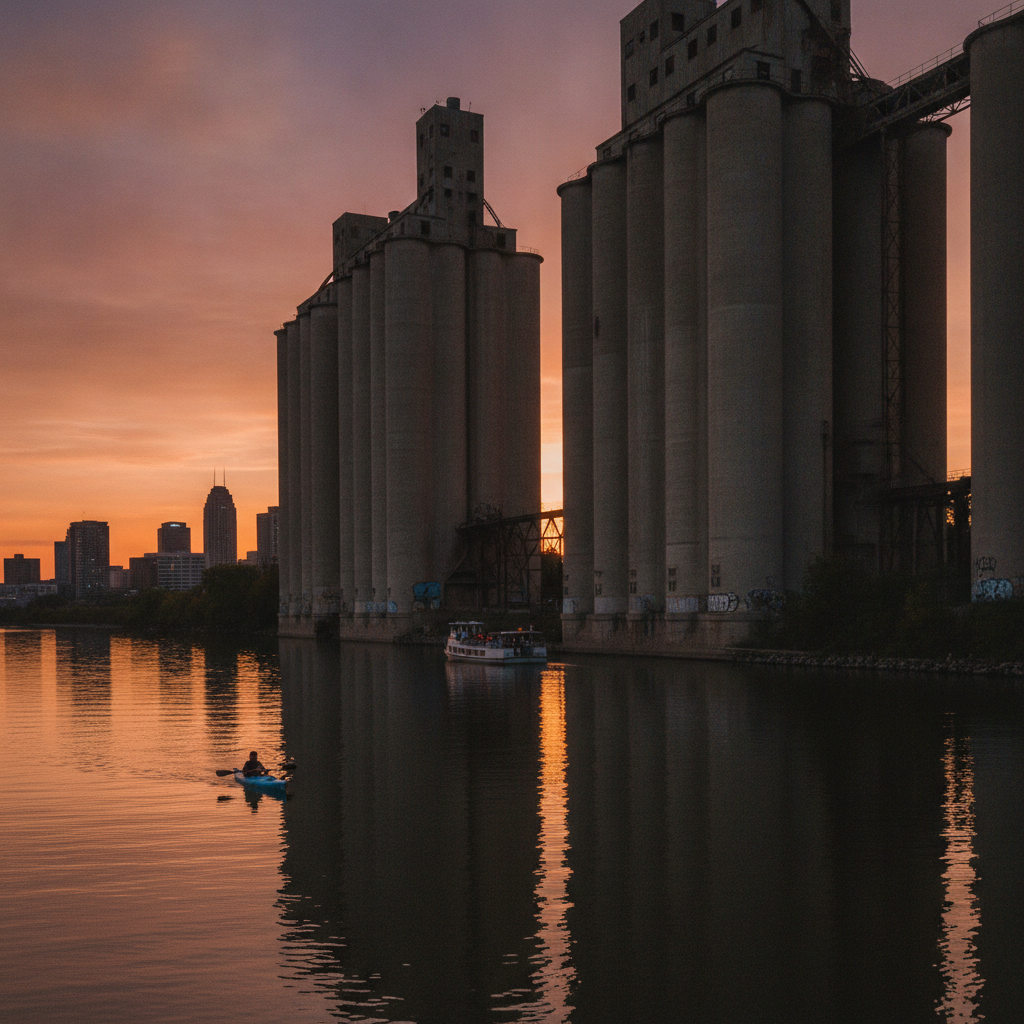
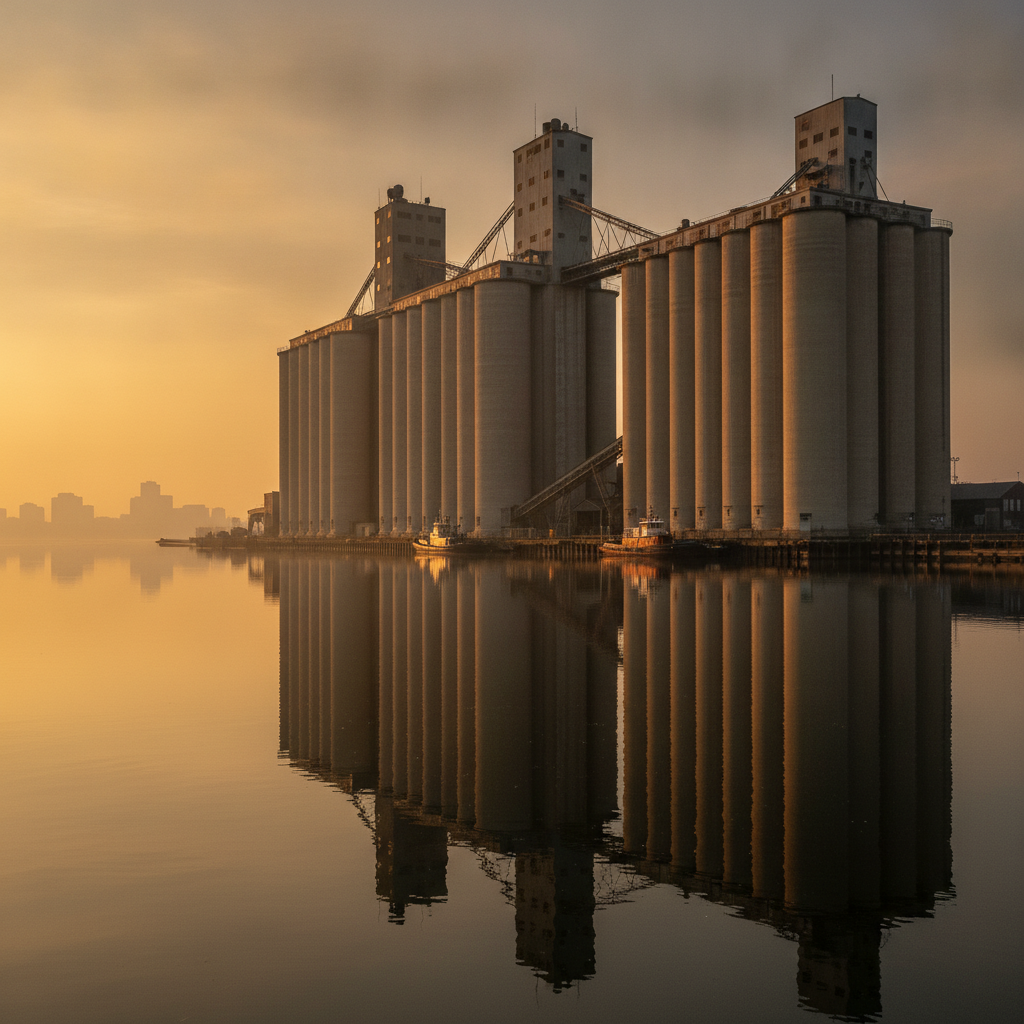
The Buffalo waterfront revival: the transformation of Buffalo's Lake Erie waterfront from an abandoned industrial landscape to the most active waterfront destination in western New York is one of the most celebrated urban renewal projects in recent American history. Canalside (at 44 Prime Street, Buffalo, the Erie Canal Harbor Development Corporation): the 35-acre recreational and event district built on the historic terminus of the Erie Canal, featuring waterfront access to the Buffalo River, an outdoor amphitheater for concerts, and the Buffalo Naval and Military Park (the waterfront museum complex with three decommissioned US Navy vessels — the destroyer USS The Sullivans, the submarine USS Croaker, and the cruiser USS Little Rock — and military exhibits covering the contributions of western New York servicemen). The grain elevators as tourist attraction: the abandoned grain elevators of the Buffalo waterfront (the largest concentration of surviving 19th and early 20th century concrete grain elevators in the world) have become the most distinctive tourist attraction in Buffalo — architecture tours of the grain elevators (by kayak, by boat, by bicycle, and on foot) are the most popular educational tourism experience in the city. Queen City Bike Ferry (the seasonal bicycle and pedestrian ferry crossing the Buffalo River at the base of the grain elevator district): the most unique way to experience the waterfront. The Buffalo Riverworks (at 359 Ganson Street, the former Republic Steel waterfront plant): the mixed-use entertainment complex built in a former industrial plant, with rock climbing walls, restaurants, and performance venues. The Outer Harbor (the former Buffalo and Lake Erie Waterfront on the outer breakwater): the newest waterfront park, with direct access to Lake Erie beaches and the sunset views that are among the most dramatic in western New York.
- 3
The Chautauqua Institution and Regional Culture
The Chautauqua Institution (at 1 Ames Avenue, Chautauqua, New York, 80 km south of Buffalo, on the western shore of Chautauqua Lake): the most unusual and remarkable cultural institution in the United States — a Victorian-era retreat community (founded 1874 by Methodist bishop John Heyl Vincent and inventor Lewis Miller, the father-in-law of Thomas Edison) that has evolved into a 9-week summer program of lectures, concerts, opera, theater, dance, and education for approximately 7,500 full-season residents and 100,000 additional visitors. The Chautauqua program: the institution presents approximately 2,200 events in its 9-week summer season (late June through late August), including daily morning lectures by political leaders, authors, and intellectuals in the 4,500-seat Amphitheater (the most continuously active outdoor lecture venue in the United States), evening performances by internationally touring symphony orchestras and theater companies, and a full schedule of opera, ballet, and art exhibitions. The Chautauqua Movement: the original Chautauqua model (traveling tent shows that brought lectures, music, and cultural enrichment to rural communities across the United States) was directly inspired by the Chautauqua Institution and functioned as the primary adult education and entertainment system for rural America from approximately 1903 to 1930 — at its peak, the circuit Chautauqua reached approximately 35 million Americans per year in approximately 10,000 communities. Theodore Roosevelt called Chautauqua the most American thing in America. The Chautauqua community: the institution's grounds contain approximately 800 Victorian-era cottages and hotels, the most intact Victorian resort community in America, designated a National Historic Landmark.
- 4
Buffalo Music and the Guitar
Buffalo's music scene: Buffalo has produced a disproportionate share of important American rock and roll musicians, and the city has a vibrant live music culture anchored by several major venues and a long tradition of original music production. Rick James (born James Ambrose Johnson Jr., February 1, 1948, Buffalo; died August 6, 2004, Los Angeles): the funk musician whose Super Freak (1981) is the most sampled song in the history of hip hop (the bass line was sampled by MC Hammer in U Cant Touch This in 1990, creating one of the most commercially successful samples in history — generating approximately USD 40M in royalties for James). Ani DiFranco (born September 23, 1970, Buffalo): the singer-songwriter who founded the independent record label Righteous Babe Records in Buffalo in 1990 (at age 19, with USD 50 in a checking account) and built it into the most successful independent folk record label in America — refusing major label deals and remaining independent while selling approximately 3 million albums through direct-to-fan and retail channels. DiFranco continues to be based in Buffalo and is the most commercially successful independent folk musician in American history. The GooGoo Dolls (formed in Buffalo in 1986 by Johnny Rzeznik and Robby Takac): the rock band that produced Iris (1998, written for the film City of Angels), the most played song on radio in American history during the week ending February 27, 1999 — spending 18 consecutive weeks at number 1 on multiple Billboard charts. The Town Ballroom (at 681 Main Street, downtown Buffalo): the 1,500-seat concert venue that is the most important live music room in western New York, presenting nationally touring acts since 2004.
- 5
The University at Buffalo and Buffalo's Knowledge Economy
The University at Buffalo (UB, at 12 Capen Hall, Amherst, New York, with a south campus in Buffalo, founded 1846): the largest and most comprehensive university in the State University of New York (SUNY) system, with approximately 32,000 students and a AAA Carnegie classification (the highest research activity). UB is the primary engine of Buffalo's 21st-century economic revival — the university's medical, dental, pharmacy, and law schools (located on the South Campus in the Medical Corridor adjacent to downtown Buffalo) have catalyzed the development of a biomedical research district. UB 2020: the university's master plan (approved 2009) to expand its downtown Buffalo footprint, with the UB School of Medicine and Biomedical Sciences (at 955 Main Street, downtown Buffalo, opened 2017) and the UB School of Dental Medicine (at 3435 Main Street, South Campus) anchoring the Medical Corridor. The Buffalo Niagara Medical Campus (BNMC, the 120-acre biomedical research and treatment district centered on the Medical Corridor): the concentration of hospitals, research institutes, and biotech companies (including Roswell Park Comprehensive Cancer Center — founded 1898, one of the oldest cancer research centers in the United States and the place where the link between smoking and lung cancer was first quantitatively demonstrated by Ernest Wynder and Evarts Graham in 1950) that employs approximately 17,000 workers. The START-UP NY program (the New York State economic development initiative providing tax-free status to businesses that locate in or near university campuses): the program that has attracted approximately 30 technology and biotech companies to the UB campus since 2014. Kaleida Health (the merged health system created in 1998 by the merger of Children's Hospital of Buffalo and Buffalo General Hospital): the largest employer in western New York, with approximately 9,000 employees.
- 6
Buffalo's Steel Heritage and the Bethlehem Steel Legacy
Bethlehem Steel and the Lackawanna works: the Bethlehem Steel plant in Lackawanna, New York (immediately south of Buffalo, at the Lake Erie shore, with the plant occupying approximately 5 km of waterfront), was at its peak (1943-1944) the fourth-largest steel plant in the United States and one of the most important military industrial facilities in the world — producing approximately 1,000 tons of steel per day for ships, tanks, and weapons for the Allied war effort. Bethlehem Steel in Lackawanna was the primary employer in the southern Buffalo region from its opening in 1900 to its complete shutdown in 1983 (the closure eliminated approximately 20,000 jobs in a community that had been built around a single employer — one of the most devastating single industrial closures in 20th-century American history). The Bethlehem Steel ruins (the RiverBend Commerce Park, at 2077 Lake Shore Road, Lackawanna, New York): the demolition of most of the Bethlehem Steel buildings has left behind a haunting landscape of ruins, with the most dramatic being the blast furnace ruins (two blast furnaces dating to the 1920s, being stabilized and adapted as an industrial heritage site). Lackawanna (the small city immediately south of Buffalo): the community that was built around Bethlehem Steel and experienced its closure most directly, with a poverty rate now exceeding 30% in some neighborhoods. Our Lady of Victory National Shrine and Basilica (at 767 Ridge Road, Lackawanna, New York, completed 1926, designed by Emile Ulrich in the French Baroque style): the most ornate Catholic church in western New York, with an interior of extraordinary marble, mosaic, and bronze work, built by Father Nelson Baker (the social service reformer who created the most comprehensive Catholic social welfare system in the United States).
Walk this route with audio
Stories play automatically as you reach each stop — no tapping needed.
More in buffalo
Buffalo: Olmsted Parks, Industrial Giants and a City Rebuilt
Buffalo R2-R6: AKG Museum (8500 works finest modern art NY to Chicago, Abstract Expressionism Pollock Rothko Kline Still de Kooning, OMA Shigematsu Gundlach Building 2023 USD 230M 21,000 sqm, Kleinhans Music Hall Saarinen father-son 1940 best acoustics NY after Carnegie Hall, Burchfield Penney Charles Burchfield 1893-1967 visionary watercolorist); Architecture (Darwin Martin House FLW 1904-1905 Prairie Style 6 structures USD 50M restoration 2007, Guaranty Building Sullivan Adler 1896 finest US office building terra-cotta vegetative, City Hall 1931 Art Deco tallest NY municipal 120m 28th floor free 360 views, Richardson Olmsted Campus HH Richardson 1870-1880 greatest 19th century collaboration Hotel Henry), Neighborhoods (Elmwood Village most desirable, Allentown Art Festival oldest outdoor juried eastern US 70,000 Father's Day weekend, Polish Broadway East Side Tops massacre May 14 2022 10 killed white supremacist NY worst, First Ward Irish dockworkers); Lake Effect (230cm average 500cm suburbs belt, cold Arctic -20/-30C over warm Erie lake moisture dump, November 2014 177cm 24hrs 14 dead, Bills Mafia table-jumping tailgate Highmark Stadium Orchard Park culture); Seneca Nation (Haudenosaunee Confederacy Six Nations Guardians Western Door, US Constitution influence Grinde Johansen Exemplar Liberty 1991 disputed, Laura Secord 30km walk June 24 1813 Canadian hero, Seneca Nation Salamanca casinos, Sullivan-Clinton 1779 40 villages scorched earth); Practical (BUF 5.5M passengers 40 destinations, Niagara Falls State Park 1885 oldest US state park, Toronto 150km 90min Peace Bridge, Niagara icewine, Hotel Henry HH Richardson).
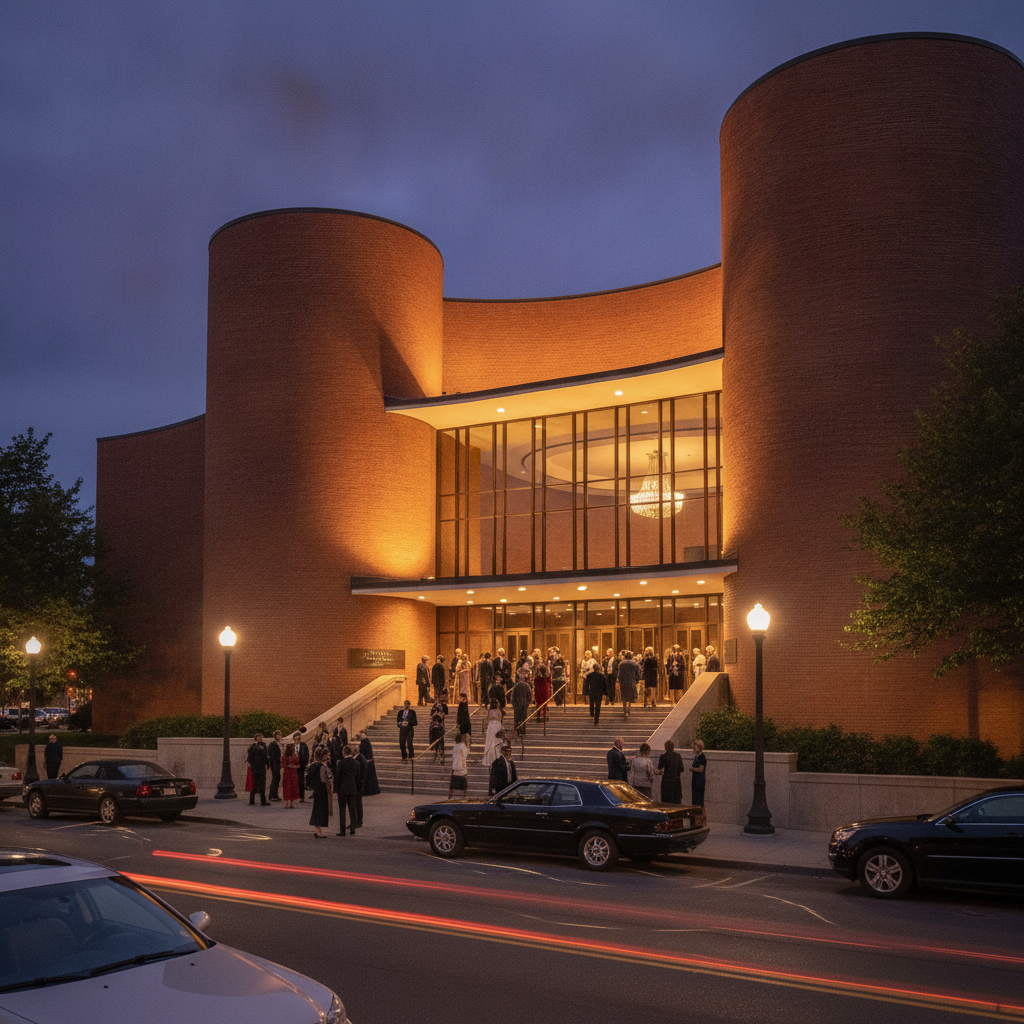
Buffalo: Haudenosaunee Roots, Snow Records and a Symphony in a Landmark Hall
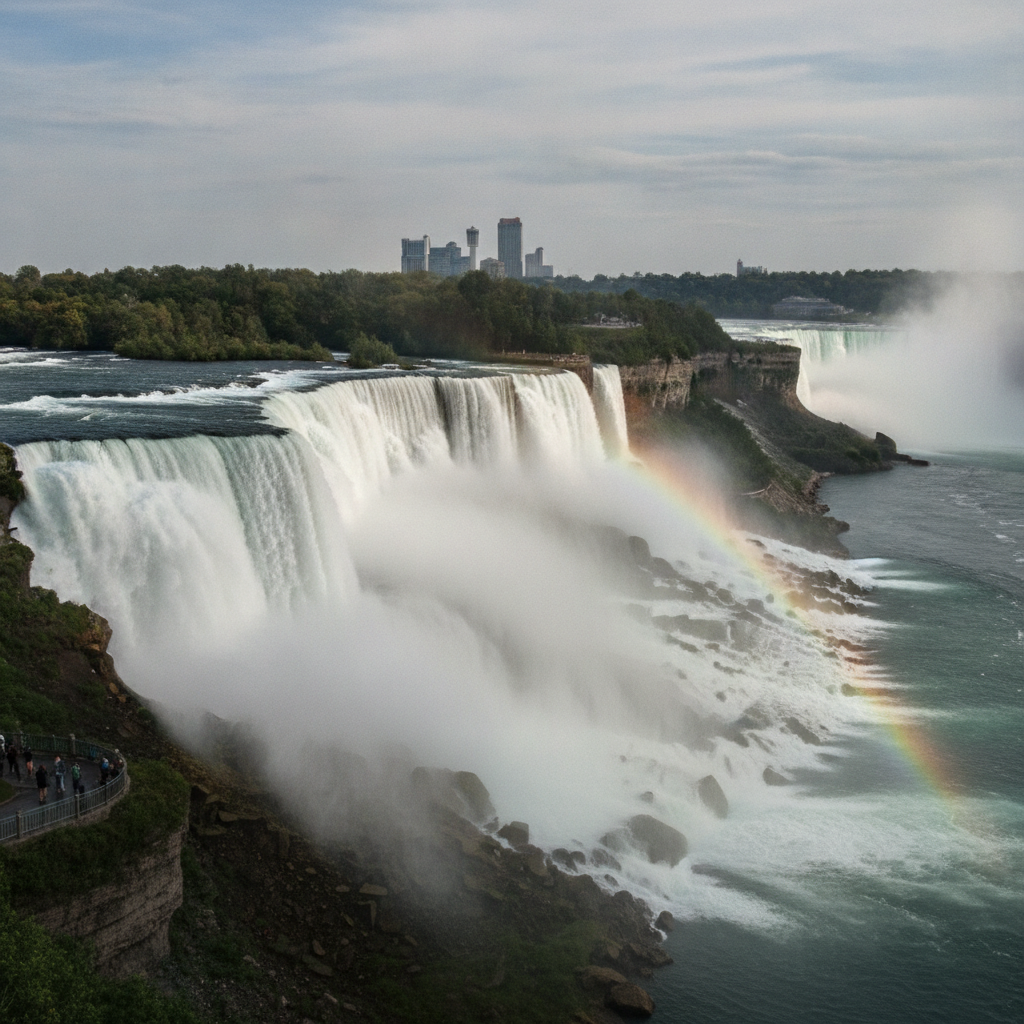
Buffalo: Niagara Falls, grain elevators, Buffalo wings, architecture, Erie Canal, and sports heartbreak
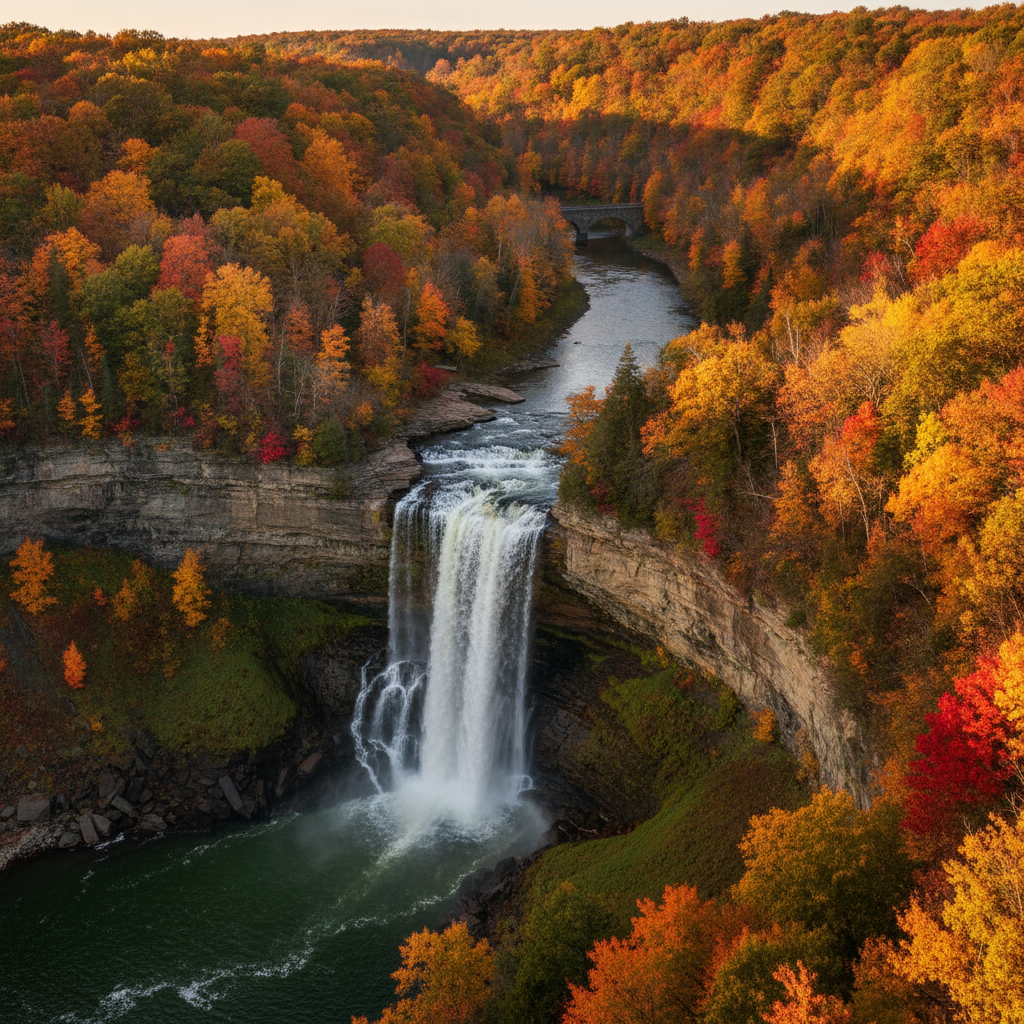
Buffalo R5: Letchworth (90km southeast, 25km gorge 180m deep, three waterfalls Upper 26m Middle 30m Lower 23m, Portage Viaduct 1903 72m above river, October foliage most beautiful inland eastern US, Mary Jemison captured 1755 age 12 lived as Seneca died 1833 age 90 buried in park, Senator Letchworth donated 1906); First Ward (Irish Famine 1840s dockworkers canal laborers, Swannie House 1880 oldest bar, grain elevator kayak tours Riverline, Seneca One Tower 38 stories USD 500M conversion, Statler Hilton 1923 Ellsworth Statler 1863-1928 invented in-room bath 1908 in-room phone 1911 doorknob menu Father Modern Hotel); Erie Canal (584km Albany to Buffalo, 57 locks 524km navigable, Lockport 40km engineers overcame Niagara Escarpment 5 pairs locks most remarkable feat, Annie Taylor born Lockport 1838, Rochester 150km Eastman Kodak 1892 George Eastman suicide note My work is done, Strong Museum of Play worlds only); Theater (Shea's 1926 C.W. Rapp 3083 seats Broadway Series, Irish Classical Theatre, Kleinhans 1940 Saarinen father-son one of finest concert hall acoustics US, Buffalo bar culture Ulrichs 1868 Pan American Toutant Southern); Canadian connections (Peace Bridge 1927 8M vehicles/year 4th busiest land crossing, Canadian side superior face-on Horseshoe view, Fallsview Casino most visited Canada, Niagara-on-the-Lake Shaw Festival 10 plays 4 theaters, Inniskillin icewine 1989 Grand Prix Bordeaux 1991, Fort George War 1812); Revival (population 258,000 to 279,000 2010-2020 first growth since 1950, USD 175-200K median home most affordable NE, Tesla Gigafactory USD 750M Solar Roof, Josh Allen 5 Pro Bowls Sean McDermott, Green Code 2016 first zoning update since 1953).