Roman Budapest: Aquincum, Óbuda & the Ancient City Beneath the Modern
Before there was Budapest, there was Aquincum — the Roman legionary fortress and civilian town that for four centuries served as the capital of the province of Pannonia Inferior, one of the most important Roman cities north of the Alps. Today the northern part of Budapest, in the district of Óbuda ('Old Buda'), conceals the largest body of visible Roman remains in Central Europe beneath its 18th-century Baroque streets, socialist housing blocks, and suburban infrastructure. To walk this route is to layer two thousand years of continuous urban habitation into a single afternoon.
- 1
Aquincum Museum & Roman Civilian Town Ruins
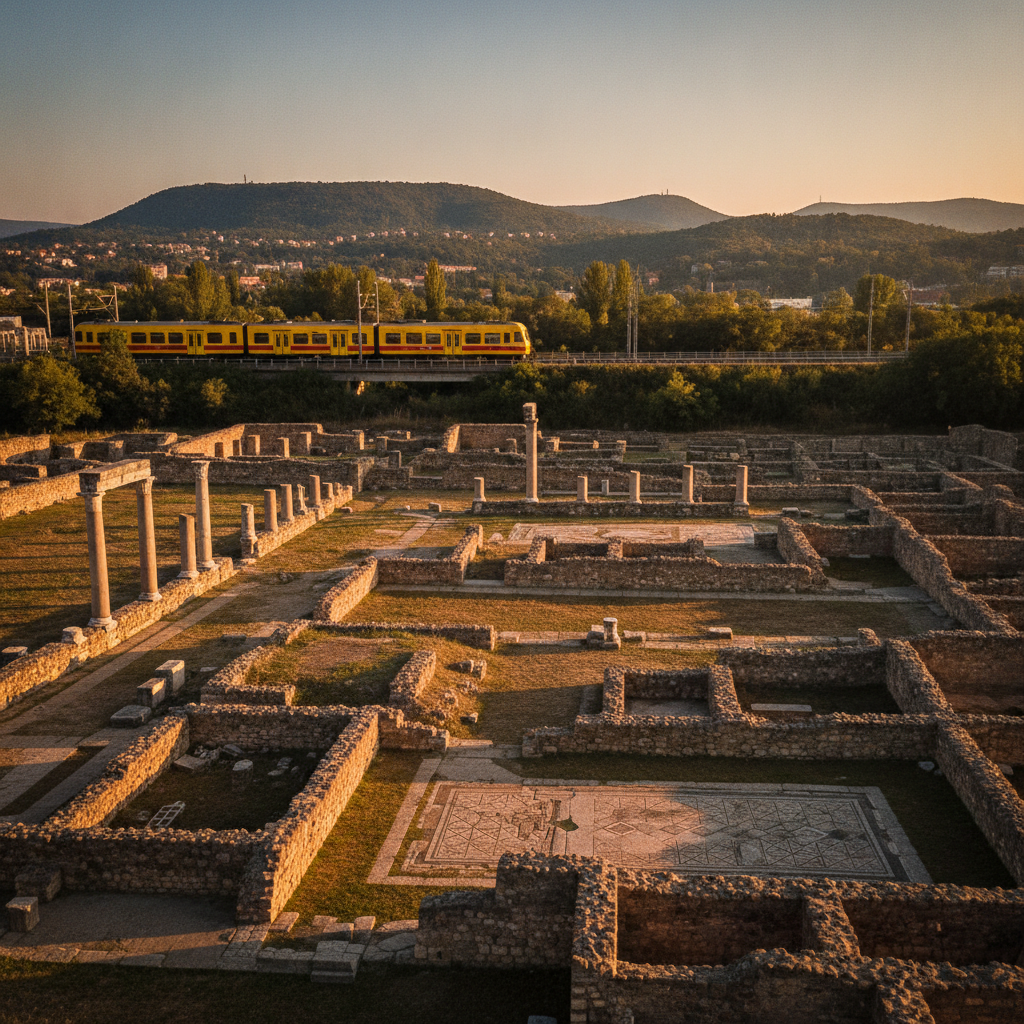
The Aquincum Museum, founded in 1894 and occupying a neo-Classical pavilion within the excavated remains of the Roman civilian town (cca. 100-300 CE), is the most important Roman archaeological museum in Hungary. The civilian settlement — home to 30,000-40,000 inhabitants at its peak — lies largely exposed in an open-air archaeological park: forums, temples, bath complexes, craftsmen's workshops, and the only surviving portable Roman organ (the Aquincum organ, 228 CE, with its bronze pipes still intact) are among the highlights. The museum's indoor galleries provide context for the ruins and display extraordinary finds: hypocaust heating systems, frescoed wall fragments, intricate mosaic floors, bronze figurines, and the personal possessions of ordinary Roman Pannonians. The civilian town was separate from the legionary fortress (legio II Adiutrix) located to its south.
- 2
Óbuda Amphitheatre (Katonavárosi amfiteátrum)
The Military Amphitheatre of Aquincum, built in the 2nd century CE for the entertainment of the legionary garrison, was one of the largest Roman amphitheatres in the empire — its arena (86 × 68 meters) was larger than the Colosseum's. After Rome's withdrawal from Pannonia in the early 5th century, the stone structure was quarried and repurposed by successive populations; by the medieval period its outline had vanished entirely under buildings and rubble. Systematic excavation began in the 1930s; today the elliptical arena outline is exposed within a modern residential neighborhood, the enormous structure's scale only becoming apparent when standing at its center surrounded by apartment blocks that were built into and over the ancient walls.
- 3
Óbuda Town Square (Fő tér) & Baroque Old Town
Óbuda's town square (Fő tér) is the historic center of the oldest continuously inhabited district of Budapest — settled without interruption since Roman times. The square is flanked by 18th-century Baroque buildings (many housing restaurants with outdoor terraces), the Zichy Mansion (1746, now the Vasarely Museum), and the Óbuda Museum. Tucked into a corner of the square is a 20th-century sculptural group by Imre Varga: five bronze women with umbrellas, caught mid-conversation in an eternal Óbuda afternoon. The surrounding streets preserve a village-like atmosphere at odds with the suburban Budapest surrounding them — narrow lanes, courtyard houses, and a pace of life that feels deliberately preserved.
- 4
Hercules Villa Roman Mosaics (Meggyfa utca)
The Hercules Villa, excavated beneath a modern residential street in Óbuda, preserves some of the finest Roman mosaics in Central Europe — including a 3rd-century polychrome floor depicting the Labours of Hercules (after which the villa is named) and a Nessus and Deianeira scene in superb condition. The mosaics were created by craftsmen from the eastern Mediterranean workshops and represent the luxury of the villa of a wealthy Roman official or merchant. The site is small but exceptional in the quality of its preserved floor art, displayed in a purpose-built pavilion that preserves the mosaics in situ.
- 5
Roman Military Amphitheatre (Polgárváros)
A second, smaller amphitheatre served the civilian population of Aquincum's civil town rather than the legionary garrison. Its remains — less extensively excavated than the military amphitheatre to the north — are partially visible near the modern Bécsi road. Near here, the remains of the Roman aqueduct that supplied Aquincum with water from sources in the Buda Hills (a distance of some 4.5 km) can be traced along the modern road alignment, the stone channels and support pillars occasionally emerging from modern pavement and gardens.
- 6
HÉV Railway to Szentendre & the Buda Hills Gateway
The Aquincum HÉV commuter railway station (on the H5 line to Szentendre) sits directly adjacent to the Roman ruins, creating one of Budapest's most striking temporal collisions: a working 21st-century suburban train passing through the exposed walls of a 2nd-century Roman town. The HÉV line continues 20 km north to Szentendre, the historic Serbian Orthodox community and artists' colony town on the Danube Bend — one of the most visited day-trip destinations from Budapest. In the opposite direction, the Buda Hills (Budai-hegység) offer hiking, cycling, and the Children's Railway (Gyermekvasút), a narrow-gauge railway operated by children under adult supervision — a remnant of the Communist youth organization system.
Walk this route with audio
Stories play automatically as you reach each stop — no tapping needed.
More in budapest
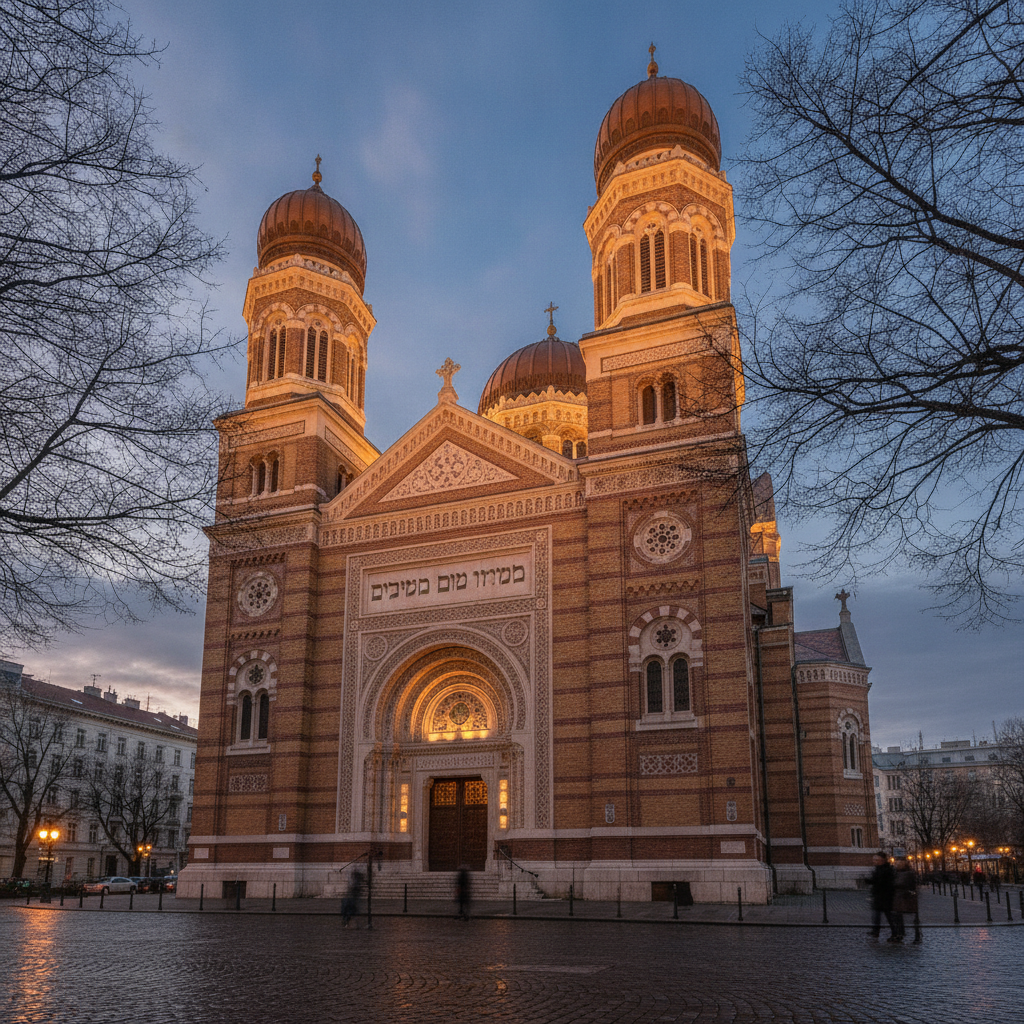
The Jewish Quarter: Dohány Synagogue, Memorial & Ruin Bars
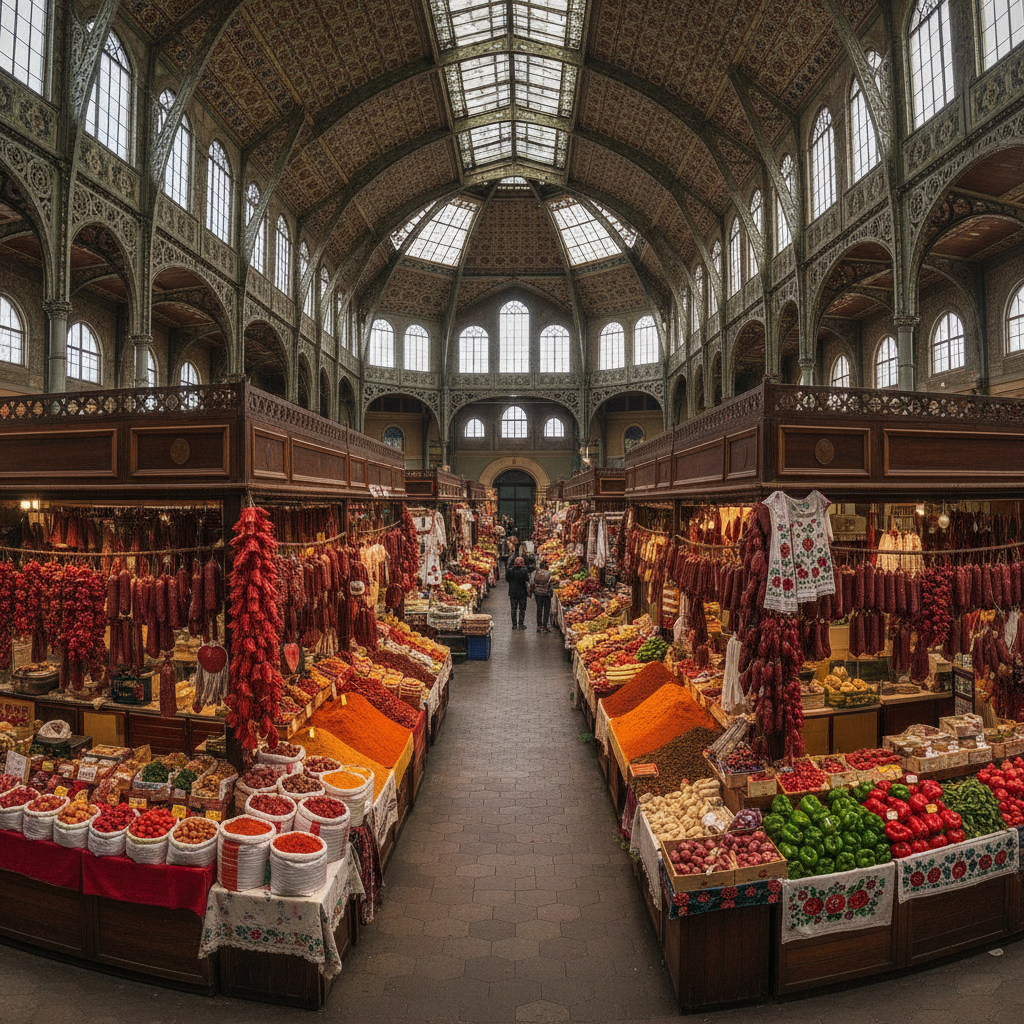
Inner City Markets: Great Market Hall, Váci Street & the Danube Embankment
Green Island in the River: Margaret Island
The Grand Boulevard: Andrássy Avenue from Opera to Heroes' Square
Parliament & the Danube: Lipótváros, Chain Bridge & St. Stephen's Basilica