Bucharest History: Ceaușescu, Revolution Square & Little Paris
Understand how Bucharest became what it is—Ceaușescu's demolition of a third of historic Bucharest to build his palace, the 1989 revolution's dramatic unfolding in Piața Revoluției, the surviving jewels like Stavropoleos Monastery, and the inter-war 'Little Paris' golden age that still shows in the Art Deco villas of the northern boulevards.
- 1
Ceaușescu's Bucharest – The Civic Centre Destruction
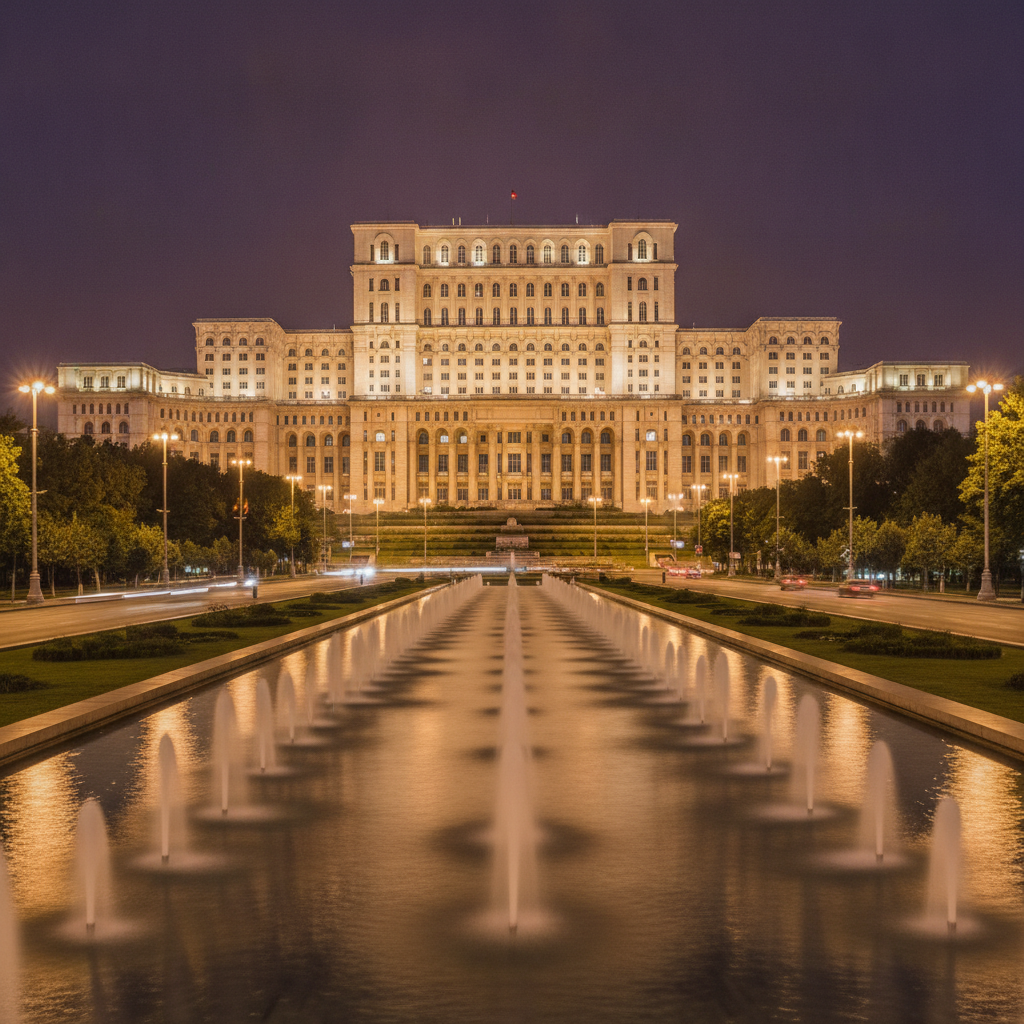
To build his Palace of the Parliament and the Boulevard Unirii (nicknamed 'Ceaușescu's Champs-Élysées'), the dictator demolished 3.5 km² of 19th-century Bucharest—26 churches, 3 monasteries, 3 hospitals, and 30,000 homes—between 1984 and 1989. The resulting urban landscape of oversized boulevards and monumental communist buildings is as much a part of Bucharest's identity as what was lost.
- 2
Revolution Square & 1989 Revolution Sites
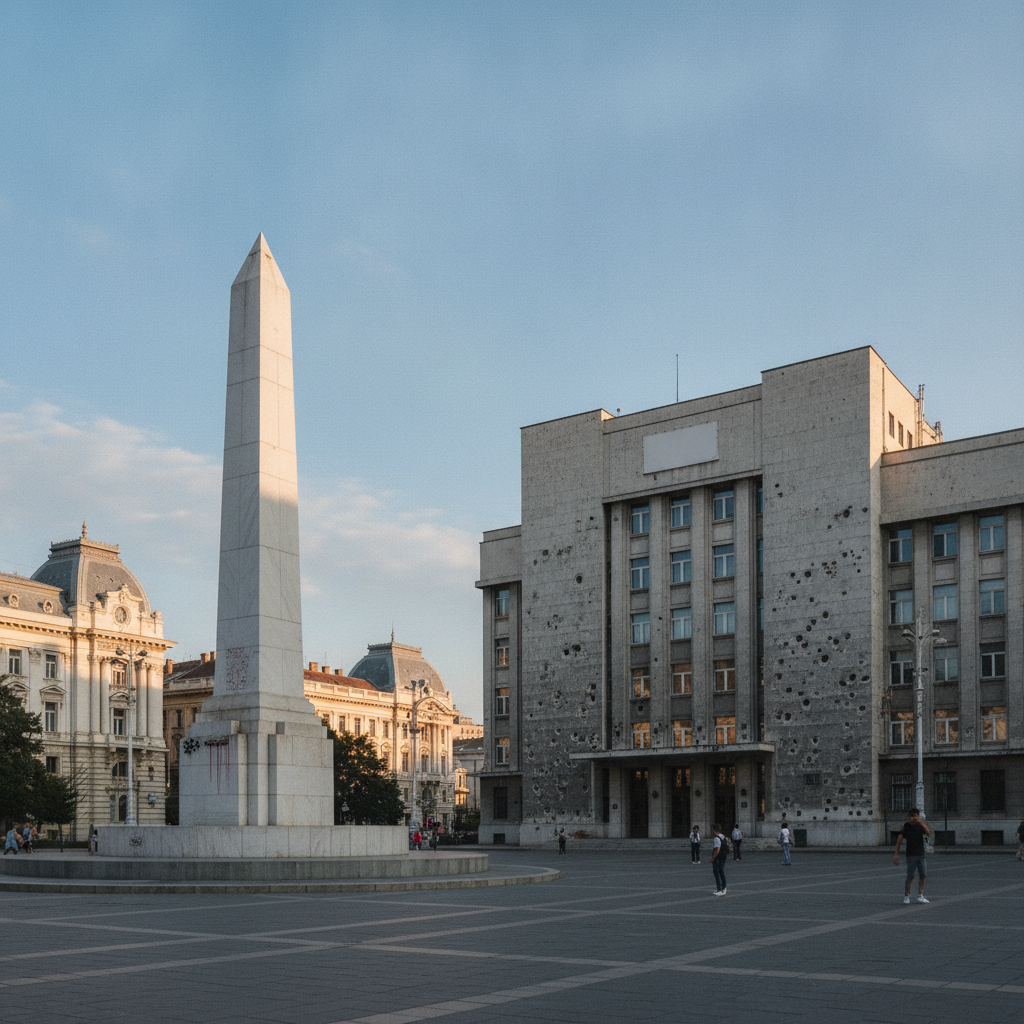
Bucharest's Piața Revoluției was the epicentre of Romania's 1989 revolution—the only violent overthrow of communist rule in Eastern Europe. From the Central Committee balcony here, Ceaușescu gave his last speech on December 21, 1989 as the crowd turned against him; he fled by helicopter and was executed on Christmas Day. The square's memorial, bullet-scarred buildings, and the 1989 Museum document these extraordinary events.
- 3
Stavropoleos Monastery – Baroque Jewel
Hidden in a narrow lane off Calea Victoriei near the old town, the Stavropoleos Monastery church (built 1724) is Bucharest's finest example of Brâncovenesc architecture—the distinctive Romanian Baroque style that fuses Byzantine, Ottoman, and Venetian Renaissance elements into carved stone columns, ornate porticos, and elaborate wooden iconostases. The courtyard garden contains medieval tombstone fragments from demolished Bucharest churches.
- 4
National Museum of Romanian History
The National History Museum occupies a grand 1900 neoclassical building on Calea Victoriei and houses Romania's most important historical collection—from Dacian gold treasures and Roman statuary to medieval Romanian art and the 20th century. The centrepiece is the Lapidarium with Roman stone carvings from Trajan's Column campaign, and a full-scale reproduction of the Trajan Column reliefs showing the Dacian Wars.
- 5
Jewish Heritage – The Great Synagogue & Sephardic Quarter
Bucharest had one of the largest Jewish communities in Europe before WWII—over 100,000 people. The Great Synagogue (1847) on Vasile Adamache Street and the Choral Temple (1867) near the old town survive as working synagogues. The Jewish History Museum documents the community's extraordinary cultural contribution and the devastation of the Holocaust and communist-era emigration to Israel.
- 6
Inter-War Bucharest – 'The Little Paris'
Between the wars, Bucharest styled itself 'Micul Paris' (Little Paris)—a cosmopolitan capital of Art Deco and neo-Romanian architecture, Francophone culture, and Balkan sophistication. The boulevards of Kiseleff, the Arcul de Triumf (a smaller Arc de Triomphe), the Aviators' neighbourhood villas, and the Cotroceni area still recall this golden era. George Enescu, Constantin Brâncuși, and Mircea Eliade all formed here.
Walk this route with audio
Stories play automatically as you reach each stop — no tapping needed.
More in Bucharest
Bucharest Nightlife, Cinema & Contemporary Culture
Bucharest on a Plate: Sarmale, Beer Halls & Romanian Wine
Bucharest Essentials: Parliament Palace, Old Town & Village Museum
Bucharest Day Trips: Peleș Castle, Transylvania & the Danube Delta