Art Nouveau Brussels — Victor Horta Museum, Ixelles & the Upper Town
Brussels is the world capital of Art Nouveau — the revolutionary architectural and decorative arts style that emerged in Brussels in the 1890s and transformed the visual culture of Europe: the architect Victor Horta (1861-1947) invented the language of Art Nouveau in Brussels in 1893 with the Hôtel Tassel (the first Art Nouveau building in the world) and developed it through a series of extraordinary private houses in Ixelles and Saint-Gilles whose interiors remain among the finest in European domestic architecture.
- 1
Horta Museum — The Birthplace of Art Nouveau
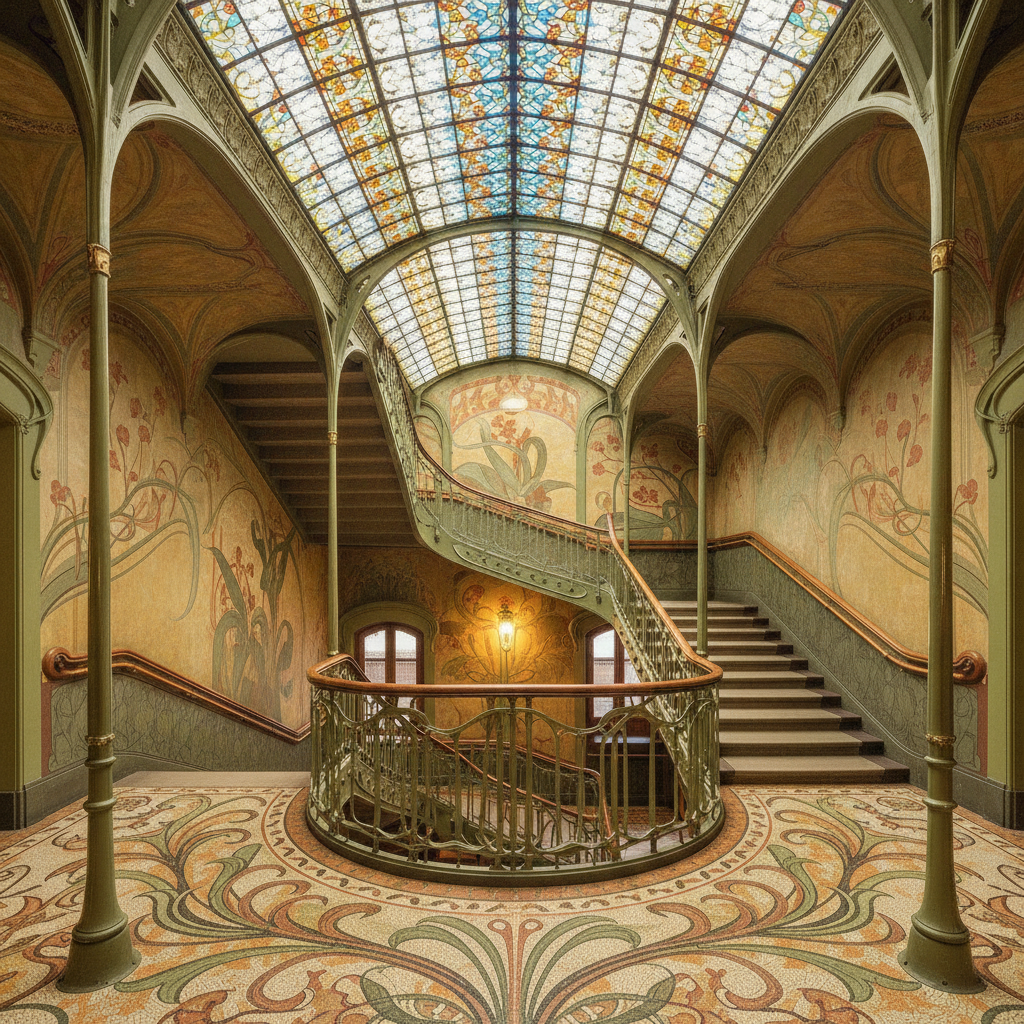
Musée Horta (Rue Américaine 25, Saint-Gilles — UNESCO World Heritage Site (2000), the former house and studio of architect Victor Horta (1861-1947), designed and built by Horta himself 1898-1901, converted to a museum after his death): the Horta Museum is the finest surviving intact Art Nouveau interior in the world and the essential visit for understanding the Art Nouveau architectural revolution that originated in Brussels; the house (consisting of a private residence and an adjacent studio) exemplifies every principle of Horta's architectural philosophy: the use of exposed iron as a decorative structural element (the sinuous iron columns, railings, and brackets that define the aesthetic of the interior), the total integration of architecture, furniture, fixtures, and decorative art into a unified aesthetic whole (Gesamtkunstwerk), the use of light as a primary architectural material (the glass roof that floods the central stairwell with soft diffuse light, the stained glass panels in the doors and windows), and the elimination of the right angle in favour of curves, tendrils, and organic forms derived from plant life; the museum also contains Horta's personal collection of furniture, drawings, architectural models, and personal effects.
- 2
Hôtel Tassel — The First Art Nouveau Building in the World
Hôtel Tassel (Rue Paul-Emile Janson 6, Ixelles — UNESCO World Heritage Site (2000) — the private house designed by Victor Horta for the engineer Emile Tassel and built 1893-1894, widely recognized as the first Art Nouveau building in the world): the Hôtel Tassel introduced the formal vocabulary of Art Nouveau in a single building — the exposed ironwork of the facade (the iron columns and the curvilinear iron balcony with its organic tendrils), the asymmetrical plan and facade, the colourful mosaic floor of the octagonal vestibule, and the extraordinary staircase hall with its whiplash curves and sinuous painted murals — all elements that would become the defining characteristics of the international Art Nouveau movement; other key Horta houses in Brussels within walking distance of the Tassel include the Hôtel Solvay (Rue Louise 224, 1895-1900 — the finest private Art Nouveau house in Brussels, built for the industrialist Armand Solvay), the Hôtel van Eetvelde (Rue Palmerston 2-4, 1895-1898 — the Brussels home of Edmond van Eetvelde, Secretary General of the Congo Free State), and the Hôtel Aubecq (now demolished).
- 3
Musées Royaux des Beaux-Arts — Bruegel, Rubens & Magritte
Musées Royaux des Beaux-Arts de Belgique (Place du Musée 1-2, Upper Town — the national fine arts museum complex of Belgium, comprising the Musée Oldmasters (Old Masters Museum — the finest collection of Flemish Primitive and Flemish Baroque painting in the world) and the Musée Magritte (the world's largest collection of works by surrealist painter René Magritte)): the Old Masters collection contains the world's finest collection of paintings by Pieter Bruegel the Elder (the 16th-century Flemish master of peasant and allegorical painting — including 'The Census at Bethlehem' (1566), 'The Fall of the Rebel Angels' (1562), 'The Landscape with the Fall of Icarus' (attribution disputed), and 'The Adoration of the Magi' (1564)); the collection also contains major works by Roger van der Weyden, Dirk Bouts, Hans Memling, Rogier de la Pasture, Peter Paul Rubens (including the monumental 'The Ascent to Calvary'), Anthony van Dyck, and Jacob Jordaens; the adjacent Musée Magritte (opened 2009 in a purpose-built space) displays approximately 230 works spanning Magritte's entire career, including 'The Empire of Light' series, 'The Treachery of Images' (Ceci n'est pas une pipe), and 'Golconda.'
- 4
Palais Royal & Mont des Arts
Palais Royal (Place des Palais — the official palace of the Belgian royal family, used as the king's offices and for state ceremonies, the principal formal facade on the Place des Palais opposite the Parc de Bruxelles — open to the public July-September when the royal family is at Laeken): the current neoclassical facade (substantially expanded and reclad in white stone 1904-1912 under King Leopold II) gives the palace a grander appearance than its relatively modest scale as an official working palace; Mont des Arts (the broad cultural hill between the Lower Town (Grand-Place level) and the Upper Town (Palais Royal level), redesigned 1956-1969 as a cultural campus with a formal garden, underground congress centre, and the cluster of national cultural institutions including the Royal Library of Belgium (the Bibliothèque Royale, housing the famous Reading Room with its extraordinary glass-vaulted ceiling), the Royal Museums of Fine Arts, the BELvue Museum (Belgian history museum in the former Belle Vue Hotel), and the Musée des Instruments de Musique (MIM — the Musical Instruments Museum, in the Art Nouveau Old England building, the finest collection of musical instruments in the world, approximately 8,000 instruments).
- 5
Saint-Gilles & Ixelles — The Art Nouveau Neighbourhoods
Saint-Gilles (the working-class commune immediately south of central Brussels, characterized by its extraordinary density of Art Nouveau domestic architecture built 1895-1910 for the prosperous middle class of the Belle Époque): the streets of Saint-Gilles and adjacent Ixelles (the bohemian commune southeast of the city centre, home to the ULB (Université Libre de Bruxelles), the African quarter of the Matonge neighbourhood, and the art galleries and restaurants of the Rue du Châtelain area) contain hundreds of Art Nouveau facades — ornate doorways with wrought-iron railings and stained glass, tile-decorated bay windows, curved stone facades with botanical motifs — the remnants of the period when Brussels was the wealthiest city in continental Europe (per capita) and its middle class commissioned the most avant-garde domestic architecture on the continent.
- 6
Belgian Comic Strip Centre — The Ninth Art
Centre Belge de la Bande Dessinée (CBBD, Rue des Sables 20, Lower Town — the Belgian Comic Strip Centre, housed in the Waucquez Warehouse (the Art Nouveau ironwork-and-glass department store designed by Victor Horta 1903-1906, converted to the comic strip museum 1989)): Belgium is the capital of European comic strip art (la bande dessinée, or BD) — the 'Ninth Art' occupies a cultural position in Belgium equivalent to cinema or literature in other countries; the most celebrated Belgian comic creators include Hergé (Georges Remi, 1907-1983 — the creator of Tintin, the most internationally famous Belgian fictional character and the subject of the Brussels Musée Hergé in Louvain-la-Neuve), Peyo (the creator of The Smurfs), Morris (the creator of Lucky Luke), E.P. Jacobs (the creator of Blake and Mortimer), Edgar Pierre Jacobs, and dozens of others; the CBBD displays original drawings, production materials, and historical context for the development of Belgian comic strip art from the 1920s to the present.
Walk this route with audio
Stories play automatically as you reach each stop — no tapping needed.
More in brussels
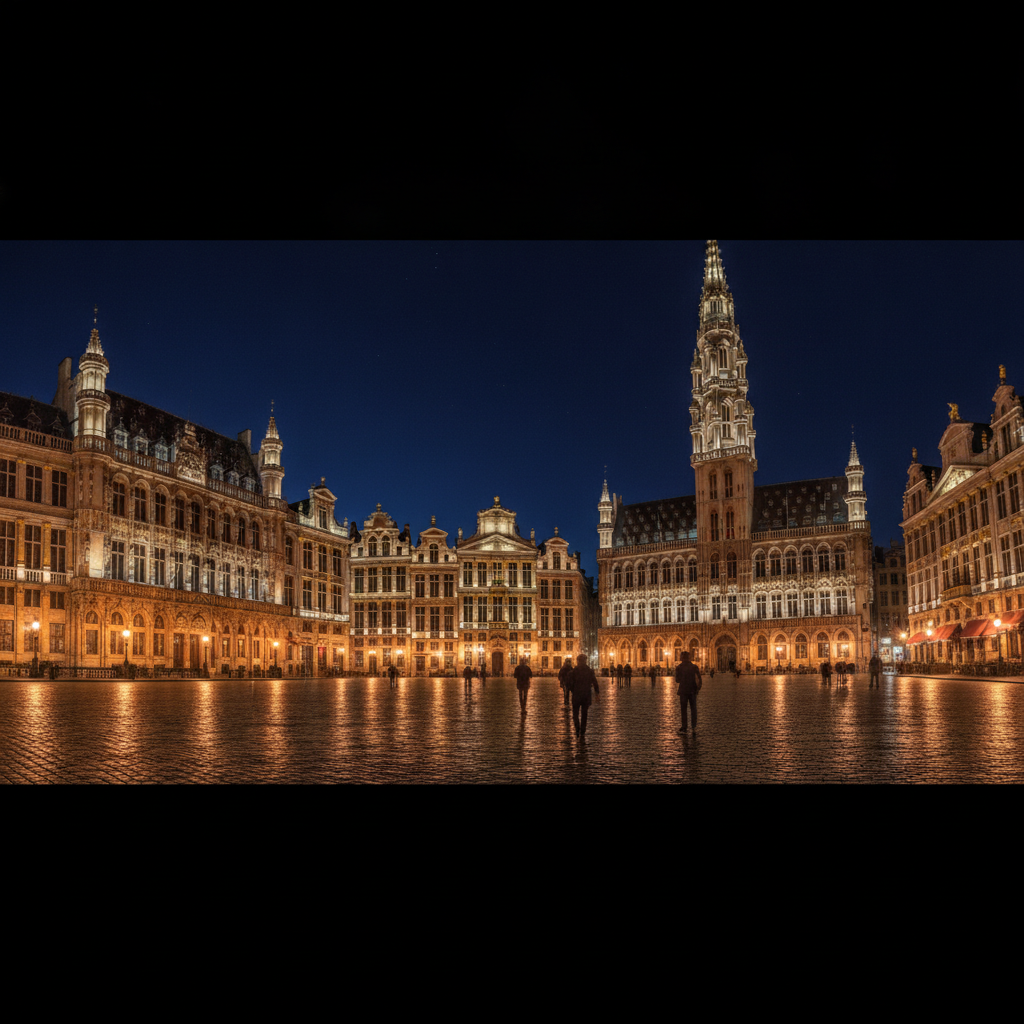
Grand-Place, Manneken Pis & the Lower Town of Brussels
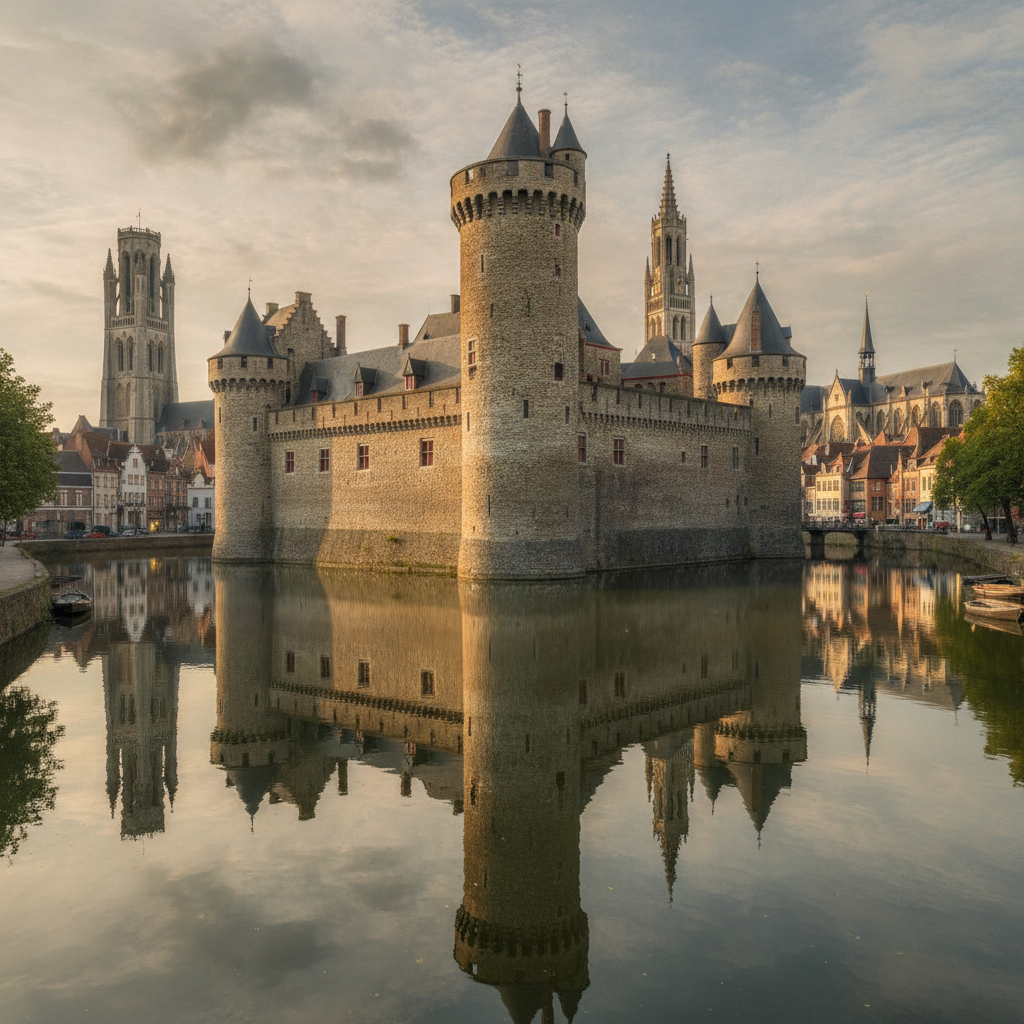
Ghent Day Trip — Gravensteen Castle, the Ghent Altarpiece & Medieval Canals
Molenbeek, Anderlecht & Multicultural Brussels
The European Quarter — EU Institutions & the Capital of Europe
Bruges Day Trip — The Venice of the North & UNESCO Medieval City