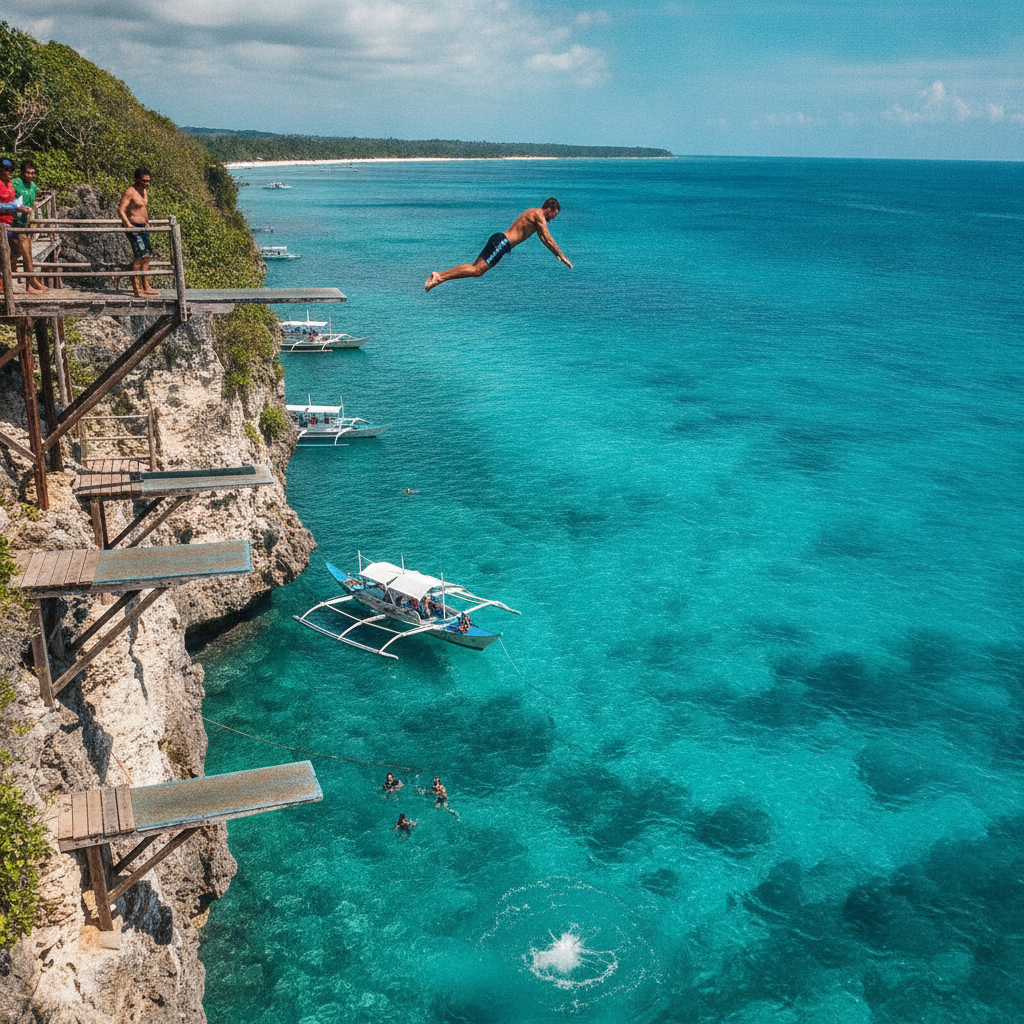
Boracay: The 4km White Sand Beach Duterte Called a 'Cesspool' Then Closed for 6 Months to Fix
White Beach's silica-rich sand stays cool even in direct sun—why it's appeared in every best-beach list for 40 years; the 2018 closure removing 400 illegal shoreline structures and installing the sewage system that had been dumping E. coli at 100× safe limits directly into the beach water where tourists were swimming; Puka Shell Beach's 200 daily visitors versus White Beach's 6,000; Bulabog Beach's consistent November–April trade winds for Asia's longest-running kiteboarding competition since 1990; the sunset paraw silhouette at 17:00 that is the most reproduced single Boracay image; and the midnight curfew and music restrictions that most regular visitors regard as improvements.
- 1
White Beach – The Most Famous Strip in the Philippines
White Beach (a 4-km arc of powdery white sand on the western coast of Boracay Island—a 10.3 km² island in Aklan province, Visayas, 2 hours from Manila by air via Caticlan airport)—is the most internationally recognised beach in the Philippines and the benchmark against which all other Philippine beaches are measured. The sand: the specific quality of Boracay's White Beach sand—fine, white, and cool to the touch even in direct sun (a result of the high silica content and fine grain size of the crushed coral that comprises the beach)—is the reason the beach has appeared in every major 'world's best beaches' list for four consecutive decades. The three stations: White Beach is informally divided into three stations; Station 1 (the northern section—most upscale, widest beach, most families, the Crowne Plaza and Discovery Shores resorts); Station 2 (the central section—the main commercial strip with the highest density of restaurants, bars, and shops, including the D'Mall retail complex); Station 3 (the southern section—cheapest accommodation, most backpackers, narrowest beach).
- 2
The 2018 Closure – Duterte's Environmental Reset
President Rodrigo Duterte ordered Boracay closed on 26 April 2018, describing the island as a 'cesspool'—a reference to the practice of directly discharging raw sewage into the beach water (testing had found E. coli levels 100× the safe limit in the water adjacent to the main strip). The 6-month closure (April–October 2018): all tourism operations suspended; 36,000 employees displaced; PHP 1.5 billion/month economic loss. The rehabilitation: the closure allowed removal of 400+ illegal structures built within the 25-metre easement from the high-water mark; installation of a centralised sewage treatment system; relocation of the road vendors; and removal of 7,000+ cubic metres of construction waste dumped in mangroves. The result: when Boracay reopened in October 2018, the water tested within safe limits for the first time in years; the beach width had visibly increased (structures removed from the easement); and the visitor cap (6,000 per day) was imposed. The lesson: the Boracay closure is cited in Philippine environmental policy as proof that radical intervention can restore a severely degraded coastal tourism destination.
- 3
Puka Shell Beach & North Boracay – The Other Island
The northern end of Boracay—beyond the White Beach crowds, accessible by 20-minute tricycle from Station 1 or by bangca around the island's northern tip—contains a series of much less visited beaches that provide the contrast to White Beach's commercial strip. Puka Shell Beach (the most famous of the north beaches—a 600-metre strand named for the puka cowrie shells historically collected here; now depleted of puka shells but still the best maintained large beach on the north coast): a daily visitor count of perhaps 200 people versus White Beach's 6,000—the most accessible 'quiet Boracay' experience. Diniwid Beach (immediately north of Station 1, reachable on foot over a rocky headland at low tide): a tiny crescent of white sand with three restaurants and no large resort development—the preferred beach of long-term Boracay residents. Yapak Beach (the northwest corner—accessible only by bangca or a difficult trail): the island's most isolated beach, with an underwater cave system used by advanced divers.
- 4
Boracay Water Sports – Kitesurfing, Diving & Sunset Sailing
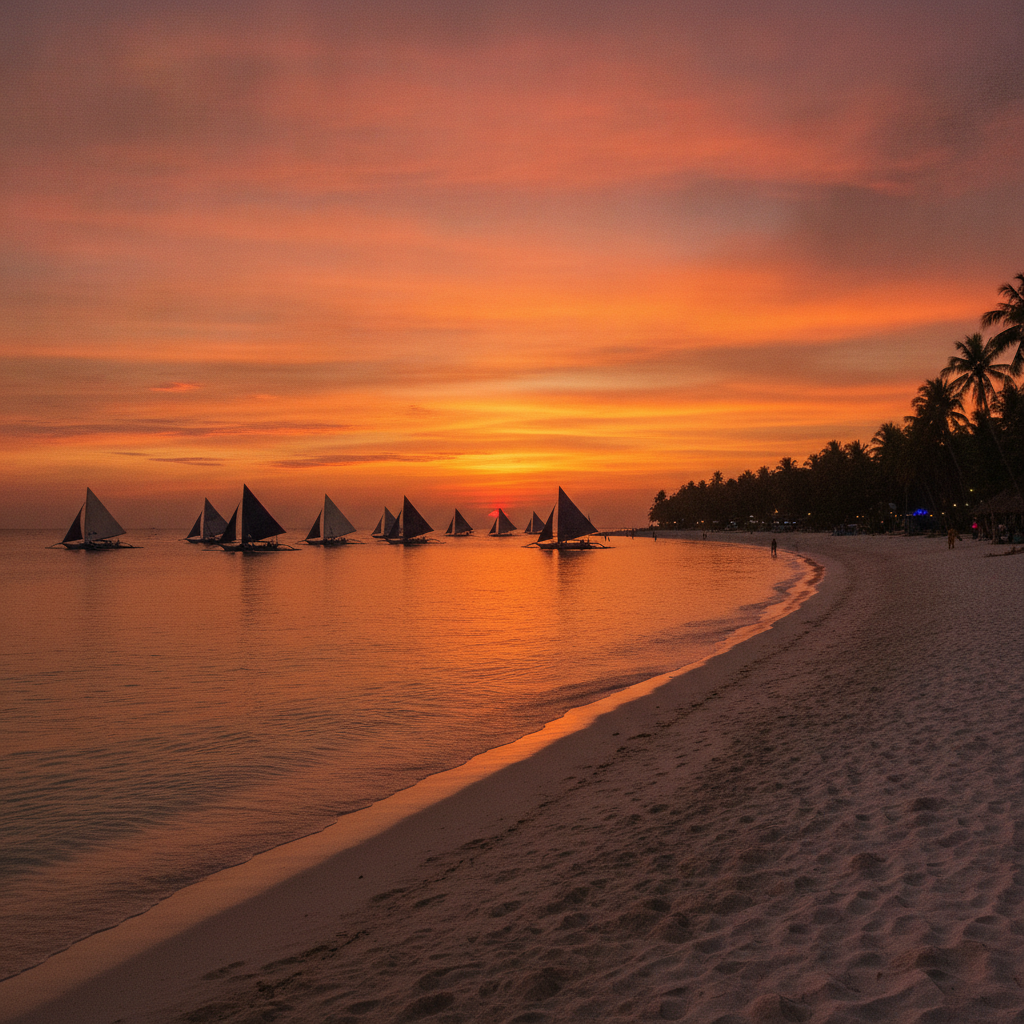
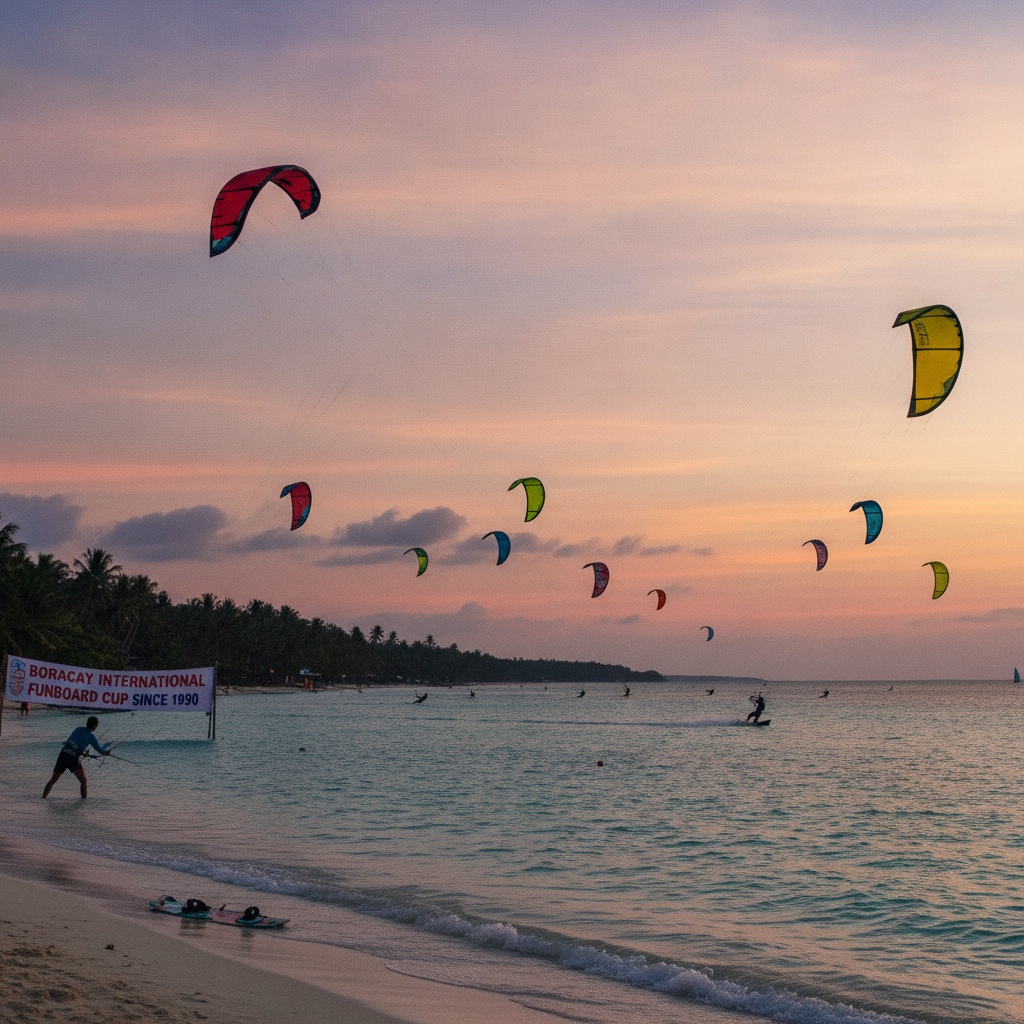
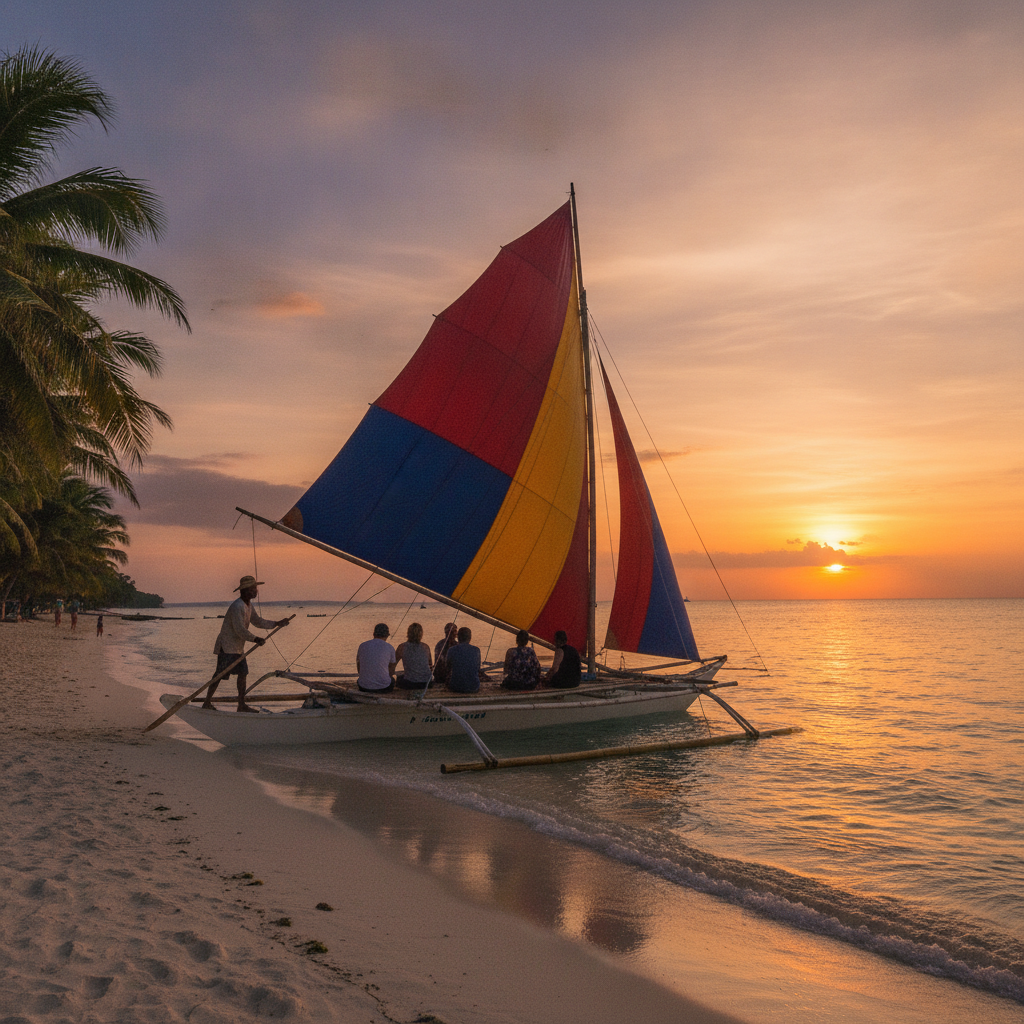
The water sports industry of Boracay—concentrated on White Beach (for sailing, kayaking, and the sunset paraw rides) and Bulabog Beach on the eastern side (for kitesurfing and windsurfing)—is the most developed in the Philippines. Bulabog Beach (the eastern coast of Boracay, 10 minutes' walk east from Station 2): the primary kitesurfing destination in the Philippines, with consistent trade winds from November to April producing conditions rated among the best in Southeast Asia; the International Funboard Cup Boracay (an annual kiteboarding competition) has been held here since 1990—the longest-running kiteboarding competition in Asia. The sunset paraw: the traditional Filipino outrigger sailing boat (paraw—a colourfully decorated single-outrigger sailing vessel) sunset rides from White Beach (departing Station 2 at approximately 17:00, sailing along the White Beach coast for 1 hour—PHP 600–800/person) are the most iconic Boracay activity, with the Boracay sunset (the sun setting over the South China Sea with the paraw silhouette in the foreground) the most reproduced single image of the island. The diving: the Boracay dive sites (Camia Reef, Balinghai Beach, the Angol Point and the Friday's Rock) are good for beginners (visibility 10–20 metres, maximum depth 25 metres) but do not rival the diving of Tubbataha, Coron, or Apo Island for experienced divers.
- 5
Boracay's Nightlife & the D'Mall Entertainment Strip
Boracay's nightlife—the most active resort island nightlife in the Philippines—is concentrated along the White Beach promenade (the beachfront path running the full length of White Beach, accessible only on foot) and in D'Mall (a retail and entertainment complex in the middle of Station 2). The entertainment geography: the Fire Dancing Shows (nightly on White Beach, where performers spin fire poi and staffs on the beach at approximately 19:30—the most-photographed nightly performance on the island); the Station 2 bars (Epic, Summer Place, Cocomangas—the long-established venues that have survived multiple Boracay openings and closings); and the Hotel Club concept (the rooftop bars of the larger resorts—Arwana at Boracay Regency, the Observatory at Discovery Shores). The post-closure nightlife: Duterte's 2018 rehabilitation imposed a curfew (midnight closing for entertainment establishments on the beach promenade), banned the construction of any new entertainment venue on the beach, and restricted amplified music on the beach after 22:00—changes that reduced the intensity of Boracay's pre-closure party atmosphere but that most regular visitors regard as improvements.
- 6
Practical Boracay – Access, Money & The Visitor Cap
Getting to Boracay: fly to Caticlan Airport (MPH—35 minutes from Manila by Cebu Pacific or Philippine Airlines—multiple daily flights) or to Kalibo Airport (KLO—1.5 hours from Manila by Air Asia and others, then a 1.5-hour bus to Caticlan pier). From Caticlan pier: a 10-minute bangca crossing to Boracay's Cagban pier (PHP 100), then a tricycle to your resort. The post-2018 visitor management: the 6,000/day visitor cap (theoretically; enforcement is inconsistent); the Boracay Inter-Agency Task Force (BIATF) management system; the environmental user fee (PHP 100 per visitor per day, collected at Cagban pier). Getting around the island: the electric tricycle (e-trike—the government introduced 300 e-trikes to replace the polluting diesel tricycles after the 2018 closure); motorbike rental (PHP 400–600/day—the most practical for independent exploration of the north beaches and the interior road). When to go: the best season is November–April (the amihan—northeast monsoon, bringing clear skies and trade winds ideal for kitesurfing); the habagat (southwest monsoon, June–October) brings rain and rough seas on the White Beach side (the eastern Bulabog side is actually calmer in the habagat).
Walk this route with audio
Stories play automatically as you reach each stop — no tapping needed.
More in Boracay
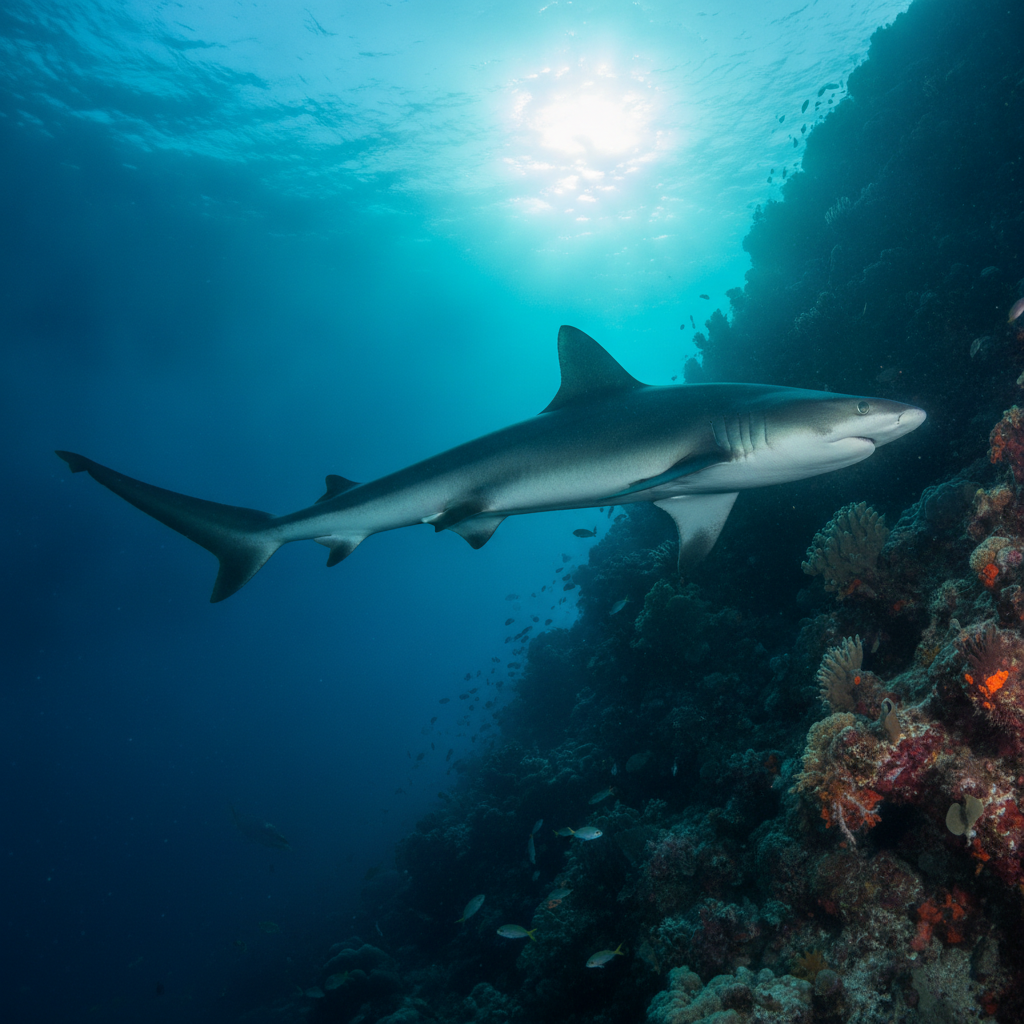
Boracay After Dark: Bioluminescent Plankton at Puka Beach, Firefly Mangroves at Caticlan & the Thresher Sharks of Yapak at Dawn
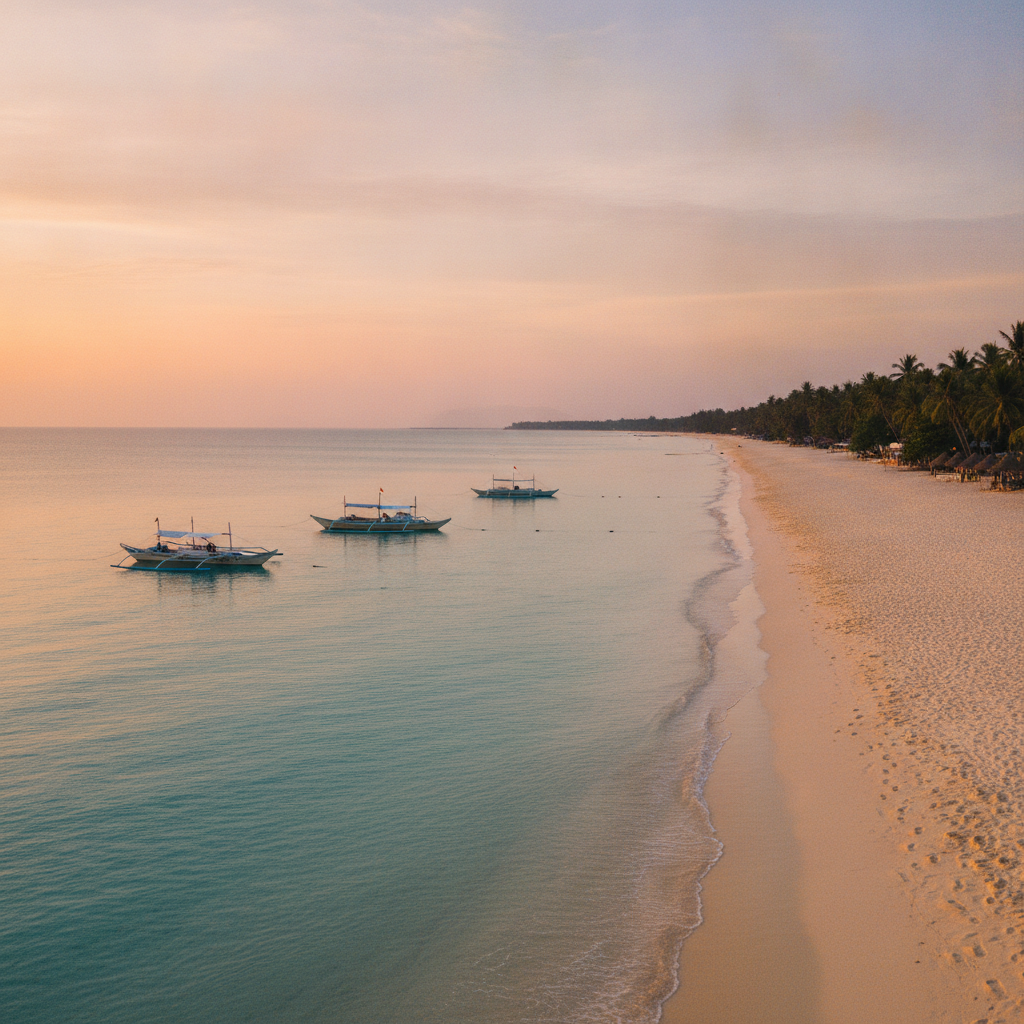
Boracay at Its Best: Environmental Recovery's 40% Coral Improvement, Hilot Coconut-Oil Massage & the Habagat Season Mistake Every Tourist Makes
Boracay's Full Picture: Ati Ancestral Displacement, Carabao Island's Escape Reef & the 6,000/Day Cap That Allows 10,000
Boracay's Full Arc: 1970s Backpacker Floor-Sleeping to 2 Million Annual Visitors to Duterte's Cesspool Closure—Was the Second Chance Used Well?