Boracay's Interior: 22,000 Residents Sharing 10km² with 6,000 Daily Tourists, 3,000 Annual Beach Weddings & Asia's Oldest Kiteboarding Competition
The 05:00 wet market in Barangay Balabag where the actual Boracay operates—the version the beach promenade never shows; the habagat season's counterintuitive advantage (30–50% fewer visitors, cheaper prices, and Bulabog Beach actually calmer in the southwest monsoon); Ariel's Point 15-metre cliff jump 40 minutes north by bangca; the PHP 500,000 Discovery Shores sunset wedding versus the PHP 15,000 beach arch package for the same ceremony location; the 2,000 IKO-certified kitesurfers trained annually at Bulabog's school cluster; and the Boracay arc—why day 3 is always the best day and why most visitors extend beyond their original departure date.
- 1
Boracay's Water Village – Barangay Balabag & Local Life
The three barangays of Boracay Island—Balabag (the central barangay, encompassing the White Beach Station 2 area and D'Mall), Manoc-Manoc (the southern barangay, encompassing Station 3 and the Cagban pier), and Yapak (the northern barangay, encompassing Station 1 and the luxury resort zone)—contain a residential population of approximately 22,000 people who live alongside 6,000 daily tourists in an island of 10.3 km². The local life: the Boracay interior (the ridge and valley running the length of the island, accessible from both the White Beach promenade and the Bulabog Beach road by the network of footpaths and alleys)—where the workers, the vendors, and the long-term resident community actually live—is completely invisible to the majority of visitors who stay on the beach promenade. The alley market: the early-morning wet market in Barangay Balabag (operating 05:00–08:00, selling the catch from the Boracay fishing fleet and the fresh produce trucked from Caticlan) is the most authentic human geography of Boracay—the version the tourism literature does not photograph.
- 2
Boracay Through the Seasons – The Habagat & Amihan Rhythm
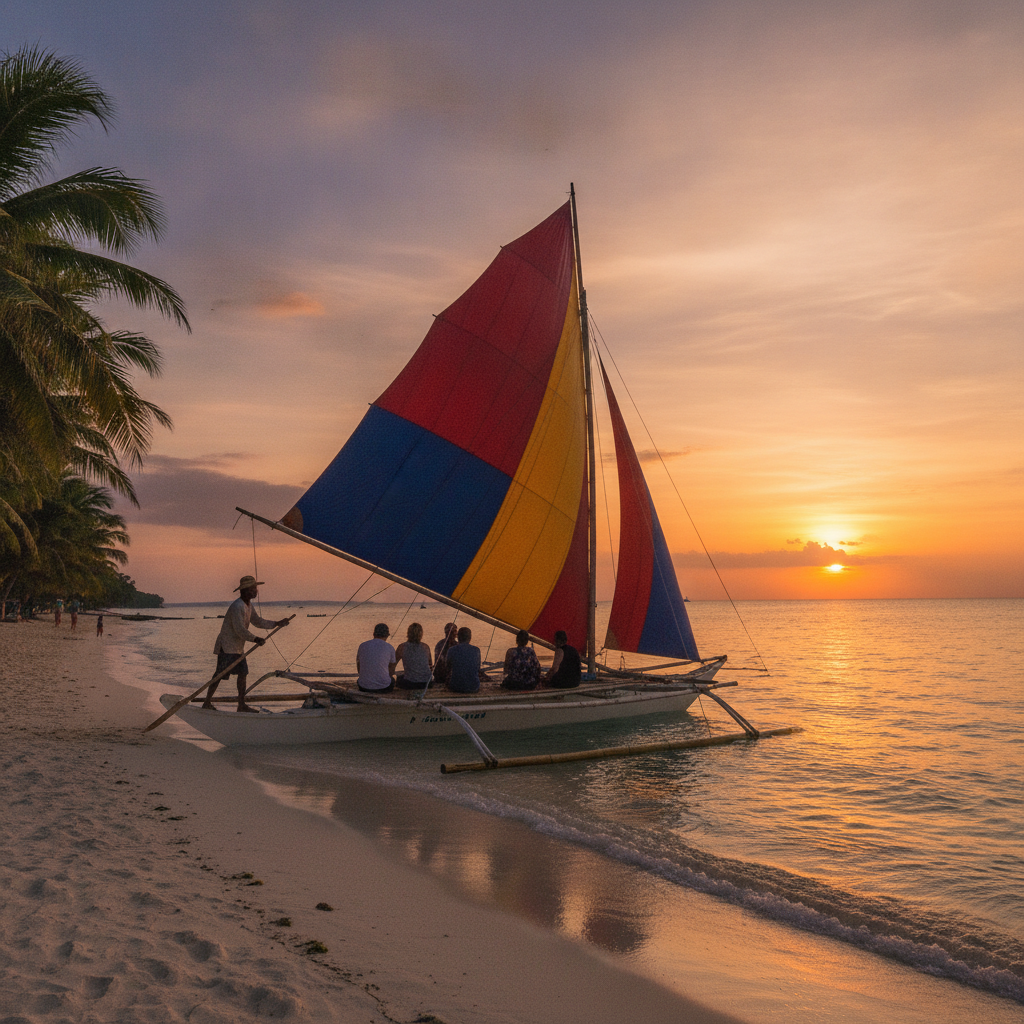
The Boracay tourism calendar is governed entirely by the Philippine monsoon cycle—the most important piece of practical information for planning any Boracay visit. The amihan (northeast monsoon): November–April; the best Boracay season; clear skies, moderate temperatures (28–32°C), consistent northeast trade winds (Beaufort 3–4—perfect for kitesurfing at Bulabog, ideal for paraw sailing at White Beach); seas calm on the White Beach (western) side; the Boracay visitor count peaks in December, January, and late March–April (Holy Week). The habagat (southwest monsoon): June–October; the challenging season; higher rainfall (average 220mm/month versus 40mm in the amihan), stronger winds and rougher seas on the White Beach side (the water becomes unsuitable for swimming in bad weather), reduced visibility for diving; but: Bulabog Beach on the eastern side is actually sheltered from the habagat wind and has calmer seas—and the island has 30–50% fewer visitors, lower accommodation prices, and an entirely different atmosphere. The typhoon risk: Boracay sits in a typhoon-vulnerable zone; the most severe typhoons affecting the island have occurred in October–November (the transition between the habagat and the amihan), and the most destructive typhoon since 1990 was Typhoon Haiyan (November 2013), which caused significant damage to the northern Philippines but passed south of Boracay.
- 3
Cliff Diving & Adventure Beyond the Beach
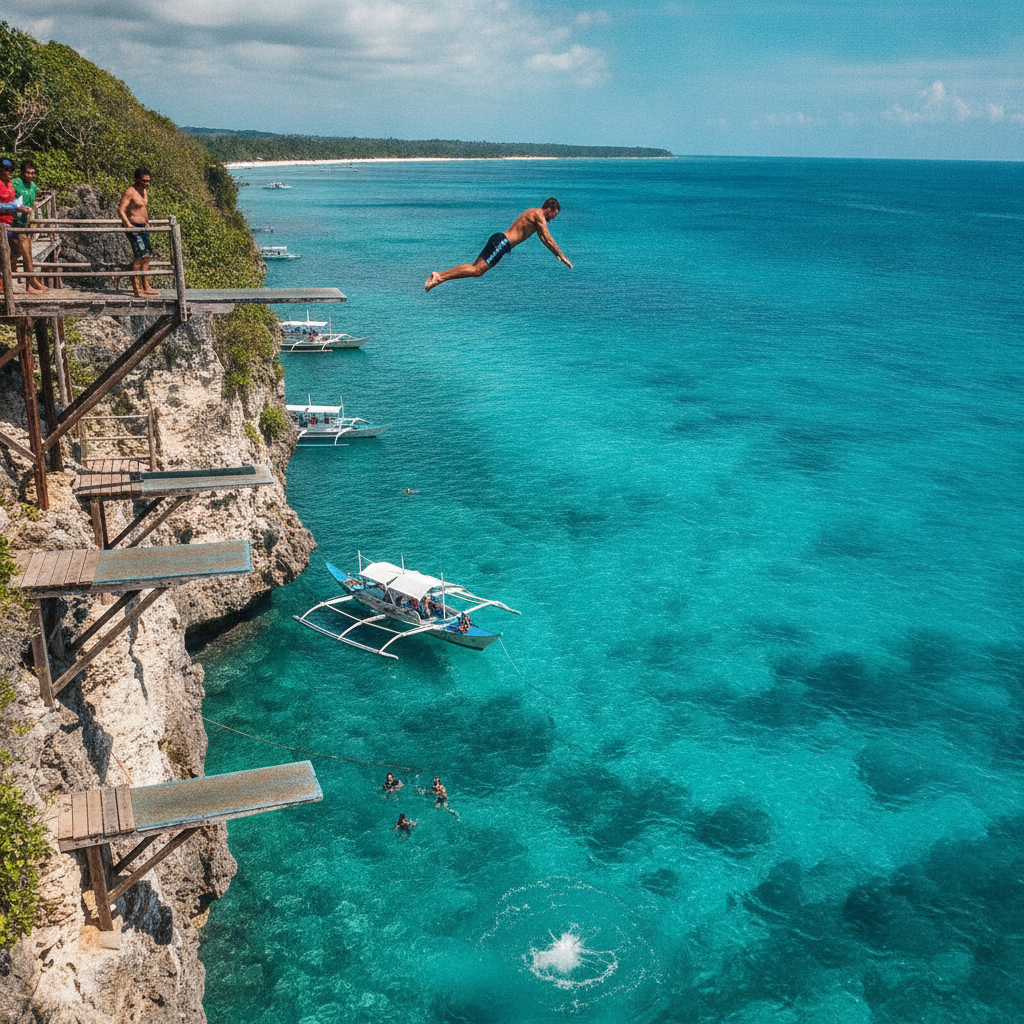
The adventure activities of Boracay extend beyond the water sports of White Beach and Bulabog: cliff jumping at Ariel's Point (a private excursion site 40 minutes by boat north of Boracay, with five cliff jumping platforms at heights from 3 metres to 15 metres, a snorkelling area, kayaks, and an open bar; the most popular full-day excursion from Boracay), spelunking in the Bat Cave (accessible by bangca to the south coast, then a short walk to a limestone cave with a significant bat colony), and hiking the island's interior (the trail from Balabag to Yapak through the island's central ridge—90 minutes—passes through secondary forest and provides the best overview of the island's topography).
- 4
Boracay Wedding Capital – The Romance Industry
Boracay is the most popular beach wedding destination in the Philippines: approximately 3,000 registered beach weddings take place on the island annually, generating a dedicated wedding tourism economy. The beach wedding format: the sunset beach ceremony (an officiant, a floral arch in the shallow water, white plastic chairs on the sand, a cocktail reception at a beachfront restaurant)—available for as little as PHP 15,000 for the most basic package or up to PHP 500,000+ for a fully managed luxury wedding with international caterers and a professional photography team. The wedding vendors: the Discovery Shores Boracay, the Shangri-La, and the Crimson Resort have dedicated wedding coordinators and licensed outdoor ceremony venues; the Station 2 independent wedding vendors (florists, photographers, catering) are less expensive and more flexible. The honeymoon industry: Boracay accounts for approximately 15% of all Philippine honeymoon travel—the island's reputation as a romantic destination is the primary reason couples who have already visited return for a second visit.
- 5
Boracay's Kitesurfing School System – Learning to Fly
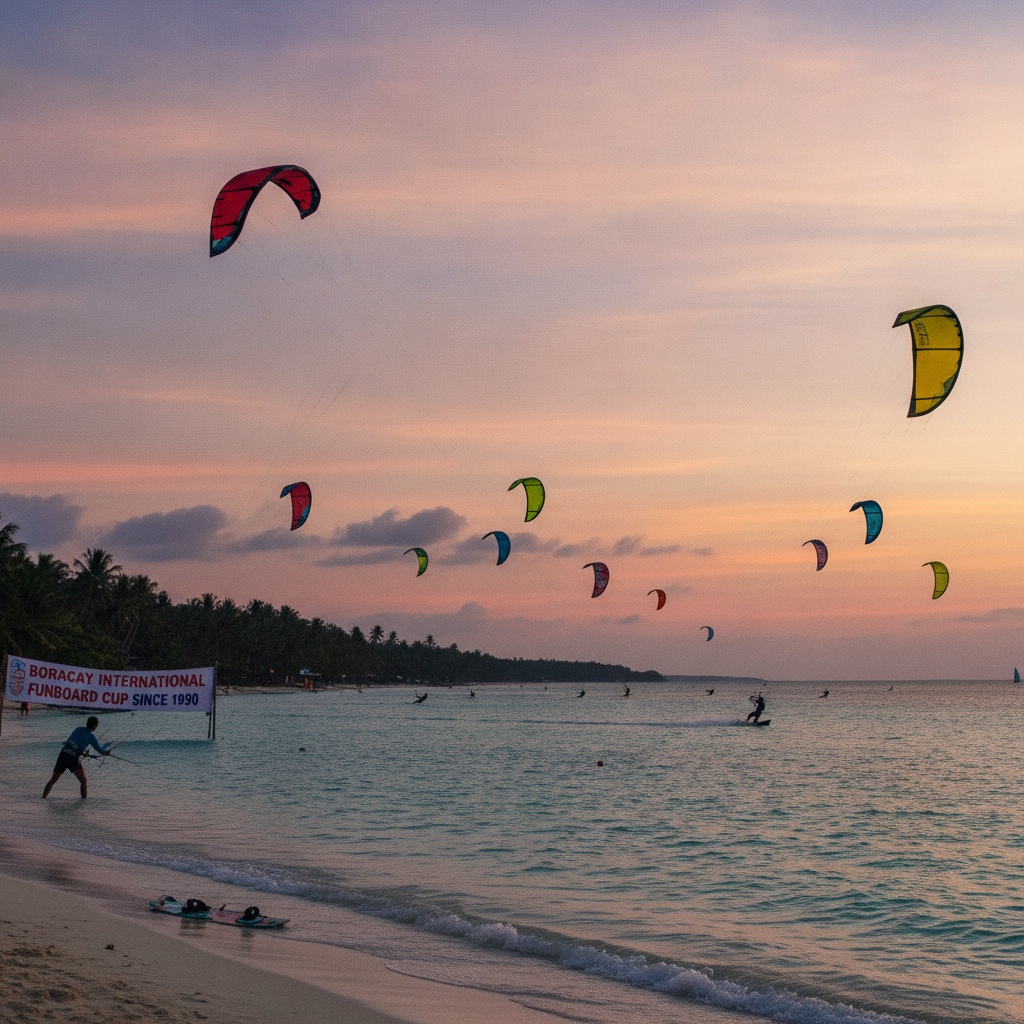
The kitesurfing school ecosystem at Bulabog Beach—the most developed kitesurfing training infrastructure in the Philippines and one of the top 5 kite schools clusters in Southeast Asia—produces approximately 2,000 certified kitesurfers per year. The learning progression: a complete beginner starting from zero can achieve independent riding within 9–12 hours of instruction spread over 3–5 days; the IKO (International Kiteboarding Organisation) certification requires 9 hours of instruction minimum; the Bulabog Beach IKO-affiliated schools (Hangin Kite Center, Freestyle Academy, Habagat Water Sports) charge PHP 5,000–7,000 for the full beginner course. The gear: a full beginner kite setup (kite, board, harness, wetsuit) costs PHP 60,000–120,000 new; the Boracay second-hand gear market (Facebook groups, beach notice boards) is the most active in the Philippines—many people buy gear in Boracay for PHP 30,000–50,000 and sell it when they leave. The Funboard Cup: the International Funboard Cup Boracay (January–February each year—held during peak amihan conditions) has been the most important kiteboarding event in the Philippines since 1990.
- 6
Leaving Boracay – What the Island Taught
The Boracay experience has a specific arc that most visitors recognise only in retrospect: the first day (arrival, disorientation, the first White Beach sunset that exceeds all expectations); the second day (the activities—paraw, water sports, the standard tourist programme); the third day (the rhythm—the best day, when the visitor knows the food stalls they prefer, the beach section that suits them, the timing of the evening light); the fourth day (the decision—extend or leave, a question that Boracay resolves for most visitors in favour of staying longer than planned). What it teaches: Boracay operates at a scale that makes it simultaneously over-visited and livable—the White Beach promenade at 18:00 on a Saturday in peak season is objectively crowded, but the beach itself is large enough to absorb the crowd; the island is sophisticated enough to supply any reasonable comfort, and small enough to traverse on foot. The Boracay verdict: there are more isolated beaches, finer dive sites, more authentic cultural landscapes, and more dramatic natural scenery elsewhere in the Philippines—but there is no other combination of sand quality, tourism infrastructure, activity diversity, and accessibility that matches Boracay's complete package, and the 2018 rehabilitation has—for now—preserved the core asset.
Walk this route with audio
Stories play automatically as you reach each stop — no tapping needed.
More in Boracay
Boracay After Dark: Bioluminescent Plankton at Puka Beach, Firefly Mangroves at Caticlan & the Thresher Sharks of Yapak at Dawn
Boracay: The 4km White Sand Beach Duterte Called a 'Cesspool' Then Closed for 6 Months to Fix
Boracay at Its Best: Environmental Recovery's 40% Coral Improvement, Hilot Coconut-Oil Massage & the Habagat Season Mistake Every Tourist Makes
Boracay's Full Picture: Ati Ancestral Displacement, Carabao Island's Escape Reef & the 6,000/Day Cap That Allows 10,000