Boracay at Its Best: Environmental Recovery's 40% Coral Improvement, Hilot Coconut-Oil Massage & the Habagat Season Mistake Every Tourist Makes
E. coli at 100× safe limits before the 2018 closure falling to within DENR standards within 6 months of the sewage installation—the most cited environmental rehabilitation data point in Southeast Asian coastal management; 40% relative coral cover improvement at Yapak and Friday's Rock between 2017 and 2020; the Ati community's BIATF cultural programme as the most honest way to spend money on the island; Whitehaven Beach's 98% silica versus Boracay's coral composite—different textures, both great, but Boracay is 4 hours from Shanghai and Whitehaven requires 2 planes from anywhere in Asia; the habagat mistake of arriving in September for the beach; and Station 3's high tide that reduces the beach to standing-room-only while the cheap room rate seems a good deal.
- 1
The Boracay Sunset – Science of the South China Sea Horizon
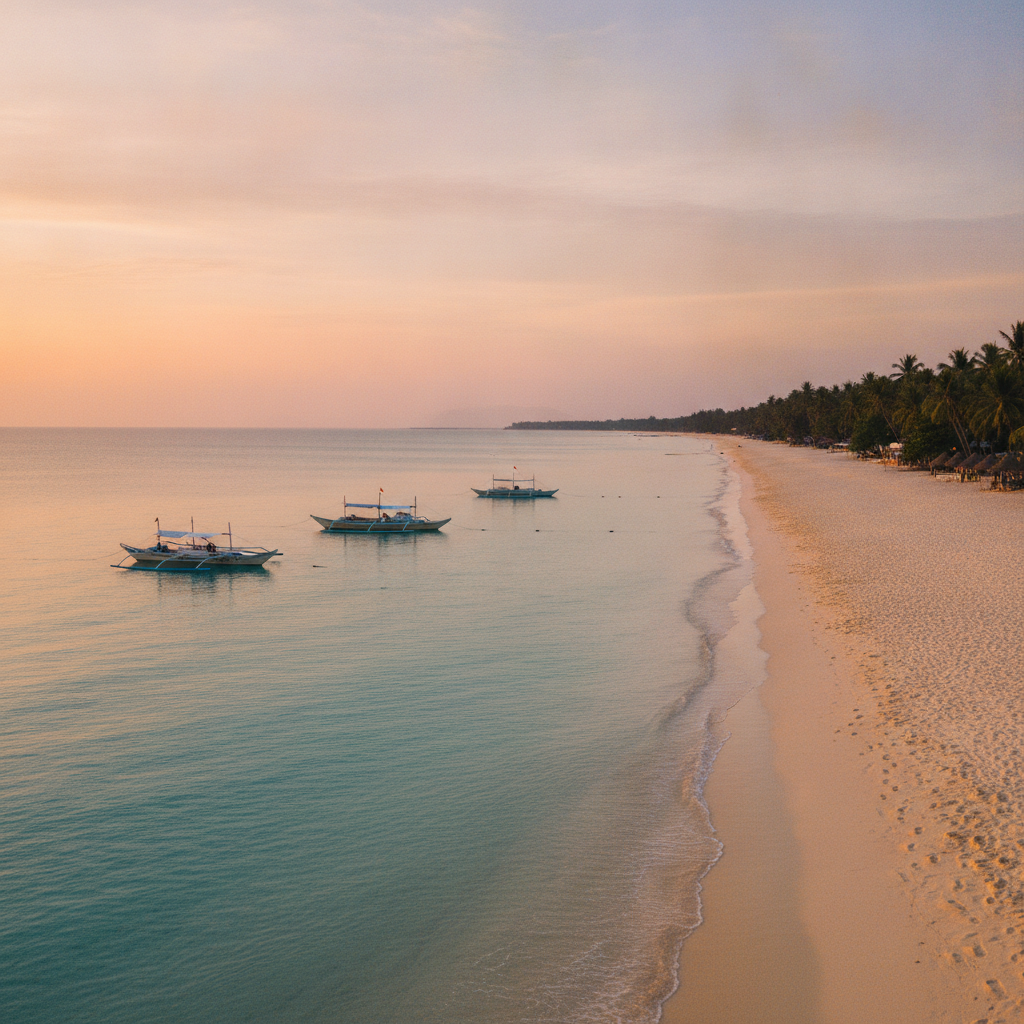
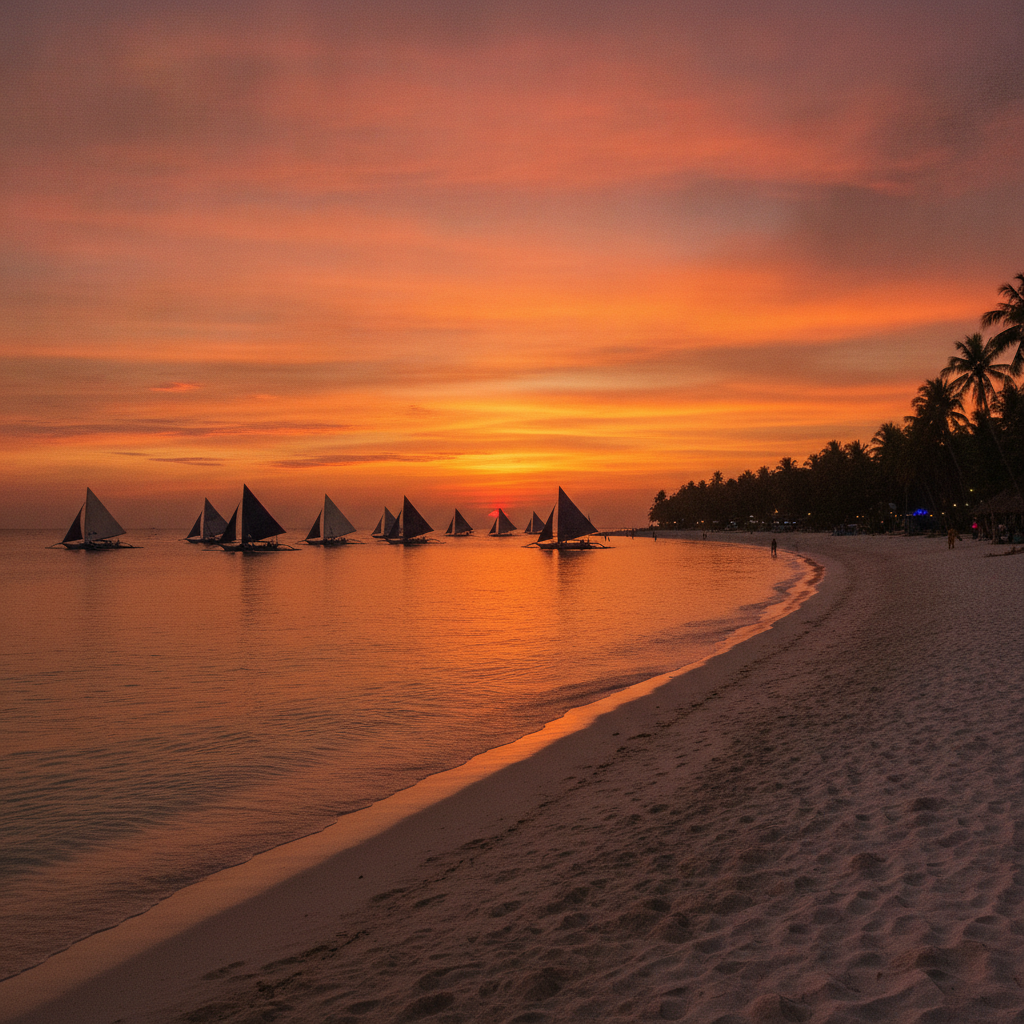
The Boracay sunset—the sun setting over the South China Sea from the White Beach viewing position—is the most consistently spectacular sunset in the Philippines: the combination of the flat western horizon (no islands obstructing the view), the quality of the air over the Sibuyan Sea, and the consistent trade-wind cloud formations that catch the orange light without blocking the sun produces a reliable daily display. The physics: the South China Sea's maritime atmosphere—higher humidity and more suspended particulate than continental or highland air—scatters sunlight toward the longer wavelengths (red and orange) more aggressively than drier atmospheres, intensifying the sunset colour. The viewing timeline: the entire White Beach promenade fills from approximately 17:00 (2 hours before sunset—the paraw rides depart at 17:00); the light quality peaks between 18:00 and 18:30; the 'green flash' (the rare atmospheric optical phenomenon visible when atmospheric conditions are exactly right) has been reported from White Beach approximately 4–6 times per year by reliable observers. The amateur astronomy: the evening sky over Boracay (after the sunset and the first hour of darkness, when the White Beach lights dominate) is best observed from the island's north beaches, away from the artificial light—the Milky Way is visible from Puka Beach on moonless nights.
- 2
Boracay's Environmental Recovery – Mangroves & Reef Monitoring
The environmental recovery of Boracay since the 2018 rehabilitation—measured by water quality testing, coral reef health surveys, and mangrove inventory—provides the most detailed data on the pace of marine ecosystem recovery after severe human impact in Philippine waters. The water quality: the E. coli concentrations that had reached 100× the safe limit before closure fell to within standards within 6 months of the sewage system installation; by 2020, all testing points on White Beach met DENR recreational water quality standards for the first time since monitoring began. The coral reef: the reef monitoring by the Boracay Foundation (a local conservation NGO) found that live coral cover at the key dive sites (Yapak, Friday's Rock, and the Angol Point) increased from an average of 18% in 2017 (the year before closure) to 25% in 2020—a 40% relative improvement in three years. The mangroves: the Boracay mangrove system (the Tong-ud Mangrove, a small remnant mangrove on the island's eastern shore) was surveyed in 2019 as having improved health after the removal of the illegal fishpond structures within the mangrove zone. The monitoring programme: the ongoing quarterly water quality testing, annual reef surveys, and mangrove health assessments—mandated by the BIATF post-rehabilitation monitoring plan—constitute the most comprehensive coastal environmental monitoring programme at any Philippine resort destination.
- 3
Boracay Wellness & Yoga – The Island's Quieter Side
Beyond the party and the beach bars, Boracay has developed a yoga and wellness community over the past decade: the island's sunrise yoga culture (the White Beach dawn—before the beach fills at 09:00—is genuinely peaceful, with the tide at low and the beach 30–40 metres wide) and the island's several spa and wellness operations represent a distinct visitor segment. The Boracay Mandala Spa (in the Station 2 area): a multi-treatment spa with Filipino traditional healing options (the hilot—a traditional Filipino massage using warm coconut oil and banana leaves; distinct from the Balinese or Thai traditions in its use of specific pressure points on the meridians of the body) alongside international treatments. The yoga offerings: the Balai Yoga studio (near Station 2) and several resort yoga programmes operate daily classes (07:00 sunrise yoga on the beach at Station 1—the Discovery Shores resort's beach yoga programme is the most popular). The free dive community: a small freediving training school (affiliated with AIDA Philippines) operates from Boracay—the clarity of the water at Yapak (the north dive site) is suitable for depth training to 30–40 metres.
- 4
The Ati Weaving & Crafts Tradition
The Ati of Boracay and the Panay mainland produce handwoven textiles and crafts that are the most visible surviving element of the indigenous culture in a predominantly tourism-oriented island environment. The Ati craft: the traditional Ati weaving produces the piña (pineapple fibre) and abacá (Manila hemp) baskets, mats, and bags that are sold at the Ati community market in the interior of Boracay—distinct from the mass-market souvenir production of the D'Mall shops. The Ati community encounter: the BIATF-supported Ati Community Cultural Programme (a cultural centre in the interior of the island, accessible by tricycle from Station 2) offers visitors a structured encounter with the Ati community—traditional music performance, weaving demonstration, and the opportunity to purchase directly from the artisans at fair prices. The Panay Ati: on the Panay mainland (accessible by bangca from Caticlan—the same pier used for the Boracay ferry), the Ati communities of the Capiz and Aklan provinces maintain more complete traditional practices, including the traditional Ati dance (the Ati-Atihan—which gave its name to the Kalibo festival that incorporated the Ati dance into a Catholic devotional format).
- 5
Boracay vs. The World – The Great Beach Comparison
Boracay's White Beach is consistently compared to the world's other 'great white sand beaches' in travel media rankings—a comparison that illuminates what makes Boracay specific and what it does not offer. Against the Caribbean: the Maldives' white atolls and the Turks & Caicos' Grace Bay have finer sand (aragonite versus Boracay's silica-coral composite); against Thailand: Boracay's sand is widely acknowledged as superior to Phuket or Koh Samui but comparable to the finest Ko Lanta beaches; against Australia: Whitehaven Beach (Whitsundays—the purest silica sand in the world, 98% silica) has a different, softer texture than Boracay but almost no amenities. The Boracay advantages: the combination of the sand quality, the consistent trade winds (which prevent the stagnant heat of calmer-weather beaches), the depth of the tourism infrastructure (accommodation for every budget within 100 metres of the beach), and the Philippines' proximity to the major East Asian population centres (2 hours from Manila, 4 hours from Hong Kong and Shanghai) gives Boracay an accessibility advantage over more isolated competitors.
- 6
Practical Boracay – Budget, Calendar & Common Mistakes
The common mistakes of first-time Boracay visitors—documented across every Philippine travel blog and systematically confirmed by the experience of regular visitors—provide the most useful practical guidance. Mistake 1: arriving in August–September (peak habagat—southwest monsoon) and expecting the White Beach swimming conditions of the dry season; the habagat brings rough seas, poor visibility, and significantly reduced paraw operation (Bulabog Beach is better in habagat, but the island's overall experience is lower quality). Mistake 2: staying at Station 3 for the cheap rooms without checking how narrow the beach is at high tide (at Station 3, high tide can reduce the beach to 5 metres width—standing-room only). Mistake 3: not booking accommodation in advance for December–April peak season (the 6,000/day cap creates genuine scarcity on busy weekends). Mistake 4: converting money at the Caticlan pier (the worst exchange rate in the Philippines—there are BDO and BPI ATMs in Boracay town and at D'Mall). Mistake 5: bringing a rental scooter onto the island (not permitted—only authorised tricycles and e-trikes operate on the island's roads). The budget: the minimum realistic daily budget in Boracay for a solo traveller (dormitory accommodation, warung food, shared tour) is PHP 2,000–3,000/day (€105–158); mid-range (private room, restaurant meals, one water sports activity) PHP 5,000–8,000/day (€263–421).
Walk this route with audio
Stories play automatically as you reach each stop — no tapping needed.
More in Boracay
Boracay After Dark: Bioluminescent Plankton at Puka Beach, Firefly Mangroves at Caticlan & the Thresher Sharks of Yapak at Dawn
Boracay: The 4km White Sand Beach Duterte Called a 'Cesspool' Then Closed for 6 Months to Fix
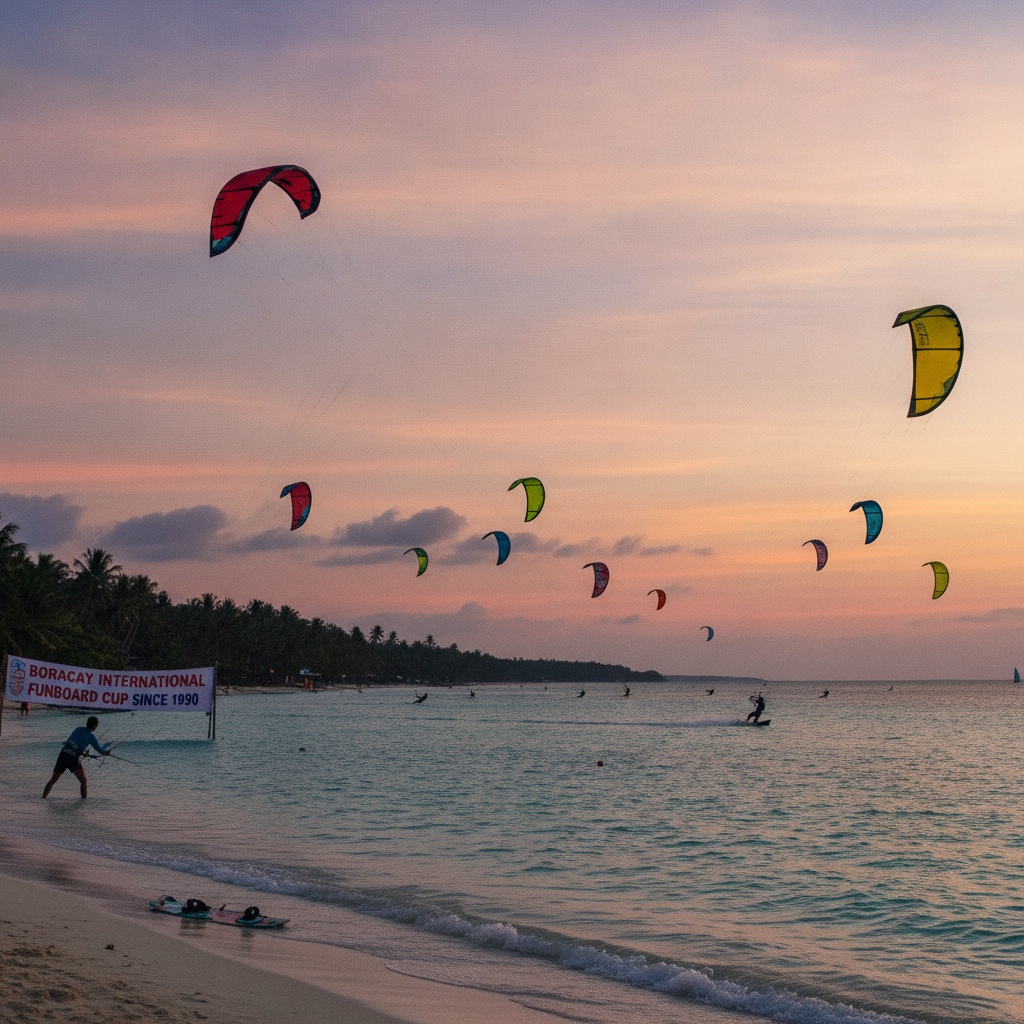
Boracay's Full Picture: Ati Ancestral Displacement, Carabao Island's Escape Reef & the 6,000/Day Cap That Allows 10,000
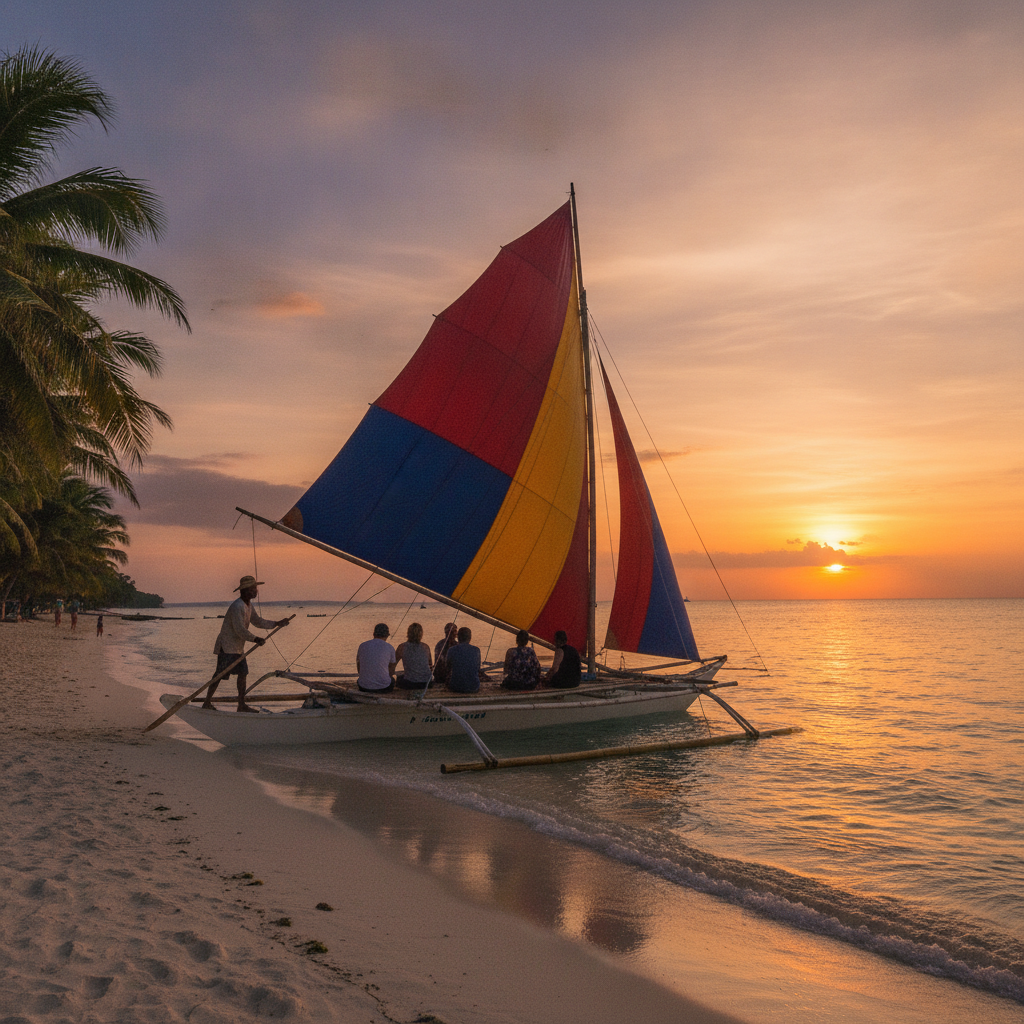
Boracay's Full Arc: 1970s Backpacker Floor-Sleeping to 2 Million Annual Visitors to Duterte's Cesspool Closure—Was the Second Chance Used Well?