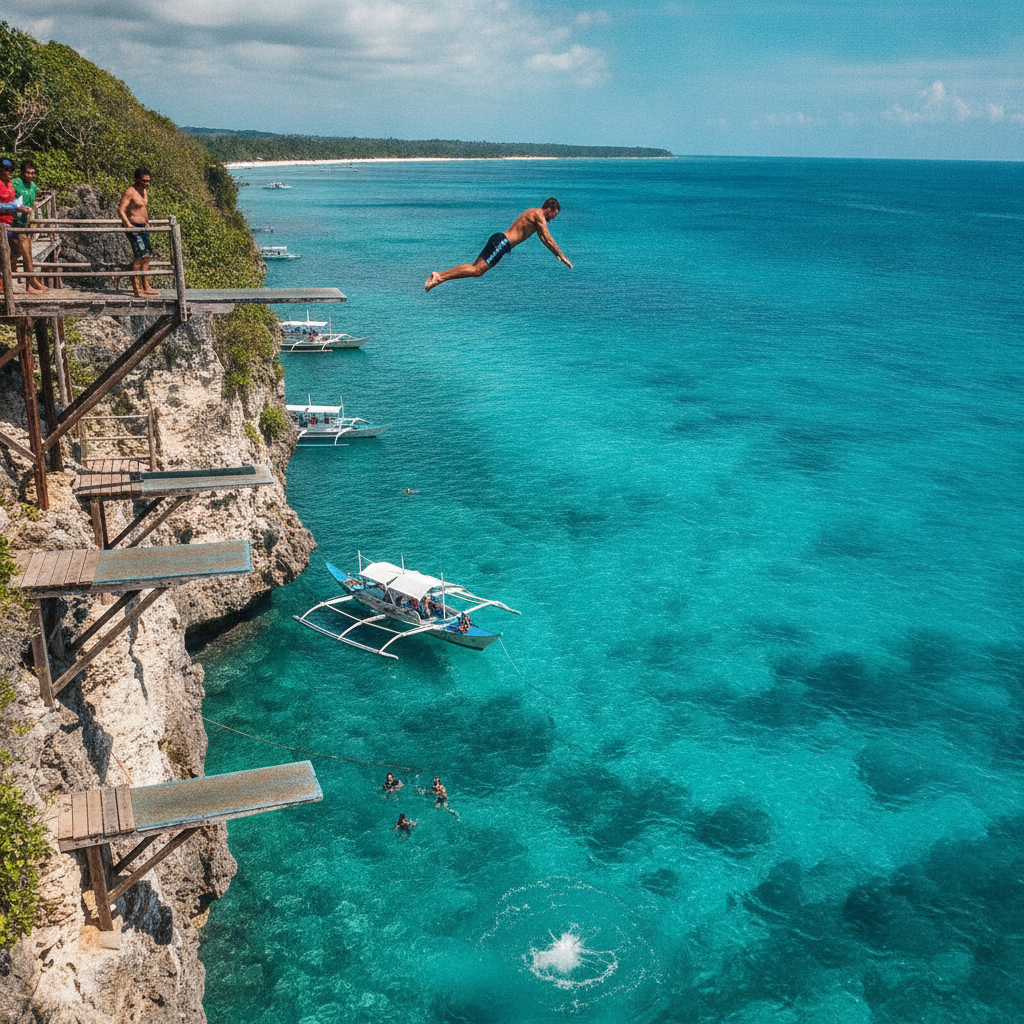
Boracay's Full Arc: 1970s Backpacker Floor-Sleeping to 2 Million Annual Visitors to Duterte's Cesspool Closure—Was the Second Chance Used Well?
From 800 Ati and Visayan fishing families in 1975 to 560 accommodation establishments by 2017—the most compressed tourism development in Southeast Asian history, achieved in 40 years what the Costa del Sol needed 60; the bangca builders of Aklan province reduced from 300 in 1970 to fewer than 40 today as outboard motors replaced the traditional construction knowledge; the expat community's 500–800 permanent residents in the island interior at PHP 20,000/month apartments while tourists pay PHP 8,000/night resorts 200 metres away; isaw intestines on a stick with spiced vinegar as the authentic culinary counterpoint to the mango shake; 2,000 coral fragments transplanted since 2019 as education more than ecological solution; and the honest verdict that Boracay is the Philippines' most complete beach package—not the most pristine, dramatic, or authentic, but the most reliably deliverable.
- 1
Boracay's Fishing Village Origins – From Backpacker Discovery to Mass Tourism
Boracay's transformation from a subsistence fishing village to an international beach resort destination is the most compressed tourism development story in Southeast Asia: in 1980, the island had no paved roads, no electricity, no accommodation beyond the homes of the 800 resident Ati and Visayan fishing families who allowed backpackers to sleep on their floors; by 2017 (the year before closure), the island had 560 accommodation establishments, 1,000+ restaurants, and 2 million annual visitors. The discovery: the first non-Filipino visitors to Boracay were European backpackers traversing the Southeast Asia banana-pancake trail in the 1970s—the island was discovered by the overland trail approximately 10 years before the first published guidebook mention (Lonely Planet Southeast Asia on a Shoestring first included Boracay in the 1980 edition). The development phases: Phase 1 (1975–1985)—backpacker huts and the first electricity generator; Phase 2 (1985–1995)—the first concrete hotels, the airport at Caticlan, the first international tour operators; Phase 3 (1995–2010)—the mass tourism infrastructure, D'Mall, the first 5-star resorts; Phase 4 (2010–2018)—unchecked overdevelopment; Phase 5 (2018–present)—the closure and rehabilitation, the managed recovery. The speed: Boracay achieved in 40 years what took the Costa del Sol 60 years and what Mallorca needed 70 years to produce—the most rapid transformation of a subsistence fishing community into an international mass tourism destination in recorded tourism history.
- 2
The Bangca Boat Culture – Handbuilt Outriggers of the Philippines
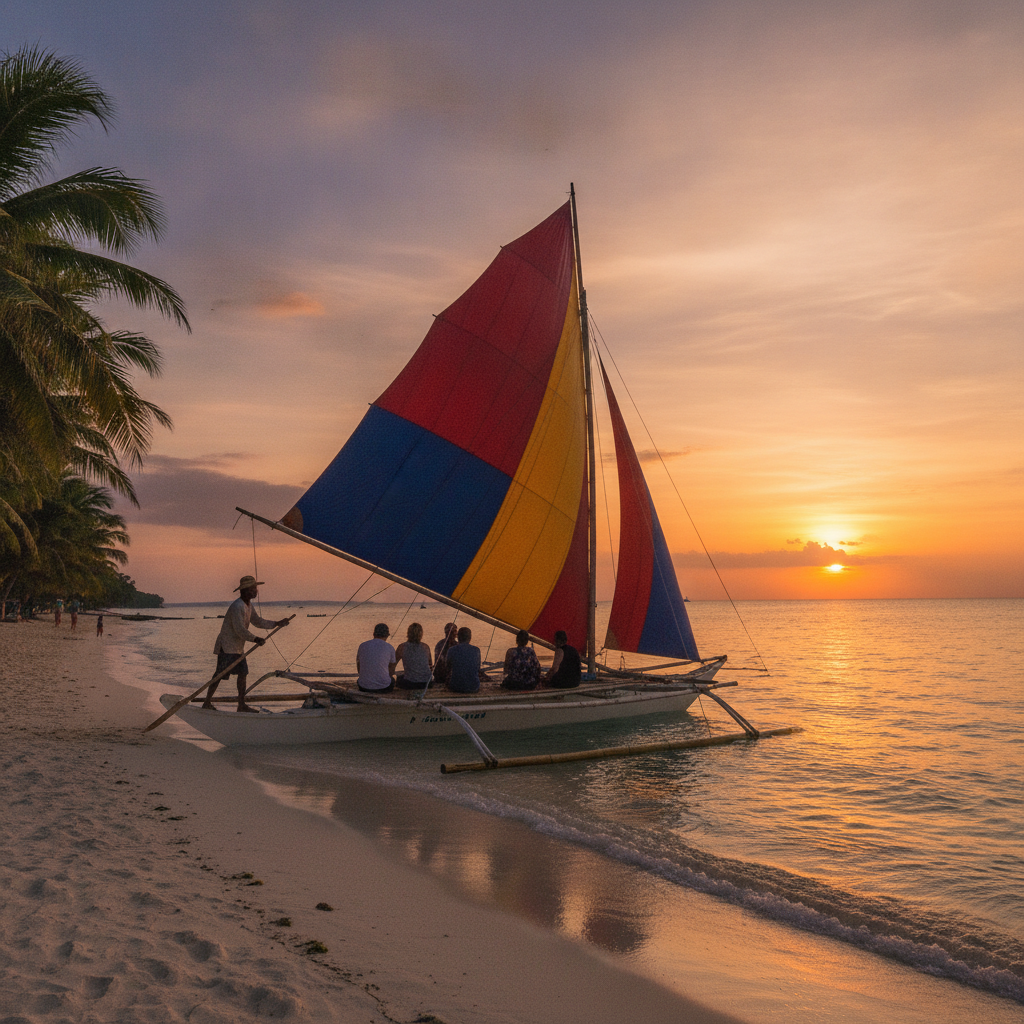
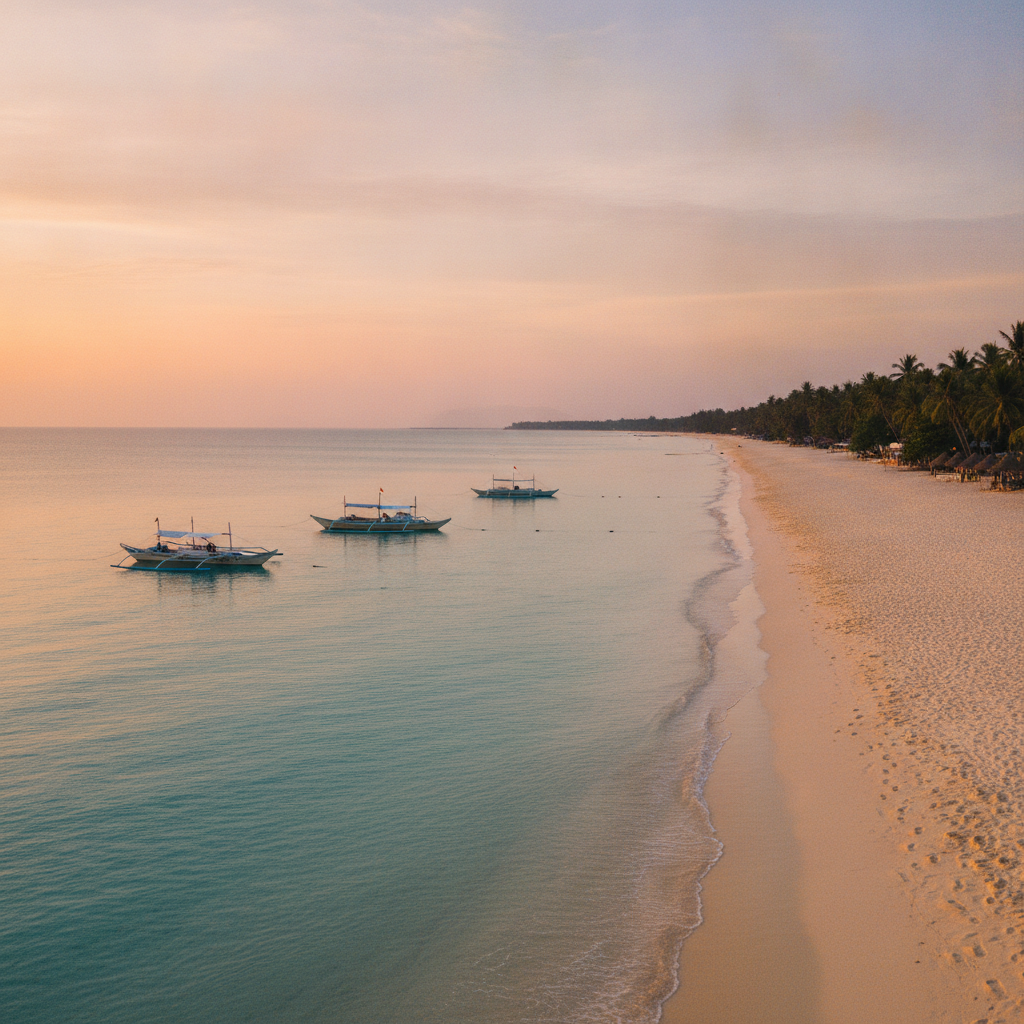
The bangca (outrigger boat—the primary sea transport technology of the Philippine archipelago for at least 3,000 years; from the Austronesian word bangka, related to the Malay perahu and the Polynesian canoe) remains the dominant small vessel of Boracay's inter-island and coastal transport system: the Caticlan–Boracay ferry crossing (the 10-minute crossing operated by a large motorised bangca with a passenger capacity of 20–40), the island-hopping tour bangca (smaller, brightly painted, operated by a single boatman), and the paraw (the traditional double-outrigger sailing bangca that has become the symbol of Boracay). The construction: the traditional bangca is built from locally available hardwoods (dao, lanete) by carpenters in the fishing villages of Aklan and Capiz provinces on the Panay mainland; the outrigger construction (the two balancing ama hulls mounted on bamboo poles extending from the main hull) requires specialist knowledge that has been passed from father to son in the same families for generations. The engine transition: the shift from sail power to outboard motors (now almost universal in commercial bangca) has reduced construction times and expanded the viable range of the boat but has altered the traditional knowledge base—the number of skilled traditional bangca builders in Aklan province has fallen from approximately 300 in 1970 to fewer than 40 today.
- 3
Boracay's Expat & Digital Nomad Community
Boracay has developed a permanent expat community of approximately 500–800 people (reliable figures are difficult to obtain) alongside a rotating digital nomad population that makes the island one of the 10 most popular remote-work bases in Southeast Asia. The expat geography: the expat community lives primarily in the interior of the island (the Station 2 alleys and the areas between White Beach and Bulabog) and in the Bulabog Beach area—away from the most tourist-dense sections of White Beach. The infrastructure: the Boracay internet infrastructure (after the 2018 rehabilitation, PLDT and Globe installed fibre connections across the island) provides download speeds of 50–100 Mbps in most areas—adequate for video conferencing and remote work. The community nodes: the Real Coffee and Tea Café (the most popular expat morning gathering point since 1995), the Bulabog Beach restaurants (more expat-oriented than the White Beach tourist strip), and the Station 1 residential buildings (where longer-term expats typically rent monthly apartments at PHP 15,000–30,000/month—a fraction of the comparable cost in Manila or Singapore). The co-working: the Post Cowork space and several café-based working environments provide alternatives to working from the resort room.
- 4
Philippine Street Food on Boracay – Isaw, Fishball & Halo-Halo
The street food culture of Boracay—which survived the 2018 rehabilitation in attenuated form (the beach promenade vendors were relocated to the D'Mall area and the designated vendor zones along the promenade)—provides the most affordable and culturally authentic eating experience on the island. The core Boracay street food: isaw (grilled chicken or pork intestines on a bamboo skewer, served with a spiced vinegar dipping sauce—the most controversial Philippine street food for international visitors, universally recommended by Filipino travellers); fishball (deep-fried fish paste spheres served on a stick with sweet sauce or spiced vinegar—the most widespread Philippine street food, available from every beach vendor); balut (partially developed duck embryo boiled and eaten from the shell—the most extreme Philippine street food, traditionally consumed as a late-night snack after drinking). The halo-halo: the Philippine shaved ice dessert (halo-halo—Tagalog for 'mix-mix': a glass of shaved ice served with sweetened beans, jackfruit, coconut jelly, ube purple yam ice cream, and evaporated milk poured over the top) is Boracay's most popular dessert and the most instagrammed food item on the island after the mango shake.
- 5
Conservation Diving – Coral Restoration at Boracay Reefs
The coral restoration programme at Boracay—operated by the Boracay Foundation in partnership with the local dive industry (approximately 12 PADI-registered dive shops on the island)—is one of the few active coral reef restoration projects at a Philippine mass-tourism destination. The programme: the Boracay coral nursery (located at Friday's Rock dive site, established 2019) grows coral fragments on underwater nursery trees at 5–8 metres depth, harvested from surviving healthy colonies, and transplants the grown fragments to degraded reef sections. The diver involvement: conservation dives (offered by several Boracay dive shops at PHP 2,000–3,500 per person) take participating divers to the nursery to assist with fragment mounting, reef cleaning, and monitoring data collection—the most substantive conservation activity available to recreational divers on the island. The scale: the restoration programme has transplanted approximately 2,000 coral fragments since 2019—a scale that addresses a few square metres of reef rather than the hectares that were damaged by pre-closure sewage; the programme's value is as much educational (making tourists and the dive industry stakeholders in reef health) as ecological.
- 6
The Boracay Verdict – Is the Most Famous Beach Worth the Hype?
The Boracay verdict—the question that every travel writer who visits the island is eventually forced to answer—requires distinguishing between the objective quality of the beach and the subjective experience of the tourism product. The objective: White Beach is among the top 10 beaches in the world by measurable criteria—sand particle size, whiteness (silica content), length (4 km), consistency (the same quality along the full length), sea temperature (28–30°C year-round), and accessibility (2 hours from a major international hub). The subjective: the Boracay experience depends entirely on when you go, where you stay, and what you want from a beach destination. Peak season (Christmas–New Year, Holy Week): the island is crowded, expensive, and the 6,000/day visitor cap is regularly exceeded—the beach is still beautiful but the margins are narrow. Shoulder season (November–mid-December, late January–March): the island is at its best—busy but manageable, the food is fresh, the sunsets are clear, the trade winds are ideal. The honest comparison: Boracay is not the Philippines' most pristine beach (Palawan), most spectacular diving (Tubbataha), most dramatic landscape (Batanes), or most authentic culture (Batad rice terraces)—it is the most complete beach destination in the archipelago, the one that delivers the full package most reliably, and the one that the 2018 rehabilitation gave a second chance to get right.
Walk this route with audio
Stories play automatically as you reach each stop — no tapping needed.
More in Boracay
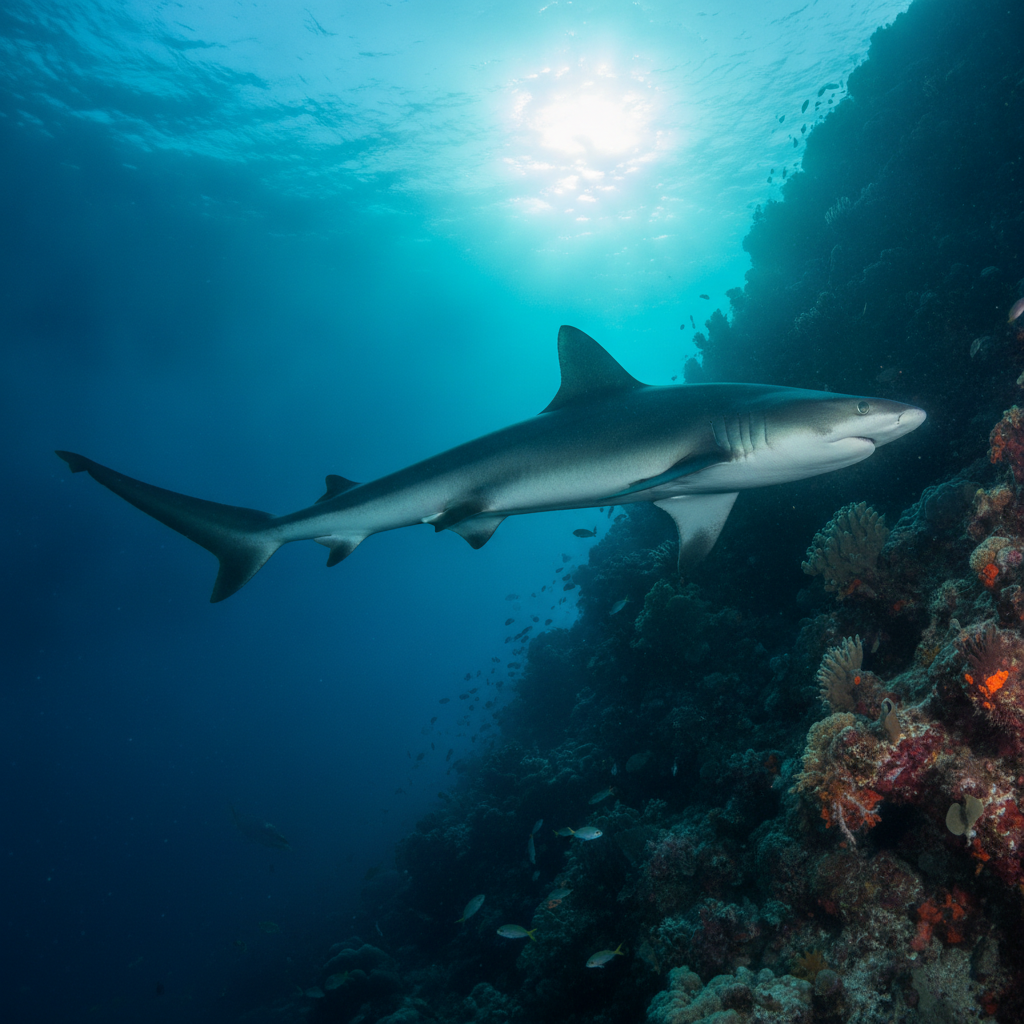
Boracay After Dark: Bioluminescent Plankton at Puka Beach, Firefly Mangroves at Caticlan & the Thresher Sharks of Yapak at Dawn
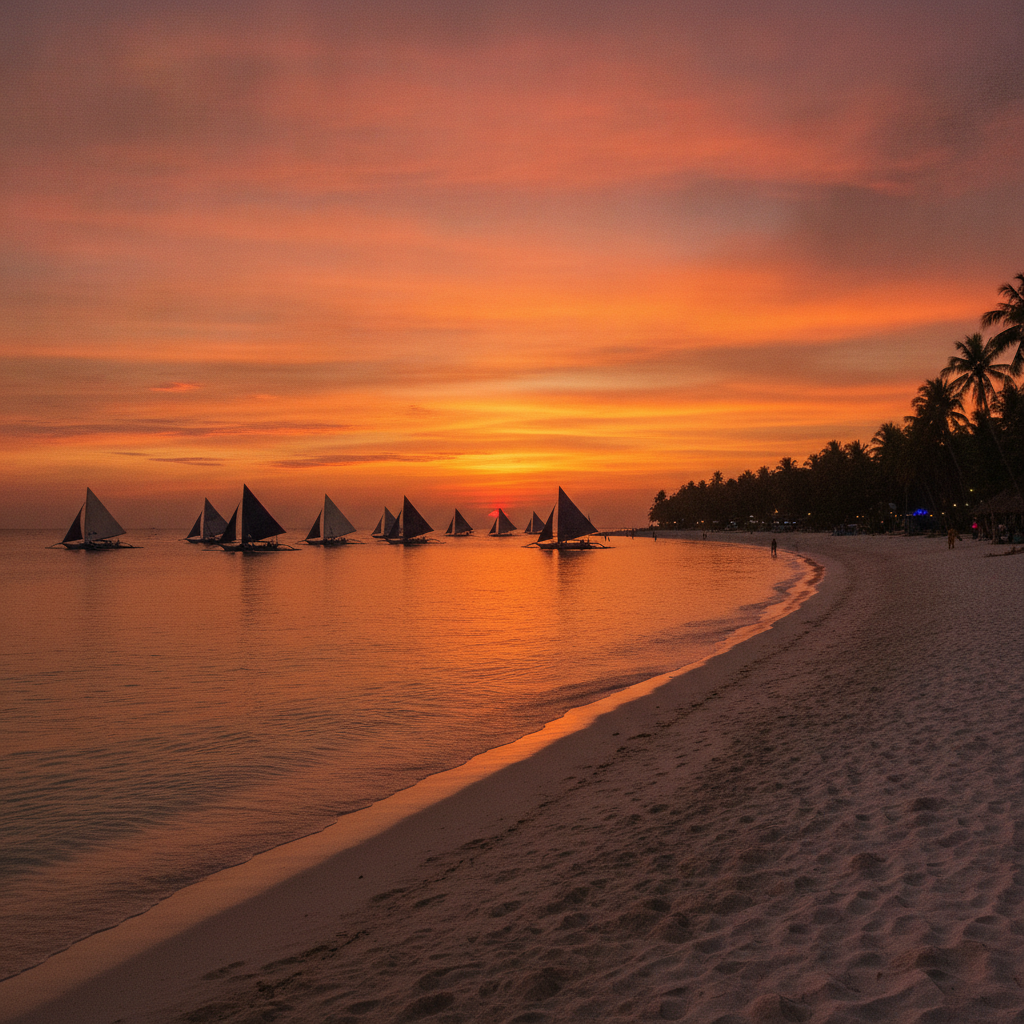
Boracay: The 4km White Sand Beach Duterte Called a 'Cesspool' Then Closed for 6 Months to Fix
Boracay at Its Best: Environmental Recovery's 40% Coral Improvement, Hilot Coconut-Oil Massage & the Habagat Season Mistake Every Tourist Makes
Boracay's Full Picture: Ati Ancestral Displacement, Carabao Island's Escape Reef & the 6,000/Day Cap That Allows 10,000