Basilica di San Luca, the World's Longest Portico & Bologna's Hills
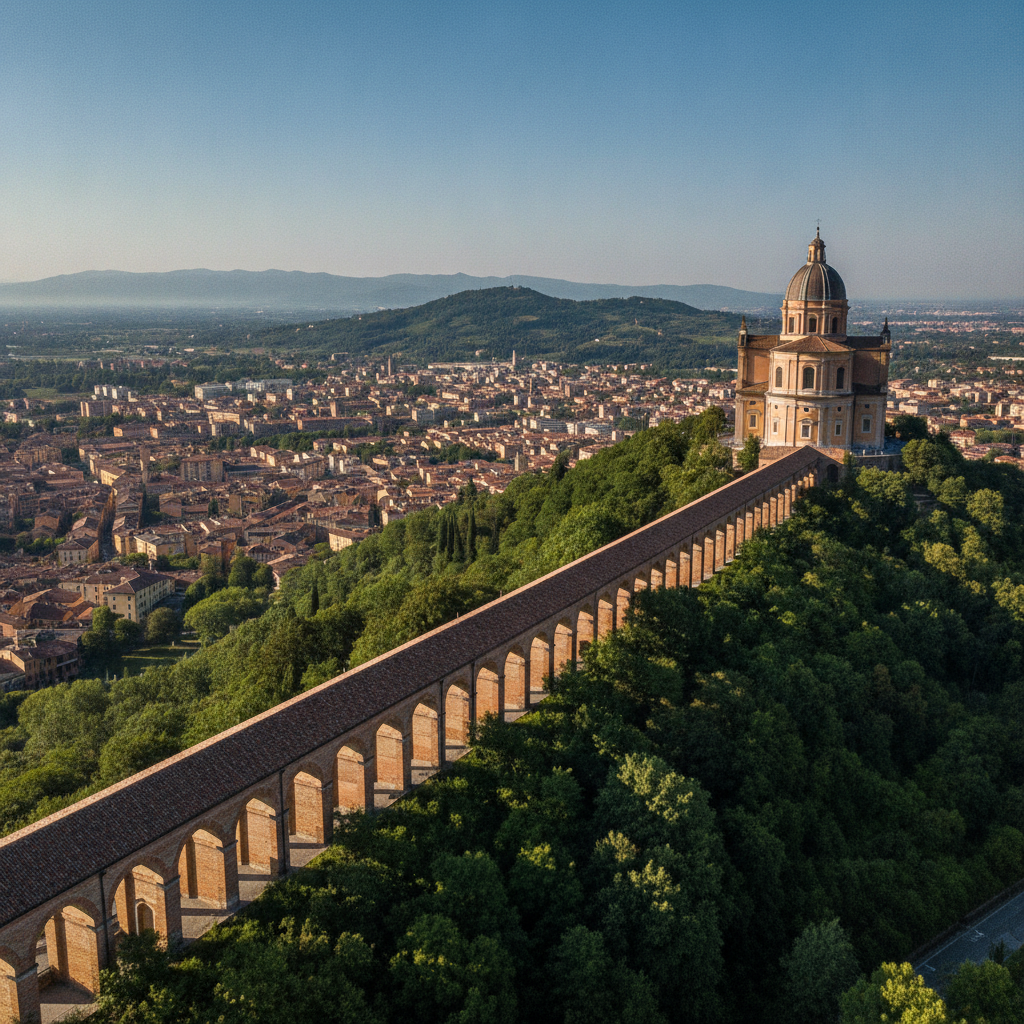
The Portico di San Luca (the 3.796 km covered walkway with 666 arches — the longest portico in the world — ascending from the Porta Saragozza in the Bologna historic centre to the Basilica di Madonna di San Luca on the Colle della Guardia above the city) is the most extraordinary architectural pilgrimage route in Italy and the supreme expression of the Bologna portico tradition, the tradition that earned the city's 62 km of porticoes the status of UNESCO World Heritage Site in 2021.
- 1
Porta Saragozza — The Start of the World's Longest Portico
The Porta Saragozza (the 'Saragozza Gate' — the medieval city gate in the southwestern sector of the Bologna historic centre walls, the starting point of the Portico di San Luca — the world's longest continuous portico (the 3.796 km portico that begins at the Porta Saragozza and ascends the Colle della Guardia to the Basilica di San Luca)): the gate (the Porta Saragozza — the medieval city gate rebuilt in the 14th-16th centuries as part of the second ring of Bologna city walls (the 'mura dei viali' — the walls of the avenues, the second and final ring of medieval defensive walls built in 1370-1398 to enclose the expanded city): the Arco del Meloncello (the 'Arch of the Meloncello' — the triumphal arch at the start of the hillside section of the Portico di San Luca, built in 1721 to the design of Carlo Francesco Dotti (1670-1759), the architect who also designed the Basilica di San Luca: the arch that marks the transition from the flat urban section of the portico (the portico running through the urban streets from the Porta Saragozza to the Arco del Meloncello, approximately 500 metres) to the hillside section (the portico that climbs the Colle della Guardia from the Arco del Meloncello to the basilica, approximately 3.3 km): the Portico di San Luca statistics (the world's longest continuous portico — 3.796 km of total length, 666 arches (the 'satanic' number of arches built as an act of penitence in the medieval religious tradition), the portico built over the period 1674-1793 (the funding provided by the devotion of the Bologna citizens, each arch funded by a private donation from the family or the guild or the confraternity that wished to be associated with the sacred route)).
- 2
The Climb — 666 Arches and the Via Crucis
The walk through the Portico di San Luca (the 'camminata' — the walk through the world's longest portico from the Porta Saragozza to the Basilica di San Luca, the traditional Bolognese Sunday walk and the pilgrim route that the Bologna faithful have made since the 12th century): the experience (the experience of walking through the Portico di San Luca — the 3.796 km walk entirely under cover (the portico providing the shelter from the rain in the winter and the shade from the sun in the summer, the walk practicable in all weather conditions): the Via Crucis (the 'Via Crucis' (the 'Way of the Cross') installed along the Portico di San Luca — the 15 chapels ('edicole votive') installed within the niches of the portico arches at regular intervals along the hillside climb, each chapel containing the painted or sculpted depiction of one of the 15 Mysteries of the Rosary (the 'Misteri del Rosario' — the sequence of meditations on the life of Christ and the Virgin Mary that the Catholic devotion meditates on while reciting the Rosary prayer): the views (the views from the hillside section of the Portico di San Luca — the glimpses of the Bologna plain visible between the arches of the portico as the climb progresses, the plain of the Po River with the city of Bologna spreading from the base of the Apennine foothills to the horizon): the Bolognese Sunday walk (the traditional Bolognese Sunday walk through the Portico di San Luca — the walk made by generations of Bologna families from the historic centre to the basilica and back, the walk of approximately 2 hours at a leisurely pace (3.796 km up + 3.796 km down = 7.6 km total)).
- 3
Basilica di Madonna di San Luca — The Oval Baroque Sanctuary
The Basilica di Madonna di San Luca (the 'Basilica of the Madonna of San Luca' — the sanctuary church on the summit of the Colle della Guardia, 289 metres above sea level and 5 km southwest of the Bologna historic centre, the destination of the Portico di San Luca pilgrimage): the history (the Basilica di San Luca — the sanctuary dedicated to the image of the 'Madonna di San Luca' (the icon of the Madonna and Child attributed by the Bologna tradition to the 12th century (the icon reputedly brought from the East — from Constantinople — by a Greek pilgrim in 1160 and subsequently kept in the small Romanesque church on the Colle della Guardia that was replaced by the current Baroque basilica)): the building (the Basilica di San Luca — the oval Baroque basilica built 1723-1757 to the design of the Bologna architect Carlo Francesco Dotti (1670-1759): the oval plan (the oval plan of the basilica — 47 metres × 37 metres of internal dimensions, the oval plan chosen to accommodate the natural contour of the hilltop site and to provide the maximum visual drama when seen from the Bologna plain below): the dome (the 'cupola ovale' — the oval dome of the basilica, the most distinctive element of the San Luca skyline: the drum (the 16-window drum supporting the oval dome), the dome (the dome 42 metres above the nave floor), and the lantern (the lantern above the dome), the total height of the basilica from the base to the tip of the cross on the lantern: 43 metres): the icon (the 'Madonna di San Luca' icon — the icon of the Madonna and Child kept in the basilica and displayed above the high altar: the Byzantine icon (the tempera on panel, approximately 58 × 43 cm) of the 12th-13th century that is the most revered sacred image in Bologna and the object of the annual Marian procession of Bologna ('la processione della Madonna di San Luca') when the icon is carried in procession from the basilica down the Portico to the Bologna Cathedral each May).
- 4
Panoramic Views & the Bologna Plain from Colle della Guardia
The views from the Colle della Guardia (the panoramic views from the hilltop of the Colle della Guardia around the Basilica di San Luca — the most comprehensive panoramic view of the Bologna plain and the Apennine foothills available within easy reach of the Bologna historic centre): the northward view (the view northward from the Colle della Guardia — the view of the Po Plain ('Pianura Padana' — the 'Padanian Plain', the vast flat plain of the Po River basin that stretches from the base of the Apennines and the Alps to the Adriatic Sea): the plain (the Po Plain visible from the Colle della Guardia — the flat, intensively cultivated agricultural landscape of the Emilia-Romagna region: the fields of wheat ('grano'), maize ('granoturco'), soy ('soia'), and the 'erba medica' (the alfalfa) of the Emilian agricultural tradition, the rows of poplars ('pioppi') along the field boundaries and the drainage channels ('canali di bonifica'), and the farmhouses ('casali') and the rural villages visible across the plain): the city of Bologna (the city of Bologna visible from the Colle della Guardia — the Bologna historic centre visible in the middle ground (the red brick buildings, the towers of the due Torri and the churches, and the curve of the medieval walls), the modern suburbs of Bologna spreading from the historic centre across the plain, and the motorways and the railway lines converging on Bologna from all directions): the southward view (the view southward from the Colle della Guardia — the view of the Apennine foothills rising behind the basilica to the south: the wooded hills of the Appennino Bolognese ('il Monte Sole' — the Monte Sole Resistance Park, the site of the Marzabotto massacre of September-October 1944 in which the German SS Division 'Reichsführer-SS' killed 770 civilians in retaliation for the partisan activity in the area, the worst Nazi massacre in Western Europe)).
- 5
Colli Bolognesi Wine & the Apennine Foothills
The 'Colli Bolognesi' (the 'Bologna Hills' — the Apennine foothills immediately south of Bologna, the wine-producing area surrounding Bologna that produces the wines of the 'Colli Bolognesi DOC' — the Denominazione di Origine Controllata wine region established in 1975 covering the municipalities on the slopes of the Apennine foothills south of Bologna): the wines (the wines of the Colli Bolognesi DOC — the wine region producing the wines from the native Emilian grape varieties and the international grape varieties planted in the Apennine foothills: the 'Pignoletto' (the indigenous white grape of the Bologna hills — the 'Grechetto Gentile' grape locally known as 'Pignoletto', producing the fresh, aromatic, and slightly sparkling ('frizzante') white wine that is the most characteristic white wine of the Bologna table: the Pignoletto served with the mortadella, the prosciutto, and the soft cheeses of the Bologna antipasto tradition): the 'Barbera' and the 'Merlot' (the red wines of the Colli Bolognesi — the Barbera (the Piedmontese red grape that has been cultivated in the Bologna hills since the 19th century) and the Merlot (the Bordeaux variety that has been the most successful international grape in the Colli Bolognesi): the 'Cabernet Sauvignon' (the Cabernet Sauvignon of the Colli Bolognesi — the international variety that has produced some of the most critically acclaimed wines of the Bologna hills, the Cabernet performing particularly well on the well-drained clay-limestone soils of the south-facing slopes of the Apennine foothills).
- 6
Bologna Jazz Festival & the City's Cultural Life
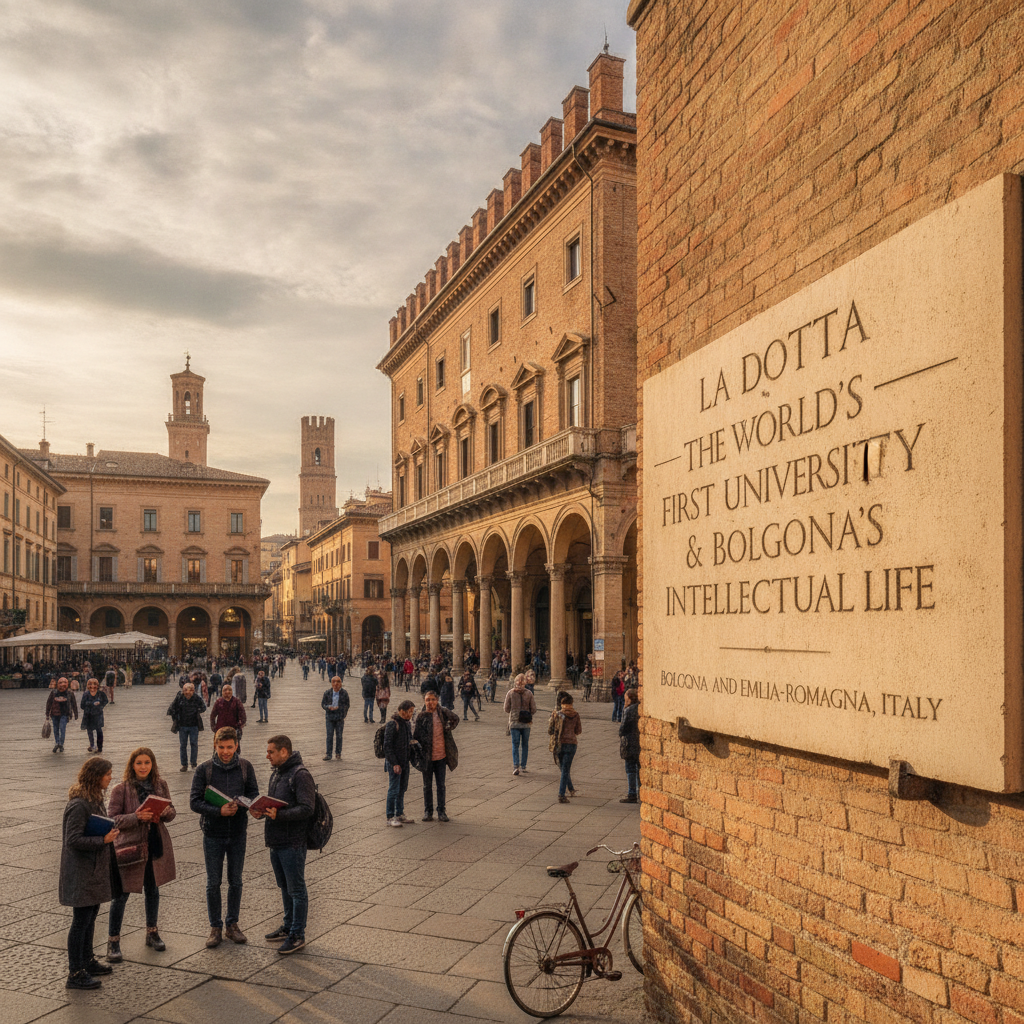
The cultural life of Bologna (the 'vita culturale bolognese' — the cultural life of 'La Dotta' (the 'Learned One' — the third nickname of Bologna, after 'La Rossa' and 'La Grassa', referring to the tradition of learning embodied by the University of Bologna, founded in 1088 and the oldest university in the Western world): the Bologna Jazz Festival (the 'Bologna Jazz Festival' — the most important jazz festival in Italy, held annually in November in the venues of the Bologna historic centre (the Teatro Manzoni, the Palazzo Re Enzo, and the jazz clubs of the Quadrilatero neighbourhood): the Bologna Cineteca (the 'Cineteca di Bologna' — the Bologna Film Archive, the most important film archive in Italy and one of the most important in the world: the archive with the collection of over 30,000 films and 250,000 documents, the archive that is the world leader in the restoration of the silent cinema films (the Bologna Cineteca has restored the films of Buster Keaton, Harold Lloyd, Charlie Chaplin, and D.W. Griffith, the restorations presented at the annual 'Il Cinema Ritrovato' festival held in Bologna every summer): the Piazzola sul Sangue (the 'Piazzola sul Sangue' — the outdoor flea market in the Piazza 8 Agosto in Bologna, held every Friday and Saturday morning, the most popular outdoor market in Bologna and one of the oldest flea markets in Italy): the Bologna Book Fair (the 'Fiera del Libro per Ragazzi di Bologna' — the 'Bologna Children's Book Fair', the most important international children's book publishing fair in the world, held annually in April in the Bologna Exhibition Centre: the fair that brings together the publishers, the authors, the illustrators, and the agents from over 70 countries for the annual exchange of the children's book publishing rights.
Walk this route with audio
Stories play automatically as you reach each stop — no tapping needed.
More in bologna
Santo Stefano Basilica, Medieval Palazzi & Bologna After Dark
Parma Day Trip — Prosciutto, Duomo & Verdi's Homeland
Via dell'Indipendenza, Shopping & Bologna's Artisan Culture
Ravenna Mosaics Day Trip — UNESCO Byzantine Art Capital
Bologna's Porticoes, Medieval Towers & UNESCO Historic Centre