Tagliatelle al Ragù, Mortadella & Bologna as the Food Capital of Italy
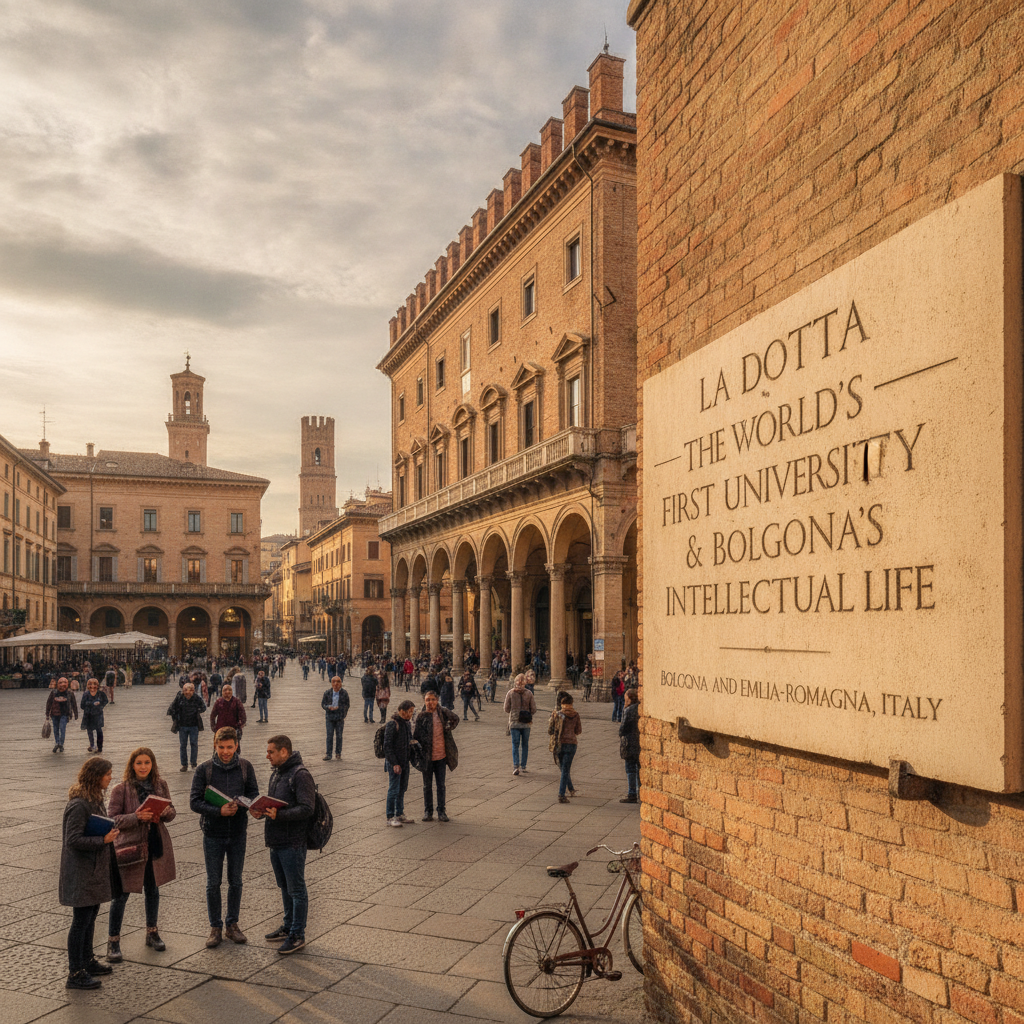
Bologna is 'La Grassa' (the 'Fat One' — the third of the three nicknames of Bologna after 'La Rossa' and 'La Dotta': the 'Fat One' is the most affectionate of the three, referring to the extraordinary richness of the Bolognese food tradition, the tradition of the tagliatelle al ragù, the tortellini, the mortadella, and the Parmigiano-Reggiano that makes Bologna the unchallenged gastronomic capital of Italy) — the city that the Italians themselves acknowledge as the best place to eat in the most food-obsessed nation in the world.
- 1
Tagliatelle al Ragù — The Most Misrepresented Dish in the World
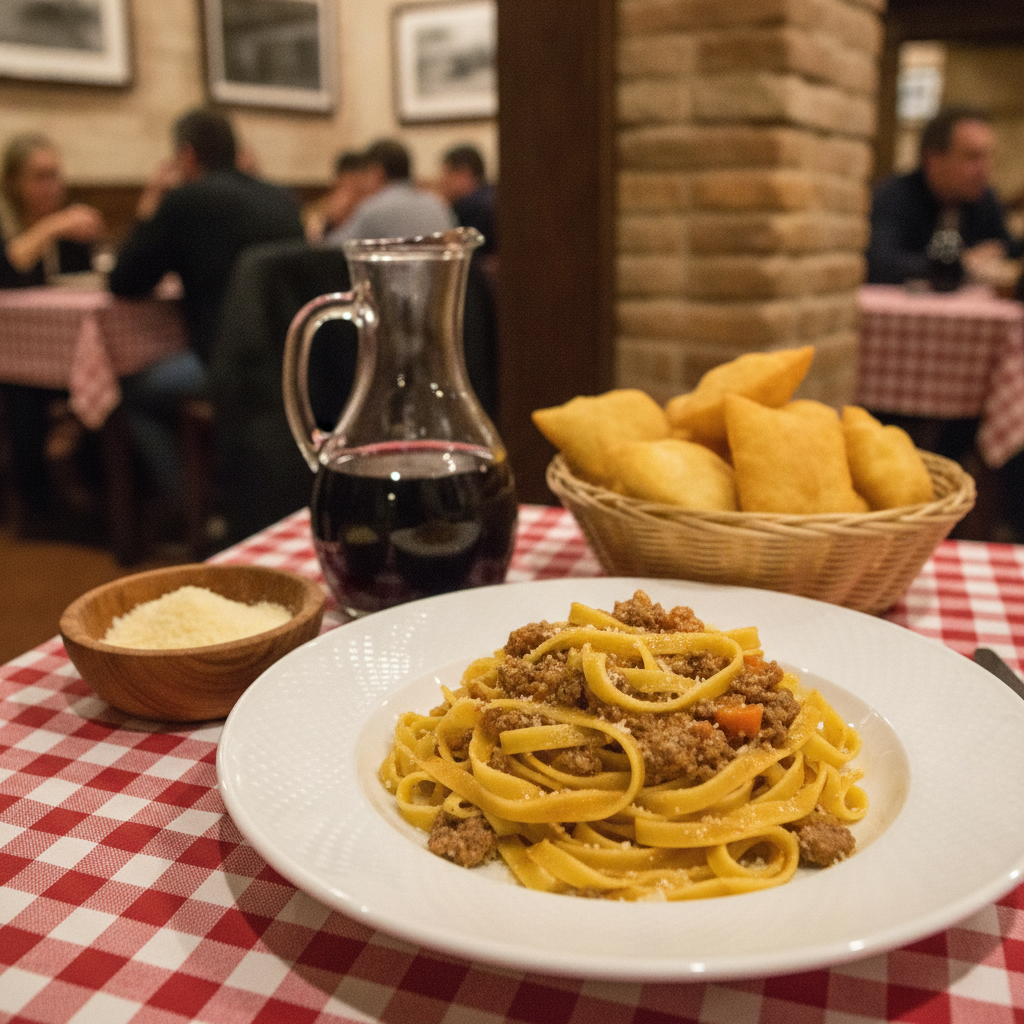
The 'tagliatelle al ragù alla bolognese' (the 'tagliatelle with Bolognese meat sauce' — the most internationally famous dish of the Bologna cuisine and simultaneously the most systematically misrepresented dish in the world (the 'spaghetti bolognese' of the international Italian restaurant tradition bears little resemblance to the authentic dish)): the authentic recipe (the authentic tagliatelle al ragù alla bolognese — the recipe registered at the Bologna Chamber of Commerce on October 17, 1972 by the Italian Academy of Cuisine ('Accademia Italiana della Cucina') in an attempt to codify and protect the authentic recipe from the international distortions: the tagliatelle (the pasta — the fresh egg pasta ('pasta fresca all'uovo') made from the soft wheat flour ('00') and the fresh eggs, rolled and cut into the ribbon of exactly 8mm width (the width specified as 1/12,270th of the height of the Bologna Asinelli Tower — the only pasta dimension specified in relation to a civic monument)): the ragù (the Bolognese ragù — the meat sauce: the ingredients of the authentic ragù: the 'soffritto' (the sauté base of the diced onion, carrot, and celery cooked slowly in the butter and the extra-virgin olive oil), the minced beef (the beef from the chuck or the neck of the Emilian breed of cattle), the pancetta (the cured pork belly), the white wine (the Trebbiano or the Albana di Romagna), the whole milk (the milk added to the ragù at the beginning of the cooking — the milk that gives the authentic Bolognese ragù its characteristic creaminess and roundness of flavour), the tomato (a very small quantity of the San Marzano tomato passata — not the dominant ingredient, in contrast to the tomato-heavy 'spaghetti bolognese' of the international tradition), and the salt): the cooking (the cooking of the authentic ragù alla bolognese — the minimum cooking time of 3 hours over the very low heat ('a famma bassa'), the ideal cooking time of 4-6 hours, the time that allows the collagen of the meat to dissolve into the sauce, producing the characteristic unctuous texture of the Bologna ragù.
- 2
Tortellini in Brodo — The Most Beloved Pasta of Bologna
The tortellini (the 'tortellini' — the ring-shaped stuffed fresh pasta of Bologna, the most beloved and the most iconic pasta of the Bologna cuisine, the pasta that is the defining dish of the Bologna Christmas lunch tradition): the legend (the tortellini — the origin legend of the tortellini: the most famous origin legend of the tortellini holds that the pasta was invented by a Bolognese innkeeper of Castelfranco Emilia (a town between Bologna and Modena) who, inspired by the navel ('ombelico') of the goddess Venus after spying on her through the keyhole of her bedroom door, created the ring-shaped pasta as an homage to the divine navel: the legend first codified by the Italian poet Giuseppe Ceri in 1919 in the poem 'The Birth of Tortellino'): the authentic recipe (the authentic tortellini filling — the recipe of the authentic tortellini di Bologna as registered at the Bologna Chamber of Commerce on December 7, 1974 by the Confraternita del Tortellino: the filling of the Bolognese tortellini (the filling that distinguishes the Bologna tortellini from the Modena cappelletti — the two competing ring-shaped pastas of the Emilia region): the pork loin (the 'lombo di maiale' — the lean pork loin sautéed in the butter), the prosciutto crudo (the raw cured ham of Parma), the mortadella (the Bologna mortadella IGP — the cooked cured pork sausage that is the most famous product of Bologna), the Parmigiano-Reggiano (the DOP grated hard cheese), the eggs, and the fresh nutmeg): the 'brodo' (the 'in brodo' — the traditional way to serve the tortellini: the tortellini floating in the 'brodo' (the clear chicken or capon broth), the most restrained and the most elegant of the pasta presentations.
- 3
Mortadella di Bologna — The Original Bologna Sausage
The 'mortadella di Bologna' (the 'Mortadella Bologna IGP' — the traditional cooked cured pork sausage of Bologna, the most famous meat product of the city and the most widely imitated charcuterie product in the world (the 'bologna sausage' of the American deli tradition is the imitation of the Bolognese mortadella brought to the United States by the Italian immigrants)): the origin (the mortadella di Bologna — the sausage with the longest documented history of any Italian charcuterie product: the earliest written reference to a cooked pork sausage from Bologna dates to 1376 (the statutes of the 'Salaroli' guild of Bologna — the guild of the pork butchers and salt-curers who regulated the production of the mortadella in medieval Bologna): the production (the production of the mortadella di Bologna IGP — the mortadella made from the pure pork (the shoulder, the belly, and the throat of the pig), ground very finely and seasoned with the salt, the black pepper, the myrtle berries, and the spices, then stuffed into the natural casing (the bladder or the large intestine of the pig), then cooked slowly in the dry-air oven (the 'stufa a secco' — the dry oven) at the controlled temperature of 70-75°C for 8-24 hours (the duration depending on the size of the mortadella, the largest mortadella di Bologna weighing up to 100 kg and requiring 24 hours of cooking)): the characteristics (the characteristics of the authentic mortadella di Bologna IGP — the oval or cylindrical shape, the smooth, pink surface, the distinctive interior appearance (the cross-section showing the finely minced pale pink meat matrix with the scattered cubes of the white pork fat ('lardelli') and the whole or crushed black peppercorns (and in some recipes the green olives and the pistachio nuts)): the tasting (the authentic way to taste the mortadella di Bologna — sliced very thinly (almost translucent) on the slicing machine ('affettatrice'), the mortadella eaten alone or on the Bolognese 'crescentina' (the fried flatbread of the Bologna street food tradition) or the 'tigella' (the small round flatbread baked between the hot stone plates ('tigelle') that is the most traditional bread of the Bolognese Apennine foothills).
- 4
Parmigiano-Reggiano — The King of Italian Cheese
The Parmigiano-Reggiano DOP (the 'Parmigiano-Reggiano Protected Designation of Origin' — the hard granular cheese produced in the provinces of Parma, Reggio Emilia, Modena, Bologna (only the part of the province west of the Reno River), and Mantova (only the part of the province south of the Po River): the most important cheese in the Italian gastronomic tradition and the most widely used cheese in the Italian kitchen): the history (the Parmigiano-Reggiano — the cheese with the longest documented production history of any Italian cheese: the earliest written reference to the Parmigiano-Reggiano dates to 1254 (a notarial act in Genoa recording the sale of 'caseus parmensis' — the 'cheese of Parma'), the cheese that has been produced in the same basic manner (the raw cow's milk, the salt, the rennet, and the long aging) for over 700 years): the production (the production of the authentic Parmigiano-Reggiano DOP — the cheese made from the raw, partially skimmed cow's milk from the cows fed exclusively on the fresh fodder, hay, and silage-free feed of the production zone (the regulation that prohibits the silage feeding of the cows distinguishing the Parmigiano-Reggiano from all other Italian hard cheeses), the milk collected twice daily (the morning and the evening milkings), the partially skimmed evening milk mixed with the full-fat morning milk in the copper 'caldaia' (the 'kettle'), the rennet and the natural whey starter added to curdle the milk, the curd broken into the fine granules (the 'granulazione' — the breaking of the curd into the 'granules' the size of the wheat grain that give the cheese its characteristic granular texture), the cheese wheel cooked in the whey at 55°C for 30-45 minutes, then pressed and salted (the 'salagione' in brine for 20-25 days), then aged for a minimum of 12 months (the 'fresco' — young Parmigiano), 24 months (the 'vecchio' — old, the most common standard), or 36+ months (the 'stravecchio' — extra-aged, the most intensely flavoured).
- 5
Mercato di Mezzo & the Quadrilatero Food Market
The 'Quadrilatero' (the 'Quadrilateral' — the area of the Bologna historic centre bounded by the Via Rizzoli, the Via Caprarie, the Via Pescherie Vecchie, and the Via degli Orefici, the most concentrated area of food shops, market stalls, and trattorias in Bologna and the gastronomic heart of the city): the Mercato di Mezzo (the 'Market in the Middle' — the covered food market in the Quadrilatero, the market that operates in the ground floors of the 13th-century buildings around the Via Pescherie Vecchie (the 'Street of the Old Fish Stalls'): the history (the Mercato di Mezzo — the market that has been the commercial heart of Bologna since the foundation of the medieval city (the market area of the Quadrilatero corresponding to the ancient Roman forum of the Roman city of 'Bononia' — the street grid of the Quadrilatero still following the orthogonal plan of the Roman city): the shops of the Quadrilatero (the food shops of the Quadrilatero — the old-fashioned food shops ('botteghe') that still operate in the medieval buildings of the Quadrilatero: the 'salumerie' (the salumi shops selling the mortadella, the prosciutto, the culatello, the salame, and the other charcuterie of the Emilia tradition), the 'latterie' (the cheese shops selling the Parmigiano-Reggiano, the grana padano, the robiola, and the other cheeses of Emilia-Romagna), the 'pescherie' (the fishmongers with the fresh fish of the Adriatic and the Mediterranean), the 'verdurerie' (the greengrocers with the vegetables of the Emilian countryside), and the 'pasticcerie' (the pastry shops with the 'sfoglia bolognese' (the Bologna pastry tradition — the pasta fresca not for the table but for the pastry: the 'sfogliatelle bolognesi' (the thin pastry sheets), the 'tortelli dolci' (the sweet pastry parcels), and the 'certosino' (the Christmas spice cake of Bologna))).
- 6
Trattoria Culture & Eating the Bolognese Way
The trattoria culture of Bologna (the 'trattoria' — the quintessentially Bolognese restaurant format: the family-run eating establishment that serves the traditional Bolognese cuisine in the informal, convivial atmosphere of the Bologna dining tradition): the trattoria (the Bologna trattoria — the restaurant of the Bologna tradition: the checked tablecloths, the handwritten menu (the 'lista' — the handwritten list of dishes, changing daily according to the season and the market), the house wine served in the ceramic or glass carafe, the communal tables (the 'tavolate' — the long tables shared by the strangers, the Bologna trattoria tradition of the shared table reflecting the Bologna culture of equality and sociability), the portions (the generous, unstinting portions of the Bologna trattoria — the 'abbondanza' (the 'abundance') that is the defining characteristic of the Bolognese table), and the bill (the modest, honest bill of the Bologna trattoria — the trattoria where the complete meal (the antipasto, the pasta, the second course, the dessert, and the wine) is available at a price accessible to the Bologna student and the Bologna worker): the 'osteria' (the 'osteria' — the even more informal and the even more traditional version of the Bologna trattoria: the osteria that serves the 'piatti del giorno' (the daily dishes) from the very limited menu ('lista'), the osteria with the barrel wine served at the table (the 'vino sfuso' — the unbottled wine from the local cantina), and the long wooden tables where the strangers eat together): the Bologna 'tagliere' (the 'tagliere' — the 'cutting board': the wooden board with the selection of the Emilian charcuterie (the mortadella, the culatello, the prosciutto, the salame, the 'coppa' (the cured pork neck)) and the cheeses (the Parmigiano-Reggiano of various ages, the 'squacquerone' (the soft, fresh Romagnan cheese)) served with the 'crescentine fritte' (the fried dough pillows) or the 'tigelle' (the round griddle breads), the most casual and the most convivial way to eat in Bologna.
Walk this route with audio
Stories play automatically as you reach each stop — no tapping needed.
More in bologna
Santo Stefano Basilica, Medieval Palazzi & Bologna After Dark
Parma Day Trip — Prosciutto, Duomo & Verdi's Homeland
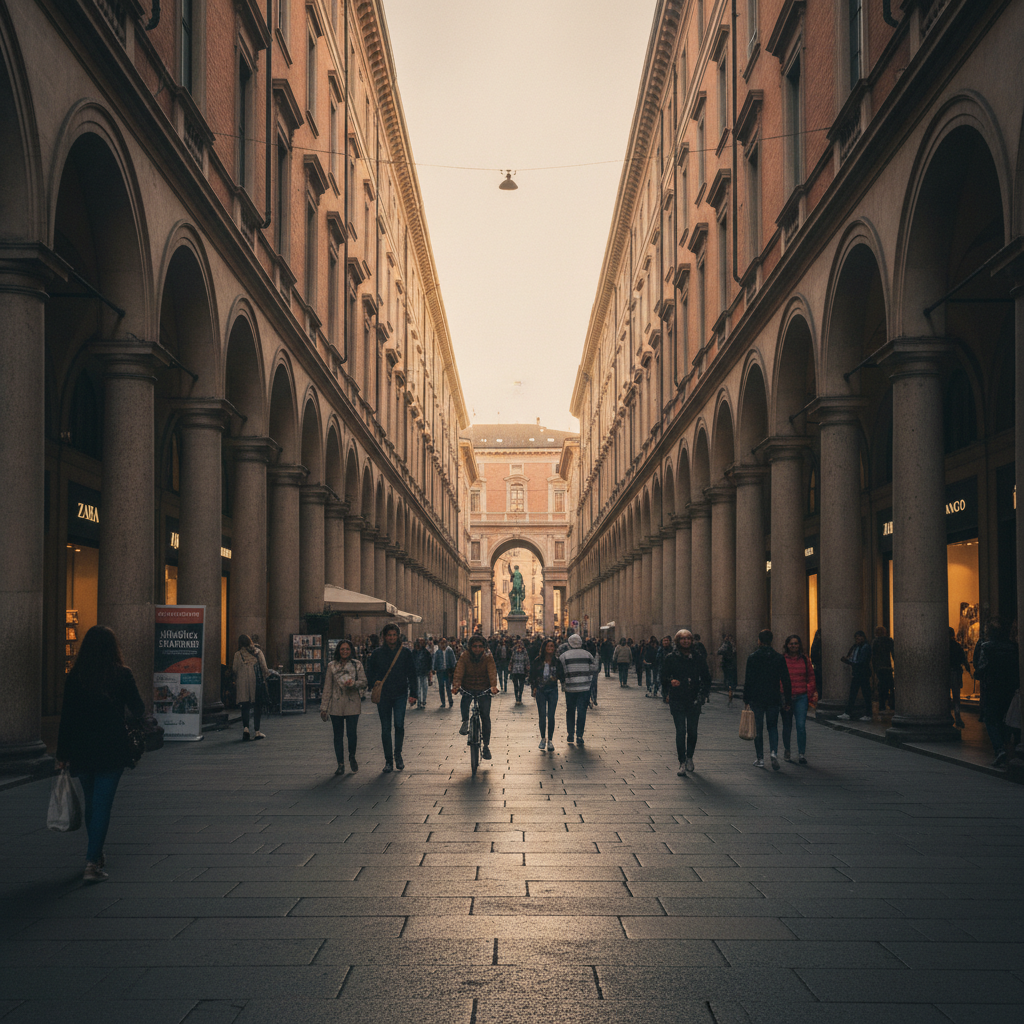
Via dell'Indipendenza, Shopping & Bologna's Artisan Culture
Ravenna Mosaics Day Trip — UNESCO Byzantine Art Capital
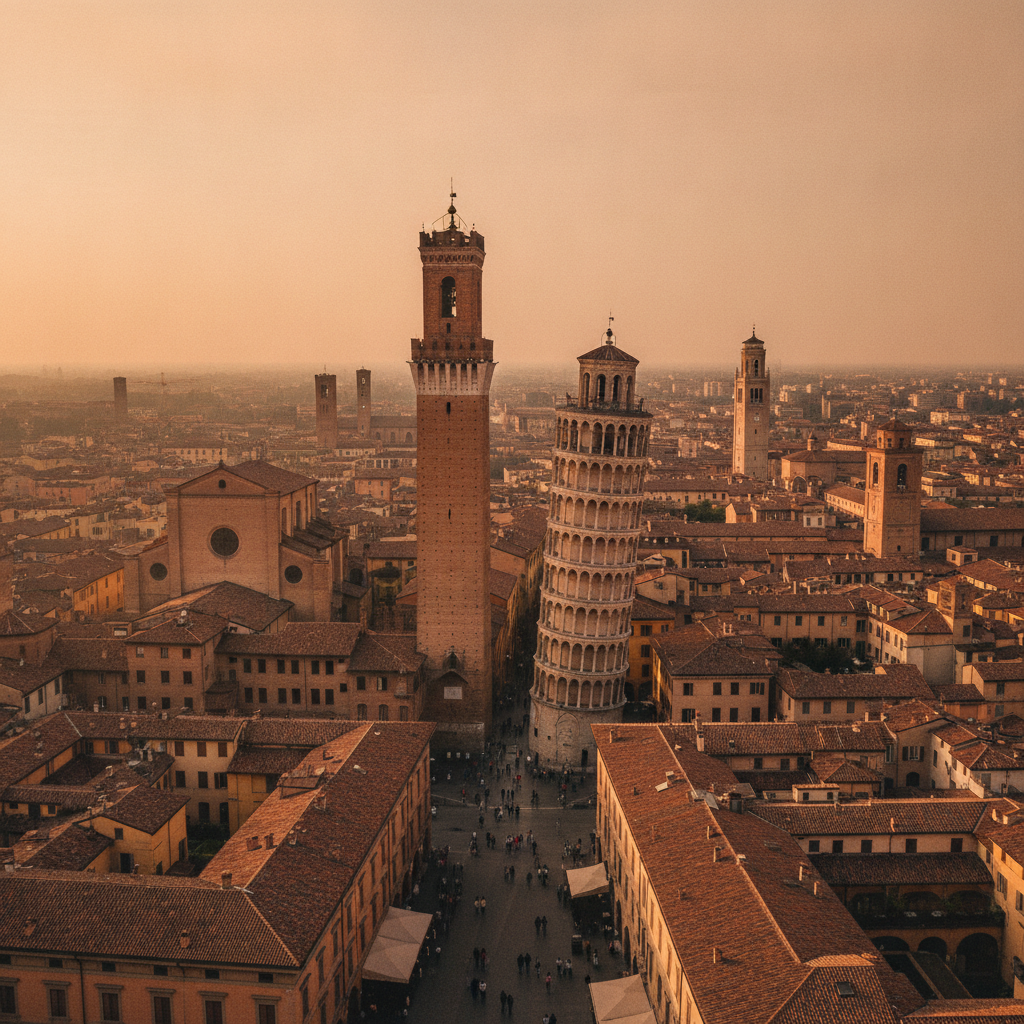
Bologna's Porticoes, Medieval Towers & UNESCO Historic Centre