Parque Simón Bolívar, Urban Nature & Bogotá's Green Spaces
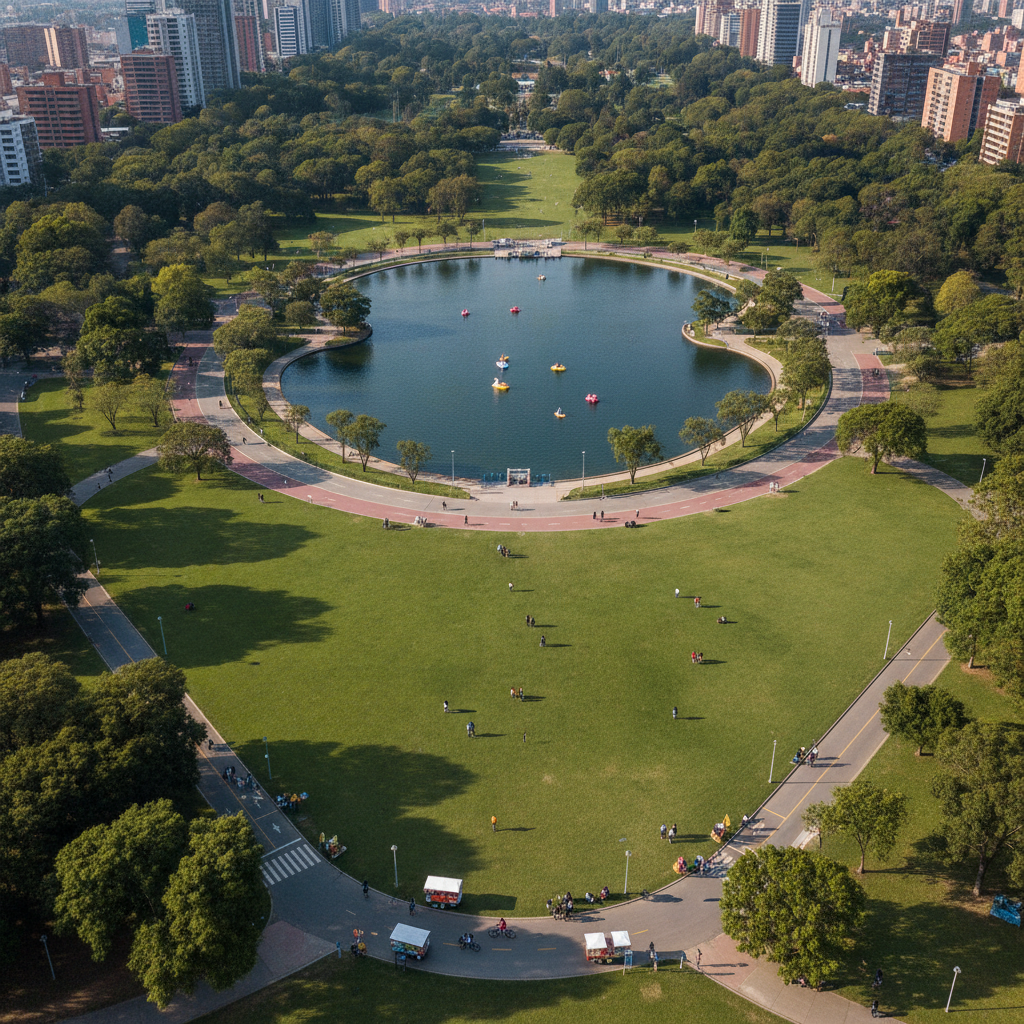
The Parque Simón Bolívar (the 113-hectare metropolitan park in northwest central Bogotá — the largest urban park in Bogotá and one of the largest urban parks in Latin America, the 'Central Park of Bogotá') is the primary green lung and recreation space of the Colombian capital, hosting the largest outdoor concerts in Colombia (the Rock al Parque festival — the largest free rock festival in Latin America) and serving as the weekend cycling, picnicking, and kite-flying destination for millions of Bogotá residents.
- 1
Parque Simón Bolívar — The Central Park of Bogotá
The Parque Simón Bolívar (the 113-hectare (279-acre) metropolitan park in the northwest of central Bogotá — the largest urban park in Bogotá, covering the equivalent area of the Bois de Boulogne in Paris): the park history (the park created in 1968 on the occasion of the VI Pan American Games held in Bogotá — the Games that required the construction of a large public park and sports complex in the growing city): the park landscape (the flat, well-maintained lawns and the mature tree plantings (the eucalyptus trees, the native Colombian trees, and the ornamental plantings) that fill the 113 hectares of the park): the Lago Central (the central artificial lake at the heart of the park — the lake where the Bogotá families rent pedal boats and kayaks on the weekends): the weekend scene (the Parque Simón Bolívar on a Sunday — when the park is filled with the families of Bogotá, the cyclists on the Ciclovía route that passes through the park, the kite flyers on the lawns, the vendors selling the Colombian street food (the obleas (the thin wafer sandwiches with arequipe caramel), the chontaduro (the peach palm fruit — the traditional street food of the Colombian Pacific coast, boiled and served with salt or honey), and the mazorca desgranada (the corn kernels with butter, salt, and lime juice)).
- 2
Rock al Parque — Latin America's Largest Free Rock Festival
Rock al Parque (the annual rock music festival held in the Parque Simón Bolívar in Bogotá — the largest free rock music festival in Latin America and the second largest free rock festival in the world (after the Monsters of Rock festival in São Paulo, Brazil)): the festival history (Rock al Parque established in 1995 under Mayor Antanas Mockus as a free public concert to bring the rock music subculture (which had previously been associated with youth violence and social marginalization in Bogotá) into the mainstream of Bogotá's public life — the festival that has grown from a one-day event with 3 stages in 1995 to a 3-day event with 5 stages and approximately 350,000-400,000 attendees in the 2010s-2020s): the festival music (the festival that has hosted the most important rock, metal, punk, and alternative music acts from Colombia and Latin America, as well as international headliners (the Suicidal Tendencies (2018), the Megadeth (2014), the Dragonforce (2016), and dozens of other international acts) on the main stage of the Parque Simón Bolívar): the festival culture (the Rock al Parque culture — the free festival that has defined the rock and metal subculture of Bogotá for 30 years, the festival that is the most important live music event in Colombia and one of the most important in Latin America).
- 3
Bogotá's Park Network & Urban Green Spaces
Bogotá's urban park network (the system of parks and green spaces that covers approximately 5,000 hectares of the urban area of Bogotá — the park system that has been expanded significantly in the 2000s-2020s as part of the broader urban quality-of-life improvement programme of the successive progressive mayors of Bogotá): the metropolitan parks (the large metropolitan parks of Bogotá — the Parque Simón Bolívar (113 hectares), the Parque El Country (the park in the north of the city in the residential neighbourhood of El Country), the Parque La Florida (the 218-hectare park on the northern edge of the city, on the banks of the Río Bogotá — the park with the largest natural lake in Bogotá), and the Humedales (the wetlands — the 13 urban wetlands of Bogotá, the remnants of the original wetland ecosystem of the Sabana de Bogotá that have been partially preserved as urban nature reserves within the urban fabric of the city)): the Jardin Botanico José Celestino Mutis (the Botanical Garden of Bogotá — the 19.6-hectare botanical garden in the northwest of the city, adjacent to the Parque Simón Bolívar, with the most complete collection of native Colombian plants (the orchids (Colombia has over 4,000 orchid species — the most of any country in the world), the frailejones (the Espeletia plants of the Colombian páramo), and the wax palms)).
- 4
Estadio El Campín — Fútbol & Colombian Passion
El Estadio Nemesio Camacho 'El Campín' (the football stadium in the Teusaquillo district of Bogotá — the primary football stadium of Bogotá and the national stadium of Colombia, with a capacity of approximately 36,343 spectators): the stadium history (the stadium built in 1938 for the 'Juegos Bolivarianos' (the Bolivarian Games — the multi-sport event for the South American countries that were liberated by Simón Bolívar) and expanded in multiple phases to its current capacity): the Bogotá football clubs (the two Bogotá football clubs that share the El Campín stadium — the Club Atlético Independiente Santa Fe (founded 1941 — 'Los Cardenales', the 'Cardinals', the club that has won the most Colombian football championships (17 titles)) and the Millonarios Fútbol Club (founded 1946 — 'El Ballet Azul', the 'Blue Ballet', the club with the largest supporter base in Bogotá and the 2nd most Colombian football championships (15 titles))): the 'Clásico Capitalino' (the 'Capital Classic' — the match between Santa Fe and Millonarios, the most intensely followed local derby in Colombian football, played 2-4 times per season in the El Campín stadium with full capacity crowds): the Colombian football culture (the passion for fútbol in Bogotá — the city that produced the famous Colombian national team of the 1990s (the 'Pibe' Carlos Valderrama's era), the team that qualified for 3 consecutive World Cups (1990, 1994, 1998) and that became famous for the 'tiki-taka' style of play (the short-passing game popularized in Colombia decades before Pep Guardiola's Barcelona made it globally known)).
- 5
Biblioteca Virgilio Barco & Bogotá's Public Libraries
The Biblioteca Virgilio Barco (the large public library in the Parque Simón Bolívar area of Bogotá — one of the three flagship public libraries built in Bogotá under Mayor Enrique Peñalosa (1998-2000) as part of the 'Bogotá, como vamos' ('Bogotá, how are we doing') urban quality-of-life improvement programme): the library architecture (the Biblioteca Virgilio Barco designed by the Colombian architect Rogelio Salmona (1927-2007) — the most important Colombian architect of the 20th century, the designer of the Torres del Parque (the residential towers adjacent to the Plaza de Toros La Santamaría in Bogotá) and the Centro Cultural Gabriel García Márquez (the cultural centre in La Candelaria named after the Nobel Prize-winning Colombian novelist)): the library design (the Biblioteca Virgilio Barco building — a curvilinear brick structure that integrates with the parkland of the Parque Simón Bolívar, with the concentric rings of the building creating a series of internal courtyards and terraces): the public library programme (the network of neighbourhood libraries ('Bibliotecas de Barrio') built throughout Bogotá under Mayor Mockus and Mayor Peñalosa — the 'Parques Biblioteca' (the 'Library Parks') built in the most marginalized neighbourhoods of the city as part of the strategy of using cultural infrastructure to reduce violence and inequality).
- 6
Bogotá at High Altitude — Acclimatization & Altitude Effects
Bogotá's altitude (the city at 2,625 metres (8,612 feet) above sea level — the highest-altitude capital city in South America (higher than Quito (2,850 metres) when measured by the altitude of the city centre rather than the highest point of the city, though both cities claim the distinction of being the highest capital in South America) and one of the highest-altitude major cities in the world): the altitude effects on visitors (the effects of the altitude on visitors arriving in Bogotá from lower elevations — the 'soroche' (the altitude sickness) that affects approximately 20-25% of visitors in the first 24-48 hours after arrival (the symptoms: headache, fatigue, shortness of breath, nausea, and dizziness) due to the reduced oxygen partial pressure at 2,625 metres (approximately 74% of the oxygen level at sea level)): the acclimatization advice (the advice for visitors arriving in Bogotá — rest for the first 24 hours, avoid alcohol and heavy meals, drink plenty of water (the Bogotá water is safe to drink from the tap — the Empresa de Acueducto y Alcantarillado de Bogotá water supply system is one of the most reliable in Latin America), and drink the 'agua de panela' (the traditional Colombian remedy for altitude sickness — the hot drink made from panela (the unrefined whole cane sugar dissolved in hot water) with lemon juice, which is believed by Colombians to aid acclimatization)): the athletic performance (the effect of Bogotá's altitude on athletic performance — the reason that the Colombian national football team plays its home qualifying matches in El Campín and the international opponents struggle at altitude (visiting teams from sea level typically perform significantly worse at Bogotá's altitude — the altitude advantage that has made Bogotá one of the most difficult venues in the world for visiting sports teams)).
Walk this route with audio
Stories play automatically as you reach each stop — no tapping needed.
More in bogota
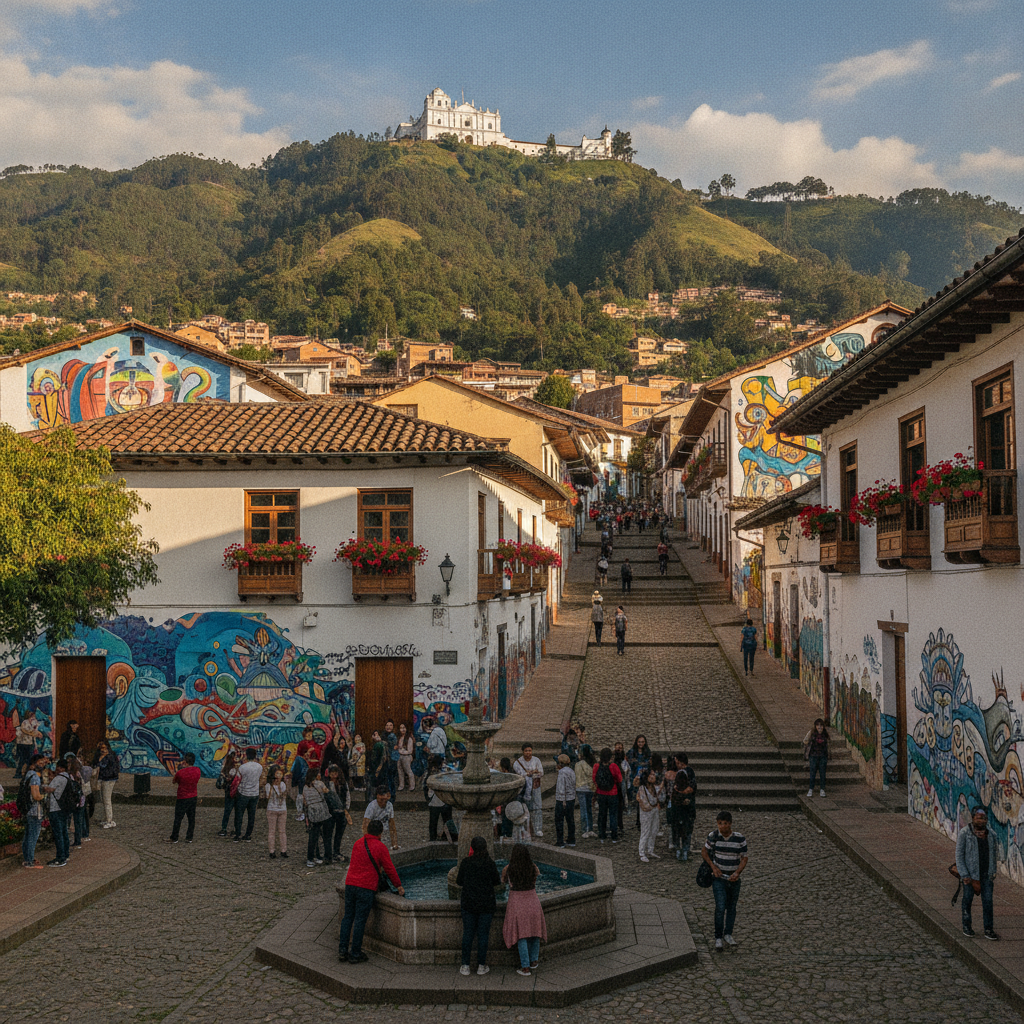
La Candelaria, the Gold Museum & Bogotá's Colonial Heart
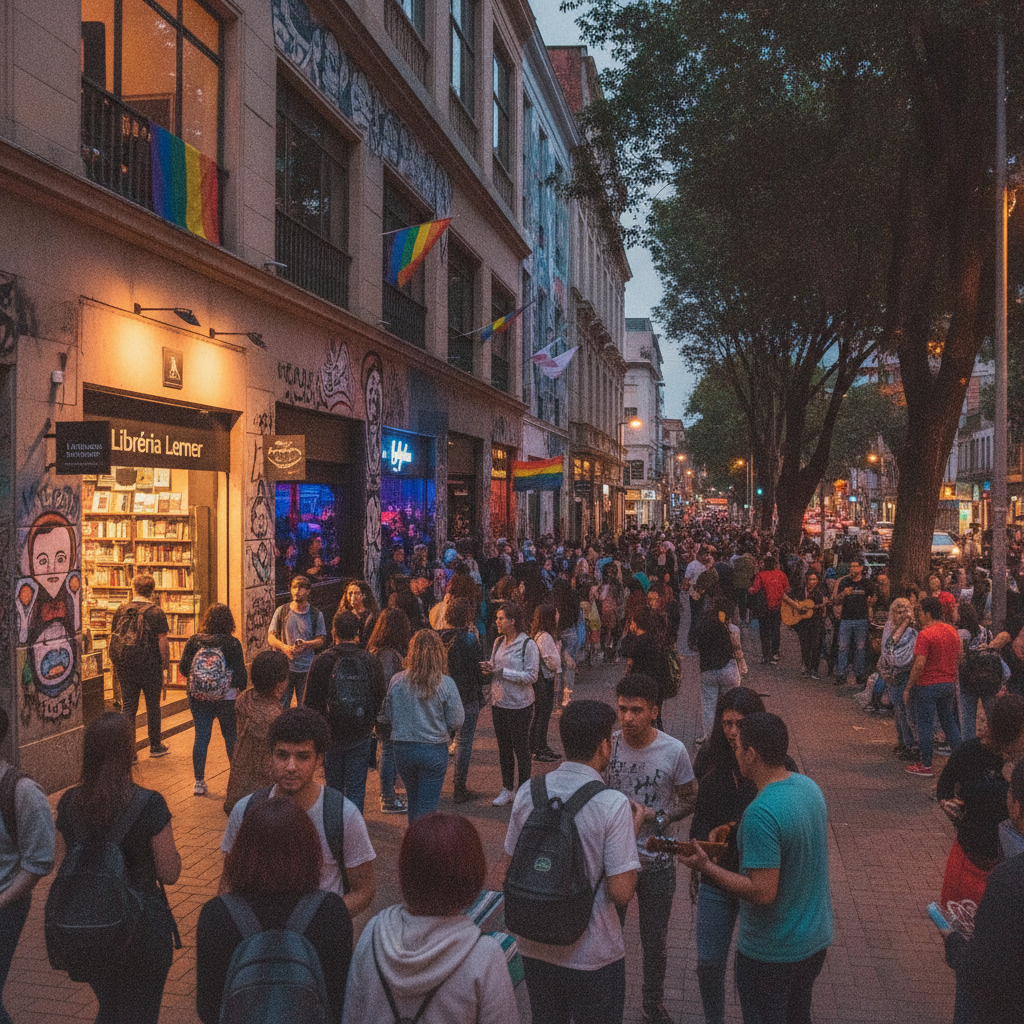
Chapinero, LGBTQ+ Culture & Bogotá's Creative Districts
TransMilenio, Urban Innovation & Bogotá's City Transformation
Zona Rosa, Usaquén & Bogotá's Culinary and Nightlife Scene
Medellín, Cartagena & Colombia's Extraordinary Diversity