La Candelaria, the Gold Museum & Bogotá's Colonial Heart
Bogotá (the capital of Colombia — population approximately 8.1 million in the city and 10.7 million in the metropolitan area, the highest-altitude capital city in South America at 2,625 metres (8,612 feet) above sea level): La Candelaria (the historic colonial neighbourhood at the foot of the Eastern Hills — the most historically significant neighbourhood in Colombia, the site of the founding of Bogotá in 1538 and the home of the Museo del Oro (the Gold Museum — the greatest pre-Columbian gold collection in the world)) is the cultural and historical heart of Colombia.
- 1
Museo del Oro — The Greatest Gold Collection in the World
The Museo del Oro (the Gold Museum — Calle 16 No. 5-41, in the Barrio La Candelaria of Bogotá — the museum of the Banco de la República de Colombia that houses the most important collection of pre-Columbian gold and metalwork in the world): the collection (the collection of approximately 55,000 objects — the most comprehensive collection of pre-Columbian goldwork in the world, spanning the full range of the goldworking cultures of ancient Colombia (the Muisca, the Zenú, the Tumaco, the Nariño, the Quimbaya, the Calima, the Malagana, and the Tayrona)): the goldwork (the objects in the collection include the tumbaga (the gold-copper alloy used by the pre-Columbian cultures of Colombia), the 'false filigree' (the casting technique that produces the appearance of wire filigree from cast metal), the lost-wax casting (the 'cire perdue' technique used to produce the most complex and finest goldwork of the pre-Columbian world), and the repoussé (the hammered sheet gold work): the 'El Dorado' legend (the origin of the legend of El Dorado (the 'Gilded Man' — the legend of a king who covered himself in gold dust and threw gold offerings into a sacred lake) in the Muisca ceremony of the Laguna de Guatavita (the sacred lake 75 km (47 miles) northeast of Bogotá): the ceremony of the Muisca king (the 'zipa') covering himself in gold dust and paddling on a raft to the centre of the lake to throw gold offerings): the Sala Dorada (the 'Golden Room' — the darkened circular room at the heart of the museum in which the largest objects of the collection are displayed on slowly rotating pedestals while gold-coloured lights and ambient Muisca music create the atmosphere of a pre-Columbian ceremonial space).
- 2
La Candelaria & the Founding of Bogotá
La Candelaria (the historic colonial neighbourhood on the eastern flank of Bogotá, at the foot of the Cerros Orientales — the neighbourhood that contains the most important colonial architectural heritage in Colombia): the founding of Bogotá (the founding of the city on August 6, 1538 by the Spanish conquistador Gonzalo Jiménez de Quesada (c.1509-1579) — the Spanish lawyer and explorer who led the expedition that ascended the Magdalena River and crossed the Eastern Andes to reach the Sabana de Bogotá (the high plateau at 2,600 metres / 8,530 feet above sea level where the Muisca people maintained the most densely populated settlements in pre-Columbian Colombia)): the colonial architecture (the churches, convents, and public buildings of La Candelaria — the Iglesia de San Francisco (the oldest surviving church in Bogotá, built 1550-1575), the Capilla del Sagrario (the 1660 chapel adjacent to the Cathedral Primada), the Palacio de San Carlos (the government palace where Simón Bolívar lived and from whose window the liberator jumped to escape the assassination attempt of September 25, 1828)): the Plazoleta del Chorro de Quevedo (the small cobblestone square in the upper part of La Candelaria, believed to be the site of the original founding of Bogotá in 1538 — the square that is now the social heart of La Candelaria, surrounded by bars, cafés, and the Universidad de los Andes students who populate the neighbourhood).
- 3
Monserrate & the Eastern Hills
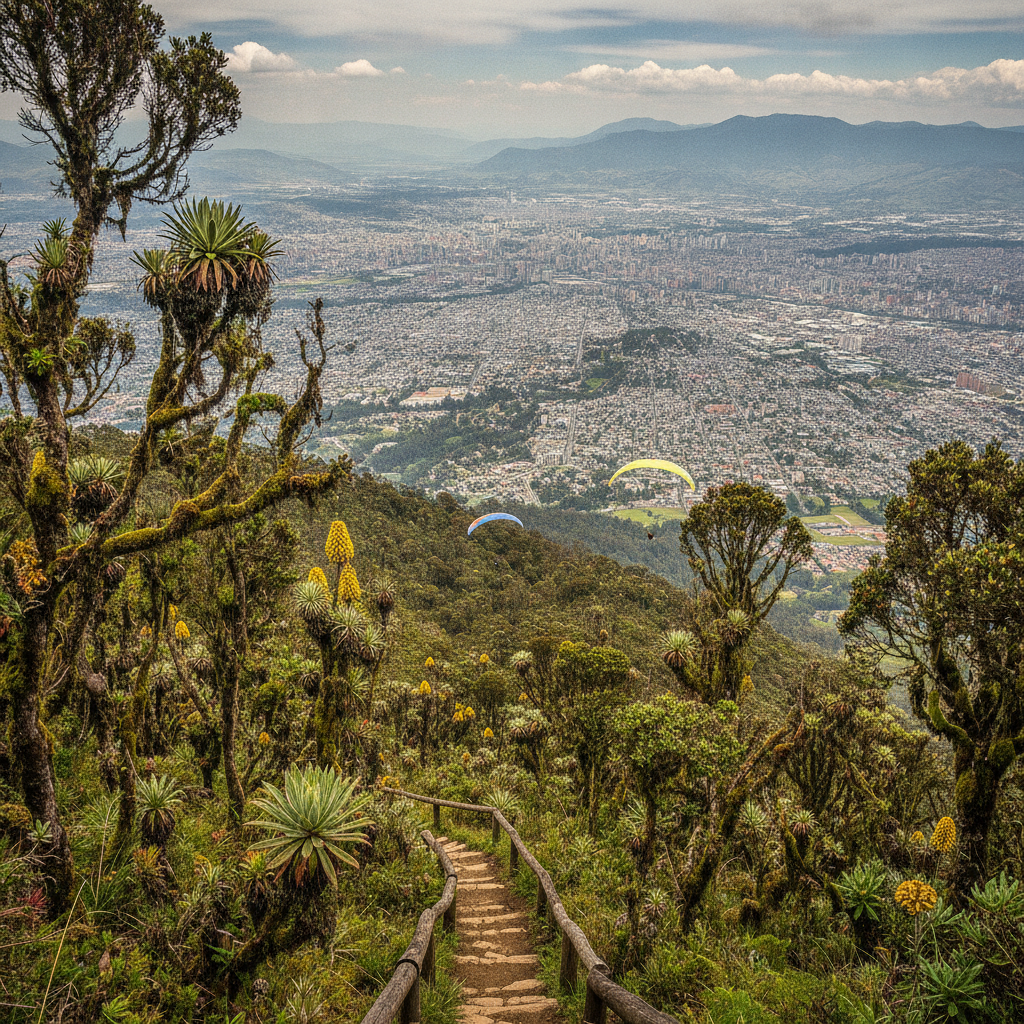
Monserrate (the mountain at 3,152 metres (10,341 feet) above sea level, immediately east of Bogotá, accessible by the Teleferico (the cable car) and the Funicular (the funicular railway) from the Monserrate station at the foot of the Eastern Hills): the Monserrate experience (the ascent to Monserrate — either by the Teleferico (the cable car that ascends in 4 minutes), the Funicular (the funicular that ascends in 4 minutes on a different track), or by the hiking path (the approximately 1,500 steps that take approximately 45-60 minutes to climb, the path that is used on weekends by the Bogotá residents for exercise and pilgrimage)): the view from Monserrate (the panoramic view of Bogotá from the summit — the view of the entire Sabana de Bogotá (the high plateau on which Bogotá is built) spread below, the urban fabric of the city of 8 million people filling the flat plateau floor from the Eastern Hills (immediately below the viewpoint) to the Western Hills (20 km / 12 miles across the plateau), the city visible in all directions): the Santuario del Señor Caído (the 'Sanctuary of the Fallen Lord' — the white church at the summit of Monserrate, the pilgrimage destination for the Catholics of Bogotá who climb the mountain on the weekend of the feast of the Señor Caído (September 14) to venerate the image of the Fallen Christ).
- 4
Plaza de Bolívar & Colombia's Political Centre
The Plaza de Bolívar (the main square of Bogotá — the large public plaza in La Candelaria flanked by the Catedral Primada de Colombia (the Cathedral of Bogotá), the Capitolio Nacional (the National Capitol building — the seat of the Colombian Congress), the Palacio de Justicia (the Palace of Justice — the Supreme Court building, rebuilt after the M-19 guerrilla takeover and army retaking of the building in November 1985 that resulted in the deaths of 98 people including 11 Supreme Court justices), and the Alcaldía Mayor (the City Hall of Bogotá)): the plaza history (the plaza that was the civic centre of colonial Bogotá (the 'Plaza Mayor de Santa Fe de Bogotá') and that has been the site of the most important political events in Colombian history — the proclamation of Colombian independence (July 20, 1810), the inauguration of presidents, and the public demonstrations and political events that have defined the political life of the nation): the Estatua de Simón Bolívar (the equestrian statue of Simón Bolívar (1783-1830) — the 'El Libertador' ('The Liberator'), the Venezuelan-born military and political leader who liberated Venezuela, Colombia, Ecuador, Peru, and Bolivia from Spanish colonial rule — in the centre of the plaza, the statue cast in 1846 by Pietro Tenerani in Rome): the pigeon culture (the hundreds of pigeons that inhabit the Plaza de Bolívar — fed by the vendors who sell handfuls of corn to tourists and local schoolchildren to attract the pigeons to land on their arms and shoulders).
- 5
Bogotá Graffiti Scene & Street Art Culture
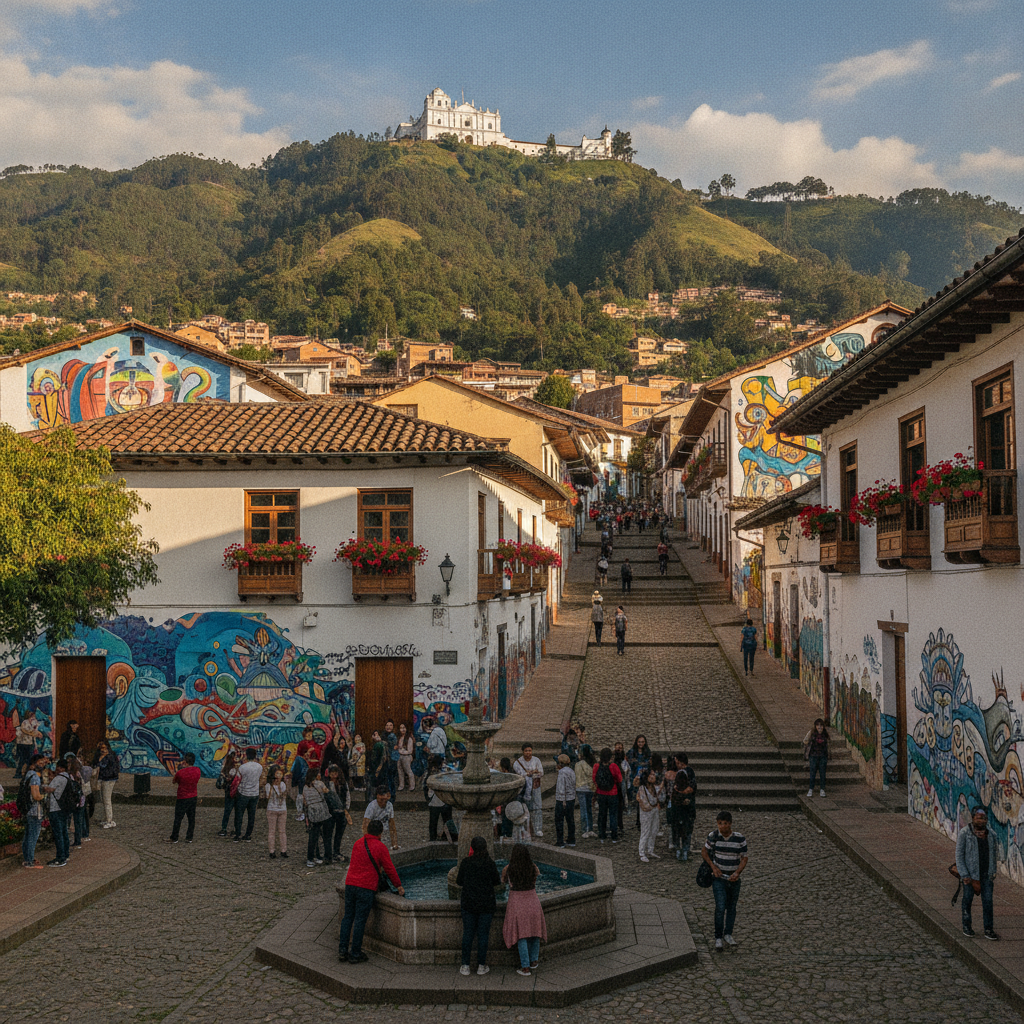
Bogotá's street art scene (the street art culture of the city that has the most vibrant and politically engaged graffiti and mural art scene in Latin America — a scene that emerged partly from the 2011 decision by Mayor Gustavo Petro (who would later be elected President of Colombia in 2022) to legalize street art in Bogotá, making the city the first major city in Latin America to officially legalize graffiti as a form of public art): the La Candelaria murals (the concentration of large-scale graffiti murals on the facades of the colonial buildings of La Candelaria — the murals that cover entire building facades with political imagery, indigenous iconography, abstract art, and portraits of Colombian cultural figures): the graffiti tours (the walking tours of La Candelaria's street art that are offered by local artists and guide services, explaining the themes, techniques, and politics behind the murals): the most important muralists (the Colombian graffiti artists whose work defines the Bogotá street art scene — DJ LU (the artist whose large-scale faces cover multiple building facades in La Candelaria), Toxicomano (the artist known for the monochrome black-and-white political imagery), and the international artists who have come to Bogotá as part of the annual Bogotá Graffiti festival): the 'graffiti revolution' (the story of Diego Felipe Becerra — the 16-year-old graffiti artist killed by a Bogotá police officer in 2011 while painting a graffiti mural, the death that triggered the public debate that led to the legalization of street art in Bogotá).
- 6
Bogotá Coffee Culture & Juan Valdez
Colombia's coffee culture (the coffee culture of the country that is the world's 3rd largest coffee producer by volume and the world's largest producer of washed Arabica coffee — the coffee that is the product most associated with Colombia in the international market): the Juan Valdez brand (the fictional Colombian coffee farmer 'Juan Valdez' — the advertising character created by the National Federation of Coffee Growers of Colombia (FNC) in 1958 and portrayed by actors in coffee advertising campaigns from 1959 to the present — the character that made Colombian coffee the most recognizable national product of any developing country in the world): the Colombian coffee regions (the 'Eje Cafetero' — the 'Coffee Axis', the cultural landscape of the coffee-growing regions of Caldas, Quindío, Risaralda, and parts of Antioquia, designated a UNESCO World Heritage Site in 2011 as the 'Coffee Cultural Landscape of Colombia'): the Bogotá café scene (the café culture of Bogotá — the city where the Juan Valdez Café chain (the chain owned by the FNC that uses the Juan Valdez brand) has its flagship store (Carrera 11 No. 82-02, Zona Rosa) and where the specialty coffee culture (the independent roasters and the third-wave coffee shops) has developed rapidly in the 2010s — the city where visitors can drink some of the finest single-origin Colombian coffees, from the Nariño Supremo to the Huila Excelso, at prices that are a fraction of what the same coffee costs in New York or London).
Walk this route with audio
Stories play automatically as you reach each stop — no tapping needed.
More in bogota
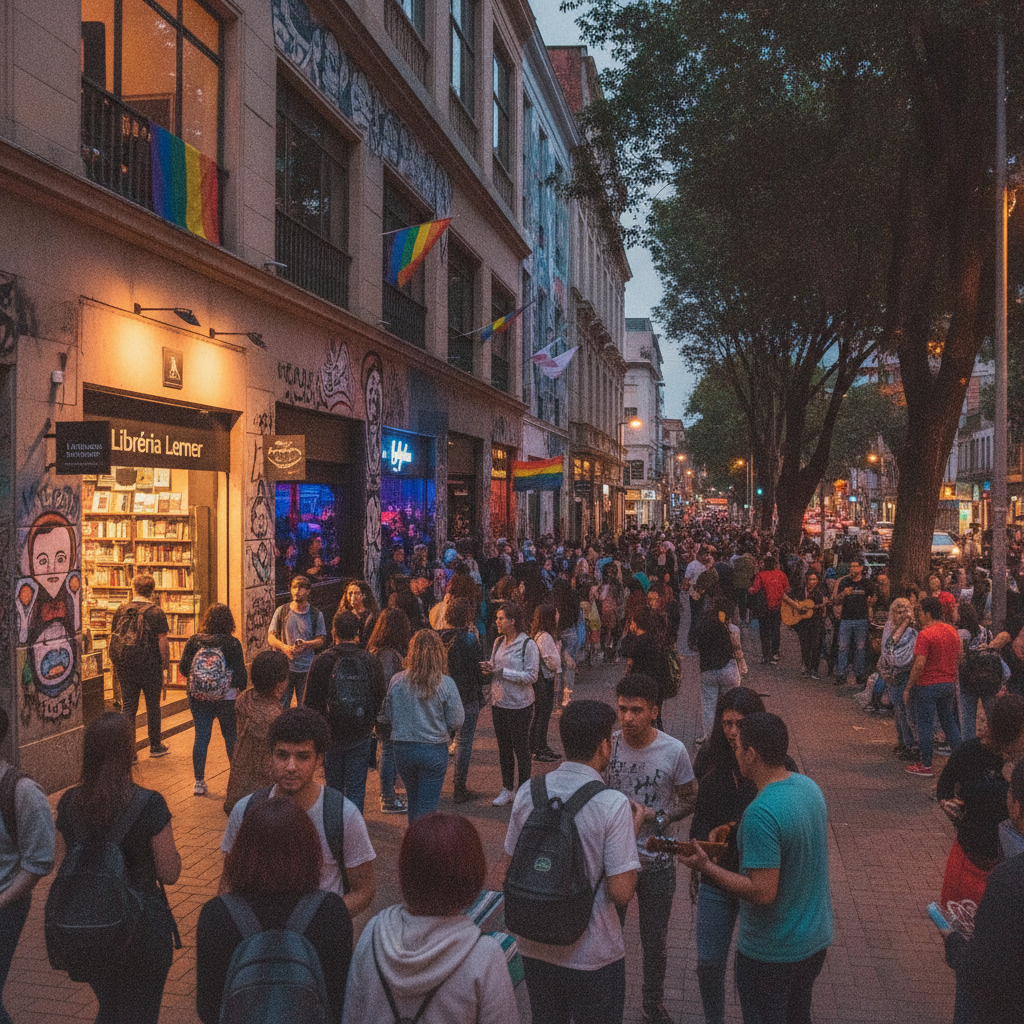
Chapinero, LGBTQ+ Culture & Bogotá's Creative Districts
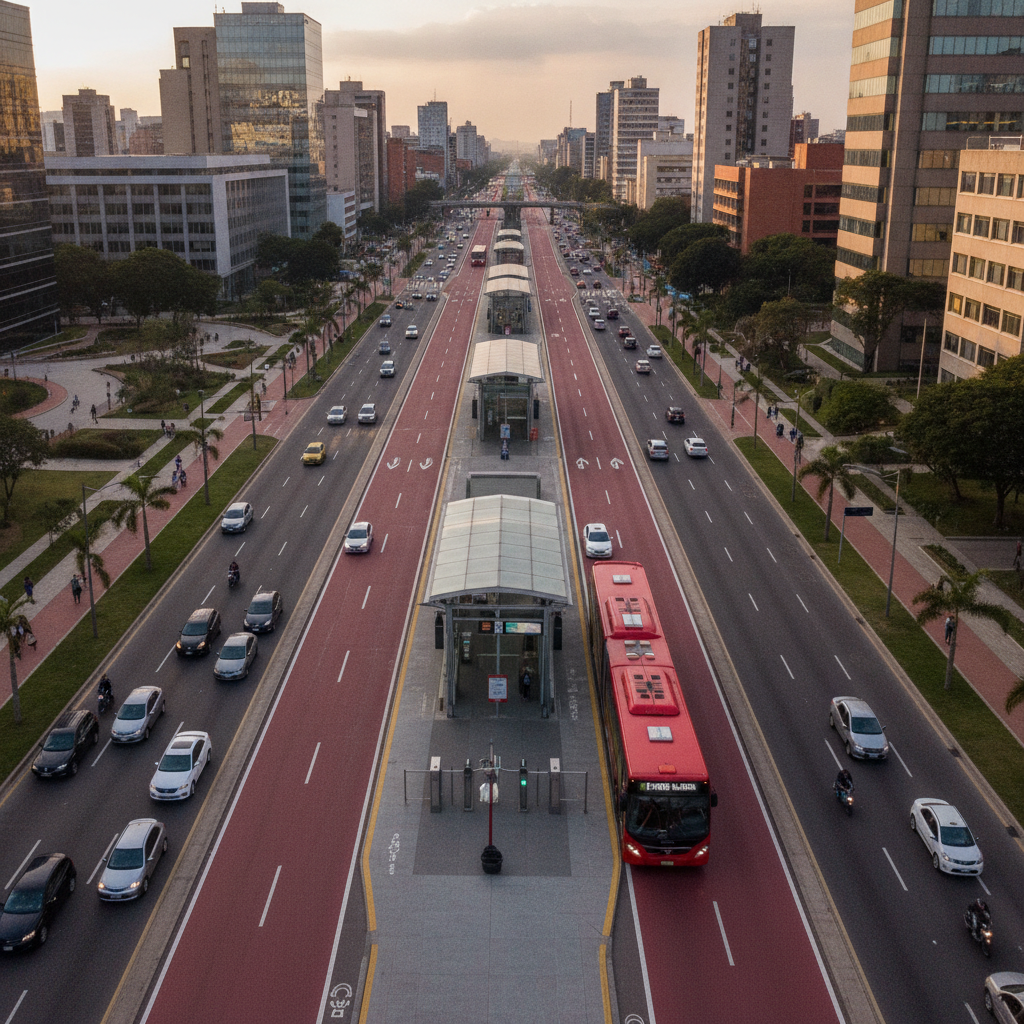
TransMilenio, Urban Innovation & Bogotá's City Transformation
Zona Rosa, Usaquén & Bogotá's Culinary and Nightlife Scene
Medellín, Cartagena & Colombia's Extraordinary Diversity
Salt Cathedral of Zipaquirá & Colombia's Andean Highlands