Babur Founded the Mughal Empire After Ruling Osh and Leaving His Mark on the Suleiman-Too Cave Mosque, the Kyrgyz Horse Surviving -40°C by Digging Through Snow (Tebineu) for Frozen Grass & the Burana Tower Oldest Monument in Kyrgyzstan
Babur (future founder of the Mughal Empire) ruling Osh and building the Suleiman-Too cave mosque in 1497 before expanding to Afghanistan and India; the Kyrgyz horse's tebineu technique of digging through snow to reach frozen grass in -40°C winters; the Burana Tower (originally 45m, now 24m after earthquake damage) as the oldest surviving monument in Kyrgyzstan; Sary-Chelek's wild walnut forests as the primary genetic reservoir for cultivated walnut (Juglans regia); the kok-boru goat carcass team sport as Kyrgyzstan's national sport; and the 7-day circuit connecting Bishkek, Issyk-Kul, Son-Kul, and Osh.
- 1
Osh City – Kyrgyzstan's Southern Capital
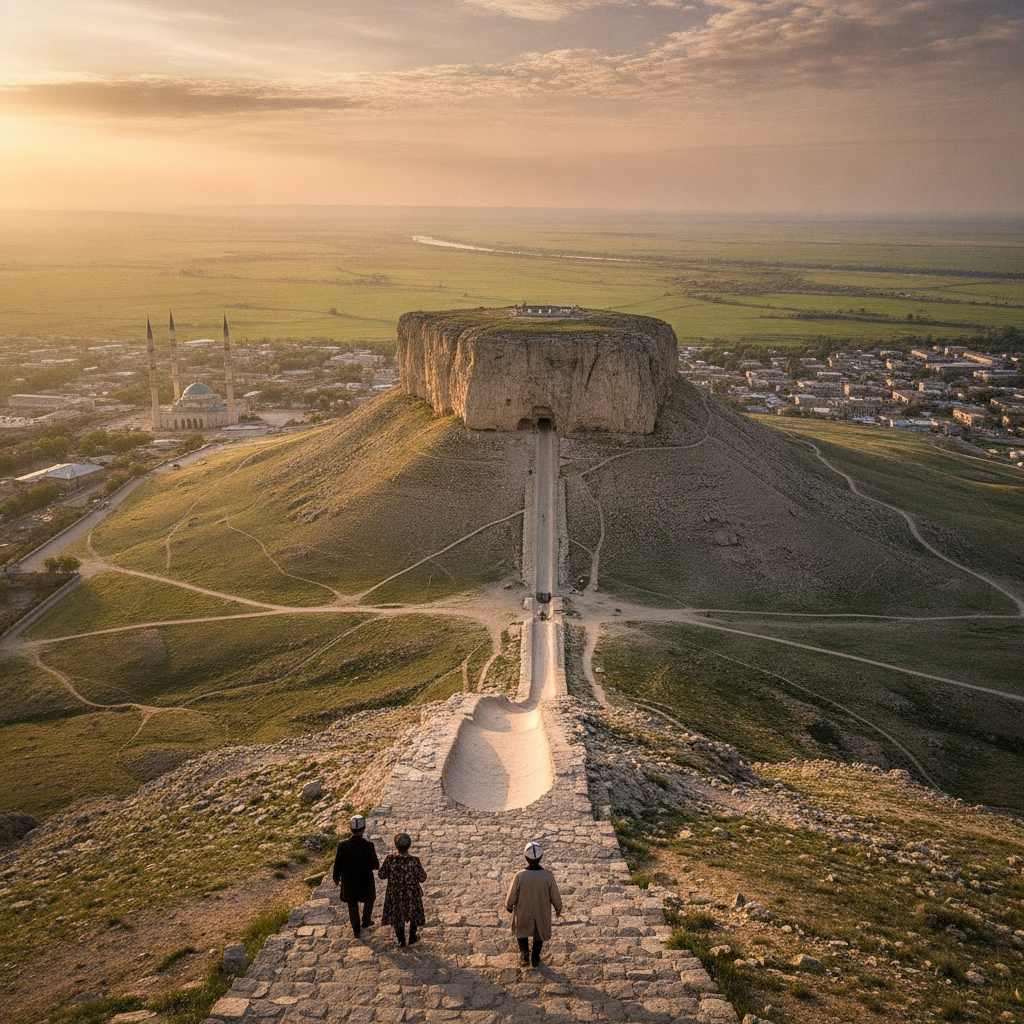
The Osh city heritage (the second city of Kyrgyzstan and the oldest continuously inhabited settlement in Central Asia — the primary cultural and commercial center of the Fergana Valley's Kyrgyz portion): the Osh heritage guide. The Suleiman-Too (the Suleiman Mountain (Сулайман-Тоо) — the sacred limestone rock in the center of Osh: the Suleiman-Too is a limestone intrusion rising 177m above the Fergana Valley floor in the center of the city of Osh: the UNESCO inscription (the Sacred Mountain Suleiman-Too was inscribed on the UNESCO World Heritage List in 2009 as the first UNESCO World Heritage Site in Kyrgyzstan: the mountain (the mountain has been a sacred site for at least 3,000 years: the name Suleiman-Too (Solomon's Mountain) derives from the Islamic tradition that identifies the mountain as the burial site of the Prophet Solomon (Suleiman in Arabic-Persian-Turkic): the cave shrine (the primary shrine on the Suleiman-Too is a cave on the southern face where the Timurid ruler Babur (the founder of the Mughal Empire) built a small mosque (the Babur House) in 1497 — Babur was the ruler of the Fergana Valley and Osh was his capital before he expanded to Afghanistan and India: the fertility shrine (the polished limestone surface in the cave has been worn smooth by generations of women sliding down it — the tradition holds that a woman who slides down the rock will have her prayers for children answered): the Osh Bazaar (the second most important bazaar in Kyrgyzstan — the Osh Bazaar in Osh city covers the entire traditional bazaar quarter adjacent to the Ak-Buura River).
- 2
Kyrgyzstan's Lakes – Sary-Chelek & Toktogul
The Kyrgyzstan lesser-known lakes heritage (the extraordinary diversity of high-altitude lakes in Kyrgyzstan beyond the famous Issyk-Kul — the most significant of the secondary lake systems): the lakes heritage guide. The Sary-Chelek (the Sary-Chelek Lake (Сары-Челек — Yellow Cup): the most beautiful lake in western Kyrgyzstan — a glacial lake at 1,873m altitude in the Jalal-Abad region 350 km southwest of Bishkek: the lake is part of the Sary-Chelek Biosphere Reserve (UNESCO Man and Biosphere Programme) — the reserve contains the last significant stands of the wild ancestor of the cultivated walnut (Juglans regia) in Central Asia — the wild walnut forests of Sary-Chelek are considered one of the most important genetic reservoirs for walnut cultivation worldwide): the Toktogul Reservoir (the Toktogul Reservoir — the largest reservoir in Kyrgyzstan (284 km²) created by the Toktogul Dam on the Naryn River in western Kyrgyzstan: the dam (the Toktogul Dam — a 215m-high arch dam completed in 1975 during the Soviet era: the dam is the primary electricity generation facility in Kyrgyzstan — the Toktogul hydroelectric station generates approximately 40% of all electricity consumed in Kyrgyzstan: the Toktogul water geopolitics (Kyrgyzstan controls approximately 25% of the freshwater of Central Asia through the Naryn-Syr Darya river system that rises in the Tian Shan and flows through Kyrgyzstan, Uzbekistan, Tajikistan, and Kazakhstan to the former Aral Sea — the Toktogul Dam gives Kyrgyzstan leverage over downstream agricultural water users).
- 3
The Silk Road Through Kyrgyzstan – The Tian Shan Route
The Silk Road heritage through Kyrgyzstan (the mountain Silk Road routes through the Tian Shan — the most geographically challenging section of the entire trans-Eurasian Silk Road): the Silk Road heritage guide. The Tian Shan Silk Road routes (the primary Silk Road route through Kyrgyzstan followed two main corridors: (1) the northern route: from Kashgar (China) through the Torugart Pass (3,752m) to the Fergana Valley and Osh, then northwest through the Kyzylkum desert to Samarkand: (2) the southern route: from Kashgar through the Karakoram via the Wakhan Corridor to the Pamirs and Tajikistan: the Burana Tower (the Burana Tower (Бурана мунарасы) — the only surviving minaret of the medieval city of Balasagun, 80 km east of Bishkek in the Chuy Valley: the tower was originally 45m high (now 24m after earthquake damage in the 16th–18th centuries) — it is the oldest surviving monument in Kyrgyzstan: the Balasagun caravanserais (the Chuy Valley between Bishkek and Issyk-Kul was lined with caravanserais on the Silk Road — the ruins of the Ak-Beshim and Krasnaya Rechka caravanserai complexes have been excavated by Soviet and Kyrgyz archaeologists: the Sogdian merchants (the Sogdians (the Iranian-speaking merchant people from the Zerafshan Valley in modern Tajikistan and Uzbekistan) dominated the Silk Road commerce through Kyrgyzstan from the 6th to 8th century CE — the Sogdian merchant letters found in a watchtower in the Chinese desert (4th century CE) are the earliest direct evidence of Silk Road commerce).
- 4
Kyrgyz Horses – Breed, Racing & the Nomadic Bond
The Kyrgyz horse culture (the central role of the horse in Kyrgyz identity — the Kyrgyz horse is not merely a domestic animal but the defining symbol of Kyrgyz civilization): the horse culture guide. The Kyrgyz breed (the Kyrgyz horse (Кыргыз жылкысы) — the indigenous mountain breed of the Tian Shan: the breed characteristics (the Kyrgyz horse is a compact, short-legged mountain breed averaging 142–147cm at the withers — substantially smaller than European warmblood breeds: the Kyrgyz horse is adapted to high altitude (functioning effectively at 4,000m+ altitude where lowland horses show severe altitude sickness), extreme cold (surviving -40°C winters in the open pasture without shelter through a thick double coat and the ability to dig through snow (tebineu) to reach frozen grass), and hard terrain (the Kyrgyz horse can climb 45-degree mountain slopes with a loaded rider): the kymiz (the fermented mare's milk (kumys in Russian — the Kyrgyz word is kymiz): the kymiz is produced from the milk of Kyrgyz mares from May to October during the grazing season: the kymiz production (each mare produces approximately 5–10 liters of milk per day — after removing the foal temporarily, the mare is milked 5–8 times per day: the milk is poured into a large leather bag (the saba — made from a whole horse hide) and churned thousands of times over 24–72 hours to produce kymiz): the kok-boru (the Kyrgyz national sport of kok-boru (Кок-Бору — the Blue Wolf in Kyrgyz) — the team sport of carrying a goat carcass (the ulak) on horseback and depositing it in the opposing team's goal (the tai-kazan — the cauldron goal)).
- 5
Bishkek's Alamedin Market & Russian Orthodox Heritage
The Bishkek Russian heritage (the significant Russian ethnic presence in Bishkek — the legacy of 150 years of Russian imperial and Soviet settlement that has produced a distinctive Russo-Kyrgyz urban culture): the Russian heritage guide. The Russian community (the Russian and Russian-speaking community in Bishkek: the Russian ethnic population of Kyrgyzstan was approximately 700,000 in 1989 (21% of the population) — the Russian population has declined to approximately 350,000 (6% of the total population) due to emigration to Russia since independence: the Bishkek Russian quarter (the neighborhoods immediately north of Ala-Too Square retain the late-19th-century Russian colonial layout — the tree-lined streets with single-story brick houses (datcha-style) are the most intact example of Russian colonial provincial architecture in Central Asia): the Russian Orthodox Cathedral (the Holy Resurrection Cathedral (Свято-Воскресенский Собор) on Beishenaliyeva Street — the primary Russian Orthodox church in Bishkek: the cathedral was built in 1947 during the Soviet era in an unusual move for a period of state atheism — Soviet authorities permitted the construction because of the Russian Orthodox Church's support for the Soviet war effort in World War II: the Alamedin Market (the Alamedin Market (Аламедин Базары) — the largest food market in Bishkek primarily serving the Russian-speaking population — the best source of Russian-style dairy products (sour cream, kefir, cottage cheese), Russian bread varieties, and preserved goods in Bishkek).
- 6
Kyrgyzstan 7-Day Itinerary – The Classic Circuit
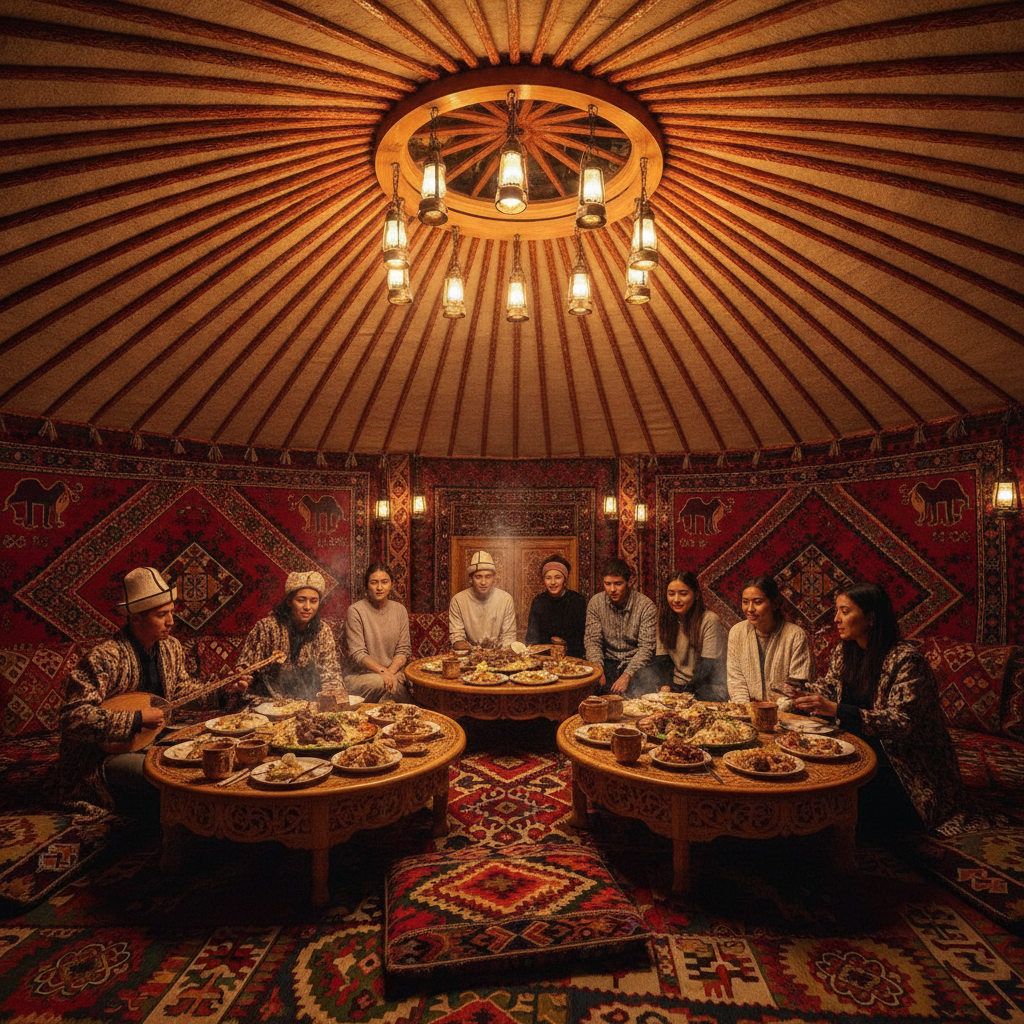
The comprehensive Kyrgyzstan 7-day itinerary (the optimal sequence for visiting Bishkek, Issyk-Kul, Son-Kul, and Osh within one week): the complete circuit. Day 1 (Bishkek arrival and city): morning (the Osh Bazaar for market orientation and kumys tasting): afternoon (Ala-Too Square and the State Historical Museum): evening (Erkindik Boulevard dinner). Day 2 (Burana and Chuy Valley): 09:00 Burana Tower (80 km east of Bishkek by shared taxi from the East Bus Station): afternoon return to Bishkek for the overnight sleeper marshrutka to Karakol (the primary town on the eastern shore of Issyk-Kul). Day 3 (Karakol area): Dungan Mosque (the most elaborate Central Asian Chinese-style mosque in Kyrgyzstan): afternoon Altyn Arashan hot springs (the 3-hour trek from Karakol to the thermal springs at 2,500m). Day 4 (Issyk-Kul southern shore return): the southern Issyk-Kul shore road through the jailoo (summer pasture) villages to Balykchy (the western end of the lake). Day 5 (Kochkor and Son-Kul): Kochkor shyrdak workshop (morning): afternoon 4x4 to Son-Kul Lake for overnight yurt stay. Day 6 (Son-Kul to Bishkek or Osh): morning horseback riding on the Son-Kul jailoo: afternoon 4x4 return to Kochkor and shared taxi to Bishkek or direct transport to Osh. Day 7 (Osh): Suleiman-Too Sacred Mountain (morning): Osh Bazaar (afternoon): flight or overnight train to Bishkek for departure.
Walk this route with audio
Stories play automatically as you reach each stop — no tapping needed.
More in Bishkek
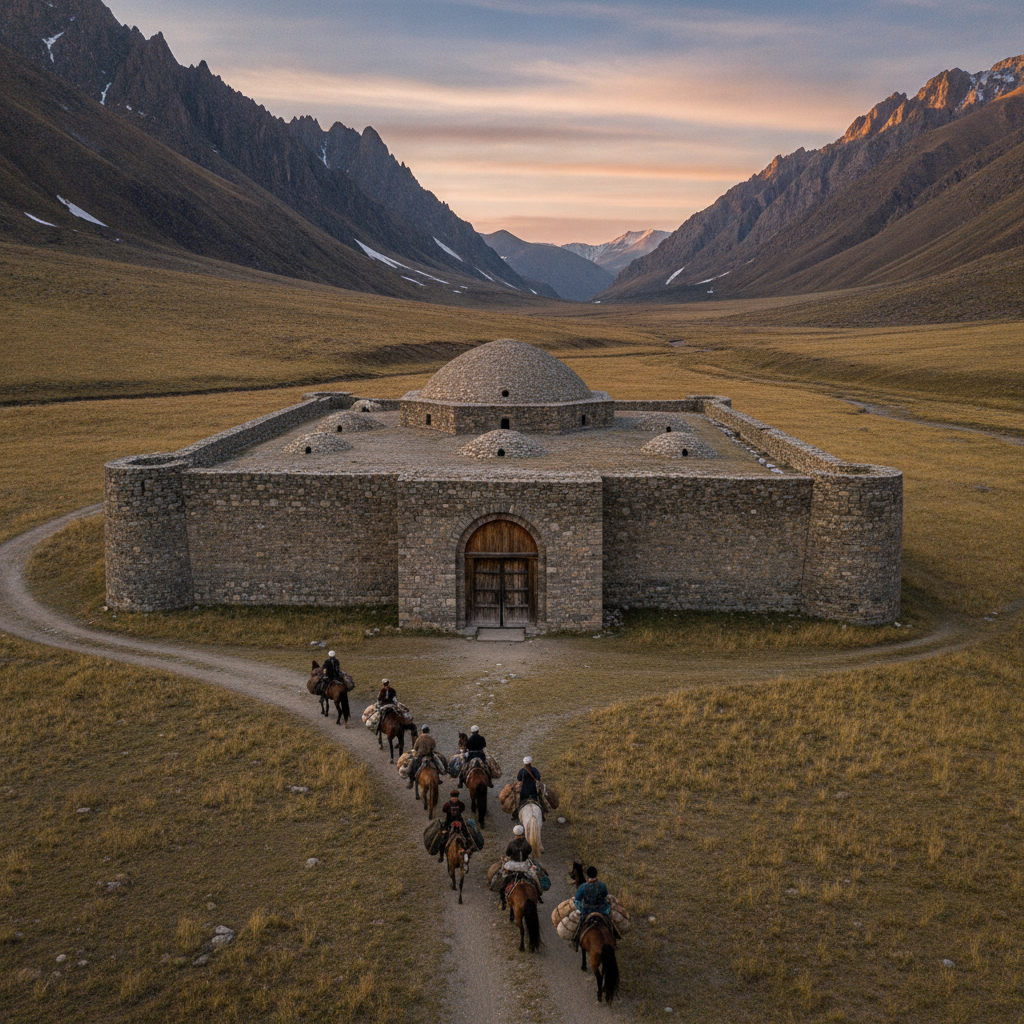
The Battle of Talas 751 CE Where Captured Chinese Papermakers Transferred Paper-Making Technology to the Islamic World, the Tash-Rabat Caravanserai Built at 3,200m Without Mortar & Kyrgyzstan's 700,000 Migrant Workers Sending 35% of GDP Home from Russia
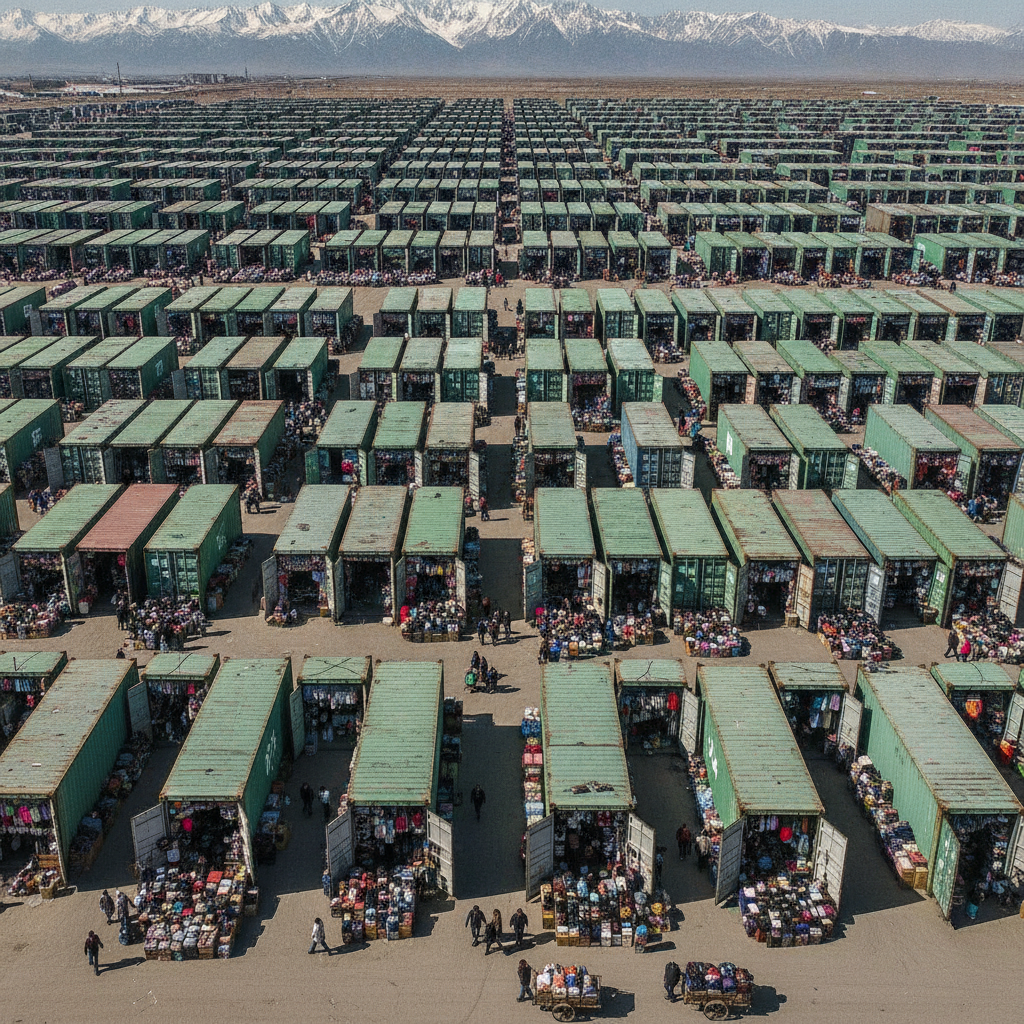
The Dordoi Bazaar 30,000 Container Stalls Handling USD 3-5 Billion Annually, Kyrgyz Yenisei Khaganate Briefly the Largest Turkic State in 840 CE & the CKU Railway Planned Since the 1990s Still Unbuilt
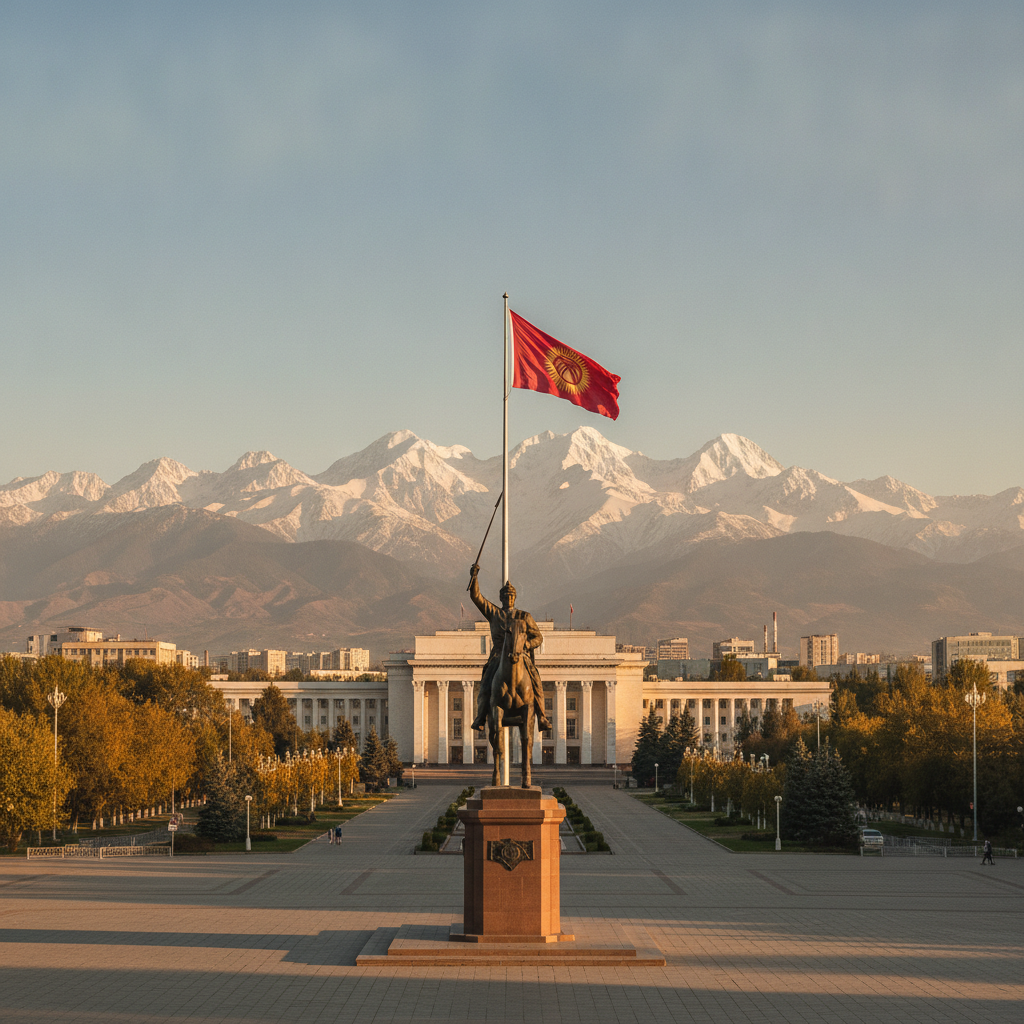
The Kyrgyz Tunduk Roof Ring on the National Flag, the Osh Bazaar Kumys Fermented Mare's Milk & Ala-Archa Glacier 45 km from Central Bishkek
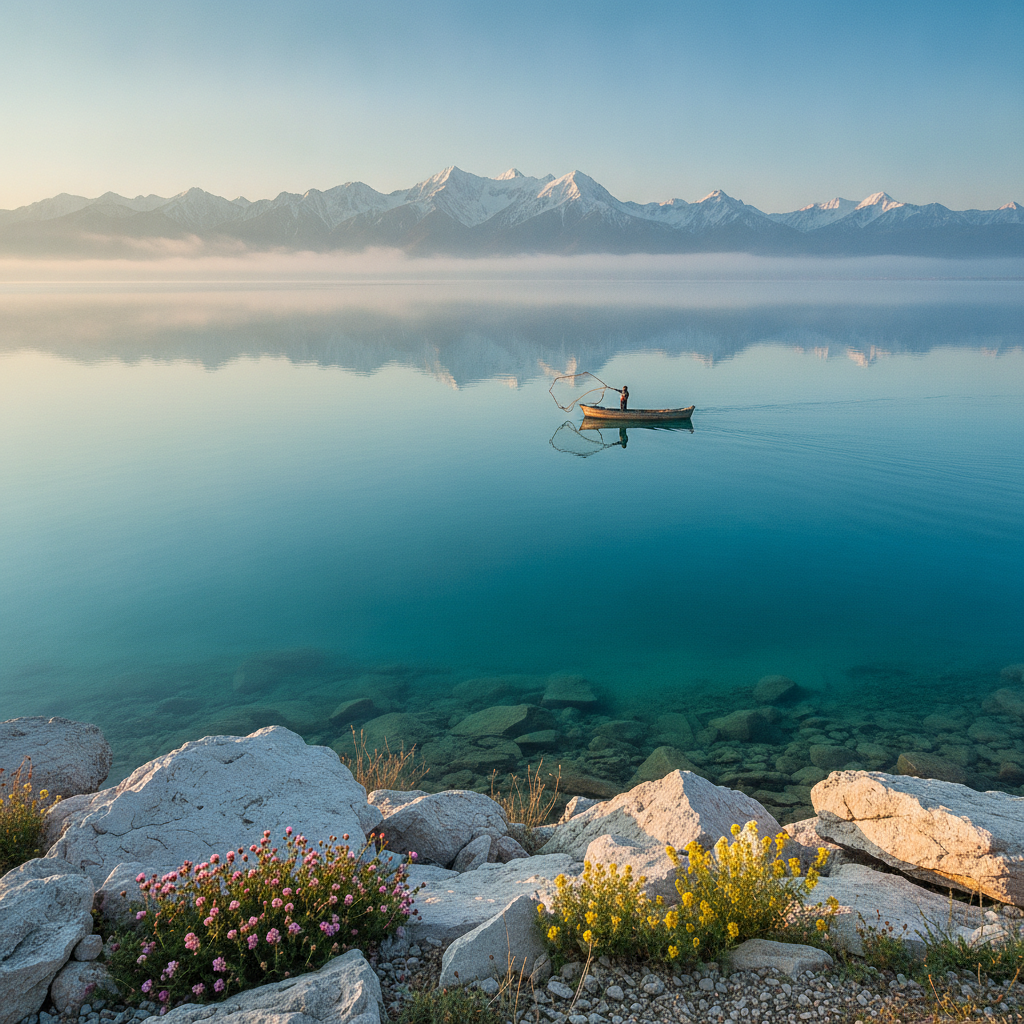
The Manas Epic at 500,000+ Lines Longer Than the Iliad and Mahabharata Combined, Issyk-Kul Never Freezes at 1,608m Due to Its 668m Depth & Son-Kul Summer Yurt Camps at 3,016m