Guggenheim Bilbao, Frank Gehry & the Basque Renaissance
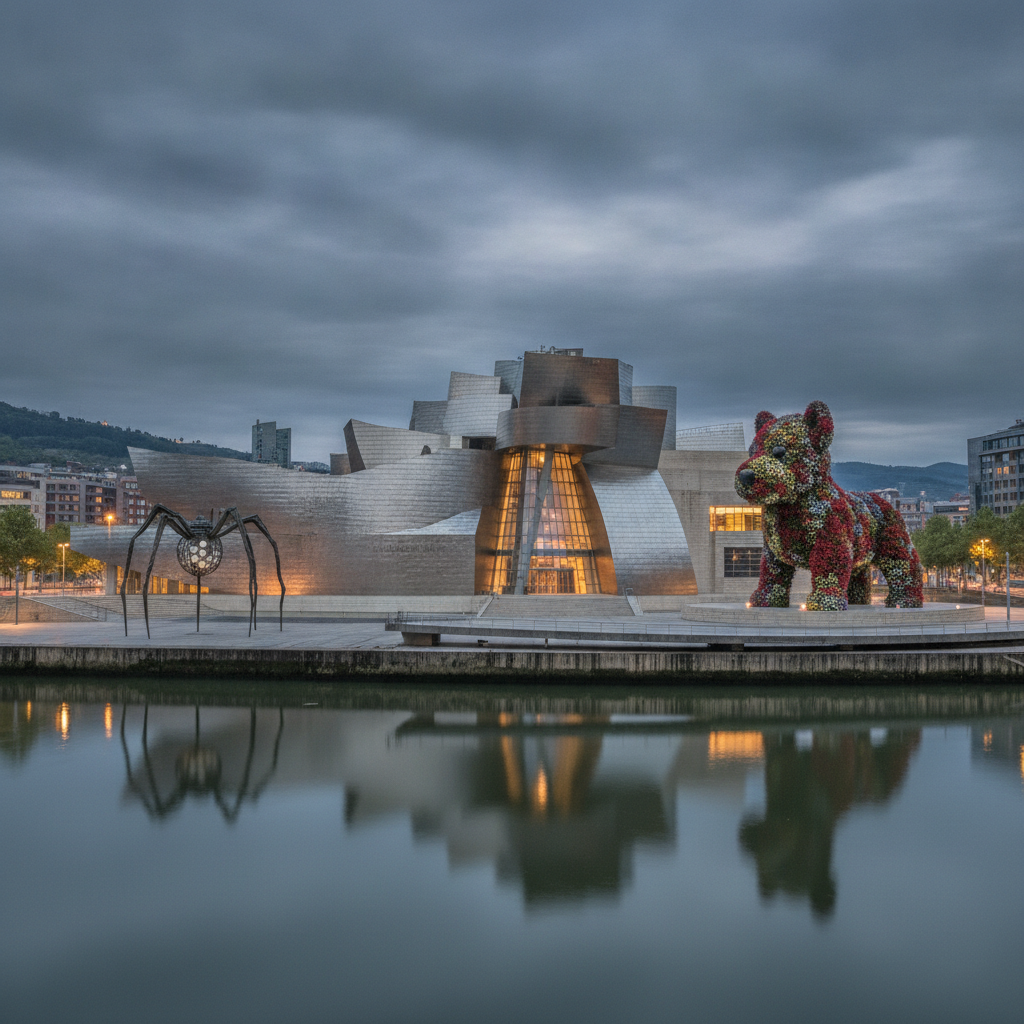
The Museo Guggenheim Bilbao (the Guggenheim Museum Bilbao — the contemporary art museum designed by Frank Gehry and opened in 1997) is universally acknowledged as the most important work of architecture of the late 20th century and the catalyst for the extraordinary urban renaissance of Bilbao (the 'Bilbao Effect' — the term coined by urban planners to describe the transformative impact of a single iconic cultural building on the economic and social regeneration of a post-industrial city, the effect first identified in Bilbao and subsequently replicated — with varying success — in cities across the world).
1. The Guggenheim Museum Bilbao — Architecture as Catalyst
- 1
The Guggenheim Museum Bilbao — Architecture as Catalyst
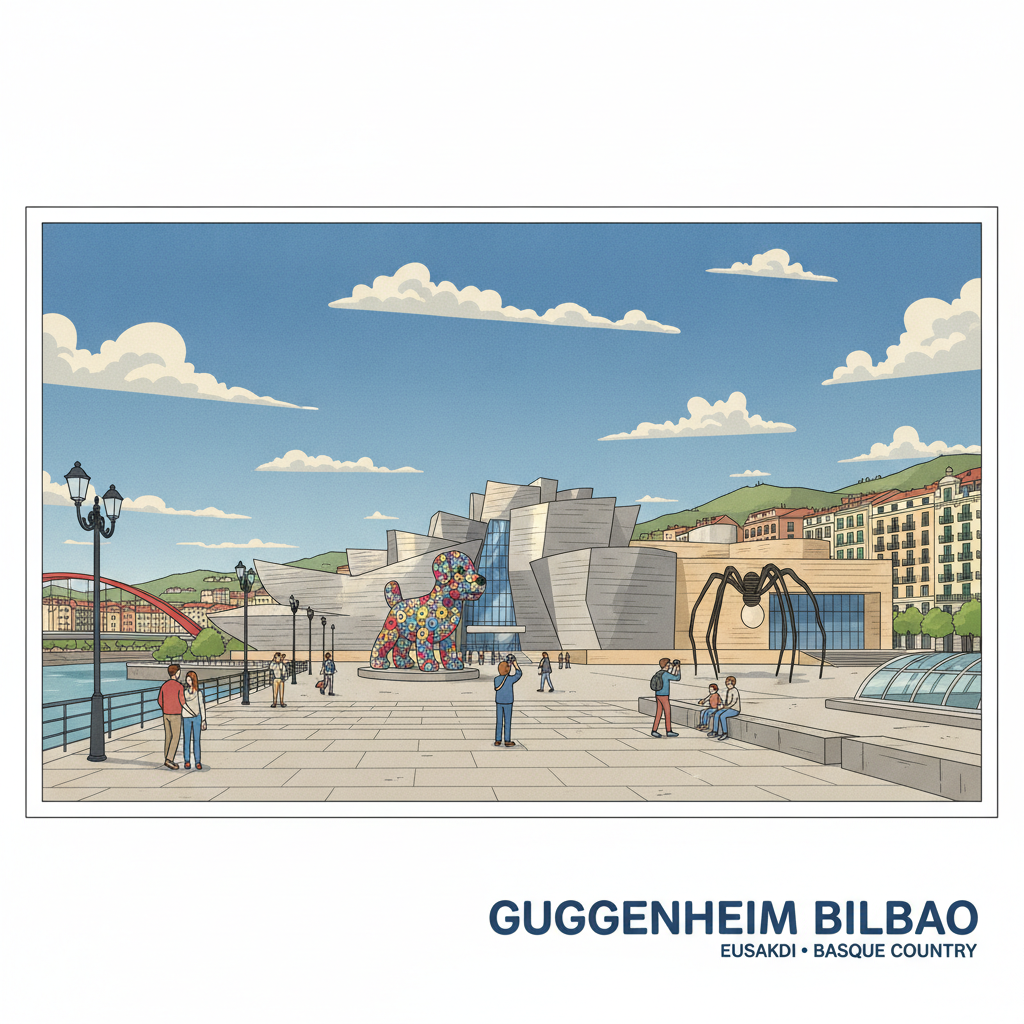
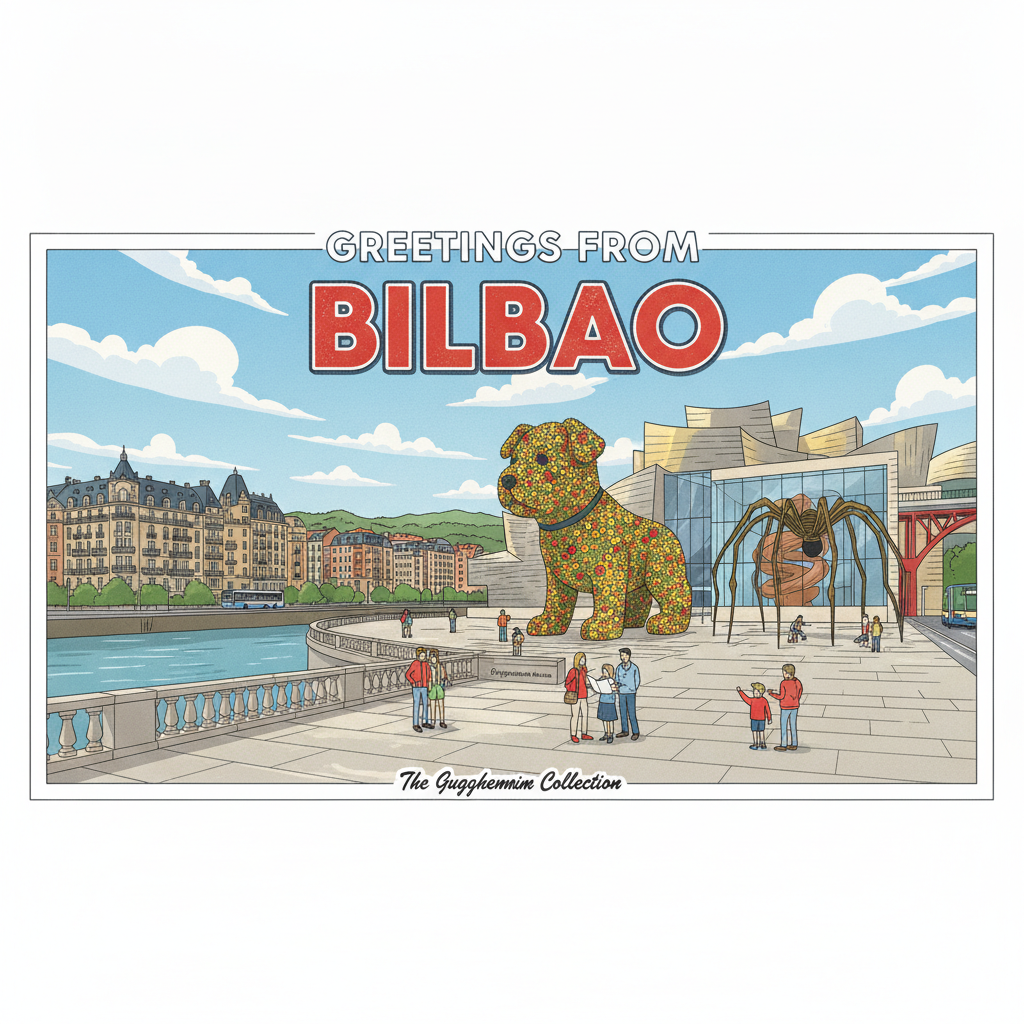
The Museo Guggenheim Bilbao (the 'Guggenheim Museum Bilbao' — the contemporary art museum on the south bank of the Nervión River in the Abandoibarra district of Bilbao, designed by the Canadian-American architect Frank Owen Gehry (born Frank Owen Goldberg, b.1929 in Toronto, Ontario) and opened on October 18, 1997 by King Juan Carlos I of Spain): the commission (the Guggenheim Bilbao — the museum commissioned by the Basque Government and the Solomon R. Guggenheim Foundation (New York) as part of the Bilbao urban regeneration strategy following the industrial collapse of the Basque Country in the 1980s (the closure of the Bilbao steel mills and the shipyards that had been the economic engine of the Basque Country since the late 19th century)): the building (the Guggenheim Bilbao — the building described by the architect Philip Johnson as 'the greatest building of our century' and by the architectural critic Herbert Muschamp as 'the reigning work of our moment': the deconstructivist building of 24,000 square metres of total floor area, composed of the interlocking curvilinear and rectilinear volumes covered in the three materials — the titanium (the 33,000 irregular titanium shingles covering the curved volumes), the limestone (the rectilinear volumes and the base of the building), and the glass (the curtain wall glazing of the central atrium and the linking elements)): the titanium (the titanium cladding of the Guggenheim Bilbao — the choice of titanium as the cladding material for the curved surfaces of the museum: the 0.38 mm thick titanium shingles (each shingle approximately 60 × 90 cm, each unique in shape and curvature), the titanium that was chosen by Gehry for its ability to capture the diffuse grey Atlantic light of the Basque Country (the titanium shimmers and changes colour in the rain and the mist of the Bilbao climate in a way that no other metal does), the total surface area of the titanium cladding approximately 10,000 m²).
- 2
The 'Bilbao Effect' — Urban Regeneration Through Culture
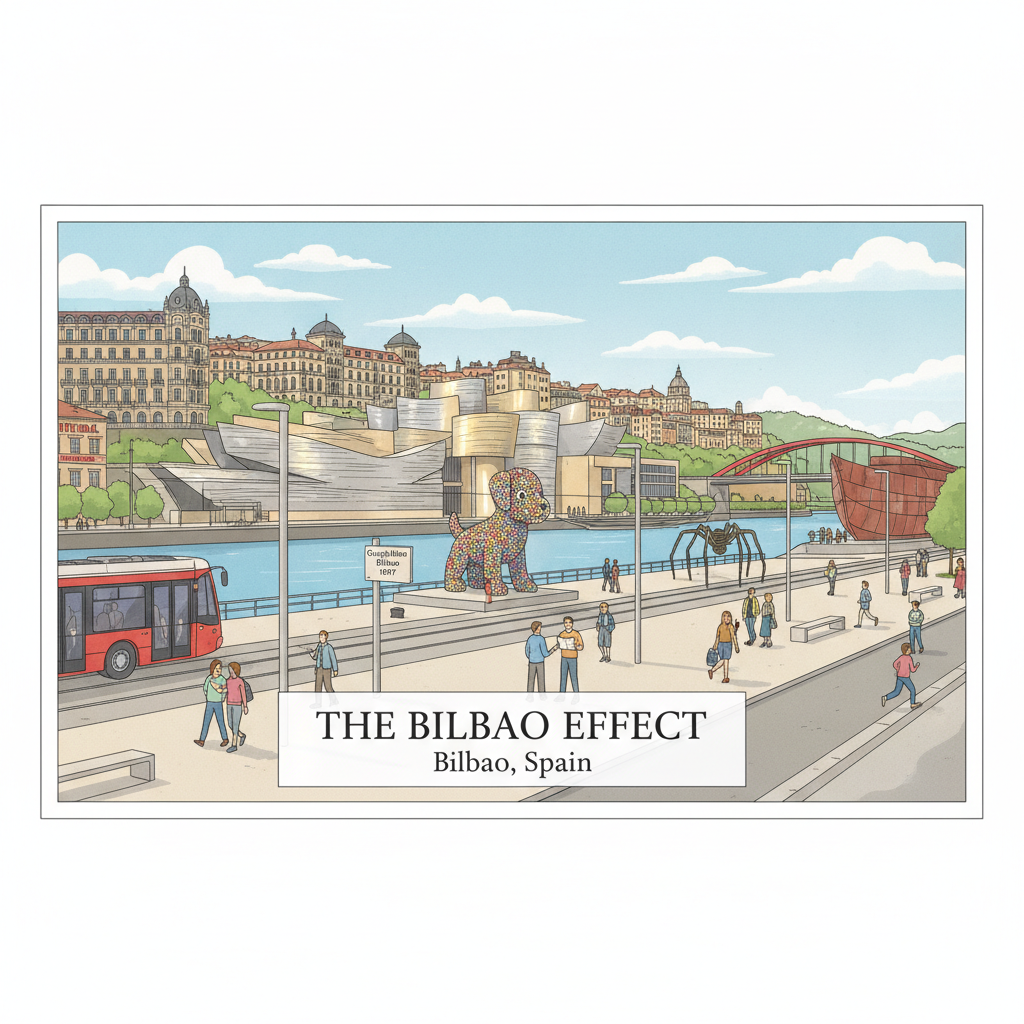
The 'Bilbao Effect' (the 'Efecto Guggenheim' or the 'Efecto Bilbao' — the term coined by urban planners and economists to describe the transformative impact of the Guggenheim Museum Bilbao on the economic and social regeneration of the city of Bilbao and subsequently used as a model for urban cultural investment worldwide): the context (the context of the Bilbao Effect — the Bilbao of the 1980s: the formerly prosperous industrial city that was devastated by the deindustrialization of the late 1970s-1980s (the closure of the steel mills of the 'Altos Hornos de Vizcaya' and the collapse of the Bilbao shipbuilding industry that had made the city the industrial capital of Spain), the city with the unemployment rate of 25% and the urban decay of the former industrial zones along the Nervión River): the regeneration strategy (the Bilbao urban regeneration strategy of the 1990s — the strategy developed by the Basque Government, the Bilbao City Council, and the private sector partners that invested in the transformation of the former industrial waterfront (the 'Abandoibarra' — the former shipyard and rail yard on the south bank of the Nervión that became the site of the Guggenheim Museum, the Palacio Euskalduna concert hall, the new park, and the luxury hotel): the results (the results of the Bilbao Effect — the economic impact of the Guggenheim Museum Bilbao since its opening in 1997: the museum has attracted approximately 20 million visitors, generated €4 billion in economic impact (according to the Basque Government's figures), and transformed Bilbao from a declining industrial city into one of the most visited tourist destinations in Spain.
- 3
The Guggenheim Collection — Koons, Serra & 20th Century Masters
The permanent collection of the Guggenheim Bilbao (the artworks in the permanent collection of the museum and the touring exhibitions from the Solomon R. Guggenheim Foundation collection): the 'Matter of Time' by Richard Serra (the most celebrated work of art in the permanent collection of the Guggenheim Bilbao — the 'The Matter of Time' by the American sculptor Richard Serra (1938-2024): the installation of 8 large-scale weathered steel sculptures (the 'Cor-Ten' steel — the weathering steel that develops the distinctive brown-orange patina of iron oxide) installed permanently in the 130-metre long 'Sala 104' (the 'Fish Gallery', the most architecturally dramatic space in the Guggenheim Bilbao): the sculptures (the 8 Richard Serra sculptures of 'The Matter of Time' — the spiralling, curving, and elliptical steel corridors and chambers that the visitor walks through and inside, the experience of the sculpture changing at every point of passage: the 'Snake' (the first Serra sculpture installed in the Guggenheim Bilbao, in 1997, a permanent commission), the 'Torqued Ellipses' (the four elliptical steel chambers whose walls lean and curve inward), the 'Double Torqued Ellipse', the 'Blind Spot Reversed', and the 'Open Ended'): the 'Puppy' by Jeff Koons (the 'Puppy' — the 12.4-metre tall West Highland White Terrier topiary sculpture by the American artist Jeff Koons (b.1955), the sculpture covered in approximately 70,000 flowering plants (the seasonal planting: the begonias, the impatiens, the petunias, and the marigolds changing with the season), the sculpture installed permanently at the main entrance to the Guggenheim Bilbao): the 'Maman' by Louise Bourgeois (the 'Maman' — the 9.27-metre tall bronze and stainless steel spider sculpture by the French-American artist Louise Bourgeois (1911-2010), the spider carrying the marble egg sac beneath its abdomen, the sculpture installed at the riverside entrance to the Guggenheim Bilbao).
- 4
Abandoibarra — The Regenerated Waterfront
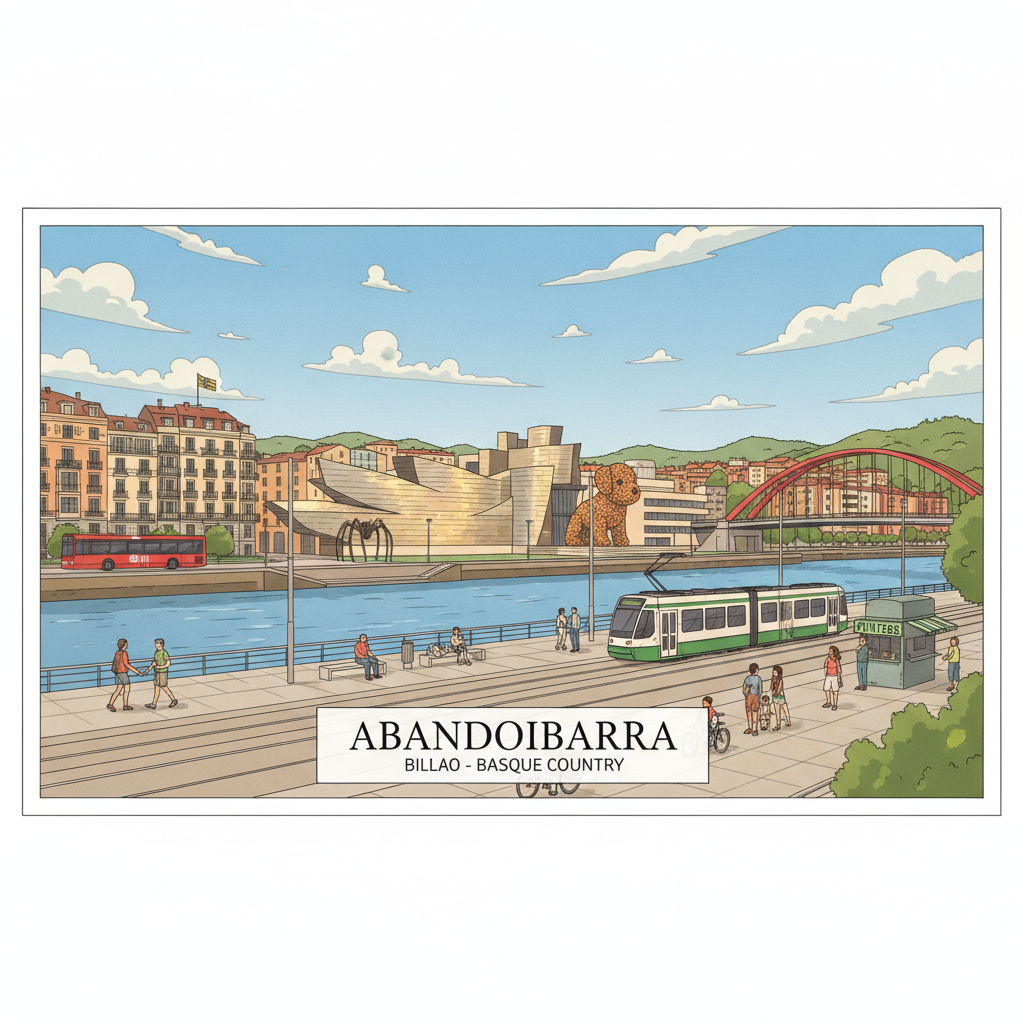
The Abandoibarra (the 'Abandoibarra' district — the former industrial waterfront on the south bank of the Nervión River in central Bilbao that was transformed from the derelict former shipyard and rail yard into the new cultural and commercial quarter of Bilbao in the urban regeneration project of the 1990s-2000s): the former industrial site (the Abandoibarra before the regeneration — the former site of the 'Euskalduna' shipyard (the 'Astilleros y Talleres del Nervión' — the shipyard that closed in 1984 after a century of shipbuilding on the Nervión) and the 'RENFE' rail marshalling yard (the goods yard of the Bilbao-Santander railway line): the regeneration (the Abandoibarra regeneration project — the masterplan for the Abandoibarra developed by the architect César Pelli (1926-2019) (the Argentinian-American architect who designed the Petronas Towers in Kuala Lumpur) and the landscape architect Kathryn Gustafson, the masterplan that located the Guggenheim Museum at the western end of the site (the site that maximized the visual impact of the building from the Puente de la Salve bridge and the Nervión waterfront), the Palacio Euskalduna concert hall at the eastern end (the titanium and concrete concert hall designed by Federico Soriano and Dolores Palacios, opened 1999), the new hotel (the Gran Hotel Domine Bilbao, facing the Guggenheim), and the Deusto University library (the 'DeustoTech' — the business and technology library designed by Rafael Moneo) in the new park.
- 5
Zubizuri & the Bridges of Bilbao
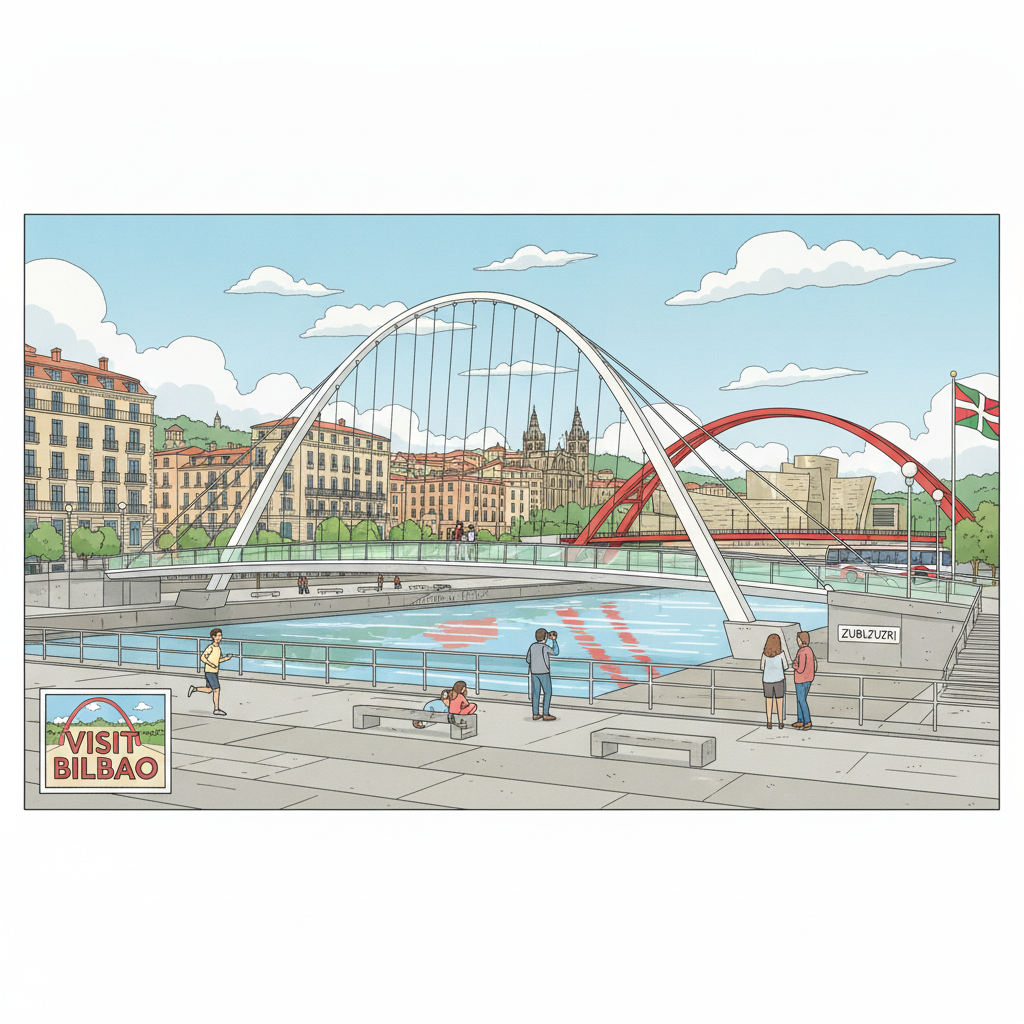
The bridges of the Nervión River in Bilbao (the bridges that cross the Nervión River in central Bilbao, the river that divides the city between the south bank (the new Abandoibarra development and the 19th-century 'Ensanche') and the north bank (the 'Casco Viejo' — the old town)): the Zubizuri (the 'Zubizuri' — the 'White Bridge' in Basque (the 'zubia' = the 'bridge', the 'zuri' = the 'white'): the pedestrian footbridge designed by the architect Santiago Calatrava (b.1951) spanning the Nervión River between the Abandoibarra and the Campos Elíseos neighbourhood, completed in 1997 (the same year as the Guggenheim Bilbao): the bridge (the Zubizuri — the arched suspension footbridge of white-painted tubular steel supporting the curved walkway of the bridge via the steel cables, the walkway enclosed by the curved glass balustrades, the bridge supported by a single arch of 75 metres span): the Puente de la Salve (the 'La Salve Bridge' — the vehicular road bridge that spans the Nervión River immediately adjacent to the Guggenheim Museum Bilbao, the red arch bridge that is the most prominent element of the Guggenheim Bilbao waterfront view: the bridge integrated into the Guggenheim composition by the 'La Salve' gateway (the red painted steel portal arch added to the bridge by the Japanese artist Iñigo Manglano-Ovalle in 2007 for the 10th anniversary of the Guggenheim Bilbao)): the Puente de Vizcaya (the 'Puente de Vizcaya' — the UNESCO World Heritage Site transporter bridge (the 'puente transbordador') at Getxo, 12 km downstream from central Bilbao — the world's oldest transporter bridge, built 1893, the suspended gondola ferry that crosses the Nervión estuary ('Ría del Nervión') at Getxo, carrying vehicles and passengers across the river on a suspended gondola carriage.
- 6
Bilbao Fine Arts Museum & the Artistic Legacy of the Basque Country
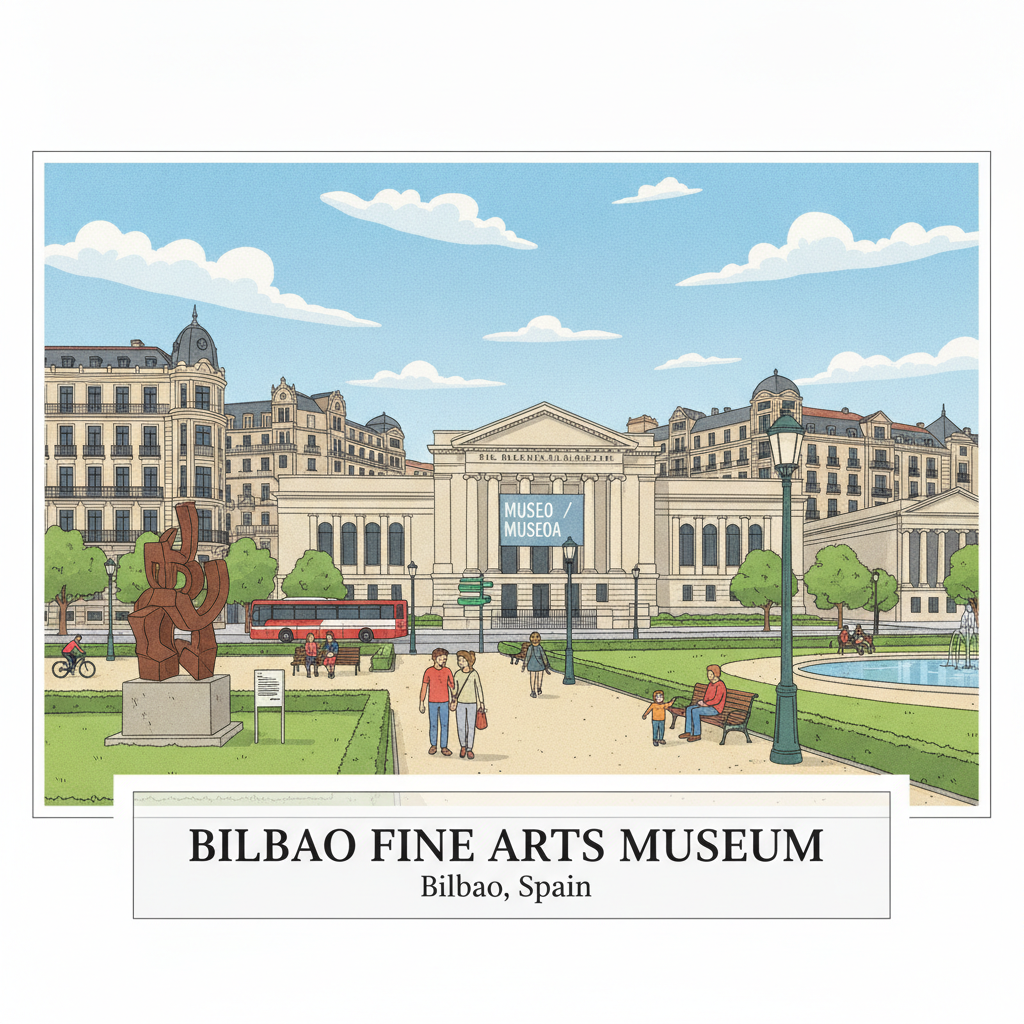
The Museo de Bellas Artes de Bilbao (the 'Bilbao Museum of Fine Arts' — the fine arts museum in the Doña Casilda park in the Ensanche district of Bilbao, one of the most important art museums in Spain and the most significant art collection in the Basque Country): the museum (the Museo de Bellas Artes de Bilbao — the museum founded in 1914, housed in the neoclassical building in the Parque de Doña Casilda de Iturrizar (the main park of Bilbao, designed in the English landscape garden style in the 19th century), the museum with the permanent collection of over 10,000 works): the collection (the permanent collection of the Museo de Bellas Artes de Bilbao — the collection organized chronologically from the medieval art (the 12th-15th century: the retablos and the sculptures of the Basque churches) to the contemporary art (the 21st century): the Flemish collection (the 16th-17th century Flemish and Dutch paintings — including the works of Pieter Bruegel the Younger (1564-1638) and Jan de Beer (c.1475-1528)): the Spanish Golden Age collection (the 17th century Spanish paintings — the works of Francisco de Zurbarán (1598-1664), Bartolomé Esteban Murillo (1617-1682), and El Greco (1541-1614)): the Basque art collection (the collection of Basque art from the 19th and 20th centuries — the works of the Bilbao painter Ignacio Zuloaga (1870-1945), the sculptor Jorge de Oteiza (1908-2003), and the sculptor Eduardo Chillida (1924-2002) — the two Basque sculptors of the 20th century who are among the most important artists of their generation in Europe).
Walk this route with audio
Stories play automatically as you reach each stop — no tapping needed.
More in bilbao
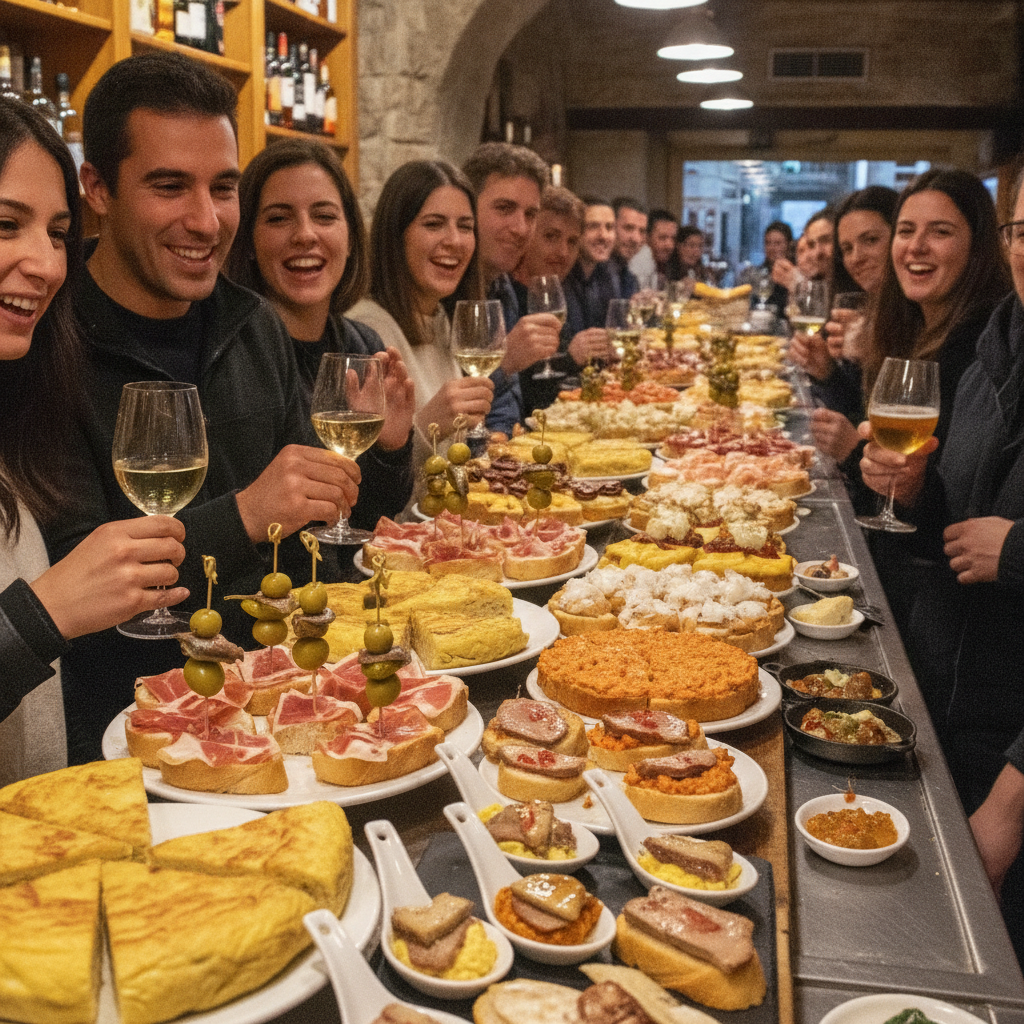
Pintxos, Casco Viejo & Bilbao's Basque Gastronomic Culture
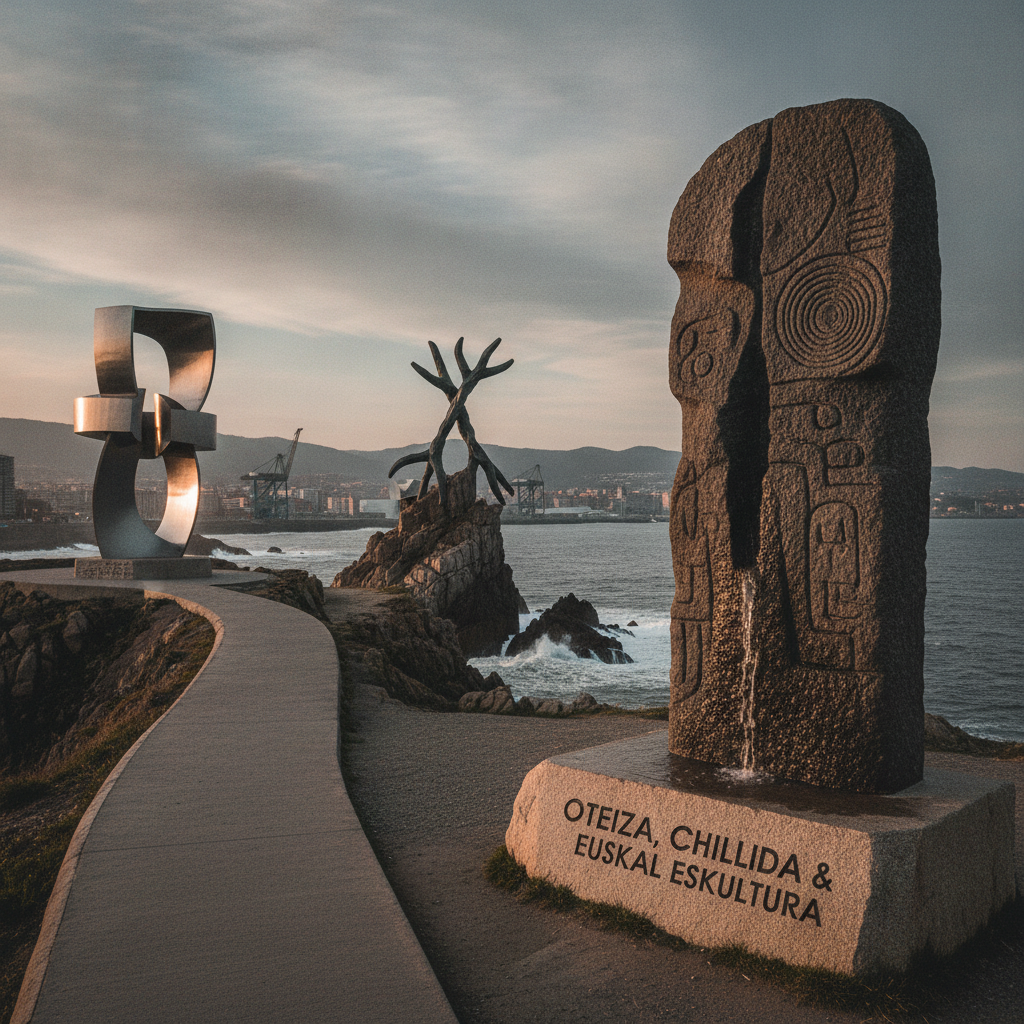
Oteiza, Chillida & the Basque Sculpture Tradition
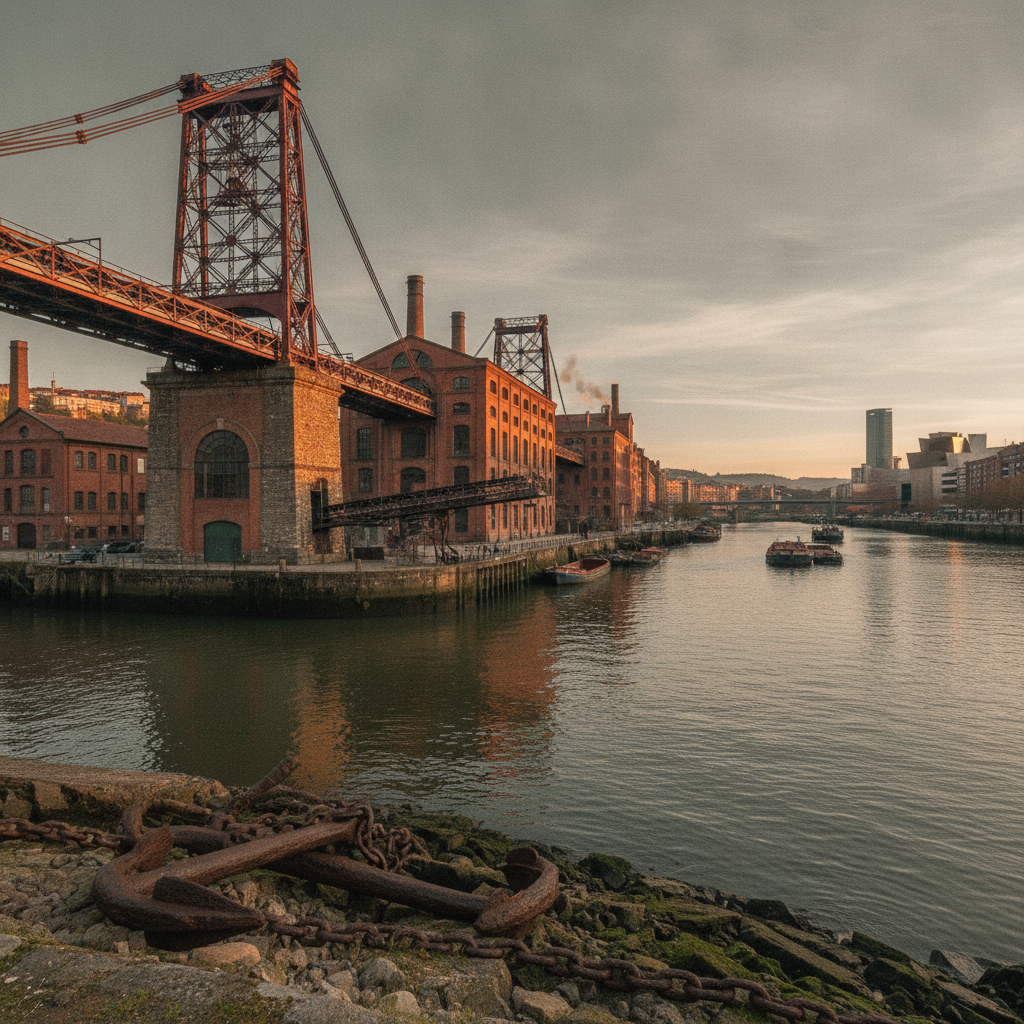
The Nervión River, Industrial Heritage & Bilbao's Iron History
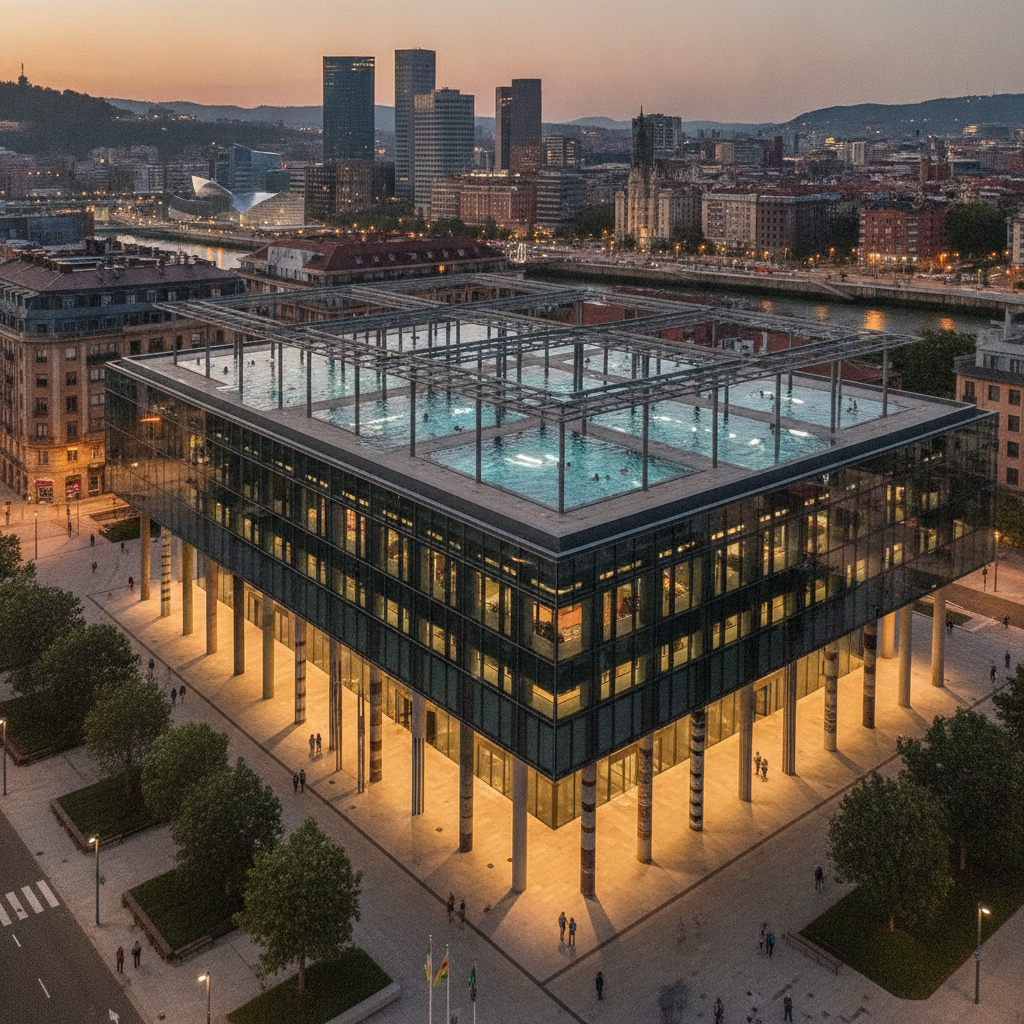
Azkuna Zentroa, Alhóndiga & Bilbao's Cultural Renewal
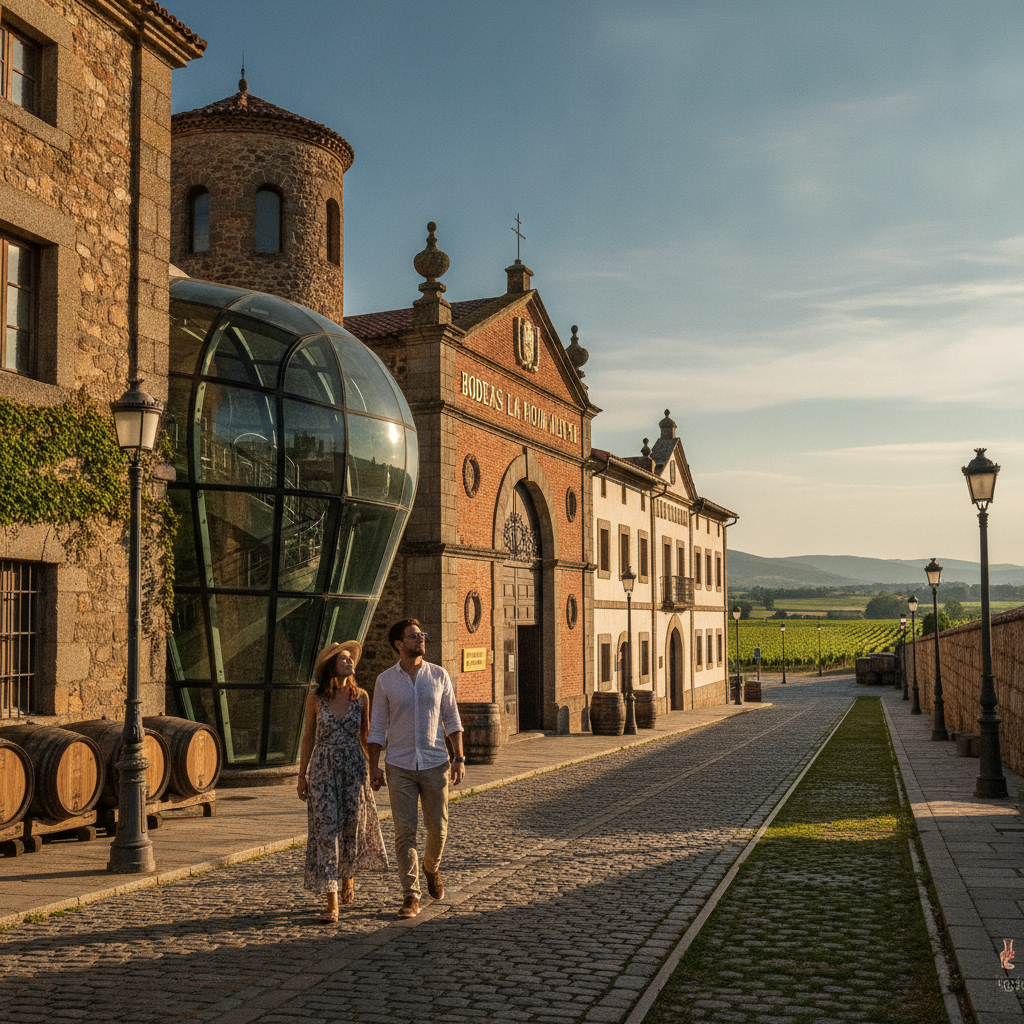
Rioja Wine Day Trip — Haro, Laguardia & the Wine Cellars of La Rioja