Bergen Medieval History — Bergenhus Fortress, Håkonshall & the Norwegian Royal Past
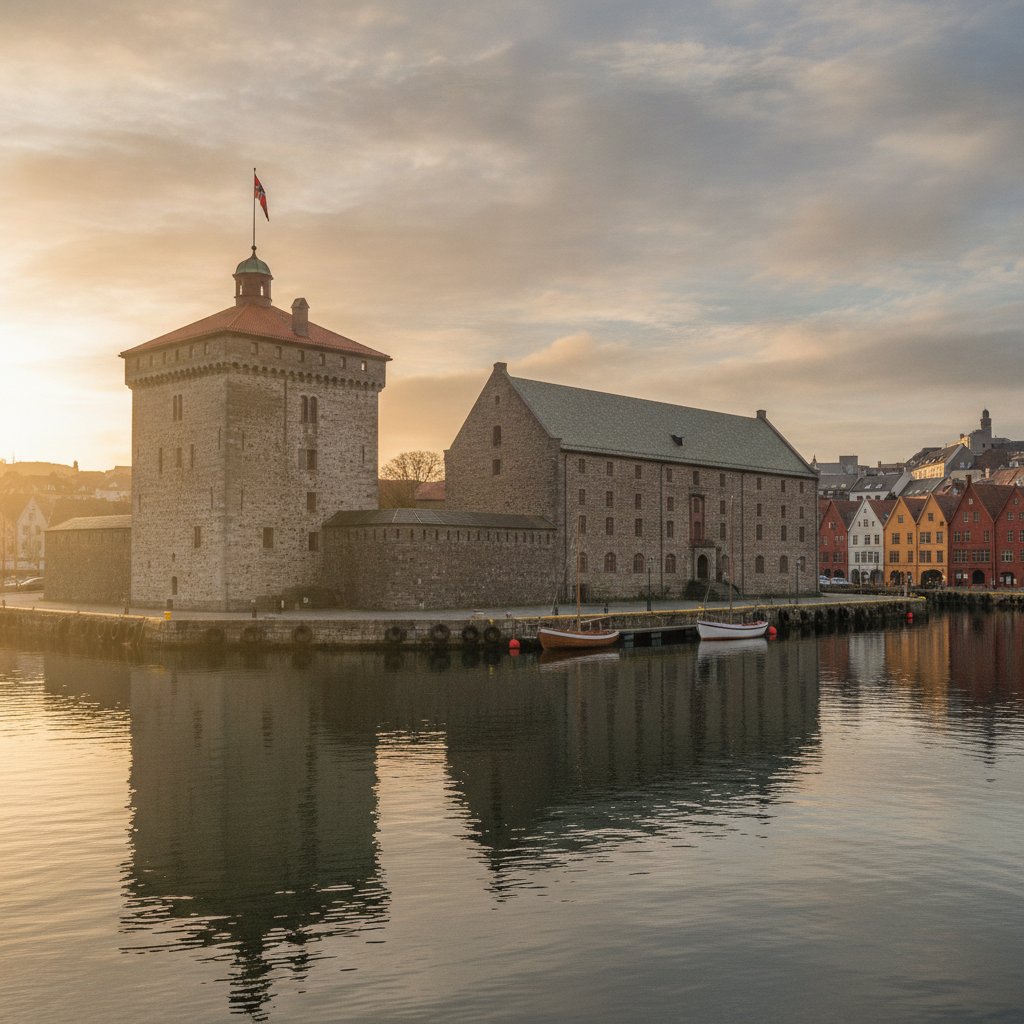
Bergen was the capital of medieval Norway and the most important city in the kingdom from the 12th to the 17th century — the Bergenhus Fortress, the Håkonshall, and the Rosenkrantz Tower the surviving monuments of the royal and military history of the city.
- 1
Bergenhus Fortress — the Royal Castle of Bergen
Bergenhus (Bergenhus Festning, the medieval fortress complex at the harbour mouth west of Bryggen, the site of the oldest stone buildings in Bergen — the Hákonshall of 1261 and the Rosenkrantz Tower of the 1560s — the fortress the seat of the Norwegian king and the military command of western Norway for 700 years, the outer walls and the parade ground the most visited free-entry public space in Bergen, open daily 6am-11pm): the fortress history (the Bergen castle first documented in the 12th century under King Inge Krokrygg, the building developing into the major royal complex under King Håkon Håkonsson in the 13th century, the fortress the base of the Norwegian military command through the Danish period 1380-1814 and the union with Sweden 1814-1905, the German occupation of 1940-1945 the most recent military use — the German command using the Håkonshall as an ammunition dump, the explosion of the German vessel Vogt in 1944 destroying the Håkonshall roof and the Rosenkrantz Tower upper sections, the subsequent restoration 1950-1970 the largest heritage reconstruction project in western Norway), the fortress parade ground (the cobblestoned inner court of the fortress, free, the most atmospheric public space in Bergen in the evening light, the outdoor concerts of the Bergenfest music festival held here in June — the Håkonshall and the Rosenkrantz Tower the backdrop for the headline concerts, the most dramatically staged outdoor music venue in Norway) and the fortress museum (the small museum in the guardhouse building, the military history of Bergen from the medieval to the World War II, €5 adults, Tuesday-Sunday 11am-4pm).
- 2
Håkonshall — the Medieval Banqueting Hall
Håkonshall (the medieval stone hall built 1247-1261 by King Håkon Håkonsson for the wedding of his son King Magnus Lagabøte and Princess Ingebjørg of Denmark — one of the most important royal events in medieval Norwegian history, the hall the largest Gothic stone secular building built in medieval Norway, the hall 37m long and 16m wide with the stone walls 2m thick, the roof destroyed in the 1944 explosion and reconstructed 1950-1961, €12 adults for the Håkonshall and the Rosenkrantz Tower, Tuesday-Sunday 10am-4pm): the interior (the restored Gothic stone interior — the single large hall on the ground floor, the stone pillars, the Gothic pointed arches, the recreated medieval banqueting setting with the long tables and the candlelight during the Bergenhus Medieval Market in late June, the hall the best surviving example of the Norwegian Gothic royal building tradition), the Rosenkrantz Tower (the adjacent tower built by the Bergen governor Erik Rosenkrantz in the 1560s on the foundation of the earlier Norwegian medieval tower, the tower combining the Renaissance defensive architecture with the medieval residential function — the tower rooms furnished as the Bergen governor's private apartments in the 16th-century style, the tower the most architecturally coherent Renaissance building in Bergen, the 360-degree view from the tower roof over the harbour and the Bryggen) and the medieval market (the Bergenhus Medieval Market in late June, the most attended outdoor historical event in Bergen, the jousting, the medieval craft demonstrations, the Viking food — the mead and the dried reindeer — the period costumes and the historical re-enactment in the correct setting of the medieval fortress courtyard, dates and programme at bymuseet.no).
- 3
Sandviken — the Historic Quarter North of Bryggen
Sandviken (the quarter north of the Bergenhus Fortress on the east side of the Byfjorden, the neighbourhood of the 18th and 19th century wooden merchant houses and the salt-fish factories of the pre-industrial Bergen economy — the most intact surviving 19th-century industrial and residential quarter in Bergen, less visited than Bryggen but more authentically preserved as a living neighbourhood): the Sandviken buildings (the coloured wooden houses of the 19th-century Bergen merchants and artisans, the houses in the terracotta red and the yellow-ochre paint schemes of the period, the narrow lanes between the houses the correct walking environment for the visitor seeking the pre-tourist Bergen urban experience, the Skottehuset at Sjøgaten 2 — the 18th-century house the oldest surviving private house in Bergen, not open to visitors but the exterior the most intact single example of the Bergen wooden architecture of the period), the fish-salting factories (the former klippfisk — the salt-dried cod — processing factories along the Sandviken waterfront, the buildings the direct predecessors of the Bryggen Hanseatic trade, the factory buildings now converted to apartments and studios but the original industrial character of the ground floor visible), the Sandviken path (the 1.5km waterfront walk from the Bergenhus Fortress north along the Sandviken shore — the most relaxed and most photogenic waterfront walk in Bergen, the wooden houses directly at the water's edge, the small boat jetties, the fishing boats moored at the private docks, the path accessible at all times and at no cost) and the Sandviken panorama (the view back south to the Bergenhus Fortress and the Bryggen from the Sandviken waterfront — the Bergen harbour panorama with the seven mountains as the backdrop — the correct late afternoon photography position for the Bryggen buildings in the western light).
- 4
Bergen's Wooden Houses — the Norwegian Urban Heritage
The Bergen wooden house tradition (the most distinctive feature of the Bergen old town character outside the Bryggen — the 18th and 19th century wooden residential buildings that cover the hillside districts of Møhlenpris, Nordnes, and the Nygård quarter, the houses in the Norwegian plank construction — the horizontal planks and the vertical corner posts of the Laftehus tradition — or the later paneled timber frame construction, the buildings painted in the characteristic Bergen palette): Nordnes (the most intact surviving Bergen wooden house district, the peninsula 1km west of Bryggen, the streets of Nordnespynten and Klosteret the most densely preserved examples, the houses at numbers 1-15 Klosteret the most homogeneous early 19th-century street in Bergen, the neighbourhood accessible on foot from the Fish Market in 15 minutes), the Nye Sandviken hospital complex (the oldest surviving group of purpose-built public buildings in Bergen at Sydneshaugen — the 18th-century asylum buildings in the hillside above Sandviken, the most historically significant public institution in the history of Bergen medicine, the buildings now converted to university and hospital use but the original exterior entirely preserved), the Fantoft Stave Church (the medieval stave church rebuilt after the 1992 arson, the stave church at Fantoftvegen 38 in Fana accessible by bus 83, the reconstruction of the 1150 CE stave church from Fortun in the Sognefjord district — the church moved to Bergen in 1883, the reconstruction using the same species of wood and the same construction methods as the original, the most correct Norwegian religious architecture outside the Urnes Stave Church UNESCO site) and the Bergen House of Lists (the most photographed single row of wooden houses in Bergen at Marken 22-28 — the terrace of identical wooden townhouses built 1880, the facades in the alternating red and yellow paint schemes, the row preserved intact and the most concentrated single example of the 19th-century Bergen streetscape).
- 5
Norwegian Crafts and Design Shopping in Bergen
Bergen design and craft shopping (the city with the strongest craft tradition in western Norway — the Norwegian wool, the Viking-inspired silversmithing, the Hardanger embroidery, and the contemporary Norwegian design all concentrated in the Bergen retail): the Norwegian wool sweater (the lopapeysa — the Icelandic wool yoke sweater — and the Norwegian Setesdal sweater — the black and white geometric pattern on the classic crew neck — the two most internationally recognized Scandinavian wool garments, the Setesdal sweater the specifically Norwegian tradition, the Bergen wool shops on Bryggen and at the Strand shopping centre, the authentic handknit versions at €120-250 versus the machine-made at €60-90, the quality Norwegian wool sweater at €100+ the most practical Norwegian memento of adequate warmth), the Hardanger embroidery (Hardangersøm, the traditional Norwegian whitework embroidery of the Hardangerfjord district — the white on white counted thread embroidery on the linen fabric, the patterns of the 8-pointed star and the flower grid the most recognized Hardanger motifs, the tablecloths and the runners at €50-200 the most common Hardanger products, available at the Husfliden shop at Vågallmenningen 3 — the national Norwegian craft cooperative shop, the most reliable quality source for the traditional crafts), the Hjelmeland silversmith (at Bryggestrete 8 in the Bryggen, the Bergen silversmith producing the Viking-inspired jewelry in the traditional Norse designs — the Urnes dragon, the Oseberg ship motifs, the runes in silver, the most authentically Norwegian jewelry in Bergen, the pieces at €30-200) and the Bergen Antiques (the Antikvariatet bookshop at Kong Oscars gate 4 — the most comprehensive Norwegian antiquarian bookshop in western Norway, the old maps and the Viking age reproductions alongside the second-hand books — the correct shopping for the visitor interested in the Bergen historical narrative rather than the tourist souvenirs).
- 6
Bergen Evening — the Restaurant Scene and the Night
Bergen evenings (the Bergen restaurant and bar scene the most varied in western Norway, the city's fishing and trading tradition creating a seafood restaurant culture that outperforms its population size): the Bryggen restaurants (the restaurant row in the Bryggen alley — the Bryggestuen og Bryggekroen at Bryggen 11, the oldest restaurant in Bergen established 1910, the fish dishes and the Norwegian specialties in the original Hanseatic building, the most historically atmospheric dining in Bergen at €35-55 per main — and the Enhjørningen at Bryggen 29, the unicorn restaurant in the 17th-century Bryggen interior, the Norwegian fish dishes in the most elaborately restored Hanseatic interior in Bergen), the Norges Gate restaurant district (the restaurant street 300m south of the Fish Market, the most concentrated independent restaurant district in Bergen — the Colonialen at Norges Gate 8, the most consistent quality in the €40-60 bracket — and the Lysverket at Rasmus Meyers allé 9 in the KODE art museum, the New Nordic restaurant of the Art Museum, the most internationally reviewed Bergen restaurant and the most design-conscious setting), the Bergen bars (the Apollon at Nygårdsgaten 2a, the best record and music bar in western Norway — the vinyl collection and the live music stage the draw for the Bergen music crowd; the Landmark at Fosswinckels gate 18, the USF cultural centre bar for the Bergen arts community; and the Dickens at Kong Oscars gate 4, the Irish-style pub the most historically established international bar in Bergen since 1972) and the night (the Bergen nightlife less extreme than Oslo but the bars on Nygårdsgaten and the Ole Bulls Plass square operating until 2am Thursday to Saturday, the Ole Bulls Plass the outdoor bar and concert venue of the Bergen summer, the most animated public space in Bergen on warm evenings).
Walk this route with audio
Stories play automatically as you reach each stop — no tapping needed.
More in bergen
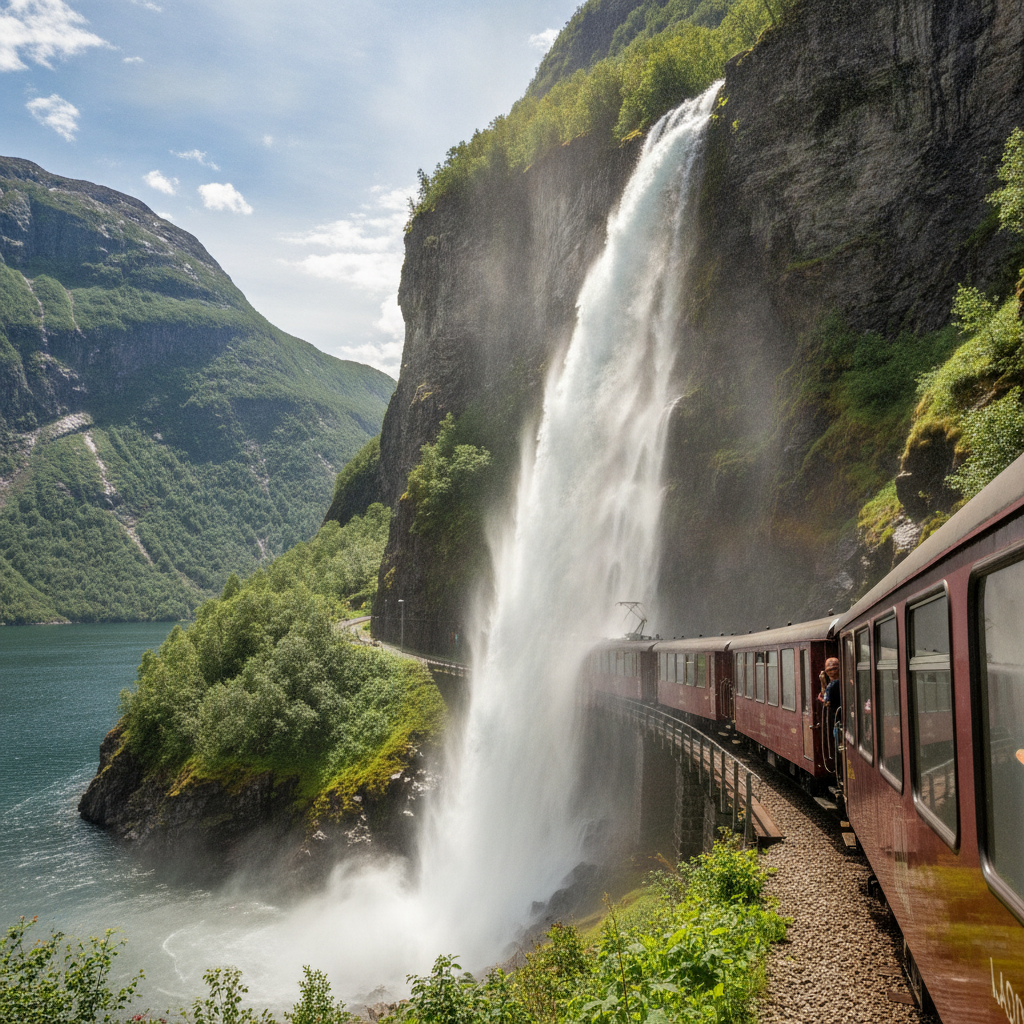
Bergen to the Fjords — the Flåmsbana Railway, Sognefjord & the Norway in a Nutshell Circuit
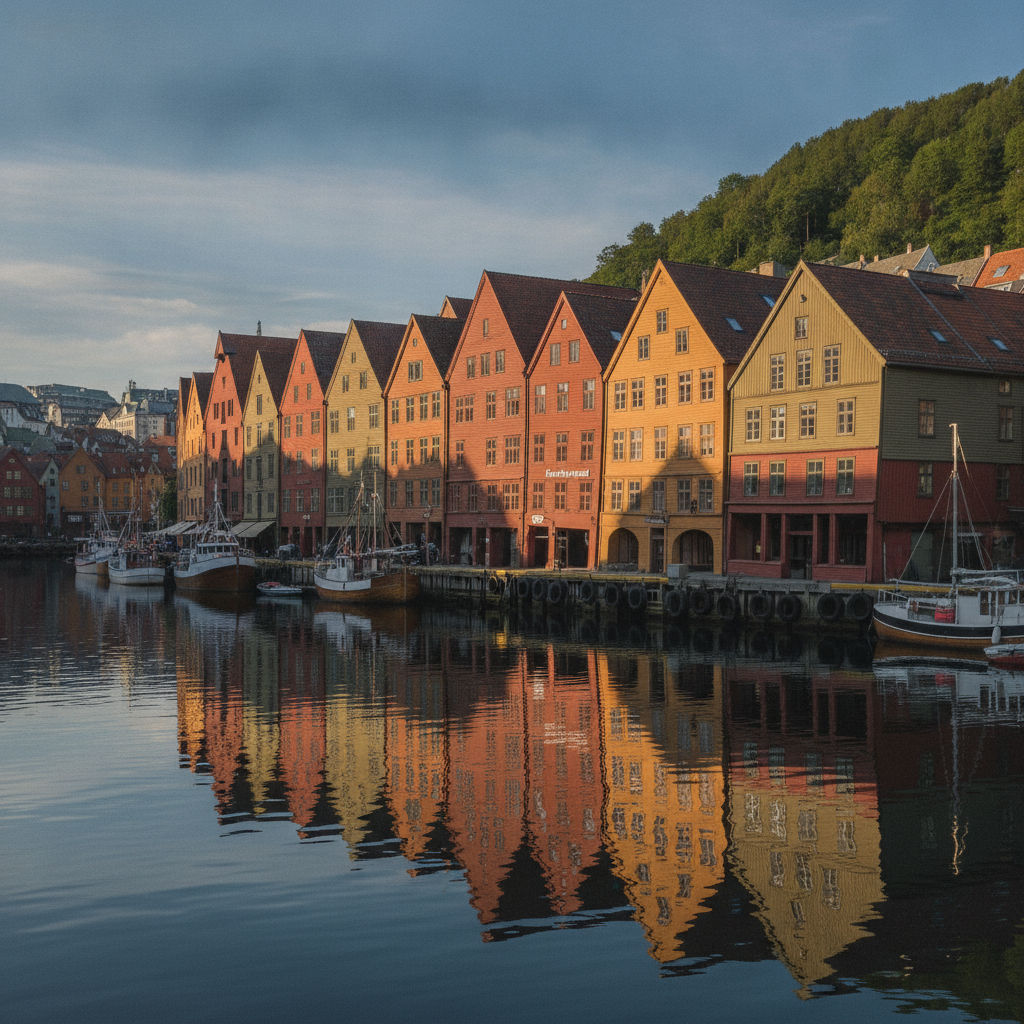
Bergen — Bryggen UNESCO Wharf, the Fish Market & the Fløibanen Funicular to the Mountain
Bergen Music — Edvard Grieg, Troldhaugen & the Norwegian Musical Tradition
Bergen Art & Architecture — KODE Museums, Norwegian Design & the City Life of Bergen