Bergen to the Fjords — the Flåmsbana Railway, Sognefjord & the Norway in a Nutshell Circuit
Bergen is the gateway to the Norwegian fjords — the most dramatically glacially carved landscapes in Europe. The Norway in a Nutshell day trip from Bergen combines the Bergen Line mountain railway, the Flåmsbana rack railway, the Sognefjord boat, and the Nærøyfjord (UNESCO) into the most scenic day journey in Europe.
- 1
The Flåmsbana — the World's Most Scenic Railway
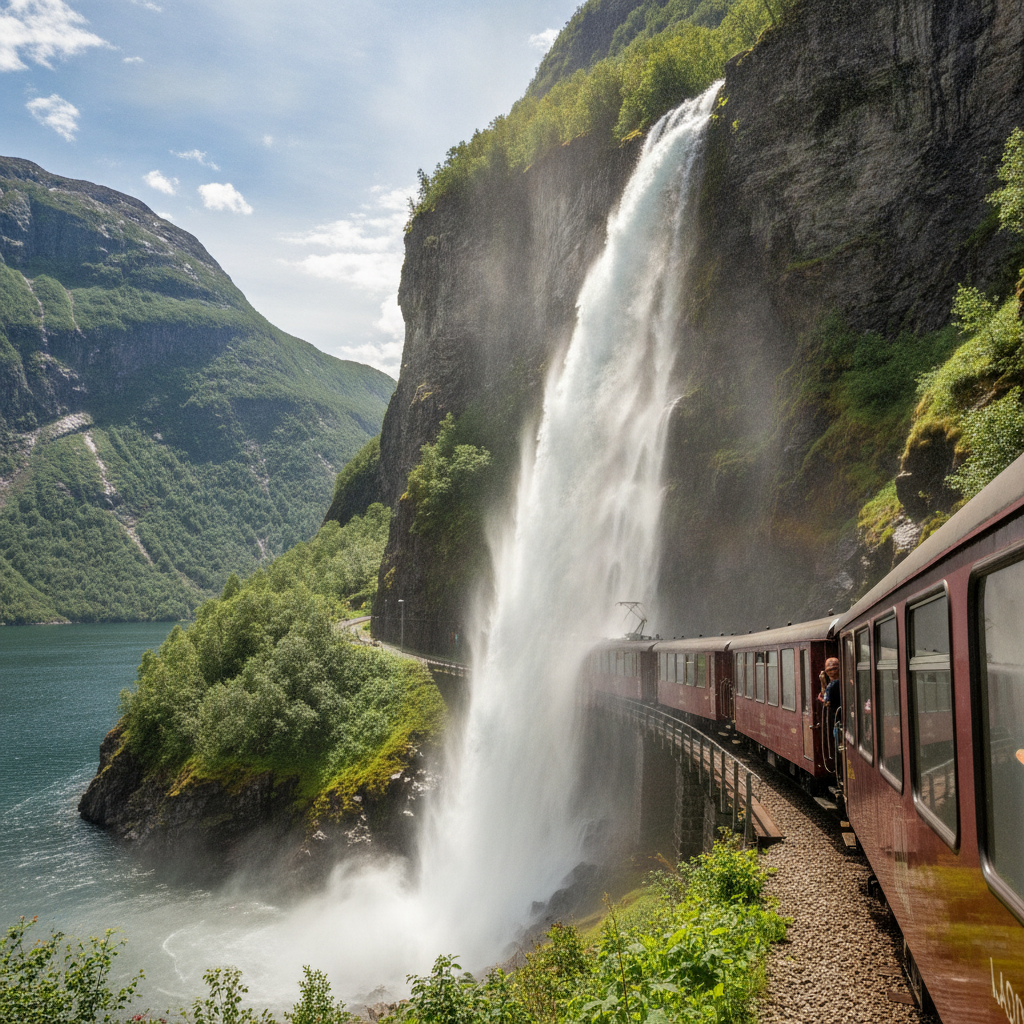
Flåmsbana (the Flåm Railway, the 20km standard-gauge railway descending 866m from the Myrdal mountain station at 867m altitude to the Flåm village on the Aurlandsfjord, the steepest standard-gauge railway in the world using normal adhesion track — the gradient of 5.5 percent maintained for 18km, the train descending through 20 tunnels, the 11 curves with the gradient exceeding the maximum for normal railways negotiated with the special Flåm railway cars fitted with the double sets of brakes, the journey 1 hour in each direction, the train operating all year — the correct departure from Myrdal coordinated with the Bergen Line train from Bergen, tickets at flamsbanabooking.no at €30 adults each way): the journey highlights (the Reinunga curve — the train reversing direction on a 180-degree turn inside a mountain tunnel, the Kjosfossen stop — the train pausing 5 minutes at the Kjosfossen waterfall, 225m tall, the waterfall the most dramatic single element of the journey, the Nåli bridge — the most photographed railway bridge in Norway, the bridge curving on a 5.5 percent gradient above the valley floor — and the descent into the Flåm valley, the valley floor 867m below the starting point at Myrdal visible from the windows in a single panoramic drop), the Flåm village (the village at the fjord head, the cluster of hotels and restaurants serving the Norway in a Nutshell passengers, the Flåm Railway Museum at the station — the free museum documenting the construction of the railway 1923-1940, the 20 years of hand-drilling and blasting through the granite mountain — and the Flåm Bakeri for the Norwegian cinnamon rolls at €4).
- 2
Sognefjord and Nærøyfjord — the World's Deepest Fjord
Sognefjord (the Sogne Fjord, 205km long and up to 1,308m deep — the longest and deepest fjord in the world, the fjord a glacially carved valley now filled with the North Atlantic seawater, the fjord arms extending from the main channel like a tree structure into the Norwegian mountain interior, the fjord system the defining geographic feature of western Norway): the Nærøyfjord (the UNESCO World Heritage arm of Sognefjord, designated 2005, the narrowest fjord in Norway at 250m width — the fjord walls rising 1,400m on both sides, the walls the most claustrophobically dramatic of any Norwegian fjord, the fjord accessible by boat from Flåm or Gudvangen, the ferry 2 hours from Flåm to Gudvangen through the most dramatic fjord section, the ticket at fjord1.no at €35-45 per person, the ferry the centrepiece of the Norway in a Nutshell journey), the Norway in a Nutshell (the Norway in a Nutshell tour — the Fjord Tours branded day trip from Bergen combining the Bergen-Myrdal mountain train, the Flåmsbana, the Flåm-Gudvangen fjord ferry, the Gudvangen-Voss bus, and the Voss-Bergen train in a single seamless ticket — the complete circuit 12 hours from Bergen at €175 adults, the most efficient way to see the Norwegian fjords without renting a car, the ticket at fjordtours.no, the journey the most photographed day trip in Norway), and the fjord kayaking (the self-guided kayak rental in Flåm and Aurland — the Norwegian Outdoor Association renting 2-person sea kayaks at €70/day, the paddle from Flåm to Aurland 8km through the Aurlandsfjord the most accessible self-guided fjord kayaking in Norway, the water calm in the morning, the afternoon katabatic winds from the mountains the primary hazard).
- 3
Hardangerfjord — the Fruit Fjord
Hardangerfjord (the second-longest fjord in Norway at 179km, 140km southeast of Bergen, accessible by bus from the Bergen bus station in 2 hours to Norheimsund or 3 hours to Ulvik, the fjord known as the 'Fruit Fjord' for the apple and cherry orchards that line the inner fjord shores — the mild microclimate created by the fjord sheltering the fruit growing from the Atlantic storms): the Hardangerfjord in blossom (the late April to mid-May blossom season when the cherry and apple orchards along the fjord shore are in full bloom, the most concentrated fruit tree blossom landscape in Northern Europe, the pink and white blossom against the blue fjord water and the snow-capped mountains the most photographed landscape in western Norway, the Hardanger Apple Festival in October the autumn equivalent), the Hardangerjøkulen glacier (the 6th largest glacier in Norway at 73 square km, the flat-topped glacier the backdrop to the Finse ski resort — 1,222m altitude — accessible from the Bergen Railway at Finse station, the glacier the setting for the ice planet Hoth in 'The Empire Strikes Back' 1980, the Star Wars location now marked by a sign at the Finse train station), the Vøringsfossen waterfall (the most visited waterfall in Norway at the head of the Hardangervidda plateau, the Bjoreio River dropping 182m into the Måbødalen canyon, the waterfall accessible from the Eidfjord village by the mountain road, the canyon the most dramatic feature of the Hardangerfjord hinterland, free, always accessible, the viewing platform built above the canyon rim) and the Hardanger fiddle (the traditional Norwegian folk fiddle of the Hardanger region — the national instrument of Norway, the Hardanger fiddle with the 8 strings — 4 playing and 4 resonating sympathetically under the soundboard — producing the most distinctively Norwegian musical sound, the folk music tradition of the Hardanger region the origin of Grieg's Norwegian folk-influenced compositions).
- 4
Bergen's Old Quarter — Nordnes and Sandviken
The Bergen neighbourhoods beyond Bryggen: Nordnes (the peninsula between the Vagen harbour and the Byfjorden, 1km west of Bryggen, the most atmospheric residential district in Bergen — the 18th and 19th century wooden houses on the narrow streets, the Nordnes Park at the peninsula tip the most pleasant public park in Bergen, the Bergen Aquarium at Nordnesbakken 4 — the largest aquarium in Norway, the penguins and the seals the most visited exhibits, the tropical fish and the Norwegian sea life collections in 60 tanks, €20 adults, daily 9am-6pm — and the Nordnes swimming pool, the outdoor pool with the harbour view, €7 adults, open May-September): Sandviken (the neighbourhood north of Bryggen on the east side of the harbour, the collection of the 19th century wooden houses and the fish-salting factories of the preserved Bergen fishing tradition, the Sandviken is home to the Bergen Fortress — Bergenhus Festning, the medieval fortress complex at the harbour mouth, the Håkonshall medieval hall of 1261 — the largest surviving medieval stone hall in Scandinavia, built by King Håkon Håkonsson for his coronation, €12 adults for the Håkonshall and the Rosenkrantz Tower — and the Korskirken church, the 12th-century medieval church the oldest surviving building in Bergen), the Festplassen cultural square (the main outdoor events venue of Bergen adjacent to the National Theatre, the most used public space in Bergen for the summer outdoor concerts and the Bergen International Festival — Bergen Festspillene — held in late May, the most important cultural festival in Norway, festspillene.no for the programme, tickets €20-80).
- 5
Bergen Seafood — the Norwegian Culinary Tradition
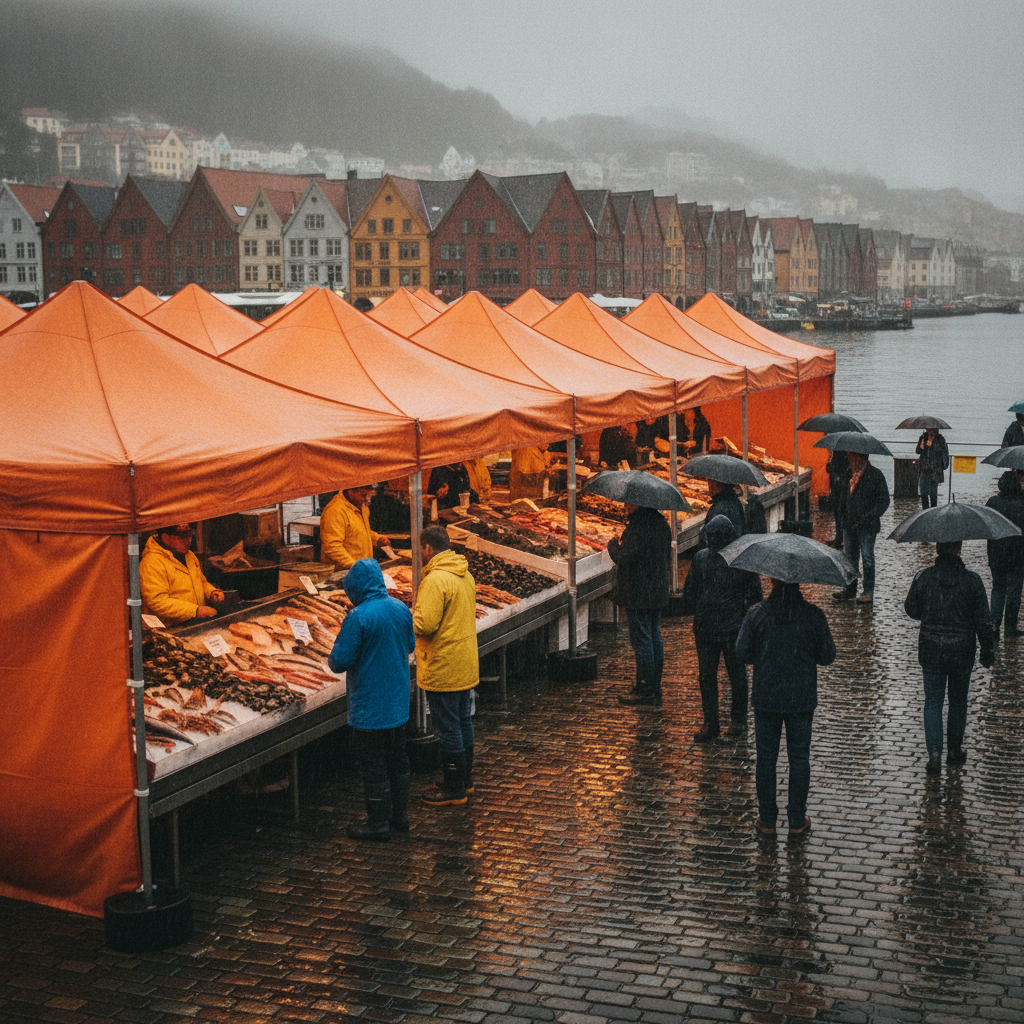
Bergen seafood tradition (the city's identity inextricably tied to the sea and the fish — Bergen was one of the wealthiest medieval cities in Northern Europe because of the stockfish — the wind-dried Arctic cod — trade with the rest of Europe, the cod dried on the racks of the Lofoten Islands in northern Norway and shipped south through the Hanseatic network, the Bergen merchants controlling the distribution): stockfish (tørrfisk, the wind-dried unsalted cod, dried on wooden racks in the Arctic wind of the Lofoten Islands from February to May, the fish losing 80 percent of its weight in drying, the resulting product lasting 5 years without refrigeration — the preserved protein that sustained medieval Europe through the winter and the Lenten fasting period, the dried fish rehydrated in water for 48 hours before preparation, the lutefisk — the lye-soaked version prepared for Christmas — the most divisive Norwegian food tradition, the stockfish museum in the Bergen Fish Market building), the Bergen fish soups (the Bergen fish soup — Bergensk fiskesuppe — the cream-based soup with the root vegetables, the fish stock, and the freshwater fish or the cod pieces, the signature Bergen dish available at the market restaurants and the Fish Market Hall, the distinction between the Bergen version and the national Norwegian fish soup important to Bergen people — the Bergen version invariably richer and more cream-dominant), and the Norwegian salmon (the farmed Atlantic salmon from the Norwegian fjord aquaculture farms — the world's largest salmon aquaculture industry producing 1.6 million tonnes per year, the Bergen port the hub of the Norwegian salmon export to 70+ countries, the freshest Norwegian salmon in Bergen available at the Fish Market at €15-20 per kg, the sashimi-quality slices €8-12 per portion at the market stalls, the best value luxury food purchase in Norway at the Bergen market).
- 6
Bergen Festivals — Bergenfest and the Cultural Calendar
Bergen's cultural calendar (the city with the richest cultural programme relative to population size of any Norwegian city): the Bergen International Festival (Festspillene i Bergen, the most important cultural festival in Norway, held over 15 days in late May and early June, the festival founded 1953 in the tradition of the Edvard Grieg legacy, the programme combining the classical music at the Grieg Hall and the Troldhaugen Concert Hall with the contemporary theatre, the visual arts, and the dance, the flagship events at the Grieg Hall the Bergen Philharmonic Orchestra opening concert and the international opera productions, tickets €30-150 at festspillene.no), Bergenfest (the outdoor rock and pop music festival in mid-June at the Bergenhus Fortress, the most popular music festival in western Norway, the 3-day festival with the international headline acts performing on the fortress grounds with the Håkonshall as the backdrop — the most atmospheric outdoor concert venue in Norway — tickets €200-350 for the 3-day pass at bergenfest.no, the programme announced in January for the June dates), the Night Jazz festival (Nattjazz, the outdoor and indoor jazz festival in late May, the most internationally recognized Norwegian jazz festival after the Molde Jazz, the programme at the USF Verftet cultural centre at Georgernes Verft 12 — the former fish factory on the inner harbour converted to the primary independent culture venue in Bergen — tickets €30-50 per evening at nattjazz.no) and the Bergen Light Festival (bergenlightfestival.no, held in February, the light installations on Bryggen and throughout the city centre, the most visited cultural event of the Bergen winter, the free outdoor installations the primary draw with the indoor events at €20-40 per ticket).
Walk this route with audio
Stories play automatically as you reach each stop — no tapping needed.
More in bergen
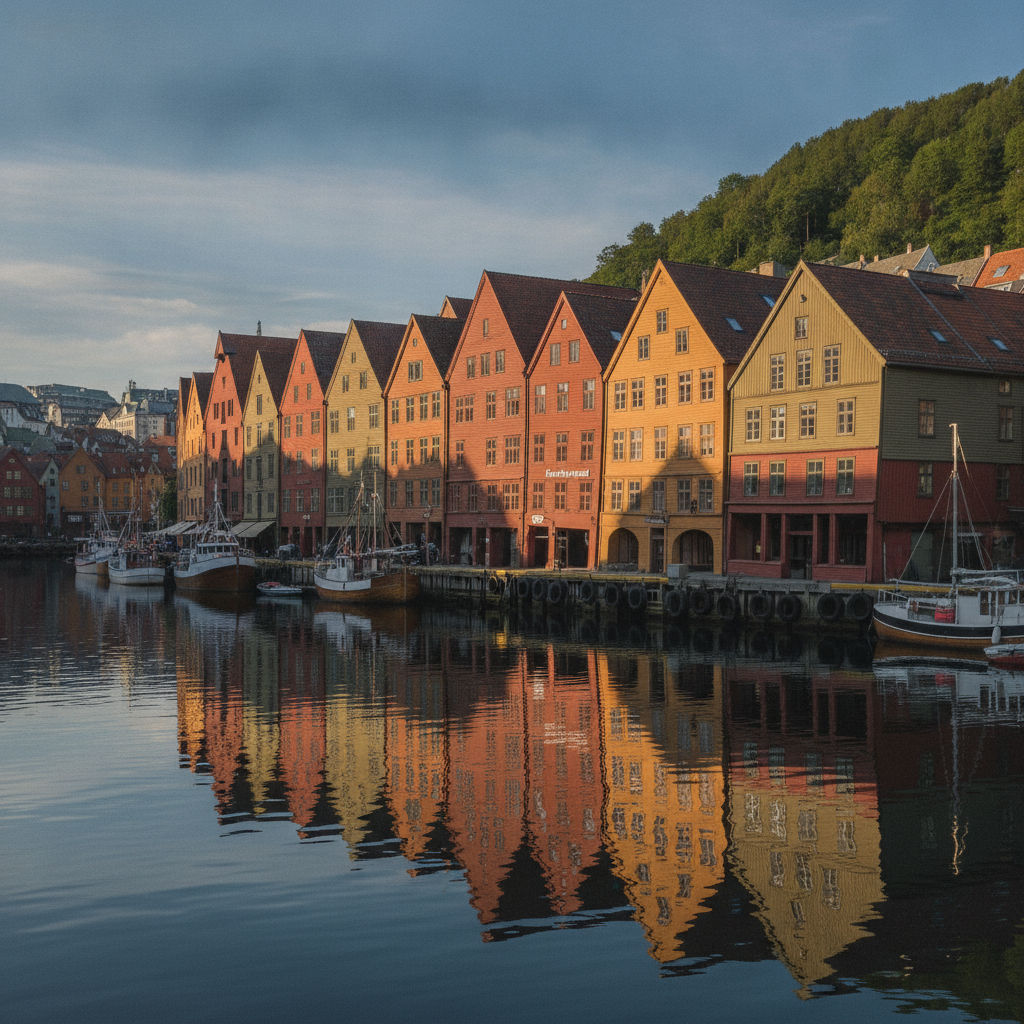
Bergen — Bryggen UNESCO Wharf, the Fish Market & the Fløibanen Funicular to the Mountain
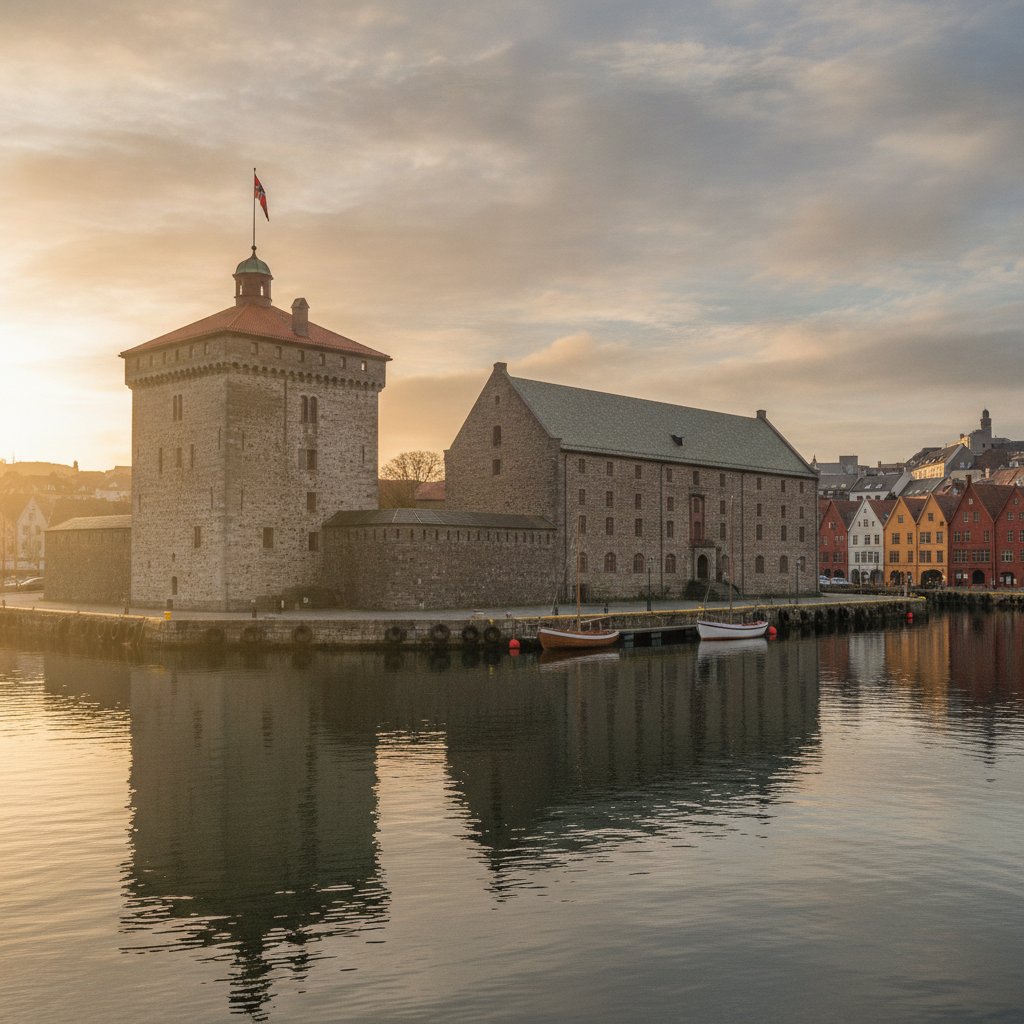
Bergen Medieval History — Bergenhus Fortress, Håkonshall & the Norwegian Royal Past
Bergen Music — Edvard Grieg, Troldhaugen & the Norwegian Musical Tradition
Bergen Art & Architecture — KODE Museums, Norwegian Design & the City Life of Bergen