Desert War History: WWII in Cyrenaica and the North Africa Campaign
Benghazi changed hands four times during WWII. The surrounding desert was the theater of some of the most mobile armored warfare in history. War cemeteries, battlefield sites and military museums tell the story of the campaign.
- 1
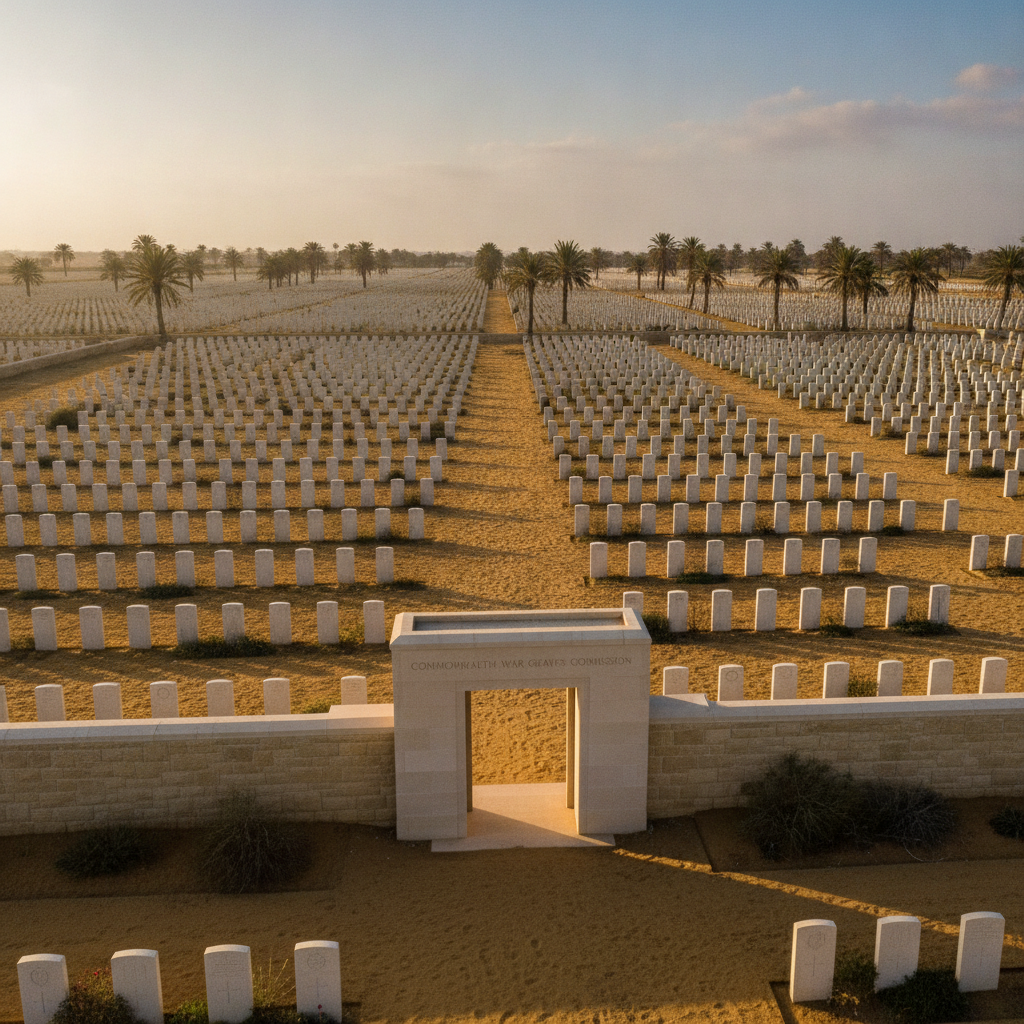
Benghazi War Cemetery
The Commonwealth War Cemetery contains the graves of Allied soldiers who fell during the North Africa Campaign, maintained by the Commonwealth War Graves Commission. A moving and well-maintained site.
- 2
WWII Battlefield Sites
The desert around Benghazi was the scene of rapid advances and retreats by British and German forces between 1941 and 1943. Battlefield terrain, tank tracks and military debris still appear in the desert.
- 3
Tobruk Siege Sites
The famous siege of Tobruk east of Benghazi lasted 241 days. The memorial sites, cemeteries and the museum at Tobruk are accessible on a day trip and form part of one of WW2s most significant campaigns.
- 4
Italian Colonial Architecture
The Italian occupation from 1911 to 1943 left significant architectural traces in Benghazi: arcaded boulevards, administrative buildings and residential quarters in a Mediterranean rationalist style.
- 5
Omar Mukhtar Legacy
The Libyan resistance leader Omar Mukhtar, captured and executed by the Italians in 1931, is a national hero. His presence is felt throughout Benghazi in street names, statues and cultural memory.
- 6
Ajdabiya Fortress
A medieval Islamic fortress south of Benghazi with connections to the Fatimid period and later Ottoman fortification. It also saw action during WWI and WWII and is a layered historical site.
Walk this route with audio
Stories play automatically as you reach each stop — no tapping needed.
More in Benghazi
Practical Benghazi: Entry Requirements, Safety and Visitor Logistics
Benghazi Essentials: Mediterranean Heritage, the Old City and the Harbor
Benghazi Culture: Sport, Music and a City Rebuilding Its Identity
Roman Libya: Context for Leptis Magna and the Ancient Road
Day Trip to Cyrene: Ancient Greek City on the Green Mountain