AUB Alumnus Charles Malik Was Primary Drafter of the 1948 Universal Declaration of Human Rights; the MV Rhosus Ammonium Nitrate Cargo Abandoned in Beirut Port in 2013 After Owner Fled Debts and Sat for 6 Years Before the 2020 Explosion; Lebanon Elected a New President on January 9, 2025 Ending a 26-Month Presidential Vacuum
AUB alumnus Charles Malik as primary drafter of the 1948 Universal Declaration of Human Rights; the MV Rhosus abandoned ammonium nitrate cargo sitting in Beirut Port for 6 years after owner Igor Grechushkin fled debts before the 2020 explosion; Lebanon's 80% poverty rate by 2021 (from 27% in 2019); the September 17, 2024 simultaneous pager attack killing 40 and injuring 3,500 Hezbollah members; Lebanon electing President Joseph Aoun on January 9, 2025 ending a 26-month presidential vacuum; and Tripoli's 37 Mamluk-era mosques, khans, and madrasas.
- 1
The American University of Beirut – 160 Years of Arab Higher Education
The American University of Beirut (AUB) — founded 1866 as the Syrian Protestant College: the most influential Western-model university in the Arab world and the institution most responsible for the modernization of Arabic academic and scientific culture: the history guide. The founding (the Syrian Protestant College was founded by American Presbyterian missionaries (primarily Daniel Bliss) in 1866 in the Ras Beirut neighborhood: the initial student body (16 students in the first year) quickly grew as the college offered instruction in Arabic at a time when Arabic-medium higher education was unavailable in the Ottoman Arab world: the name change (renamed the American University of Beirut in 1920 at the start of the French Mandate period: the language shift (the college initially taught in Arabic but gradually shifted to English as the medium of instruction in the 1880s-1890s: the English-language instruction made AUB graduates fluent in English and employable across the entire Arab world and in international organizations: the alumni (AUB alumni include: Riad al-Solh (Prime Minister of Lebanon 1943 — a principal drafter of the 1943 National Pact): Philip Hitti (the founding figure of Arabic studies in America — Princeton professor who wrote the definitive History of the Arabs 1937): Charles Malik (Lebanese philosopher-diplomat who was a primary drafter of the Universal Declaration of Human Rights 1948): the campus (the AUB campus occupies a 73-hectare clifftop site in Ras Beirut above the Mediterranean: the AUB Main Gate and green campus lawn is the most iconic view in Ras Beirut: the campus contains a small but important archaeological museum (the AUB Archaeological Museum) with Phoenician, Roman, and Bronze Age collections: the AUB today (approximately 9,000 students: faculties of Arts and Sciences, Medicine, Engineering, Nursing, Health Sciences, and Agriculture: the AUB Medical Center is the primary Western-model teaching hospital in Lebanon).
- 2
The Chouf Mountains – Druze Heartland and Cedar Forests
The Chouf Mountains (Jabal al-Chouf) — the primary Druze political territory in Lebanon and the location of the Shouf Cedar Nature Reserve: the landscape guide. The geography (the Chouf Mountains form the southern sector of the Lebanon Mountain range south of Beirut: the primary peaks reach 1,600-2,000m: the Chouf has historically been the stronghold of the Druze community and the political base of the Jumblatt family: the Shouf Cedar Nature Reserve (the Shouf Cedar Nature Reserve — the largest nature reserve in Lebanon at approximately 550 km2: established 1996: contains the largest remaining area of Cedar of Lebanon (Cedrus libani) forest outside the Bsharri grove: the reserve also contains the ruins of approximately 25 villages depopulated during the 1983 Mountain War (the Druze-Christian conflict within the Lebanese Civil War in which Druze forces expelled approximately 150,000 Maronite Christians from the Chouf in 1983): Deir al-Qamar (the historical capital of the Chouf and the seat of the Shehabi Emirs: a well-preserved Ottoman-era village with a central square, a 16th century mosque (converted from a church), and several historic buildings: the village was the birthplace of the 17th century Druze leader Fakhr al-Din II: the Beiteddine Palace (the Beiteddine Palace (Palace of the House of Faith) — the primary Shehabi Emir palace built between 1788 and 1840 by Emir Bashir II Shehab: the palace is the finest surviving example of Lebanese Arab-Ottoman architecture: the palace is now a summer presidential residence and the venue of the annual Beiteddine Art Festival (international music festival in the palace courts each summer): the Mukhtar (Walid Jumblatt's residence and the political center of the Druze community) is in the Chouf village of Mukhtara.
- 3
Tripoli (Trablous) – The Second City and the Finest Mamluk Architecture in Lebanon
Tripoli (Trablous, Arabic: طرابلس) — 80 km north of Beirut: the second largest city in Lebanon and the primary Sunni Muslim city of the north: the city with the finest Mamluk period Islamic architecture in Lebanon: the architectural guide. The history (Tripoli was founded as a Phoenician city: the Greek name Tripolis (Triple City) refers to the three Phoenician city-state communities (from Sidon, Tyre, and Arwad) that established separate quarters in the city: Tripoli was a major Crusader city and the capital of the County of Tripoli (1102-1289 CE) — one of the four principal Crusader states: the Mamluk conquest (the Mamluk Sultan Qalawun destroyed the Crusader city of Tripoli in 1289 and built a new Mamluk city 2 km from the old site: the Mamluk city (now the historic center of modern Tripoli) contains the most concentrated collection of Mamluk period Islamic architecture in Lebanon: the primary monuments: the Great Mosque (Jamii al-Mansouri al-Kabir — converted from the Crusader Cathedral of Saint Mary 1289): the Taynal Mosque (1336): 37 Mamluk-era mosques, khans (caravansaries), madrasas (Islamic schools), and hammams (public baths) in the old city: the souk (the Tripoli old city souk system — the most intact traditional souk in Lebanon: the Souk al-Haraj (the gold market): the Souk al-Nahhasin (the copper market): the soap souk: the street food (Tripoli is famous throughout Lebanon for the finest sweets in the country: the primary specialties: kaak bi jibn (bread rings with cheese): halawet el jibn (sweet cheese rolled in semolina syrup): kaak al-Eid: the Tripoli ice cream (the traditional Arabic ice cream made with mastic and sahlab thickener).
- 4
The 2020 Beirut Port Explosion – Causes, Scale, and Aftermath
The August 4, 2020 Beirut Port Explosion — the most destructive single event in Beirut since the Civil War and one of the largest accidental non-nuclear explosions in recorded history: the analytical guide. The ammonium nitrate (the 2,750 tonnes of ammonium nitrate that exploded on August 4, 2020 had been stored in Hangar 12 of the Beirut Port since October 2013: the ammonium nitrate was the cargo of the abandoned cargo ship MV Rhosus (a Moldovan-flagged vessel): the Rhosus had sailed from Batumi, Georgia bound for Mozambique carrying 2,750 tonnes of ammonium nitrate for a Mozambican explosives manufacturer: the ship docked in Beirut in November 2013 for routine inspection but was declared unseaworthy: the ship's owner (the Ukrainian businessman Igor Grechushkin) abandoned the ship and its cargo: the Lebanese port authorities offloaded the ammonium nitrate to Hangar 12 for safekeeping: the neglect (the Lebanese port authorities sent at least six written warnings to the Lebanese judicial authorities and customs directorate between 2014 and 2017 requesting instructions for safe disposal of the ammonium nitrate: the warnings were ignored: the ammonium nitrate sat in Hangar 12 for 6 years in deteriorating conditions with inadequate temperature control and ventilation: the explosion (the explosion on August 4, 2020 at 18:07 local time: the initial trigger was a fire in Hangar 12 (possibly caused by welding work being done on a hole in the warehouse wall): the fire reached the ammonium nitrate after approximately 30 minutes: the explosion: 218 killed: 7,000 injured: 300,000 made homeless: 77,000 apartments damaged or destroyed: the blast was heard in Cyprus (240 km away): the economic impact estimated at USD 3.8-4.6 billion: the investigation (the Lebanese internal investigation has been repeatedly obstructed by politicians citing immunity: the Beirut judge investigating the case (Tarek Bitar) has been blocked repeatedly by parliamentary immunity claims from politicians he attempted to question).
- 5
Lebanon's Economic Collapse – Banks, Lira, and Bread Queues
Lebanon's economic collapse (the Lebanese financial crisis 2019-present): the economic analysis guide. The background (the Lebanese economy had been running a structural deficit financed by capital inflows (primarily remittances from the Lebanese diaspora) since the end of the Civil War in 1990: the primary structural problem: the Lebanese pound had been pegged to the USD at LBP 1,507 per USD since 1997: maintaining this peg required continuous capital inflows: the Banque du Liban (the Lebanese Central Bank) maintained a Ponzi-like scheme (called financial engineering) in which commercial banks were offered increasingly high interest rates to deposit funds at the central bank — the central bank used these deposits to finance the government deficit and maintain the dollar peg: the collapse (the October 2019 Revolution exposed the unsustainability of the system: capital flight accelerated: the banks imposed informal capital controls (preventing dollar withdrawals) from November 2019 onward: the pound collapsed on the parallel market: by 2021 the pound had lost 90% of its value: by 2022 95%: by 2023-2024 the open market rate exceeded LBP 90,000 per USD vs the former peg of LBP 1,507: the depositor losses (approximately USD 70-80 billion in depositor savings were effectively frozen in the Lebanese banking system: small depositors lost access to their dollar savings: the banks issued lira at official rates for dollar accounts effectively wiping out 95% of savings values: the poverty rate (the poverty rate in Lebanon rose from approximately 27% in 2019 to over 80% in 2021 according to UNDP estimates: the electricity crisis (the Lebanese national electricity grid (EDL) supplies approximately 1-3 hours of electricity per day in 2025 due to fuel shortages: most buildings rely on private generator networks charged additionally: the IMF (Lebanon has not implemented the IMF structural reform requirements that would unlock a USD 3 billion IMF rescue package as of 2025).
- 6
Lebanon 2025 – The Country After the Ceasefire
Lebanon in 2025 — the country after the November 2024 Israel-Hezbollah ceasefire and the beginning of possible political stabilization: the current situation guide. The 2024 war (the September-October 2024 Israeli military campaign against Hezbollah: the pager attacks (September 17, 2024 — Israeli intelligence operation detonating modified pager devices carried by Hezbollah members killed approximately 40 people and injured 3,500 across Lebanon in a single simultaneous attack: the assassination of Hassan Nasrallah (September 27, 2024 — the Israeli Air Force struck the Hezbollah headquarters in the Dahiyeh suburb of Beirut killing Secretary-General Hassan Nasrallah who had led Hezbollah for 32 years: the ground operation (Israeli ground forces entered southern Lebanon from October 1, 2024: the ceasefire (a 60-day ceasefire brokered by the United States and France began on November 27, 2024: under the ceasefire terms the Israeli military agreed to withdraw from southern Lebanon and the Lebanese Army would deploy south of the Litani River: the political opening (the Hezbollah military weakening in 2024 created a political opening in Lebanon: the Lebanese parliament elected a new president (Joseph Aoun, commander of the Lebanese Armed Forces) on January 9, 2025 — ending a 26-month presidential vacuum: Nawaf Salam was appointed Prime Minister in January 2025: the reform program (the new Lebanese government in 2025 is pursuing an IMF agreement: the international community (led by France, Saudi Arabia, and the US) has pledged to support Lebanon's reconstruction: the reconstruction (the rebuilding of southern Lebanon and the Dahiyeh suburb of Beirut: international estimates put reconstruction costs at USD 8-11 billion: the visitor situation (Beirut in mid-2025 is open to visitors: the airport is operating normally: the ceasefire is holding: southern Lebanon near the Israeli border remains a sensitive area with unexploded ordnance: the economic crisis continues but at a stabilized level).
Walk this route with audio
Stories play automatically as you reach each stop — no tapping needed.
More in Beirut
Khalil Gibran's The Prophet Has Sold Over 100 Million Copies in 108 Languages Making It the Third Best-Selling Book of the 20th Century After the Bible and the Quran; the Kahan Commission Found Ariel Sharon Bore Personal Responsibility for the Sabra and Shatila Massacre of 762-3,500 Palestinian Civilians; Fairuz Has Been Recording for 70 Years and Is the Best-Selling Arabic-Language Artist of All Time
Hezbollah Secretary-General Hassan Nasrallah Killed by Israeli Strike September 27, 2024 After 32 Years Leading the Movement; the 2005 Rafik Hariri Assassination Car Bomb Contained 1,000 kg TNT and Triggered the Cedar Revolution Ending Syria's 29-Year Military Presence in Lebanon; Lebanon's 18 Recognized Religious Communities Make It the Most Religiously Diverse Country in the Arab World
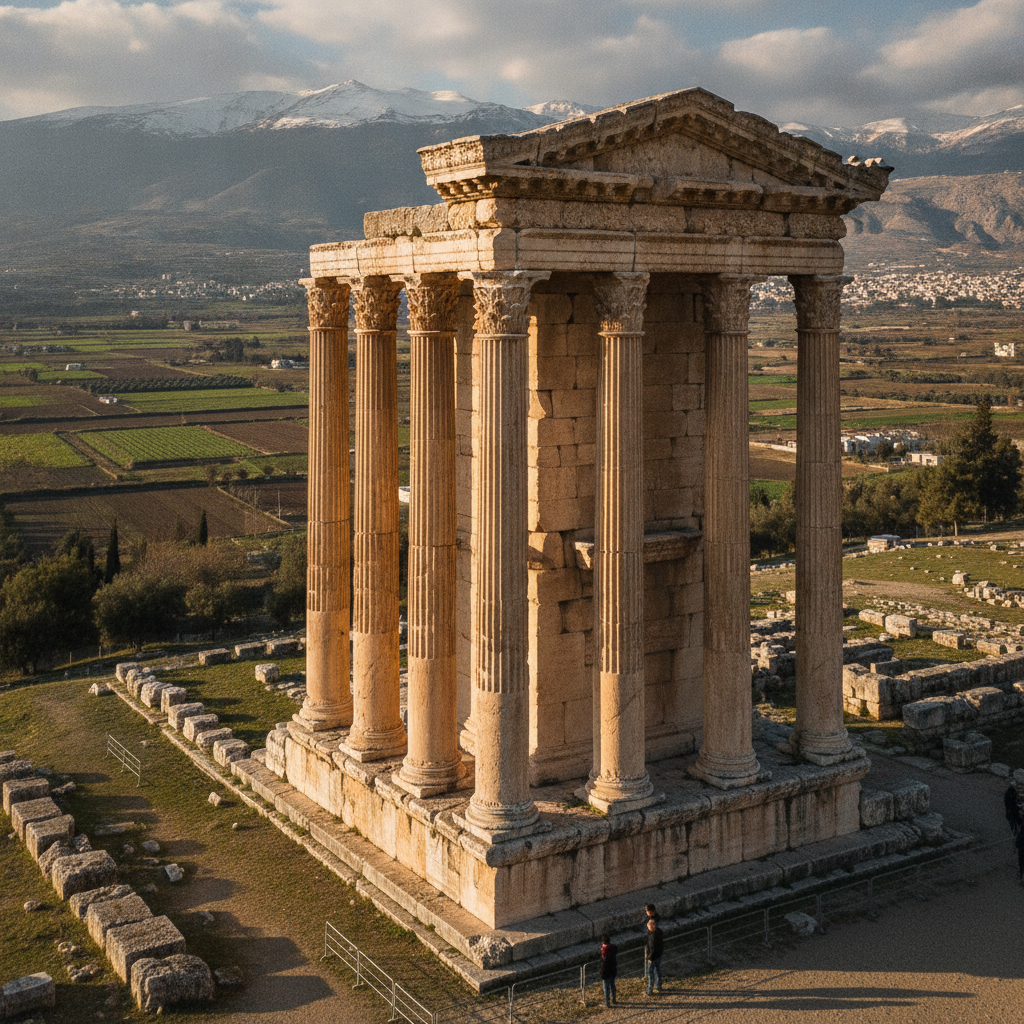
Beirut Day Trips: Byblos, Baalbek Roman Temples, Sidon, and Tyre in the Most Historically Dense Single Small Country
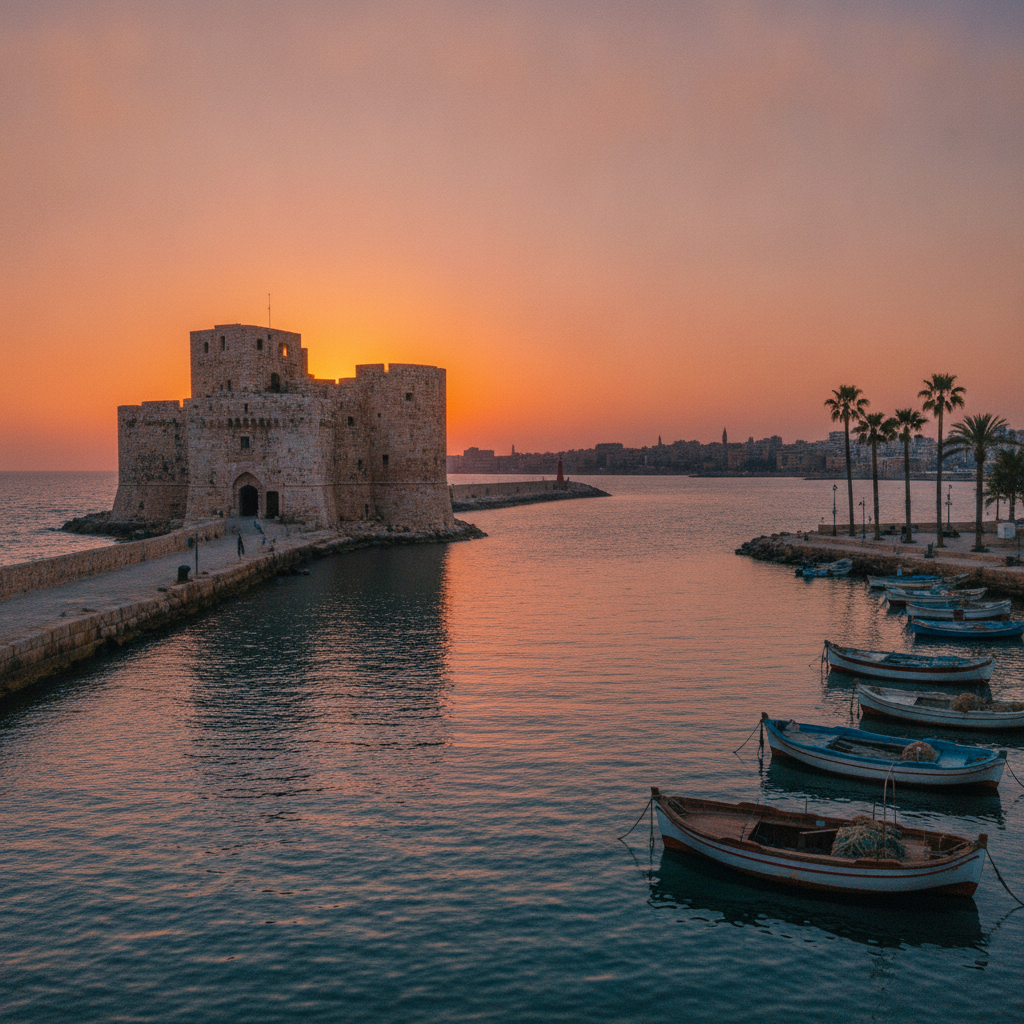
Alexander the Great Built a 60m-Wide 800m-Long Causeway to Reach Island Tyre in 332 BCE and the Sediment Accumulation Has Made It a Permanent Land Bridge Today; the Druze Religion Has Been Closed to Converts and Non-Members Since the 11th Century; the Palestinian Refugee Camp Ain al-Hilweh Houses 80,000 People in 2 Square Kilometers Making It the Densest Urban Area in Lebanon
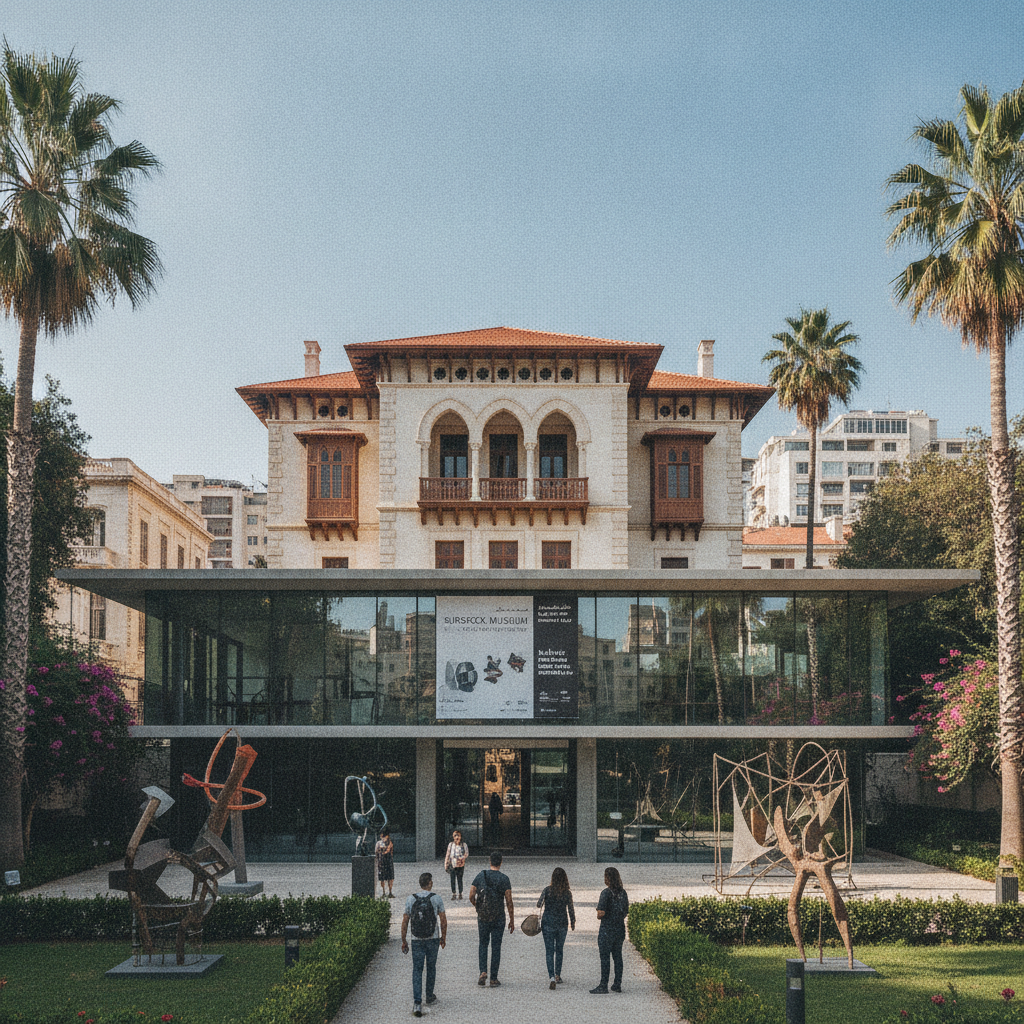
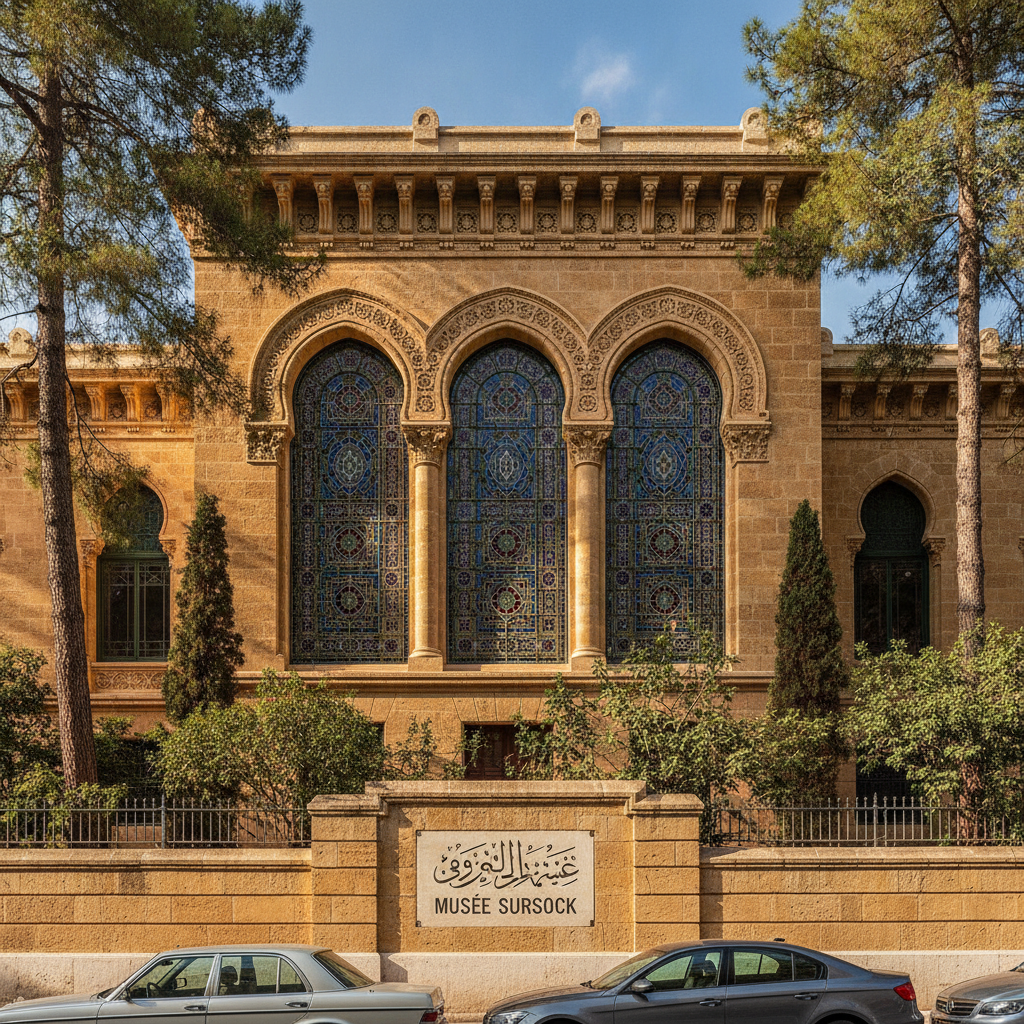
Beirut Arts: The Sursock Museum, the Theatre and Cinema Scene, the Gallery Circuit, and the Most Culturally Ambitious Single Arab Capital