Summer Palace & Yuanmingyuan — Beijing's Imperial Garden Legacy
The Summer Palace (颐和园 — the imperial garden and summer retreat on the northwestern outskirts of Beijing, covering 290 hectares of which approximately 220 hectares is the man-made Kunming Lake — UNESCO World Heritage since 1998) is the finest surviving example of Chinese imperial garden design and the most beautiful single site in Beijing.
- 1
The Summer Palace — China's Greatest Imperial Garden
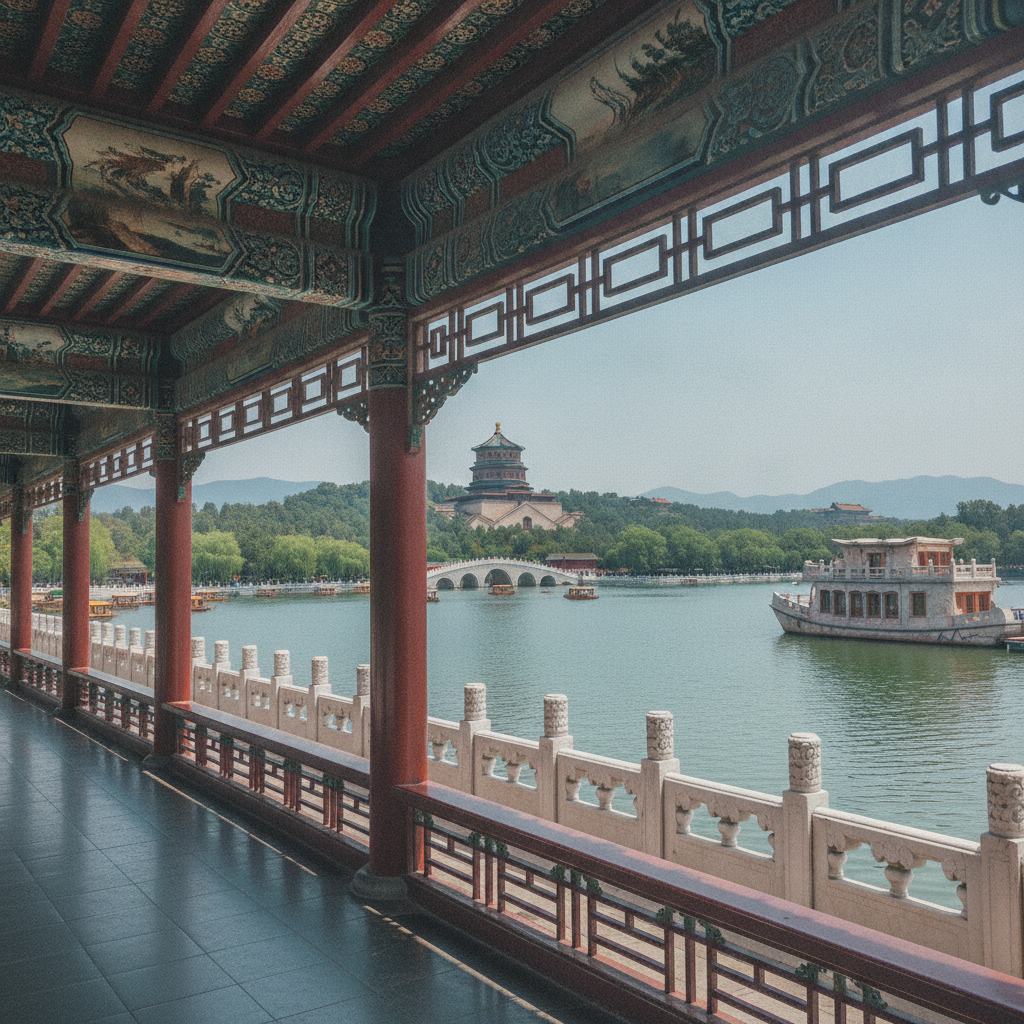
Summer Palace (颐和园 — Yíhéyuán — 'Garden of Nurtured Harmony', in the Haidian district on the northwestern outskirts of Beijing, 15 km from the city centre — the imperial garden and summer retreat of the Qing dynasty emperors (particularly the Qianlong Emperor (r.1735-1796) and the Empress Dowager Cixi (1835-1908)), UNESCO World Heritage since 1998): the Summer Palace (the garden that Empress Dowager Cixi reconstructed in the 1880s using funds diverted from the naval modernization programme (the most famous act of corruption in Qing dynasty history), completing it in 1888 and using it as her de facto seat of government from 1889 until her death in 1908) covers 290 hectares, of which approximately 75% is Kunming Lake (昆明湖 — the man-made lake excavated by the Qianlong Emperor in 1750, the earth from which was used to create Longevity Hill (万寿山)); the Long Corridor (长廊 — the 728-metre roofed wooden gallery along the northern lakeshore, decorated with approximately 14,000 painted panels on the crossbeams depicting Chinese mythological scenes, landscapes, and figures) is the architectural centrepiece; the Tower of Buddhist Incense (佛香阁 — the 41-metre octagonal tower on the rocky summit of Longevity Hill, rebuilt by Cixi in 1891) is the visual landmark.
- 2
Kunming Lake & the Seventeen-Arch Bridge
Kunming Lake (昆明湖 — the man-made lake at the Summer Palace, covering approximately 220 hectares (2.2 km × 1.7 km) — the dominant feature of the Summer Palace landscape and the largest imperial garden lake in China): the lake was originally called 'Wengshan Pond' (瓮山泊) before the Qianlong Emperor renamed it Kunming Lake in 1750 (after the Kunming Pool in Xi'an where the Han dynasty Emperor Wu trained his naval forces) and dramatically enlarged it by diverting water from the Jade Spring Hill (玉泉山) springs; the Seventeen-Arch Bridge (十七孔桥 — the 150-metre stone arch bridge connecting South Lake Island (南湖岛) to the eastern shore of the lake, with 17 arches of different sizes (the central arch being the largest) and approximately 544 carved stone lions on the balustrades — the finest stone bridge in Beijing and one of the finest in China) is best seen at the winter solstice ('Golden Light Shining Through All 17 Arches' (金光穿洞) — the annual phenomenon where the setting sun on approximately December 15-17 shines through all 17 arches simultaneously, illuminating the interior of each arch in golden light — the most celebrated natural light event in the Beijing calendar); the lakeside terrace (the northern shore of Kunming Lake, the approach path east of the Long Corridor) gives the finest views of the lake and the classical landscape.
- 3
Yuanmingyuan — The Old Summer Palace & Its Ruins
Yuanmingyuan (圆明园 — 'Garden of Perfect Brightness', also known as the Old Summer Palace — the former imperial garden complex to the northwest of the city, adjacent to the current Summer Palace, built from 1709 by the Kangxi Emperor and substantially expanded by the Yongzheng and Qianlong Emperors into the largest imperial garden complex in Chinese history (approximately 350 hectares)): Yuanmingyuan was destroyed in the Second Opium War (1856-1860) by the Anglo-French Expeditionary Force (the burning of Yuanmingyuan in October 1860, ordered by Lord Elgin on the advice of The Times correspondent, as reprisal for the torture of British and French envoys — the most traumatic act of cultural destruction in modern Chinese history, still a defining grievance in Chinese national consciousness regarding Western imperialism); the European Palace ruins (欧式宫殿遗址 — the ruins of the Western-style baroque palace buildings (Xiyanglou (西洋楼)) designed by the Jesuit missionaries Giuseppe Castiglione and Michel Benoist for the Qianlong Emperor — the most visited ruins in China, preserved deliberately unrestored as a monument to the destruction wrought by foreign imperialism) are the most historically resonant site in Beijing.
- 4
Beijing's Hutong Neighbourhoods — Life in the Courtyard City
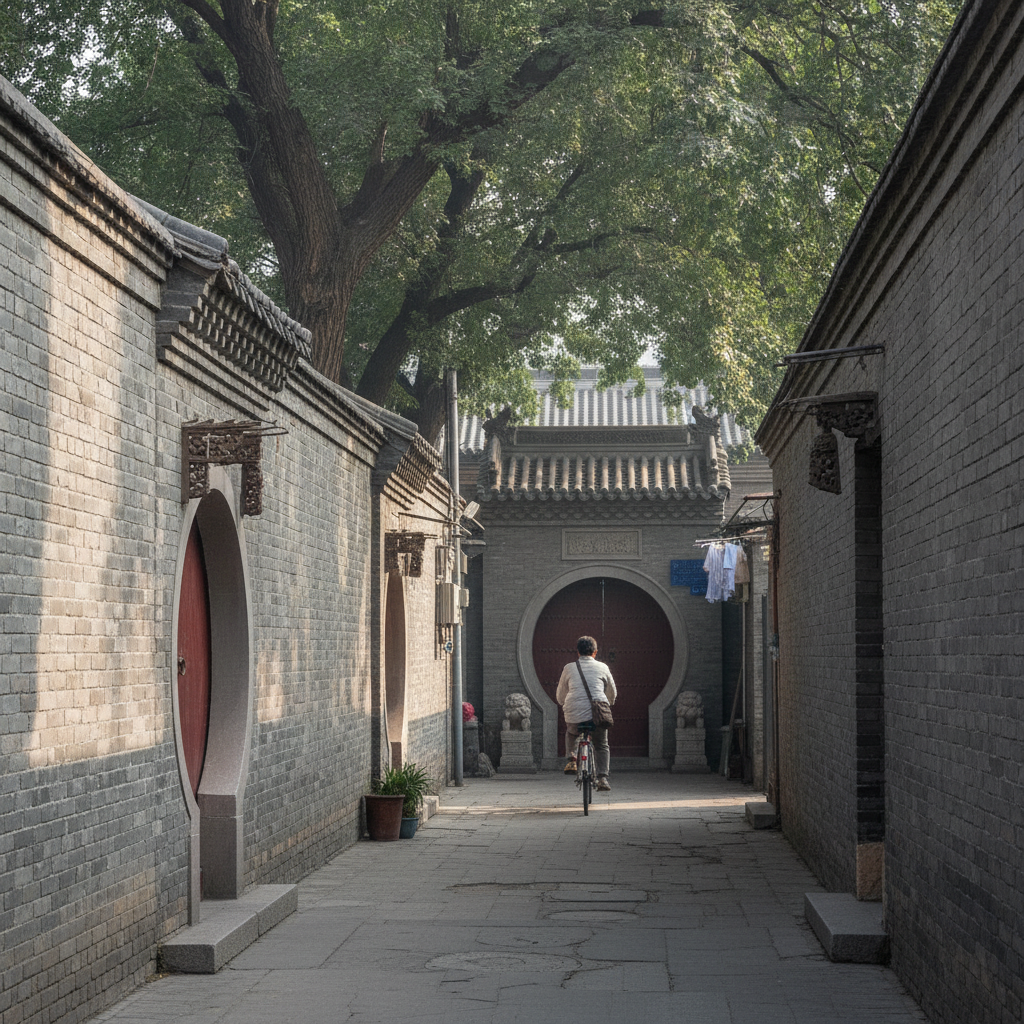
Hutong (胡同 — the narrow traditional alleyways of old Beijing, originally created during the Yuan dynasty (1271-1368) as the street plan of Kublai Khan's capital Dadu — the surviving historic urban fabric of pre-1949 Beijing): Beijing's hutong neighbourhoods (the highest concentrations of surviving hutong are in the Dongcheng and Xicheng districts, particularly in the areas north of the Drum Tower (Gulou) and around the Shichahai lakes) preserve the traditional Beijing urban environment of the siheyuan (四合院 — the enclosed courtyard house with buildings on all four sides opening to a central courtyard — the standard residential form of Beijing for 700 years); the most visited hutong areas are: Nanluoguxiang (南锣鼓巷 — the 800-metre north-south hutong in the Dongcheng district, now heavily gentrified with boutique shops, cafes, and bars — the most touristic but also the most accessible hutong experience in Beijing), Wudaoying Hutong (五道营胡同 — the less touristy hutong west of the Lama Temple (Yonghegong), known for its independent cafes and restaurants), and Shichahai (什刹海 — the three connected lakes (Qianhai, Houhai, Xihai) in the Xicheng district, the most scenic of the Beijing lake areas, with hutong to the east and west).
- 5
Lama Temple & Confucius Temple — Beijing's Religious Heritage
Yonghe Lamasery (雍和宫 — 'Yonghe Palace', the Tibetan Buddhist temple in the Dongcheng district of Beijing, originally built as the residence of the future Yongzheng Emperor in 1694, converted to a lamasery in 1744 by the Qianlong Emperor, and now the most important Tibetan Buddhist temple in China (outside Tibet)): the Lama Temple (the name by which it is universally known in English) is Beijing's most popular active religious site, attracting vast numbers of Chinese worshippers (particularly during the Spring Festival, when thousands of Buddhists come to burn incense and pray for the new year) as well as tourists; the Wanfu Pavilion (万福阁 — the tallest hall in the temple, housing the 26-metre sandalwood statue of Maitreya Buddha (弥勒佛 — the Future Buddha), carved from a single white sandalwood tree (a gift from the 7th Dalai Lama to the Qianlong Emperor) — the tallest single-piece carved wooden statue in the world, carved from a single tree trunk 26 metres tall); the Confucius Temple (孔庙 — the Guozijian (Imperial Academy) and the adjacent Beijing Confucius Temple in the Andingmen hutong area).
- 6
Beijing Cuisine — Peking Duck, Jiaozi & Imperial Court Food
Beijing cuisine (北京菜 — the culinary tradition of the Chinese capital, characterized by its emphasis on roasted meats (particularly the Peking Duck (北京烤鸭 — Běijīng Kǎoyā)), dumplings, and the elaborate banquet tradition of the Imperial Court Kitchen (御膳房 — the Qing dynasty imperial kitchen that served the emperor's household at the Forbidden City)): Peking Duck (the most internationally celebrated Chinese dish, consisting of a duck specially bred and force-fed for 45-65 days to produce the thick subcutaneous fat that blisters into the characteristic crispy lacquered skin when roasted in a wood-fired oven (the fruit-wood wood (果木 — typically date, peach, or pear wood) imparts a distinctive fragrance to the skin)) is served by wrapping the crispy skin (and optionally the meat) in thin wheat pancakes (薄饼 — bó bǐng) with spring onion (大葱 — dà cōng) slices, cucumber (黄瓜 — huángguā) strips, and sweet bean paste (甜面酱 — tiánmiàn jiàng) sauce: the finest Peking Duck restaurants in Beijing are Quanjude (全聚德 — the historic restaurant chain established 1864, famous for its 'hang-roasted' (挂炉烤鸭) method) and Dadong (大董 — the contemporary restaurant known for its 'sūpí kǎoyā' (酥皮烤鸭 — crispy-skin duck, the modern style with a thinner, less fatty skin achieved by special breeding and preparation methods)).
Walk this route with audio
Stories play automatically as you reach each stop — no tapping needed.
More in beijing
Hutong & Siheyuan — Old Beijing's Courtyard City
798 Art District & Contemporary Beijing — China's Creative Revolution
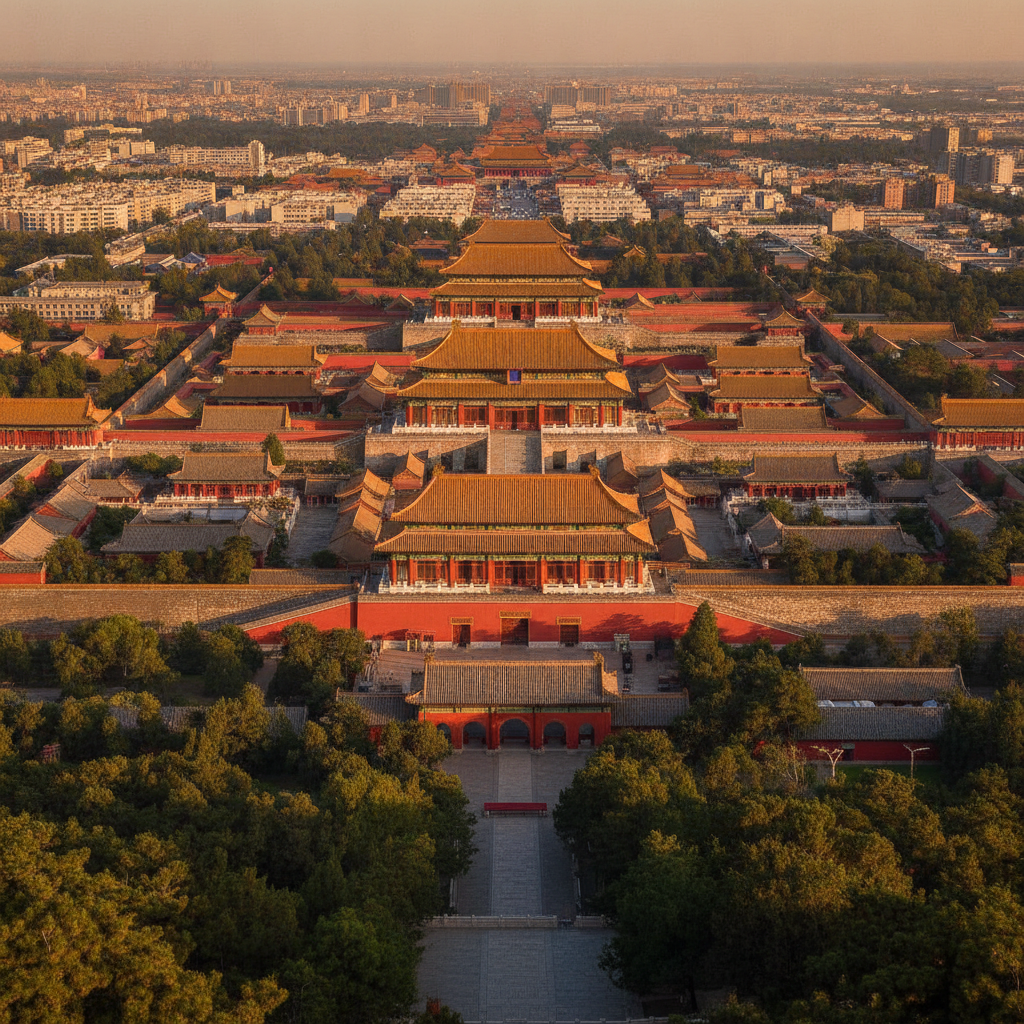
Forbidden City, Tiananmen & the Imperial Heart of Beijing
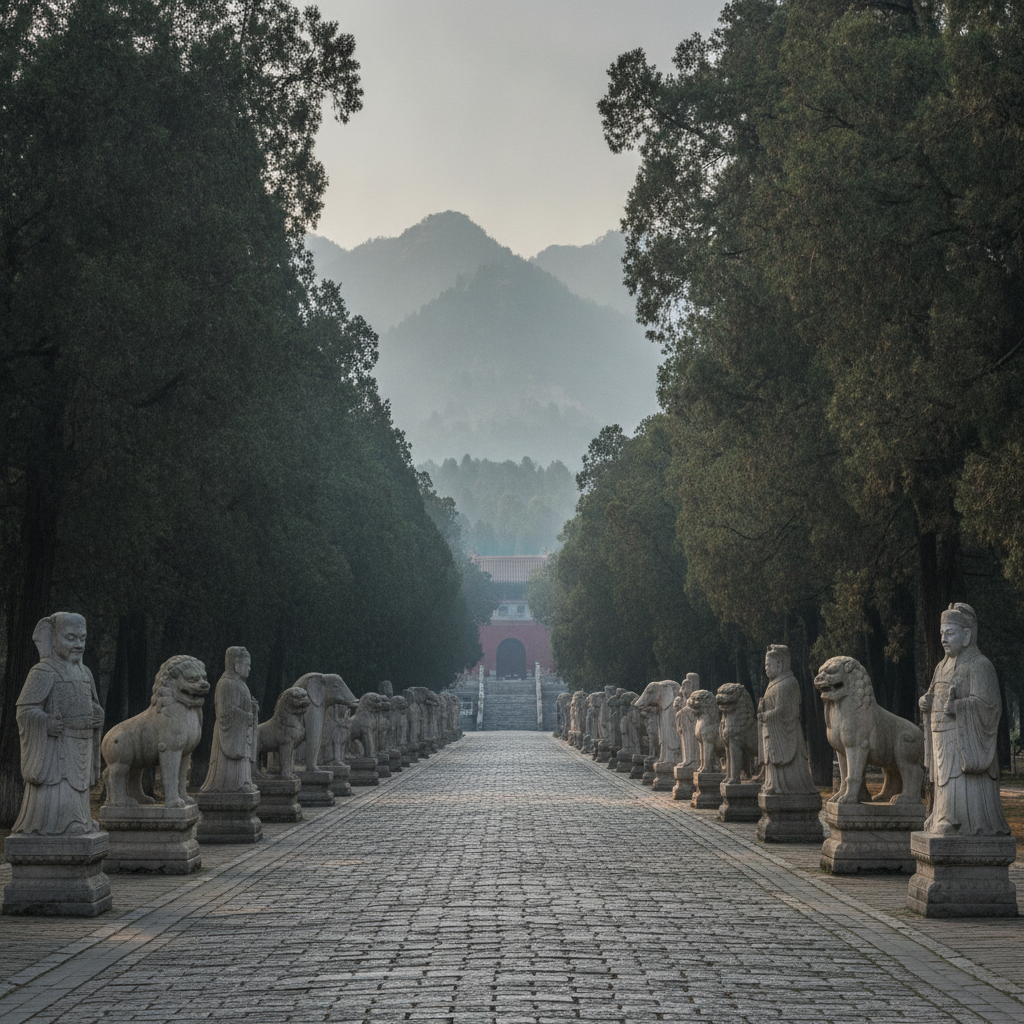
Ming Tombs & the Sacred Way — Beijing's Imperial Necropolis
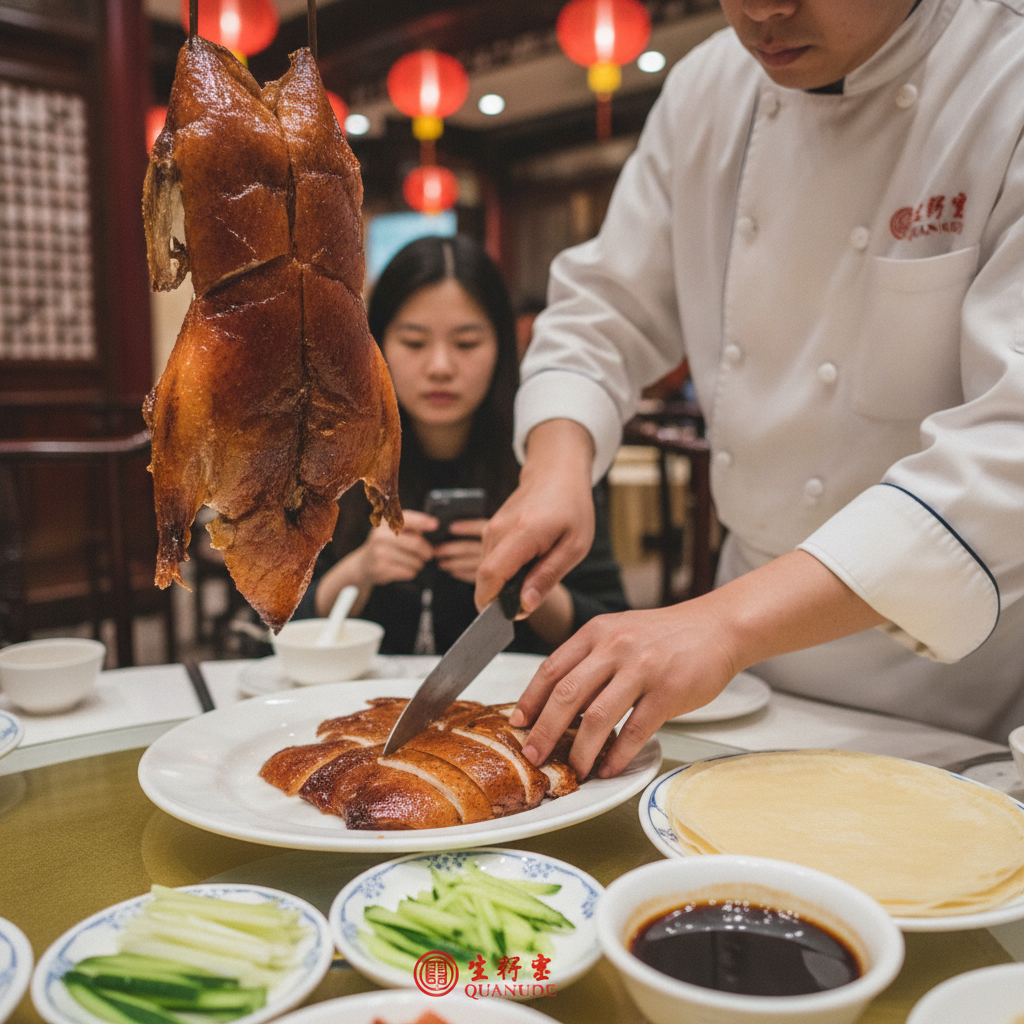
Peking Duck, Jiaozi & the Imperial Gastronomy of Beijing