Barranquilla's Cumbia: The Dance That Crossed the World
Cumbia — born on Colombia's Caribbean coast from the encounter of African slaves and Indigenous peoples — is now danced throughout Latin America; Barranquilla is the custodian of cumbia's most authentic traditions
- 1
Cumbia Origins and African Roots
Cumbia originated in the 17th and 18th centuries on the Colombian Caribbean coast — the circle dance and drum patterns (especially the tambora and llamador drums) are West African in origin, grafted onto indigenous Colombian melodies and combined with Spanish verse forms
- 2
The light dance
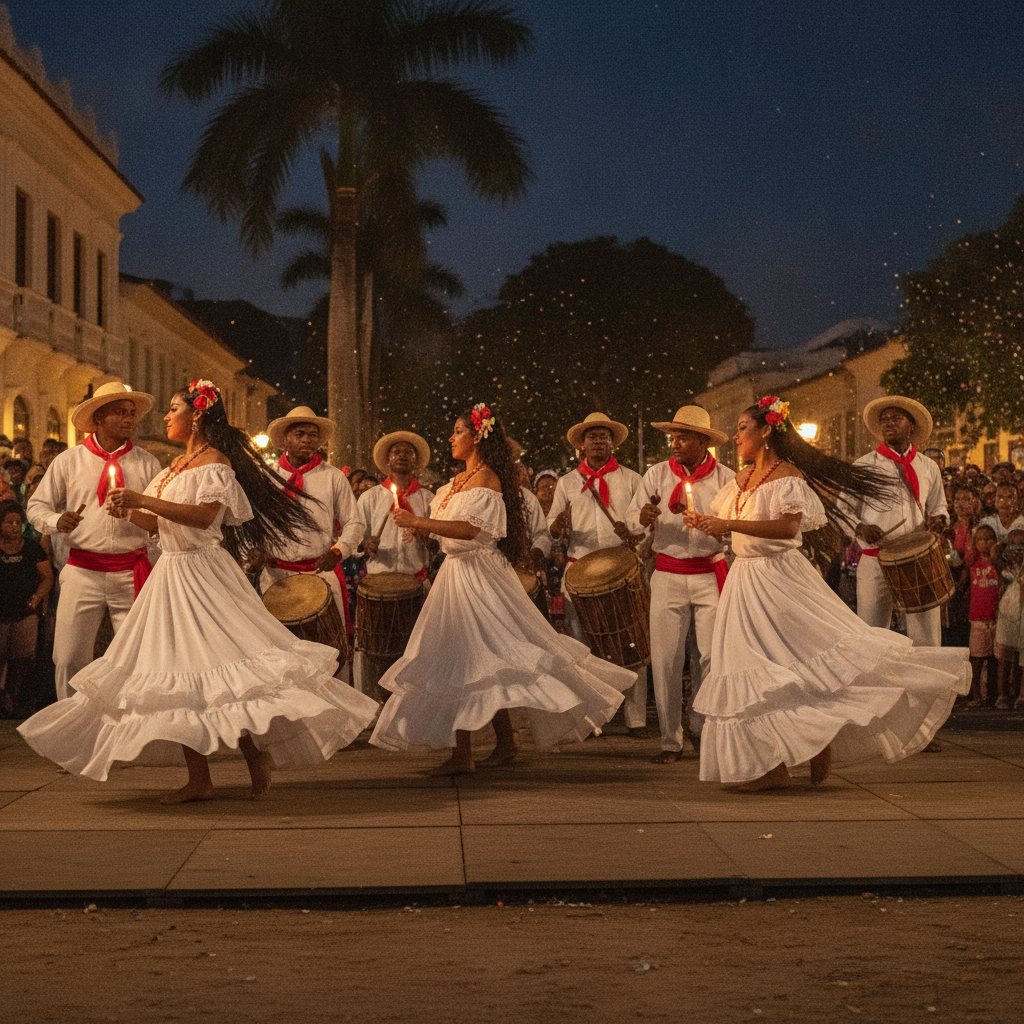
The original cumbia is danced by women holding lit candles - the women move their ruffled white skirts around the flame without extinguishing it; the skill required to maintain the flame and flow of the skirt simultaneously is cumbia's defining technical challenge
- 3
Cumbia's spread through Latin America
Cumbia spread from Colombia throughout Latin America during the 20th century - each country adapting it to its own style; Mexican cumbia, Peruvian chicha cumbia, Argentinian cumbia villera and Central American cumbia all originate from Barranquilla original
- 4
Mapale Dance
Mapale—a faster, more athletically demanding Afro-Colombian dance tradition from the Barranquilla region—is performed at carnival with acrobatic jumps and spins; Mapalen's African origins are less disguised than cumbias and the energy is extraordinary
- 5
Garabato Dance Group
The garabato – a carnival dance performed by a figure dressed for death who tries to get the living while they dance and dodge – is Barranquilla's most distinctive carnival allegory; the garabato dance celebrates the victory of life over death
- 6
Afro-Colombian Cultural Organizations
Barranquilla has a strong network of Afro-Colombian cultural organizations — the community centers, dance schools and carnival groups uphold the African-rooted traditions of cumbia, mapale and congo against the pressure of commercial music
Walk this route with audio
Stories play automatically as you reach each stop — no tapping needed.
More in Barranquilla
Barranquilla's Costeño Table: Caribbean Flavours of Colombia
Barranquilla and Gabo: The Caribbean That Made Magical Realism
Barranquilla and Vallenato: Colombia's Musical Soul
Barranquilla Architecture: From Republican to Modern