Bariloche History: Mapuche Territory, German Settlers, and the Nazi Controversy
The history of the Bariloche area moves from the Mapuche and Tehuelche peoples who inhabited the lake district before European contact through the Argentine military exploration and the German immigrant settlement that created the modern city, to the controversial presence of escaped Nazi war criminals who settled in the Patagonian lake district after World War II.
- 1
Mapuche and Tehuelche: The Original Peoples of the Lake District
The Mapuche people, one of the most resilient and politically significant indigenous nations in South America, inhabited the Patagonian lake district including the Nahuel Huapi area, which they knew as Pallal, as part of the broader Mapuche territory that extended across the Andes between Argentina and Chile. The Mapuche maintained a semi-nomadic lifestyle based on the hunting of guanaco and rhea on the Patagonian steppe and the gathering of resources in the lake district forests, crossing the Andes seasonally between the Argentine and Chilean sides of the range. The Conquest of the Desert campaign of 1878 to 1885, the Argentine military campaign that extended Argentine state control over Patagonia through the displacement and killing of indigenous peoples, effectively ended the Mapuche occupation of the Bariloche area and opened the land for European settlement.
- 2
Francisco Moreno and the Creation of the National Park
Francisco Pascasio Moreno, the Argentine naturalist and explorer who conducted extensive surveys of Patagonia in the 1870s and 1880s, donated three square leagues of his personal land grant in the Nahuel Huapi area to the Argentine state in 1903 with the specific condition that it be used for the creation of a national park; this donation became the nucleus of the Nahuel Huapi national park established in 1934. Moreno's vision of the Patagonian lake district as a landscape of exceptional scientific and aesthetic significance, expressed in his survey reports and his advocacy for its protection, was the foundational act in the creation of the Argentine national park system.
- 3
German Settlement and the Lake District Colony
The German-speaking community that settled the Bariloche area from the 1890s onward, encouraged by the Argentine government's immigration programs that offered land grants to agricultural settlers, established the dairy farms, orchards, and small industries that gave the city its European character. The relationship between the legitimate German immigrant community and the post-World War II Nazi escapees who also settled in the Patagonian lake district is a complex historical topic that requires careful separation of the two groups.
- 4
Nazi Escapees: The Patagonian Controversy
The presence of Nazi war criminals who escaped to Argentina after World War II, including Adolf Eichmann who was captured in Buenos Aires in 1960 and Erich Priebke who lived in Bariloche until his extradition to Italy in 1995, has created a historical controversy around the lake district community that the legitimate German immigrant families find damaging to their reputation. The routes used by Nazi escapees to reach Argentina, known as the ratlines, passed through Spain, Portugal, and the Vatican before reaching South American ports, and Argentina's welcoming policy toward German immigration under Peron facilitated the settlement of both legitimate immigrants and war criminals.
- 5
Bustillo and the Alpine Architecture of Bariloche
The architect Alejandro Bustillo, commissioned by the Argentine national parks administration to design the principal buildings of the new lake district resort in the 1930s and 1940s, created a coherent architectural vocabulary for Bariloche that combined the local basalt stone with Swiss and German alpine building traditions; the Llao Llao hotel, the civic center, and the Catedral hotel are the principal surviving examples. Bustillo's Bariloche buildings are considered the finest example of regional Argentine modernism and have defined the visual character of the city for nearly a century.
- 6
The Llao Llao Hotel: Argentina's Alpine Palace
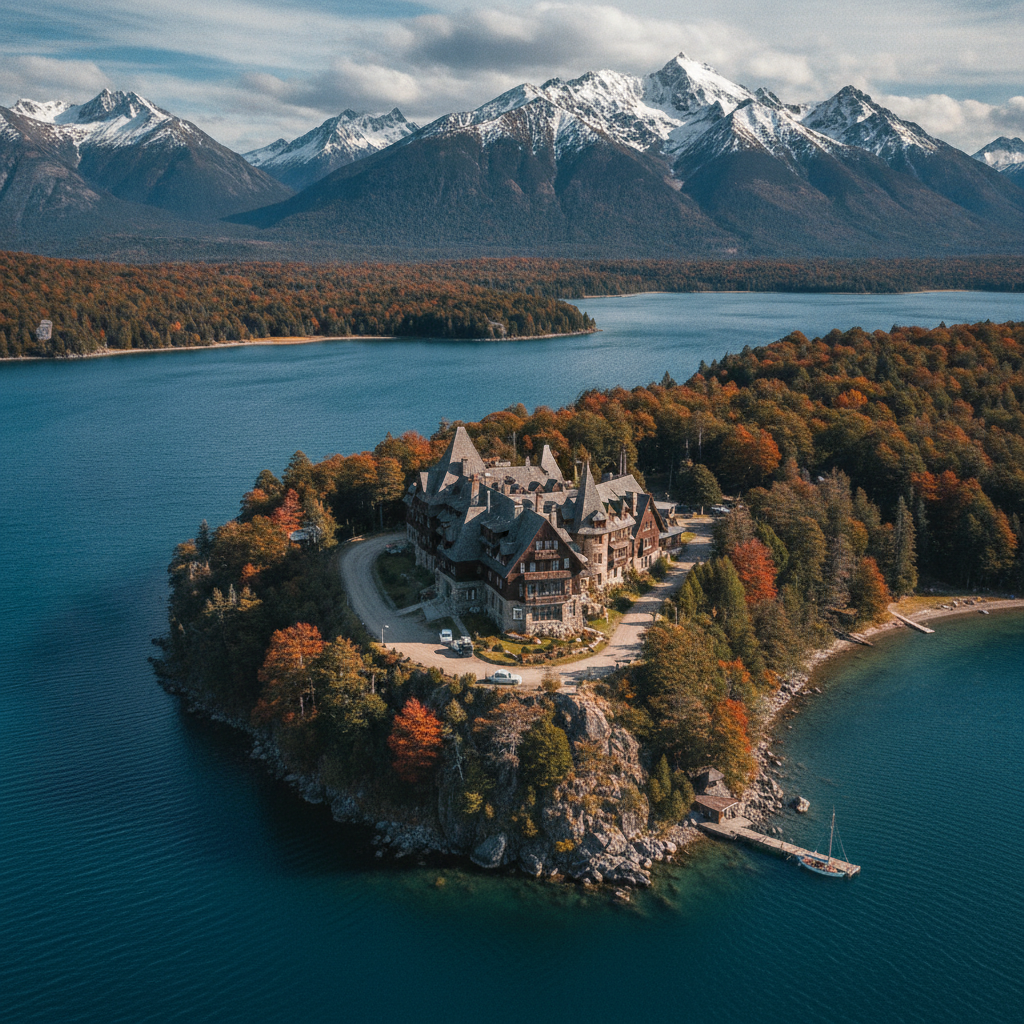
The Llao Llao hotel, opened in 1938 on a rocky promontory between the Nahuel Huapi and Moreno lakes with panoramic views of the surrounding peaks, is considered one of the finest resort hotels in South America and has hosted every Argentine president since its opening alongside numerous international celebrities and dignitaries. The hotel was damaged by fire in 1939, rebuilt in 1940, and has been renovated multiple times while maintaining the architectural character of the original Bustillo design.
Walk this route with audio
Stories play automatically as you reach each stop — no tapping needed.
More in Bariloche
Bariloche Day Trips: Seven Lakes Route, Villa La Angostura, and El Bolson
Bariloche Wildlife: Pumas, Huemul Deer, and Lake District Birds
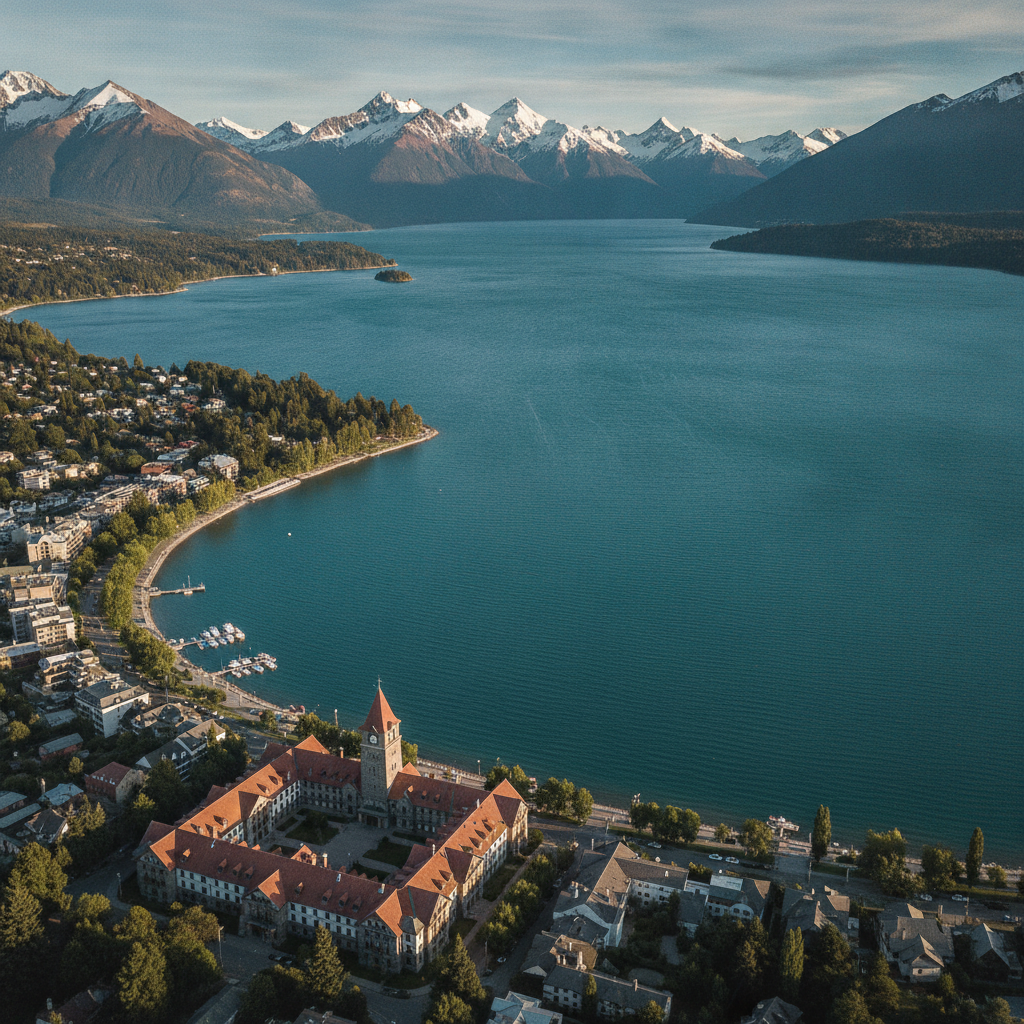
Bariloche Practical Guide: Getting There, Seasons, Accommodation, and the Patagonia Circuit
Bariloche Adventures: Rock Climbing, Multi-Day Trekking, Mountain Biking, and Lake Kayaking
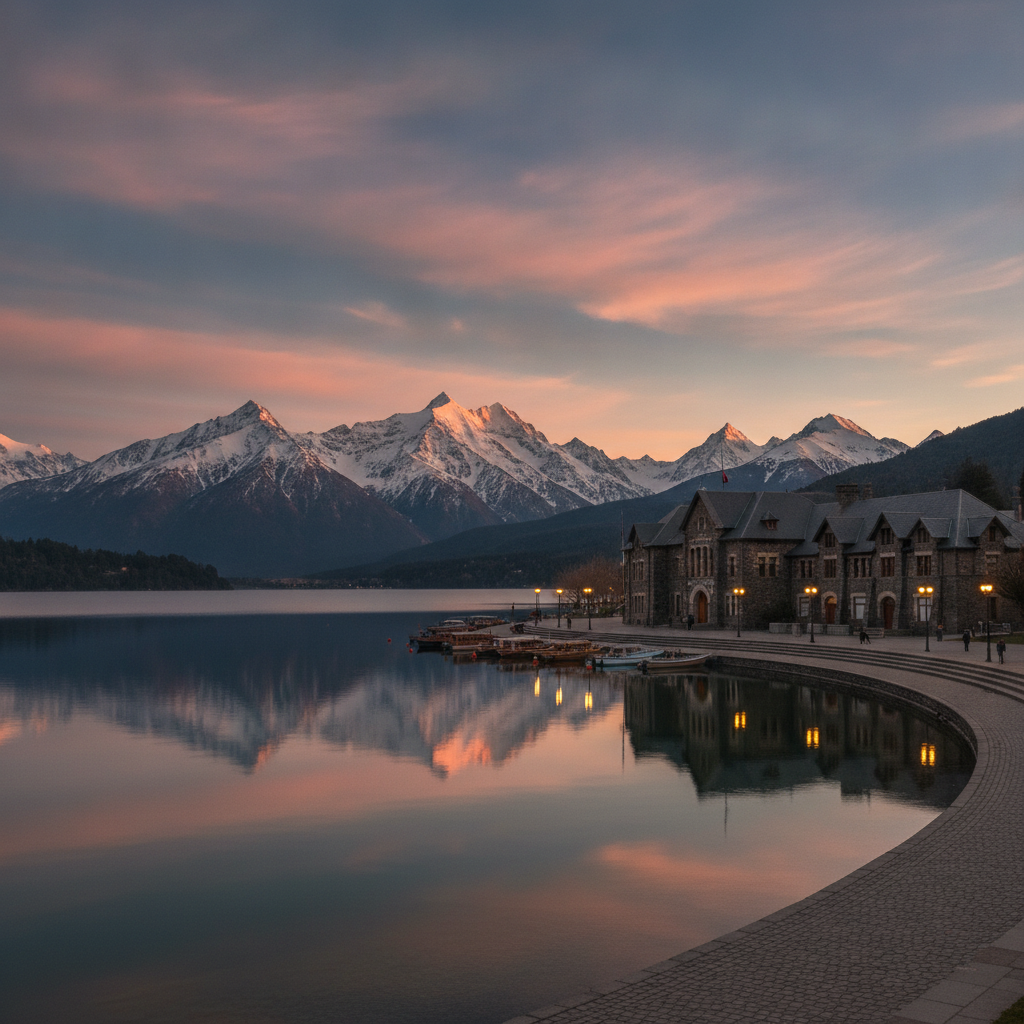
Bariloche: Andean Lakes, Chocolate, Skiing, and Patagonian Wilderness