Sagrada Família to Arc de Triomf: Gaudí's Masterwork and the Eixample Grid
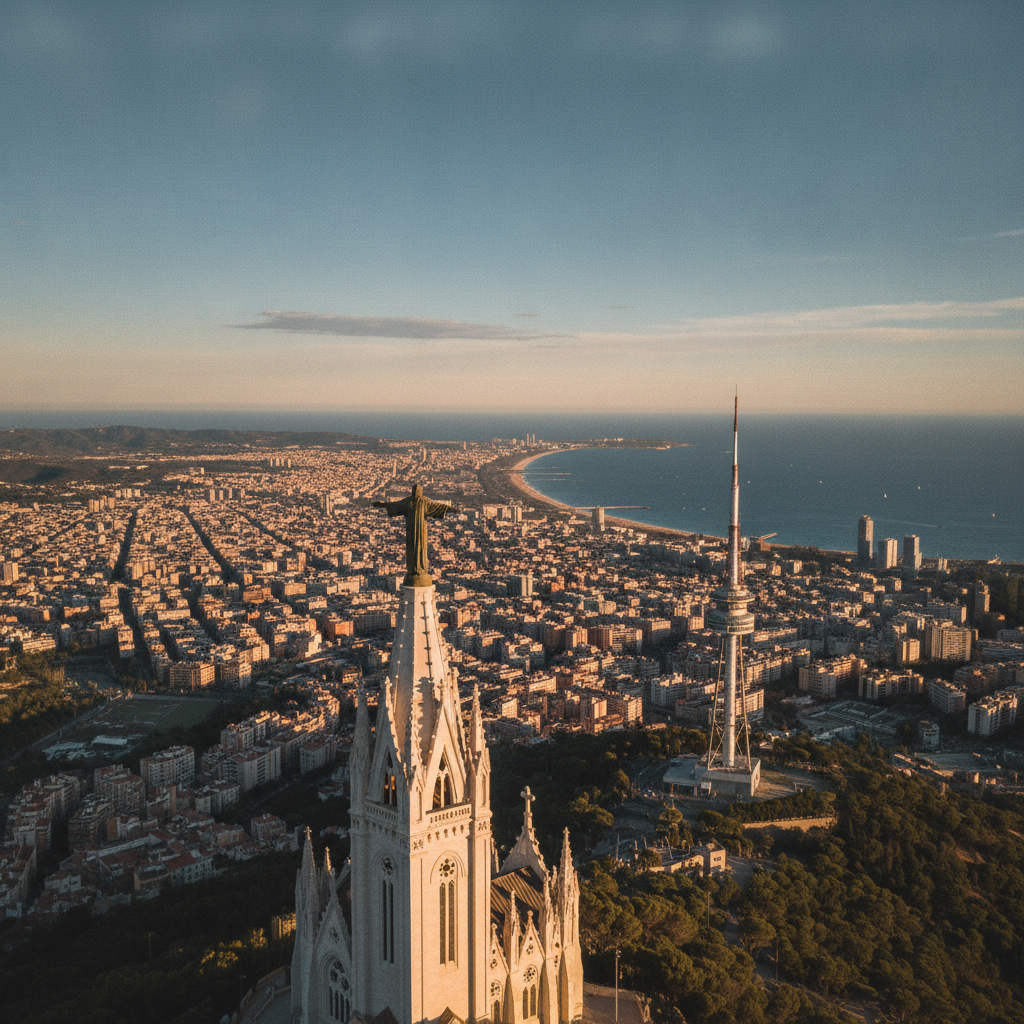
The Eixample ('enlargement') district, designed by engineer Ildefons Cerdà in 1860 and built over the following century, is one of the most remarkable examples of urban planning in European history: a perfect grid of octagonal city blocks (the chamfered corners creating the wide intersections that give the district its distinctive aerial pattern), each block originally intended to contain interior gardens accessible to residents. Within this rational grid, Catalan Modernisme erupted in the late 19th and early 20th centuries, placing some of the most extravagant architecture ever built in Europe on the same street corners. This route connects the two defining landmarks of the district — the Sagrada Família and the Manzana de la Discordia (Block of Discord) on Passeig de Gràcia — via the Hospital de Sant Pau, Gaudí's La Pedrera, and the civic heart of Plaça de Catalunya.
1. Sagrada Família — The Unfinished Cathedral
- 1
Sagrada Família — The Unfinished Cathedral
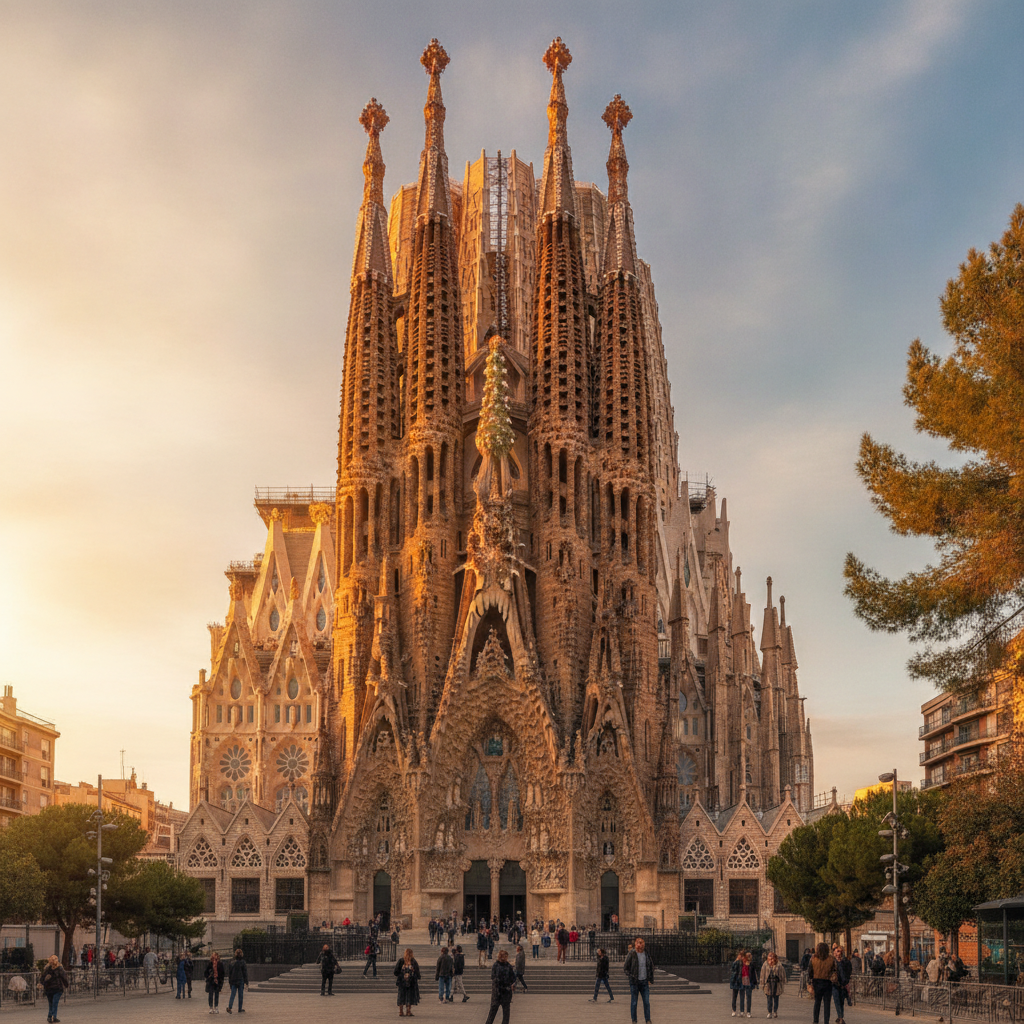
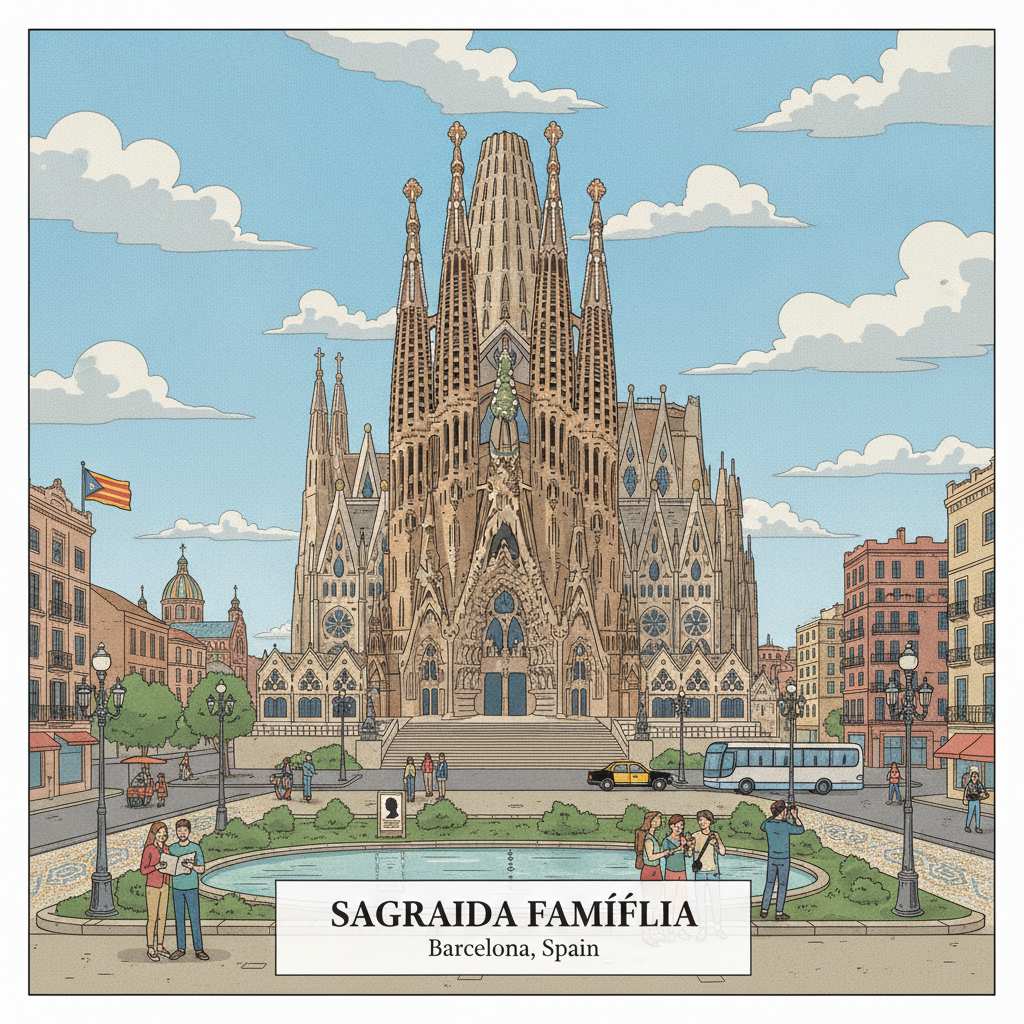
Antoni Gaudí's Temple Expiatori de la Sagrada Família, under continuous construction since 1882, is the most visited monument in Spain and the defining symbol of Barcelona. Gaudí took over the project in 1883 and transformed what had been a conventional neo-Gothic design into something entirely without precedent: a basilica in which every element—columns, vaults, facades, towers—is derived from natural forms (trees, bones, ruled geometrical surfaces) rather than historical architectural vocabulary. When Gaudí died in a tram accident in 1926 (struck down on the street, initially unrecognized because of his threadbare clothing, and dying three days later in the Sant Pau hospital), only the crypt and the lower portion of the Nativity facade had been completed. Construction continued from his models and drawings, surviving the Civil War (when anarchists burned the workshop and destroyed many originals), and is now projected to complete in 2026—144 years after it began. The interior, completed 2010, is among the most extraordinary architectural spaces in the world: a forest of branching stone columns filtered by stained glass in the colors of the Catalan Mediterranean (warm ambers and greens in the west, cool blues in the east). The four Nativity towers (1925–1930) remain Gaudí's own work; the six Passion towers (1976–2006) and the central tower of Jesus Christ (completed 2021, the tallest church tower in the world at 172.5 meters) are later additions by Jordi Bonet and Subirachs.
- 2
Hospital de Sant Pau — The Other Modernista Masterwork
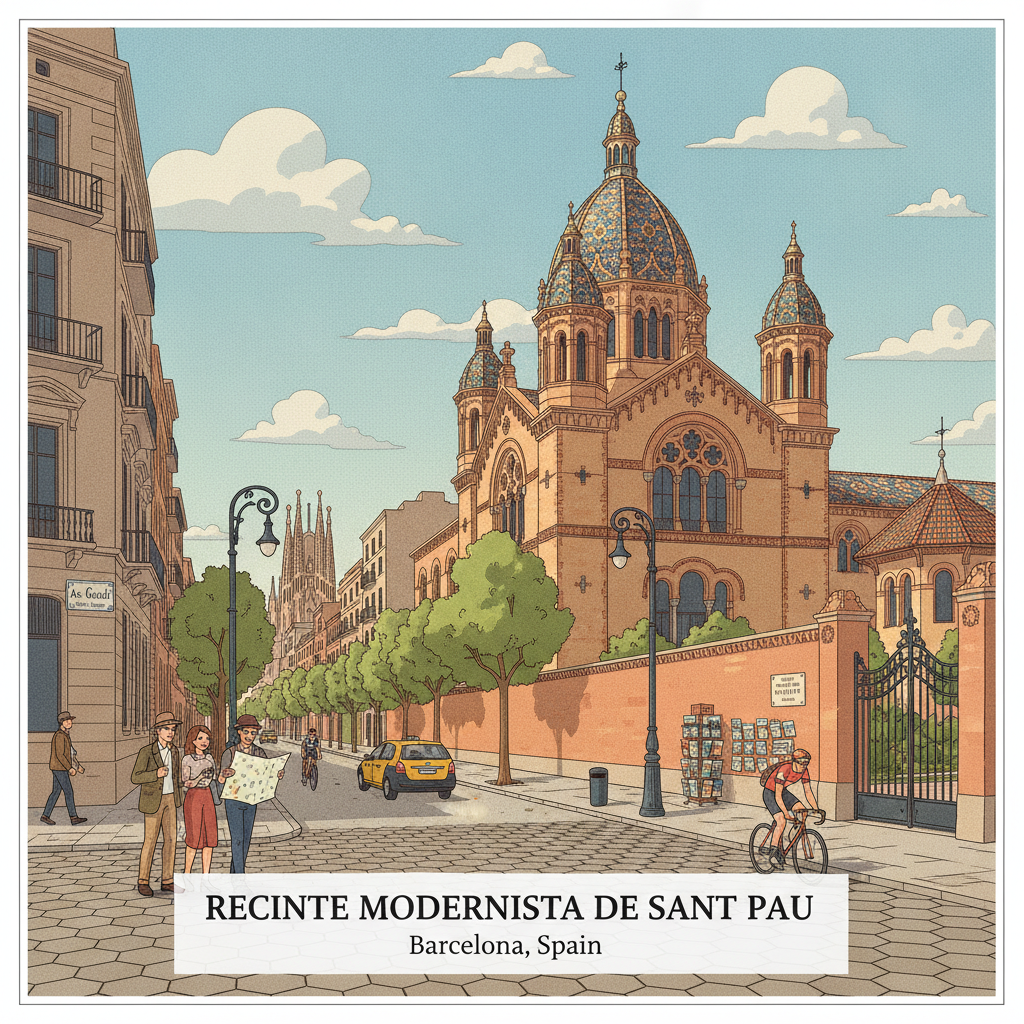
The Recinte Modernista de Sant Pau, on the Avinguda de Gaudí directly across from the Sagrada Família, is Lluís Domènech i Montaner's rival claim to the title of Barcelona's greatest Modernista building. Built between 1902 and 1930 (two phases, the second completed by his son Pere Domènech i Roura after his father's death), the hospital complex consists of 27 buildings connected by underground tunnels and arranged on a diagonal grid rotated 45 degrees from Cerdà's Eixample plan—an implicit challenge to the rationalism of the Eixample, inserting a different order within it. The architecture combines Mudejar influences (Islamic geometric tile work), Gothic structural forms, and Art Nouveau decoration in a complex that was, when built, considered the most advanced hospital in Europe in terms of its architectural approach to patient wellbeing (natural light, gardens, fresh air, separate pavilions for different conditions). It functioned as a hospital until 2009 and is now a UNESCO World Heritage Site and cultural center. The Main Pavilion's staircase, tiled dome, and mosaic-encrusted surfaces are among the finest decorative interiors in Spain.
- 3
Casa Milà / La Pedrera — Gaudí's Last Secular Building
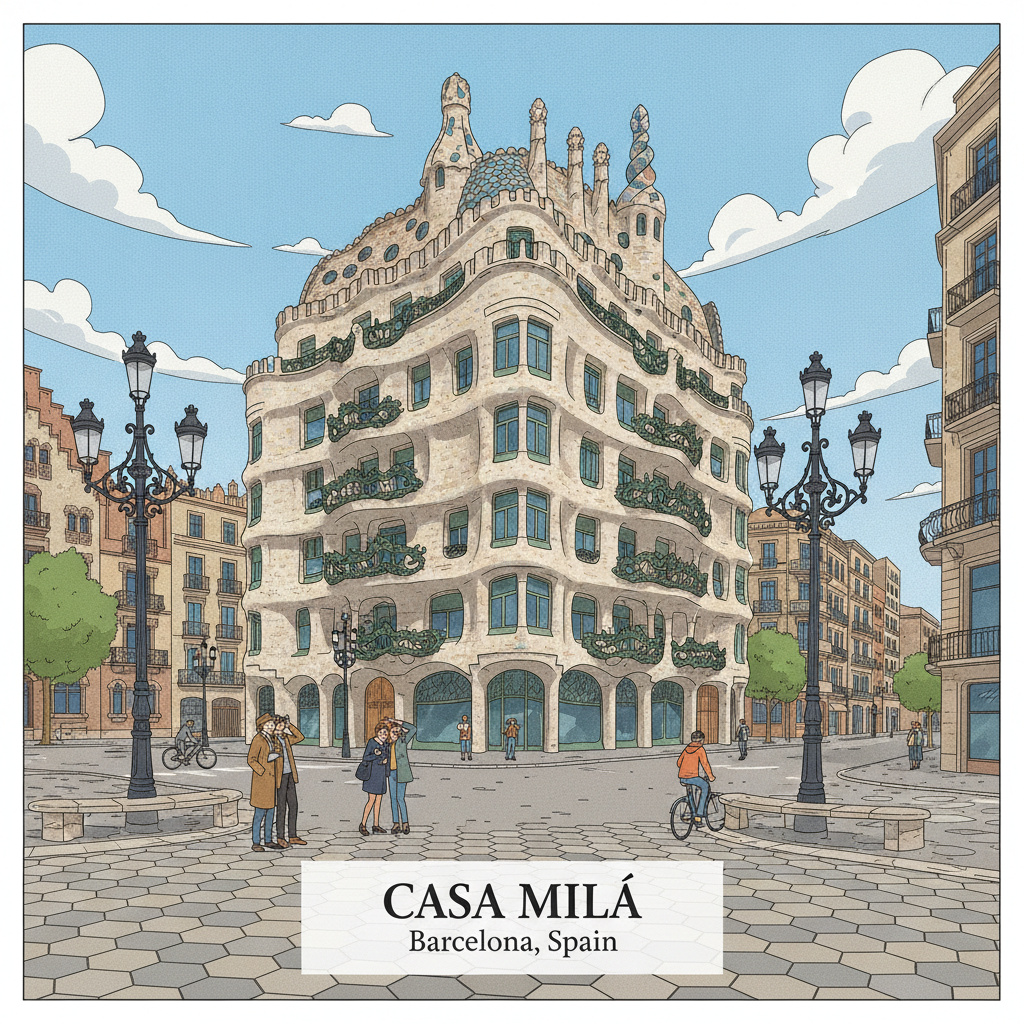
Casa Milà (1906–1912), at the corner of Passeig de Gràcia and Carrer de Provença, is Antoni Gaudí's last secular building and the most radical private residence built in Europe in the 20th century. Known universally as La Pedrera ('the stone quarry'), the building has no straight lines and no right angles: the undulating stone facade, supported by a free-standing structure of iron columns and brick vaults that allows the interior walls to be placed anywhere, is clad in limestone blocks that have been individually carved and laid to create the impression of a cliff face eroded by wind and water. The rooftop (accessible to visitors) is perhaps the most extraordinary single architectural element in Barcelona: a landscape of sculptural chimneys (nicknamed 'the warriors' by Barcelona residents, wearing their twisted headdresses) and ventilation towers that anticipate the Surrealist movement by two decades. The building was commissioned by Pere Milà and his wife Roser Segimon, who disliked the final result and took Gaudí to court over the cost. Now a UNESCO World Heritage Site managed by the Fundació Catalunya-La Pedrera.
- 4
Casa Batlló & the Manzana de la Discordia — Three Masters on One Block
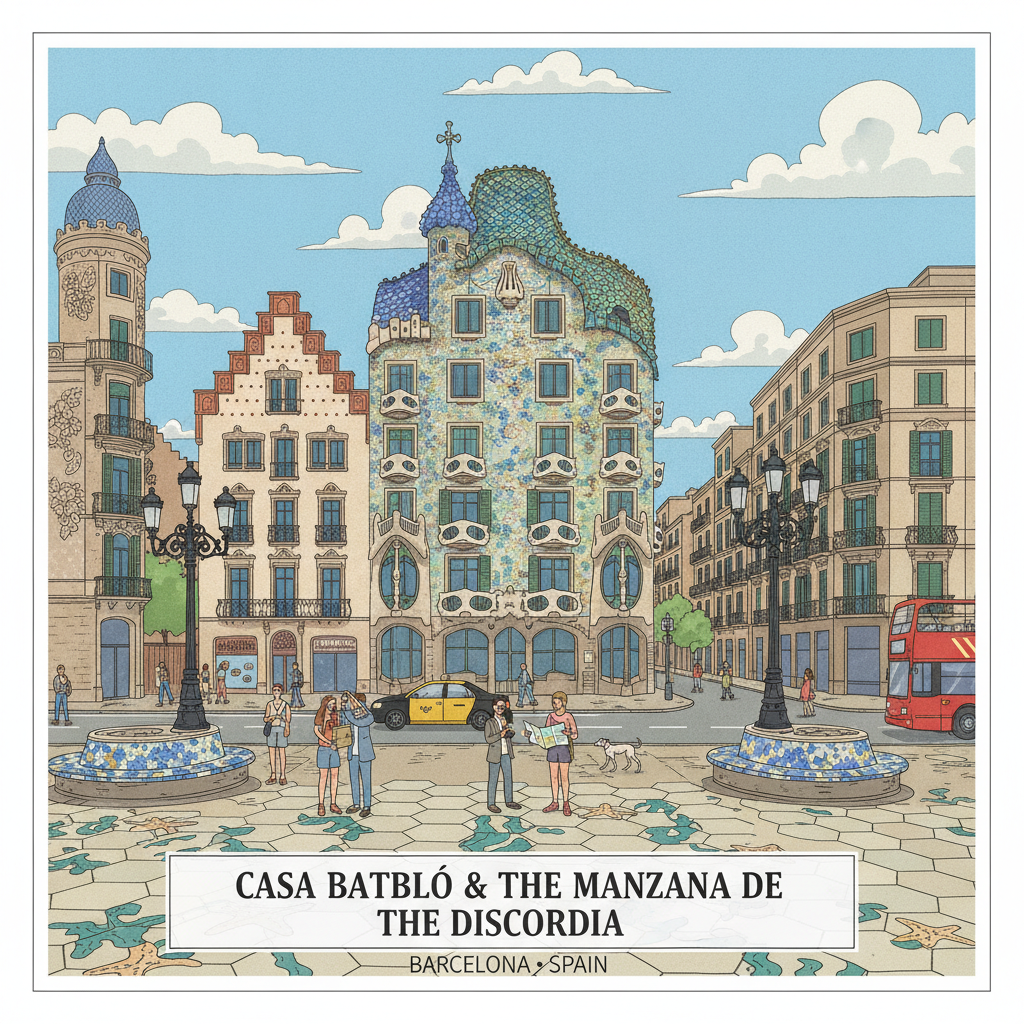
The block of Passeig de Gràcia between Carrer d'Aragó and Carrer del Consell de Cent (Block 92) is called the Manzana de la Discordia (Block of Discord, with a pun on manzana meaning both 'block' and 'apple') because it contains major works by the three leading architects of Catalan Modernisme on the same city block: Casa Lleó Morera (1905) by Lluís Domènech i Montaner (corner, heavily altered on the ground floor); Casa Amatller (1900) by Josep Puig i Cadafalch (Gothic-Flemish hybrid in the middle); and Casa Batlló (1904–1906) by Antoni Gaudí (the most famous, immediately recognizable by its ceramic-tile dragon-scale roof, skull-like balcony railings, and undulating ceramic-clad facade in blues, greens, and golds). Gaudí's renovation of the pre-existing building for textile manufacturer Josep Batlló is now interpreted as a representation of the legend of Sant Jordi (Saint George): the blue-tiled roof is the dragon's back, the tower is the saint's lance, and the balconies at the lower levels are the skulls of the dragon's victims. All three buildings are open to visitors; Casa Batlló's interior is the most spectacular.
- 5
Plaça de Catalunya — The Heart of Barcelona
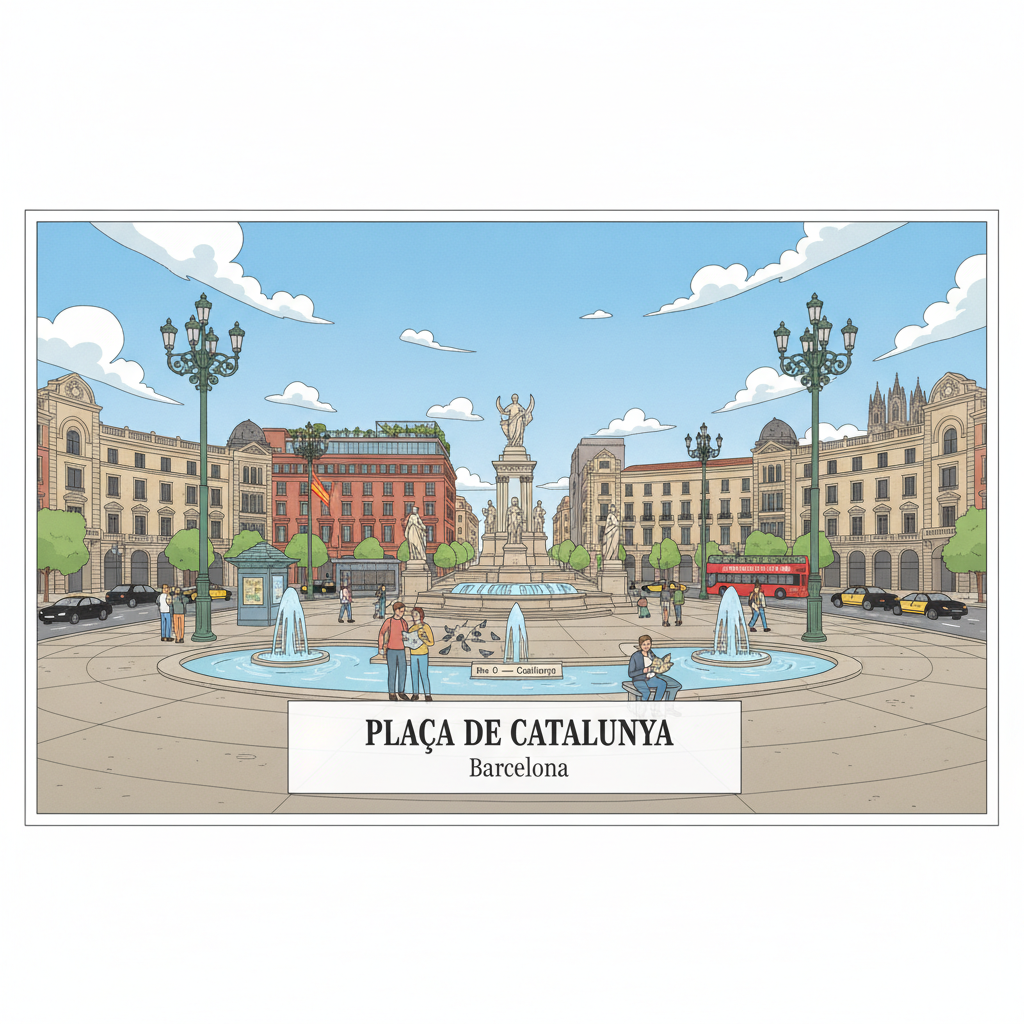
Plaça de Catalunya, the large oval plaza at the top of La Rambla and the intersection of the old city (Barri Gòtic) with the Eixample, functions as the psychological and geographic center of Barcelona — and, by extension, of Catalonia: the kilometer-zero point from which distances in Catalonia are measured is located here. The plaza was redesigned in its current form in 1927 (architect Francesc Nebot), with fountains, ornamental pools, and sculptures by major Catalan artists of the early 20th century (Josep Llimona, Josep Clarà, Pau Gargallo). Today it is the main transit hub for Barcelona (underground stations for metro lines 1, 2, and 3 converge here), the starting point of La Rambla, and the point from which visitors orient themselves to the city. The Corte Inglés department store on the northern edge has a rooftop café with panoramic views used by locals and visitors alike. Large public events and demonstrations traditionally gather here: it was the site of the mass civilian response to the October 2017 independence referendum.
- 6
Arc de Triomf — Gateway to the 1888 World's Fair
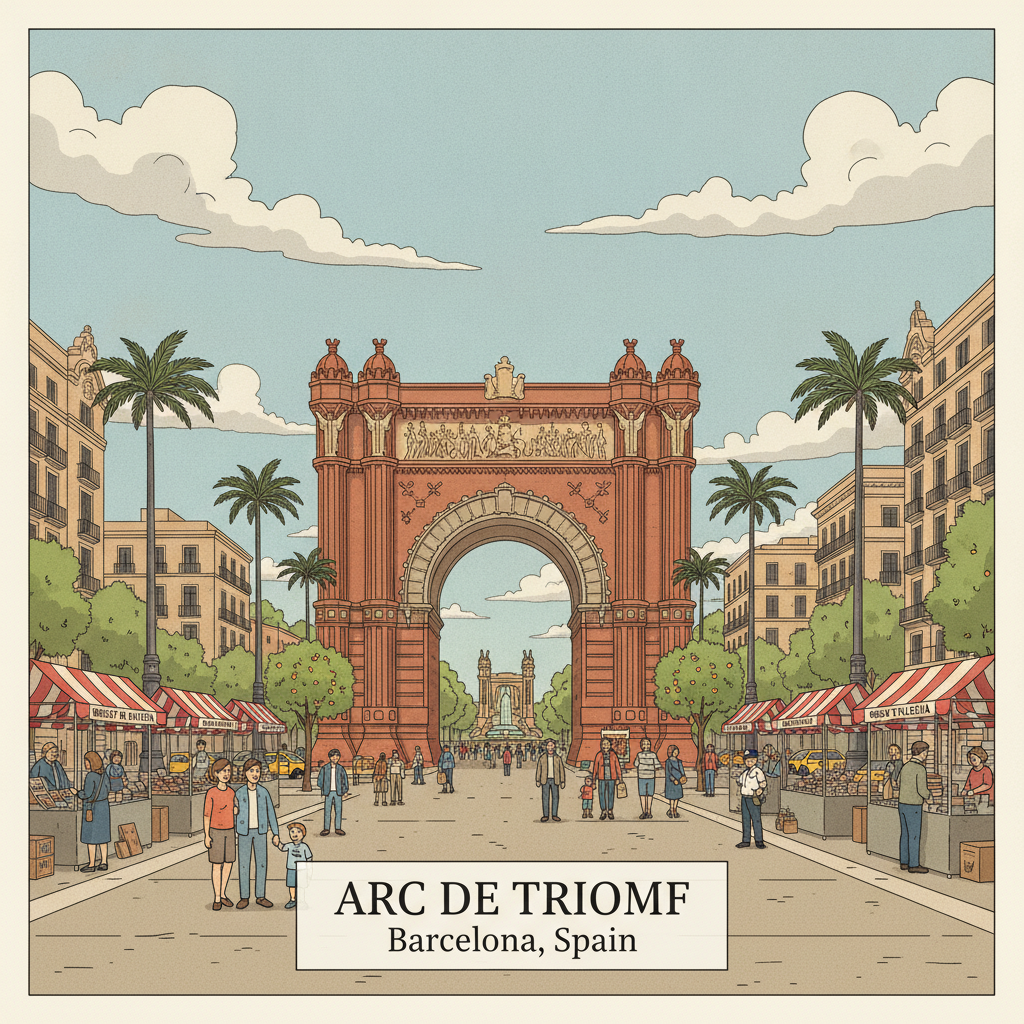
The Arc de Triomf, at the northern end of the Passeig de Lluís Companys, was built as the main gateway to the Universal Exhibition of 1888—Barcelona's answer to Paris's 1889 exhibition (which produced the Eiffel Tower) and the event that put the city on the modern international map. Designed by Josep Vilaseca i Casanovas in a neo-Mudejar style (unusually for a triumphal arch, using brick rather than stone), the arch is decorated with friezes representing the nations of the world and the Barcelona coat of arms, and topped with allegorical figures welcoming visitors. The promenade leading south from the arch to the Parc de la Ciutadella (designed specifically for the exhibition) is lined with street lamps in the shape of palm trees and with orange trees, making it one of the most pleasant walking axes in Barcelona. The arch and promenade were redesigned for the 1992 Olympics and are now used for the weekly Sunday flea market (Mercat de Filatèlia i Col·leccionisme).
Walk this route with audio
Stories play automatically as you reach each stop — no tapping needed.
More in barcelona
Pedralbes, Camp Nou & Sarrià: Barcelona's Quiet Upper City
Palau de la Música & Sant Pere: The Greatest Concert Hall in Spain and the City of Iron
Barceloneta & the Olympic Waterfront: From Columbus to the Mediterranean
La Rambla, Boqueria & El Raval: The Street, the Market, and the Other Barcelona
Poblenou, 22@ & the Design Hub: Barcelona's Creative Frontier