La Rambla, Boqueria & El Raval: The Street, the Market, and the Other Barcelona
La Rambla — the 1.2-kilometer pedestrian boulevard running from Plaça de Catalunya to the Columbus Monument and the sea — is simultaneously the most famous street in Spain and one of the most written-about urban spaces in the world. George Orwell described it in Homage to Catalonia (1938) as 'a wide tree-lined boulevard where the crowds are always thick' and 'the only street I have ever been in that I felt truly sorry to leave.' Today it is also one of the most pickpocketed streets in Europe. Adjacent El Raval, long Barcelona's most stigmatized neighborhood (historically the site of convents, the prison, a hospital for the poor, and a red-light district), has been dramatically transformed since the 1990s into a cultural district of the first order: MACBA, CCCB, the Filmoteca de Catalunya, and dozens of independent restaurants and galleries make it one of the most culturally dense neighborhoods in the city.
1. Plaça de Catalunya — Start of the Rambla
- 1
Plaça de Catalunya — Start of the Rambla
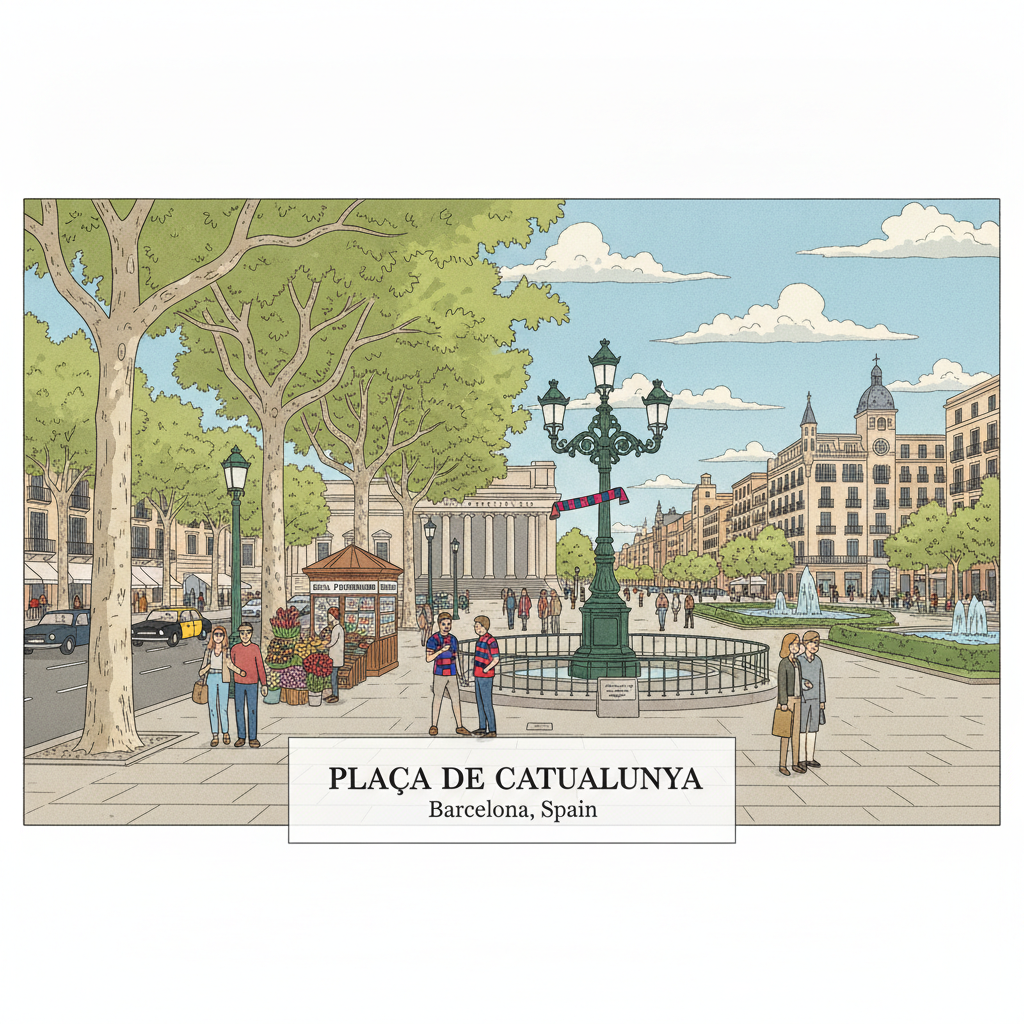
Plaça de Catalunya (see Route 1) is the starting point of La Rambla: the transition point between the rational Eixample grid above and the organic medieval city below. The top section of La Rambla — the Rambla de Canaletes, named for the Font de Canaletes, the ornate 1892 drinking fountain whose water locals believe will compel anyone who drinks from it to return to Barcelona — is where FC Barcelona fans traditionally gather to celebrate championships (the font gets doused in cava on such occasions). The lower sections of La Rambla change character as you descend: the Rambla dels Ocells (birds, now mainly flowers), the Rambla de Sant Josep (La Boqueria), the Rambla dels Caputxins (opera house, pavement mosaic by Miró), and the Rambla de Santa Mònica (contemporary art center, widest section). The living statues, flower stalls, and newspaper kiosks that characterized the Rambla have largely been replaced by tourist shops and crowds, but the physical space — the broad promenade between two lanes of slow traffic, the plane trees, the paving stones — remains.
- 2
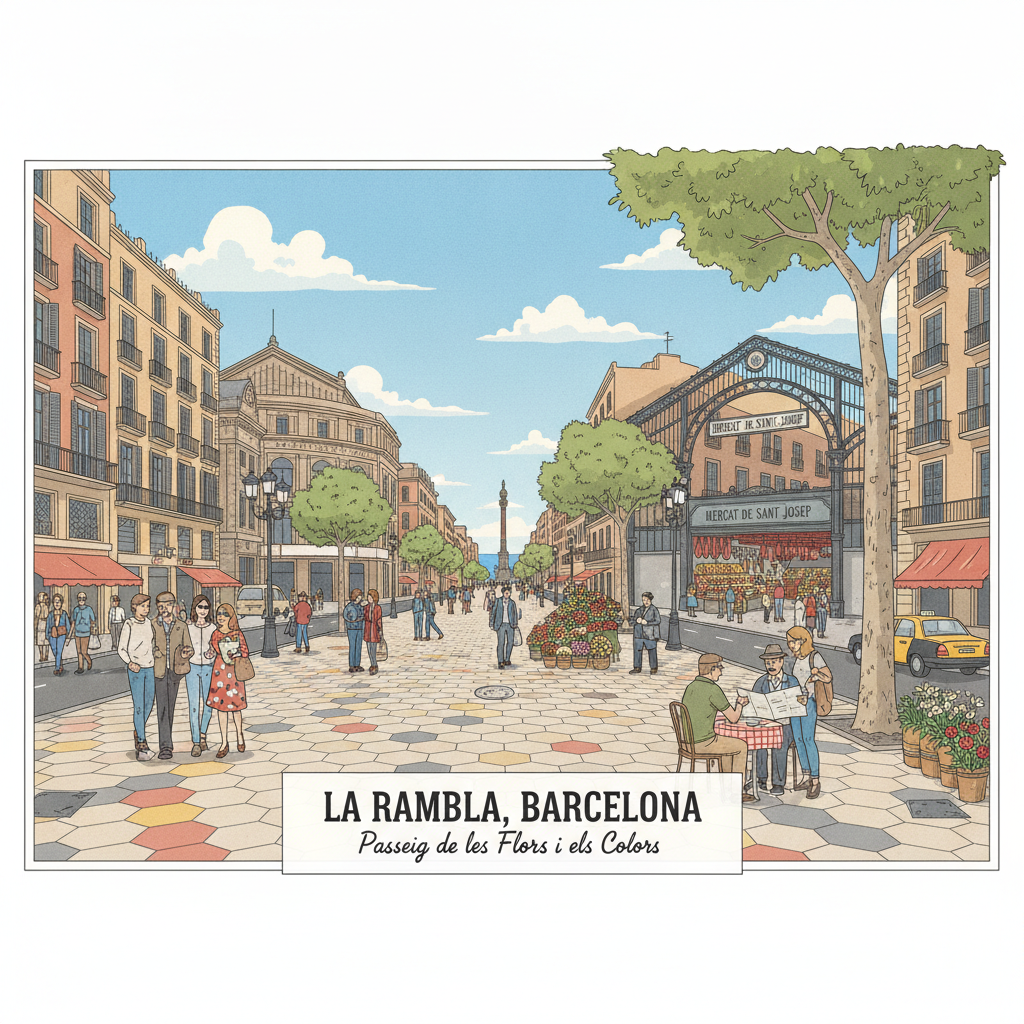
Mercat de la Boqueria — The World's Most Famous Market
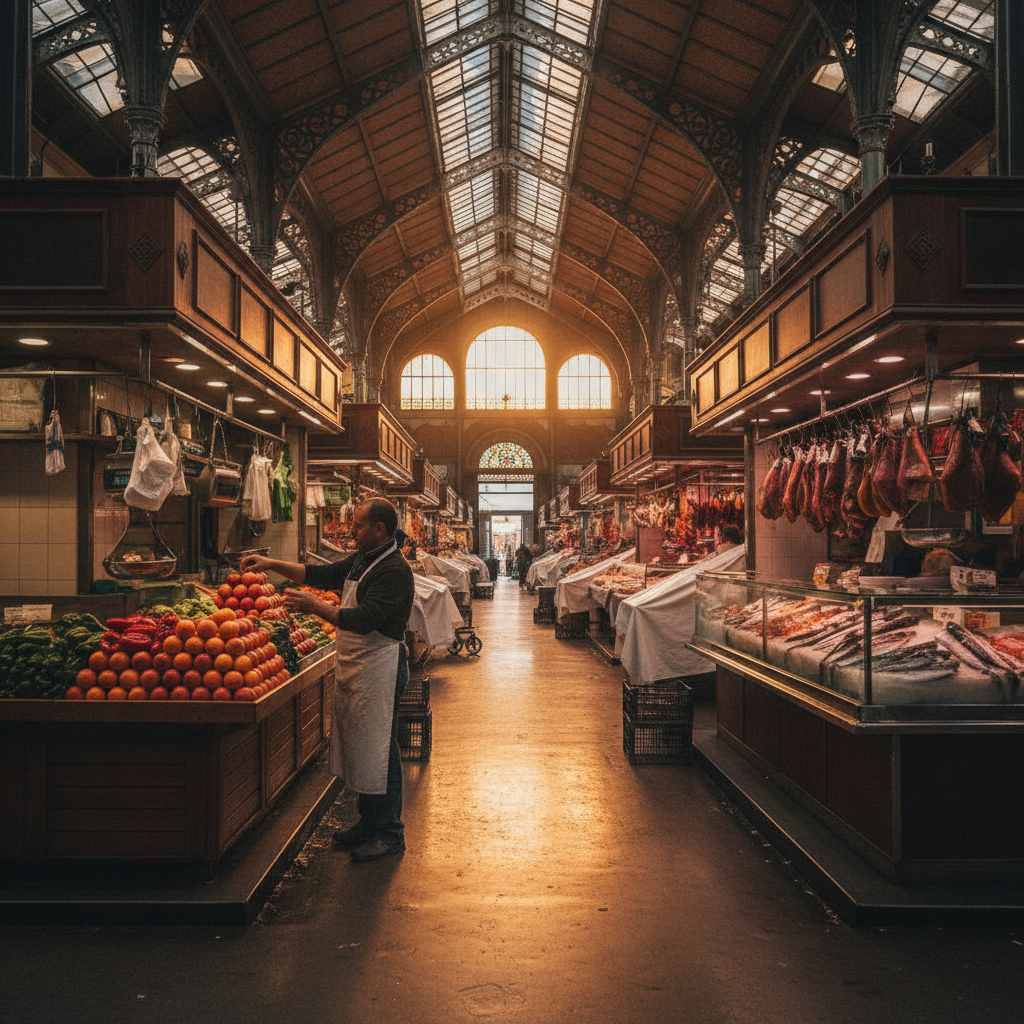
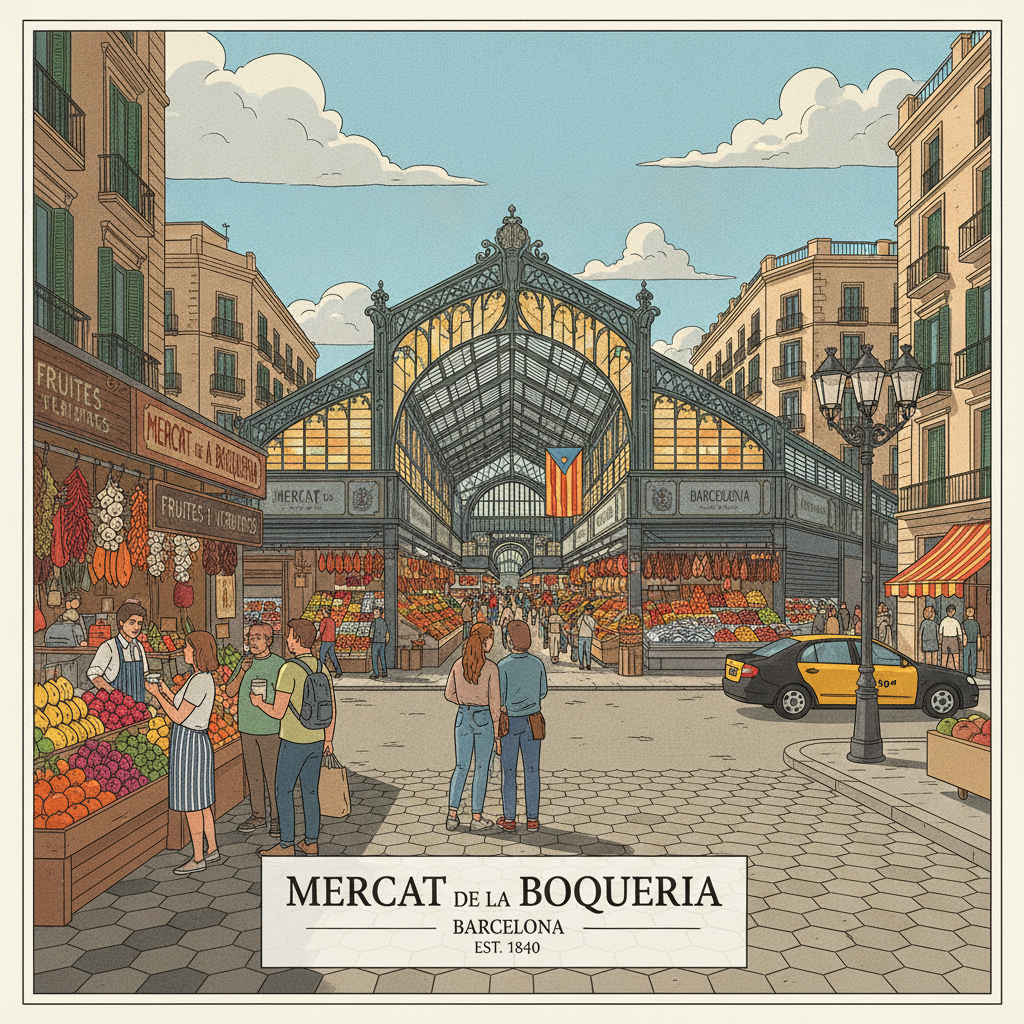
La Boqueria (officially the Mercat de Sant Josep de la Boqueria), entered from La Rambla through a stained-glass Art Nouveau arch (1914), is the most visited food market in the world: approximately 50,000 visitors per day, of whom perhaps 10–15% are actual shoppers rather than sightseers. The market has existed in some form on this site since 1217 (open-air stalls) and moved into its current iron-and-glass hall beginning in 1840 (completed 1914). It is a genuine working market with 300 stalls selling fish, meat, charcuterie, cheese, vegetables, fruit, spices, nuts, and prepared foods — though the central stalls closest to the entrance have increasingly converted to tourist-oriented prepared foods and expensive smoothies. The best produce is generally found in the stalls deeper in the market, away from La Rambla. Visiting before 9am or after 3pm avoids the worst crowds.
- 3
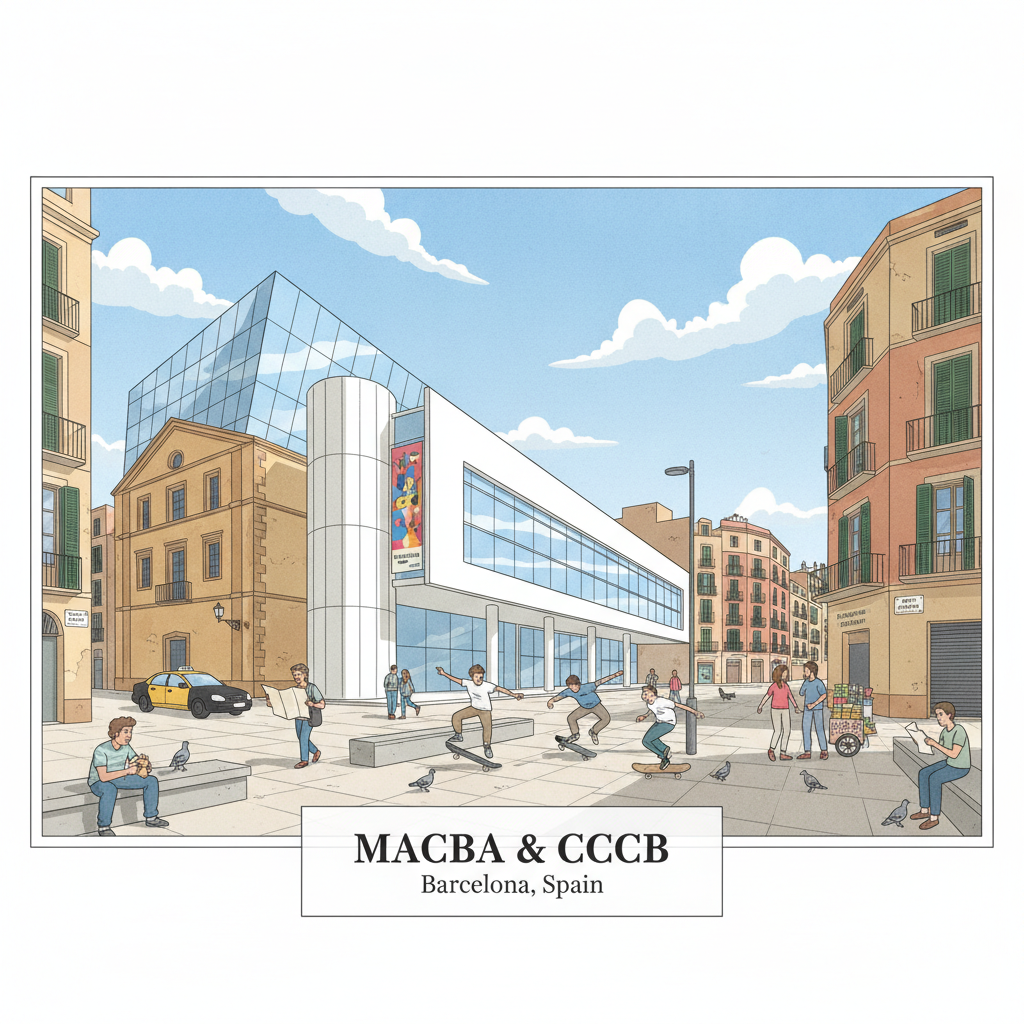
MACBA & CCCB — El Raval's Cultural Anchor
The Museu d'Art Contemporani de Barcelona (MACBA, 1995, designed by Richard Meier) and the adjacent Centre de Cultura Contemporània de Barcelona (CCCB, 1994, in a restored 18th-century hospice building with a dramatic glass facade by Helio Piñón and Albert Viaplana), together define the cultural transformation of El Raval that began with the 1992 Olympics and continued through the following decade. MACBA's permanent collection focuses on art from the 1950s to the present, with particular strength in Spanish and Catalan conceptual art (the Grup de Treball collection), Latin American art, and international movements from Fluxus to the present. The building's dramatic white Modernist facade and the skateboard culture that has developed in the plaza in front (Barcelona's most important skate spot) make it one of the most photographed buildings of the 1990s in Europe.
- 4
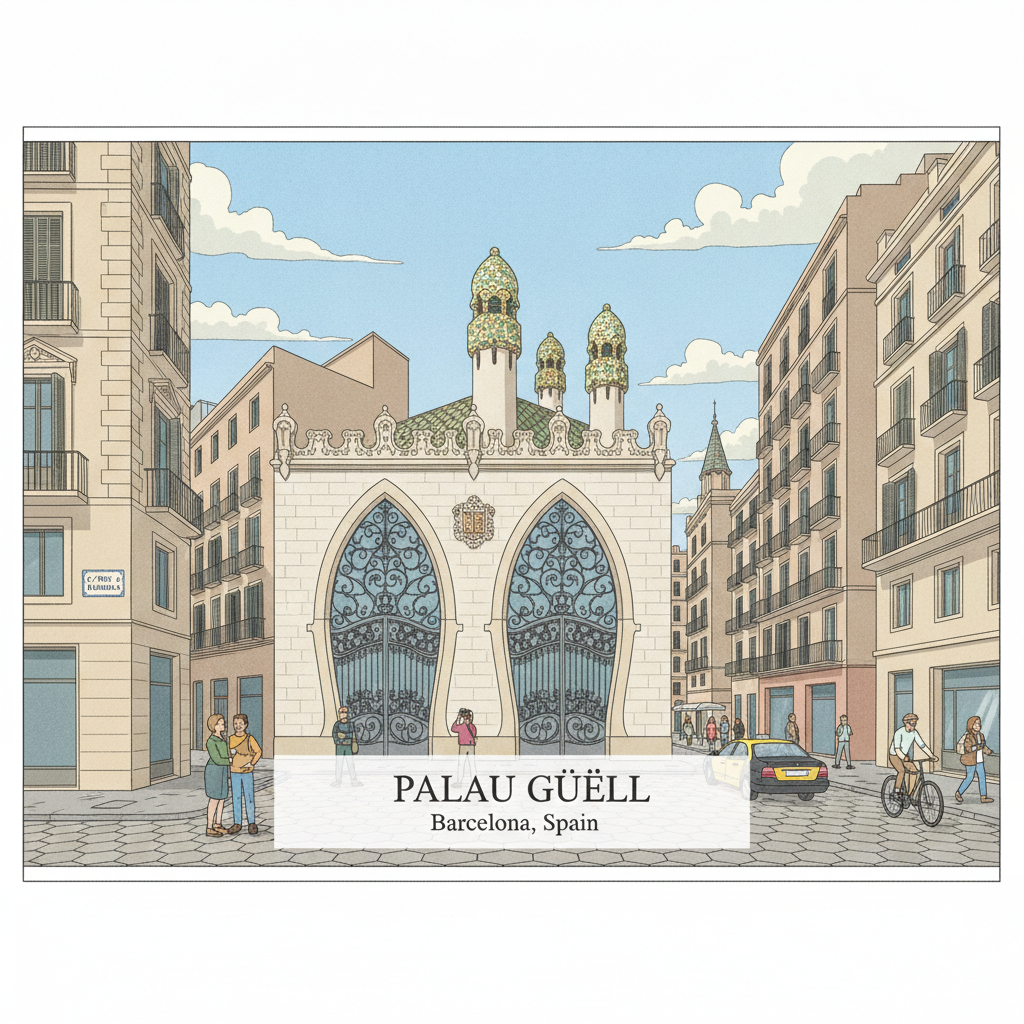
Palau Güell — Gaudí's First Great Building
The Palau Güell (1886–1888), on the Carrer Nou de la Rambla just off La Rambla, is Antoni Gaudí's first major work and the building in which his architectural language begins to separate clearly from the historicist mainstream: a private palace for Eusebi Güell that uses the full vocabulary of Catalan Gothic and Mudejar ornament but deploys it in ways that are already distinctly personal. The exterior is restrained (given what was to follow) — two parabolic entrance arches in iron and stone, a facade of Garraf limestone — but the interior reveals Gaudí's spatial ambitions: a central hall rising the full height of the building through four floors, lit by a parabolic dome pierced with 20 circular skylights and capped by a conical spire. The rooftop, with its chimney towers covered in broken tile (anticipating La Pedrera and Park Güell), is considered the first expression of the trencadís aesthetic. The palace was used by the Güell family until 1936, then by the police as a prison and torture center during the Franco period; it is now a UNESCO World Heritage Site and museum.
- 5
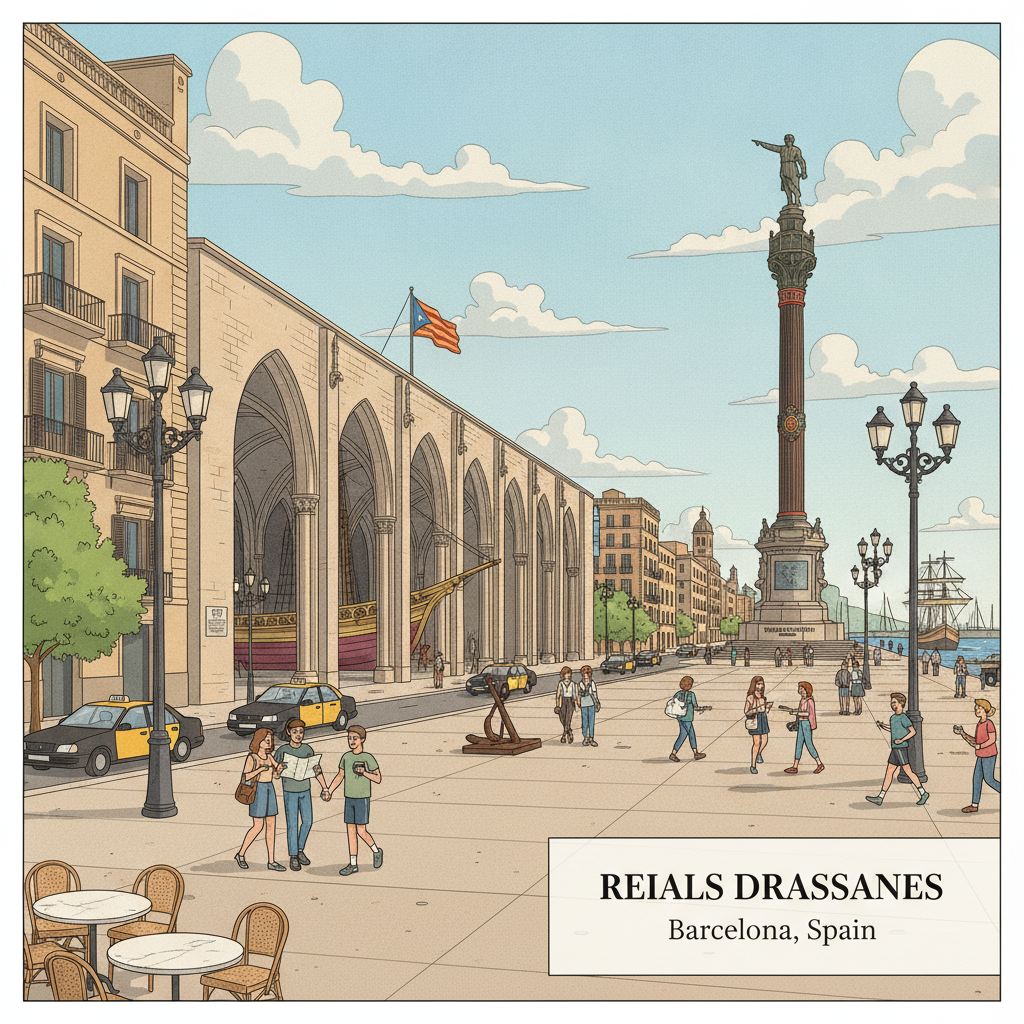
Drassanes & Maritime Museum — Where the Galleys Were Built
The Reials Drassanes (Royal Shipyards), at the foot of La Rambla where it meets the Columbus Monument, are the largest and best-preserved medieval shipyards in the world: a series of parallel stone vaulted bays (14th–17th centuries) in which galleys were built under cover, then launched directly into the sea when the port was at the building's edge (the port has since been extended seaward). The building now houses the Museu Marítim de Barcelona, one of the most important maritime museums in the Mediterranean, whose centerpiece is a full-scale replica of the Real — the royal galley of Don Juan of Austria, admiral of the Christian fleet at the Battle of Lepanto (1571), the last major naval battle fought entirely by rowing galleys. The building itself — 70 meters wide, 120 meters long, with stone vaulting reaching 13 meters — is as extraordinary as its contents.
- 6
La Rambla — Walking the Full Length
La Rambla (the name derives from the Arabic 'raml', meaning sandy torrent — this was the bed of a seasonal stream that ran along the outside of the medieval city wall) is most usefully experienced as a walk rather than a destination: 1.2 kilometers from Plaça de Catalunya to the sea, descending 7 meters in elevation, with the medieval city on the left (east) and El Raval on the right (west). The street's character shifts significantly between day and night: in the morning, residents buy flowers and newspapers; in the afternoon, tourists dominate the pavement cafés and souvenir shops; in the evening, the street resumes a more local character, with the theaters and cinemas on either side drawing residents. The pavement tiles were designed by Joan Miró and installed in 1976 (centered on the Pla de l'Os or 'Bone' mosaic near the Boqueria); Miró's colorful abstract shapes are frequently obscured by the crowds. The Terroris attack of August 17, 2017, in which a van drove down the Rambla killing 13 people, is commemorated by a small plaque near the Boqueria entrance.
Walk this route with audio
Stories play automatically as you reach each stop — no tapping needed.
More in barcelona
Pedralbes, Camp Nou & Sarrià: Barcelona's Quiet Upper City
Palau de la Música & Sant Pere: The Greatest Concert Hall in Spain and the City of Iron
Barceloneta & the Olympic Waterfront: From Columbus to the Mediterranean
Poblenou, 22@ & the Design Hub: Barcelona's Creative Frontier
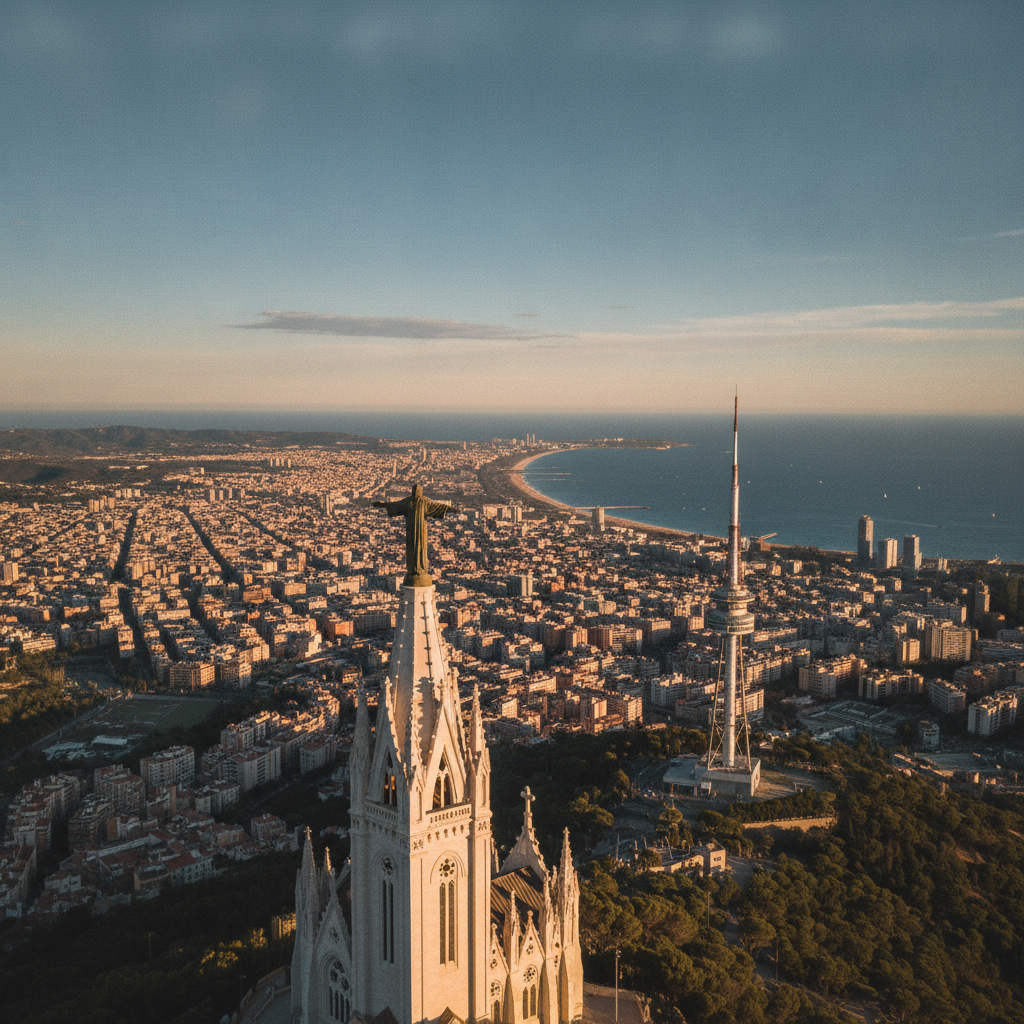
Tibidabo, Collserola & Pedralbes: Above the City, Beyond the Grid