Pedralbes, Camp Nou & Sarrià: Barcelona's Quiet Upper City
The upper-left quadrant of Barcelona — the neighborhoods of Pedralbes, Les Corts, Sarrià, and the zone along the Avinguda Diagonal beyond the Eixample — is the least-visited part of the city by tourists and the most revealing of how Barcelona's elite actually live. This is where the city's wealthiest families have always lived: in the Pedralbes neighborhood of early 20th-century villas and gardens, in the mansion zone around Sarrià, in the large apartments along the Diagonal. The route connects two of Barcelona's most significant but undervisited destinations — the Gothic monastery of Pedralbes (14th century, largely untouched) and the CosmoCaixa science museum (perhaps the best science museum in southern Europe) — with Camp Nou, the largest stadium in Europe, and the leafy residential streets that give this part of the city its particular character: prosperous, quiet, green, and emphatically Catalan.
1. Monestir de Pedralbes — Medieval Silence Twenty Minutes from the Center
- 1
Monestir de Pedralbes — Medieval Silence Twenty Minutes from the Center
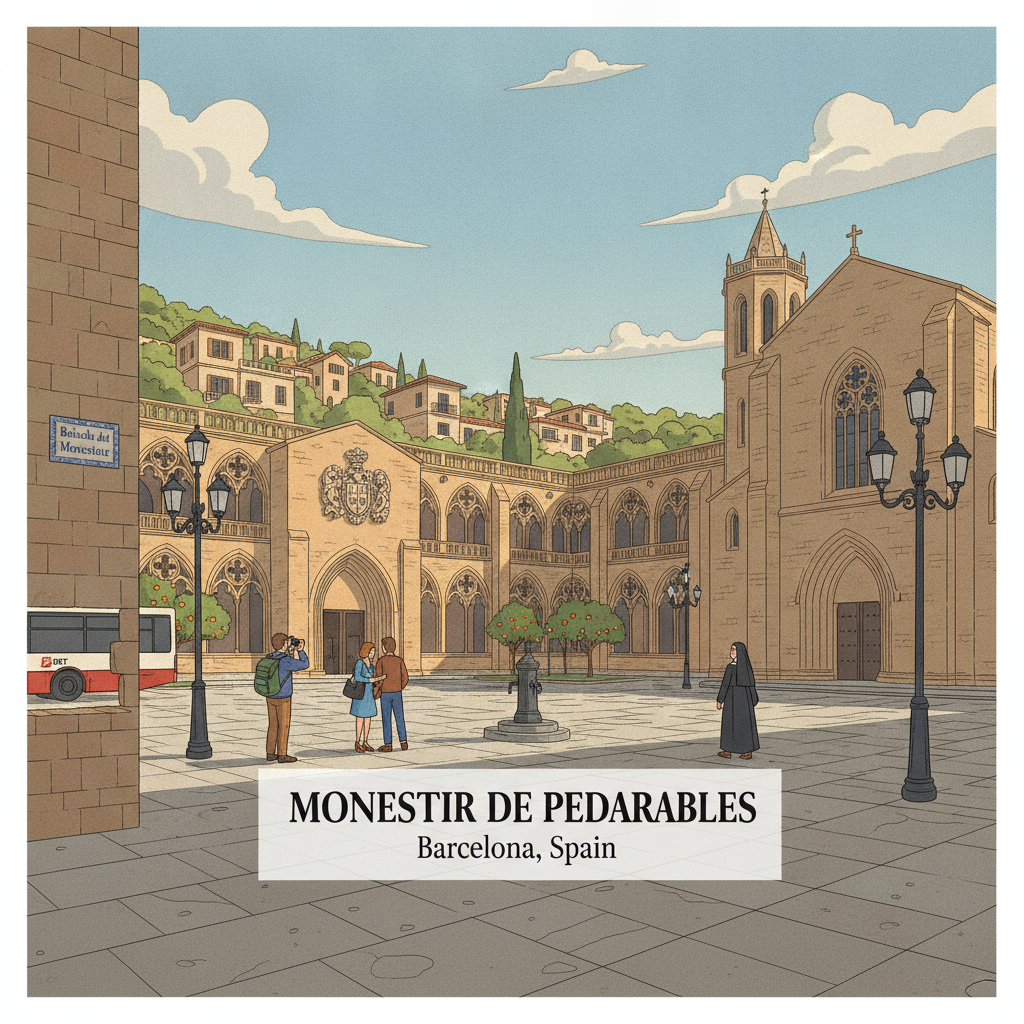
The Monestir de Pedralbes (see also Route 8 for the approach from Tibidabo) is best experienced in the morning, before the tour groups arrive: the three-story Gothic cloister, 40 meters per side, with 26 arches per floor (78 arches total, each slightly different), is one of the most serene spaces in Barcelona — a quality earned by 700 years of monastic use and the fact that the Poor Clares still live in the complex, meaning a genuine institutional continuity rather than a museum reconstruction. The cloister garden, planted with orange trees, roses, and a cypress, has been maintained in approximately its medieval arrangement. The Capella de Sant Miquel (1343) is the highlight: Ferrer Bassa's 13-scene Life of the Virgin and 5-scene Passion of Christ cycle, painted directly on the plaster in a style so close to Giotto that the influence was certainly direct (Bassa is documented in Avignon, where Giotto's influence reached via Simone Martini). The cells of the original nuns, the infirmary with its 14th-century painted furniture, and the refectory with its Gothic arched windows are all open — a rare intact view of medieval monastic life.
- 2
Camp Nou — The Cathedral of Football
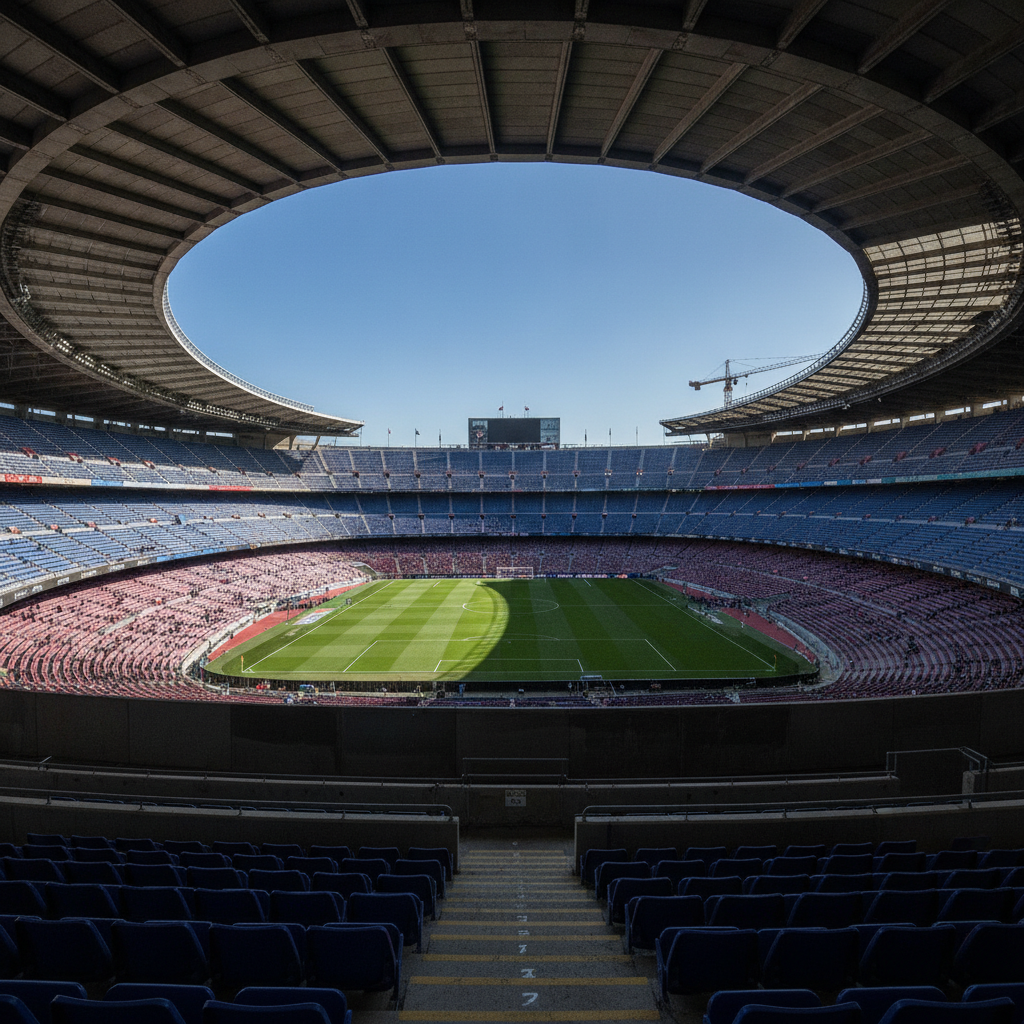
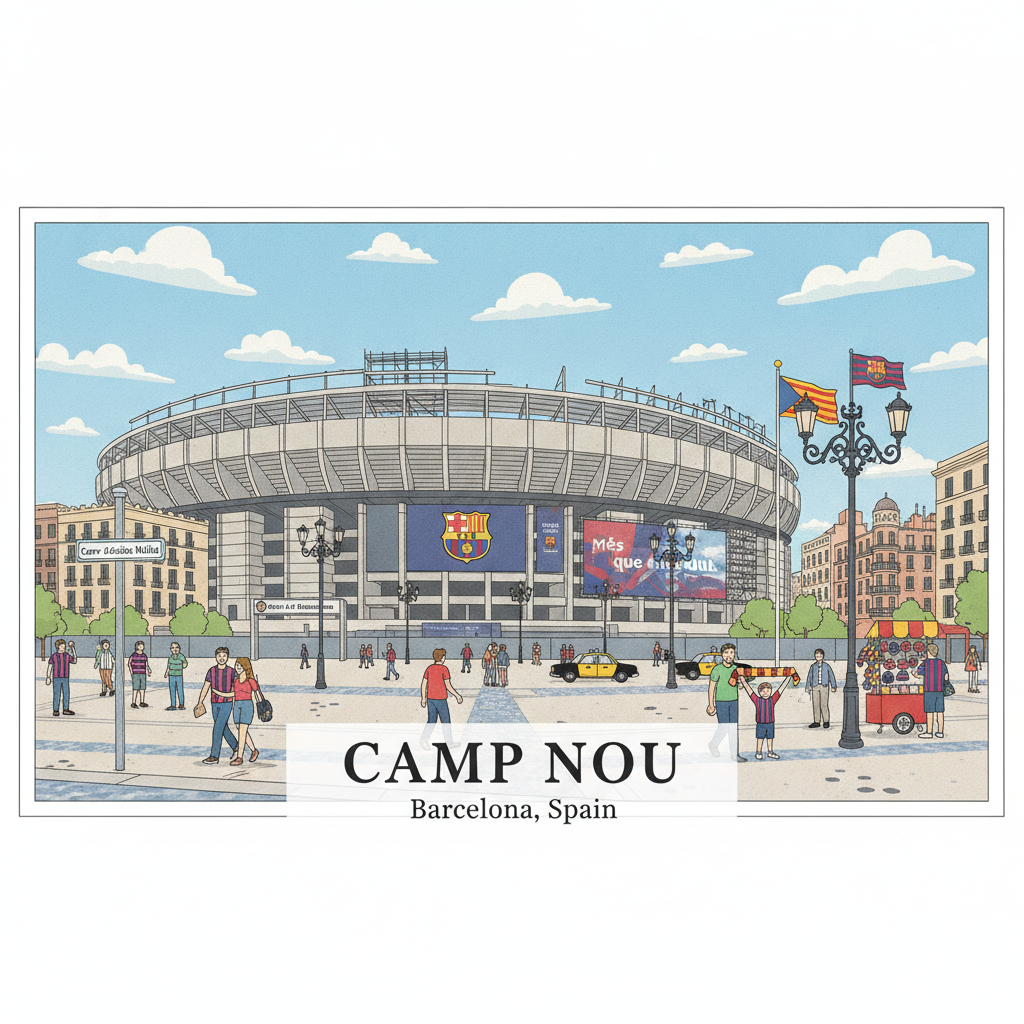
Camp Nou (New Ground in Catalan), the home stadium of Futbol Club Barcelona, is the largest football stadium in Europe (capacity 99,354, occasionally exceeded for special events) and the fourth largest in the world. Built in 1957 to replace the Club's previous ground (the Camp de Les Corts, now the Les Corts shopping area), it has been expanded three times and is currently undergoing a €1.5 billion renovation (Spotify Camp Nou project, 2023–2026) that will add a roof and increase capacity to 105,000. For a club founded in 1899 by the Swiss Hans Gamper ('Joan Gamper') specifically to give Barcelona a club that would be genuinely Catalan rather than Spanish — 'Més que un club' (More than a club) is the Club's motto, referring to its role as a symbol of Catalan identity during the Franco dictatorship — the stadium is more than a sports venue. The Museu del FC Barcelona in the stadium complex is the most visited museum in Catalonia (1.9 million visitors per year), ahead of the Sagrada Família.
- 3
Palau Reial de Pedralbes & the Güell Dragon Gate
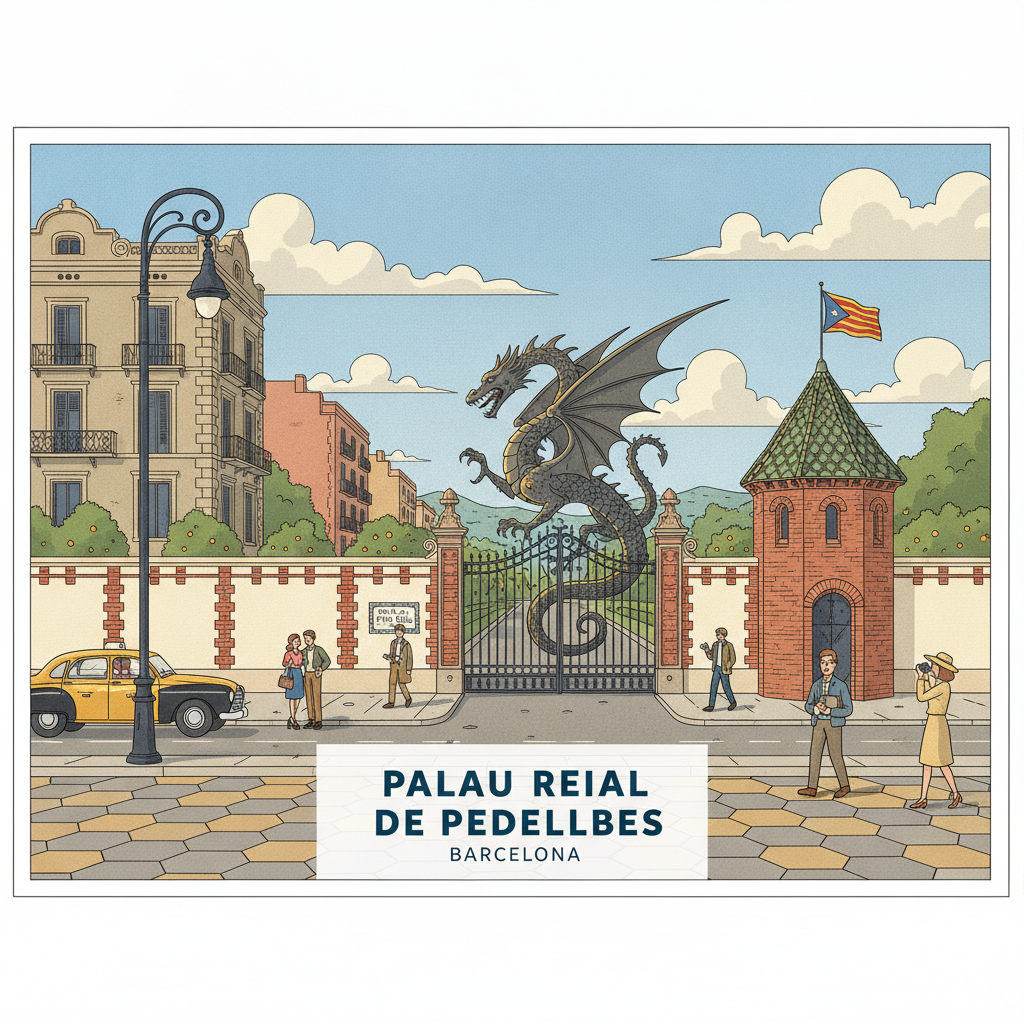
The Palau Reial de Pedralbes, on the Avinguda Diagonal at the edge of the university campus, occupies the former Finca Güell — the Güell family country estate that Eusebi Güell inherited from his father and where he invited Gaudí to work for the first time in 1884. Gaudí's contributions to the Finca Güell include the main entrance gate (the Dragon Gate, 1884–1887): a wrought-iron gate whose central panel is a dragon with extraordinary anatomical detail — scaled body, articulated wings, an open jaw with individual teeth — representing the dragon Ladon from the myth of the Hesperides, guardian of the golden apples (the orange grove of the Güell estate = the garden of the Hesperides). This is Gaudí in his earliest mature period, before Park Güell or the Sagrada Família, already working at the level of invention that would characterize everything that followed. The gate is in the garden wall of the current university campus and can be viewed for free from the Avinguda de Pedralbes.
- 4
CosmoCaixa — The Best Science Museum in Southern Europe
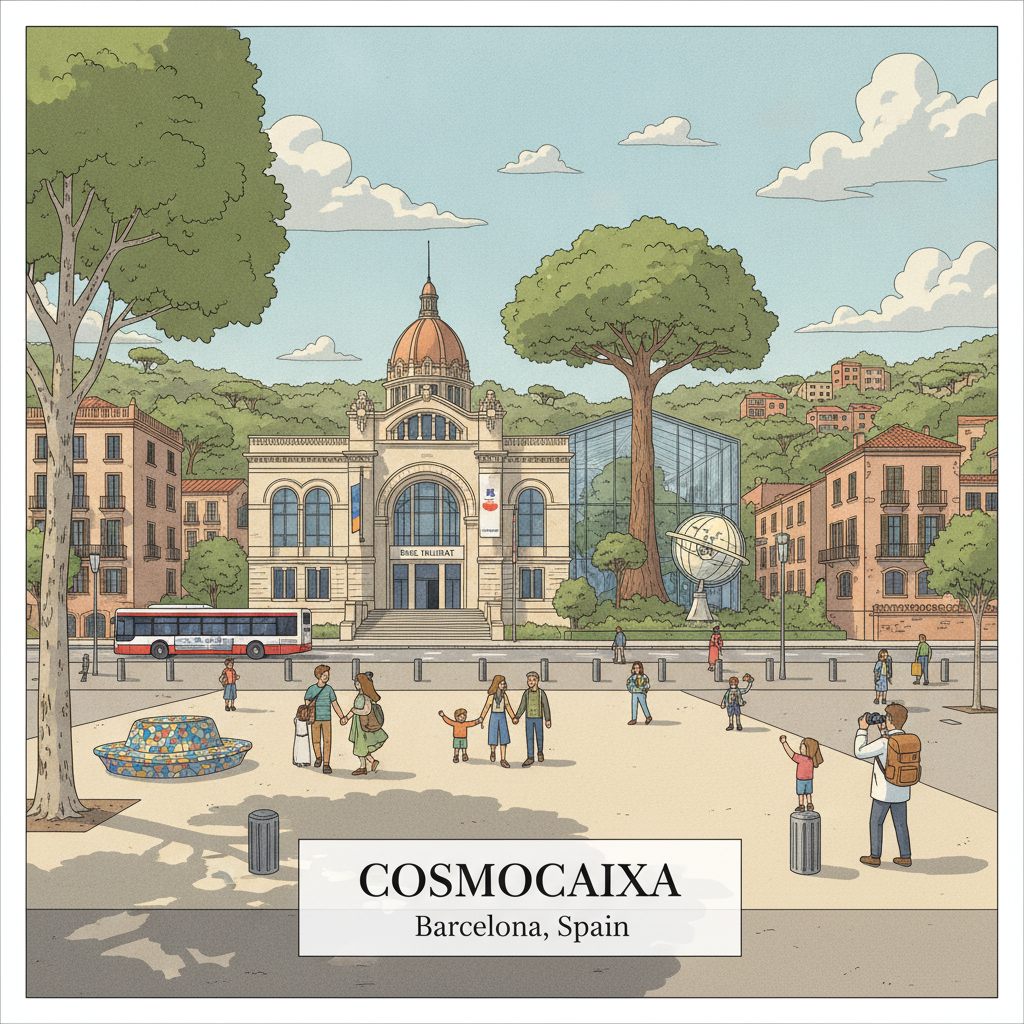
CosmoCaixa, the science museum of the Fundació 'la Caixa' (the cultural foundation of the Catalan savings bank CaixaBank), occupies a renovated 1909 building (original: a home for the blind, by the architect Josep Domènech i Estapà) in the Sarrià neighborhood at the base of the Collserola hills. The renovation by the architects Esteve Terradas and Robert Terradas (2004) added an underground extension six floors deep that houses the museum's most extraordinary space: the Flooded Forest (Bosc Inundat), a 1,000-square-meter living slice of Amazonian rainforest — real trees, real plants, real animals (piranhas, anacondas, caimans, tropical birds) under controlled temperature, humidity, and light conditions, representing the Amazon ecosystem as it actually functions. The geological wall (the history of Earth in rock samples, arranged chronologically), the planetarium, and the temporary exhibitions on current scientific research complete a museum that is far more engaging than its institutional description suggests. Unlike most science museums, CosmoCaixa maintains genuine scientific partnerships with research institutions.
- 5
Sarrià Village Center — The Catalan Bourgeoisie at Home
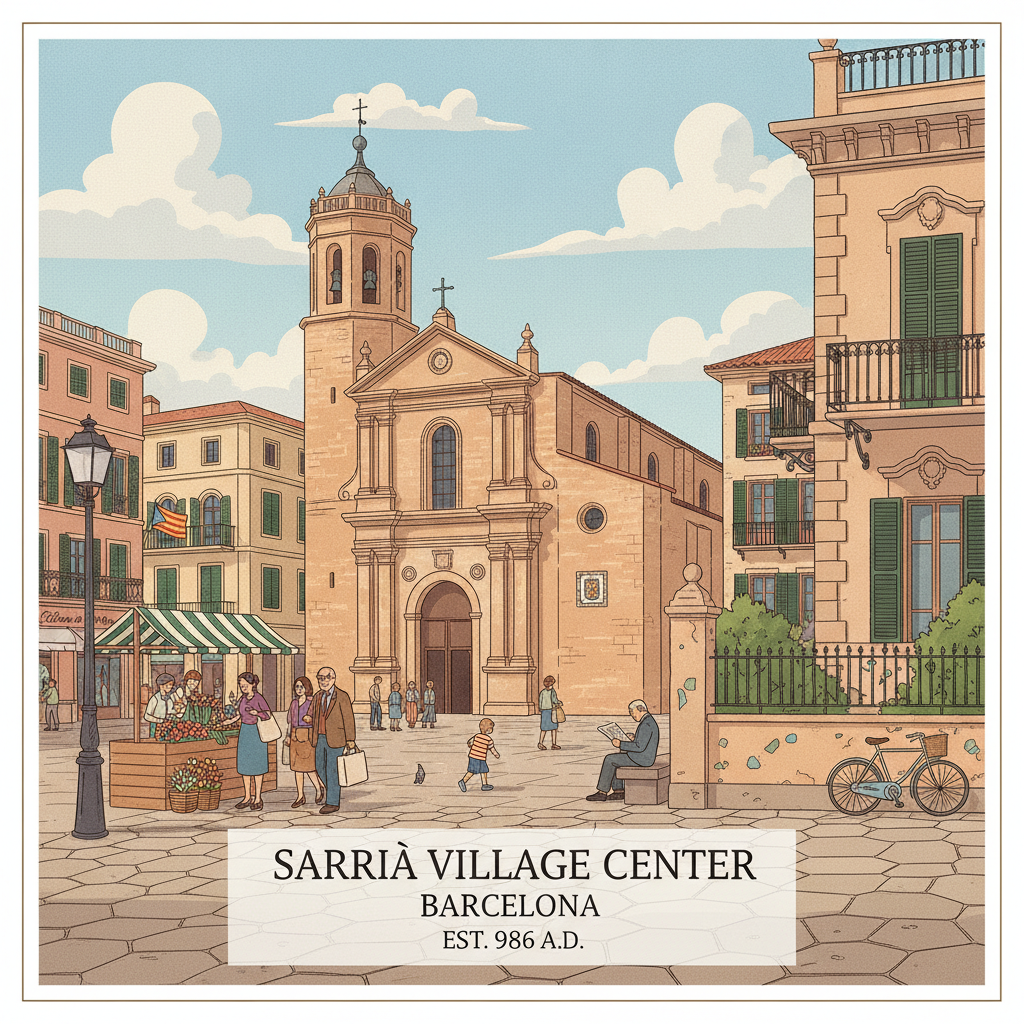
The village center of Sarrià, five minutes' walk from CosmoCaixa, is the most complete surviving example of the pre-incorporation village centers that Barcelona absorbed during its 19th–20th century expansion. The Carrer Major de Sarrià (the original main street of the village, now a shopping street with local businesses) leads to the Plaça de Sarrià (village square, with the 18th-century church of Sant Vicenç and a morning market) and the Plaça del Consell de la Vila (the former town hall square). The surrounding streets — particularly Carrer de Canet, Carrer de Cornet i Mas, and the area around the Plaça de Sant Vicenç — contain remarkable late 19th-century bourgeois villas: large houses with gardens, built by wealthy Catalan industrialists and merchants who chose Sarrià (then a separate municipality with lower taxes and cleaner air) as their residential retreat. The Barcelona poet Joan Maragall (1860–1911), who wrote the unofficial Catalan anthem 'El Cant de la Senyera', lived in Sarrià at Carrer de l'Avenir 5; the house is preserved and occasionally open.
- 6
Avinguda Diagonal — Barcelona's Grand Avenue
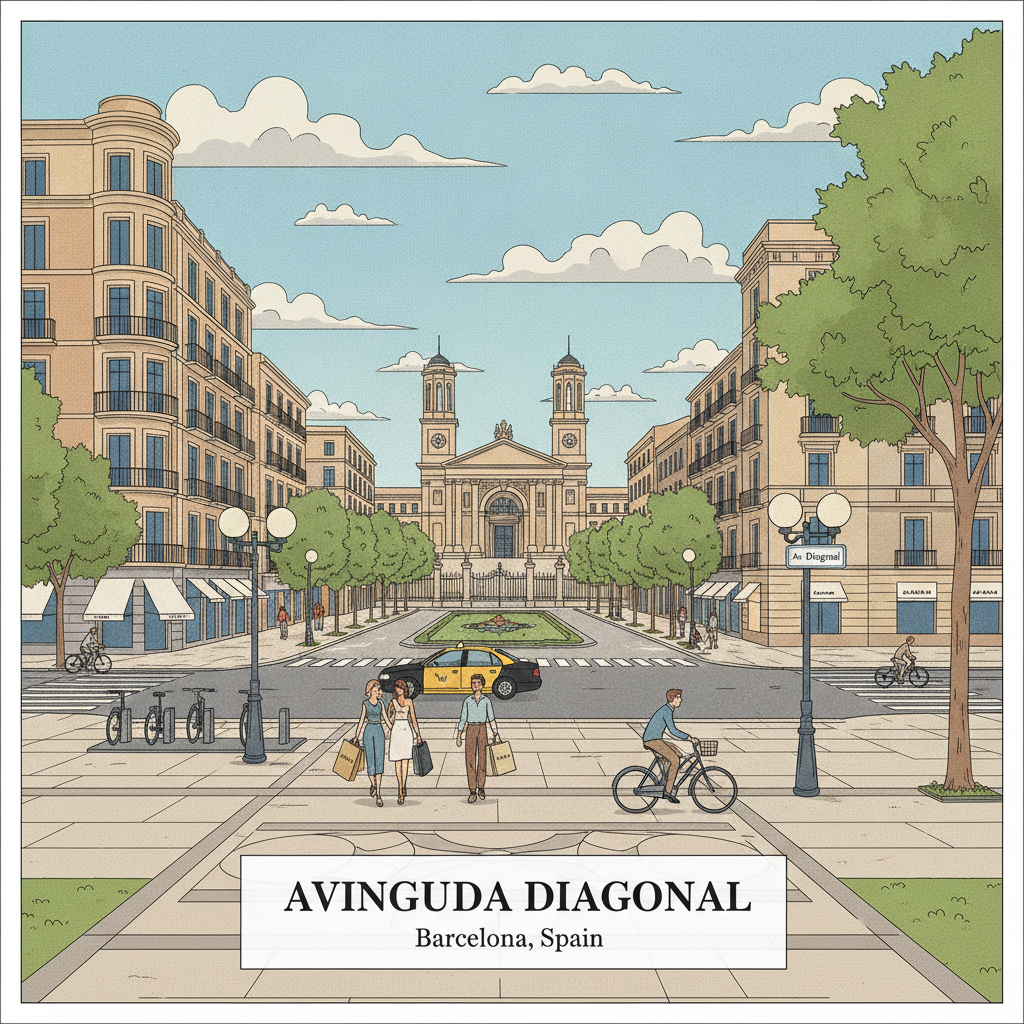
The Avinguda Diagonal, slicing diagonally across the Eixample grid from the upper-left to the lower-right of the city (from Pedralbes/Les Corts to the Fòrum at the sea), was the prestige axis of Ildefons Cerdà's 1860 plan for the Eixample expansion: a grand boulevard that would cut through the grid at an angle, creating a series of diamond-shaped intersections and housing the city's most important institutions. The western section of the Diagonal (from Pedralbes to the university) still fulfills something of this original ambition: the University of Barcelona campus, the Royal Palace gardens, the architecture schools, the Pedralbes monastery all front onto it. The Diagonal is also the boundary between Barcelona's upper-city neighborhoods (Pedralbes, Les Corts, Sarrià) and the Eixample below — a social boundary as much as a geographical one. The stretch between Passeig de Gràcia and Plaça de Francesc Macià contains the highest concentration of international luxury boutiques in Barcelona.
Walk this route with audio
Stories play automatically as you reach each stop — no tapping needed.
More in barcelona
Palau de la Música & Sant Pere: The Greatest Concert Hall in Spain and the City of Iron
Barceloneta & the Olympic Waterfront: From Columbus to the Mediterranean
La Rambla, Boqueria & El Raval: The Street, the Market, and the Other Barcelona
Poblenou, 22@ & the Design Hub: Barcelona's Creative Frontier
Tibidabo, Collserola & Pedralbes: Above the City, Beyond the Grid