Park Güell & Gràcia: Gaudí's Urban Garden and Barcelona's Village Within
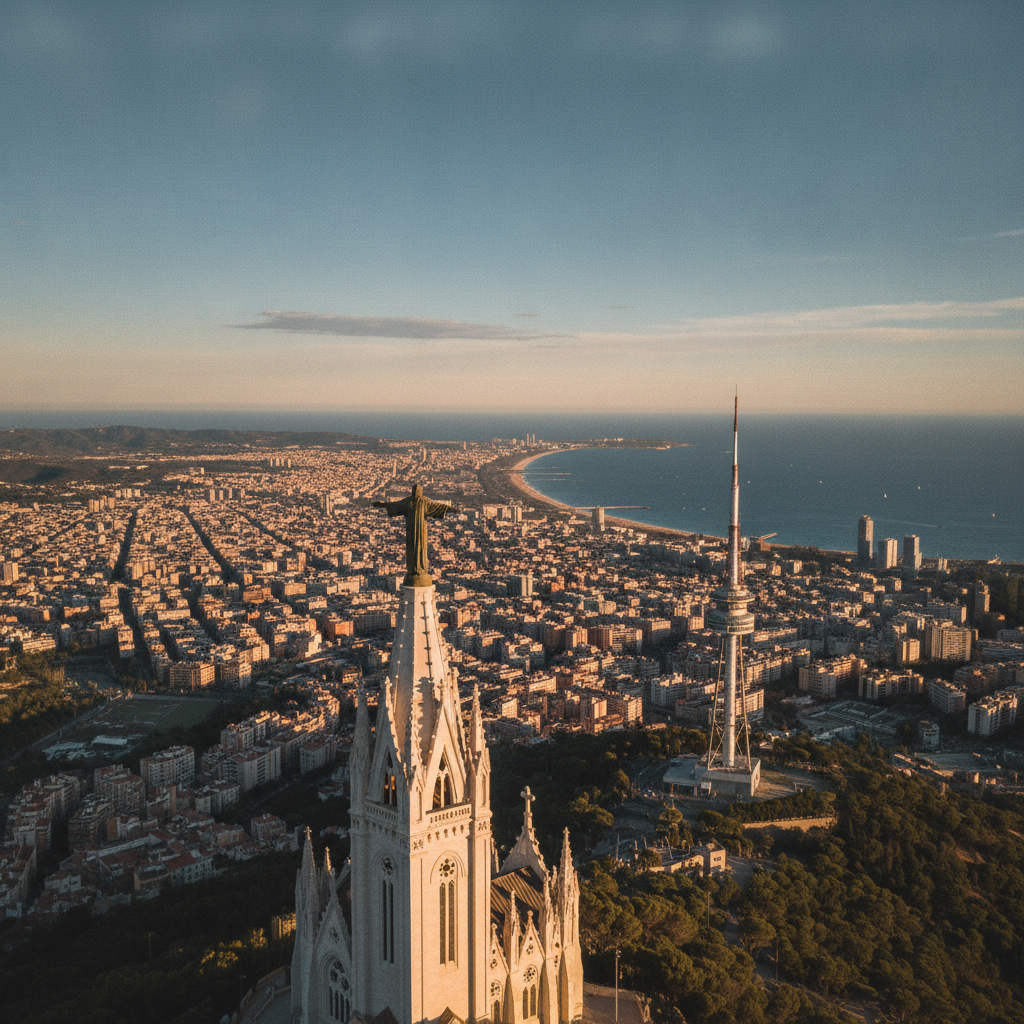
Park Güell occupies the southern slope of the Carmel hill in the district of Gràcia, overlooking the city and the sea. It was conceived by Eusebi Güell (Gaudí's principal patron) as a garden city of 60 plots, inspired by the English garden-city movement — a hillside suburb for Barcelona's upper classes. Only 2 of the 60 plots were ever sold (one to Gaudí himself, who lived there 1906–1926), and in 1922 the failing project was donated to the city as a public park. What remained — Gaudí's extraordinary structures (gatehouses, Dragon Staircase, Hypostyle Hall, the great terrace) and the landscaped pathways — became one of the defining public spaces of 20th-century Barcelona. The neighborhood of Gràcia below (an independent municipality until its annexation by Barcelona in 1897) retains a distinct village identity with its own festivals, politics, and local culture.
1. Park Güell Main Terrace — The Dragon's Bench
- 1
Park Güell Main Terrace — The Dragon's Bench
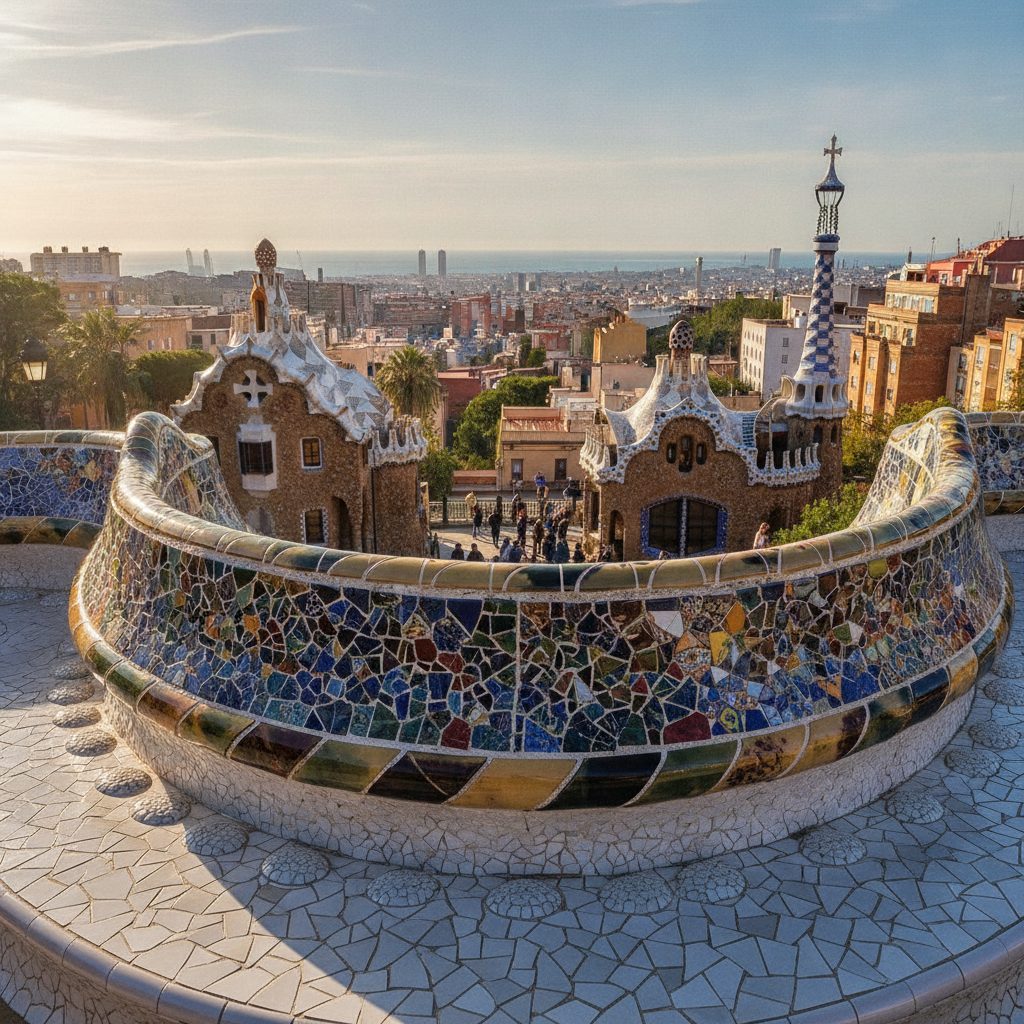
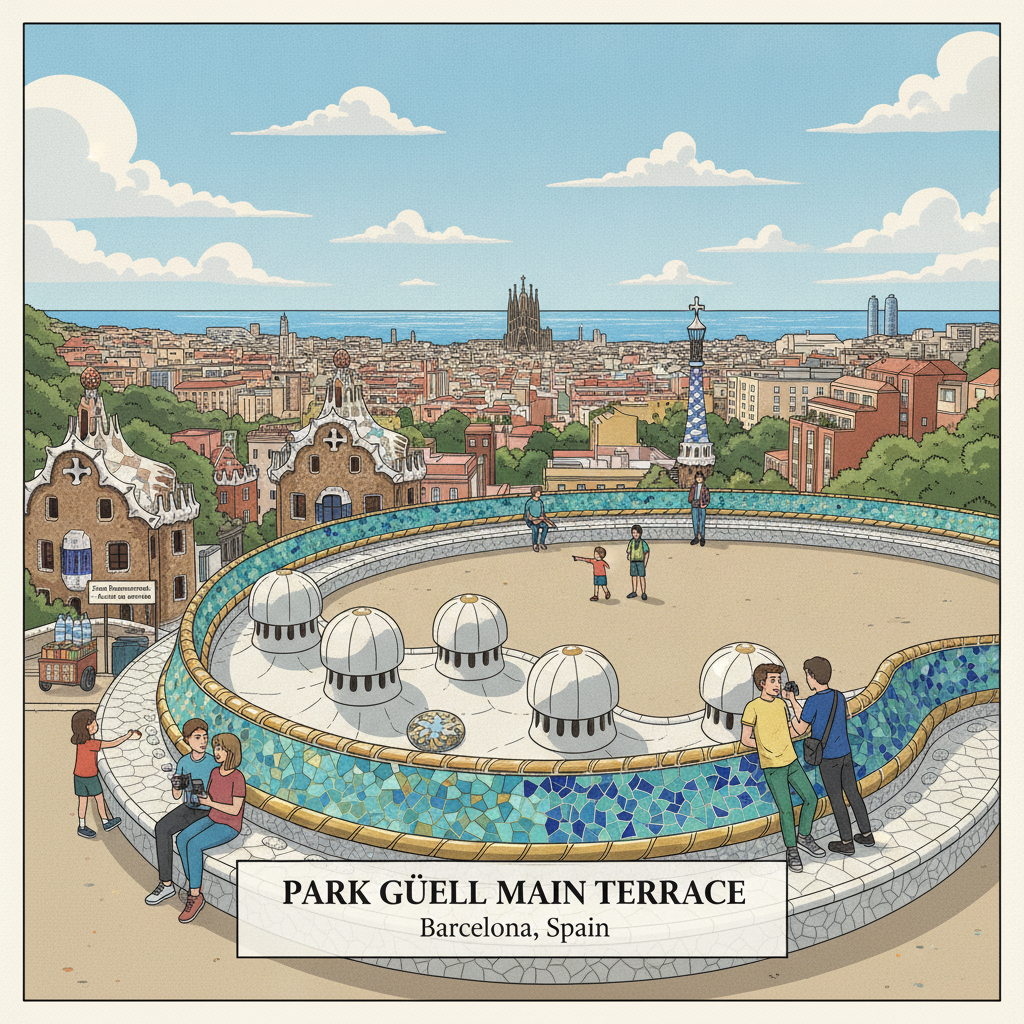
The Nature Square (Plaça de la Natura), the great terrace of Park Güell built on the roof of the Hypostyle Hall below, is one of the most extraordinary public spaces in 20th-century architecture: a vast irregular ellipse surrounded by the world's longest park bench (110 meters long, undulating in organic curves), designed by Gaudí in collaboration with Josep Maria Jujol and covered in trencadís — the mosaic technique of fragments of broken tile, ceramic, and glass arranged in polychrome patterns. The bench curves in a way that echoes the human spine, providing ergonomic seating that was startlingly modern for 1908; the surface shimmers and changes in different lights. The terrace commands a panoramic view of the entire city and the Mediterranean. Access to the Monumental Zone (including this terrace and the Hypostyle Hall) requires a timed ticket, purchased in advance; the park's forested hillside paths are free.
- 2
Gaudí House Museum — Where He Lived
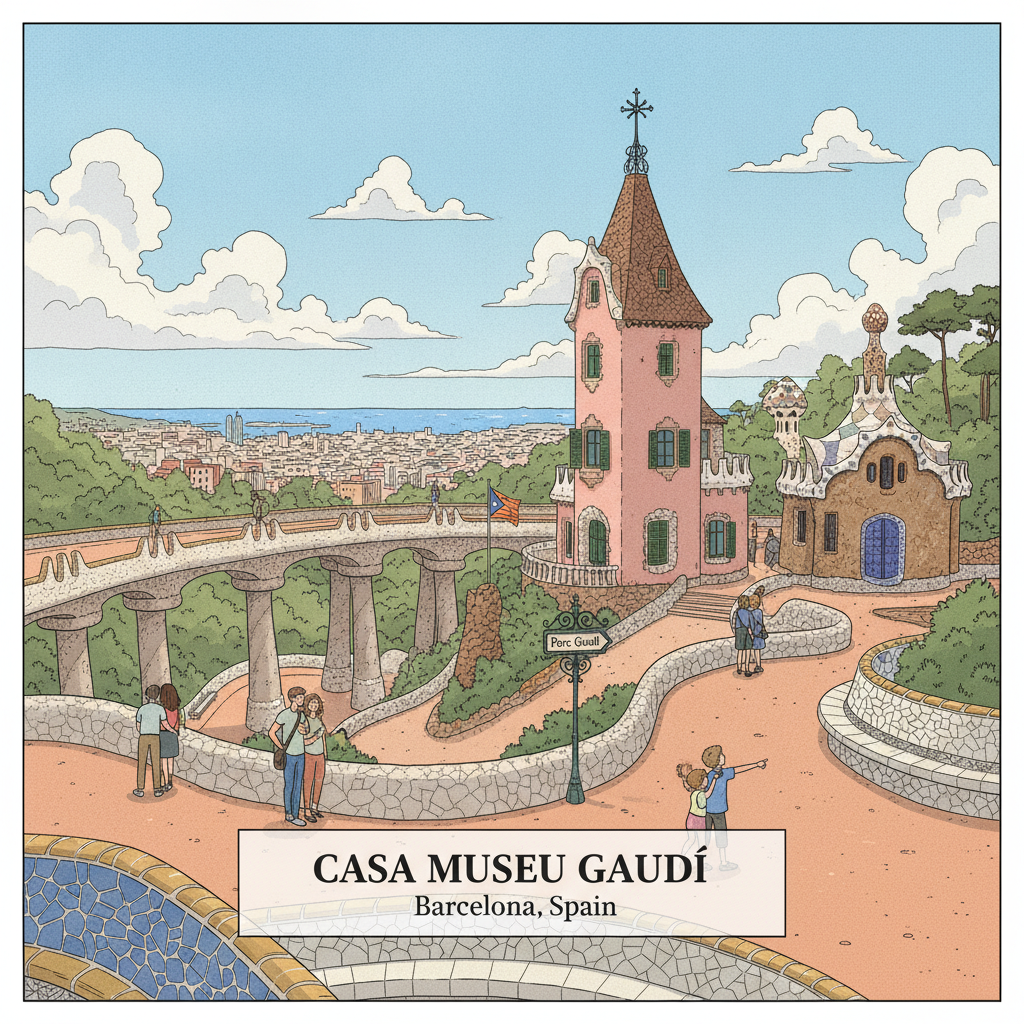
The Casa Museu Gaudí, in the southwestern section of Park Güell, is the house where Antoni Gaudí lived from 1906 until three days before his death in 1926, when he moved to the Sagrada Família workshop. The house (not designed by Gaudí, but by his assistant Francesc Berenguer) contains personal furniture and objects designed by Gaudí, including a characteristic pre-dieu (prayer bench), a writing desk, and several pieces of the iconic Gaudí furniture now reproduced worldwide. The house was purchased in 1906 as the only viable plot in the failed Güell garden city; Gaudí's decision to live here while working on the park was intended to boost the project's commercial appeal. The museum provides an intimate glimpse into the domestic life of an architect who dressed in threadbare clothes, became increasingly ascetic in his later years, and was described by contemporaries as indistinguishable from a beggar — the man unrecognized in the street after being hit by a tram.
- 3
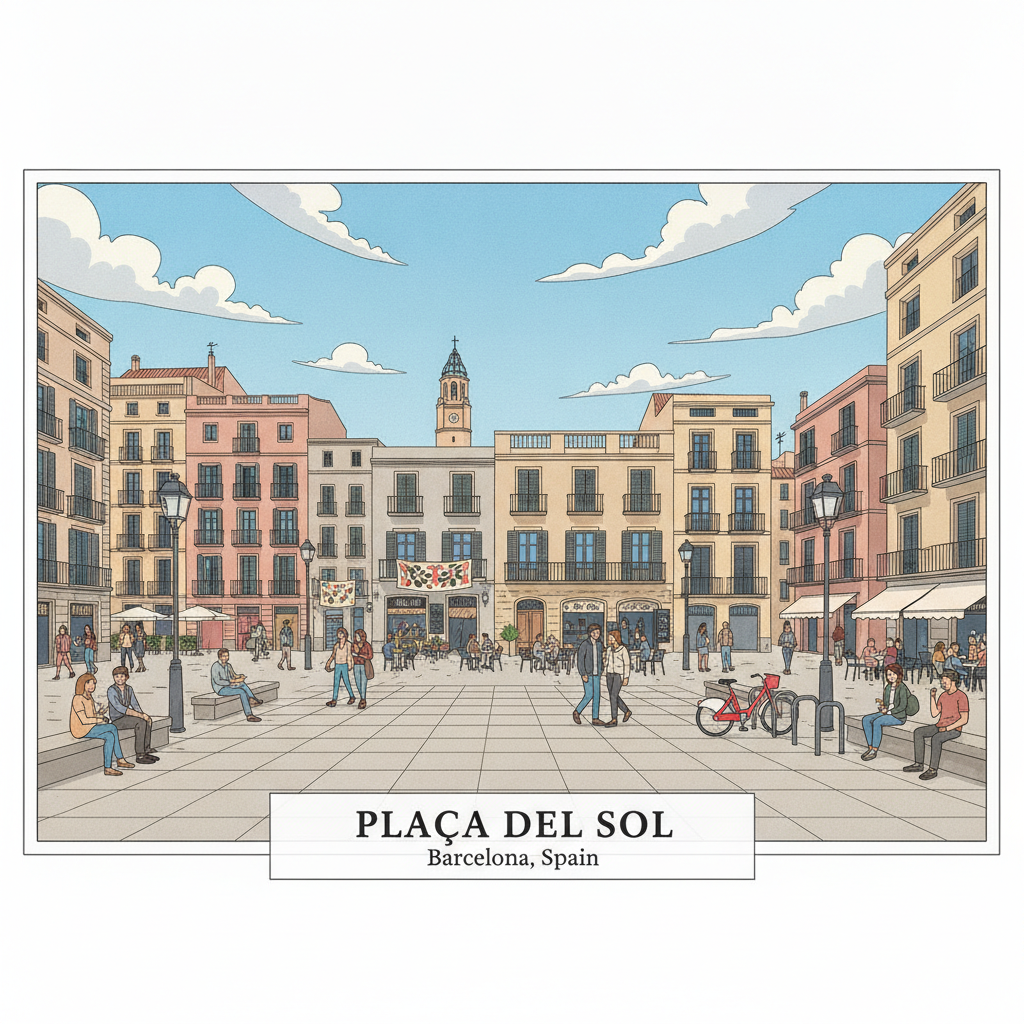
Plaça del Sol — Gràcia's Living Room
Plaça del Sol is the largest and most active of Gràcia's network of neighborhood squares — the social fabric of this neighborhood being organized around a series of small plazas each with its own character: Plaça del Sol (the broadest, most open, a gathering place for young people and the setting for the neighborhood's famous Festa Major in August); Plaça de la Vila de Gràcia (the 'official' square with the clock tower); Plaça de la Virreina (more intimate, with terrace cafés); and Plaça del Diamant (intimate, immortalized by Mercè Rodoreda's novel of the same name, 1962, the defining novel of 20th-century Catalan literature). Gràcia was an independent municipality, with its own progressive political culture, until Barcelona forcibly annexed it in 1897 (during the systematic expansion that absorbed all surrounding villages). The neighborhood retains a strong local identity: more politically active, more culturally distinct, and more locally oriented than most Barcelona neighborhoods.
- 4
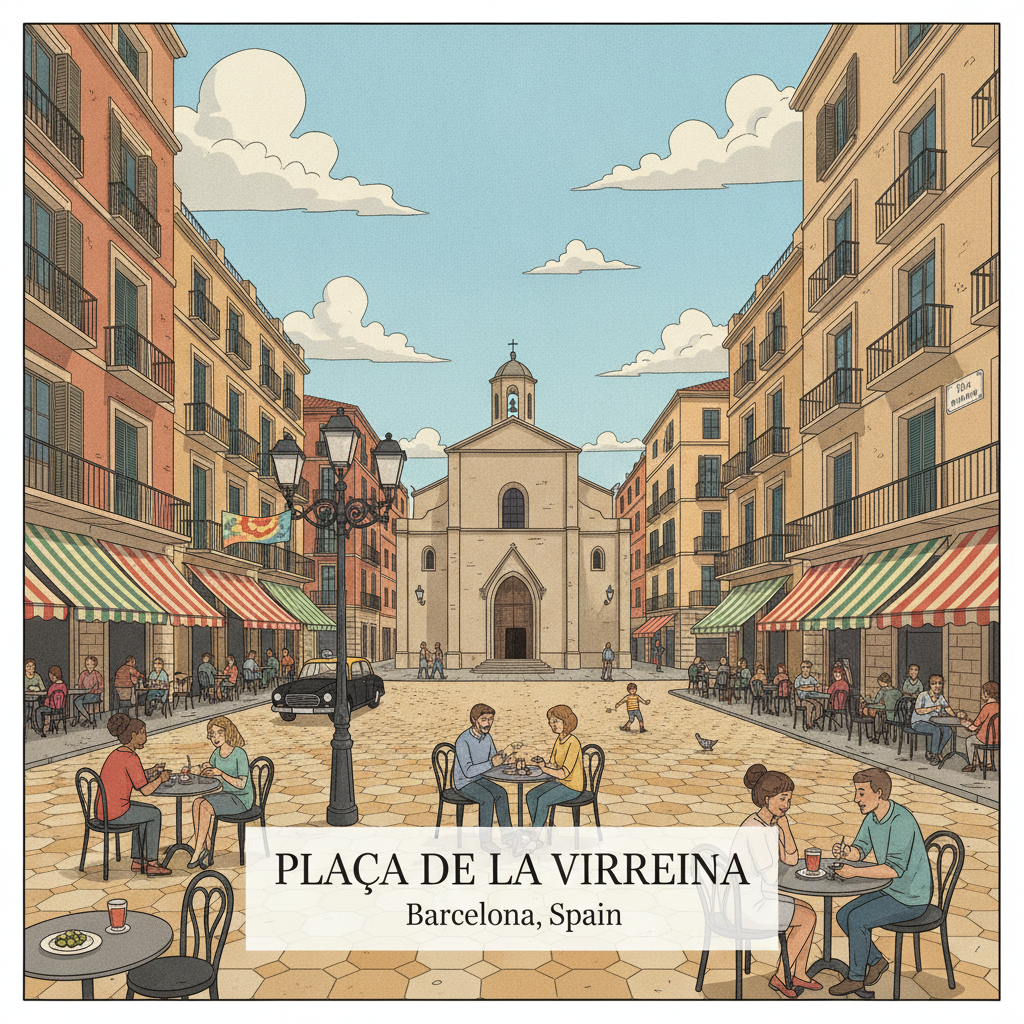
Plaça de la Virreina — The Most Beautiful Square in Gràcia
Plaça de la Virreina, a small irregular plaza in the heart of Gràcia named after the Viceroy's widow (La Virreina) who lived nearby in the 18th century, is arguably the most pleasant of Gràcia's squares: quieter than Plaça del Sol, more intimate than Plaça de la Vila de Gràcia, with terrace bars and restaurants on all sides and the 17th-century church of Sant Joan Baptista closing the northern end. The plaza is the starting point for the famous Festa Major de Gràcia in August, when the entire neighborhood decorates its streets with elaborate themed installations (the festival, which dates to 1817, has been a UNESCO Intangible Cultural Heritage since 2024) and organizes concerts, human towers (castellers), and open-air performances for a week. On ordinary days, the Virreina is simply one of the best places in Barcelona to sit with a coffee in the early morning or an aperitivo in the late afternoon.
- 5
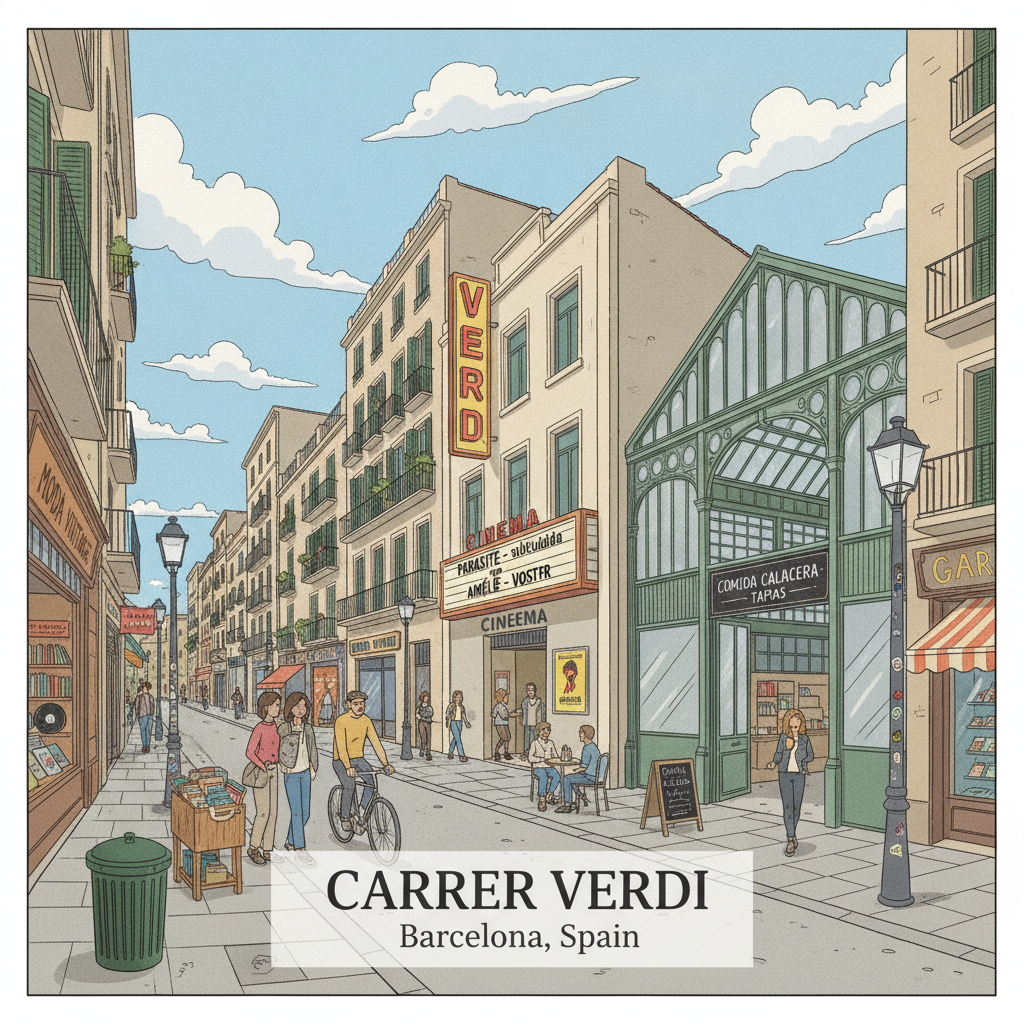
Carrer Verdi & the Verdi Market — The Creative Heart of Gràcia
Carrer Verdi, running diagonally through the heart of Gràcia, is the main commercial and cultural street of the neighborhood: lined with independent bookshops, vintage clothing stores, bars and restaurants aimed at residents rather than tourists, and small art galleries. At the top of the street, the Verdi and Verdi Park cinemas (showing original-version films, rarities in Barcelona) are the cultural anchors of the neighborhood's evening life. The nearby Mercat de l'Abaceria (also called the Mercat de Gràcia), a large cast-iron market hall (1892), housed food stalls until 2012 and has since become an events and street food space. Gràcia's independent commercial culture — the density of small independent businesses per capita — is significantly higher than the Barcelona average and reflects the neighborhood's strong local identity and resistance to large chain retail.
- 6
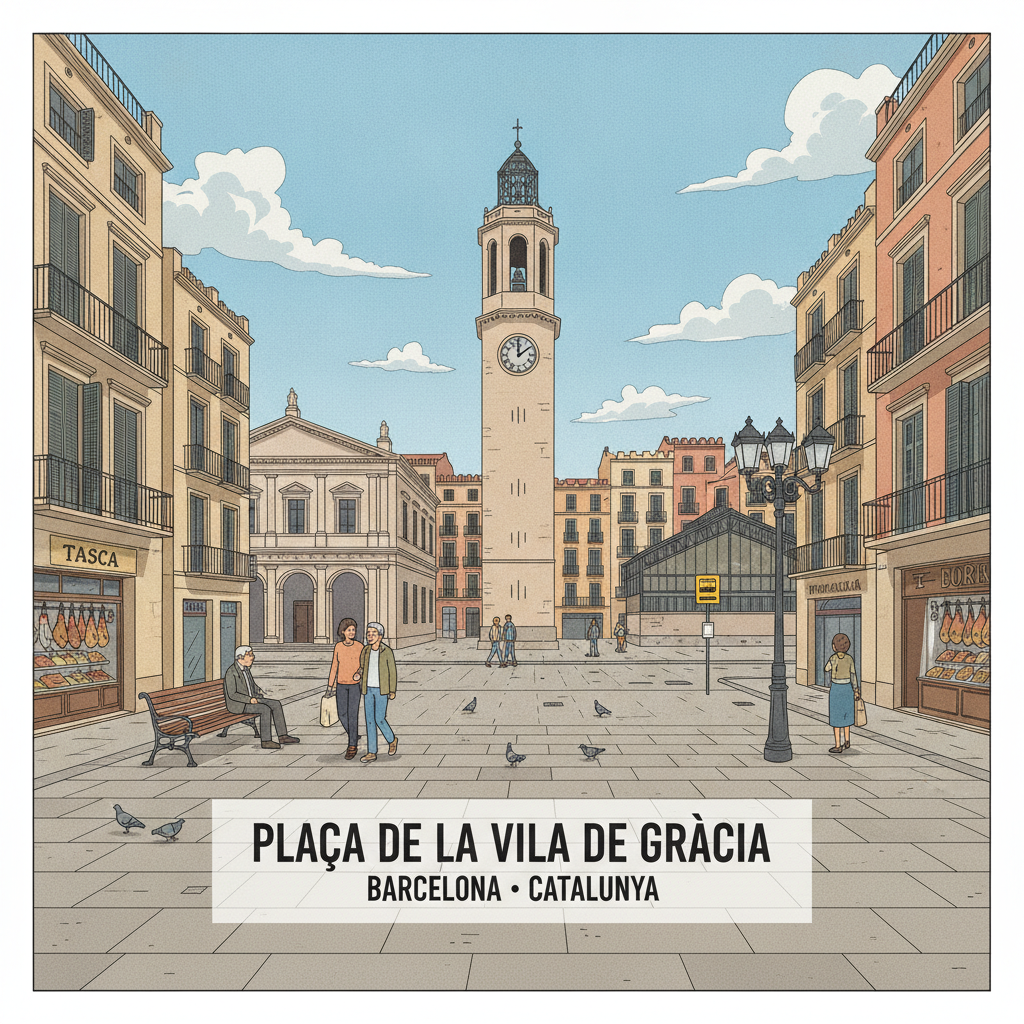
Plaça de la Vila de Gràcia — The Official Heart
Plaça de la Vila de Gràcia, with its clock tower (Torre del Rellotge, 1862, rebuilt after anarchist damage in 1909) and the old Gràcia town hall (now a branch of the Barcelona district administration), was the political center of the independent municipality of Gràcia from its establishment as a vila franca (free town) in 1821 until annexation in 1897. The clock tower is the symbol of Gràcia's independence and of the Semana Trágica ('Tragic Week', July 1909), when anti-conscription riots spread through Barcelona and the anarchist and republican left burned dozens of churches and convents; in Gràcia, the fighting was particularly intense. The plaza's market (Mercat de Gràcia, within the adjacent iron hall) was one of Barcelona's most important neighborhood markets until the 21st century. The surrounding streets contain a high concentration of Gràcia's best traditional bars (tascas), specialty food shops, and morning café-amb-llet culture.
Walk this route with audio
Stories play automatically as you reach each stop — no tapping needed.
More in barcelona
Pedralbes, Camp Nou & Sarrià: Barcelona's Quiet Upper City
Palau de la Música & Sant Pere: The Greatest Concert Hall in Spain and the City of Iron
Barceloneta & the Olympic Waterfront: From Columbus to the Mediterranean
La Rambla, Boqueria & El Raval: The Street, the Market, and the Other Barcelona
Poblenou, 22@ & the Design Hub: Barcelona's Creative Frontier