Montjuïc & Poble Sec: Olympic Hill, Mies van der Rohe, and the City of Gardens
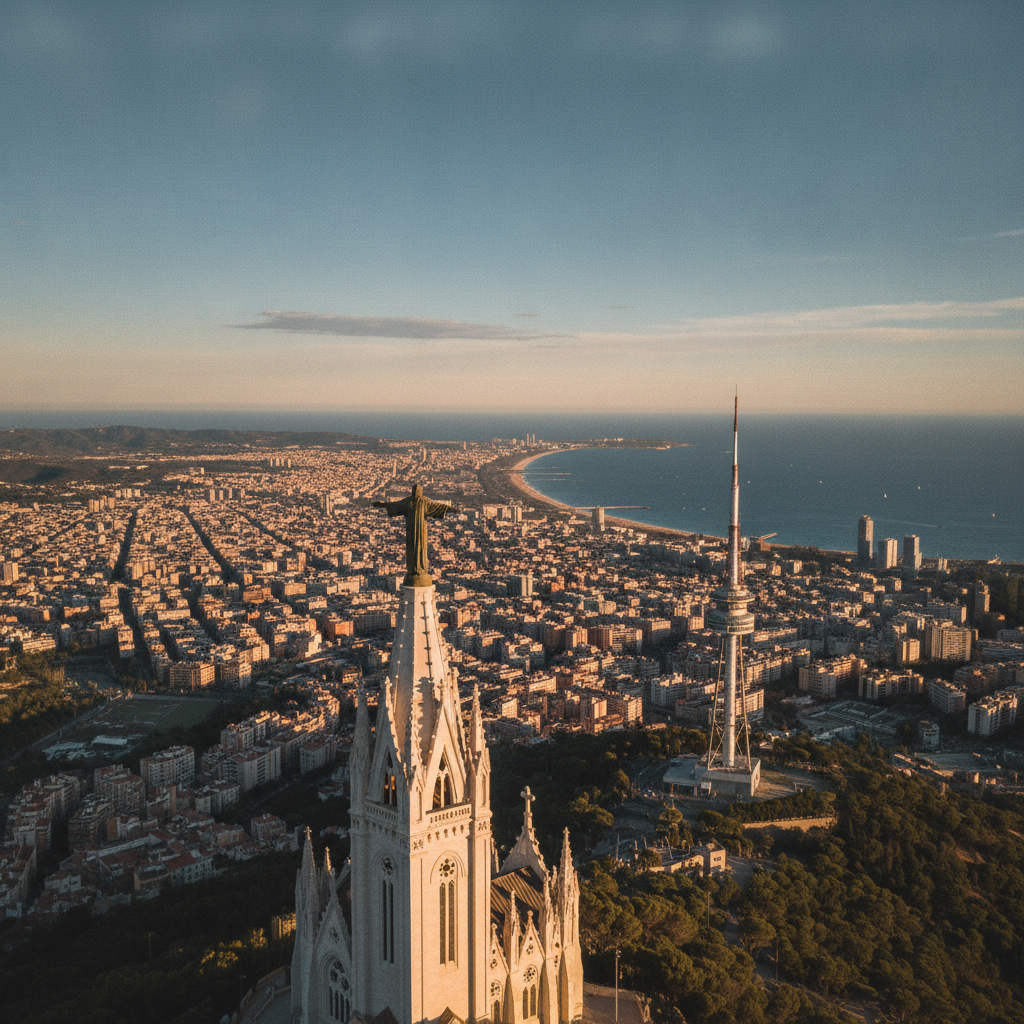
Montjuïc — the hill rising 184 meters on the southwestern edge of Barcelona between the port and the Llobregat delta — has been, at different points in its history, a Jewish cemetery (hence the likely etymology of 'mountain of Jews'), a military fortress controlling the city below, the site of two world's fairs (1888 preparatory works, 1929 main site), the location of the 1992 Olympic stadium and athletics events, and the city's main cultural hill, containing the Museu Nacional d'Art de Catalunya, the Fundació Joan Miró, and the Teatre Grec. This route climbs Montjuïc from the Plaça d'Espanya, crosses the hill via its main cultural institutions, reaches the fortress at the summit, and descends to the tapas street of Poble Sec.
1. Plaça d'Espanya & the 1929 Exhibition Axis
- 1
Plaça d'Espanya & the 1929 Exhibition Axis
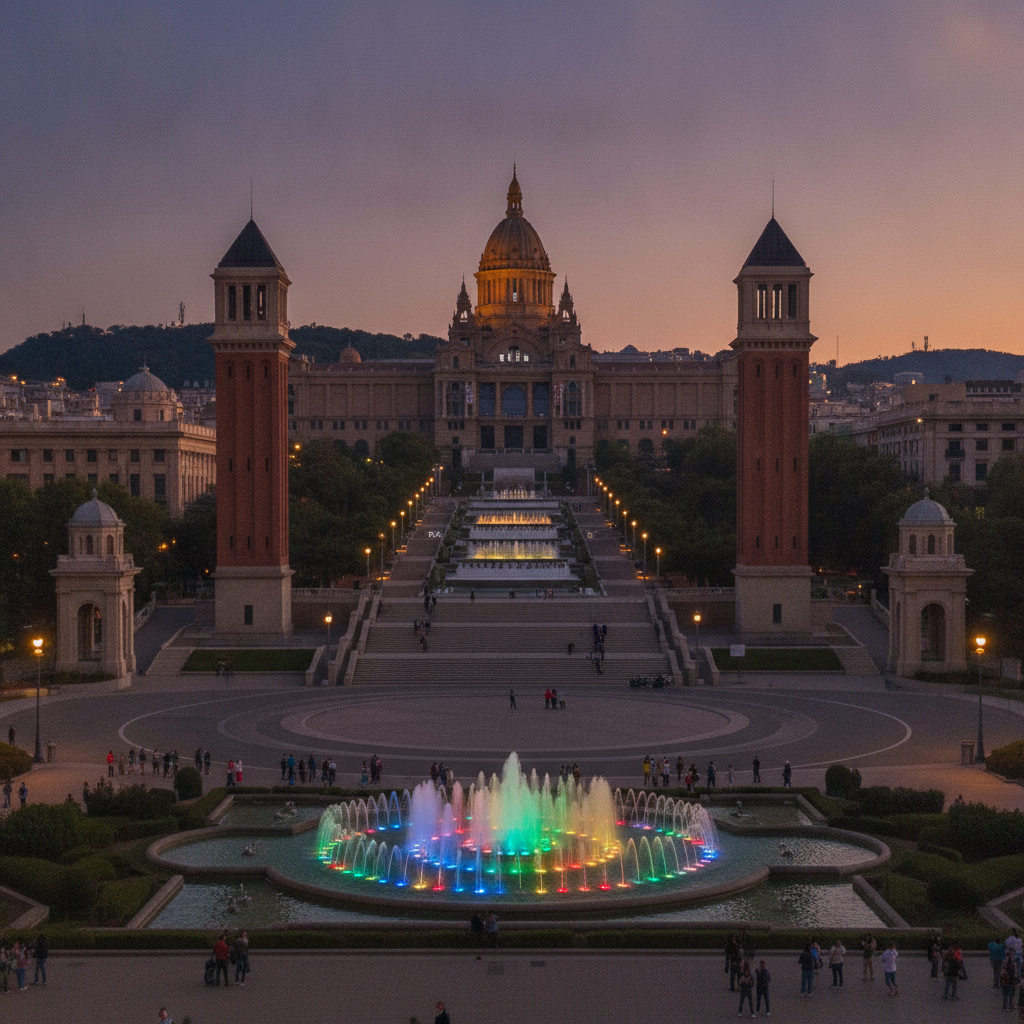
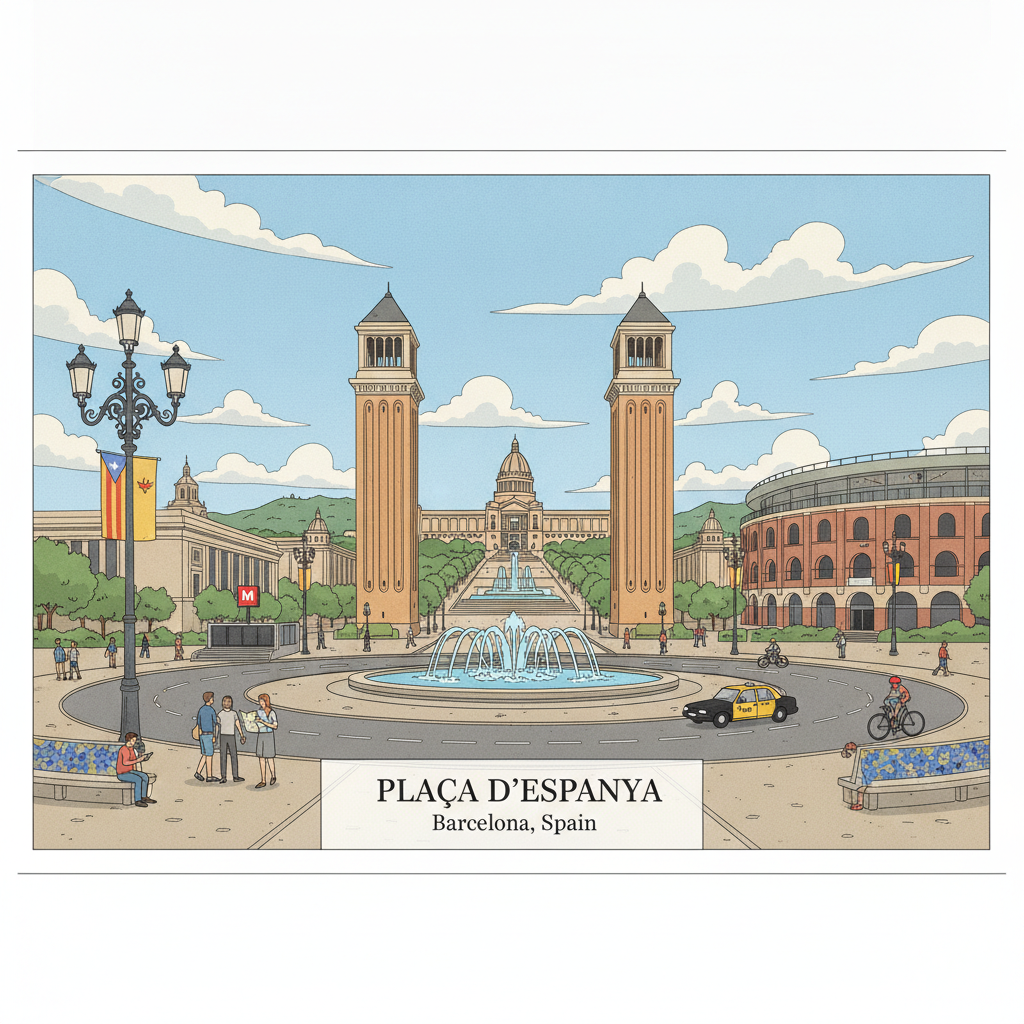
Plaça d'Espanya, the large circular plaza at the base of Montjuïc where the Gran Via and the Avinguda del Paral·lel converge, is the main approach to Montjuïc and the entry point to the 1929 International Exhibition's ceremonial axis: a broad avenue rising between the twin Venetian-inspired towers (designed by Ramon Reventós, 1929, each 47 meters tall) toward the cascading fountains, the Palau Nacional, and the hill beyond. The plaza itself was redesigned multiple times (the current version dates to the 1920s and 1990s renovations), and contains the Font de la Plaça d'Espanya and a large bullring (the Arenas de Barcelona, now converted to a shopping and leisure center with a remarkable rooftop terrace). The Font Màgica (Magic Fountain, 1929), at the midpoint of the exhibition axis, is Barcelona's most popular free evening attraction: a choreographed light, music, and water show running Thursday–Sunday evenings (April–October) that draws enormous crowds.
- 2
Mies van der Rohe Pavilion — A Manifesto in Stone and Water
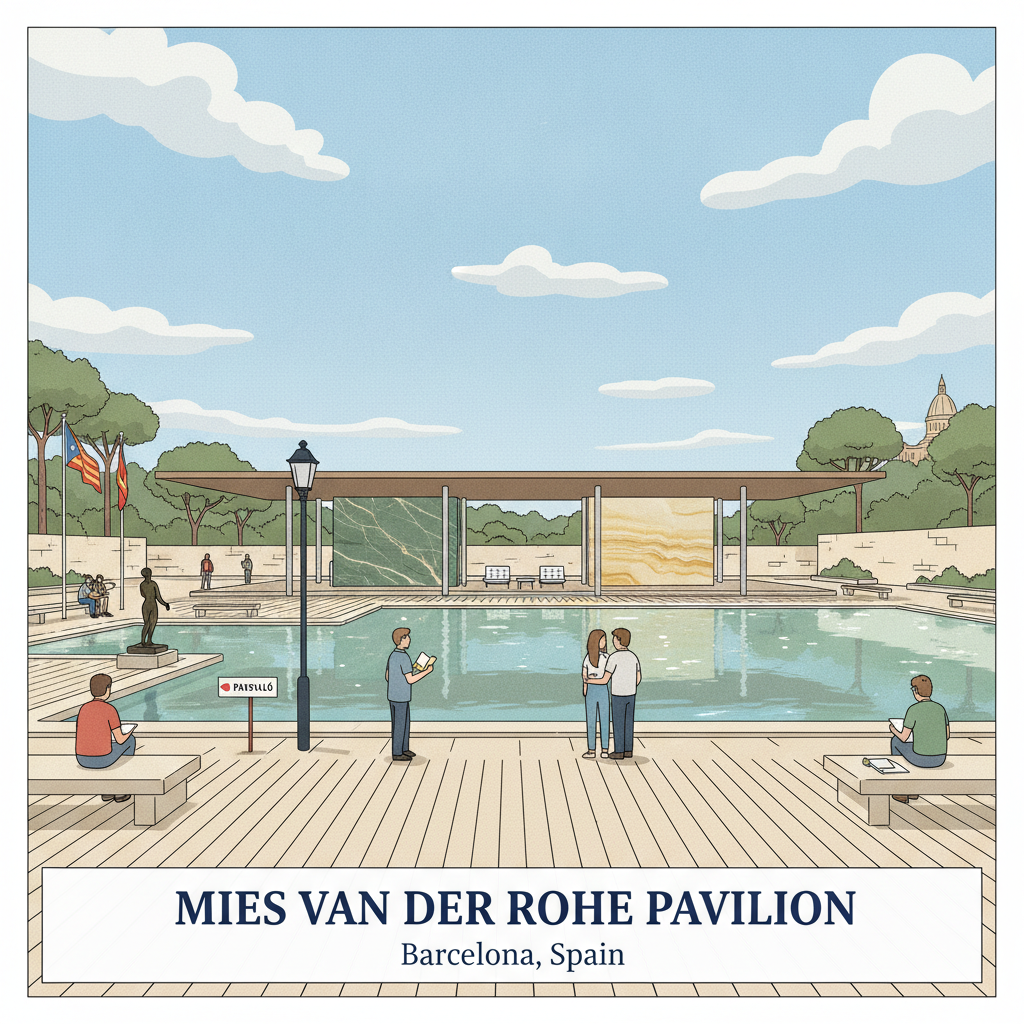
The German Pavilion for the 1929 International Exhibition, designed by Ludwig Mies van der Rohe and Lilly Reich, is one of the most influential buildings of the 20th century — and one of the smallest. The pavilion, which served no practical purpose other than representing Germany at the exhibition (there was nothing to display; it was the building itself that was the exhibit), consists of eight steel columns supporting a flat roof, between which horizontal planes of marble, onyx, and travertine create a series of partially enclosed spaces flowing into each other and into the reflecting pools on either side. The famous Barcelona Chair (designed specifically for the pavilion to seat the Spanish royal couple during the opening ceremony) has been in continuous production since. The original pavilion was demolished after the exhibition; the current building is a precise 1986 reconstruction from original plans and photographs. No building of this size has generated more theoretical writing in the history of architecture.
- 3
MNAC — 1,000 Years of Catalan Art
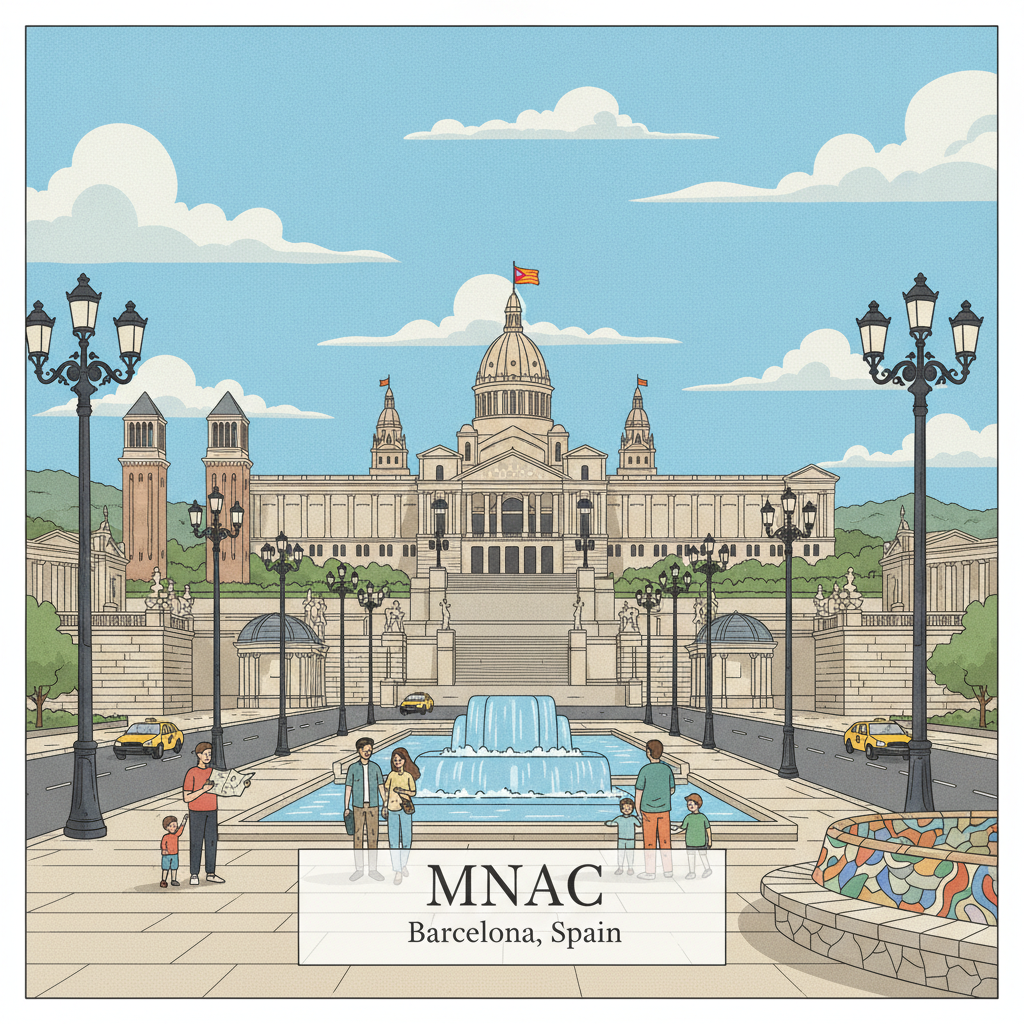
The Museu Nacional d'Art de Catalunya, in the Palau Nacional at the top of the 1929 Exhibition axis (the dome visible from most of Barcelona), contains the most important collection of Romanesque art in the world: approximately 100 complete Romanesque church interiors (apsidal frescoes, altarpieces, carved capitals) removed from isolated Pyrenean churches in the early 20th century to prevent their sale to foreign collectors. The collection, spanning the 11th–12th centuries, is of extraordinary quality and completeness, with the Pantocrator of Sant Climent de Taüll (c. 1123) — a hieratic, frontal Christ in Majesty of monumental power — as its centerpiece. Beyond the Romanesque galleries, the MNAC contains equally strong Gothic, Renaissance, Baroque, and Modernista collections (including the definitive collection of Modernista applied arts and design), making it the broadest survey of Catalan visual culture from the 9th to the 20th century available anywhere. The rooftop terrace offers the best elevated view of Barcelona from the south.
- 4
Fundació Joan Miró — Color, Form, and Mediterranean Light
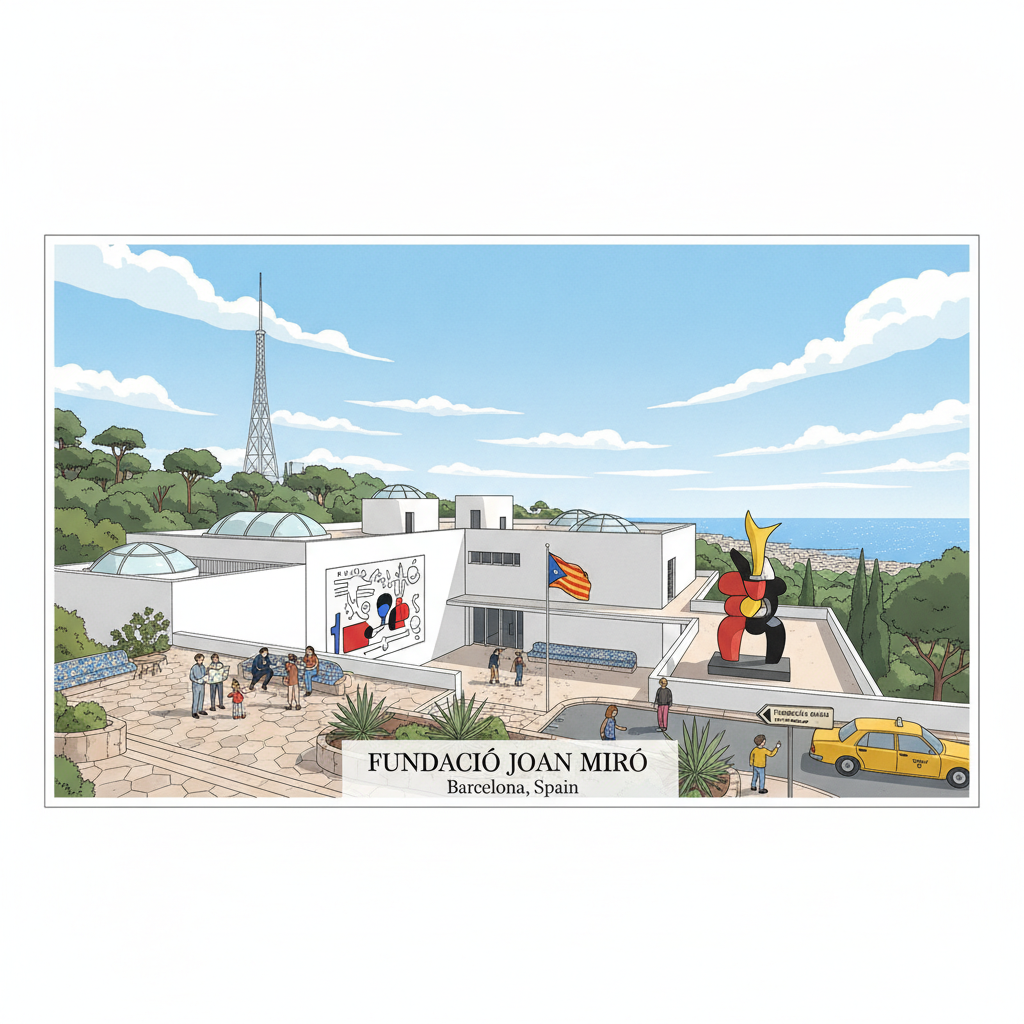
The Fundació Joan Miró, designed by Josep Lluís Sert (Miró's friend and fellow Catalan exile, a founding figure of CIAM and dean of Harvard's Graduate School of Design) and opened in 1975, is one of the most beautiful museum buildings in Spain: white walls, flat roofs with skylights that flood the galleries with controlled Mediterranean light, and a series of terraces and courtyards that integrate the building with the hill and the views. Miró (1893–1983) donated the core collection of 14,000 works (paintings, sculptures, drawings, and the complete graphic work), which is supplemented by works from the Miró foundation's active contemporary art program. The permanent collection traces Miró's evolution from his early realist Catalan landscapes (1914–1917) through the Cubist influence and the development of his mature language — the biomorphic figures, primary colors, and constellation of symbols (star, crescent, bird, woman, eye) that are immediately recognizable as 'Miró' — to the late work of extraordinary freedom and scale. The terrace sculpture garden and the Espai 13 contemporary art space are additional highlights.
- 5
Castell de Montjuïc — The Fortress That Watched the City
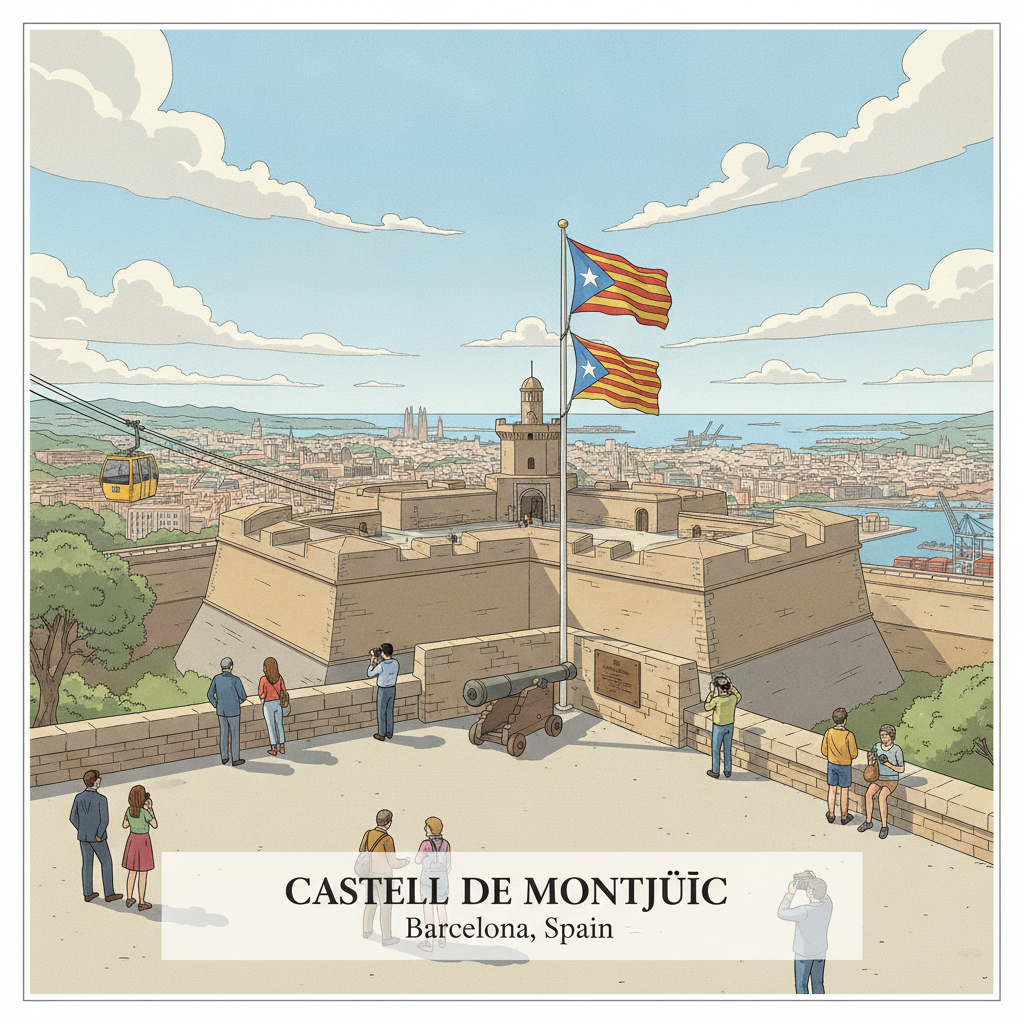
The Castell de Montjuïc, at the summit of the hill (184 meters), is a military fortress whose history is inseparable from Barcelona's political history: built by the city's Castilian rulers after the 1640 Catalan revolt as a means of controlling the rebellious population below, used by different powers to bombard the city (by the Bourbon forces in 1714, by the liberal constitutional forces in 1842, by Napoleon's forces in 1808), and serving as a political prison until 1960 — most notoriously as the site of the execution of anarchist pedagogue Francesc Ferrer Guàrdia in 1909 (precipitating the international protest that ended the Maura government) and of Lluís Companys, President of the Generalitat de Catalunya, in 1940 (shot by Franco's forces after being handed over by the Nazis from occupied France). The fortress was transferred to Barcelona's city government in 2007 and is now a museum and public space. The views from the castle walls are the most comprehensive in Barcelona.
- 6
Carrer Blai, Poble Sec — The Pintxos Street
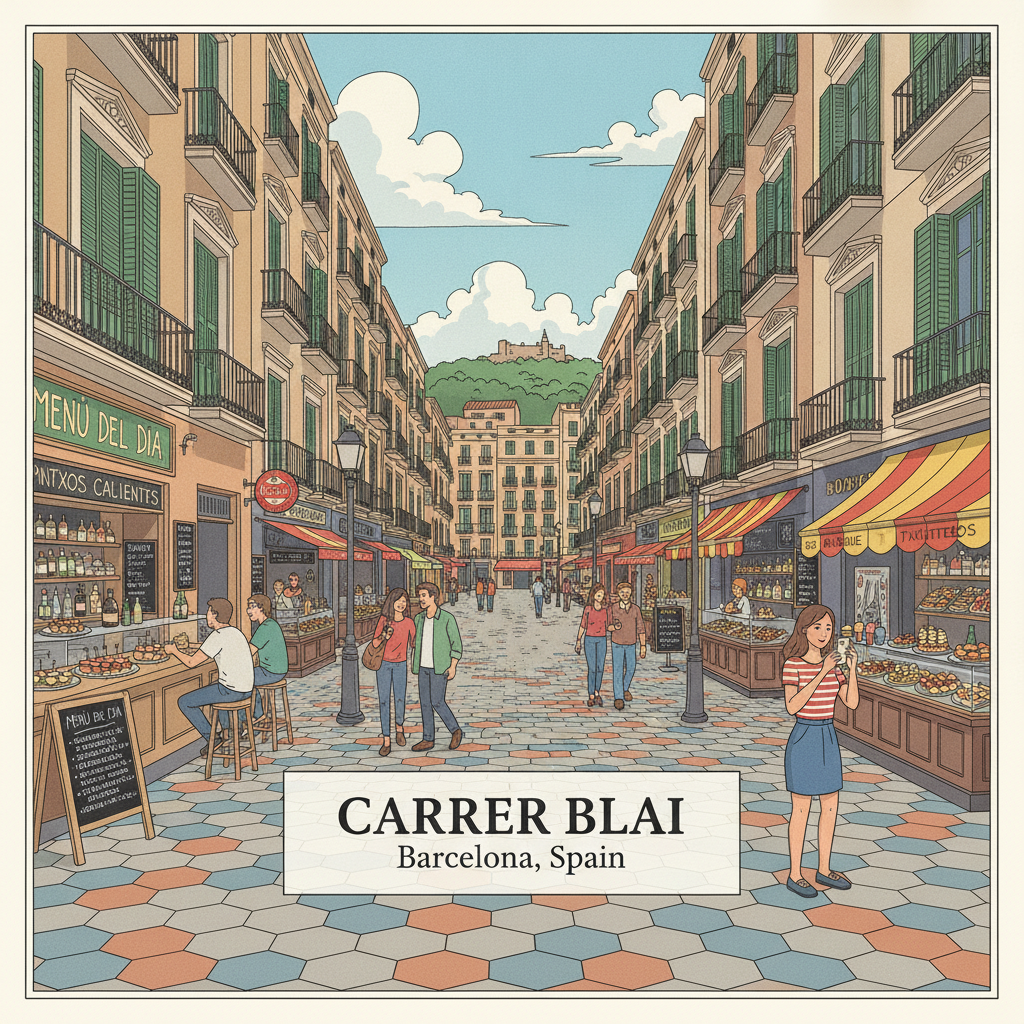
Carrer Blai, the main pedestrian street of the Poble Sec neighborhood at the base of Montjuïc, is Barcelona's pintxos street: a single block lined almost entirely with bars serving Basque-style pintxos (small open-faced sandwiches and skewered tapas), which has become one of the most popular evening destinations in Barcelona for both locals and visitors seeking inexpensive food in a convivial atmosphere. The surrounding Poble Sec neighborhood — the name means 'dry village', referring to the lack of water from the Montjuïc hillside before modern plumbing — is one of Barcelona's most interesting neighborhoods for independent restaurants, small theaters (the Sala Apolo, Teatre Grec, and La Seca are nearby), and a genuinely local residential character that remains distinct from the heavily touristed center. The Avinguda del Paral·lel, the boundary between Poble Sec and the Raval, was historically Barcelona's entertainment district, known as the 'Montmartre of Barcelona' for its concentration of theaters, music halls, and cabarets in the early 20th century.
Walk this route with audio
Stories play automatically as you reach each stop — no tapping needed.
More in barcelona
Pedralbes, Camp Nou & Sarrià: Barcelona's Quiet Upper City
Palau de la Música & Sant Pere: The Greatest Concert Hall in Spain and the City of Iron
Barceloneta & the Olympic Waterfront: From Columbus to the Mediterranean
La Rambla, Boqueria & El Raval: The Street, the Market, and the Other Barcelona
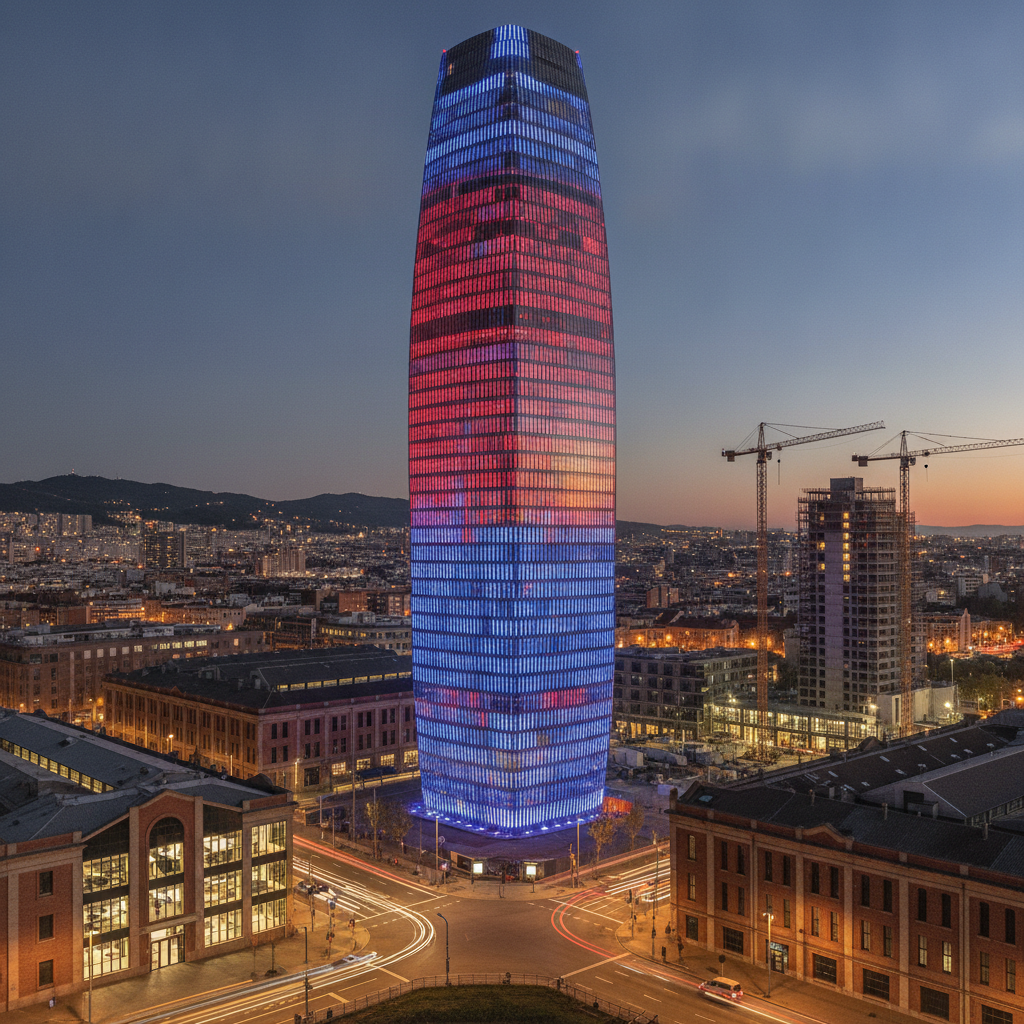
Poblenou, 22@ & the Design Hub: Barcelona's Creative Frontier