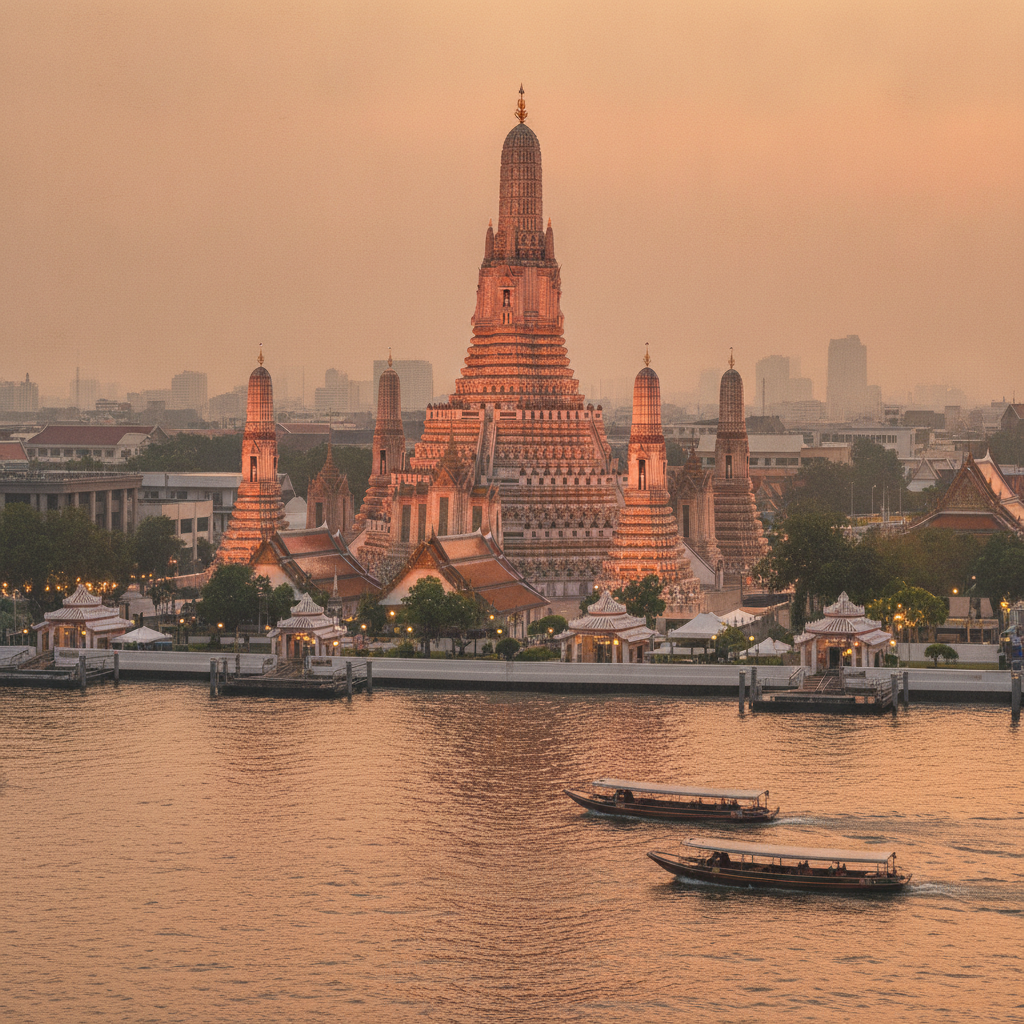
Wat Arun, the Chao Phraya & Thonburi's Ancient Waterways
The Thonburi side of the Chao Phraya River — the west bank of Bangkok — preserves the most ancient layer of the Thai capital: the city of Thonburi (1767-1782) that preceded Bangkok was established here by King Taksin after the Burmese destruction of Ayutthaya; Wat Arun (Temple of Dawn), the iconic riverside prang, the klong (canal) network of Thonburi, the Royal Barges National Museum, and Wat Kalayanamit together form one of the richest historical walks in the city, entirely accessible by river and canal transport.
- 1
Tha Tien Pier & Cross-River Ferry to Wat Arun
Tha Tien (ท่าเตียน, Tien Pier, Maharat Road, Phra Nakhon — the pier serving as the river crossing point for Wat Arun, the most famous temple on the Thonburi (west) bank of the Chao Phraya; the cross-river ferry (3 baht, running approximately every 5-10 minutes from 06:00-21:00) crosses the approximately 120 metres of the Chao Phraya between Tha Tien and the Wat Arun pier; Tha Tien Market (ตลาดท่าเตียน), on the Phra Nakhon side of the pier, is one of the oldest fresh food markets in Bangkok — the market has operated continuously on this site since the Ayutthaya period and remains a wholesale fish and produce market serving the restaurants of the Old City; the riverside walkway at Tha Tien offers one of the best views of Wat Arun from the opposite bank — particularly at dusk, when the setting sun illuminates the western face of the prang and turns the porcelain mosaic tiles gold and pink; the riverside promenade connecting Tha Tien northward to Tha Chang and the Grand Palace walls, and southward to Pak Khlong Talat (the 24-hour flower market) is one of the finest short walks in Bangkok for historical riverside scenery).
- 2
Wat Arun Ratchawararam — The Temple of Dawn
Wat Arun Ratchawararam (วัดอรุณราชวรารามราชวรมหาวิหาร, Arun Amarin Road, Bangkok Yai, Thonburi — Wat Arun (Temple of Dawn) — the most recognizable silhouette on the Bangkok skyline and arguably the most iconic single structure in Thailand: the temple's history predates the Bangkok period entirely, having been established as Wat Makok during the Ayutthaya period and serving as the location of the holy Emerald Buddha image during the reign of King Taksin of Thonburi (1767-1782) before the image was transferred across the river to the new capital by Rama I in 1784; the central prang (Khmer-style tower) of Wat Arun rises to approximately 82 metres (variously stated as 67-86 metres depending on the measurement methodology) and is covered from base to crown in an intricate mosaic of Chinese porcelain fragments — the original 18th-century tiles were made from trade porcelain that arrived as ballast in Chinese merchant ships, and the distinctive blue-green, white, and ochre tones of the original tilework reflect the colours of the porcelain that was available through this trade; the prang was restored and extended to its present height in the reign of Rama II (1809-1824) and Rama III (1824-1851); visitors may climb the steep external stairways of the central prang to a viewing terrace at approximately half height (the upper portion of the central prang is not accessible to visitors due to the steepness of the stairs); the four satellite prangs surrounding the central tower are decorated with figures of Nang Kinnaree (half-woman, half-bird mythological beings) and Hindu guardian figures; the temple compound also contains an ordination hall (ubosot) housing a principal Buddha image said to have been created under the personal supervision of Rama II, and the royal teak barge.
- 3
Klong Bangkok Yai (Bangkok Yai Canal) — Thonburi's Historic Waterway
Klong Bangkok Yai (คลองบางกอกใหญ่, Bangkok Yai Canal, the main canal on the Thonburi side of the Chao Phraya — the most historically significant waterway in Bangkok outside the river itself: Klong Bangkok Yai is the principal surviving remnant of the ancient Chao Phraya River course — before the construction of the Klong Lat (shortcut canal) in 1542 by order of King Chairacha of Ayutthaya, the Chao Phraya followed the meandering course that is now the Bangkok Yai and Bangkok Noi canals; the construction of the shortcut dramatically reduced the sailing distance between the Gulf of Thailand and Ayutthaya, and the original meandering course gradually silted and became the canal network of Thonburi; the area around Klong Bangkok Yai contains a concentration of the oldest temples in the greater Bangkok area: Wat Pak Nam Phasi Charoen (วัดปากน้ำภาษีเจริญ, established in the Ayutthaya period), Wat Kalayanamit (วัดกัลยาณมิตร), and dozens of smaller temples and Thai-style wooden houses visible from the canal; canal boat tours (from Tha Tien or from the Chao Phraya Express Boat jetties on the Thonburi side) provide access to the interior canal network).
- 4
Royal Barges National Museum — The King's Ceremonial Fleet
Royal Barges National Museum (พิพิธภัณฑสถานแห่งชาติเรือพระราชพิธี, Arun Amarin Road, Bangkok Noi, Thonburi — the museum housing the royal barge fleet of the Thai monarchy, the most spectacular collection of ceremonial watercraft in the world: the Royal Barge Procession (ริ้วขบวนพยุหยาตราชลมารค, Rikhuan Khon Phayuha Yatra Chon Marok) is performed on the Chao Phraya River on the occasion of the Kathin ceremony (the royal presentation of robes to Buddhist monks at the end of Buddhist Lent, Vassa/Ok Phansa) and occasionally for other major royal events; the procession involves 52 barges manned by over 2,000 oarsmen, with the King or his representative traveling aboard the principal royal barge (Suphannahong, the golden swan barge) at the center of the formation; the Suphannahong (สุพรรณหงส์, Golden Swan) is the most sacred vessel in the fleet — a 46-metre carved and gilded teak barge in the form of a swan, with a prow carved to represent the mythological golden swan; the barge was originally constructed in the reign of Rama I but was rebuilt in the reign of Rama VI and subsequently restored multiple times; the museum also houses eight other principal royal barges including the Anantanakharat (a 45-metre barge with a seven-headed naga prow) and the Anekchatphuchong (featuring a 150-year-old seated Buddha image); the Royal Barge Procession has been performed approximately 16 times since 1932, most recently in 2019 for the coronation of King Vajiralongkorn (Rama X)).
- 5
Pak Khlong Talat — Bangkok's 24-Hour Flower Market
Pak Khlong Talat (ปากคลองตลาด, Pak Khlong Market, Chak Phet Road, Phra Nakhon — the largest fresh flower wholesale market in Bangkok and one of the most extraordinary sensory experiences in the city: the market operates 24 hours a day, 7 days a week, but is most spectacular from approximately midnight to 06:00 when the overnight wholesale trading is at its peak — massive refrigerated trucks from flower farms in Chiang Mai, Chiang Rai, and the central plains deliver their cargo directly to the market floor, and flower wholesalers unload mountains of fresh-cut jasmine, marigolds, orchids, roses, and lotus blossoms under fluorescent lights while retail vendors and temple floral garland makers negotiate prices; the market is adjacent to the Chao Phraya river at the mouth of Klong Ong Ang (which connects to Klong Mahanak, the original moat of the Rattanakosin island), and the combination of the scent of cut flowers, the noise of the wholesale market at night, and the river beyond makes this one of the most disorienting and memorable locations in Bangkok; the market is particularly busy before Buddhist holy days (Wan Phra) when demand for lotus buds and jasmine garlands for temple offerings spikes dramatically).
- 6
Santa Cruz Church (1770) & Kudeejeen — Bangkok's Portuguese Quarter
Santa Cruz Church (วัดซางตาครู้ส, Kudeejeen, Thetsaban Sai Road, Khlong San, Thonburi — the oldest functioning Catholic church in Bangkok and one of only two churches established before the founding of the city of Bangkok in 1782 (the other being Wat Kalawa, also known as Holy Rosary Church); the church was established in 1770 by the Portuguese community of Thonburi — the Portuguese were among the first European traders to establish a presence in Siam, arriving in the early 16th century and being granted land concessions by King Taksin in the Thonburi period; the present yellow-and-white Neo-Classical church building dates from 1913 (replacing the original 1770 structure) and is notable for being one of the very few European-style buildings in Bangkok that predates the reign of Rama IV; the surrounding Kudeejeen community (กุฎีจีน) is a multi-cultural neighbourhood that has been home to Portuguese-descended Thais (who form a culturally distinct community known for producing khanom farang kudi chin — a traditional Thai cake with Portuguese origins), Chinese, Muslims, and Theravada Buddhists since the 18th century; the neighbourhood also contains the small Kudeejeen Museum and the Wat Kalayanamit (วัดกัลยาณมิตร), whose principal hall contains the largest seated Buddha image in Bangkok (Luang Pho Tho, a 15-metre gilded seated figure cast in the reign of Rama III)).
Walk this route with audio
Stories play automatically as you reach each stop — no tapping needed.
More in bangkok
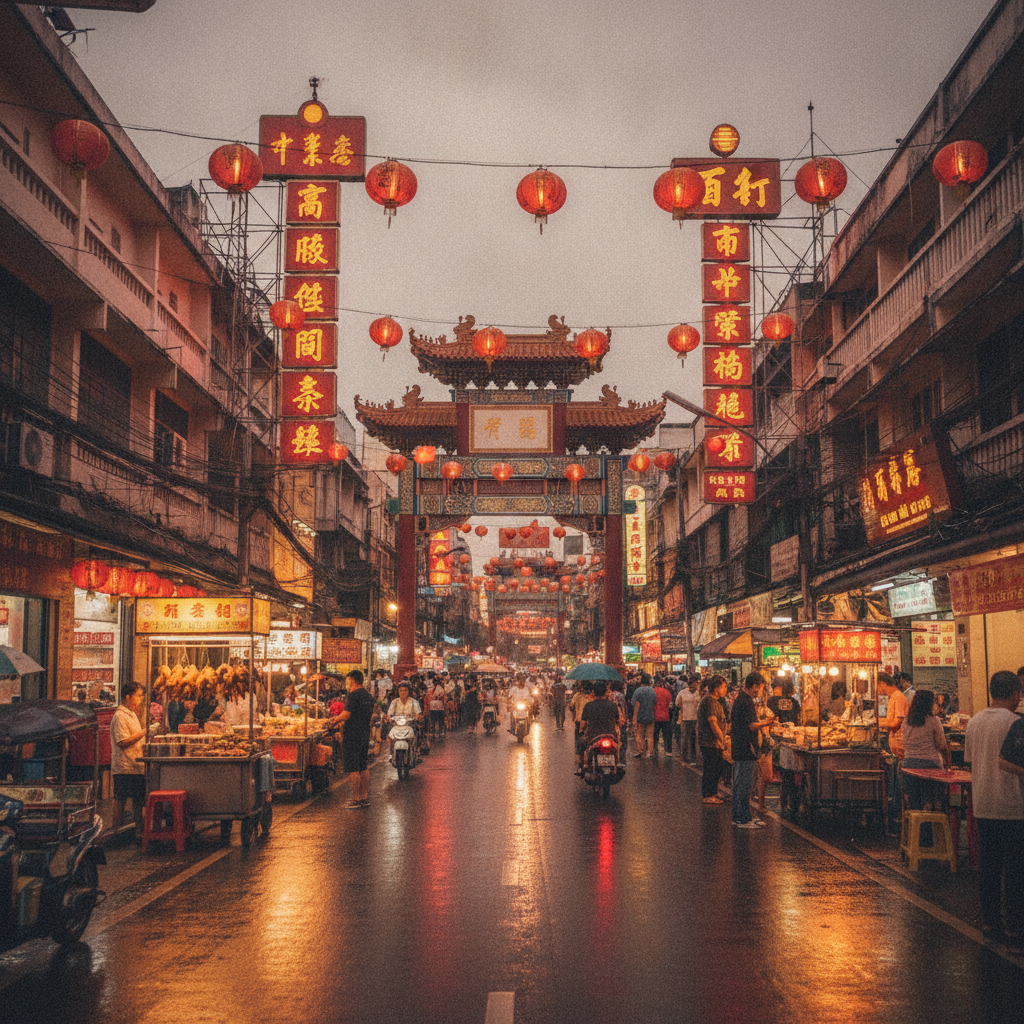
Chinatown Yaowarat, Pahurat Fabric Market & Bangkok Old Town Street Food
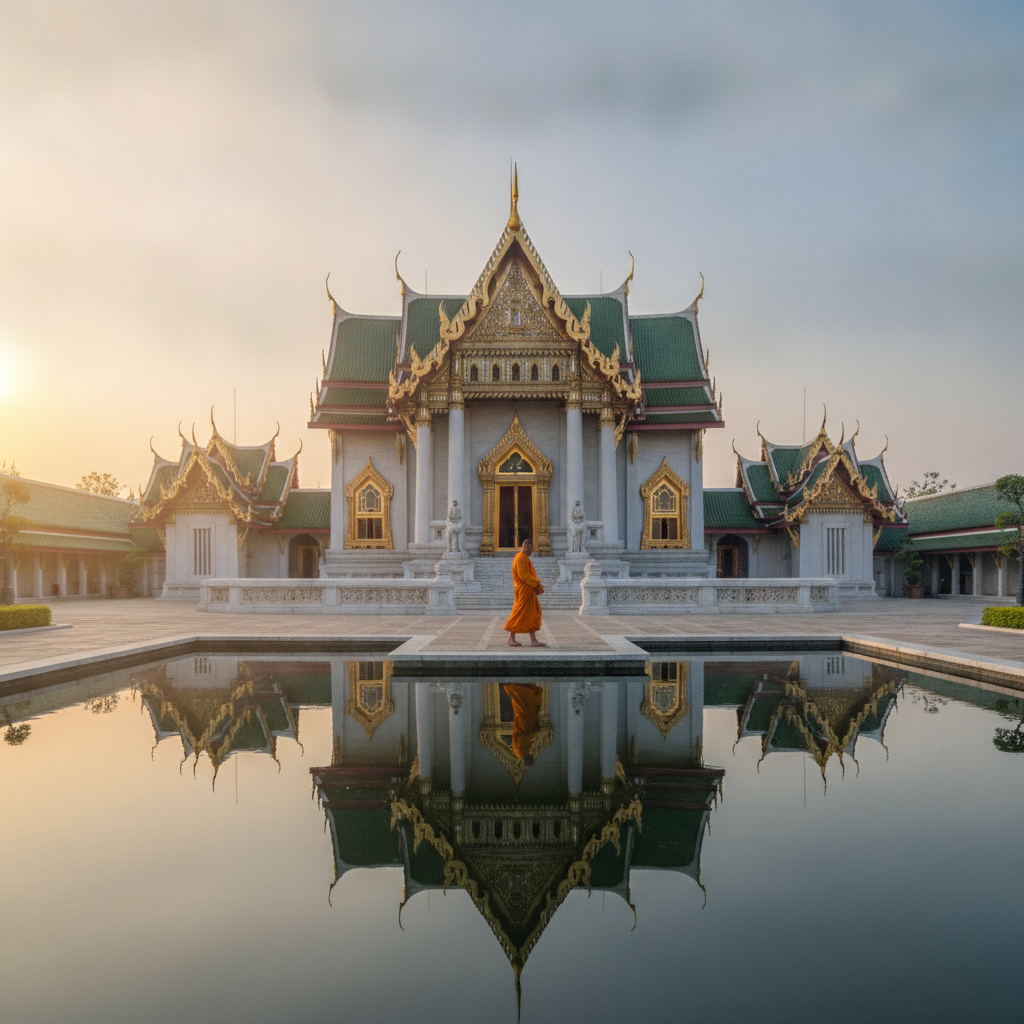
Wat Benchamabophit, Dusit Palace, Ananta Samakhom Throne Hall & Vimanmek Mansion
Chatuchak Weekend Market, Siam Square & Bangkok's Shopping Culture
Khao San Road, Democracy Monument & the Banglamphu Backpacker District
Damnoen Saduak Floating Market, Maeklong Railway & Amphawa Day Trip