Silom Road, Lumphini Park, Patpong Night Market & the Sathorn Financial District
The Silom-Sathorn-Lumphini district — defined by Silom Road (the primary commercial and banking street running east-west through the district), Sathorn Road (the tree-lined avenue running parallel to Silom one block south, home to most foreign embassies and the headquarters of major international corporations), and Lumphini Park (the central park that forms the green core of the district) — represents Bangkok's transition from 19th-century commercial Bangkok toward the modern financial and diplomatic city.
- 1
Silom Road (ถนนสีลม) — Bangkok's Wall Street and Commercial Heart
Silom Road (ถนนสีลม, Silom Road, Bang Rak and Bangrak districts — the approximately 3-kilometre commercial and financial artery running from Charoen Krung Road (the oldest paved road in Bangkok) in the west to Rama IV Road in the east, passing through the dense commercial district of Bang Rak: Silom Road was developed as Bangkok's primary commercial street in the late 19th century following the construction of Charoen Krung Road, which opened the area adjacent to the river to development; the road name derives from the windmills (สีลม, si lom — 'to grind the wind') that were erected along the road's southern side to pump water for irrigation from the canal network that originally ran parallel to the road; the road's evolution through the 20th century traces Bangkok's economic development — from the trading houses and import-export firms of the early 20th century (many operating in the Sino-Portuguese shophouse buildings that still survive along the road's western section near Charoen Krung Road) to the modern office towers and banking headquarters that characterize the road's central section; Silom Road is also the central artery of Bangkok's LGBTQ+ nightlife district (the Silom Soi 2 and Silom Soi 4 area around the Soi 4 junction) — a community that has been centered in the Silom area since the 1980s and that now constitutes one of the most visible and commercially significant LGBTQ+ districts in Southeast Asia; the Silom area is served by three BTS Skytrain stations (Chong Nonsi, Sala Daeng, and Surasak) and one MRT subway station (Silom MRT).
- 2
Lumphini Park (สวนลุมพินี) — Bangkok's Green Lung & Monitor Lizard Sanctuary
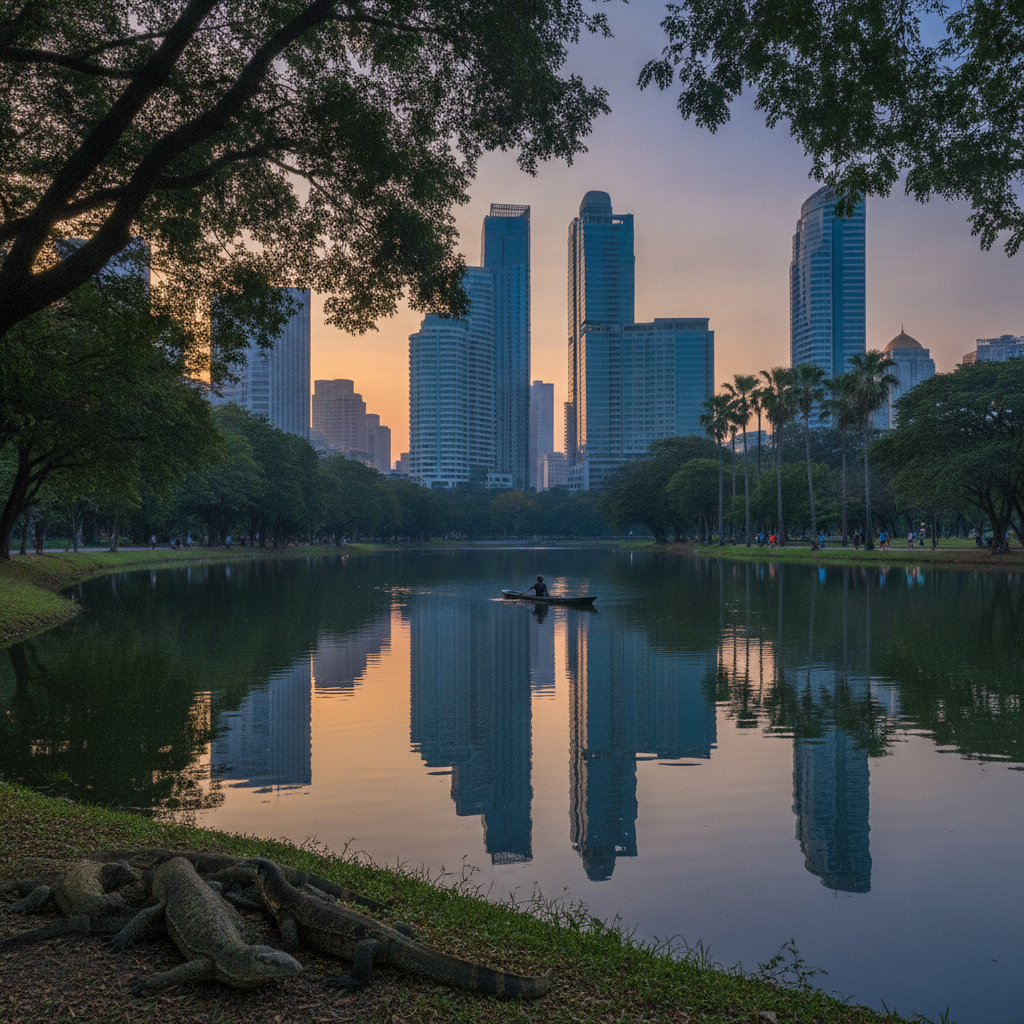
Lumphini Park (สวนลุมพินี, Rama IV Road and Ratchadamri Road, Pathumwan — the 57.6-hectare public park that constitutes Bangkok's most important urban green space and one of the city's most used public facilities: the park was created by King Vajiravudh (Rama VI) on land that had been used for public fairs and exhibitions; the king donated the land to the Bangkok municipality in 1920 specifically for use as a public park, naming it after the birthplace of the Buddha (Lumbini in present-day Nepal) as an expression of Buddhist devotion; the park was formally opened in 1925 and has been maintained continuously since then; the park is defined by two principal features: the large artificial lake (approximately 1.5 hectares) at the centre of the park around which the primary pedestrian and jogging circuit of 2.5 kilometres runs; and the extensive tree cover (the park contains over 6,000 trees, predominantly rain trees, royal palms, and banana palms that provide near-continuous canopy shade throughout the park); the park's most famous non-human residents are the Malayan Water Monitor Lizards (Varanus salvator, เหี้ย or ตะกวด in Thai) — the large (1.5-2.5 metre) semi-aquatic lizards that have colonized the park's lake and drainage infrastructure and can be seen throughout the park at any time of day, basking on the lake banks or foraging through the park's vegetation; the park is open from 05:00 to 21:00 daily and is most active in the early morning (06:00-08:00) when thousands of Bangkok residents use the park for jogging, aerobics exercise classes, tai chi, and yoga.
- 3
Patpong Night Market (พัฒน์พงษ์) — Bangkok's Most Famous Night Market & Entertainment District
Patpong Night Market (พัฒน์พงษ์, Patpong Road 1 and Patpong Road 2, between Silom Road and Surawong Road, Bang Rak — the night market and entertainment district occupying the private road development built by the Patpong family (Chinese-Thai immigrants who purchased the land in the 1940s and developed it with rental properties beginning in the 1960s): Patpong Road 1 (the primary street) hosts the open-air night market that operates from approximately 18:00 until midnight selling clothing, electronics, watches, accessories, and souvenirs at prices negotiable from the initial asking price; the market is particularly associated with counterfeit goods (branded replica watches, handbags, clothing) though the level of counterfeiting enforcement varies; the surrounding bars, clubs, and entertainment venues represent the entertainment district component of the Patpong development — the area has been associated with adult entertainment since the Vietnam War era (when American military personnel on R&R leave visited Bangkok) but has evolved substantially and now operates more as an international tourist entertainment destination than as an active adult entertainment district; the night market is one of the most compact and navigable in Bangkok (the road is approximately 150 metres long and fully pedestrianized during market hours) and is well-served by the Sala Daeng BTS station immediately adjacent.
- 4
Sathorn Road (ถนนสาทร) — Embassy Row & Bangkok's Diplomatic District
Sathorn Road (ถนนสาทร, Sathorn Road — the tree-lined two-way boulevard running parallel to Silom Road, approximately 500 metres to the south, forming the spine of Bangkok's primary diplomatic and upper-end commercial district: Sathorn Road (divided into North Sathorn Road and South Sathorn Road by the Chong Nonsi junction) hosts the greatest concentration of foreign embassies in Bangkok — including the US Embassy (at Wireless Road, technically a separate but adjacent street), the British Embassy, the Australian Embassy, the French Embassy, and multiple Southeast Asian nation embassies; the road is also lined with the Thai headquarters buildings of major international corporations, luxury hotel developments (the Banyan Tree Bangkok, the Metropolitan Bangkok, and the Marriott Marquis Queen's Park are in the Sathorn area), upscale restaurants (Sathorn Road and its immediate side streets are the highest concentration of Michelin-recognized restaurants in Bangkok outside the Sukhumvit corridor), and the professional service firms (law firms, consulting firms, accounting firms) that serve the diplomatic and corporate communities; the Sathorn Road area is also home to the Sofitel So Bangkok (formerly the Park Hotel, designed by the Thai architect Duangrit Bunnag on the site of a former motor racing circuit) and the Lebua State Tower (the 73-storey mixed-use tower at the southern end of Silom Road where Sirocco restaurant and the Sky Bar — consistently cited as among the highest outdoor bars in the world — are located on the 63rd floor).
- 5
Assumption Cathedral (อาสนวิหารอัสสัมชัญ) & Bang Rak Riverside
Assumption Cathedral (อาสนวิหารอัสสัมชัญ, Assumption Road, Bang Rak — the Roman Catholic cathedral built in 1910 by the Congregation of the Mission (Vincentian Fathers) on the site of an earlier church dating from 1821: the cathedral is the seat of the Archdiocese of Bangkok and the most significant Roman Catholic building in Thailand; the cathedral was built by the French Vincentian missionary community that established the first Catholic presence in Bangkok in the early 19th century, following the French missions that had been active in the earlier Ayutthayan capital (Ayutthaya) since the 17th century; the cathedral's red-brick Romanesque facade (characteristic of the late 19th-century European ecclesiastical architecture that the Vincentians built across Southeast Asia — from Cambodia to Vietnam to Thailand), twin bell towers, and rose window overlooking the river represent the most significant Catholic architectural heritage in Bangkok; the area around the cathedral — the Bang Rak district between Silom Road and the river — preserves several 19th-century commercial and residential buildings including the Oriental Hotel (now the Mandarin Oriental Bangkok, founded 1876, the oldest hotel in Thailand and consistently rated among the finest in Asia), the East Asiatic Company Building, and the former customs houses along the Chao Phraya riverfront.
- 6
Chong Nonsi BTS Station Area — Modern Sathorn Skyline & Elevated City
Chong Nonsi BTS Skytrain Station Area (สถานีช่องนนทรี, Narathiwat Ratchanakarin Road and North Sathorn Road interchange, Bang Rak — the elevated interchange station where the BTS Silom Line makes its closest approach to the Sathorn Road diplomatic and financial district: the Chong Nonsi station area provides the most dramatic urban landscape of the Silom-Sathorn district — the elevated BTS track runs through a canyon of glass office towers and hotel developments, with the Sathon district's tree-lined streets and the glass tower skyline creating a visual juxtaposition unique in Bangkok; the area around Chong Nonsi is the most concentrated employment district in Bangkok (the intersection of Silom Road, Sathorn Road, and the BTS network creates an exceptionally dense commuter zone); the Sky Walk — the elevated pedestrian walkway connecting Chong Nonsi station to the surrounding commercial buildings — provides an elevated perspective on the Sathorn streetscape and is one of the most heavily-used pedestrian infrastructure elements in central Bangkok; the sky bar and restaurant district of the Sathorn Road area (Sirocco, Breeze, Above Eleven) can be seen from the elevated walkway at night as illuminated platforms above the Bangkok skyline.
Walk this route with audio
Stories play automatically as you reach each stop — no tapping needed.
More in bangkok
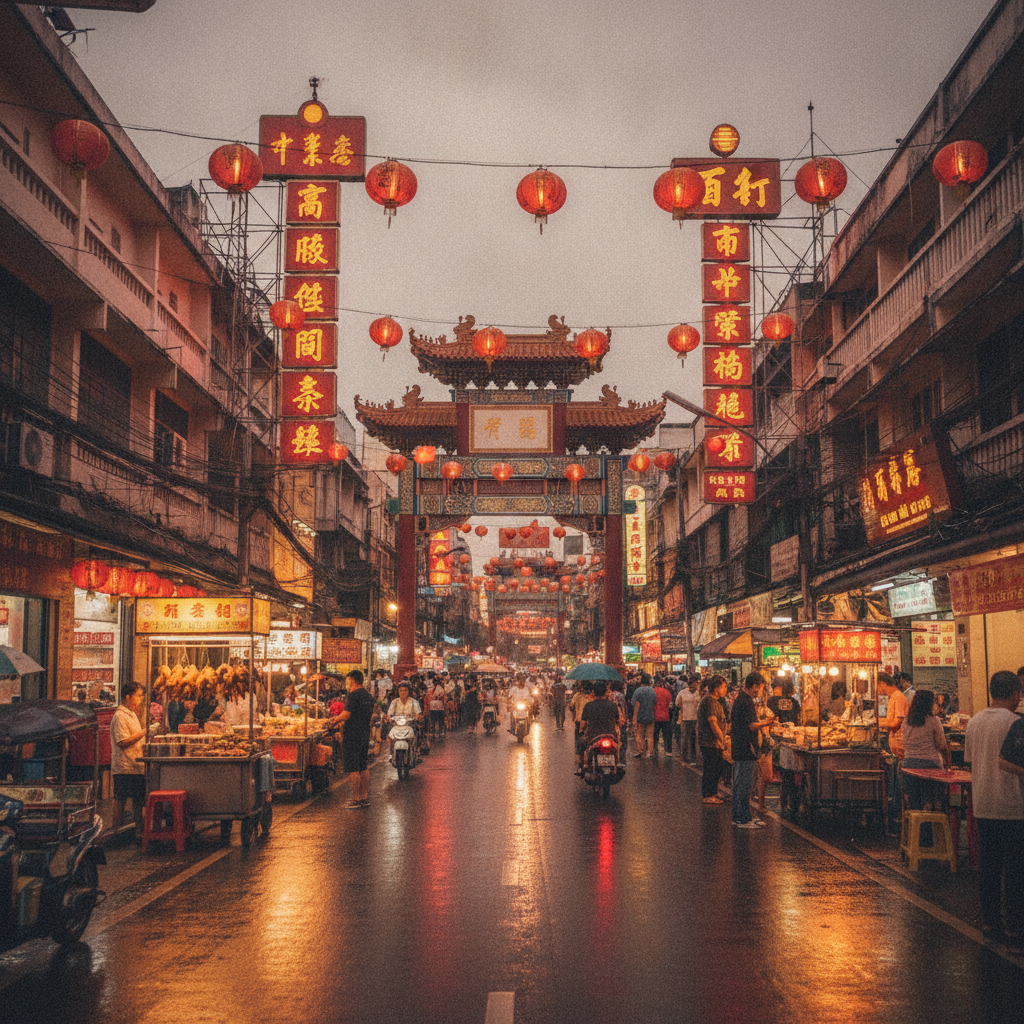
Chinatown Yaowarat, Pahurat Fabric Market & Bangkok Old Town Street Food
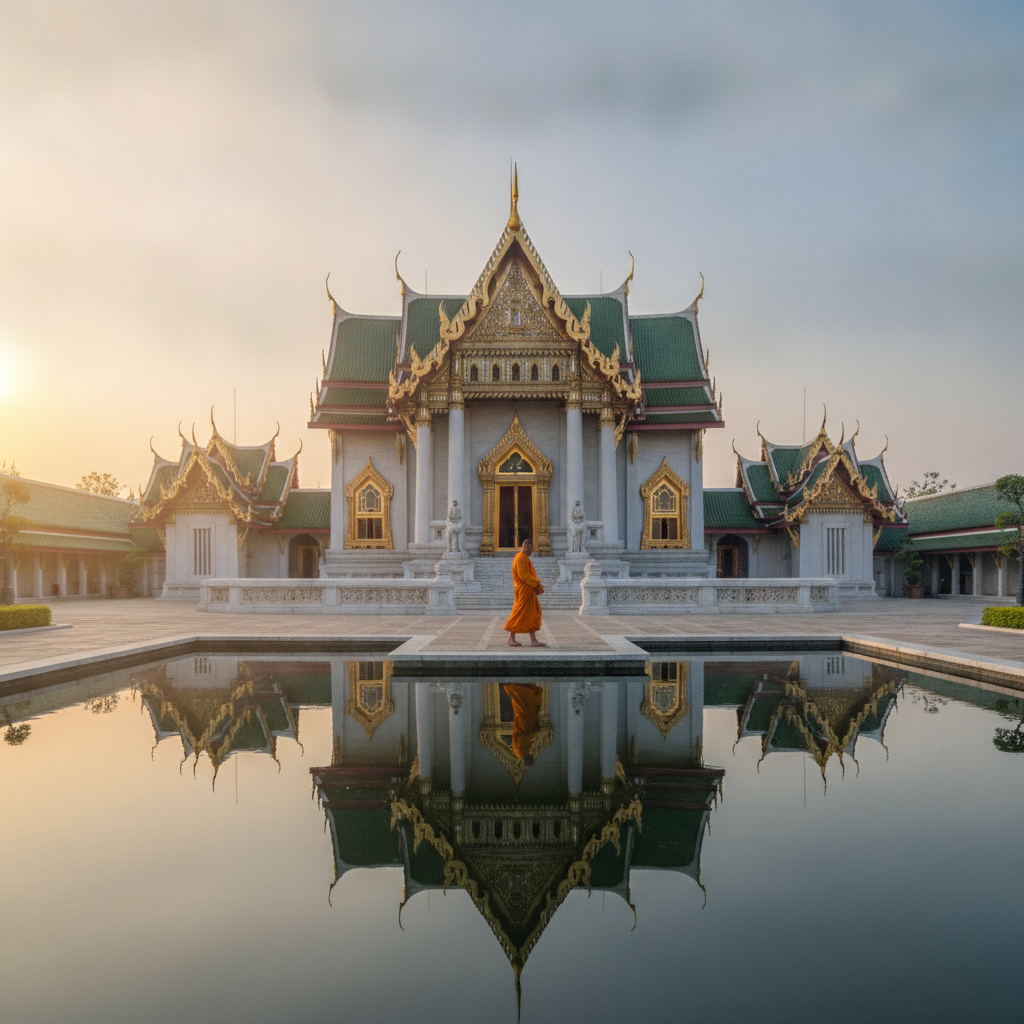
Wat Benchamabophit, Dusit Palace, Ananta Samakhom Throne Hall & Vimanmek Mansion
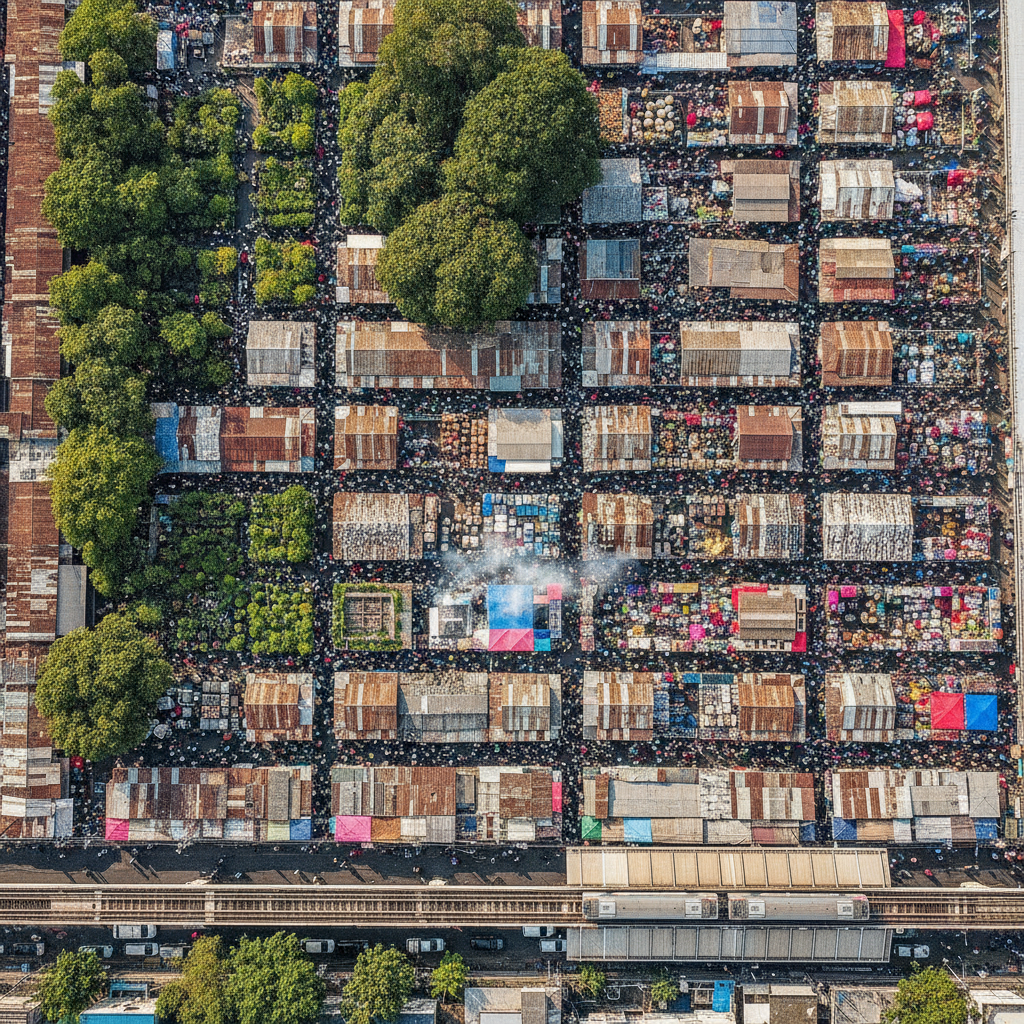
Chatuchak Weekend Market, Siam Square & Bangkok's Shopping Culture
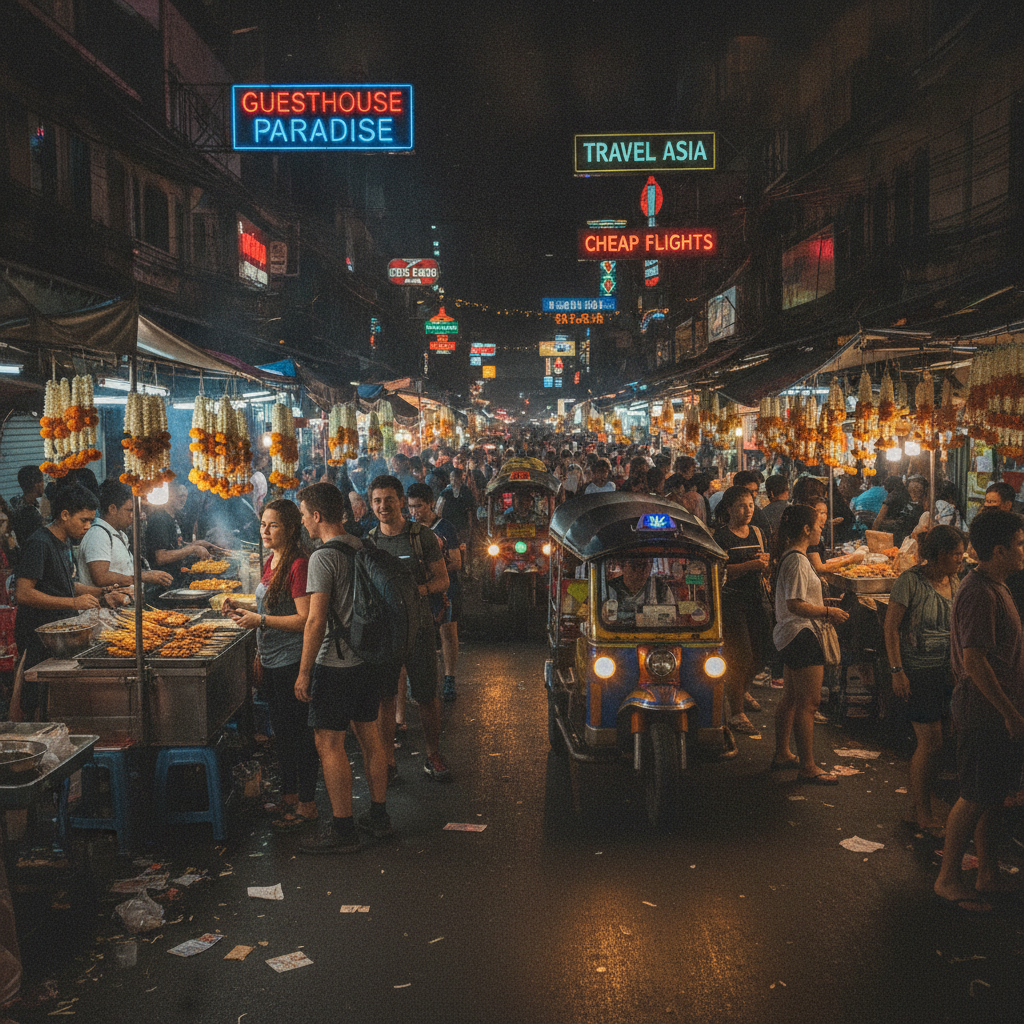
Khao San Road, Democracy Monument & the Banglamphu Backpacker District
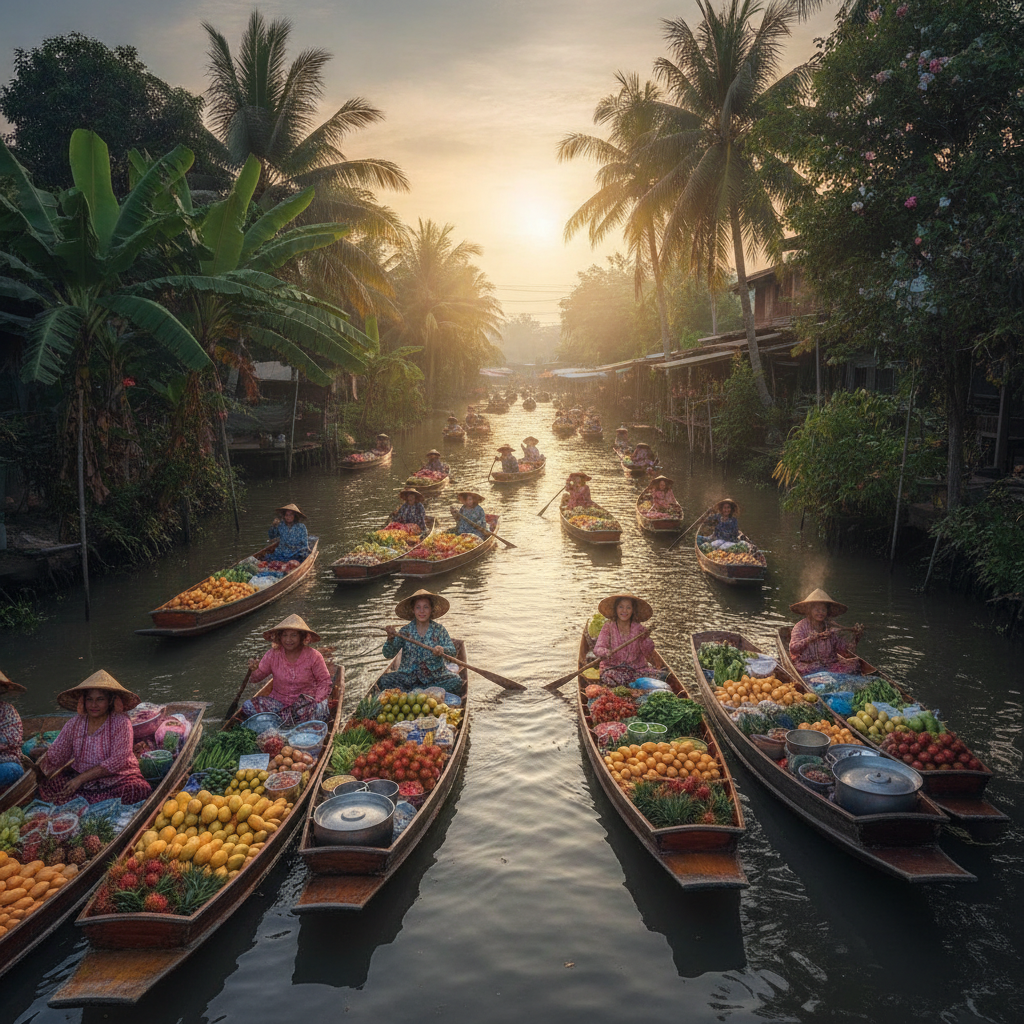
Damnoen Saduak Floating Market, Maeklong Railway & Amphawa Day Trip