Baltimore: Inner Harbor (National Aquarium, USS Constellation last sail warship, USS Taney Pearl Harbor survivor, American Visionary Art Museum), Fort McHenry (September 13-14 1814 25hr British bombardment, Francis Scott Key aboard British ship writes Star-Spangled Banner, 30x42ft Pickersgill flag now Smithsonian), Chesapeake Bay blue crabs (Old Bay Seasoning Gustav Brunn 1939, Maryland crab cake purist lumped meat, LP Steamers, Faidley Seafood Lexington Market 1782), Edgar Allan Poe (died Baltimore October 7 1849 mysterious circumstances, Westminster Hall grave, Poe Toaster 70 years roses cognac, Baltimore Ravens named after The Raven 1845), The Wire (greatest US TV drama David Simon Ed Burns, Bethlehem Steel Sparrows Point 35,000 workers closed 2012, 2015 Freddie Gray uprising), Practical (Johns Hopkins first US research university 1876, Flexner Report reformed US medical education, Fells Point Federal Hill Canton Mount Vernon, MARC train to DC, BWI airport)
Baltimore highlights: Inner Harbor (National Aquarium opened 1981 top 5 US, USS Constellation last sail-only US Navy warship 1854, USS Taney last Pearl Harbor survivor afloat, AVAM), Fort McHenry (September 13-14 1814 British bombardment 1,800 shells 25 hours, Francis Scott Key attorney detained aboard British ship, Pickersgill 30x42ft flag now Smithsonian, national anthem adopted 1931), Chesapeake Bay crabs (blue crab largest US producer, Old Bay 1939 German immigrant Gustav Brunn, Maryland crab cake purist lump meat no filler, Faidley Seafood Lexington Market 1782 oldest public market Baltimore), Poe (died October 7 1849 mysterious, Westminster Hall grave, Poe Toaster 1949-2009 roses cognac, Ravens named The Raven), The Wire (greatest US TV drama 5 seasons 2002-2008, David Simon Baltimore Sun Burns homicide detective, Bethlehem Steel Sparrows Point 35,000 workers closed 2012, 2015 Freddie Gray uprising), practical (Johns Hopkins 1876 first US research university Flexner Report, Fells Point cobblestone colonial taverns, Federal Hill park harbor view, BWI MARC train).
- 1
Baltimore - Charm City Overview and the Inner Harbor
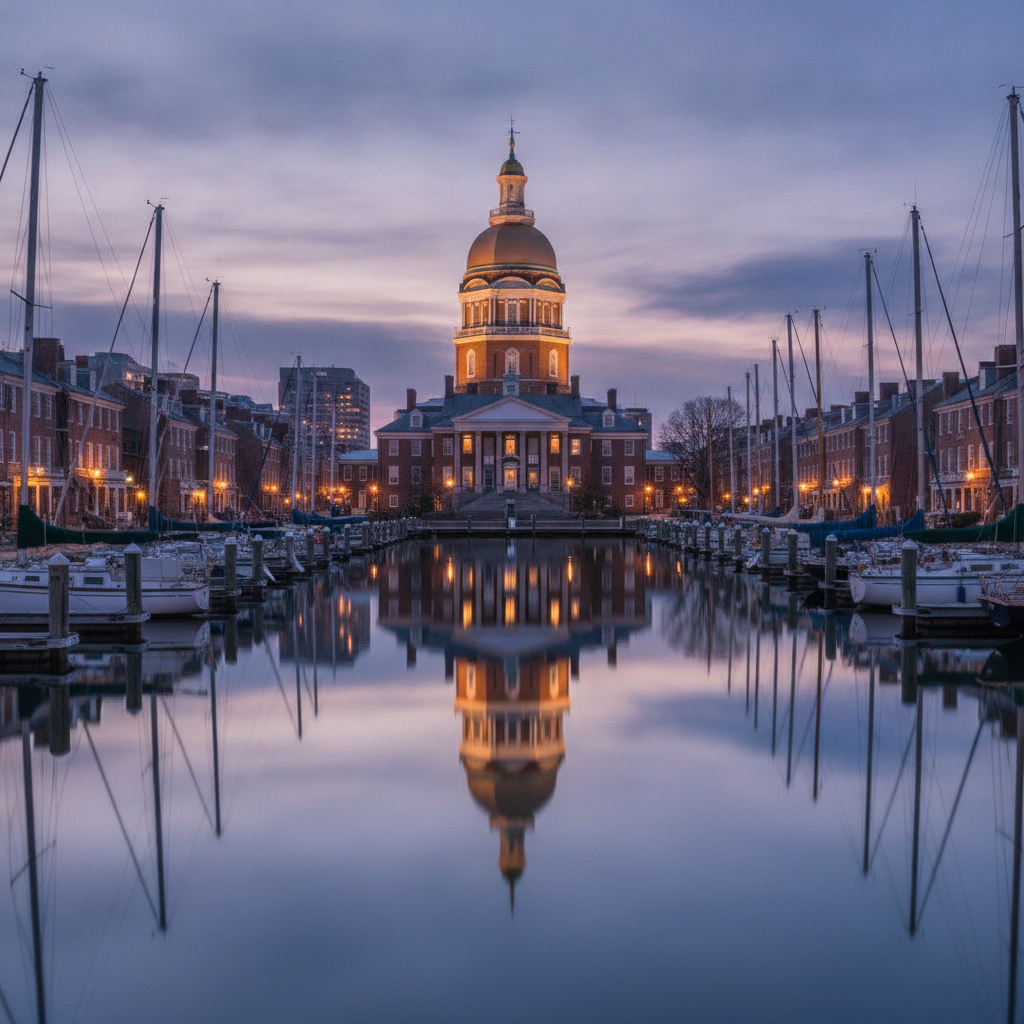
Baltimore (independent city, population approximately 569,000, the largest city in Maryland and the most populous independent city in the United States, not part of any county): the economic and cultural capital of the state of Maryland, located at the northwest tip of the Chesapeake Bay on the Patapsco River, approximately 60 km northeast of Washington DC. Baltimore's significance: Baltimore was the second largest city in the United States from approximately 1790 to 1830 (after New York), the site of the Battle of Baltimore (September 13-14, 1814, during which Francis Scott Key wrote The Star-Spangled Banner while watching the British bombardment of Fort McHenry from a ship in Baltimore harbor), the home of the B&O Railroad (the Baltimore and Ohio Railroad, the first common-carrier railroad in the United States, chartered 1827), and a major port city for the trade in tobacco, cotton, and enslaved people from the 1600s through 1865. The Inner Harbor (the waterfront redevelopment project centered on the basin of Baltimore's historic inner harbor, approximately 1 km south of downtown): the most visited attraction in Baltimore, with the National Aquarium Baltimore (one of the top 5 aquariums in the United States, opened 1981), the Maryland Science Center, the Historic Ships in Baltimore (the USS Constellation, the last purely sail-powered US Navy warship, launched 1854; the USS Torsk, a World War II submarine; and the USCGC Taney, the last US ship afloat that was in service during the attack on Pearl Harbor), the Harborplace shopping and dining pavilions, and the American Visionary Art Museum (AVAM, at 800 Key Hwy, on the south side of the harbor).
- 2
Fort McHenry and the Star-Spangled Banner
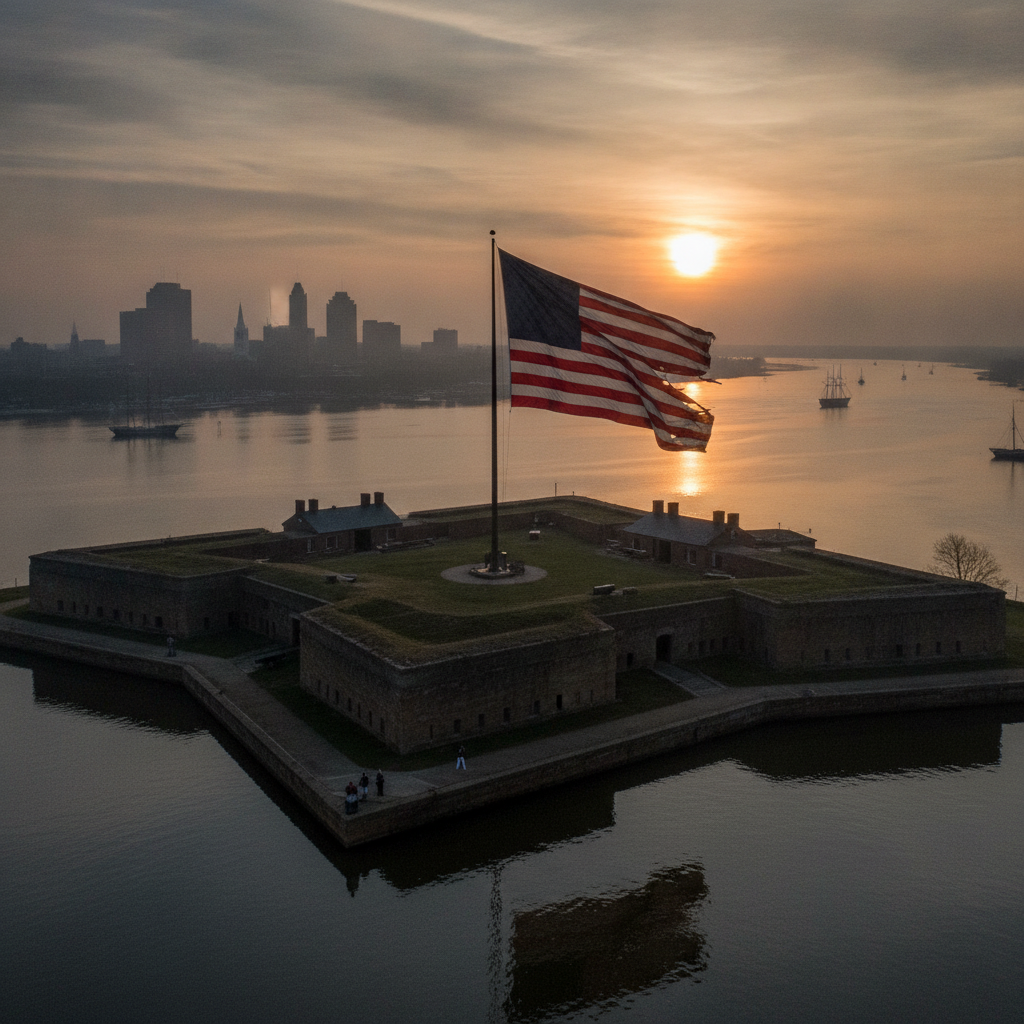
Fort McHenry National Monument and Historic Shrine (at 2400 East Fort Avenue, Locust Point, approximately 5 km southeast of downtown Baltimore): the star-shaped fortification on a peninsula in the Patapsco River, which defended Baltimore Harbor during the Battle of Baltimore on September 13-14, 1814. The battle: British forces, fresh from burning Washington DC (they set fire to the White House and Capitol on August 24, 1814), sailed up the Chesapeake Bay to attack Baltimore — the third largest city in the United States and a major center of American privateering against British shipping during the War of 1812. The British bombardment: from 6:00 AM on September 13 to 7:00 AM on September 14, 1814 (25 hours of continuous bombardment), British warships fired approximately 1,800 shells, rockets, and explosive bombs at Fort McHenry. Fort McHenry commander Major George Armistead had specifically requested a flag so large that the British cannot help but see it from a great distance — the flag made by Mary Pickersgill (the 30-foot by 42-foot garrison flag that flew over the fort during the bombardment) is now preserved at the Smithsonian National Museum of American History in Washington DC. Francis Scott Key (a Baltimore attorney who had gone to the British fleet to negotiate the release of a prisoner and was detained aboard a British ship during the bombardment) witnessed the entire 25-hour battle and, seeing the American flag still flying in the dawn light on September 14, was inspired to write the poem Defense of Fort McHenry, which was later set to music and became the national anthem of the United States in 1931.
- 3
Baltimore Seafood Culture - Chesapeake Bay Blue Crabs
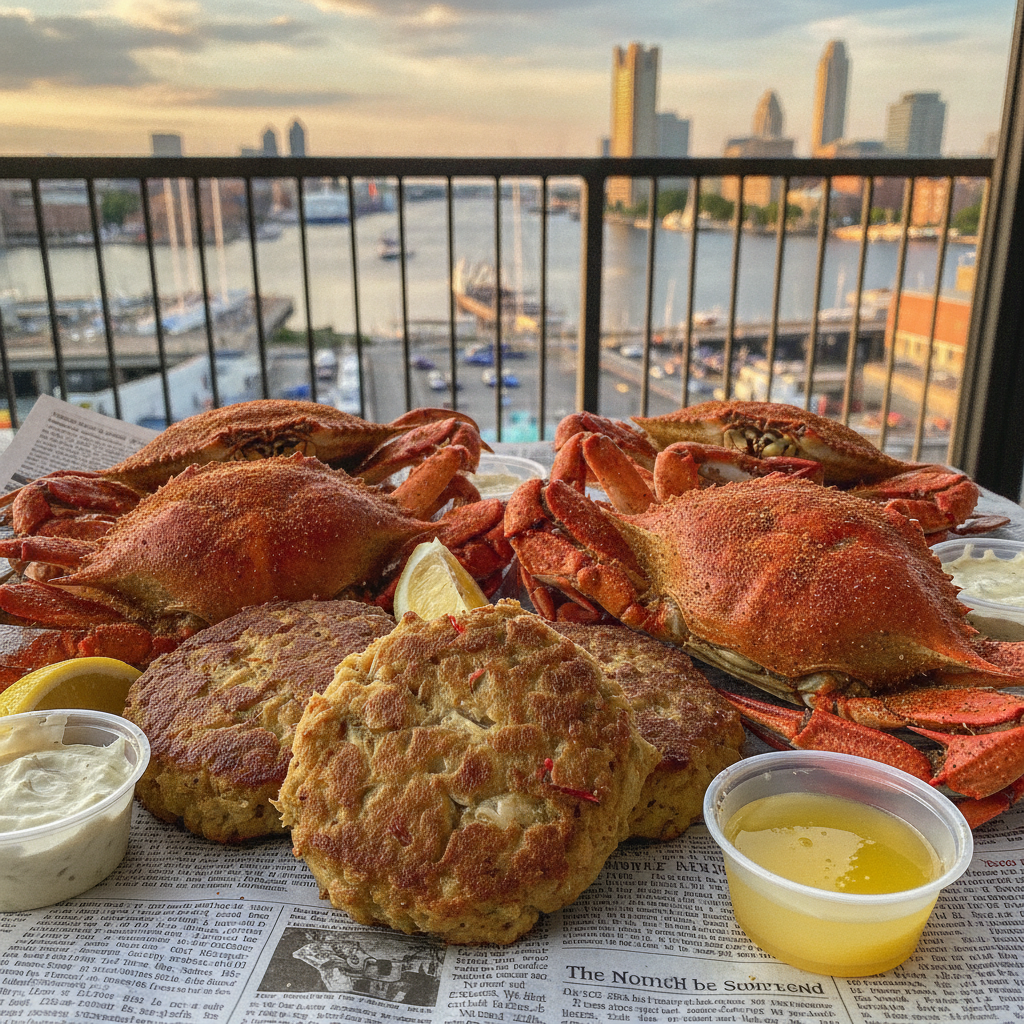
Chesapeake Bay blue crab (Callinectes sapidus, the blue crab of the Chesapeake Bay): the defining food of Baltimore culture and one of the most important regional seafood traditions in the United States. The Chesapeake Bay blue crab harvest: the Chesapeake Bay is the largest producer of blue crabs in the United States, with Maryland and Virginia watermen harvesting approximately 50-70 million pounds per year (at peak production in the 1990s; the harvest has declined significantly due to overfishing and pollution). The Maryland blue crab experience: eating steamed blue crabs is the defining Baltimore dining experience — the crabs are steamed with Old Bay Seasoning (the spice blend invented in 1939 by German immigrant Gustav Brunn in Baltimore, the essential seasoning for all Chesapeake Bay seafood), then dumped on a table covered with brown paper, with diners eating with wooden mallets and knives. The Baltimore crab cake: the purist Maryland crab cake (consisting almost entirely of jumbo lump blue crab meat with minimal filler — the opposite of the bread-heavy crab cakes served elsewhere) is considered by many food writers the most regionally distinctive dish in the United States. LP Steamers (at 1100 E Fort Ave, Locust Point): the classic Baltimore steamed crab house. Faidley Seafood (at 203 N Paca Street, Lexington Market): the legendary seafood stall in the historic Lexington Market (Baltimore's oldest public market, established 1782), serving the most acclaimed crab cake in Baltimore for generations. The National Aquarium Baltimore (at 501 E Pratt Street, Inner Harbor): the most visited paid attraction in Baltimore, with the Atlantic coral reef, Australia: Wild Extremes exhibit, and the dolphin discovery.
- 4
Edgar Allan Poe and Baltimore Literary Heritage
Edgar Allan Poe (born January 19, 1809, Boston; died October 7, 1849, Baltimore): the most important writer in the American Gothic and detective fiction traditions, buried at Westminster Hall and Burying Ground in Baltimore and celebrated in the city through the Edgar Allan Poe House and Museum. Poe's Baltimore years: Poe lived in Baltimore from 1831 to 1835 (the period in which he published his first short stories and began the development of his distinctive style), and he died in Baltimore under mysterious circumstances (found delirious on the streets of Baltimore on October 3, 1849, and died 4 days later at Washington College Hospital, with the cause of death still debated by scholars — theories include rabies, cooping (a form of election fraud in which victims were drugged and used to vote multiple times), carbon monoxide poisoning, and brain disease). The Edgar Allan Poe House and Museum (at 203 N Amity Street, Hollins Market neighborhood): the house where Poe lived with his aunt and his cousin Virginia (whom he later married) from 1833 to 1835, now operated as a museum by the City of Baltimore. The Poe Toaster: for over 70 years (from 1949 to 2009, with the original Poe Toaster succeeded by apparent surrogates until 2009, when the tradition ended), an anonymous figure dressed in black with a white scarf left three red roses and a bottle of cognac at Poe's grave on the night of January 19th (Poe's birthday). The Edgar Allan Poe Baltimore Ravens connection: the Baltimore Ravens NFL team is named in honor of Poe's poem The Raven (1845), the most famous poem in American literature, first published in the New York Evening Mirror on January 29, 1845.
- 5
The Wire and Baltimore's Urban Challenges
The Wire (the HBO television series, created by David Simon and Ed Burns, 5 seasons 2002-2008): widely considered the greatest television drama series in American history (ranked #1 by multiple critics including BBC Culture and Rolling Stone), a comprehensive sociological examination of Baltimore's institutions — the drug trade, the police department, the labor unions, the schools, and the print media — through the lens of the failed War on Drugs and the devastation of deindustrialization. The Wire and Baltimore reality: the series was based on the actual experiences of David Simon (a Baltimore Sun crime reporter for 12 years) and Ed Burns (a former Baltimore homicide detective turned school teacher), and is remarkable for its accuracy in depicting the real geography, institutions, and people of Baltimore's African American communities in West and East Baltimore. Baltimore's challenges: Baltimore has one of the highest violent crime rates of any major American city (particularly for homicide, with rates consistently 5-10 times the national average), driven by the collapse of the manufacturing economy that supported the working-class communities of East and West Baltimore (the Bethlehem Steel Sparrows Point plant — once the largest steel mill in the world, employing over 35,000 workers — closed in 2012), the devastation of the War on Drugs (Baltimore had one of the highest per capita heroin use rates of any American city from the 1970s to the 2000s), and the structural inequality inherited from decades of redlining and discriminatory housing policies. The 2015 Baltimore uprising (following the death of Freddie Gray, 25, who suffered a fatal spinal injury while in police custody on April 19, 2015): the most significant urban uprising in Baltimore since the 1968 riots following the assassination of Martin Luther King Jr.
- 6
Baltimore Practical Guide - Johns Hopkins and the Neighborhoods
Baltimore practical visitor guide: Baltimore is one of the most underrated major American cities, offering world-class cultural institutions, distinctive neighborhoods, excellent seafood, and a compact urban core at a fraction of the cost of Washington DC (located 60 km to the southwest). Johns Hopkins University (at 3400 N Charles Street, Charles Village neighborhood, founded 1876): the first research university in the United States (modeled on the German research university, particularly the University of Berlin), consistently ranked among the top 10 universities in the world, with the Johns Hopkins School of Medicine (the medical school that invented modern American medical education: the Flexner Report of 1910, which reformed medical education throughout North America, was commissioned by the Carnegie Foundation based on the Johns Hopkins model). Baltimore neighborhoods: Fells Point (the waterfront neighborhood east of the Inner Harbor, with the 18th-century rowhouses, cobblestone streets, and taverns where British sailors caroused in the colonial era, now the most popular nightlife destination in Baltimore); Federal Hill (the neighborhood on the south side of the Inner Harbor, with the Federal Hill Park overlook of the harbor and downtown); Canton (the waterfront neighborhood east of Fells Point, with the O'Donnell Square park surrounded by rowhouses and bars); Mount Vernon (the Victorian neighborhood north of downtown, with the Washington Monument — a column topped by a statue of George Washington, the first monument to Washington completed in the United States, dedicated 1829 — and the Walters Art Museum). Baltimore-Washington Amtrak and MARC: Baltimore Penn Station and BWI Airport (the most convenient airport for Baltimore visitors, served by multiple airlines and the MARC Penn Line commuter rail to both Baltimore and Washington DC).
Walk this route with audio
Stories play automatically as you reach each stop — no tapping needed.
More in baltimore
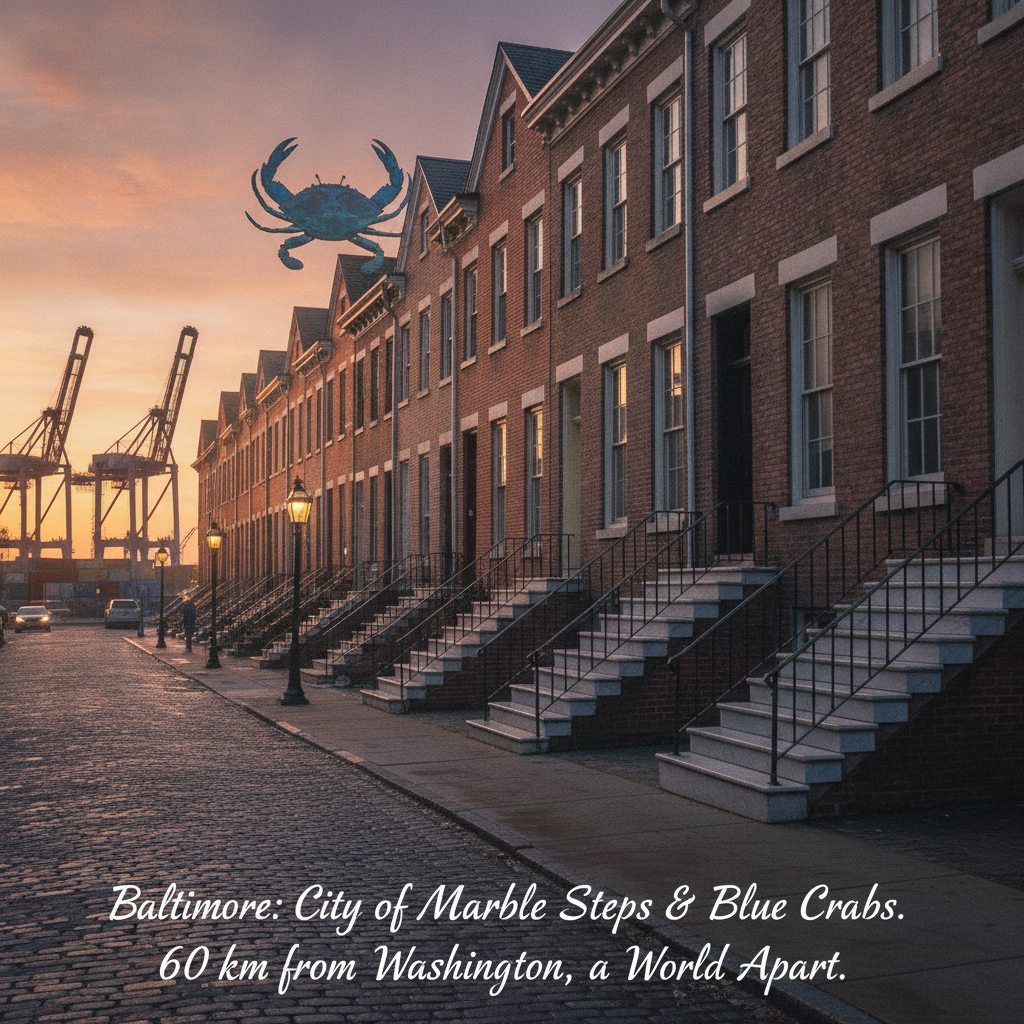
Baltimore R4: Rowhouse culture (70,000 brick rowhouses, white marble Cockeysville stoop scrubbing Saturday tradition, Bolton Hill Patterson Park William Patterson Jerome Bonaparte, Johns Hopkins Hospital 1889 modern surgery nursing), Baltimore music (Cab Calloway Hi-De-Ho, Billie Holiday raised in Baltimore Pigtown, Eubie Blake ragtime, Frank Zappa born 1940, 8x10 Club Federal Hill), Port of Baltimore (largest US auto import port, Baltimore Clipper slave trade, Key Bridge collapse March 26 2024 Dali container ship 6 workers killed largest recovery operation US), Civil rights (Thurgood Marshall 32 Supreme Court cases 29 wins Brown v Board 1954 first Black Justice 1967, Frederick Douglass HS Calloway Holiday Marshall, Morgan State HBCU 1867), Baltimore in film (John Waters Pink Flamingos Hairspray Serial Mom, The Wire filmed on location, Barry Levinson Diner 1982 Rain Man 1988, Sleepless in Seattle), Practical (median home USD 180-200K vs DC USD 600K, MARC train to DC 40min, Acela to NYC 2.5hr, BWI Southwest hub Key Bridge replacement USD 60M 2028)
Baltimore: Pope of Trash Homeland, Free Double Warhol Museum and the Freeway That Never Got Built
Baltimore: Largest Matisse Collection in the World, Poe Toaster Cognac and the 1782 Crab Market
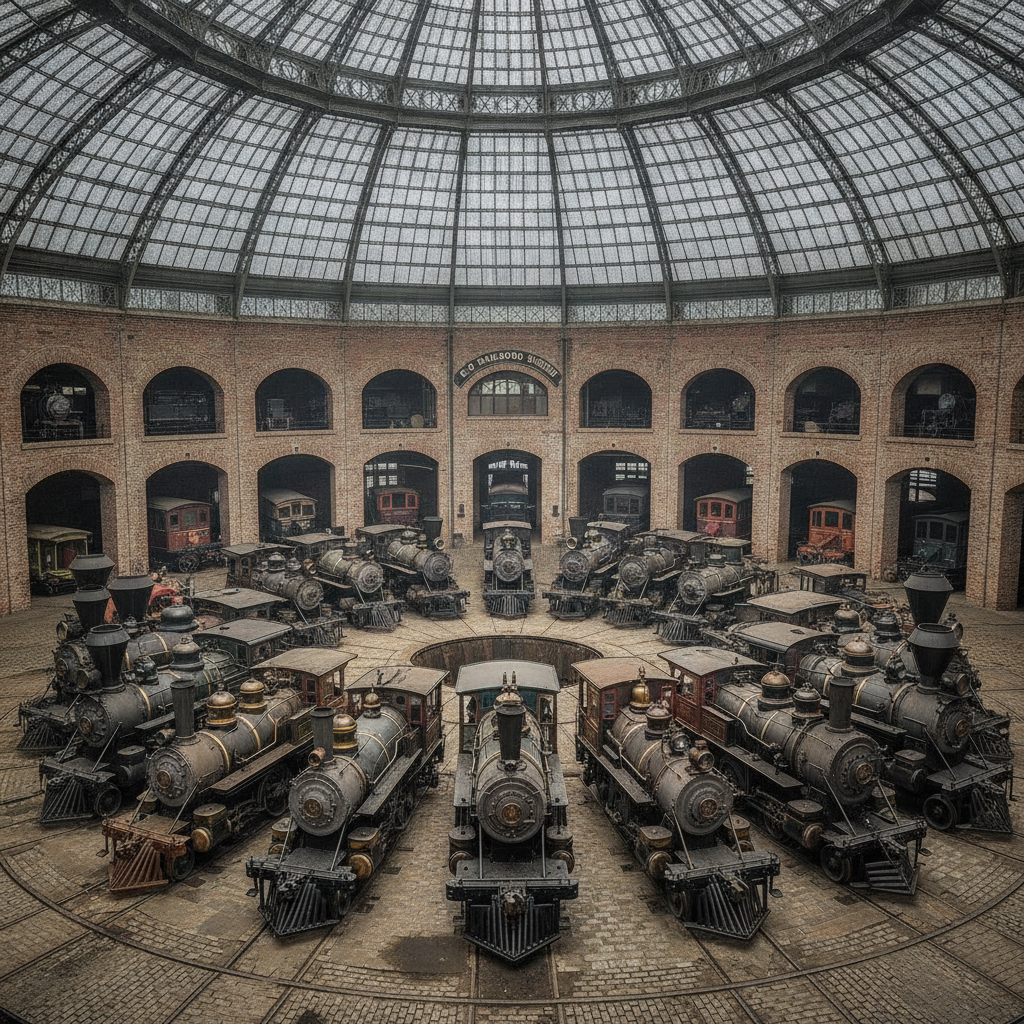
Baltimore R3-R4: B&O Railroad Museum (1827 first common-carrier US railroad, 1884 roundhouse 22-sided largest early railroad collection, Tom Thumb 1830 replica, Lincoln Baltimore Plot 1861), Space Telescope Science Institute (Hubble 1990 James Webb 2022, Applied Physics Lab GPS TIROS-1 New Horizons Pluto 2015), H.L. Mencken (Baltimore Sun 1906-1948 greatest American journalist, The American Language 1919 never out of print, John Waters Pope of Trash Hairspray 1988), African American heritage (MICA oldest degree-granting art college 1826, Great Blacks in Wax Museum, Reginald Lewis first Black billionaire USD 985M buyout 1987, Marin Alsop first woman major US orchestra music director), Chesapeake Bay (largest US estuary 320km, 348 fish species ecological decline restoration USD 6B, Assateague wild ponies 300 years), Practical (BWI Southwest hub MARC train to DC 40min, Preakness Stakes Pimlico May second oldest US track 1870, blue crab season July-September, Artscape largest free Maryland arts festival July)
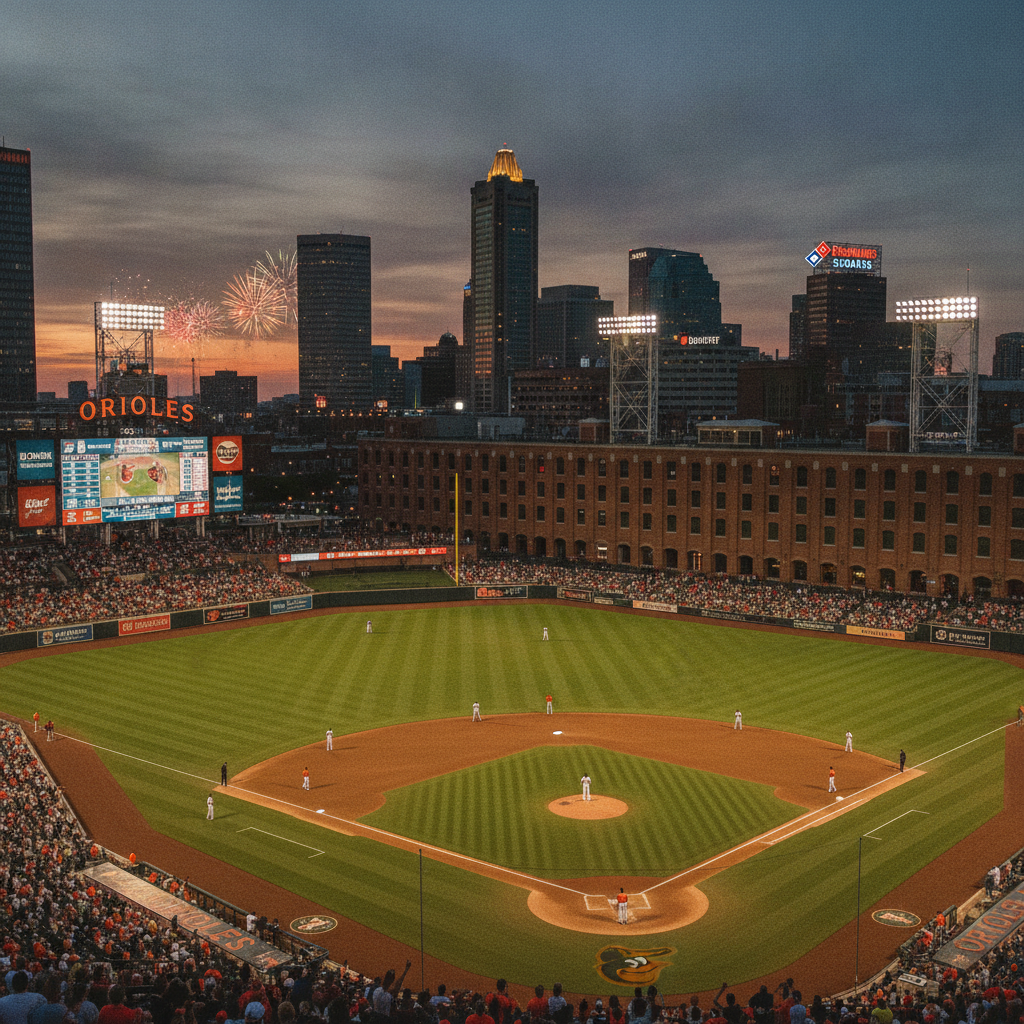
Baltimore: The Ballpark That Changed Baseball, Frederick Douglass Escapes in a Sailor Suit and the First Catholic Cathedral in the US