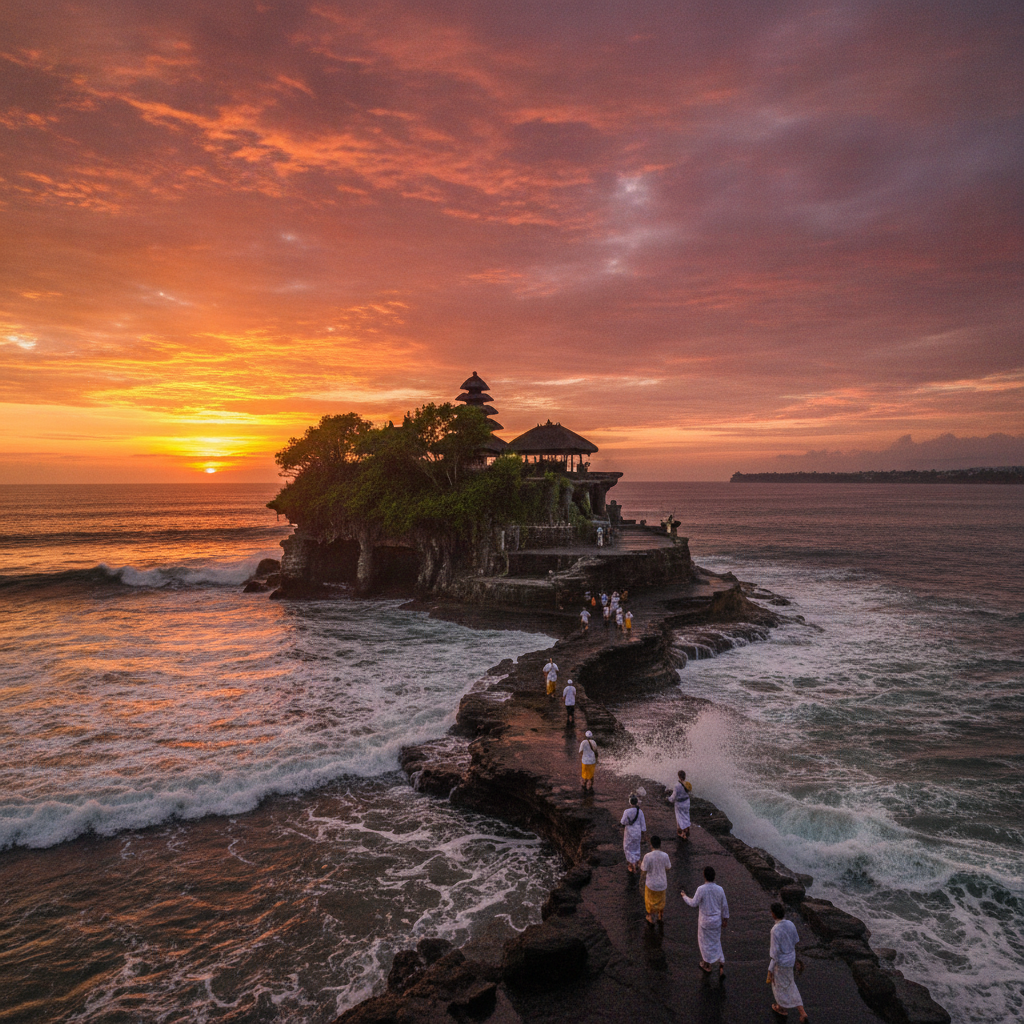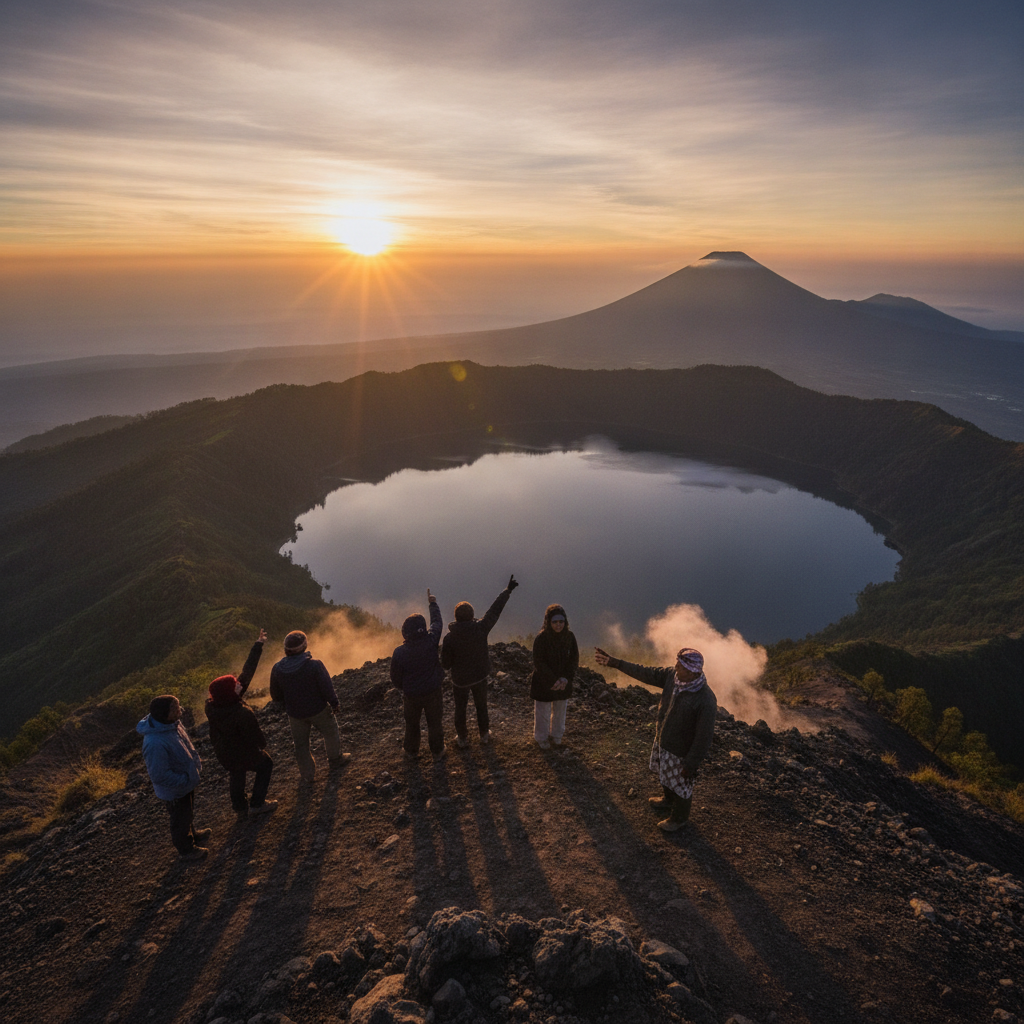
Mount Batur & Mount Agung — Volcano Sunrise Trekking in Bali
Bali's volcanic landscape — dominated by the sacred Mount Agung (3,031 metres, Bali's highest peak, last active in 2017-2019) and the more accessible Mount Batur (1,717 metres, an active volcano within a spectacular double caldera, the most popular trekking destination in Bali) — offers the most dramatic natural scenery on the island and a direct experience of the volcanic geology that created Bali.
1. Mount Batur Sunrise Trek — Bali's Most Popular Hike
- 1
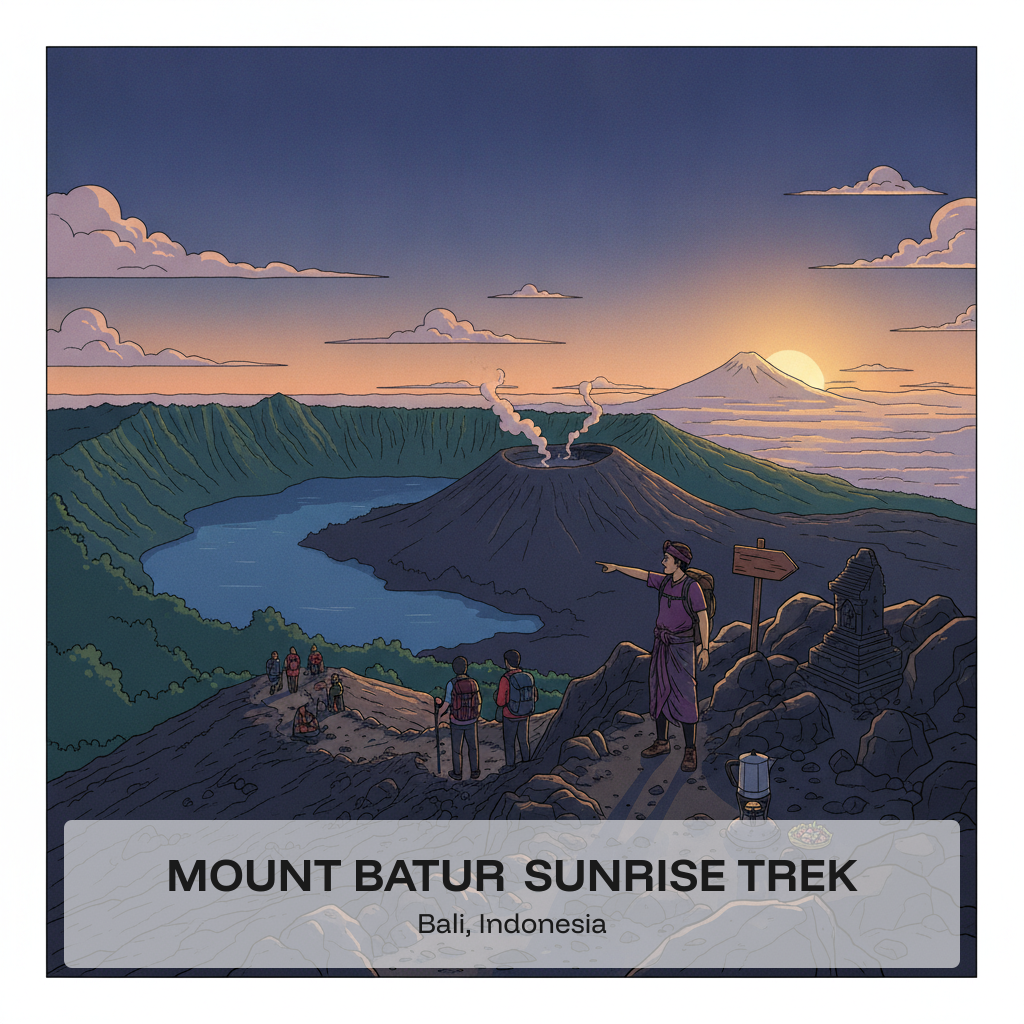
Mount Batur Sunrise Trek — Bali's Most Popular Hike
Mount Batur Sunrise Trek (Gunung Batur, Kintamani, Bangli Regency — 1,717 metres, an active stratovolcano within the larger Batur caldera, with the most recent significant eruption in 2000; the most popular trekking destination in Bali, with approximately 500-1,000 trekkers ascending each morning): the standard sunrise trek begins at approximately 03:30-04:00am from the trailhead near Pura Jati temple on the western slope of the volcano, ascending 2-3 hours through lava fields and pine forest to reach the summit just before sunrise (approximately 05:30-06:00); the view from the summit at sunrise reveals the Batur caldera lake (Danau Batur) 700 metres below, the larger Batur outer caldera rim surrounding it, and Mount Agung rising to the east through the morning mist; the local trekking guide association (PGMB, Persatuan Pemandu Gunung Batur) requires all trekkers to hire a local guide, providing income to the Kintamani village community.
- 2
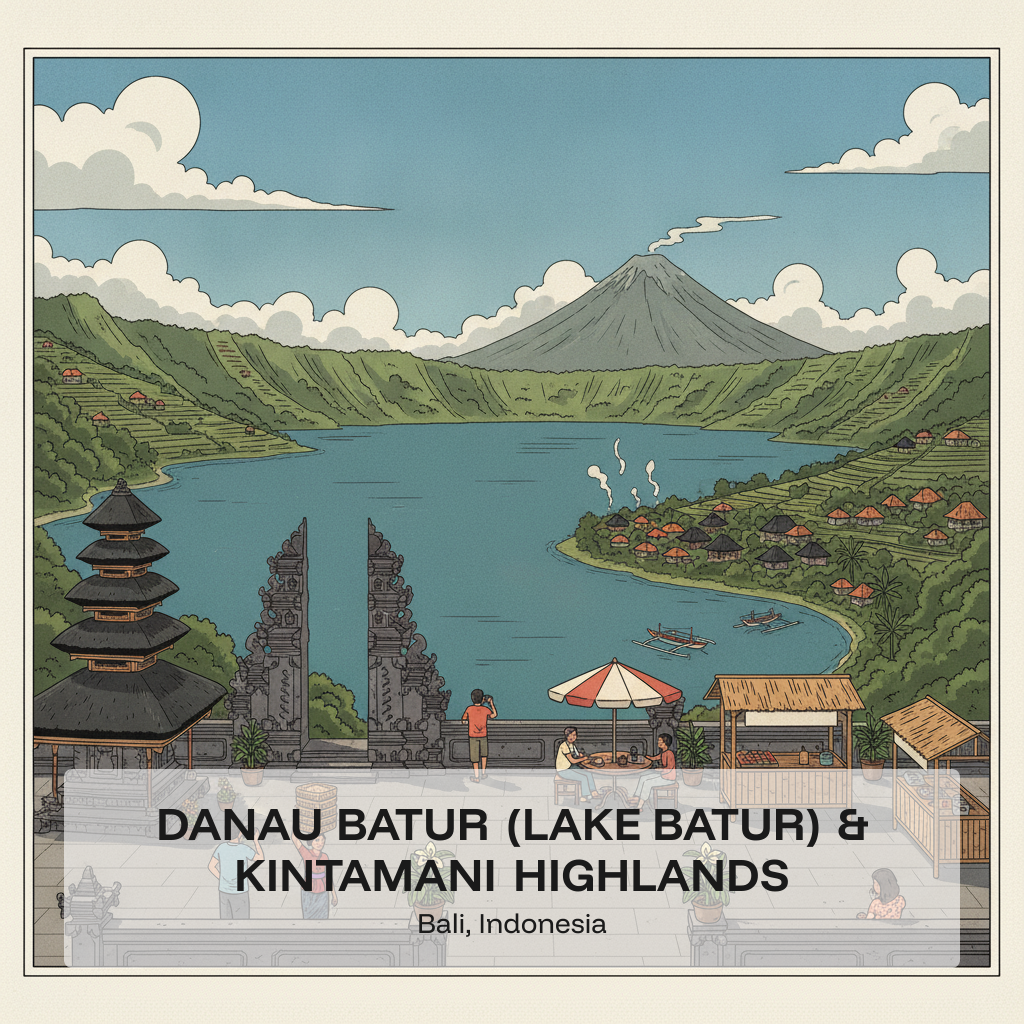
Danau Batur (Lake Batur) & Kintamani Highlands
Danau Batur (the crescent-shaped lake in the main Batur caldera, approximately 8 kilometres long and 2.5 kilometres wide, at approximately 1,031 metres elevation): Lake Batur is the largest lake in Bali and the primary source of fresh water for the subak irrigation system of southern Bali — underground water percolating through the volcanic soils from the Kintamani highlands feeds the springs of southern Bali, including the famous spring temple Pura Tirtha Empul; the lake shore at Toya Bungkah village contains natural hot springs (the volcanic activity of Mount Batur heats groundwater to approximately 38-45°C) accessible as public bathing pools or through the private pool of the Toya Devasya resort; the Kintamani Rim (the edge of the outer caldera, the area of the villages of Kintamani, Penelokan, and Batur) offers the most dramatic views of the lake and volcano, and is lined with restaurants offering spectacular caldera views over lunch.
- 3
Mount Agung — Sacred Summit and Bali's Spiritual Axis
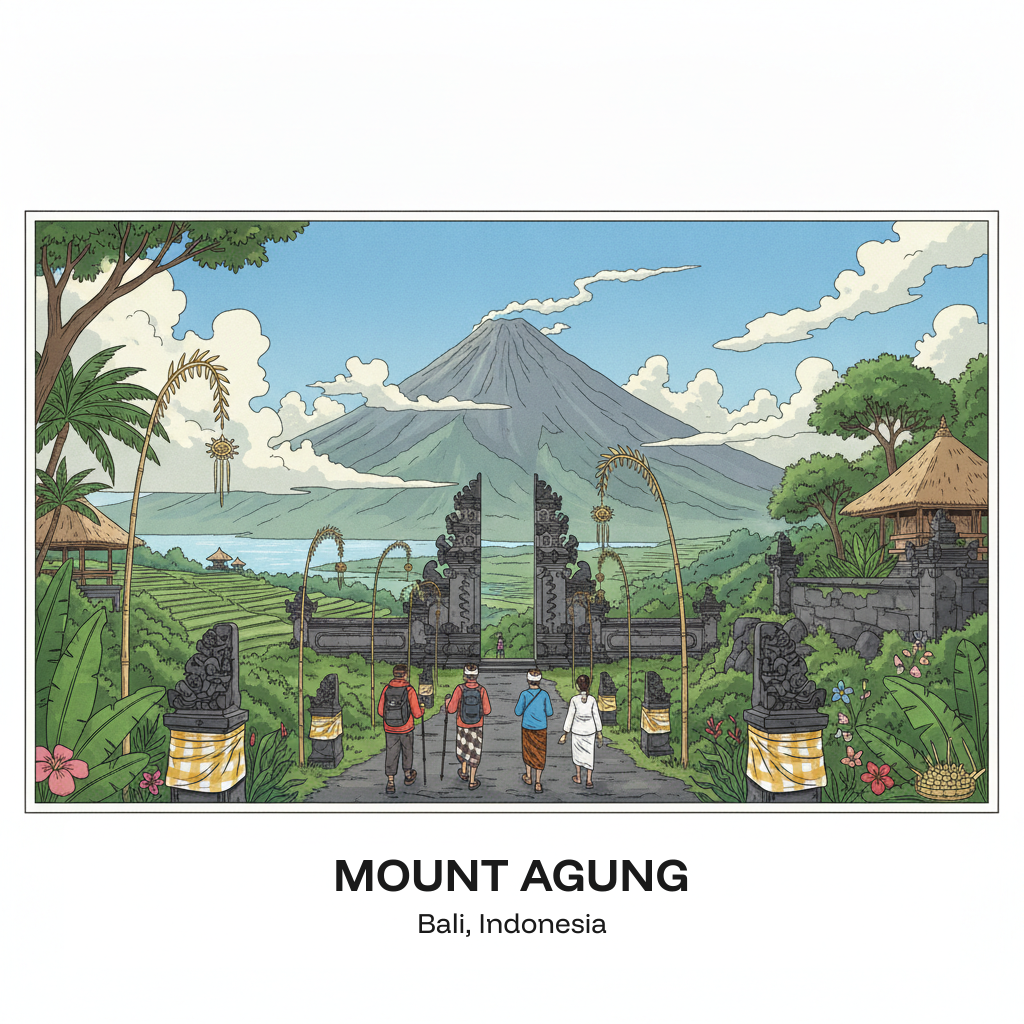
Mount Agung (Gunung Agung, Karangasem Regency — 3,031 metres, Bali's highest peak and the sacred centre of the Balinese Hindu universe — the mountain is believed to be a replica of Mount Meru, the mythological Hindu cosmic mountain at the centre of the universe, and all Balinese temples are oriented toward Agung): the volcano was extremely active in 1963-1964 (the eruption killed approximately 1,100-1,500 people and devastated the surrounding area) and again in November 2017-March 2018 (causing mass evacuations and major disruption to Bali's tourism industry before settling to intermittent eruptions); the trek to the summit of Agung (2 routes: the easier southern route from Pura Pasar Agung beginning at 1,700 metres, requiring 3-4 hours to the summit; and the harder northeast route from Pura Besakih, requiring 5-7 hours) is one of the most challenging and rewarding treks in Bali, requiring a local guide.
- 4
Lempuyang Temple & the Gates of Heaven
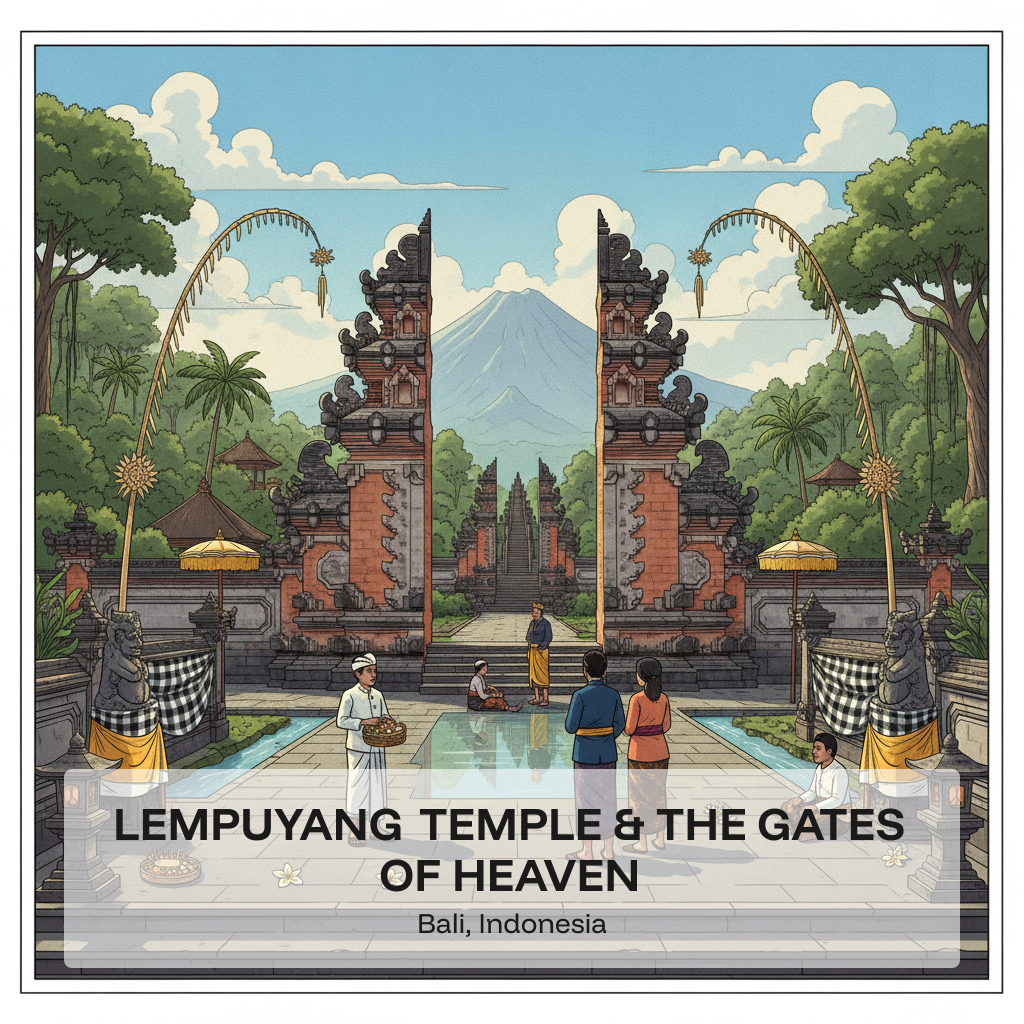
Pura Lempuyang Luhur (the temple complex on the slopes of Mount Lempuyang, Karangasem, east Bali — the highest of the six paramount temples (sad kahyangan) of Bali, consisting of seven temple levels ascending the mountain, the highest at approximately 1,175 metres): the temple is most famous for the split gate (candi bentar) at its entrance — the image of the two ornate split gates framing the perfect conical silhouette of Mount Agung through the central opening against the sky has become one of the most iconic images of Bali (the 'Gates of Heaven' shot), reproduced in millions of photographs and used in Bali tourism marketing worldwide; reaching the main gate requires climbing approximately 1,700 stone steps from the entrance car park, passing through the lower six temple levels; the reward is one of the most dramatic views of Mount Agung available, and the sense of having completed a genuine pilgrimage.
- 5
Tirtha Empul — Holy Spring Temple and Purification Ritual
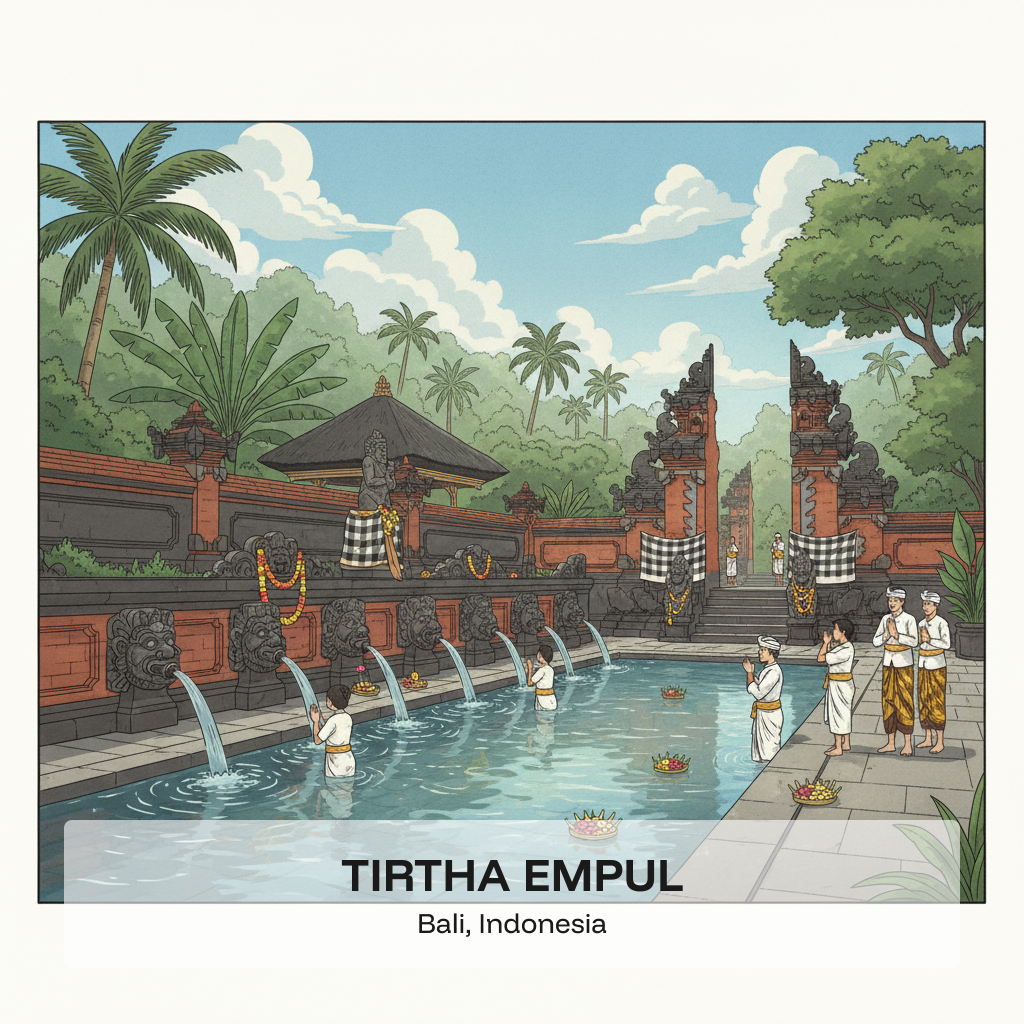
Pura Tirtha Empul (Jalan Tirtha, Tampaksiring village, Gianyar Regency — the Hindu water temple built around the sacred spring of Tirtha Empul, legendary site of the spring created by the god Indra to revive his poisoned army during a mythological battle): the spring temple contains a large rectangular pool fed by 30 individual spring-water spouts (tirtha), through which Hindu Balinese pilgrims conduct the ritual of melukat (purification by immersion in holy water) — moving from spout to spout, submerging the head and body three times at each spout while making a prayer and offering; non-Hindu visitors may participate in the purification ritual (dressed in a sarong and temple sash available at the entrance); the temple was founded in 962 CE and is one of the most important purification temples in Bali, with major ceremonies drawing thousands of worshippers.
- 6
East Bali — Karangasem Regency's Hidden Temples and Villages
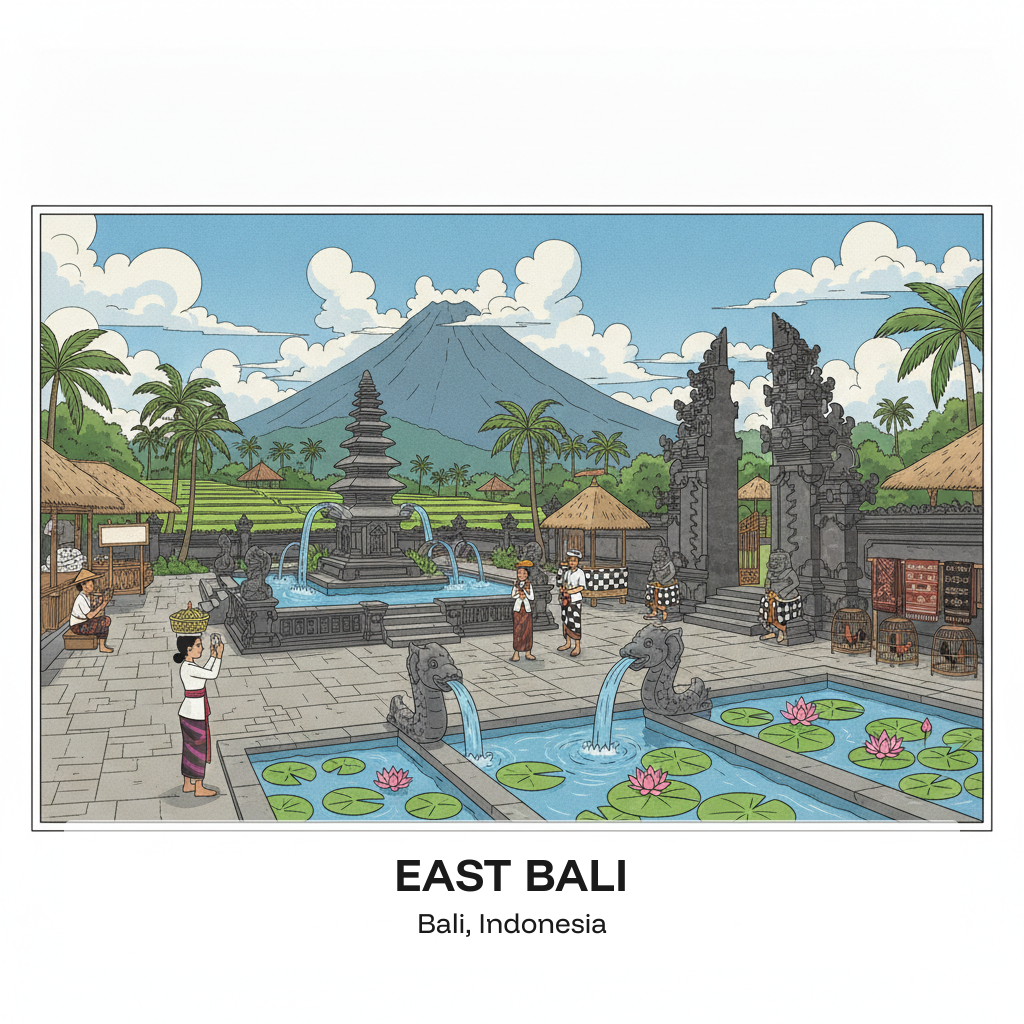
Karangasem Regency (the easternmost regency of Bali, centred on the capital Amlapura, bordered to the north by the volcanic peaks of Agung and Abang and to the east by the Bali Strait separating Bali from Lombok): Karangasem is the most traditionally Balinese and least developed of Bali's eight regencies, with an extraordinary concentration of water palaces (Taman Ujung and Taman Tirtagangga, the royal pleasure grounds of the last King of Karangasem, Anak Agung Anglurah Ketut Karangasem, built in the 1940s), ancient village temples, and traditional weaving villages (particularly Tenganan Pegringsingan, one of the 'original' Bali Aga villages (pre-Hindu Balinese villages) that still practice the ancient geringsing double-ikat weaving technique, producing cloth that is among the most technically complex woven textiles in the world).
Walk this route with audio
Stories play automatically as you reach each stop — no tapping needed.
More in bali
Bali Wellness — Spa Rituals, Yoga Retreats & the Bali Spirit
Ubud, Monkey Forest, Tegallalang Rice Terraces & Balinese Arts
Nusa Penida & Nusa Lembongan — Pristine Islands off Bali's Southeast Coast
Balinese Hinduism — Temple Ceremonies, Cremation & the Spiritual Life of Bali
Balinese Cuisine — Babi Guling, Lawar, Nasi Campur & the Warung Culture