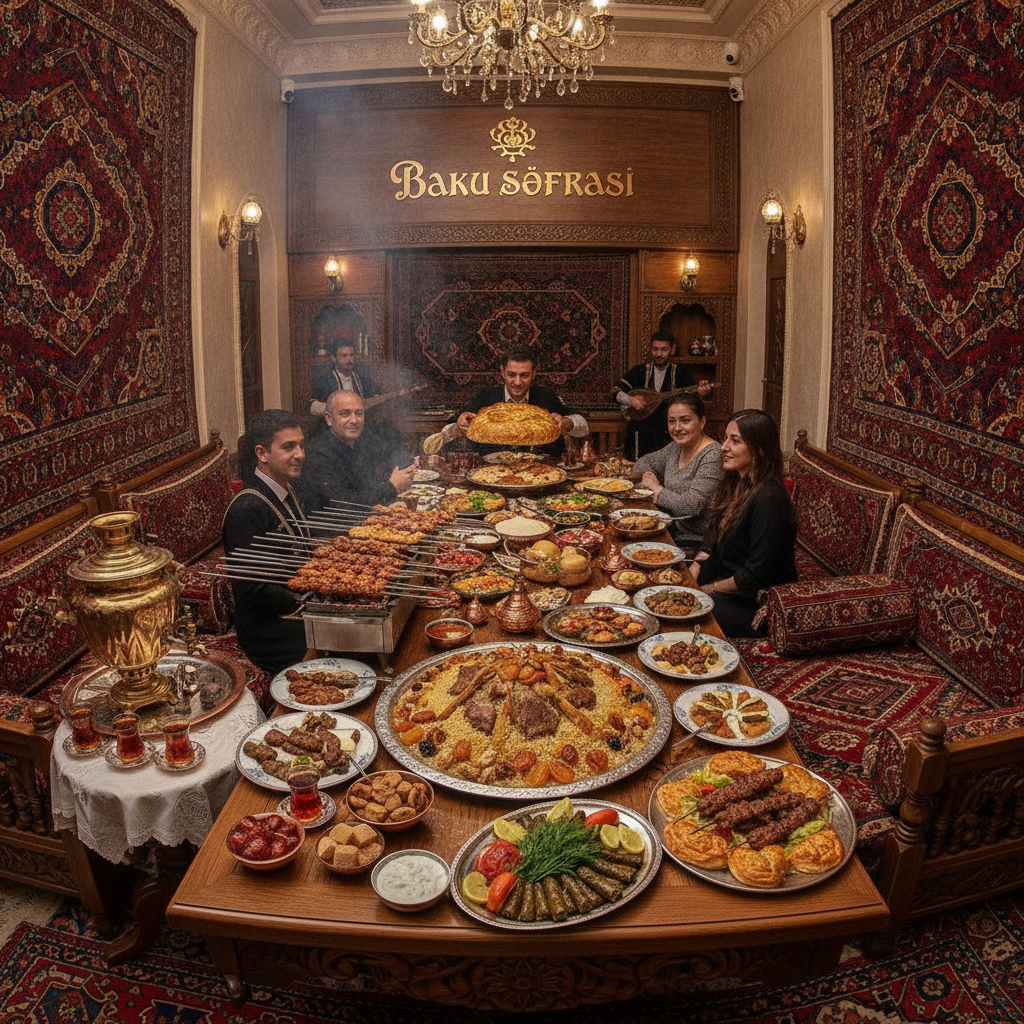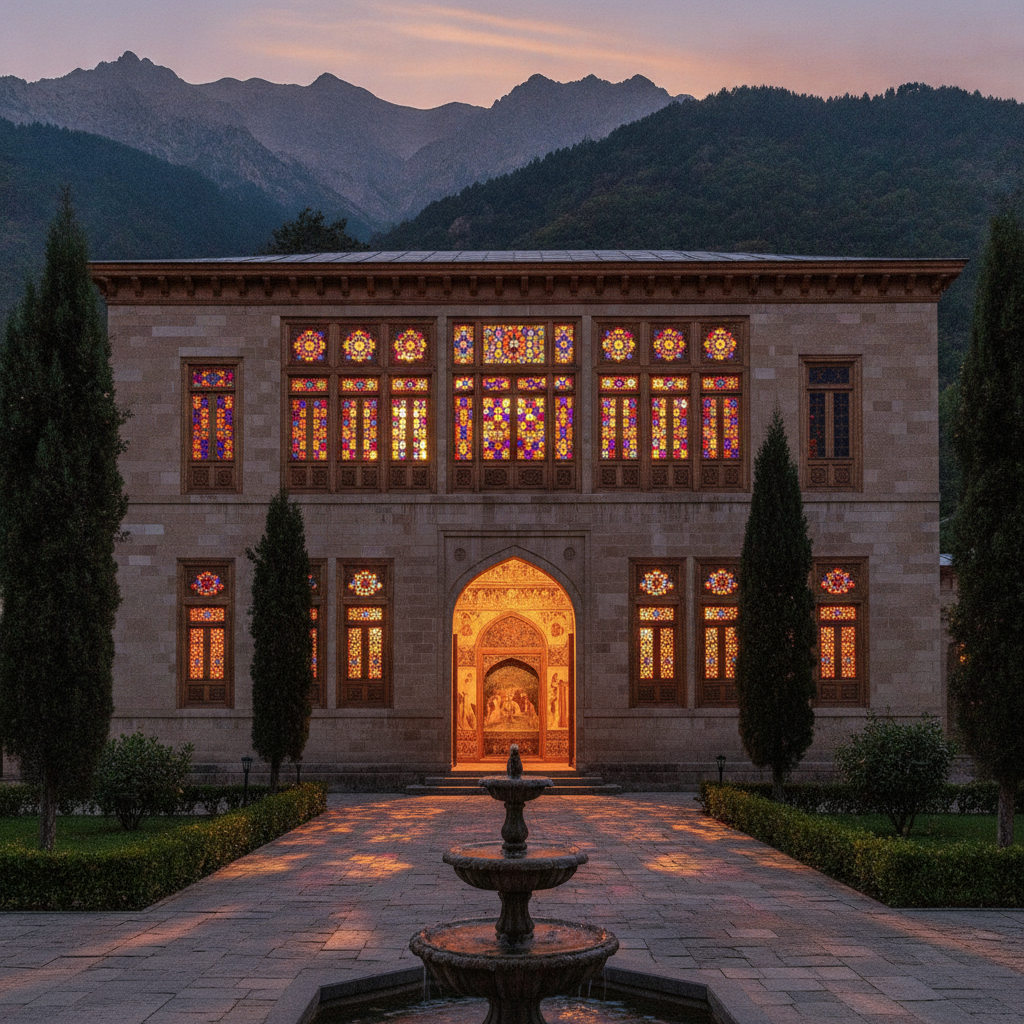
The Sheki Khan's Palace Shebeke Stained Glass Fitted Without Glue, the Piti Clay-Pot Lamb Baked 8 Hours in a Tandir, Nizami Ganjavi's Khamsa Five Poems & the Baku Boulevard Caspian Level Dropping 1.5m Since 1995
The Sheki shebeke — thousands of pieces of Venetian colored glass fitted without glue into hand-carved walnut lattice frames — inscribed UNESCO 2019; the Sheki piti lamb and chickpea soup sealed in clay pots and baked 6–8 hours in a tandir bread oven; Nizami Ganjavi's Khamsa five extended narrative poems (1141–1209) as the supreme achievement of Azerbaijani literary culture; the Baku Boulevard Caspian waterfront with the sea level dropping 1.5m since 1995; the ASAN Visa e-visa system for 95 nationalities; and the BakıKart contactless metro card at AZN 0.40 per journey.
- 1
Sheki – The Silk Road Khan's Palace
The Sheki Khanate city of Sheki (Şəki) 300 km northwest of Baku in the Greater Caucasus foothills — the most historically complete surviving example of an 18th-century Azerbaijani khanate capital: the Sheki Khan's Winter Palace (Şəki Xanlarının Sarayı): the palace (built 1797 by Mammad Hasan Khan as his winter residence — the primary surviving example of the Azerbaijani Safavid-influenced palace architecture): the shebeke (the extraordinary feature of the Sheki Khan's Palace is the shebeke — the stained glass windows made of thousands of pieces of colored glass fitted together without glue or nails into a hand-carved wooden geometric lattice framework: the shebeke technique involves cutting colored glass from Venetian glass sheets (imported via the Silk Road) and fitting them into hand-carved walnut lattice frames: each piece of glass is unique — the shebeke cannot be reproduced by industrial methods): the interior frescoes (the palace interior is covered entirely with frescoes depicting hunting scenes, battle scenes, floral motifs, and birds — the frescoes were painted by the court painter from Shemakha using natural mineral pigments: the frescoes required UNESCO emergency restoration in 2000 after water damage from roof leaks): the Sheki UNESCO inscription (the historic center of Sheki with the Khan's Palace was inscribed on the UNESCO World Heritage List in 2019 — the inscription specifically cited the shebeke technique as the primary justification for universal significance).
- 2
Sheki Cuisine – Piti & Pakhlava
The Sheki culinary tradition (the most distinctive regional cuisine of Azerbaijan — the Sheki food traditions are significantly different from Baku cuisine and represent the most complete survival of ancient Azerbaijani culinary techniques): the Sheki food guide. The piti (Şəki piti — the definitive dish of Sheki cuisine: the piti is a slow-cooked lamb and chickpea soup baked in an individual clay pot (the piti çölmək): the composition: tender lamb on the bone, dried chickpeas, tail fat (Azerbaijani qaymaq yağı — the fat from the fat-tailed Karabakh sheep breeds), dried sour plum (şilə), chestnuts, and saffron: the cooking method: each individual clay pot is sealed with dough and baked in a bread oven (tandir) for 6–8 hours: the eating method: the piti is never eaten directly from the pot — the procedure is to break the crust and pour the broth into a separate bowl (to drink as a soup), then eat the solid contents of the pot separately with flatbread): the Sheki pakhlava (the Sheki pakhlava (Şəki halvası) — this confection is not the layered phyllo pastry familiar from Baku and Turkish cuisine: the Sheki pakhlava is a rice-flour wafer filled with chopped hazelnuts and sweetened with grape syrup — the entire structure is held together with a frame of caramelized sugar: the pakhlava is made only in Sheki, only by a small number of confectioners who hold the traditional technique): the best restaurant (Sheki Karvansaray restaurant inside the restored caravanserai adjacent to the Khan's Palace — the only restaurant in Azerbaijan serving all major Sheki dishes in their authentic form).
- 3
The Silk Road Caravanserais of the Absheron
The Baku-area caravanserai heritage (the surviving Silk Road caravanserai infrastructure on the Absheron Peninsula — the commercial staging posts of the medieval trans-Caspian Silk Road): the caravanserai heritage guide. The Multani Caravanserai (the Multani Caravanserai (Multanilər Karvansarayı) within the Icherisheher (Old City) of Baku: built in the 15th century for merchants from Multan (in modern Pakistan) — the Multani Hindu merchants were among the primary Silk Road trading communities operating through Baku: the caravanserai was the home, warehouse, and commercial center of the Multani community in Baku: the building retains its original stone arches and central courtyard with the merchant cell rooms arranged around the perimeter): the Bukharan Caravanserai (the Bukharan Caravanserai (Buharalılar Karvansarayı) in the Icherisheher — built for the Bukharan merchant community (Central Asian Uzbek merchants who operated the Baku terminus of the central Silk Road) in the 15th–16th century: the two caravanserais stand side by side in the Old City and together represent the complete multi-ethnic Silk Road trading infrastructure): the Shamakhi road (the primary medieval Silk Road route from Central Asia to Baku passed through Shamakhi (Şamaxı) — the ancient Shirvan capital 100 km northwest of Baku — before descending to the Baku port for the Caspian Sea crossing: the Shamakhi to Baku segment was considered the most dangerous of the entire Eurasian Silk Road due to the constant brigand activity in the passes above Shamakhi).
- 4
Baku's Literary Heritage – Nizami & Beyond
The Azerbaijani literary heritage (the extraordinary canon of Azerbaijani literature — the most internationally significant Central Asian literary tradition after Persian and Arabic): the literary heritage guide. The Nizami Ganjavi (Nizami Gəncəvi (1141–1209) — the greatest poet of the Azerbaijani literary tradition and one of the supreme figures of Persian-language literature: Nizami was born in Ganja (the second city of Azerbaijan, 375 km west of Baku) and wrote exclusively in Persian, but the Azerbaijani cultural tradition claims him as its national poet on the basis of his Azerbaijani Turkic ethnicity: the Khamsa (the Five Poems — the collection of five extended narrative poems that constitutes Nizami's primary legacy: (1) Makhzan al-Asrar (the Treasury of Mysteries — a philosophical poem about the nature of wisdom and the duties of rulers); (2) Khusraw wa Shirin (the Khusraw and Shirin love epic — the definitive romance of Persian literature); (3) Layla wa Majnun (the definitive Arabic Romeo-and-Juliet tragedy — Nizami's version is the most influential in all Eastern literature); (4) Haft Paykar (the Seven Portraits — an allegory of the planets and cosmic wisdom); (5) Iskandarname (the Book of Alexander — the largest Persian epic about Alexander the Great): the Nizami Museum (the Nizami Literature Museum on Istiqlaliyyat Street — the primary museum of Azerbaijani literary history): the Nizami Mausoleum in Ganja (the primary pilgrimage site for the Azerbaijani literary tradition — the tomb of Nizami in Ganja's Jomard Qassab cemetery).
- 5
The Baku Boulevard & Caspian Waterfront
The Baku Boulevard (Bakı Bulvarı) — the central public promenade of Baku along the Caspian Sea waterfront — the most heavily used public space in the South Caucasus: the waterfront guide. The Boulevard (the Baku National Seaside Park (the Baku Boulevard) stretches 3.75 km along the Caspian seafront from the Baku Ferris Wheel (the Azerbaijan Ferris Wheel at the southern end) to the Carpet Museum at the northern end: the Boulevard was established in 1909 during the first oil boom — it was originally a much shorter promenade that has been progressively extended along the reclaimed land created by the Soviet-era engineering projects that pushed the shoreline 300m into the Caspian: the primary attractions (the primary spaces along the Boulevard: the Baku Eye (the 60m observation Ferris wheel at the southern end of the Boulevard — constructed 2014, capacity 40 gondolas, the most recognizable single structure on the Baku waterfront); the Little Venice (the artificial canal system with gondola rides in the southern Boulevard section — built during the Soviet era (1960) by pumping seawater into a network of channels between artificial islets); the National Flag Square (the flagpole plaza at the northern Boulevard end — once the highest flagpole in the world at 162m until 2011 when Tajikistan built a higher one): the Caspian Sea (the Caspian Sea is the world's largest lake (371,000 km²) — the Caspian water level has dropped 1.5m since 1995 due to climate change and evaporation exceeding river inflow — the level fluctuations are the primary long-term infrastructure threat to the Baku waterfront).
- 6
Baku Practical Guide – Getting There & Around
The Baku practical travel guide (the logistics and planning information for independent travel to Baku): the comprehensive practical guide. The airport (the Heydar Aliyev International Airport (GYD) is 25 km northeast of central Baku — the airport express bus (Bus 145) runs every 30 minutes from the airport to the 28 May metro station (the central transit hub) — journey time 45–60 minutes: the airport taxi (official taxi from the airport to central Baku: AZN 30–40 (approximately USD 18–24) — agree the price before entering the taxi — meter taxis are rare at the airport): the visa (the ASAN Visa system (asanonline.gov.az) allows citizens of 95 countries to obtain an Azerbaijani e-visa in 3 business days for USD 20: the visa-on-arrival is not available at Heydar Aliyev Airport despite some older sources claiming otherwise): the metro (the Baku Metro has 3 lines and 29 stations — the BakıKart contactless card (available at all metro stations for AZN 2 deposit) is required for metro travel — single metro journey: AZN 0.40 (USD 0.24)): the currency (the Azerbaijani Manat (AZN) — the exchange rate is officially fixed at 1 USD = 1.70 AZN — the fixed exchange rate has been maintained since 2017 after the 2015 devaluation: cash USD is widely exchangeable at the numerous exchange offices (valyuta): card payment (Visa/Mastercard) is accepted at all hotels, larger restaurants, and shopping centers but not at bazaars and small restaurants): the tipping (a 10% tip is standard at Baku restaurants — the service charge is not typically included in the bill).
Walk this route with audio
Stories play automatically as you reach each stop — no tapping needed.
More in Baku
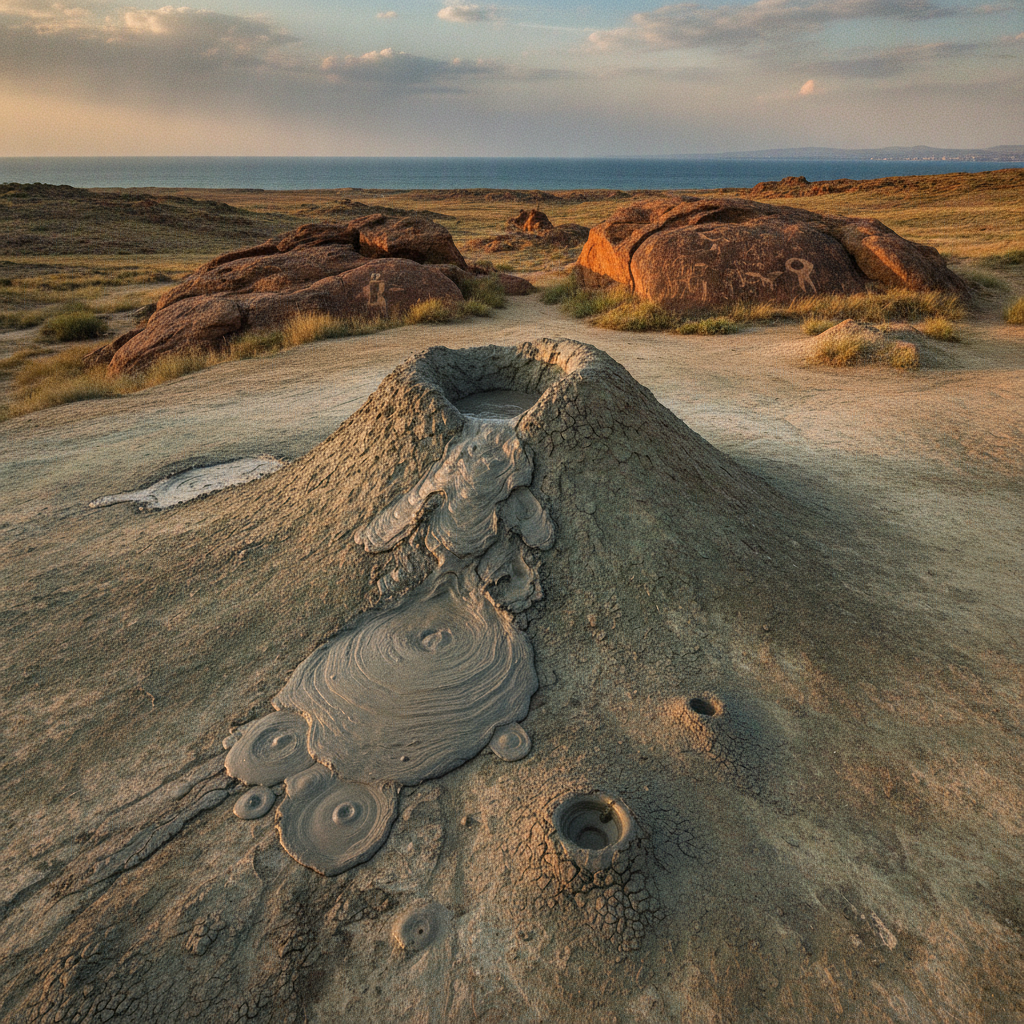
Baku Day Trips: Gobustan Rock Art, the Mud Volcanoes, the Caspian Sea, and the Most Geologically Unique Single Azerbaijan Excursion Circuit
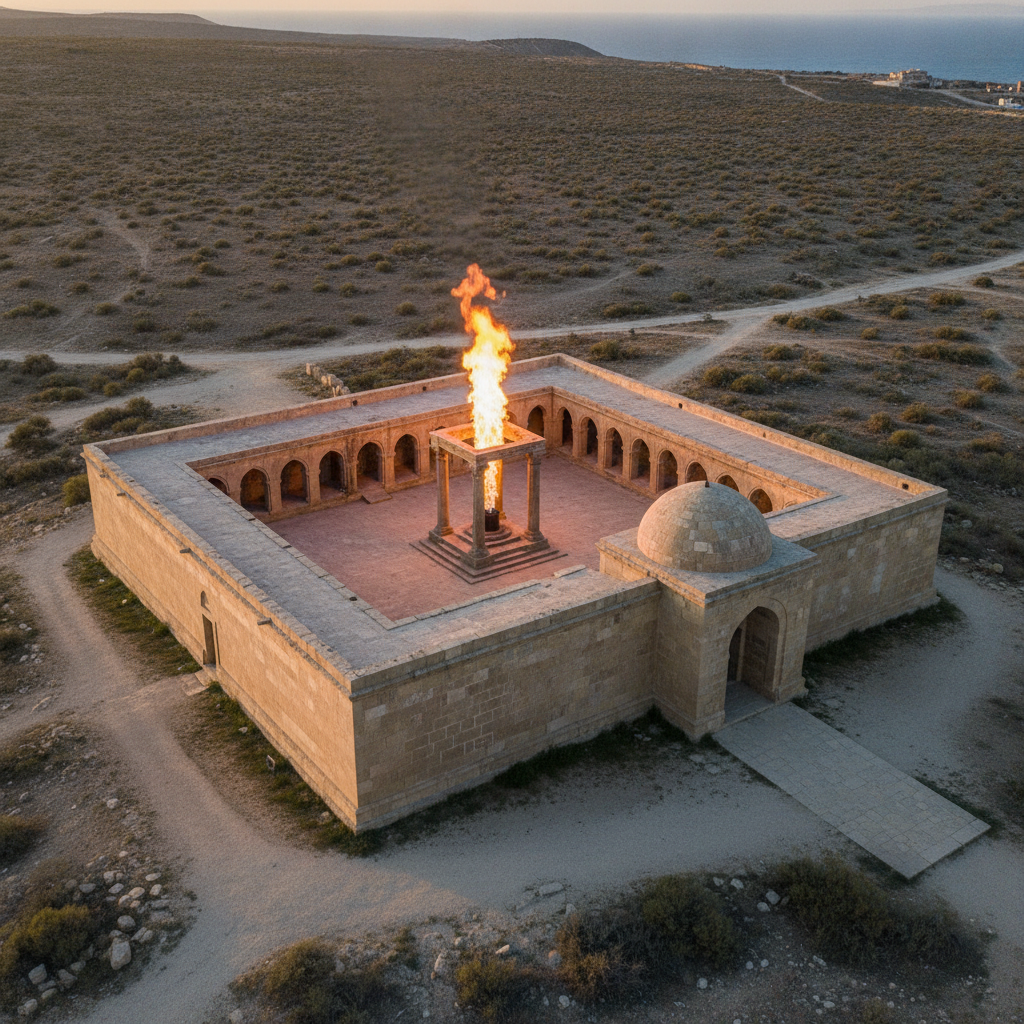
The Ateshgah Sacred Flame Extinguished by the 1880s Oil Drilling That Lowered Absheron Gas Pressure, the Mugham Zarb Upper Register as the Most Demanding Technical Feat in Azerbaijani Singing & the 2020 Bayraktar TB2 Drones That Reversed the 1994 Karabakh Ceasefire Line
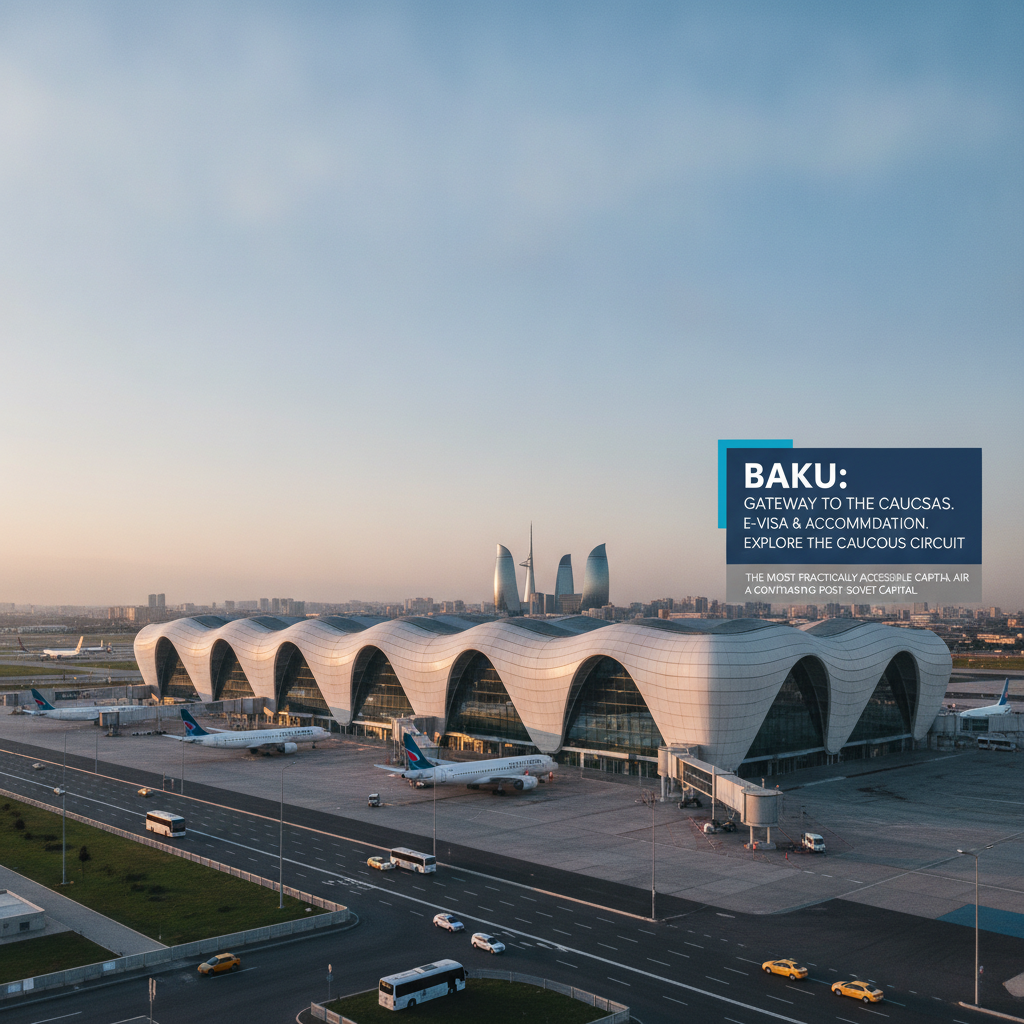
Baku Practical: Getting There, the e-Visa, Accommodation, the Caucasus Circuit, and the Azerbaijan Visitor Framework
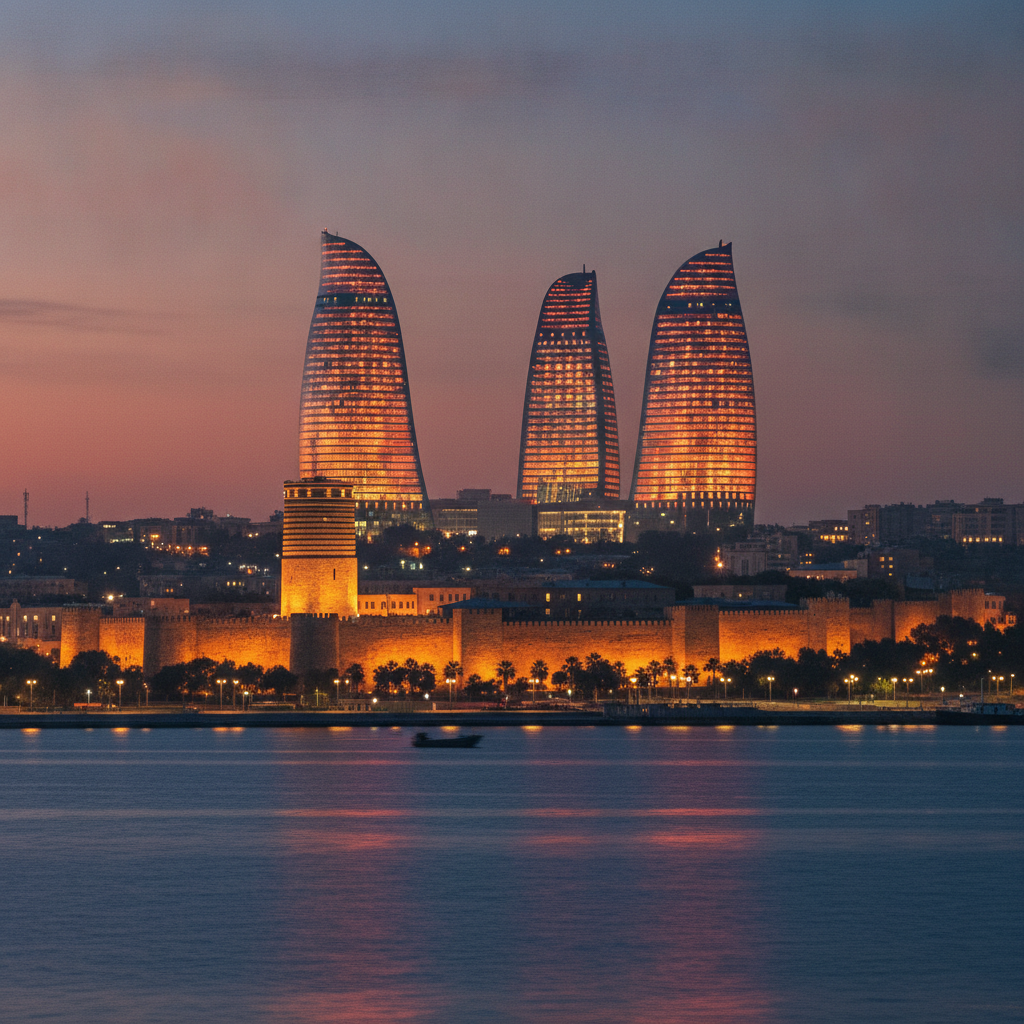
Baku Essential: The Old City, Flame Towers, the Caspian Boulevard, the Maiden Tower, and the Most Dramatically Contrasting Single Post-Soviet Capital
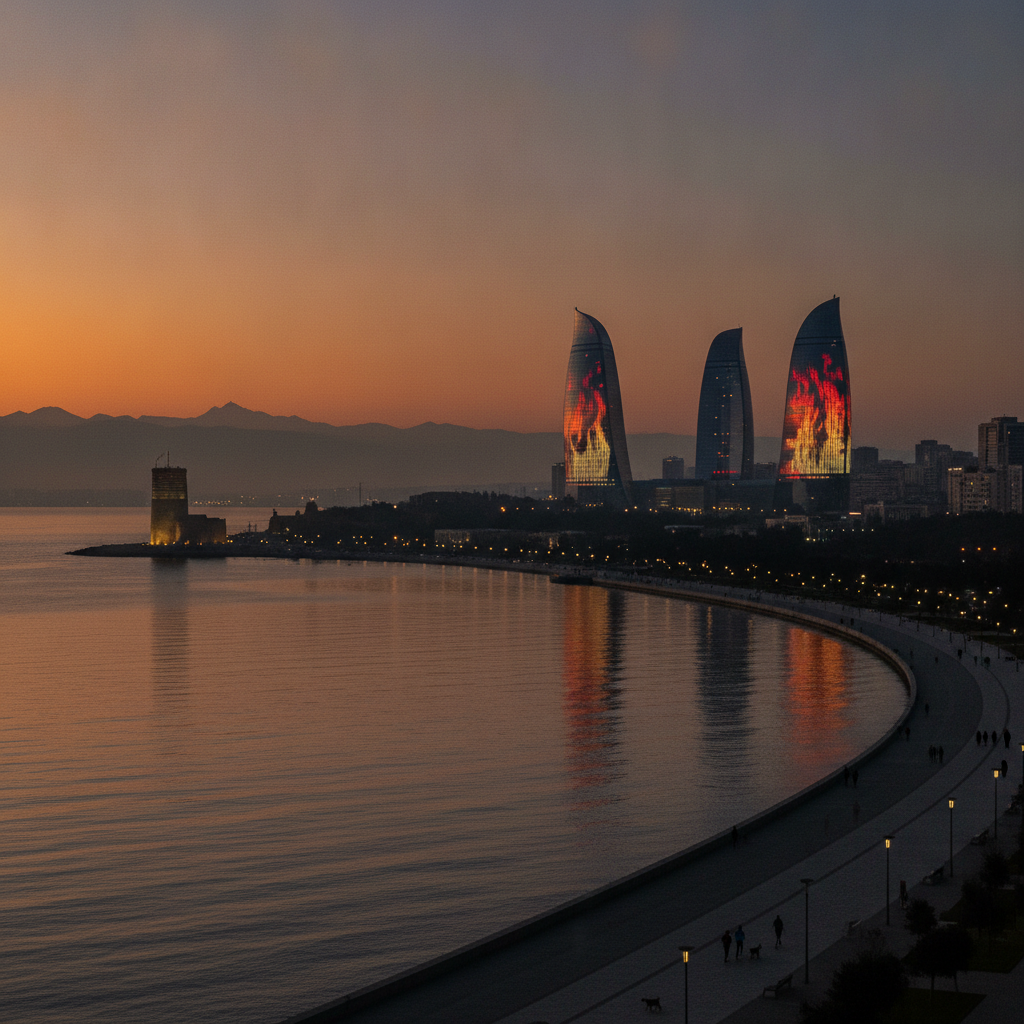
The Baku-Tbilisi-Ceyhan Pipeline Routed to Bypass Both Russia and Iran, Baku's 30,000-40,000 Jewish Residents as the Largest Jewish Community in Any Majority-Muslim City, and the Azerbaijan Tower Planned at 1,050m to Have Been the World's Tallest Building