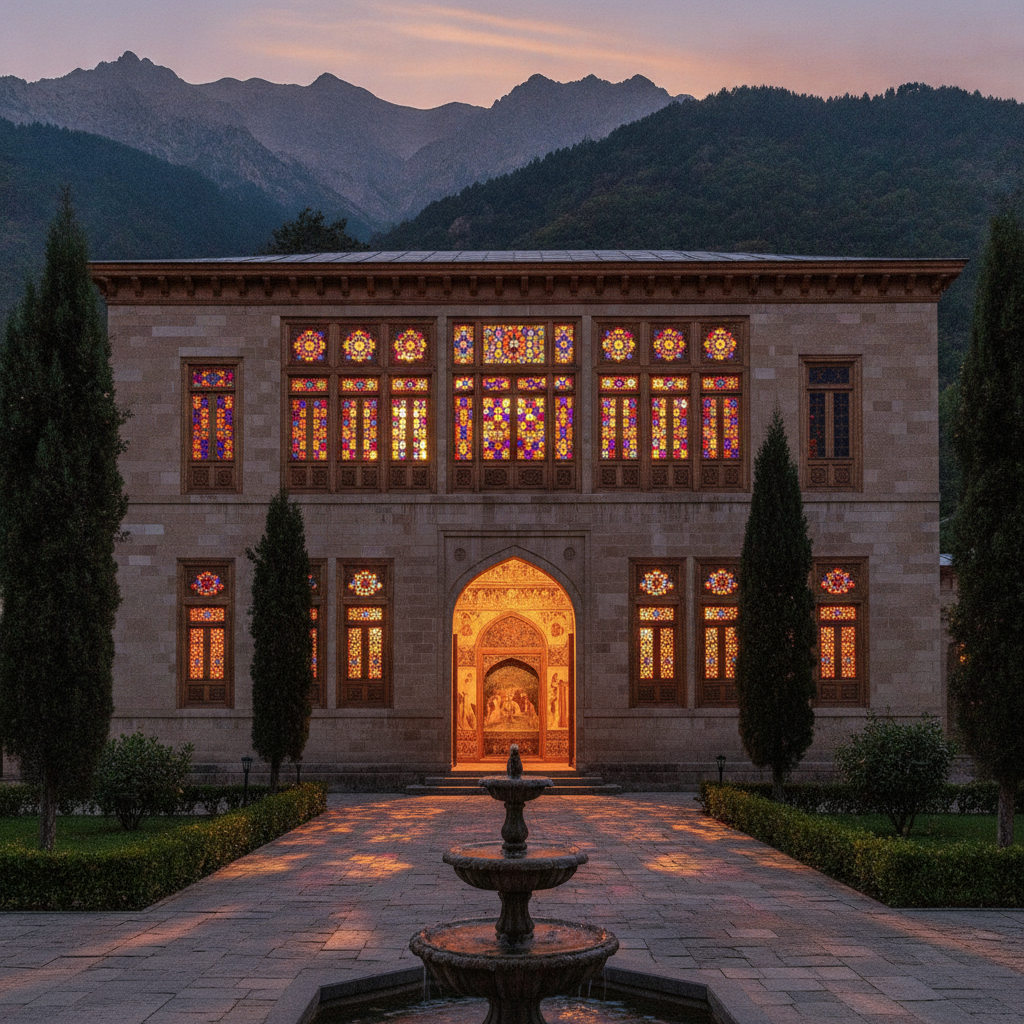
The Azerbaijani Arabic-to-Latin-to-Cyrillic-to-Latin Alphabet Triple Change Unique in World Linguistic History, Black January 1990 Soviet Crackdown Killing 137 Civilians & the Armud Tea Glass Shape That Keeps the Bottom Cooler Than the Top
The Azerbaijani alphabet changed three times in the 20th century (Arabic to Latin to Cyrillic to Latin — a sequence unique in world linguistic history); the Black January 1990 Soviet military crackdown killing at least 137 Baku civilians commemorated in the Alley of Martyrs; the armud pear-shaped glass keeping the bottom third cooler than the top (allowing hot tea to be held and sipped simultaneously); the Taza Bazaar aşxana cafeteria full meal at AZN 3–7; the Gobustan rock engravings photographed in 16:00–17:00 oblique light; and the Neft Daşları Oil Rocks — the world's first offshore oil platform city built 1949, 50 km offshore in the Caspian.
- 1
The Nagorno-Karabakh Conflict – Historical Timeline
The Nagorno-Karabakh conflict historical timeline (the complete chronological history of the conflict from the Tsarist-era administrative divisions through the 2023 resolution): the historical timeline guide. The Ottoman-Russian-Persian background (the South Caucasus was divided between the Russian Empire and Qajar Persia by the Gulistan Treaty (1813) and the Turkmenchay Treaty (1828): the Karabakh khanate (the Karabakh Khanate (Qarabağ Xanlığı) was an independent Azerbaijani Turkic state from 1747–1805: the khanate was absorbed into the Russian Empire in 1805 as a vassal and formally annexed in 1822: the Russian colonial administration divided the Karabakh region into a highland district (Nagorno in Russian — mountainous) and a lowland district, with the highland district having a mixed Armenian-Azerbaijani population): the Soviet delimitation (the 1921 Caucasian Bureau decision assigned the Nagorno-Karabakh region to Soviet Azerbaijan rather than Soviet Armenia — the decision was influenced by the Bolshevik nationalities policy of preventing ethnically homogeneous territories at the republic level): the First War (the first Karabakh War (1988–1994) began when the Nagorno-Karabakh oblast voted to join Soviet Armenia in February 1988: the war caused approximately 30,000 deaths and 1 million displaced persons on both sides): the Second War (the 44-day Second Karabakh War (September 27–November 9, 2020) — Azerbaijan recaptured approximately 75% of the occupied territories in 44 days using Bayraktar TB2 drones and Israeli Harop loitering munitions): the 2023 resolution (the 24-hour Azerbaijani military operation of September 19, 2023 restored full Azerbaijani territorial control).
- 2
Baku's Soviet Heritage – The Architecture of the USSR
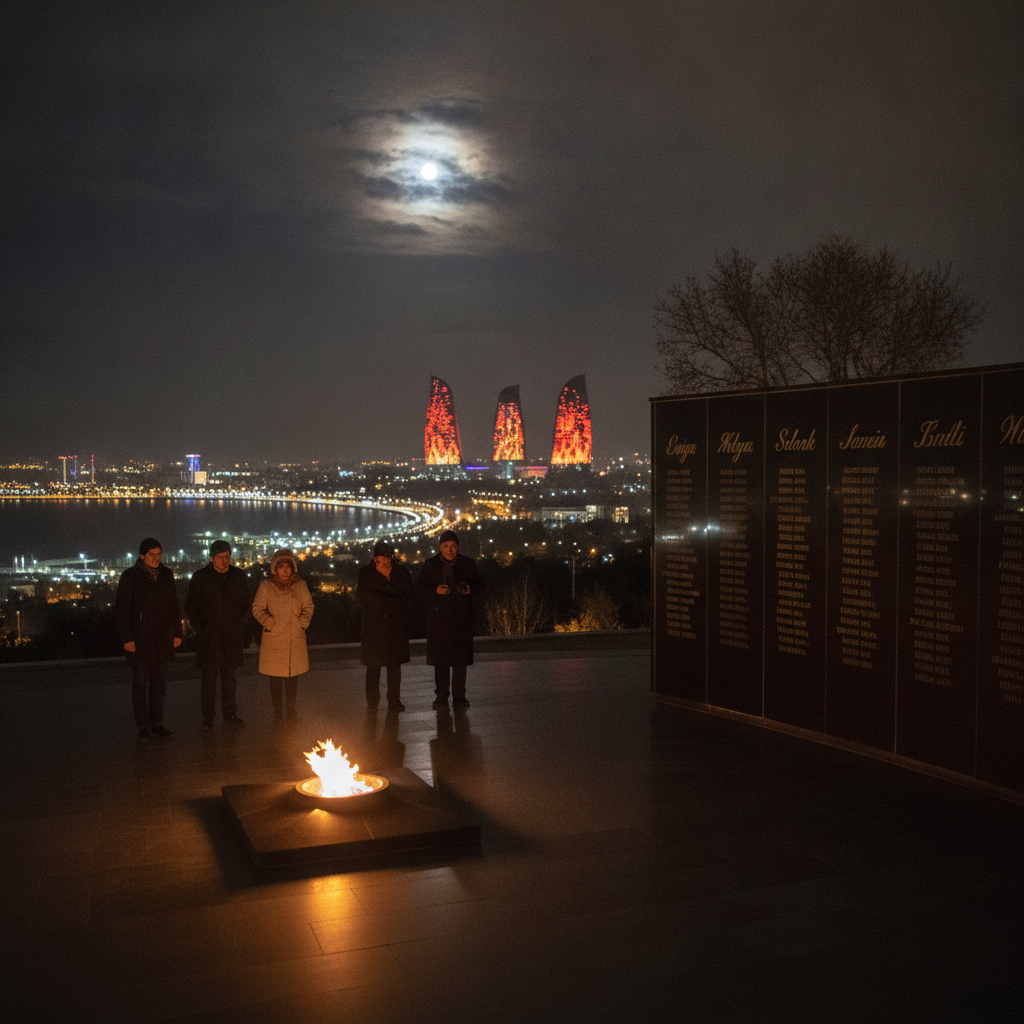
The Baku Soviet architectural heritage (the substantial legacy of Soviet-era construction in Baku — the city was the most important industrial center in Soviet Transcaucasia and received correspondingly large architectural investment): the Soviet architecture guide. The Stalin-era construction (the Stalinist period (1936–1953) produced the most grandiose Soviet construction in Baku: the Government House (Hökumət Evi — the massive Stalinist neoclassical government building on Azadliq (Freedom) Square (formerly Lenin Square): the building was designed by the Moscow architect Lev Rudnev and completed in 1952 — it is one of the largest government buildings in the Caucasus: the Azadliq Square (formerly Lenin Square — the giant public square in front of the Government House that was the site of the Soviet military crackdown of Black January (January 19–20, 1990) when Soviet troops entered Baku and killed at least 137 civilians to suppress the national independence movement): the Black January memorial (the Alley of Martyrs (Şəhidlər Xiyabanı) on the hill above Azadliq Square — the memorial cemetery for the victims of Black January 1990 and the Karabakh war dead — the eternal flame and the panoramic view of the Baku waterfront make this the most emotionally significant public space in Azerbaijan): the Soviet modernism (the 1960s–1980s produced a second wave of Soviet construction in Baku: the Baku Metro stations (particularly the 28 May station and the Nizami station with their marble columns and bronze reliefs are the finest surviving examples of Soviet Metro design in the South Caucasus).
- 3
The Azerbaijani Language – Turkic Branch & Alphabet History
The Azerbaijani language heritage (the Azerbaijani (Azərbaycan dili) — the Turkic language of Azerbaijan and the second most widely spoken Turkic language after Turkish — the linguistic heritage guide): The language family (Azerbaijani (Azərbaycan dili) is a member of the Oghuz branch of the Turkic language family — the Oghuz branch includes Turkish, Azerbaijani, and Turkmen: Azerbaijani and Turkish are mutually intelligible at approximately 80% — a native speaker of Turkish with no Azerbaijan experience can understand approximately 80% of spoken Azerbaijani and virtually all written standard Azerbaijani): the alphabet history (the Azerbaijani writing system has changed three times in the 20th century in a sequence that is unique in world linguistic history: (1) Arabic script (used from the 10th century through 1929 — the Azerbaijani Arabic script was based on the Ottoman Turkish Arabic script with additional letters for Azerbaijani vowel sounds): (2) the Latin alphabet (adopted in 1929 as part of the Soviet modernization campaign — a standardized Latin alphabet for Azerbaijani was designed by the Azerbaijani linguist Bəkir Çobanzadə): (3) the Cyrillic alphabet (imposed by Stalin in 1940 to cut Azerbaijanis off from their Ottoman and Persian literary heritage — the Cyrillic Azerbaijani alphabet was designed so that the letters could not be directly mapped to the original Arabic script): (4) the return to Latin (independent Azerbaijan readopted a modified Latin alphabet in 1991 — the current Azerbaijani Latin alphabet (32 letters) became mandatory in 2001): the dialects (the Southern Azerbaijani dialect spoken in northwestern Iran (by 15–25 million people) differs from Northern Azerbaijani mainly in vocabulary borrowed from Persian).
- 4
Baku's Tea Culture – The Çayxana & Armud Glass
The Azerbaijani tea culture (the çayxana — teahouse — tradition as the foundational social institution of Azerbaijani urban life and the most important daily ritual of Baku male social life): the tea culture guide. The çayxana (the Azerbaijani çayxana (çayxana — teahouse) is the primary social space for traditional Azerbaijani male socializing: the çayxana is typically open from morning prayers until midnight — men of all ages gather to drink tea, play backgammon (nard — the Azerbaijani version of backgammon, which they claim was invented in Azerbaijan), and discuss business and politics: the armud (the armud glass (armud — pear in Azerbaijani) — the distinctive pear-shaped glass used for tea throughout Azerbaijan and in Turkish and Iranian çay culture: the armud shape keeps the bottom third of the glass cooler than the top two-thirds — allowing the drinker to hold the glass from the bottom while drinking hot tea from the top: the glass holds approximately 100ml of tea): the tea ceremony (the Azerbaijani tea ceremony involves: placing a cube of hard sugar (nabat — crystallized sugar) between the teeth (not in the cup — the sugar is held in the mouth and the hot tea is sipped through it — this is the traditional Azerbaijani tea-drinking method): the tea (the standard Azerbaijani tea is a strong black tea made from Lankaran tea (the only tea growing region in the South Caucasus — the Lankaran lowlands on the Iranian border receive subtropical rainfall that supports tea cultivation at the same latitude as northern Spain): the accompaniments (the Azerbaijani tea service includes: the Sheki pakhlava (hazelnut wafer); the churchkhela (walnut rolls dipped in grape juice); the dried fruits).
- 5
Budget Baku – Eating & Sleeping for Less
The budget travel guide to Baku (independent travel to Baku on a limited budget — the cheapest way to see the city without missing the primary attractions): the comprehensive budget guide. The budget accommodation (the cheapest accommodation options in Baku: Old City hostels (the Icherisheher (Old City) has 3–4 budget hostels with dormitory beds for AZN 15–25 (USD 9–15) per night — Old City location gives walking access to all major historical sites): the mid-range guesthouses (the best value mid-range accommodation is in the small guesthouses in the streets immediately behind the Boulevard — rates of AZN 40–70 (USD 24–41) for a double room with breakfast are typical): the budget restaurants (the cheapest filling meals in Baku: the aşxana (traditional Azerbaijani cafeteria — a self-service canteen serving traditional Azerbaijani dishes — a full meal including soup, main course, and bread costs AZN 3–7 (USD 1.80–4.10): the Taza Bazaar food court (the food vendors at the Taza Bazaar central market — the cheapest fresh produce, dried fruits, and cooked foods in Baku): the Culinary Museum market (the market attached to the Culinary Museum in the Old City area): the free attractions (the primary free attractions in Baku: the Icherisheher Old City (free entry to the streets and exterior of all buildings — only the Shirvanshah Palace and Maiden Tower interiors require tickets): the Boulevard walk (entirely free — the most pleasant free activity in Baku): the Alley of Martyrs (free — open 24 hours): the Heydar Aliyev Center exterior (free — the interior exhibition requires a ticket of AZN 5 (USD 3)): the budget transportation (the metro at AZN 0.40 per journey is the cheapest way to reach outlying attractions).
- 6
Baku Photography Guide – Best Viewpoints & Light
The Baku photography guide (the optimal viewpoints, timing, and techniques for photographing Baku's most photogenic elements — the Old City, Flame Towers, waterfront, and Absheron landscape): the photography guide. The Flame Towers (the Flame Towers are best photographed from two positions: (1) the Alley of Martyrs viewpoint (the hilltop above the Old City) — this position gives the complete three-tower composition with the Baku waterfront and Caspian Sea as the background — the golden hour (60 minutes before sunset) is the optimal time as the towers glow orange before activating the LED display: (2) the Icherisheher (Old City) eastern gate — from here the Flame Towers frame the medieval battlements in a single composition contrasting old and new Baku: the LED display (the Flame Towers LED display activates at dusk — the display runs for 90 minutes showing a continuous animation of flames, Azerbaijani flags, and seasonal themes): the Maiden Tower (the Qız Qalası Maiden Tower is best photographed: (1) from the north — the full cylindrical tower against the medieval walls of the Old City: (2) from the top of the tower (access: AZN 2 tower entry) — the panoramic view from the Maiden Tower shows the Old City carpet of flat roofs extending to the modern city skyline: the Gobustan petroglyphs photography (the Gobustan rock engravings photograph best in the late afternoon (16:00–17:00) when the oblique light creates strong shadows in the carved lines — a polarizing filter reduces glare on the limestone surface): the Absheron industrial landscape (the working oil derricks and pump jacks visible throughout the Absheron Peninsula are among the most photogenic industrial landscapes in the world — the abandoned Soviet-era derricks standing in the Caspian Sea (the Neft Daşları — Oil Rocks — the world's first offshore oil platform city (1949) are 50 km offshore and accessible only by helicopter or special permit).
Walk this route with audio
Stories play automatically as you reach each stop — no tapping needed.
More in Baku
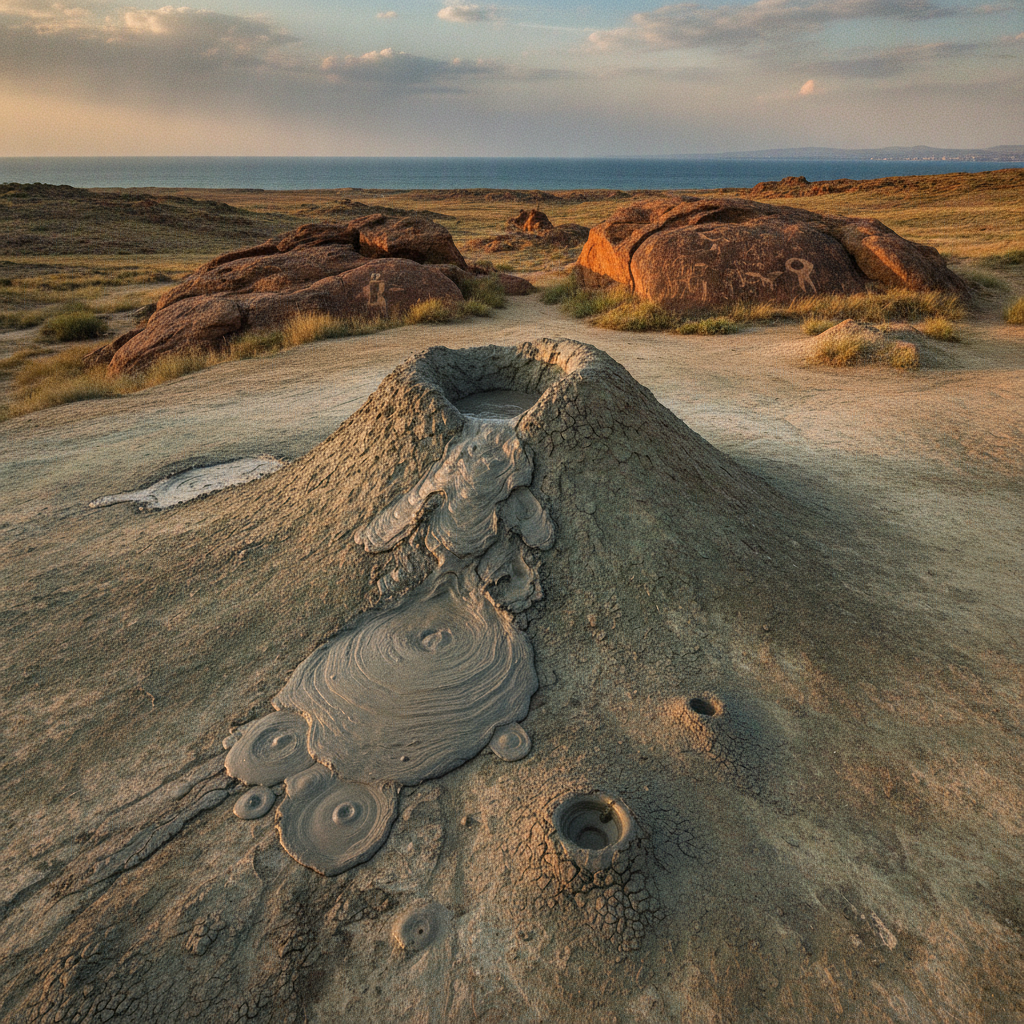
Baku Day Trips: Gobustan Rock Art, the Mud Volcanoes, the Caspian Sea, and the Most Geologically Unique Single Azerbaijan Excursion Circuit
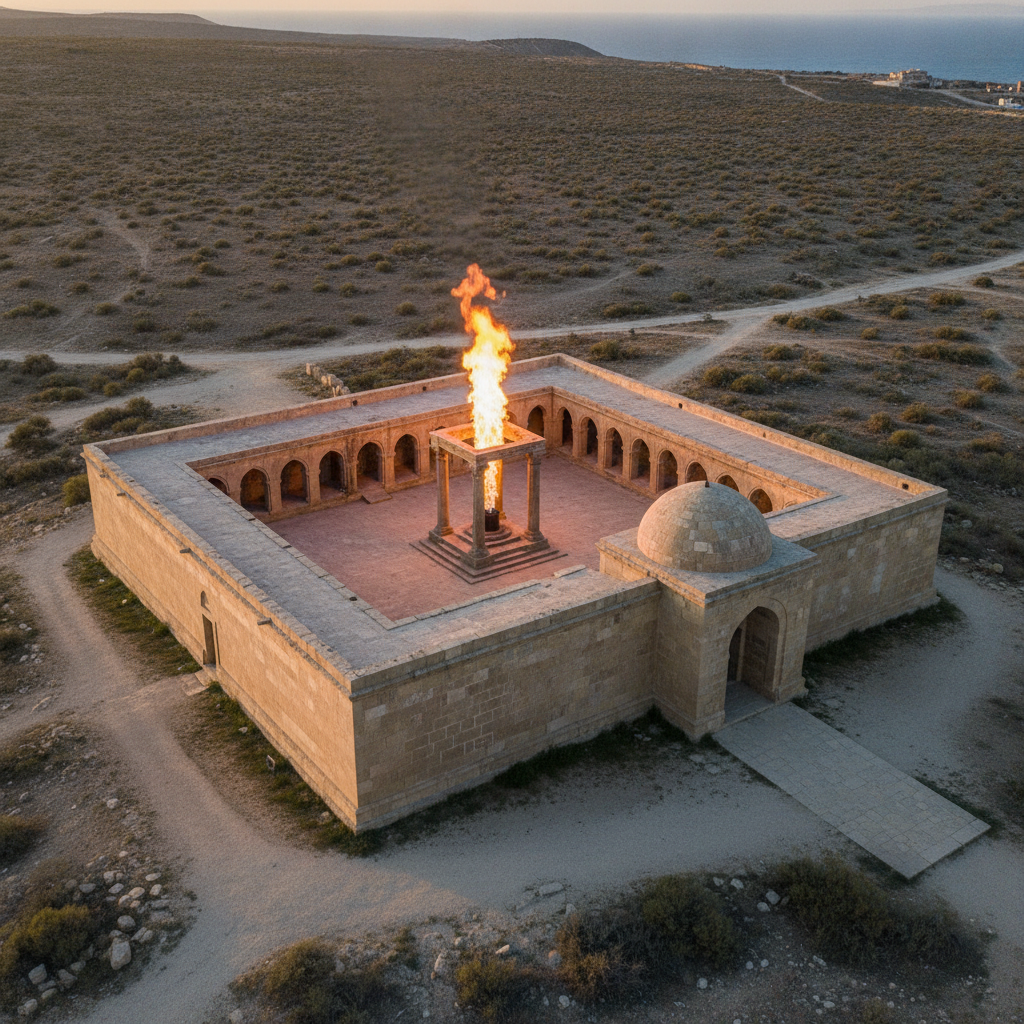
The Ateshgah Sacred Flame Extinguished by the 1880s Oil Drilling That Lowered Absheron Gas Pressure, the Mugham Zarb Upper Register as the Most Demanding Technical Feat in Azerbaijani Singing & the 2020 Bayraktar TB2 Drones That Reversed the 1994 Karabakh Ceasefire Line
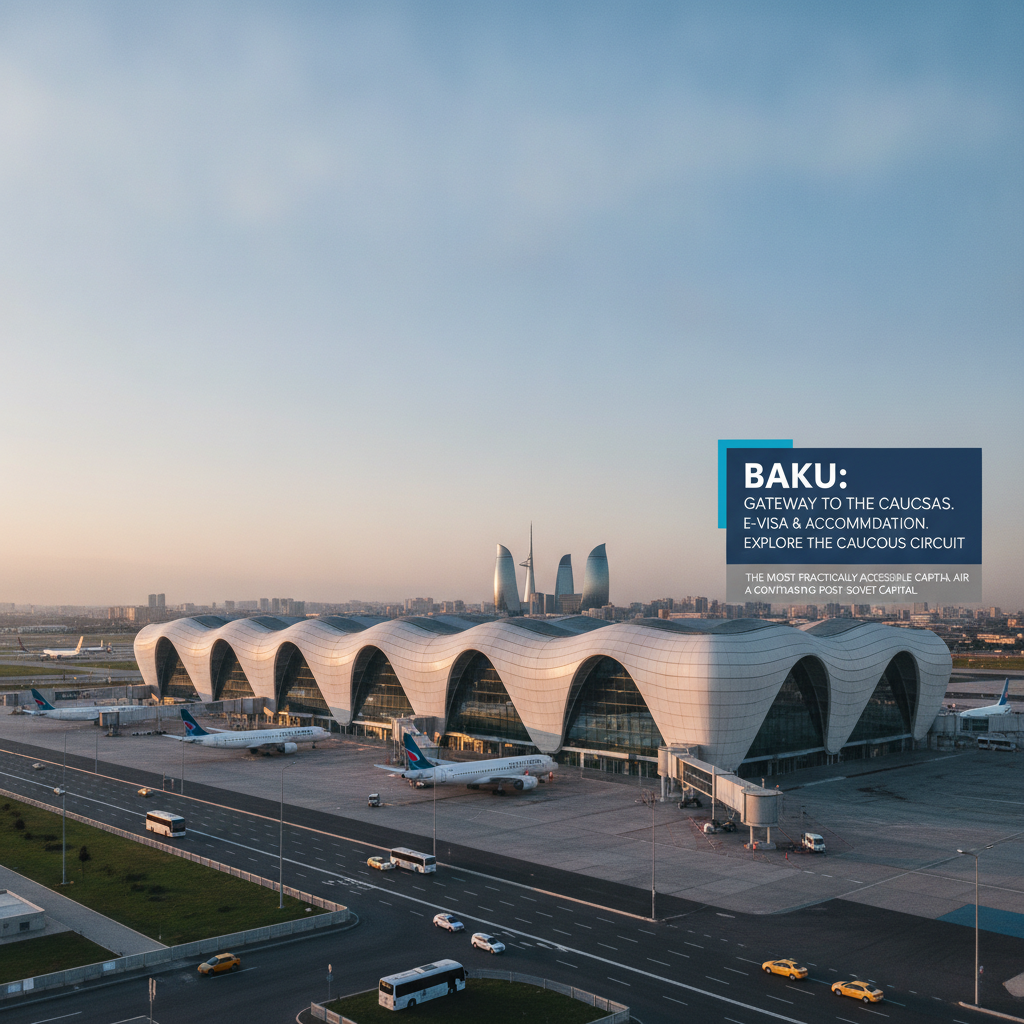
Baku Practical: Getting There, the e-Visa, Accommodation, the Caucasus Circuit, and the Azerbaijan Visitor Framework
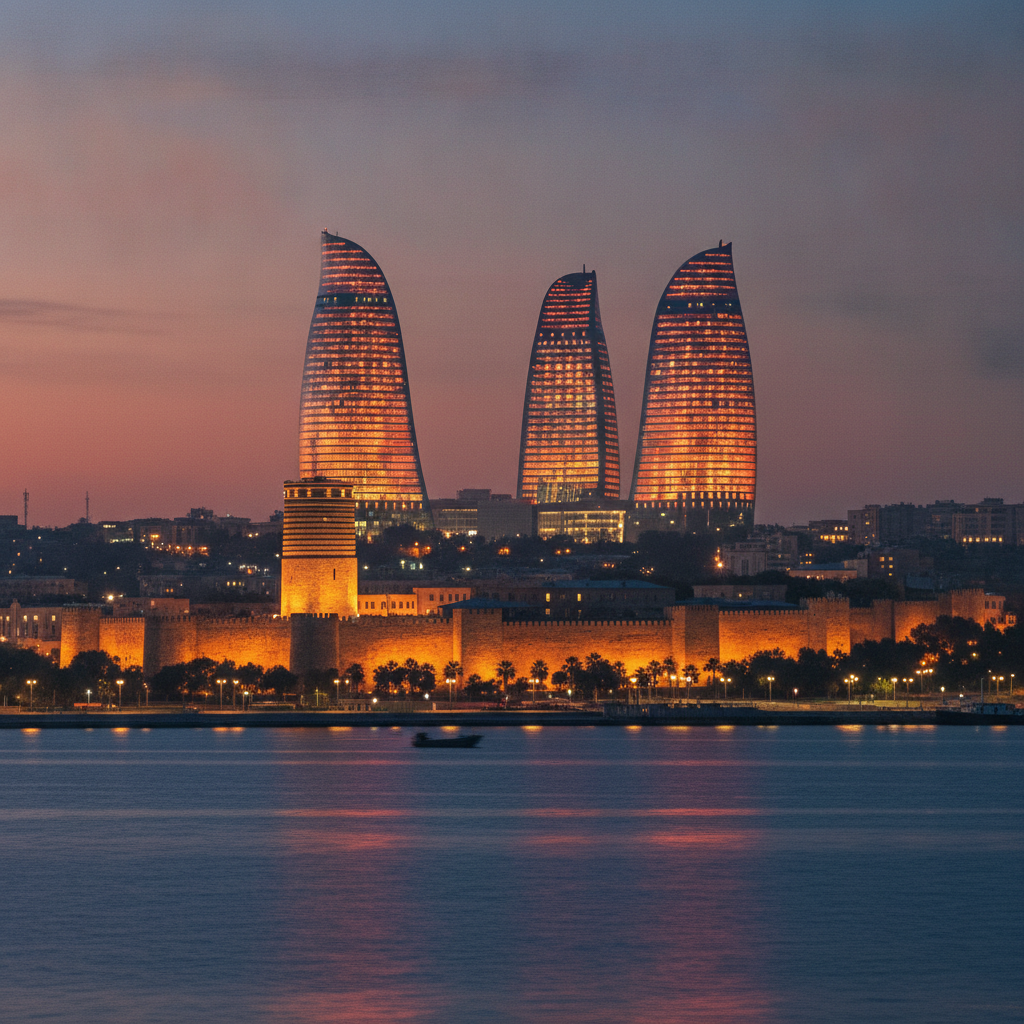
Baku Essential: The Old City, Flame Towers, the Caspian Boulevard, the Maiden Tower, and the Most Dramatically Contrasting Single Post-Soviet Capital
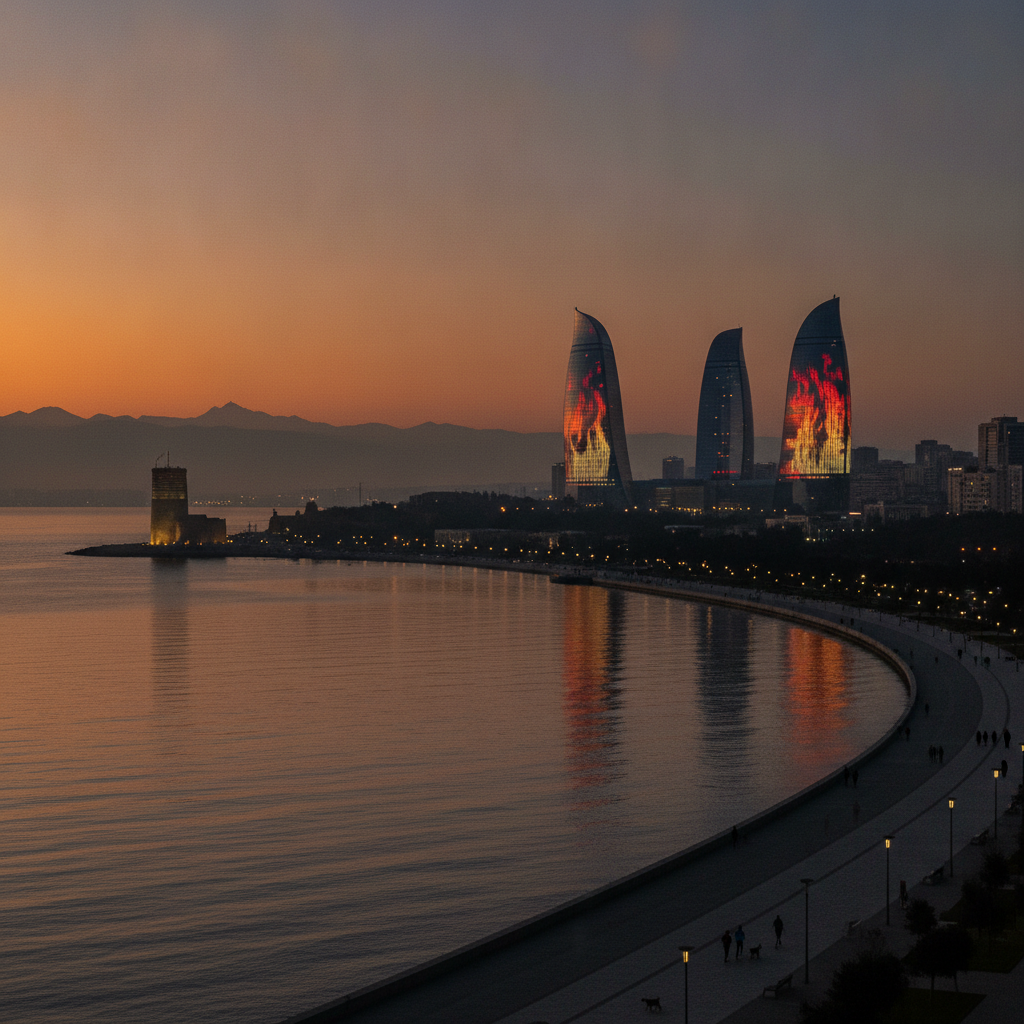
The Baku-Tbilisi-Ceyhan Pipeline Routed to Bypass Both Russia and Iran, Baku's 30,000-40,000 Jewish Residents as the Largest Jewish Community in Any Majority-Muslim City, and the Azerbaijan Tower Planned at 1,050m to Have Been the World's Tallest Building