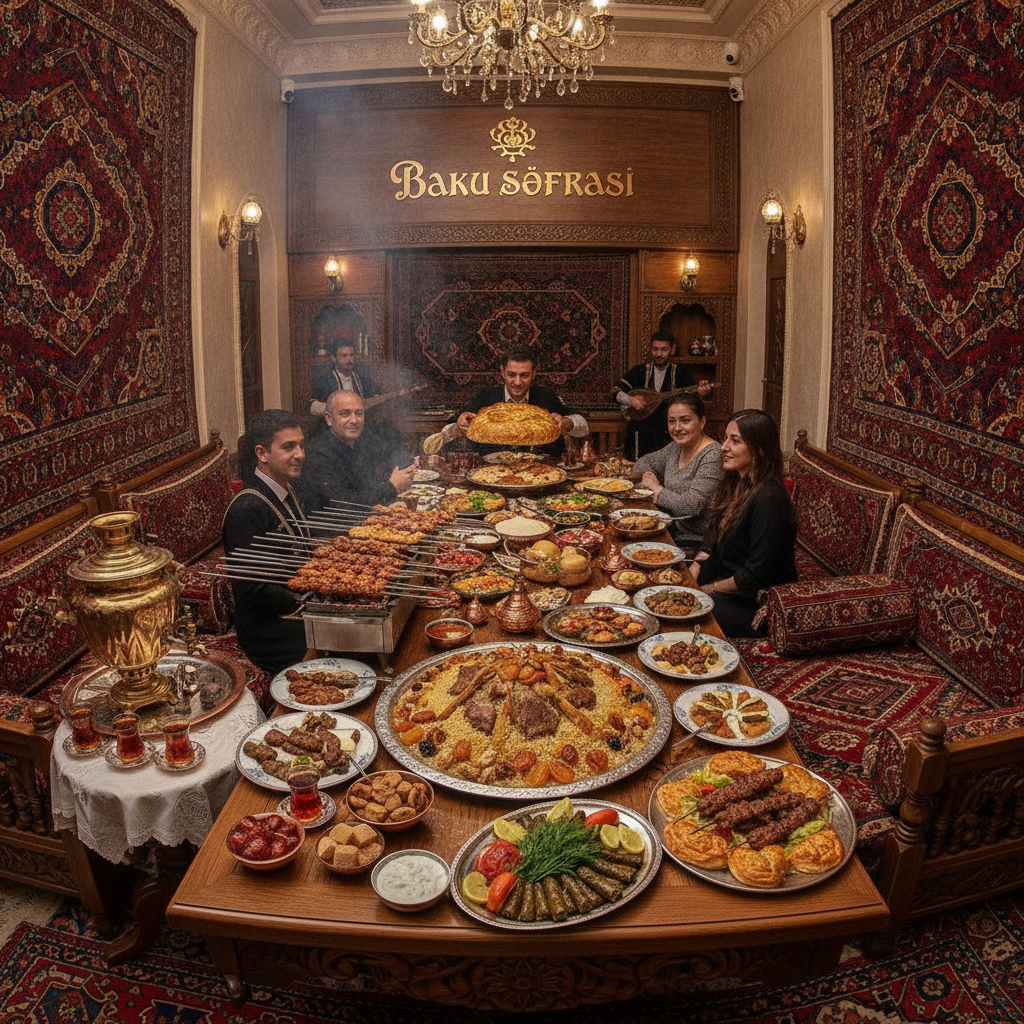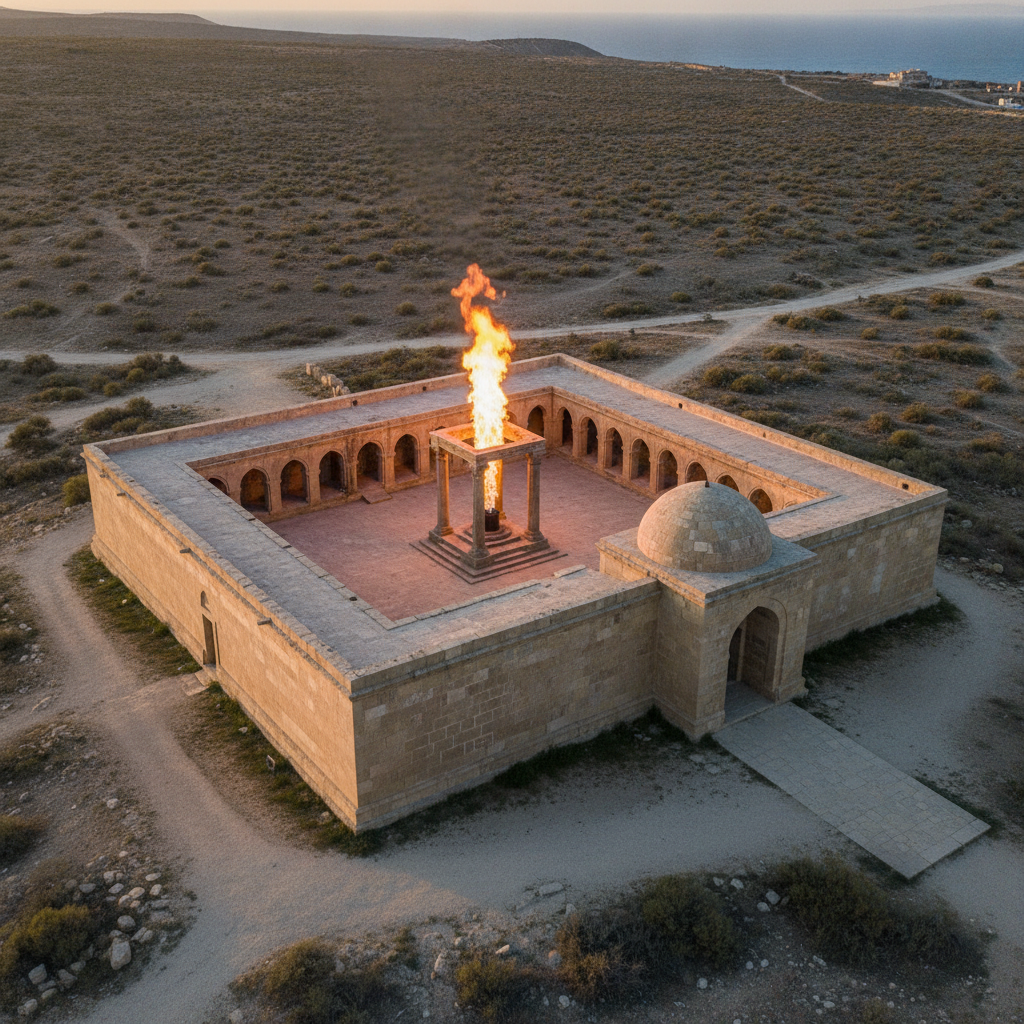
The Ateshgah Sacred Flame Extinguished by the 1880s Oil Drilling That Lowered Absheron Gas Pressure, the Mugham Zarb Upper Register as the Most Demanding Technical Feat in Azerbaijani Singing & the 2020 Bayraktar TB2 Drones That Reversed the 1994 Karabakh Ceasefire Line
The Ateshgah eternal flame — burning for 2,000+ years — extinguished by the 1880s oil drilling lowering Absheron subsurface gas pressure, now piped rather than natural; the mugham khanende zarb upper-register improvisation as the supreme technical achievement in Azerbaijani classical singing; the 2020 Bayraktar TB2 Turkish drones reconquering 75% of the previously occupied territory in 44 days; the Pazyryk carpet (500 BCE Scythian burial in Siberia) using identical design motifs to Azerbaijani carpets; Zaha Hadid's Heydar Aliyev Center as the most internationally recognized Azerbaijani building; and the Baku F1 circuit's 2.2km straight with 370+ km/h top speeds as the fastest single section in Formula 1.
- 1
Ateshgah – The Zoroastrian Fire Temple
The Ateshgah Fire Temple (the Zoroastrian and Hindu fire temple at Surakhani 30 km east of central Baku on the Absheron Peninsula): the fire temple heritage guide. The site (the Ateshgah (Atəşgah—'Place of Fire' in Azerbaijani/Persian)—the caravanserai-style complex built around a natural gas vent that has burned continuously (with one 19th-century interruption) for at least 2,000 years: the central altar (the central fire altar in the inner courtyard is the most sacred element—the natural gas emerges from a crack in the Absheron limestone and has burned since the Zoroastrian period): the Zoroastrian use (the Ateshgah was a Zoroastrian pilgrimage site from at least the 5th century CE—the Absheron Peninsula natural gas fires were described as miraculous sacred flames by the Zoroastrian tradition: the current site dates primarily to the 18th century when Indian Zoroastrian (Parsi) and Hindu merchants from the Baku trading post rebuilt the fire temple structures around the original vent): the Hindu shrines (the rebuilt complex contains inscriptions in both Zoroastrian Avestan and Sanskrit—evidence of the Hindu Indian community that maintained the temple in the 18th–19th centuries alongside the Parsi Zoroastrian community: the Shiva trident (trishul) inscriptions on some altars indicate Hindu tantric practices): the extinguishing (the natural gas flow at Ateshgah was interrupted in the 1880s by the oil drilling operations that lowered the Absheron subsurface gas pressure—the sacred flame that had burned for millennia was extinguished by the first oil boom: the current eternal flame is piped gas rather than natural seepage): the museum (the Soviet-era caretaker's house is now the Ateshgah Museum).
- 2
Azerbaijani Music – Mugham & the Tar
The Azerbaijani musical heritage (the mugham classical music tradition—the most complex classical music tradition of the South Caucasus): the music heritage guide. The mugham (Azerbaijani mugham (muğam—the Azerbaijani classical music system based on modal improvisation, related to the Persian dastgah and the Turkish makam systems: the mugham is performed by a trio: the khanende (the vocalist—the primary carrier of the improvisation); the tar player (tar—the long-necked plucked lute with 11 strings, the primary melodic instrument of Azerbaijani classical music); and the kamancha player (kamancha—the spike fiddle with 4 strings played with a short bow): the improvisation structure (the mugham performance is structured around a fixed sequence of melodic-modal sections (shobe—sections) but the singer improvises the melodic content within the modal framework—the quality of mugham improvisation is evaluated by: the singer's command of the upper register (called zarb—the most demanding technical feat in Azerbaijani singing); the expressiveness of the emotional content (hal—the emotional state generated in the audience); and the singer's invention of new melodic material within the tradition): the primary mugham modes (the seven primary modes: Shur, Segah, Chahargah, Bayati-Shiraz, Humayun, Rast, Shushtar): the UNESCO status (Azerbaijani mugham was inscribed on the UNESCO Representative List of Intangible Cultural Heritage in 2008): the Baku Mugham Center (the primary performance venue for mugham in Baku—the center on Istiqlaliyyat Street hosts regular mugham concerts (Friday and Saturday, 19:00)—entry USD 10–20).
- 3
The Karabakh Conflict – Baku's Political Wound
The Karabakh conflict from the Azerbaijani perspective (the war for the restoration of Azerbaijani sovereignty over Nagorno-Karabakh—the defining political and military event of modern Azerbaijan): the political history guide. The background (Nagorno-Karabakh (Dağlıq Qarabağ in Azerbaijani) is a mountainous enclave in southwestern Azerbaijan that had an Armenian majority population in the Soviet period—the Soviet nationality system placed it as an Autonomous Oblast within the Azerbaijani SSR in 1921): the First Karabakh War (1988–1994): the Armenian population of Karabakh declared independence in 1988; the war began with ethnic violence on both sides; Azerbaijan lost control of the Nagorno-Karabakh region and approximately 20% of its total territory by the 1994 ceasefire—700,000 Azerbaijanis were displaced from Karabakh and the surrounding occupied territories): the Victory Park (the Baku Victory Park (Zəfər Parkı): the hilltop park containing the Eternal Flame memorial for the Karabakh war dead—the primary public expression of Azerbaijani grief over the First Karabakh War losses): the 2020 Second Karabakh War (the 44-day war (September 27–November 9, 2020) in which Azerbaijan, using Turkish Bayraktar TB2 drones and Israeli precision weapons, reconquered approximately 75% of the previously occupied territory including the strategically crucial city of Shusha (the historic cultural capital of Azerbaijan), after which Russia brokered a ceasefire): the September 2023 Restoration (the 24-hour Azerbaijani military operation of September 19, 2023 restored full Azerbaijani control over the Karabakh region—Azerbaijan now controls its full constitutional territory for the first time since 1994).
- 4
The Azerbaijani Carpet – Art of the Khanates
The Azerbaijani carpet tradition (the most internationally celebrated craft product of Azerbaijan—the hand-knotted wool and silk carpets produced in the distinct regional schools of the Azerbaijani khanates): the carpet heritage guide. The tradition (the Azerbaijani carpet (xalça—the hand-knotted pile carpet woven in Azerbaijan since at least the 3rd century BCE (the Pazyryk carpet, found in a Scythian burial in Siberia (500 BCE) uses design motifs identical to the Azerbaijani carpet vocabulary—suggesting that the Azerbaijani plateau was already producing sophisticated knotted carpets 2,500 years ago)): the regional schools (the Azerbaijani carpet is organized into 5 regional schools, each with distinctive color palettes, design structures, and knotting techniques: the Baku school (the most intricate geometric compositions, predominantly blue-and-cream palette); the Ganja school (the large-scale arabesque vine compositions, predominantly red); the Shirvan school (the most technically refined—the highest knot density, small repeating medallion compositions); the Karabakh school (the largest carpets, bold dragon motifs); the Tabriz school (the most Persian-influenced, naturalistic floral compositions)): the Azerbaijan Carpet Museum (the carpet museum on the Baku Boulevard—the building designed in the shape of a folded carpet (2014, the architect Franz Janz)—the collection of 10,000 carpets is the largest Azerbaijani carpet collection in the world): the UNESCO status (the traditional art of Azerbaijani carpet weaving was inscribed on the UNESCO Representative List of Intangible Cultural Heritage in 2010).
- 5
Baku's Oil Baron Architecture – The Neft Dövləti Legacy
The Baku oil baron architecture (the extraordinary architectural legacy of the 1880s–1914 oil boom—the period when Baku was the wealthiest city in the Russian Empire per capita and its newly rich oil barons competed to build the most palatial urban mansions): the architectural heritage guide. The oil boom (the first Baku oil boom (1878–1914): the industrial oil extraction technology introduced by Nobel Brothers and the Royal Dutch Shell Company (via the Rothschild investment in Batumi-Baku pipeline) transformed Baku from a small provincial town into one of the largest industrial cities in the Russian Empire—the population grew from 14,000 (1863) to 214,000 (1913): the oil barons (the primary oil baron families: the Taghiyevs (the Haji Zeynalabdin Taghiyev family—the largest individual fortune in the Baku oil boom); the Nağıyevs (the Musa Nağıyev family—the builders of the largest number of surviving architectural commissions in Baku); the Asadullayevs (who built the Ismailieh building—now the Ministry of Foreign Affairs)): the architectural style (the oil baron palaces were commissioned from European-trained architects who produced an eclectic mix of Italian Gothic (the Taghiyev Palace), French Baroque (the Ismailiyeh), Venetian Renaissance (the Nağıyev buildings on Neftçilər Avenue), and Art Nouveau (the Baku National Museum building (1905)): the Taghiyev Museum (the Haji Zeynalabdin Taghiyev House-Museum at 4 Taghiyev Street—the most intact surviving oil baron palace in Baku, now a museum of Azerbaijani domestic life 1870–1920).
- 6
Modern Baku – SOCAR, Formula 1 & Architecture
The contemporary Baku (the oil-funded transformation of Baku since independence in 1991 and the city's aspirations to become a global cultural and events hub): the modern city guide. The SOCAR economy (the State Oil Company of Azerbaijan Republic (SOCAR)—the primary engine of the Azerbaijani economy: Azerbaijan's oil production in 2023 was approximately 700,000 barrels/day (down from 1 million in 2010 as the major Azeri-Chirag-Guneshli (ACG) fields decline): the Shah Deniz gas field (the Shah Deniz-2 field, producing approximately 16 billion m³ of gas annually, supplying the Trans-Adriatic Pipeline (TAP) to Italy and the Trans-Anatolian Pipeline (TANAP) to Turkey—the gas fields will exceed the oil revenue by 2030 as ACG production declines): the Formula 1 Azerbaijan Grand Prix (the Baku City Circuit—the street circuit through central Baku: the longest straight on the F1 calendar (2.2 km on the Neftçilər Avenue waterfront—the highest top speeds in Formula 1 (370+ km/h recorded)): the circuit passes through the Old City gate and along the Baku seafront (the most scenic F1 circuit in the world): the race has been held annually in the summer (April–June) since 2016): the Heydar Aliyev Center (the primary cultural landmark of modern Baku: designed by Zaha Hadid Architects (completed 2012)—the flowing white fiberglass-and-concrete structure that has become the most internationally recognized building in Azerbaijan; the building houses a museum, concert hall, and exhibition spaces): the COP29 (Baku hosted the COP29 UN Climate Conference in November 2024—the largest international event in Azerbaijan's history).
Walk this route with audio
Stories play automatically as you reach each stop — no tapping needed.
More in Baku
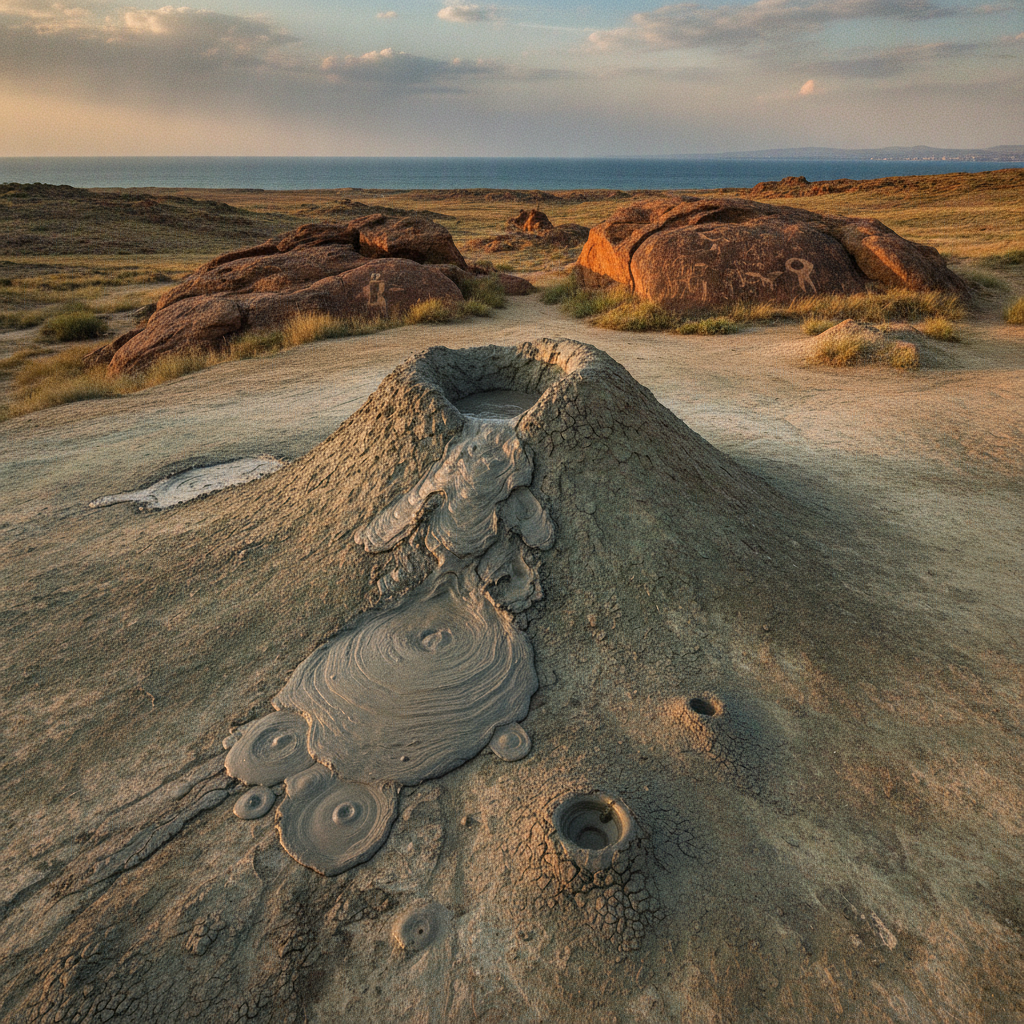
Baku Day Trips: Gobustan Rock Art, the Mud Volcanoes, the Caspian Sea, and the Most Geologically Unique Single Azerbaijan Excursion Circuit
Baku Practical: Getting There, the e-Visa, Accommodation, the Caucasus Circuit, and the Azerbaijan Visitor Framework
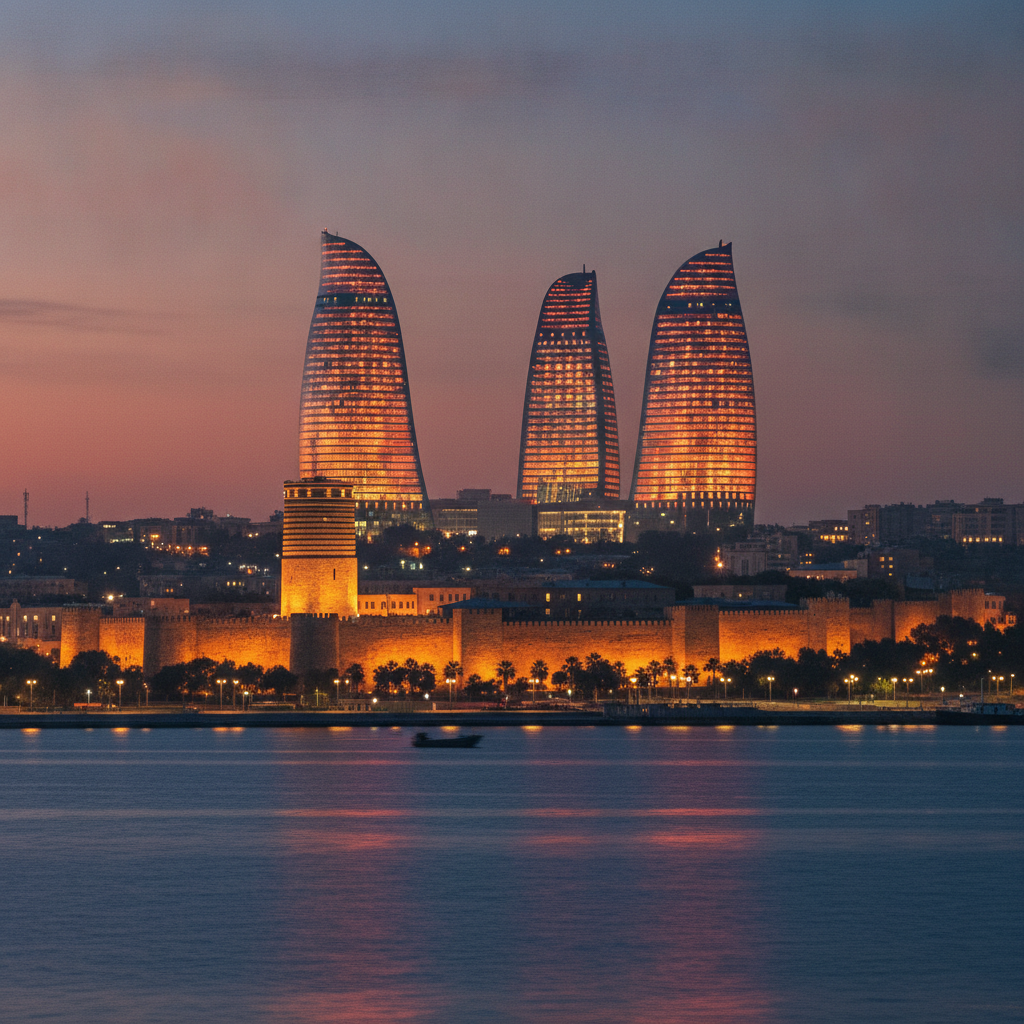
Baku Essential: The Old City, Flame Towers, the Caspian Boulevard, the Maiden Tower, and the Most Dramatically Contrasting Single Post-Soviet Capital
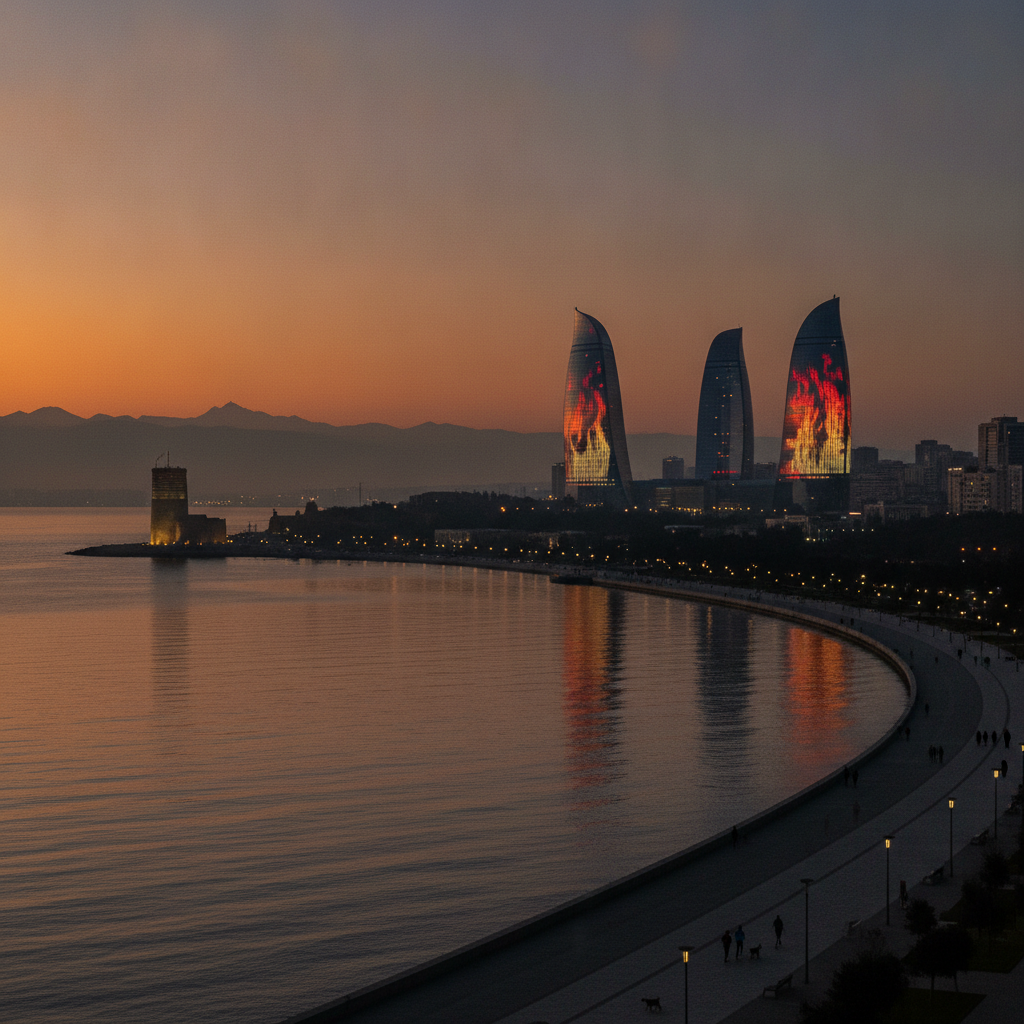
The Baku-Tbilisi-Ceyhan Pipeline Routed to Bypass Both Russia and Iran, Baku's 30,000-40,000 Jewish Residents as the Largest Jewish Community in Any Majority-Muslim City, and the Azerbaijan Tower Planned at 1,050m to Have Been the World's Tallest Building
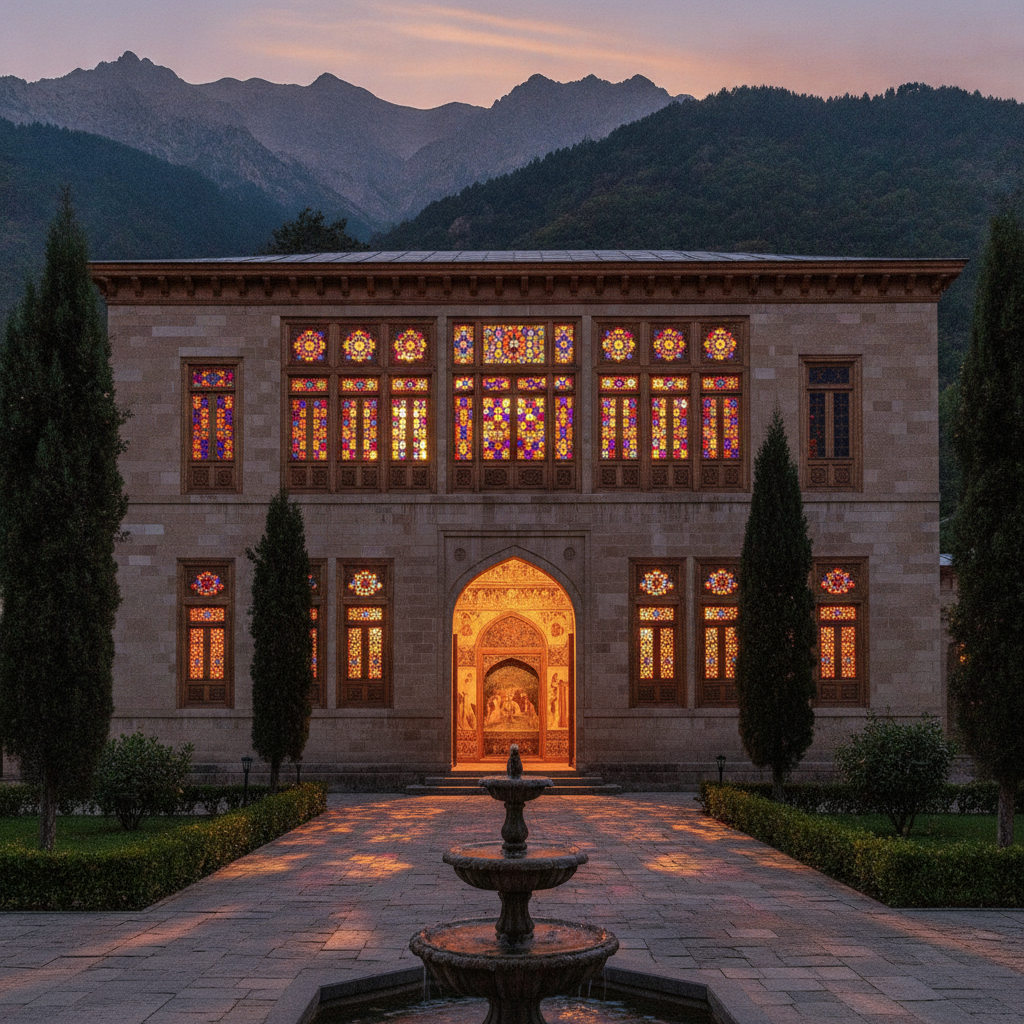
The Sheki Khan's Palace Shebeke Stained Glass Fitted Without Glue, the Piti Clay-Pot Lamb Baked 8 Hours in a Tandir, Nizami Ganjavi's Khamsa Five Poems & the Baku Boulevard Caspian Level Dropping 1.5m Since 1995