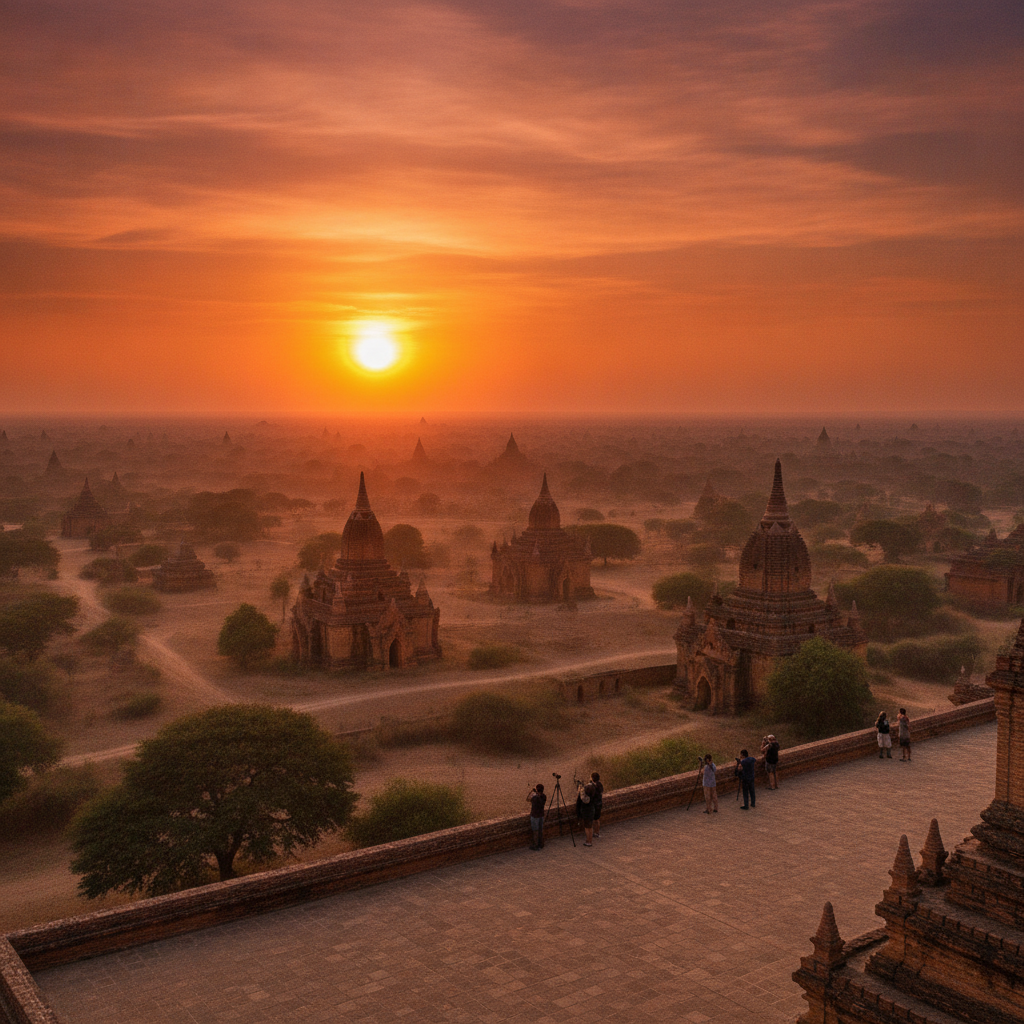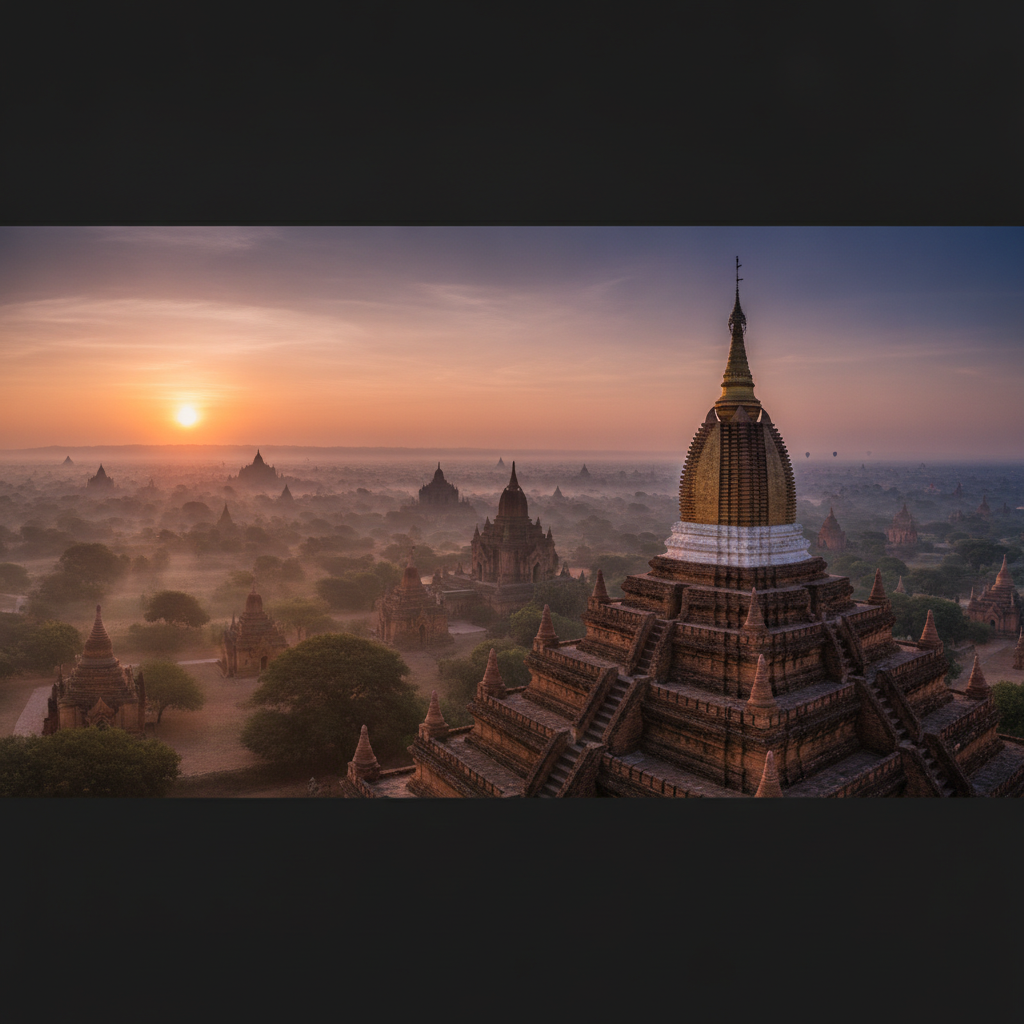
Bagan Empire History & Legacy Walk
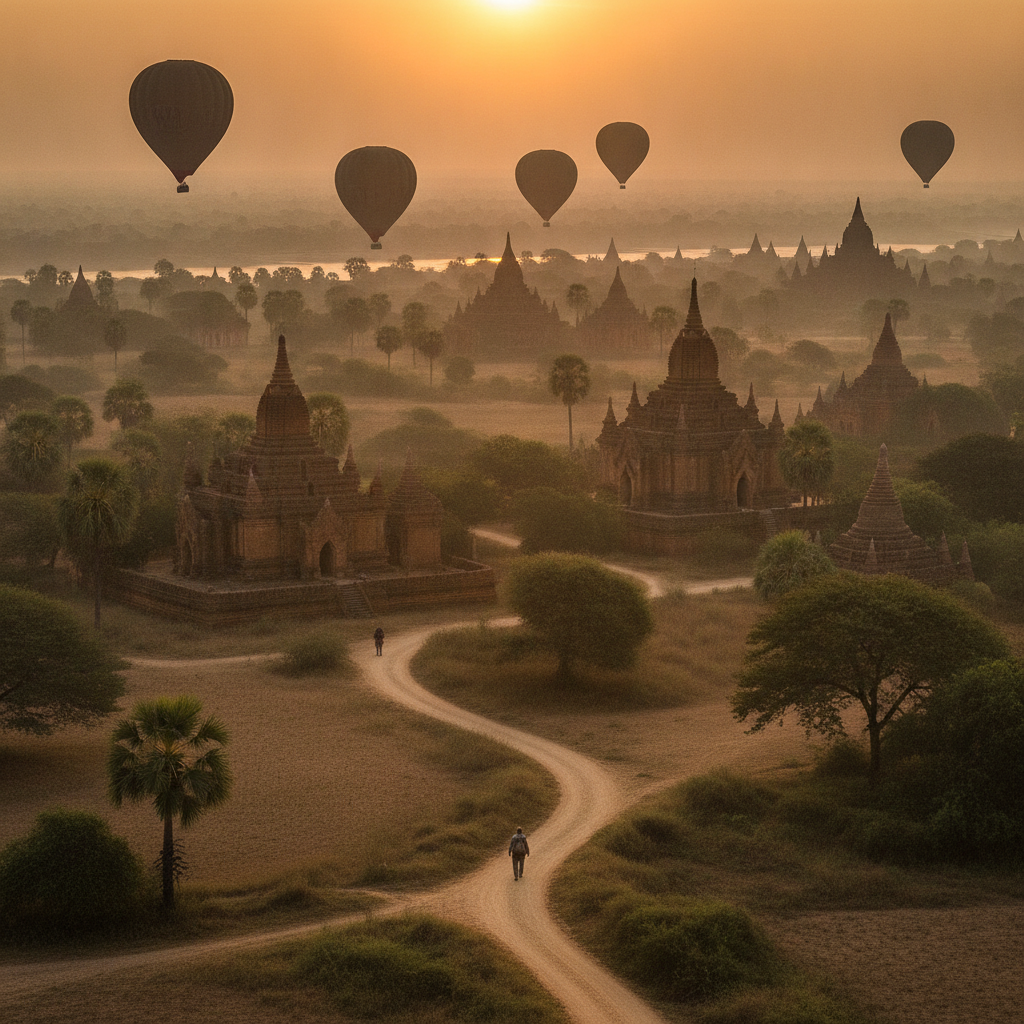
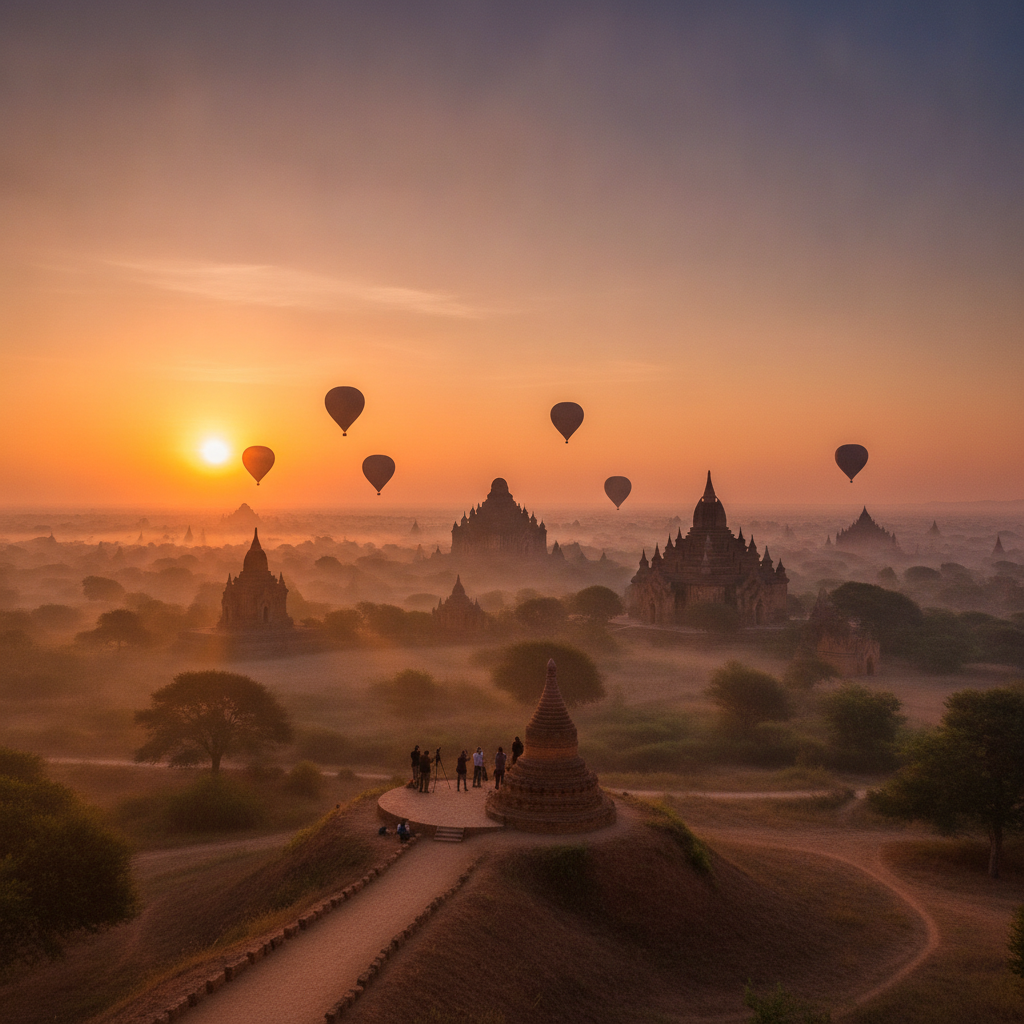
Understand Bagan's history — the Bagan Empire (9th to 13th centuries CE) unified the Irrawaddy valley and created the religious and cultural foundations of modern Myanmar, and the temples, inscriptions, and archaeological evidence accessible at the site constitute the most complete surviving record of an early Southeast Asian empire.
- 1
Shwezigon Pagoda Anawrahta
Shwezigon Pagoda (begun by King Anawrahta and completed by King Kyanzittha in 1102 CE) is the most sacred Buddhist monument in Bagan and the prototype for the Burmese stupa form that has defined Myanmar Buddhist architecture ever since — the golden bell-shaped stupa (the model for the Shwedagon Pagoda in Yangon and for the thousands of similar stupas visible throughout Myanmar) contains relics of the Buddha including a tooth and bone, making it the most sacred single structure in the Bagan archaeological zone. The pagoda's historical significance (the construction by Anawrahta, the king who unified Burma and established Theravada Buddhism as the state religion by conquering the Mon kingdom and acquiring the Theravada texts and monks in 1057 CE) makes Shwezigon the foundation monument of the Burmese Buddhist civilisation that the entire Bagan temple programme represents.
- 2
Bagan Empire Timeline
The Bagan Empire's historical timeline (from the foundation of the city by the Pagan kings in the 9th century CE through the reign of Anawrahta (1044-1077 CE) who unified the Irrawaddy valley, the architectural golden age under Kyanzittha (1084-1113 CE) and Alaungsithu (1113-1163 CE), and the decline under the successive kings before the Mongol invasions of 1277, 1283, and 1287 CE that ended the empire) is most directly encountered through the Bagan Archaeological Museum's documentation and the individual temples' inscriptions — the extraordinary compression of the temple-building programme into a 200-year period (the 2,000+ surviving temples, representing perhaps 10% of the original 10,000-20,000 structures built during the empire's height) creates the most concentrated expression of royal Buddhist piety accessible at any archaeological site in mainland Southeast Asia.
- 3
Htilominlo Temple
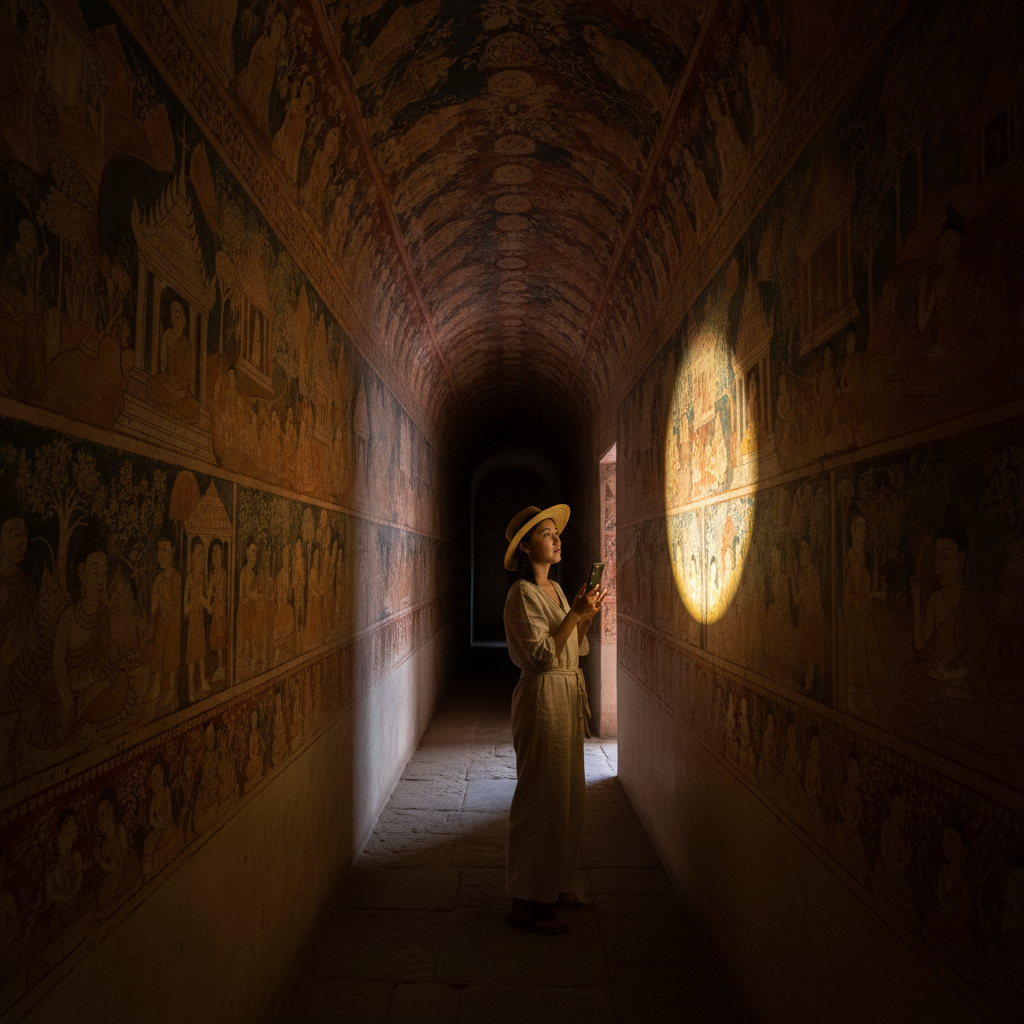
Htilominlo Temple (built by King Htilominlo in 1218 CE, one of the last major temples constructed before the Mongol invasions disrupted the building programme) is among the most elegantly decorated of the Bagan temples accessible to visitors — the three-storey temple (the most elaborate multi-storey structure built in the late Bagan period) retains some of the finest surviving stucco decoration on its exterior, with the carved floral and geometric ornamentation on the tower and the pediments still visible despite the centuries of monsoon exposure. The temple's interior (the four Buddha images at the cardinal directions of the ground floor, the painted murals in the upper storey accessible by the internal staircase) provides the most complete late-Bagan artistic programme accessible in a single temple visit.
- 4
Manuha Temple Mon Heritage
Manuha Temple in My-in-ka-ba village (built by the captured Mon king Manuha in 1059 CE, two years after his defeat and capture by Anawrahta) is the most historically poignant individual temple in Bagan — the temple (financed by Manuha's personal jewellery sale while living as a captive in the Bagan city) contains three enormous seated Buddha images whose cramped positioning in the shrines too small to contain them comfortably has been interpreted as Manuha's artistic expression of his own captivity. The Mon heritage at Bagan (the crucial influence of the Mon artistic, architectural, and religious tradition on the development of the Bagan style — the Mon craftsmen, monks, and scholars brought to Bagan after the conquest of Thaton providing the technical expertise for the temple-building programme) is most directly encountered at the My-in-ka-ba village temples built by or associated with the Mon community.
- 5
Mongol Invasion Memory
The Mongol invasions of 1277, 1283, and 1287 CE that brought the Bagan Empire to an end are remembered in the Bagan archaeological record through the evidence of the fresco paintings at Kyanzittha Umin (the Mongol soldier portraits), the abandonment of the temple-building programme in the final decades of the empire, and the gradual depopulation of the city after the final Mongol occupation. The historical narrative of the invasion (the Bagan army's elephants panicking at the noise of the Mongol cavalry's arrows, the decisive defeat at the Battle of Ngasaunggyan in 1277 CE described by Marco Polo who heard the account on his travels through China, and the eventual Mongol decision not to permanently occupy the city but to extract tribute) is the most dramatic single historical event accessible through the Bagan archaeological record.
- 6
Living Buddhism Bagan Today
The continuing Buddhist religious practice accessible at the Bagan archaeological zone (the active temples and pagodas within the zone that continue to receive the daily devotional visits of the local community, the monks' residence in some of the smaller temple complexes, and the festival activities that animate the major temples at the full moon of each Burmese lunar month) documents the unbroken continuity between the Bagan Empire's Buddhist foundation and the contemporary Burmese Buddhist practice — the Shwezigon Pagoda's pilgrims (the families arriving to make offerings at the golden stupa built by Anawrahta nearly 1,000 years ago, performing the same circumambulation and the same offering rituals that their ancestors performed at the same structure) create the most direct temporal connection between the archaeological past and the living present accessible at any Southeast Asian religious heritage site.
Walk this route with audio
Stories play automatically as you reach each stop — no tapping needed.