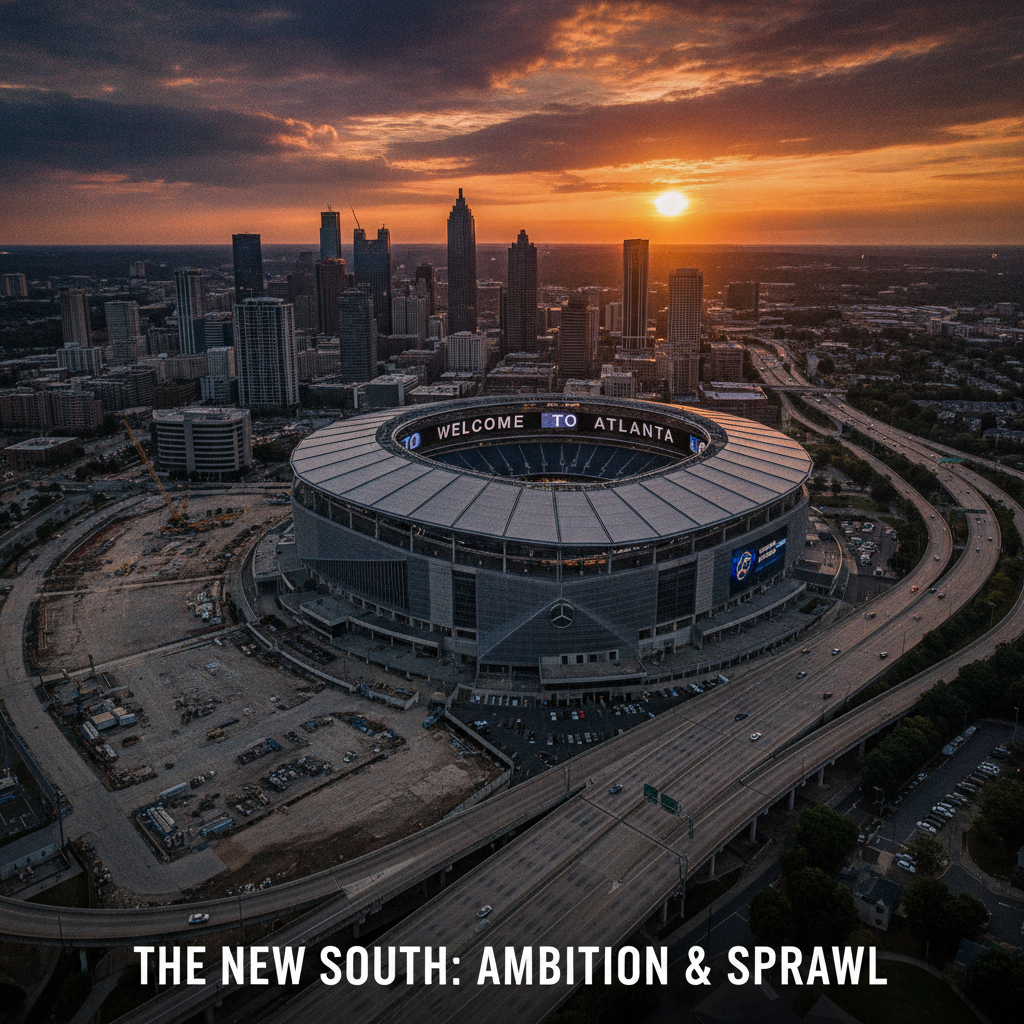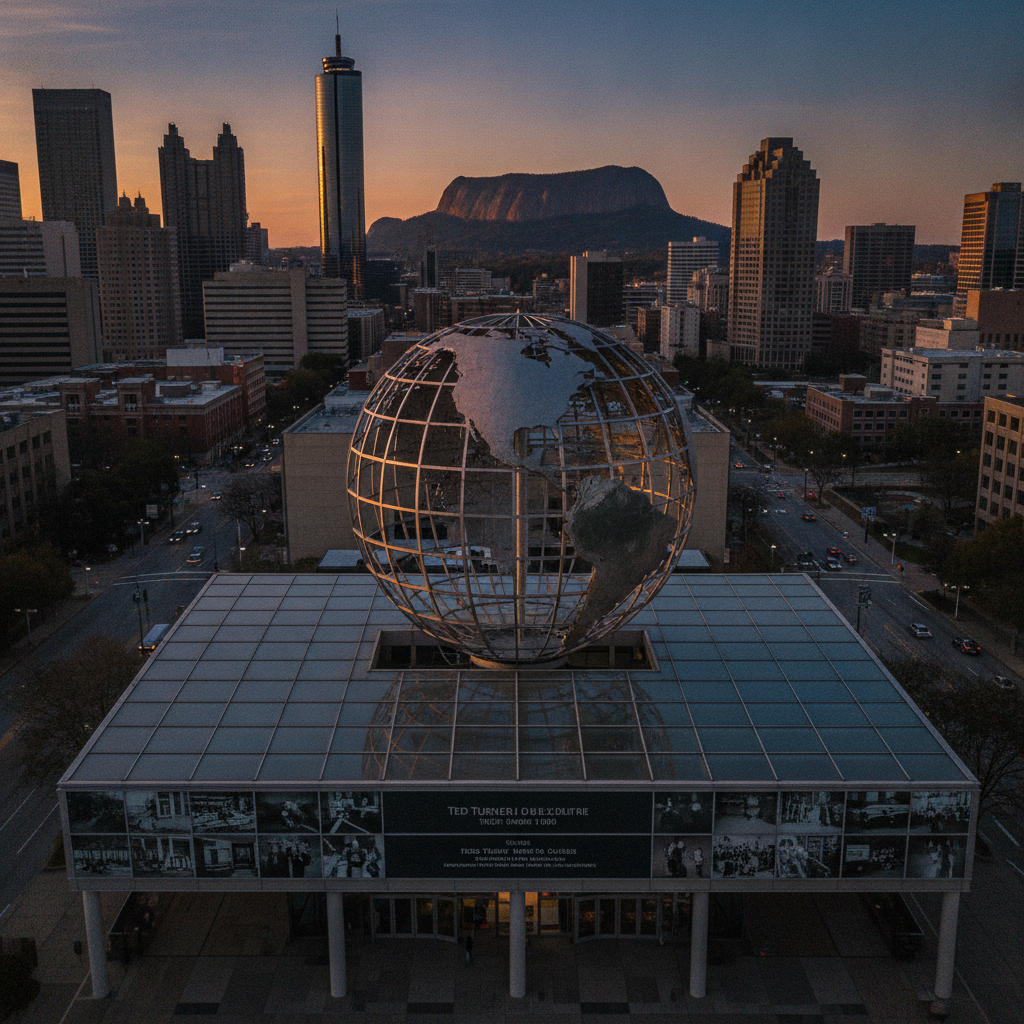
Atlanta: Civil Rights Movement (AUC HBCUs, Morehouse, Spelman, SCLC headquarters), National Center for Civil and Human Rights (MLK papers, sit-in counter experience, global human rights gallery), Centennial Olympic Park (1996 Olympics, Muhammad Ali cauldron, Jewell bombing, Georgia Aquarium whale sharks), CNN Center (Ted Turner 1980, Gulf War coverage, Hollywood of the South Tyler Perry Studios), Stone Mountain (worlds largest bas-relief Confederate carving, KKK 1915, Hank Aaron 715th home run), Atlanta food (soul food Paschal's Mary Macs, Buford Highway international corridor, Buford Highway Farmers Market)
Atlanta civil rights and culture: Civil Rights Movement in Atlanta (AUC HBCU consortium — Morehouse King class 1948, Spelman — SCLC headquarters, Maynard Jackson first Black Southern mayor 1973), National Center for Civil and Human Rights (MLK personal papers 1,700 items, sit-in counter simulation, global human rights connection), Centennial Olympic Park (1996 Centennial Olympics, Michael Johnson double gold, Ali cauldron, Jewell bombing, Georgia Aquarium largest in world 2005), CNN Center (Ted Turner June 1 1980 launch, Challenger/Tiananmen/Gulf War coverage, Tyler Perry Studios 330 acres Hollywood of the South), Stone Mountain (worlds largest bas-relief carving, KKK refounded 1915, Hank Aaron home run 715 on April 8 1974), Atlanta food (Paschal's civil rights soul food, Mary Mac's Tea Room 1945, Buford Highway international food corridor Vietnamese-Korean-Chinese-Ethiopian, Buford Highway Farmers Market 80,000 sqft).
- 1
The Civil Rights Movement in Atlanta
Atlanta as the birthplace of the civil rights movement: Atlanta was not only the birthplace of Martin Luther King Jr. (born 1929) but also the home of the most important network of African American colleges in the United States (the Atlanta University Center Consortium), the headquarters of the Southern Christian Leadership Conference (SCLC, founded 1957 by King and Ralph Abernathy), and the intellectual and organizational center of the civil rights struggle in the 1950s and 1960s. The Atlanta University Center (AUC): the consortium of historically Black colleges and universities in the West End neighborhood of Atlanta, including Morehouse College (founded 1867: the only historically Black all-male liberal arts college in the United States, alma mater of Martin Luther King Jr. class of 1948, Maynard Jackson, Julian Bond, Samuel L. Jackson, and Spike Lee), Spelman College (founded 1881: the most prestigious historically Black college for women in the United States, alma mater of Alice Walker), Clark Atlanta University, Morris Brown College, and the Morehouse School of Medicine. The Atlanta HBCU complex as a cultural force: the AUC consortium enrolls approximately 11,000 students and produces more African American doctors, lawyers, and business leaders per capita than any other educational complex in the United States. The legacy: Atlanta elected Maynard Jackson as the first African American mayor of a major Southern city in 1973 (and at 35 the youngest mayor of Atlanta in history); the city has had continuous African American leadership since 1973.
- 2
National Center for Civil and Human Rights
The National Center for Civil and Human Rights (at 100 Ivan Allen Jr. Blvd NW, adjacent to Centennial Olympic Park, downtown Atlanta): the museum opened in 2014 that connects the American civil rights movement to the global human rights movement. The NCCHR collection: the museum holds the personal papers of Martin Luther King Jr. (donated by Coretta Scott King), including more than 1,700 items: correspondence, sermon notes, speeches, and personal photographs. The centerpiece exhibits: the sit-in counter experience (a recreation of the Greensboro sit-in counter at Woolworths, where museum visitors can sit on a stool and listen through headphones to the audio of actual harassment endured by civil rights protesters, while the stool vibrates to simulate being pushed and jostled by hostile crowds), and the Global Human Rights gallery (connecting the American civil rights movement to apartheid South Africa, the Holocaust, the Rwandan genocide, LGBT rights, and contemporary human rights struggles). The Morehouse College Martin Luther King Jr. Collection (displayed at the NCCHR): the 17,000 items of the MLK collection owned by Morehouse College and the King Center, including the Bibles used at the 2009 and 2013 Obama inaugurations (both were King family Bibles lent by the King estate). Ebenezer Baptist Church and the civil rights network: from Ebenezer, King organized the Montgomery Bus Boycott (1955-1956), the Albany Movement (1961-1962), the Birmingham Campaign (1963, with the Children's Crusade and fire hoses), the March on Washington (28 August 1963, I Have a Dream speech), and the Selma to Montgomery marches (March 1965).
- 3
Centennial Olympic Park and the 1996 Atlanta Games
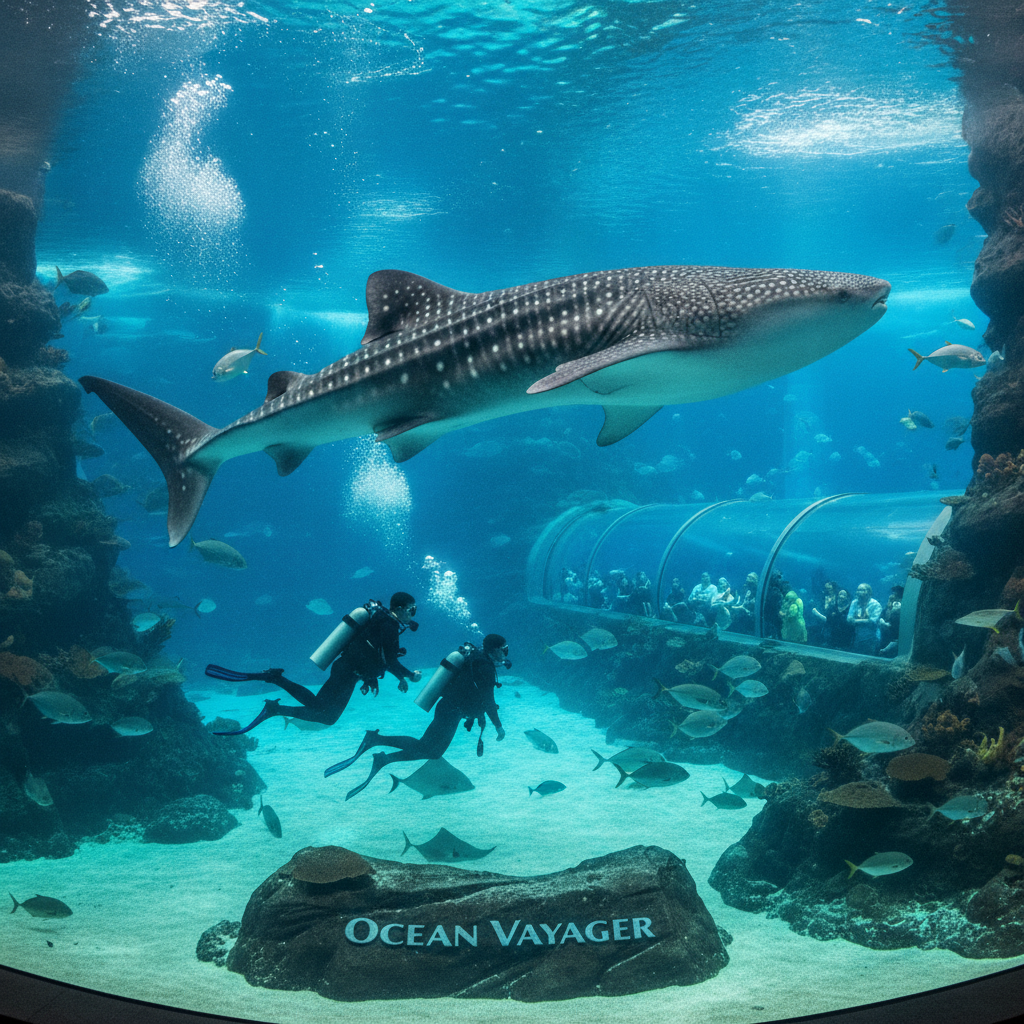
Centennial Olympic Park (at 265 Park Avenue West NW, downtown Atlanta): the 21-acre park built for the 1996 Centennial Olympic Games in Atlanta, now the centerpiece of downtown Atlanta and surrounded by the Georgia Aquarium, World of Coca-Cola, the National Center for Civil and Human Rights, and CNN Center. The 1996 Atlanta Olympics: the centennial of the modern Olympic Games (the first modern Olympics was held in Athens in 1896, making 1996 the 100th anniversary), hosted by Atlanta after defeating Athens, Belgrade, Manchester, Melbourne, and Toronto in the selection process. The 1996 Games statistics: 197 nations participated, 10,318 athletes competed, 271 events were held, and 2 million tickets were sold. The Atlanta Olympics highlights: Michael Johnson won the 200m and 400m gold medals (setting world records in both), Muhammad Ali lit the Olympic cauldron (his appearance was kept secret and was one of the most emotionally moving moments in Olympic history), the US won 44 gold medals and 101 total medals (the most of any nation). The Centennial Olympic Park bombing: on 27 July 1996, Eric Rudolph (later identified as a domestic terrorist) detonated a pipe bomb in Centennial Olympic Park during a free concert, killing 2 people and injuring 111. The bombing cast a shadow over the Games and Richard Jewell (the security guard who discovered the bomb and was initially accused by the FBI and media) was later fully exonerated. The Georgia Aquarium (at 225 Baker Street NW, adjacent to Centennial Olympic Park): opened in 2005 as the largest aquarium in the world (10 million gallons), home to whale sharks (the only four whale sharks in captivity outside Asia), beluga whales, manta rays, and over 120,000 animals.
- 4
CNN Center and Atlanta as a Media Capital
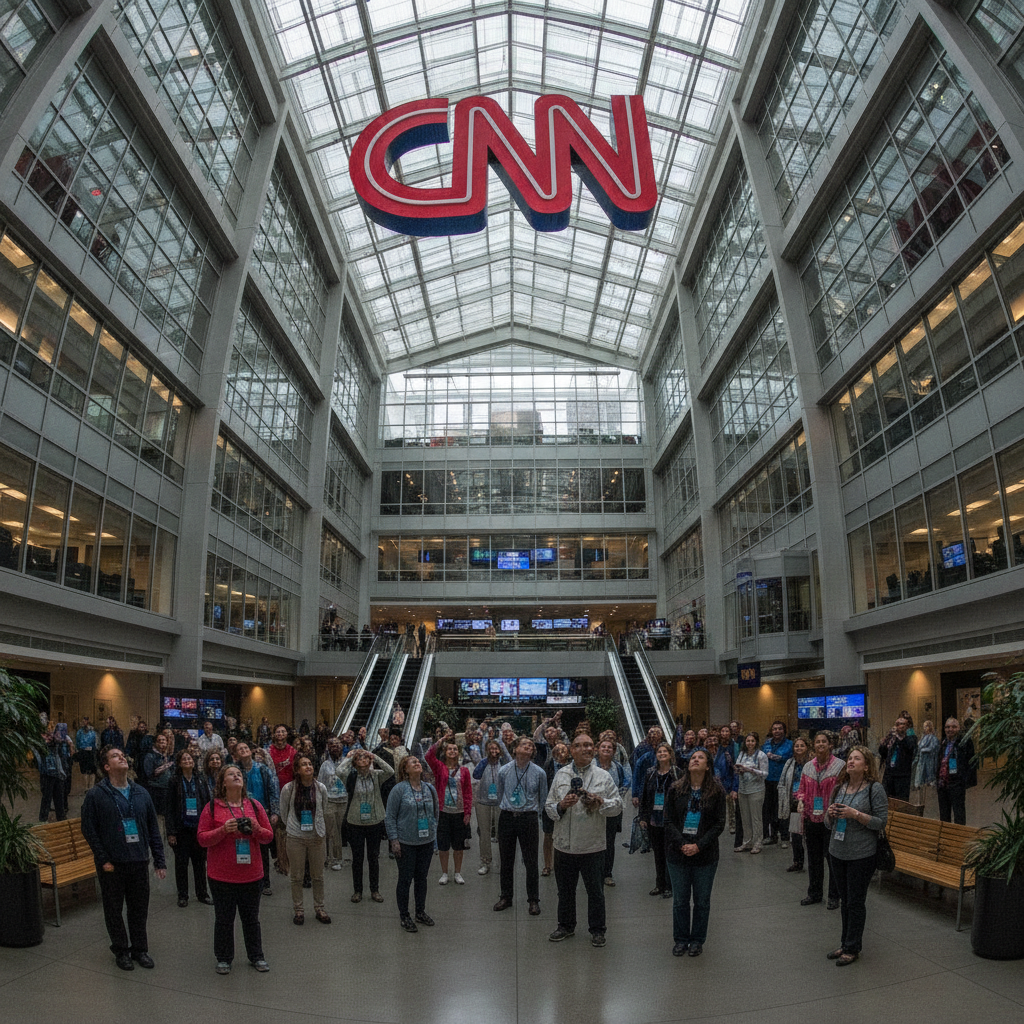
CNN Center (at One CNN Center, Techwood Drive NW, downtown Atlanta): the global headquarters of CNN (Cable News Network), opened in 1980 by Ted Turner (Robert Edward Turner III) as the first 24-hour cable news network in the world. CNN history: Ted Turner launched CNN on June 1, 1980, with a staff of 300 people and an annual budget of USD 30 million; critics called it Chicken Noodle News and predicted it would fail within months. The network went on to define the modern media landscape, with its coverage of the 1986 Space Shuttle Challenger disaster (the first major live coverage of a breaking news event), the Tiananmen Square protests in 1989, the 1991 Gulf War (which made Bernard Shaw and Peter Arnett household names), and the September 11, 2001 attacks. CNN Center tour (open to the public, 8-story atrium, the worlds largest freestanding escalator in the building): visitors can see the newsroom and studios from observation areas. Turner Broadcasting and Atlanta as media capital: Turner founded not only CNN but also TBS (Turner Broadcasting System, 1976: the first cable superstation, broadcasting Atlanta Braves games nationwide), TNT (Turner Network Television, 1988), and Cartoon Network (1992). Time Warner acquired Turner Broadcasting in 1996 for USD 7.5 billion; AT&T later acquired Time Warner (now WarnerMedia) in 2018. Atlanta media today: Atlanta is the third-largest film and television production center in the United States (after Los Angeles and New York), known as the Hollywood of the South, with the largest concentration of soundstage space in the world outside of Hollywood (Tyler Perry Studios 330 acres on the former Fort McPherson Army base, plus dozens of other production facilities).
- 5
Stone Mountain and Atlanta Sports Culture
Stone Mountain Park (at 1000 Robert E. Lee Blvd, Stone Mountain, 25 km east of downtown Atlanta): the 3,200-acre state park centered on Stone Mountain, the largest exposed granite outcropping in the world (with a surface area of approximately 583 hectares). The Stone Mountain carving: the bas-relief carving on the north face of Stone Mountain depicting Confederate President Jefferson Davis and Generals Robert E. Lee and Stonewall Jackson on horseback is the largest bas-relief sculpture in the world (90 meters tall, 58 meters wide). The carving was begun in 1916, suspended for decades, and finally completed in 1972; it has been the subject of ongoing controversy, particularly following the 2020 racial justice protests, with calls for removal or modification. Stone Mountain and the Ku Klux Klan: the modern KKK was re-founded at Stone Mountain on Thanksgiving Day 1915 (inspired by the film Birth of a Nation); the mountain has served as a gathering place for KKK cross burnings since 1915, creating a profound historical tension with Georgia's civil rights legacy. Atlanta Braves baseball: the Atlanta Braves (founded 1876 in Boston, moved to Milwaukee 1953, moved to Atlanta 1966): one of the most historic franchises in Major League Baseball, with Hank Aaron (Henry Louis Aaron, who broke Babe Ruth's all-time home run record on April 8, 1974, at Atlanta-Fulton County Stadium, hitting his 715th home run amid death threats and FBI protection): the moment was broadcast live on NBC in the most watched baseball telecast in history to that point. The Braves' Truist Park (opened 2017 in Cobb County suburb of Cumberland) and their 2021 World Series championship (beating the Houston Astros).
- 6
Atlanta Food Scene and the Buford Highway Corridor
Atlanta food scene: Atlanta has become one of the most vibrant and diverse food cities in the American South, reflecting both the deep roots of Southern cuisine and the rapid diversification of the Atlanta metropolitan area population (Atlanta metro is approximately 35% White, 33% African American, 12% Hispanic, 12% Asian, making it one of the most ethnically diverse major metropolitan areas in the Southeast). Southern soul food in Atlanta: the tradition of soul food (a cuisine developed by enslaved African Americans, drawing on West African culinary traditions, and incorporating whatever ingredients were available: collard greens, black-eyed peas, cornbread, fried chicken, pork chitterlings, sweet potato pie): some of the best soul food restaurants in the United States are in Atlanta, including Paschal's (founded 1947 by brothers James and Robert Paschal, a gathering place for civil rights leaders including King, Abernathy, and Julian Bond), Beautiful Restaurant (a Vine City institution for 50+ years), and Mary Mac's Tea Room (founded 1945, the last of the original Atlanta meat-and-three restaurants, serving over 3,000 meals per day at its peak). The Buford Highway international food corridor (Buford Highway from Buckhead north through Chamblee and Doraville, approximately 20 km): the most diverse international food corridor in the American Southeast, developed from the 1980s as successive waves of immigrants (Vietnamese, Korean, Chinese, Bangladeshi, Mexican, Guatemalan, Salvadoran, Ethiopian, and numerous other communities) established restaurants and markets along the highway. The Buford Highway Farmers Market (5600 Buford Hwy NE, Doraville): the largest international grocery market in the Southeast, with 80,000 square feet of international foods.
Walk this route with audio
Stories play automatically as you reach each stop — no tapping needed.
More in atlanta
Atlanta: Presidential Peace Work, Mill Ruins and Counterculture Corners
Atlanta: MLK National Historical Park (Birth Home, Ebenezer Baptist Church, King tomb Sweet Auburn, Atlanta Life Insurance), World of Coca-Cola (John Pemberton 1886 invention, secret formula, taste 100 world beverages), Piedmont Park and Atlanta BeltLine (35km trail, Ponce City Market Sears warehouse, Eastside Trail murals), Hartsfield-Jackson Airport (worlds busiest since 1998, Delta 75% hub, Plane Train automated transit), and Practical Guide (BeltLine neighborhoods, Buford Highway international food, The Varsity oldest drive-in, Georgia Bulldogs football)
Atlanta: World Busiest Airport, Hollywood of the South and Global Food
Atlanta: CNN Birthplace, Braves Champions and the Chattahoochee Trout River
Atlanta: Civil Rights Legacy, Olympic Park and the BeltLine Loop