National Archaeological Museum & Exarcheia: Greece's Greatest Treasures
The National Archaeological Museum of Athens — founded 1829, in its current building since 1889 — is the largest archaeological museum in Greece and one of the most important in the world, housing objects that span 7,000 years of Greek civilization from the Neolithic period to Late Antiquity. Adjacent to the museum, the Exarcheia neighborhood — historically Athens' intellectual and anarchist quarter, home to the Polytechnic whose 1973 student uprising helped end the military junta — remains one of the most socially and culturally distinctive urban neighborhoods in Europe.
- 1
National Archaeological Museum — Prehistoric & Mycenaean Collections
The National Archaeological Museum's ground floor is dominated by the prehistoric and Mycenaean collections — the material culture of Bronze Age Greece (3300-1100 BC) that predates the Classical period by 2,000 years. The Mycenaean collection (Room 4) is the most significant in the world: the finds from Heinrich Schliemann's 1876 excavations at Mycenae, including the Gold Mask of Agamemnon (Shaft Grave V, c. 1550-1500 BC) — which Schliemann famously telegraphed to the King of Greece claiming 'I have gazed upon the face of Agamemnon', though modern scholarship dates it 300 years earlier than the Trojan War hero. The Cycladic collection (Room 6) contains the most extraordinary Cycladic figurines outside the Museum of Cycladic Art — including the c. 2700 BC harpist and flute-player figurines from Keros, whose abstract geometry influenced Brancusi, Modigliani, and Picasso. The Thera/Santorini frescoes (Room 48) — removed from the Bronze Age town of Akrotiri buried by the 1600 BC Minoan eruption — include the 'Boxing Children' and 'Spring' frescos, vivid color surviving 3,600 years.
- 2
National Archaeological Museum — Greek Sculpture Gallery
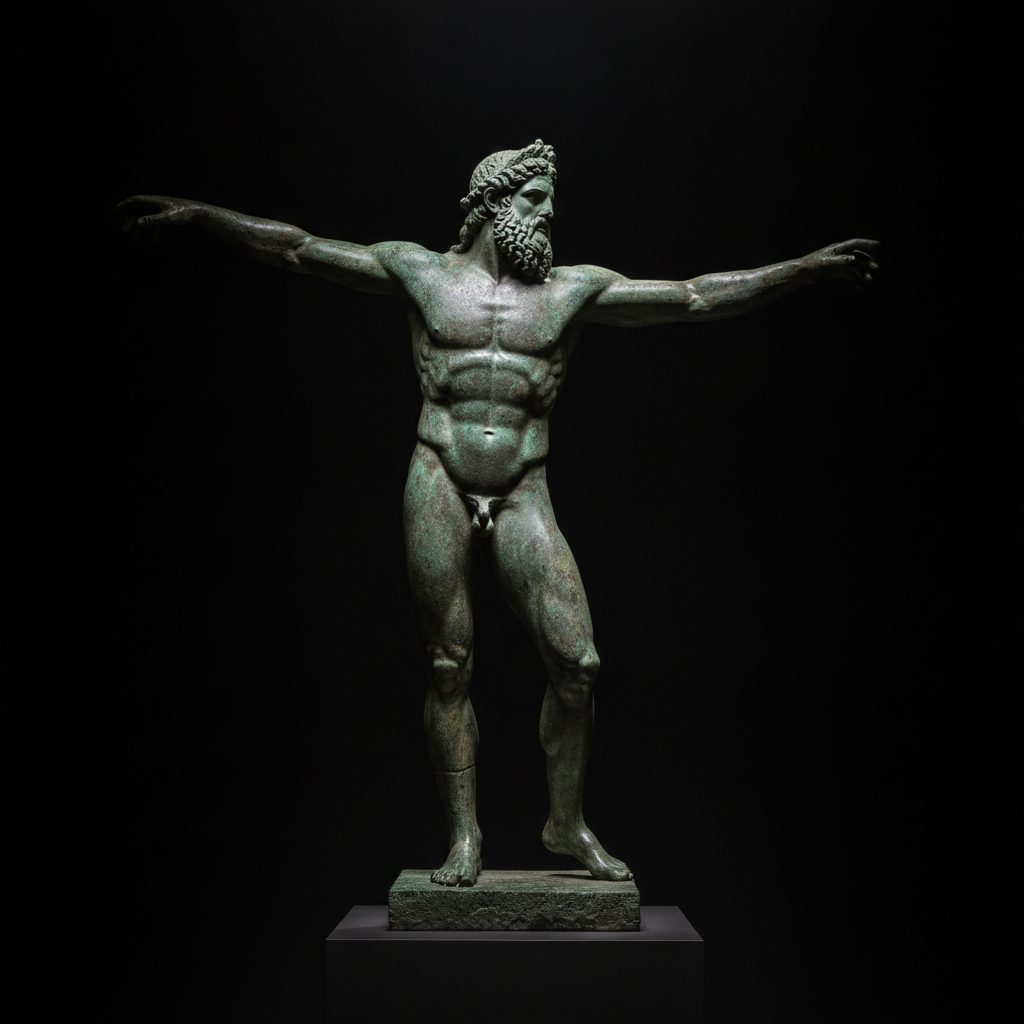
The sculpture galleries occupy the central spine of the museum from the Archaic period through the Hellenistic. The Archaic collection (Rooms 7-14) traces the development of kouros (male) and kore (female) sculpture from rigid Egyptian-influenced frontality to the first hints of naturalism in the so-called 'Kritios Boy' (c. 480 BC, from the Acropolis). The Classical sculpture collection contains the bronze Poseidon of Artemision (Room 15, c. 460 BC) — discovered in the sea off Cape Artemision 1926-1928, the finest surviving large-scale Classical Greek bronze, showing Zeus or Poseidon about to hurl his thunderbolt/trident — and the Jockey of Artemision (c. 150 BC), a Hellenistic bronze of a small boy riding a racehorse in full gallop, recovered from the same shipwreck. The Antikythera Mechanism (Room 38, c. 70-60 BC) — recovered 1900-1901 from a Roman-era shipwreck off the island of Antikythera, identified as a complex astronomical calculating device (the world's oldest analog computer) using X-ray tomography in 2006 — is the most sophisticated mechanical object known from antiquity.
- 3
Polytechnic & 1973 Student Uprising
The Athens Polytechnic (Εθνικό Μετσόβιο Πολυτεχνείο, National Technical University, founded 1836) occupies a neo-classical complex at the corner of Patission and Stournari streets, adjacent to the National Archaeological Museum. On November 14-17, 1973, students occupied the Polytechnic in protest against the military junta of Georgios Papadopoulos (in power since the coup of April 21, 1967). A makeshift radio transmitter broadcast the uprising to the city: 'Here is the Polytechnic! The people of Greece are rising up!' On November 17, army tanks demolished the gates and the occupation was crushed — at least 24 people were killed in the surrounding neighborhoods by military and police action. The junta fell in July 1974, replaced by the Metapolitefsi ('regime change') — the restoration of democracy under Konstantinos Karamanlis. November 17 is commemorated annually as a public holiday; the gates of the Polytechnic bear the marks of the tanks.
- 4
Exarcheia Square & Neighborhood
Exarcheia — the dense residential neighborhood between the Polytechnic and the hills of Strefi and Lycabettus — has been Athens' intellectual and counterculture neighborhood since the 1950s, when it was home to poets, musicians, communist intellectuals, and the underground press during the junta years (1967-1974). The neighborhood's character is expressed in its dozen independent bookshops (including Politeia and Nakas), its radical political graffiti (one of the densest concentrations of political wall text in Europe), its record shops, and its concentrated nightlife of small bars and live music venues. Plateia Exarcheia (Exarcheia Square) is the neighborhood's social center — an outdoor gathering place for students, anarchists, musicians, and neighbors. The shooting of 15-year-old Alexandros Grigoropoulos by a police officer on December 6, 2008 — at the corner of Tzavella and Mesologgiou, 100 meters from the square — triggered two weeks of riots across Greece, the most severe civil unrest in Europe in the 21st century to that point.
- 5
Strefi Hill & Lycabettus Funicular
Strefi Hill (108m) — a rocky public park at the eastern edge of Exarcheia — provides intimate views over the rooftops of the neighborhood and is a gathering place for the local community away from tourist circuits. Mount Lycabettus (Lykavittós, 277m) — the highest hill within the Athens city limits, topped by the white-painted chapel of Saint George (19th century) and a restaurant/bar with the best 360-degree panorama in Athens — is reached by funicular railway (built 1965) from Plutarchou street in the Kolonaki neighborhood on the southeast side, or on foot via paths from Exarcheia on the north. The hill is a limestone outcrop geologically continuous with the Acropolis; legend holds that Athena was carrying it to add height to the Acropolis but dropped it when startled by bad news from crows. The outdoor theater on the south slope hosts summer concerts under the Attica sky.
- 6
Neapoli & Kolonaki Hill Quarter
The Neapoli neighborhood — wedged between Exarcheia and Kolonaki on the lower slopes of Lycabettus — is one of Athens' most pleasant middle-class residential areas: a grid of streets lined with 1930s apartment blocks, neighborhood tavernas, and small workshops that gives way at the Kolonaki Square (Plateia Filikis Eterias) to the most expensive real estate in Athens. Kolonaki is Athens' equivalent of Paris's 16th arrondissement — the neighborhood of the Greek establishment, embassies, and luxury boutiques — with the Benaki Museum (Greek national museum in the Antoniou Benaki mansion, 1930; extensive collection of Byzantine art, Islamic art, and material from ancient Egypt through the 20th century) at the corner of Koubari and Vasilissis Sofias as its cultural anchor.
Walk this route with audio
Stories play automatically as you reach each stop — no tapping needed.
More in athens
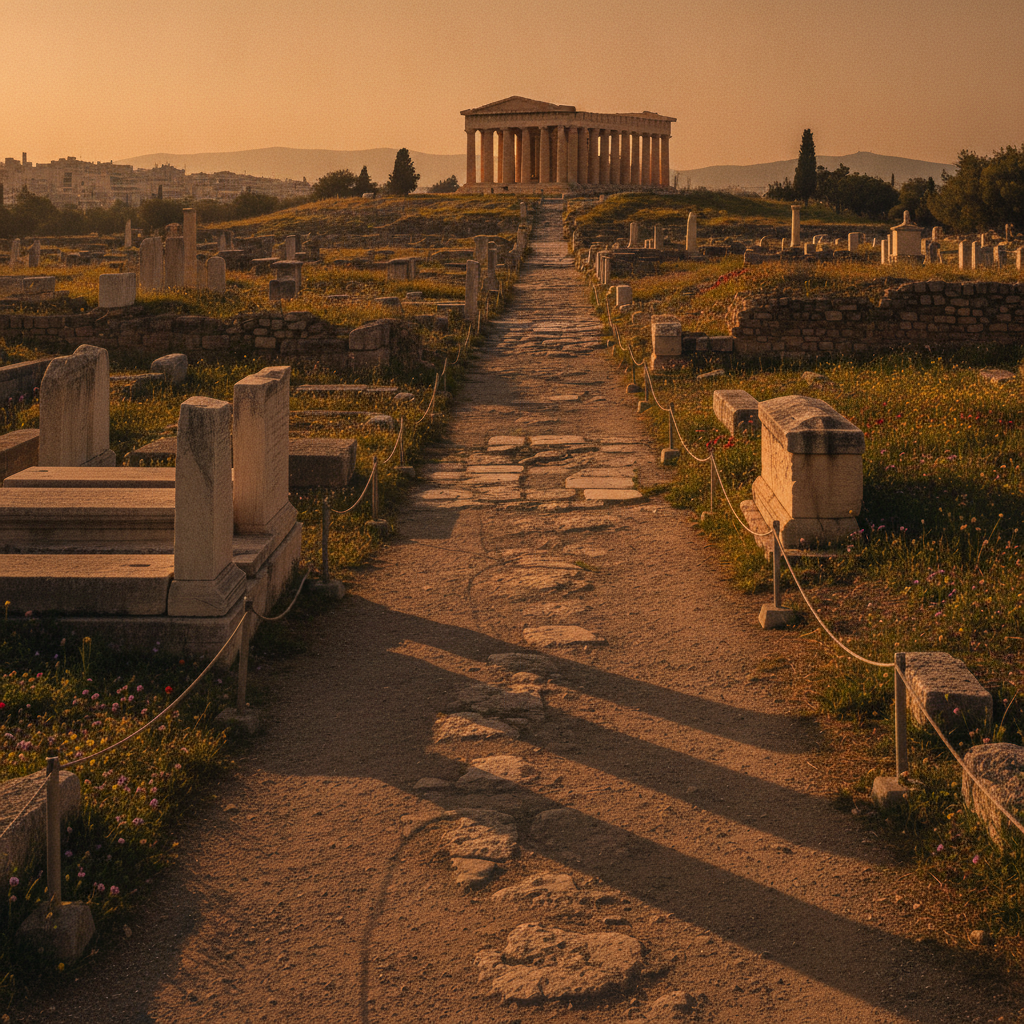
Keramikos, Gazi & Thisseio: Ancient Cemeteries, Creative Districts & Democratic Hills
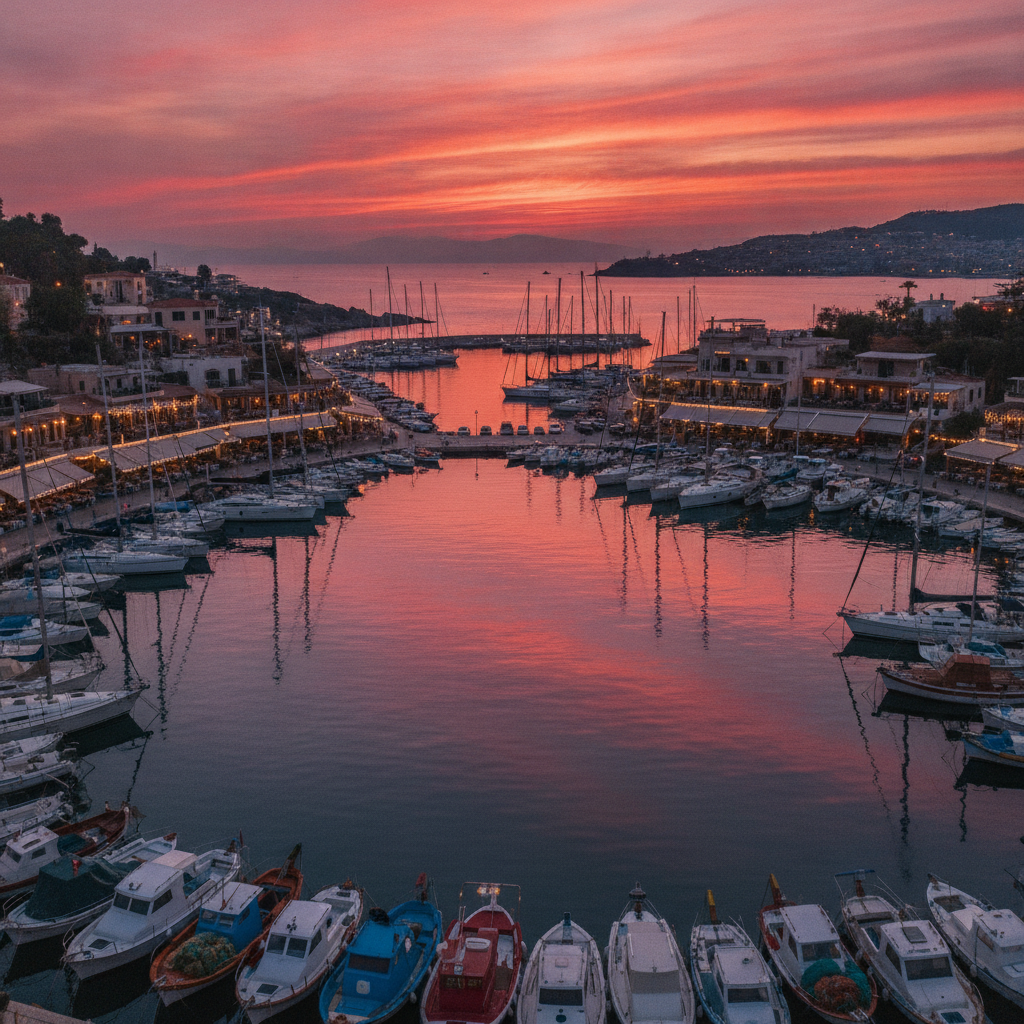
Piraeus, Mikrolimano & the Saronic Riviera: Athens' Ancient Port and Yacht Harbor
Plaka, Monastiraki & Psyrri: Athens Beneath the Acropolis
Panathenaic Stadium, Zappeion & National Garden: Olympic Legacy and Royal Athens
Cape Sounion & the Attica Coast: Poseidon's Temple Above the Aegean