Aswan Complete Reference - Kalabsha Temple, Practical Guide, and the Eastern Desert
The complete practical reference for Aswan: the Kalabsha Temple on Lake Nasser; the Wadi Halfa and the Sudan border crossing; the Eastern Desert and Wadi el-Hudi; the Aswan caravan routes to the oases; practical guide to permits for Lake Nasser; and the complete hotel and logistics guide.
- 1
The Kalabsha Temple and Lake Nasser Monuments - The Rescued Nubian Heritage
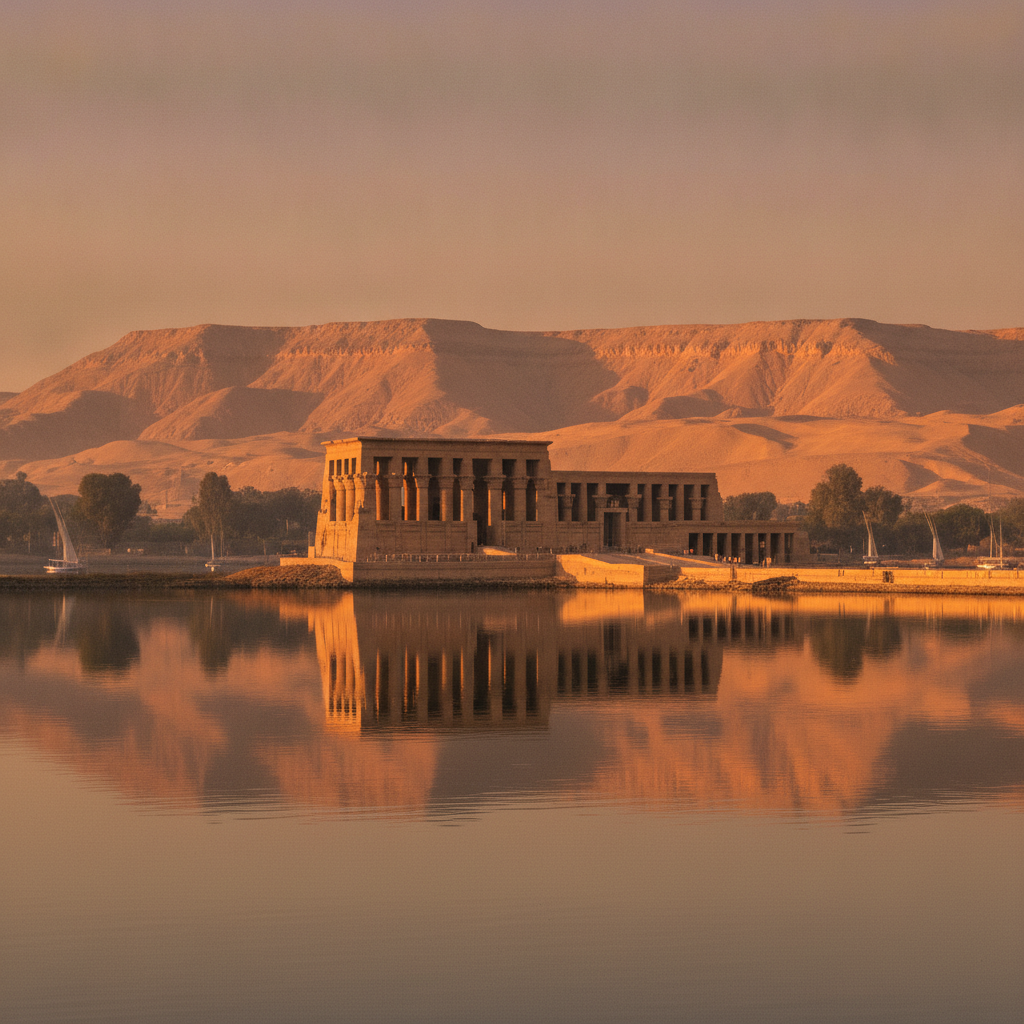
The Kalabsha Temple (the Temple of Mandoulis (Mandulis) - a Nubian sun god associated with Horus): originally built in the Ptolemaic and Roman period (approximately 1st century BCE - 1st century CE) at the ancient site of Talmis (modern Kalabsha, 50 km south of Aswan): one of the largest and best-preserved temples in Egyptian Nubia: relocated to new Kalabsha Island near the Aswan High Dam in 1962-1963 (before the main lake was created) in the first of the Nubian rescue operations. The Temple of Beit el-Wali (the earliest Nubian temple of Ramesses II: originally at Beit el-Wali near Kalabsha: relocated to Kalabsha Island: the fine early Ramesses II painted reliefs including a remarkable scene of Ramesses II in his chariot charging Nubian enemies (one of the finest early 19th Dynasty battle reliefs)). The Kiosk of Qertassi (a small Roman kiosk (a roofless columned pavilion) from the Qertassi site: relocated to Kalabsha Island: the Hathor-headed columns are among the finest examples of Roman-Egyptian Hathor column capitals). Lake Nasser cruises (specialized Lake Nasser cruises operate on the northern part of the lake between the Aswan Dam and Abu Simbel: visiting the lakeside monuments (Kalabsha, Beit el-Wali, Wadi el-Sebua, Amada, Derr, and Kasr Ibrim): the only way to access the remaining lakeside monuments: typically 4-day cruises departing from Aswan).
- 2
Wadi el-Hudi and the Eastern Desert - The Ancient Amethyst Mines
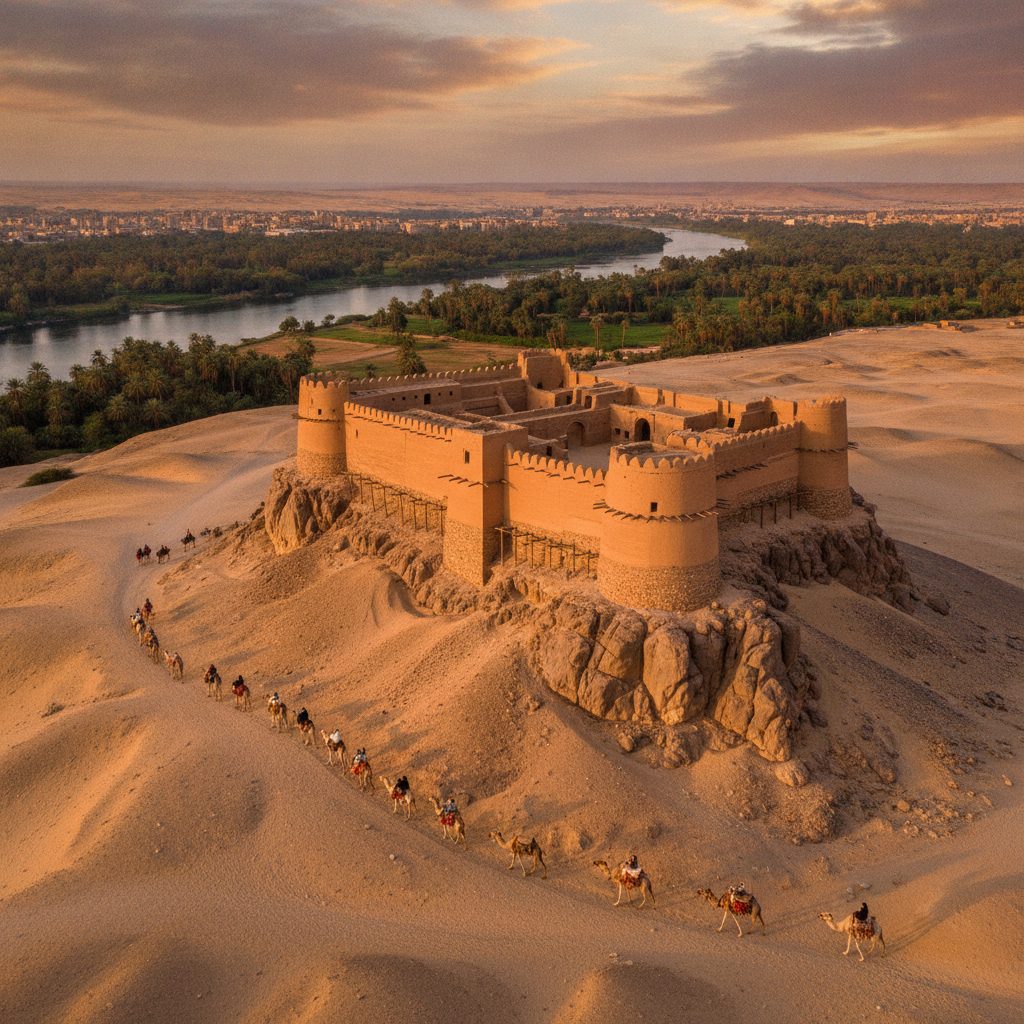
Wadi el-Hudi (the Valley of Precious Stones): the ancient amethyst mining district in the Eastern Desert approximately 30 km east-southeast of Aswan: the primary source of amethyst for ancient Egyptian jewelry and ritual objects during the Middle Kingdom and Second Intermediate Period (approximately 2055-1550 BCE). The mining history (Egyptian amethyst mining at Wadi el-Hudi: extensively documented by Middle Kingdom inscriptions and graffiti: the expeditions were organized by the pharaoh: large teams of miners and soldiers were sent into the Eastern Desert to extract the violet quartz: the inscriptions record the names and dates of the expeditions, the numbers of workers, and prayers for safe return: the amethyst was used for scarabs (amulet beetles), necklace beads, and small figurines in royal and elite burials). The Eastern Desert of Aswan (the Eastern Desert between Aswan and the Red Sea coast: the ancient caravan routes connecting Nubia to the Red Sea ports (Berenice, Myos Hormos, Quseir): the routes of the Eastern Desert were traveled by Egyptian merchants, Nubian traders, Arab caravaneers, and Roman grain shippers for 3,000 years). The ancient graffiti (the Eastern Desert is one of the richest areas for ancient inscription and rock art in Egypt outside the Nile Valley: Pharaonic, Greek, Latin, and Meroitic inscriptions record centuries of travel and trade across the desert). The modern access (Wadi el-Hudi requires a private vehicle and guide from Aswan: approximately 1.5-2 hours from Aswan: a permit from the Egyptian military is required for Eastern Desert excursions).
- 3
The Nubian Cuisine Tradition - Cooking in the Land of Gold
The Nubian culinary tradition: the distinct food culture of the Nubian communities of Aswan, combining sub-Saharan African, ancient Nile, and Arab-Islamic culinary influences. The Nile fish tradition (the Aswan Nile fish culture: the Nile tilapia (bolty) and the Nile perch (qarmout): grilled whole fish with the distinctive Nubian spice rub (cumin, coriander, fenugreek, dried chili, and turmeric): the fish restaurants on the Aswan Corniche and in the Nubian villages: the tradition of eating fish by the Nile on granite boulders). The Nubian stews (the Nubian lamb stew with tamarind and dried okra: a distinctly sub-Saharan flavor profile not found in northern Egyptian cuisine: the Nubian mulah (a dark sauce of dried okra (bamia) and meat slow-cooked with spices): the ful Nubian (fava bean stew with distinctly different spicing from the Egyptian ful medames: more tamarind and ginger)). Karkadeh (the dried hibiscus flowers brewed as tea: the primary Aswan drink: deep red, intensely flavored: Aswan is a primary hibiscus production region). The Nubian bread (gors - the traditional unleavened Nubian flatbread (similar to Ethiopian injera but not fermented): baked on a clay griddle over an open fire). The doum palm (the doum palm (Hyphaene thebaica): the multi-branched palm of Nubia: the doum nut (a hard reddish-brown fruit with a gingerbread-like flavor): the doum tea (dried doum nuts boiled to make a reddish tea with a distinctive flavor): the doum palm has been harvested in Nubia for approximately 4,000 years (depicted in ancient Egyptian botanical illustrations).
- 4
Aswan and Sudan - The Southern Frontier and the Road to Khartoum
Aswan as the gateway to Sudan: the historical connection between Aswan and the Sudanese Nile Valley, the modern border crossing, and the extraordinary Sudan archaeological heritage that few travelers ever visit. The historical connection (the Egypt-Sudan Nile Valley has been a single cultural and political zone for much of history: the ancient Egyptian-Nubian civilizations: the Meroitic Kingdom: the medieval Nubian Christian kingdoms (the Makuria, Alodia, and Nobatia kingdoms (approximately 350-1500 CE): Christian kingdoms in the Sudanese Nile Valley for over 1,000 years that maintained extensive connections with Egypt and the Byzantine-Arab worlds)). The Wadi Halfa crossing (the Egypt-Sudan border at Wadi Halfa: the Aswan to Wadi Halfa ferry (the weekly Lake Nasser ferry from Aswan High Dam to Wadi Halfa in Sudan: approximately 24-36 hours: one of the most adventurous overland routes in Africa): the overland extension by train or bus from Wadi Halfa to Khartoum (approximately 900 km): the complete journey from Aswan to Khartoum is one of the great African overland travel experiences). The Sudan heritage (the Sudan is one of the most undervisited heritage destinations in the world: the Meroitic pyramids at Meroe (approximately 200 steep narrow pyramids: finer in number than the Egyptian pyramids): the Nubian temples and rock art: the Kerma civilization (3rd-2nd millennium BCE): the ancient cities of Napata, Meroe, and Musawwarat es-Sufra).
- 5
The Isis Temple Legacy - How Egyptian Religion Shaped Western Spirituality
The legacy of the Isis cult and the broader influence of ancient Egyptian religion on Western spiritual traditions. The Isis-Mary connection (the theological and iconographic parallels between the goddess Isis and the Virgin Mary: the nursing Madonna (Isis nursing the infant Horus, depicted in thousands of ancient Egyptian bronze and stone figurines, was the visual prototype for the Christian Madonna and Child iconography: the nursing Isis statue type (Isis lactans) was widespread in the Roman Empire by the 1st century CE and was adapted by early Christian artists): the title Queen of Heaven (Isis was called Queen of Heaven in the Roman period: the same title was applied to the Virgin Mary in Christian theology from approximately the 5th century CE)). The Hermeticism (the Hermetic tradition (the philosophical and spiritual texts attributed to the legendary Hermes Trismegistus (Hermes Thrice-Greatest): a syncretic fusion of ancient Egyptian religion, Greek Platonic philosophy, and Jewish wisdom traditions: the Corpus Hermeticum (a collection of texts in Greek probably written in Egypt between approximately 100-300 CE) claims to transmit the ancient wisdom of Egypt: the Hermetic tradition was rediscovered in Renaissance Florence (Cosimo de Medici commissioned the translation of the Corpus Hermeticum in 1463) and became one of the primary currents of European esoteric thought). The Rosicrucian and Masonic traditions (the fraternal and esoteric traditions of early modern Europe claimed (largely fictitiously) to draw on ancient Egyptian wisdom: the Egyptian architectural and symbolic vocabulary (obelisks, pyramids, the Eye of Providence (derived from the Eye of Horus), the ankh) was incorporated into Western esoteric visual symbolism from the Renaissance onward).
- 6
Aswan Final Legacy - The Southern Crossroads of Human Civilization
Aswan final legacy: the enduring significance of the city at the first Nile cataract as the crossroads between Mediterranean and African civilizations for 5,000 years. The geographic significance (the first Nile cataract at Aswan was the effective southern limit of Nile navigation from the Delta: the granite outcrops blocked the passage of larger vessels: everything going south or north through this point had to be portaged: this geographic bottleneck made Aswan the defining checkpoint of Egypt southern border and trade gateway for 3,000 years of pharaonic history). The cultural heritage (the ancient Egyptian monuments (the Philae Temple of Isis, the Unfinished Obelisk, Elephantine Island and the Nilometer): the Nubian civilization legacy (the most ancient continuously inhabited Nile Valley communities: the Kingdom of Kush and the 25th Dynasty pharaohs: the Meroitic civilization of Sudan): the Coptic Christian heritage (the Monastery of Saint Simeon, the Coptic communities of Upper Egypt): the Islamic heritage (the Agha Khan Mausoleum)). The natural heritage (the first Nile cataract: the granite boulder landscape of pink and grey stone in the blue Nile water: the desert hills: the Nubian palm groves and felucca sails: one of the finest natural urban landscapes in the world). The modern significance (the Aswan High Dam and Lake Nasser as one of the defining engineering achievements of the 20th century: the UNESCO International Campaign to Save the Monuments of Nubia as the birth of the international heritage rescue movement: the Nubian people and their cultural renaissance: Aswan as the living gateway between Egyptian Mediterranean civilization and the African interior).
Walk this route with audio
Stories play automatically as you reach each stop — no tapping needed.
More in Aswan
Aswan Practical Guide - Felucca Rides, Sound and Light Shows, Best Season, and Complete Itinerary
Aswan Essential: Abu Simbel, the Philae Temple of Isis, the Nile Felucca, the Nubian Village, and the Most Dramatically Beautiful Single Nile City
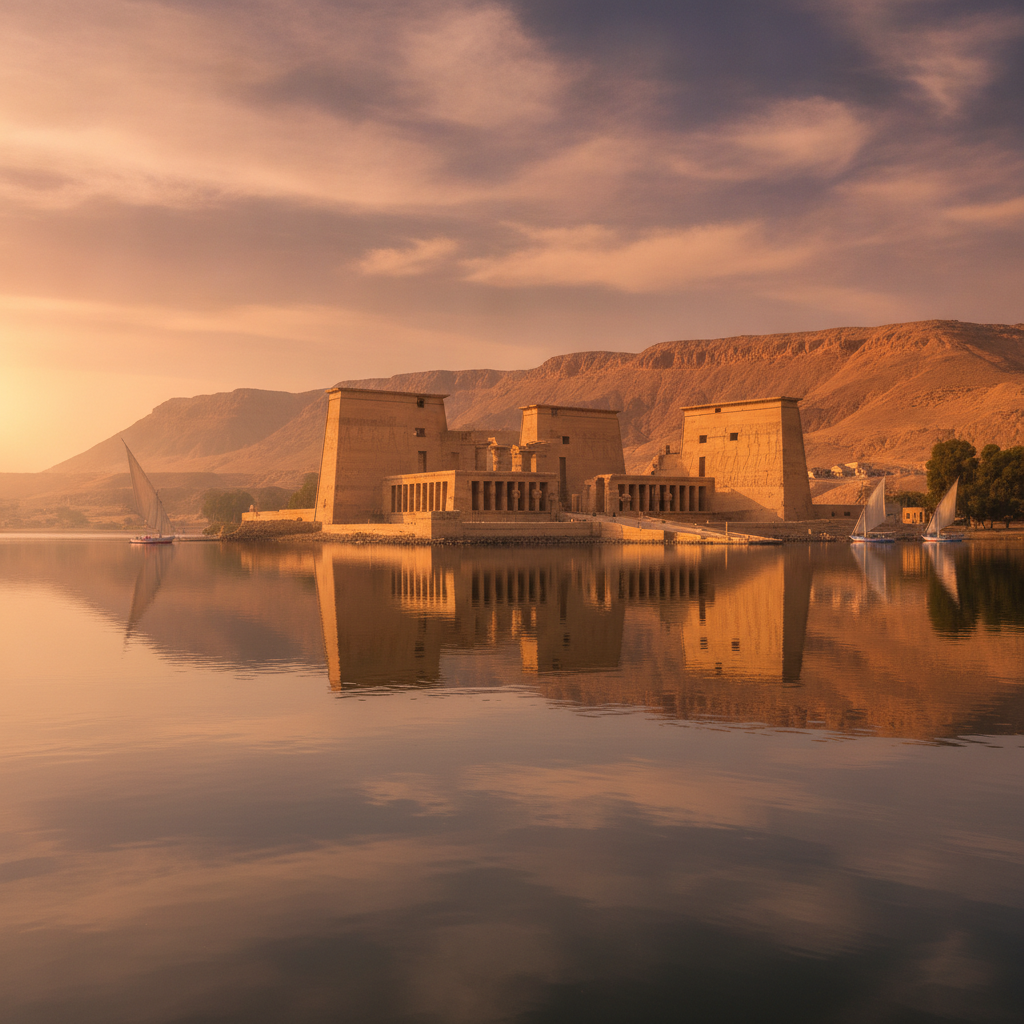
Aswan Complete Reference - Eratosthenes, the Suez Canal, Nile Source Discovery, and Heritage Tourism
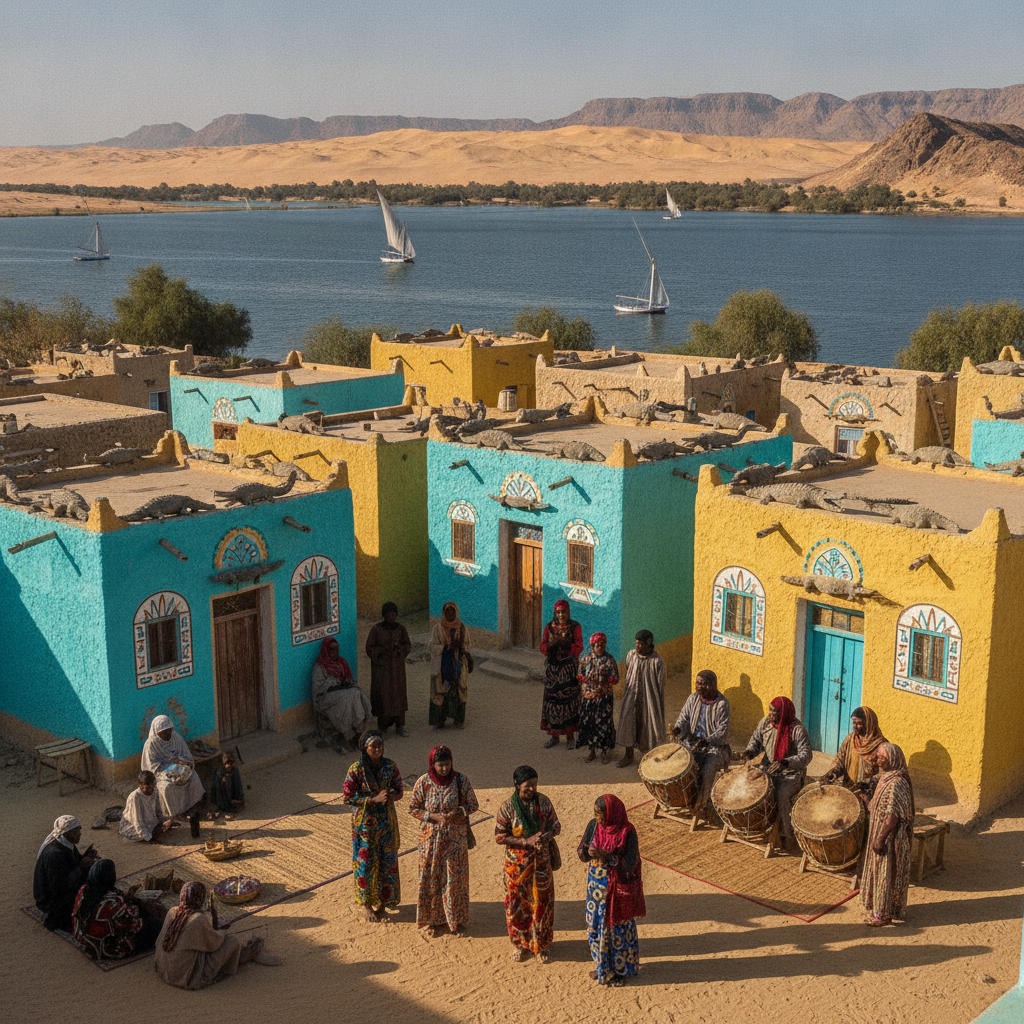
Aswan Nubian Culture: The Nubian Heritage, Music, Food, the Colorful Architecture, and the Most Distinctively African Single Egyptian Community
Aswan Practical: The Airport, Lake Nasser Cruise Booking, Accommodation, Optimal Timing, and the Nile South Circuit