Asuncion Arts, Music, and the Paraguayan Harp
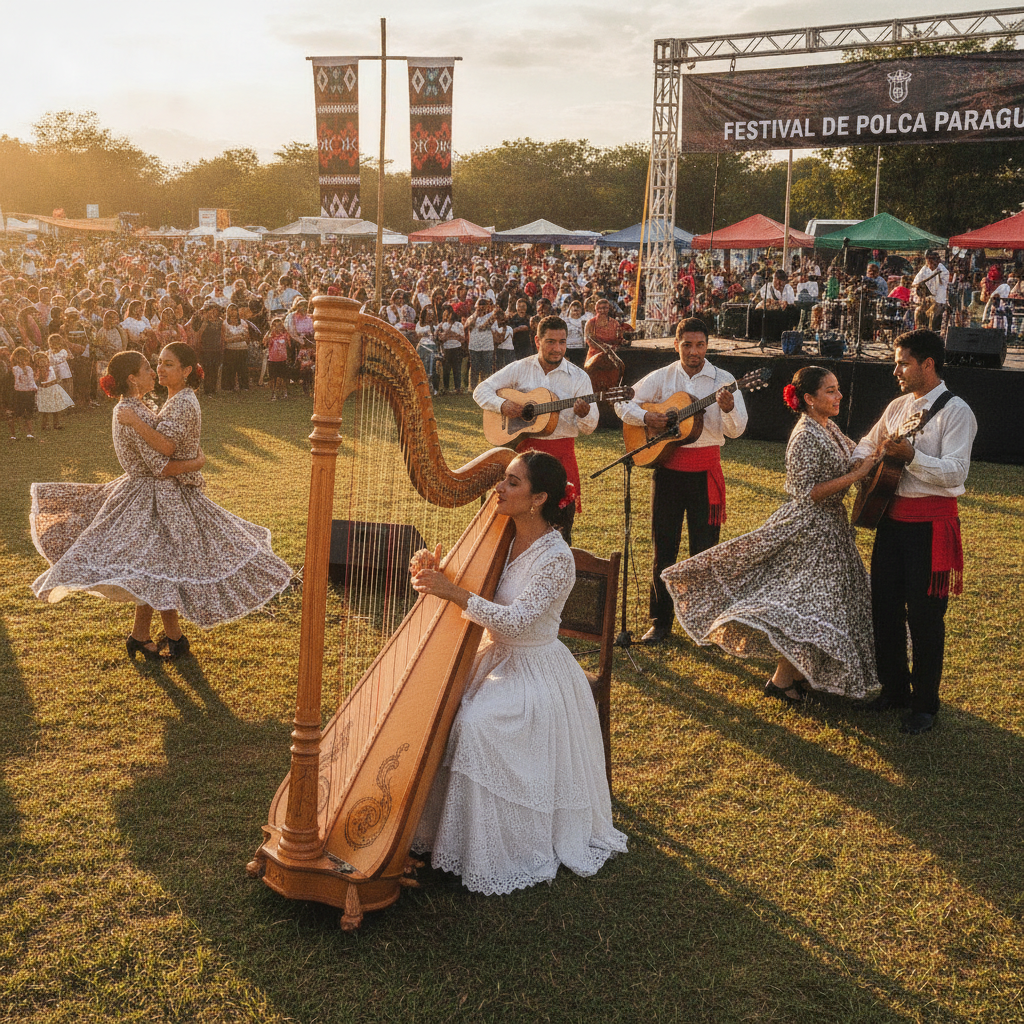
The Paraguayan harp, an instrument of Spanish colonial origin that Paraguay has made entirely its own, is one of the few instruments to become so identified with a single nation that it serves as a national symbol; the Paraguayan harp is the primary melodic instrument of Paraguayan folk music and the foundation of the polca paraguaya, the national dance and music form. The arts scene in Asuncion, concentrated in the Loma San Jeronimo and Villa Morra neighborhoods, includes a small but dedicated community of contemporary artists, the Museo del Barro with one of the best pre-Columbian and indigenous art collections in South America, and the performing arts venues of the Manzana de la Rivera cultural complex. Paraguayan literature and visual art have operated in relative isolation from the main currents of Latin American cultural life, producing a distinctive voice shaped by the Guarani language, the experience of isolation, and the weight of historical tragedy.
- 1
The Paraguayan Harp: National Instrument and Musical Identity
The Paraguayan arpa, the light wooden diatonic harp that has become the definitive Paraguayan folk instrument, arrived with the Spanish colonial missionaries in the 16th and 17th centuries and was adopted so completely by the Guarani and mestizo population that it became unambiguously Paraguayan in identity within generations. The instrument is lighter and more portable than the concert harp, with fewer strings and a diatonic rather than chromatic tuning that shapes the melodic character of the music. The Paraguayan harp style involves a right hand playing the melody at high speed with rapid ornamental passages while the left hand provides bass and harmonic support; the characteristic sound is bright, fast, and percussive in a way that distinguishes it from European concert harp performance. The most famous Paraguayan harpist internationally is Felix Perez Cardozo, who composed the song Pajaro Campana, the bellbird, which became the most recognized Paraguayan musical piece worldwide. The harp is performed alongside the guitar in the traditional Paraguayan duo format at folk music events throughout the country and in the restaurants and penas of Asuncion where traditional music is presented for visitors. Learning to play the Paraguayan harp is a common childhood activity in rural Paraguay, and the tradition is transmitted within families and through music schools across the country.
- 2
Polca Paraguaya and Guarania: The National Music Forms
The polca paraguaya, the national dance and music form of Paraguay, is entirely distinct from the European polka despite sharing the name: it has a 6/8 rhythm with syncopation that creates a characteristic bounce quite different from the 2/4 European polka, and is performed on harp and guitar in a tempo that varies from slow and lyrical to fast and energetic. The word polca arrived with European influence in the 19th century but was applied to an existing Paraguayan musical form with pre-existing Guarani musical elements. The guarania, created by composer Jose Asuncion Flores in 1925, is a slower, more melancholy musical form developed from the polca tradition; Flores described it as the music of the Paraguayan soul and it remains the preferred form for expressing the deep emotional themes of Paraguayan lyric song including nostalgia, love, and the natural beauty of the country. The song India, composed by Flores with words by Manuel Ortiz Guerrero, is the most beloved of the guarania compositions and the piece that most completely expresses the form's emotional character. Both forms are performed with the harp and guitar combination that defines Paraguayan folk music; the orquesta sinfonica concerts in Asuncion regularly include arrangements of guarania and polca paraguaya alongside the standard orchestral repertoire.
- 3
Museo del Barro: Pre-Columbian and Indigenous Art Collections
The Museo del Barro, located in the Punta Karapá neighborhood of Asuncion, is the most important museum in Paraguay for pre-Columbian, indigenous, and popular art, with collections spanning the full range of Paraguayan and neighboring South American material culture from ancient ceramics to contemporary indigenous craft production. The pre-Columbian ceramic collection includes pieces from the Guarani and other prehistoric cultures of the Rio de la Plata region, providing material evidence for the cultures that preceded and shaped the colonial society. The indigenous art collection documents the contemporary craft traditions of the Paraguayan indigenous peoples including the Ishir-Chamacoco sculpture in wood and bone, the Ayoreo featherwork, and the Enxet weaving traditions; these objects are presented with ethnographic context that makes the collection more than a display of aesthetic objects. The popular art section documents the material culture of the Paraguayan rural and urban poor, including the ex-votos votive offerings, the religious popular art, and the decorative objects of everyday life that constitute a different kind of cultural heritage from the formal artistic tradition. The museum was founded by collectors Carlos Colombino and Josefina Plá, whose scholarly and artistic work established the intellectual framework for understanding Paraguayan material culture.
- 4
Josefina Plá and the Literary Tradition
Josefina Plá, born in the Canary Islands in 1903 and a Paraguayan resident from 1927 until her death in 1999, is the most important figure in 20th century Paraguayan cultural life, contributing as a poet, short story writer, ceramicist, visual artist, cultural journalist, and historian in a career of over 70 years that touched every dimension of Paraguayan artistic and intellectual life. Her poetry in Spanish and her analysis of Paraguayan culture, including her landmark study of the baroque art of the Jesuit missions, established her as the central figure of Paraguayan literary modernism. The Augusto Roa Bastos, the novelist who received the Cervantes Prize in 1989, the highest honor in Spanish-language literature, is the most internationally recognized Paraguayan writer: his novel Yo el Supremo, a fictional recreation of the internal monologue of the 19th century Paraguayan dictator Jose Gaspar Rodriguez de Francia, is considered one of the major works of Latin American literature. Roa Bastos lived most of his adult life in exile in Argentina and France during the Stroessner years, an experience shared by a generation of Paraguayan intellectuals who could not work freely in their own country. The recovery of this literary tradition is an ongoing project of post-Stroessner Paraguayan cultural institutions.
- 5
Asuncion Contemporary Art Scene: Manzana de la Rivera
The Manzana de la Rivera, a block of eight colonial houses from different periods in the 18th and 19th centuries preserved as a cultural complex adjacent to the Palacio de los Lopez, is the most important cultural venue in Asuncion and the primary space for visual art exhibitions, theater, and cultural events in the city center. The complex hosts temporary exhibitions of Paraguayan and international contemporary art, permanent collections of colonial and republican period objects, a library, and the offices of several cultural organizations. The contemporary art scene in Asuncion is small by the standards of Buenos Aires or Bogota but has a dedicated community of artists working in visual art, video, performance, and installation, concentrated in the Loma San Jeronimo barrio and the Villa Morra commercial and cultural neighborhood. The Centro de Artes Visuales Museo del Barro provides the most sustained institutional support for the visual arts in Paraguay. The ArteUnico contemporary art fair, held periodically in Asuncion, brings Paraguayan artists together with collectors and gallery representatives from the region. The relative isolation of Paraguay from the main Latin American art market circuits has produced an art scene that is genuinely independent from the trends and commercial pressures that shape art in larger regional capitals.
- 6
Festivals and Cultural Calendar: San Juan, Caacupe, and the Paraguayan Year
The Paraguayan cultural calendar is structured around Catholic feast days that have absorbed Guarani ceremonial elements over the colonial period, producing hybrid celebrations that are distinctively Paraguayan in character. The Fiesta de San Juan on June 24 is the most elaborately celebrated popular festival in Paraguay, featuring fire-related activities including walking on embers, wrestling matches held in mud, and the tatá pyrá, fire games in which participants demonstrate bravery and community belonging through contact with flame. The celebration of the Virgin of Caacupe, the patron saint of Paraguay, on December 8 draws hundreds of thousands of pilgrims to the basilica town of Caacupe 54 kilometers east of Asuncion; the pilgrimage walk from Asuncion to Caacupe on the eve of the festival is made by tens of thousands of devotees overnight, and the arrival at the basilica at dawn is one of the most significant religious experiences in Paraguayan life. The Semana Santa Holy Week produces the highest national chipa production of the year, with families baking in the traditional tatakua ovens and exchanging chipa with neighbors and extended family. The Friendship Day on August 1, a public holiday unique to Paraguay, celebrates friendship with the sharing of tereré con ruda, the caña and ruda herb mixture drunk specifically on this day for its purported protective properties.
Walk this route with audio
Stories play automatically as you reach each stop — no tapping needed.
More in Asuncion
Asuncion Practical Guide: Getting There, Getting Around, and Paraguay Circuit
Asuncion Day Trips: Areguá, Itauguá, Caacupe, and the Circuito de Oro
Asuncion: The Mother of Cities, Guarani Culture, and the Heart of Paraguay
Asuncion History: Foundation, Independence, Dr Francia, and the Lopezas
Asuncion Food and Daily Life: Sopa Paraguaya, Chipa, and the Tereré Culture