Antigua Practical Guide: Getting There, Accommodation, Safety, and Climate
Antigua is one of the most accessible and visitor-friendly cities in Central America, served by Guatemala City's international airport forty-five minutes away by shuttle. The compact historic center is entirely walkable, the climate is spring-like year-round, and the tourism infrastructure is well developed for all budget levels. This route provides the practical framework: transport from Guatemala City, accommodation across all price ranges, the safety reality, the seasonal pattern, and specific logistical tips for getting the most from a visit to the colonial capital.
- 1
Getting to Antigua: Airport Shuttles and the Guatemala City Connection
La Aurora International Airport in Guatemala City, forty-five kilometers from Antigua, receives direct flights from major US hubs including Miami, Houston, Dallas, Los Angeles, and New York, as well as connections from Mexico City, Bogota, and Panama City. From the airport, the standard transport is a private shuttle to Antigua taking forty-five minutes to one hour and costing 10 to 15 USD per person, operating continuously through the day. Taxis from the airport to Antigua cost 40 to 60 USD for a private vehicle. The ADN luxury bus service operates between Antigua and Guatemala City with multiple daily departures. It is also possible to connect from Antigua to other Guatemalan destinations by shuttle, including Flores for Tikal, Lake Atitlan, and the Mexican border.
- 2
Accommodation: Colonial Hotels, Boutique Rooms, and Hostels
Accommodation in Antigua spans from budget hostels at 10 to 20 USD per dormitory bed to the premium hotels in fully restored colonial mansions charging 300 to 500 USD per night. The mid-range is strong, with boutique hotels in colonial courtyards offering private rooms with breakfast for 60 to 150 USD. The Casa Santo Domingo Hotel, built within the ruins of the Dominican convent, is the most architecturally ambitious accommodation in the city and has been praised for its integration of the archaeological remains into the hotel experience. Homestay accommodation through the language schools costs 150 to 200 USD per week including meals. The best value mid-range options fill quickly during Semana Santa and the December holiday period, requiring booking months in advance for those weeks.
- 3
Safety: The Tourist Zone Reality and Caution Zones
Antigua is significantly safer than Guatemala City and has a visible tourist police (PROATUR) presence throughout the historic center. Petty theft including phone snatching has occurred on the less-traveled streets and on the approaches to the Cerro de la Cruz. Walking to outlying volcanoes or rural areas without a guide has led to robberies in the past; the PROATUR-organized walks to the Cerro de la Cruz and the tours organized by established operators are the safest format for anything outside the historic core. Night travel outside the city should use registered transport rather than walking or unregistered taxis. The general tourist experience within the central grid is relaxed and safe; the context is Guatemalan tourism infrastructure in a country with significant inequality and a police force of variable reliability.
- 4
Climate: The Eternal Spring and the Rain Season
Antigua at 1,540 meters altitude has the spring-like climate that Guatemalan highlands are famous for. Temperatures range from 15 to 25 degrees Celsius throughout the year, with minimal seasonal variation. The dry season from November through April brings clear skies and cool nights; the rainy season from May through October brings afternoon rains that typically last one to three hours before clearing. The volcanoes are most clearly visible in the dry season; the green season turns the valley an intense tropical green. Semana Santa in March or April is the peak tourism period regardless of weather. December and January are popular for the cool nights and clear days. October and September are the quietest months, with the best hotel prices and the least crowded streets.
- 5
The Parque Central as Social Hub and Time Anchor
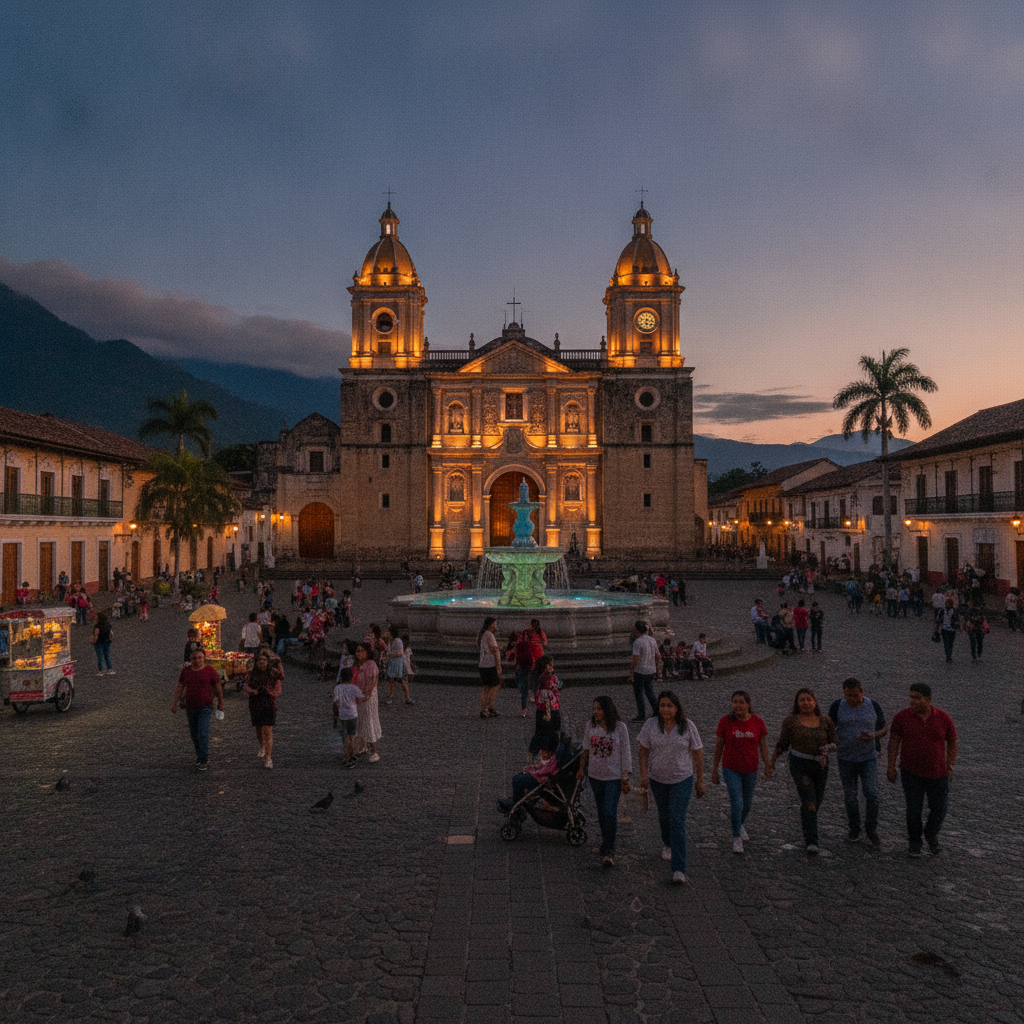
The Parque Central is the organizing social space of Antigua and the best single point of orientation. The shoe-shiners at the park benches, the food vendors, the pigeons, the view of the palace facade, and the cathedral ruins provide a consistent reference point across the day. The park is active from 6 AM through midnight, with the morning characterized by local workers and market traffic, the midday by tourists, the afternoon by students from the language schools, and the evening by couples and families enjoying the plaza atmosphere. The permanent activity of the park makes it the most efficient introduction to the city's social life and the best landmark for orienting the surrounding street grid in any direction.
- 6
Day Budget, Tipping, and Practical Money in Antigua
Guatemala uses the quetzal (Q) as its currency; exchange rates of approximately 7 to 8 quetzales per US dollar make mental arithmetic straightforward. US dollars are widely accepted in tourist-oriented businesses but at slightly unfavorable rates. ATMs are available at major banks near the Parque Central and accept international cards. The budget range for a comfortable visit to Antigua runs from 40 USD per day (hostel, local meals, public transport, one paid activity) to 200 USD per day (boutique hotel, restaurant meals, guided tours, language school). Tipping is expected in restaurants at 10 percent. The language school market has created a price transparency that is unusual for the region: rates are publicly posted and comparable between operators, making comparison shopping straightforward.
Walk this route with audio
Stories play automatically as you reach each stop — no tapping needed.
More in Antigua Guatemala
Antigua Guatemala: Colonial Baroque, Volcano Views, and the UNESCO Historic Core
Spanish Language Schools and the Antigua Study-Travel Economy
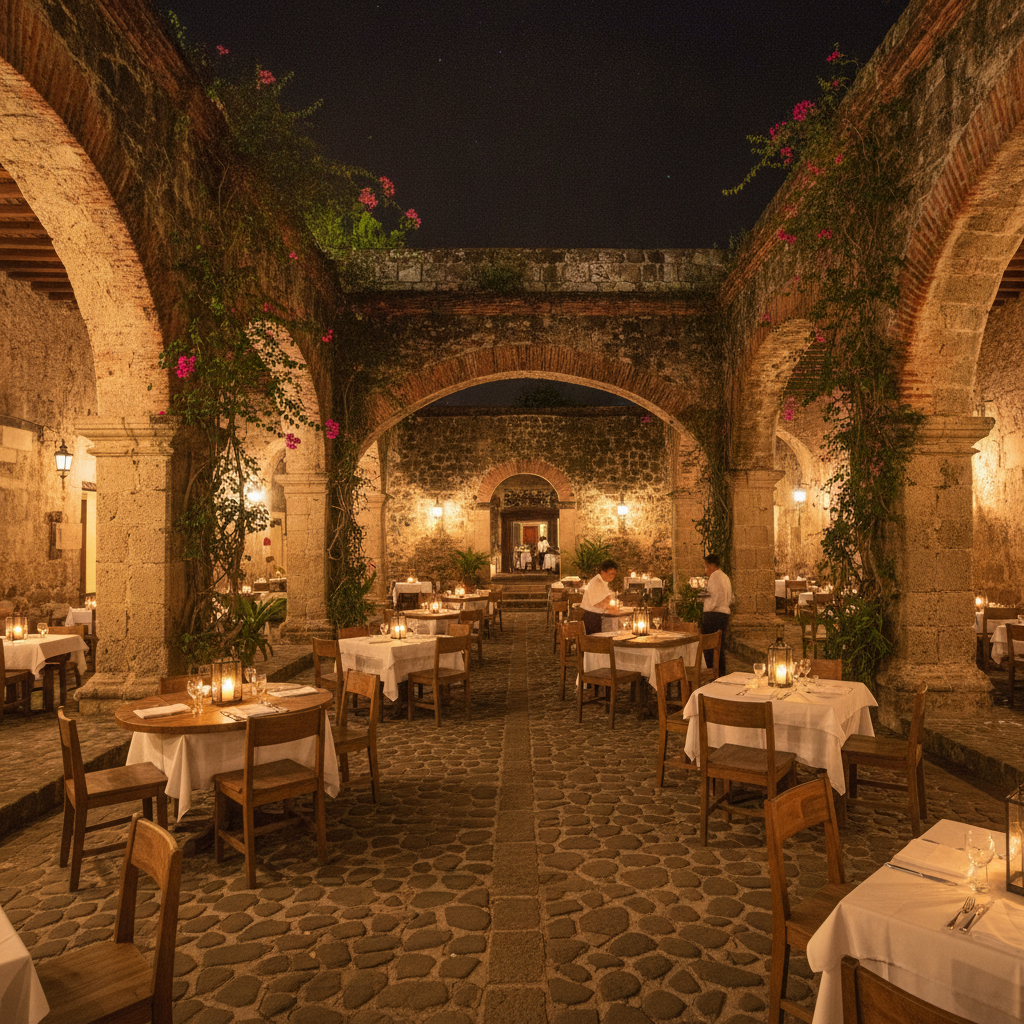
Antigua Food Scene: Coffee, Chocolate, Pepian, and the Restaurant Economy
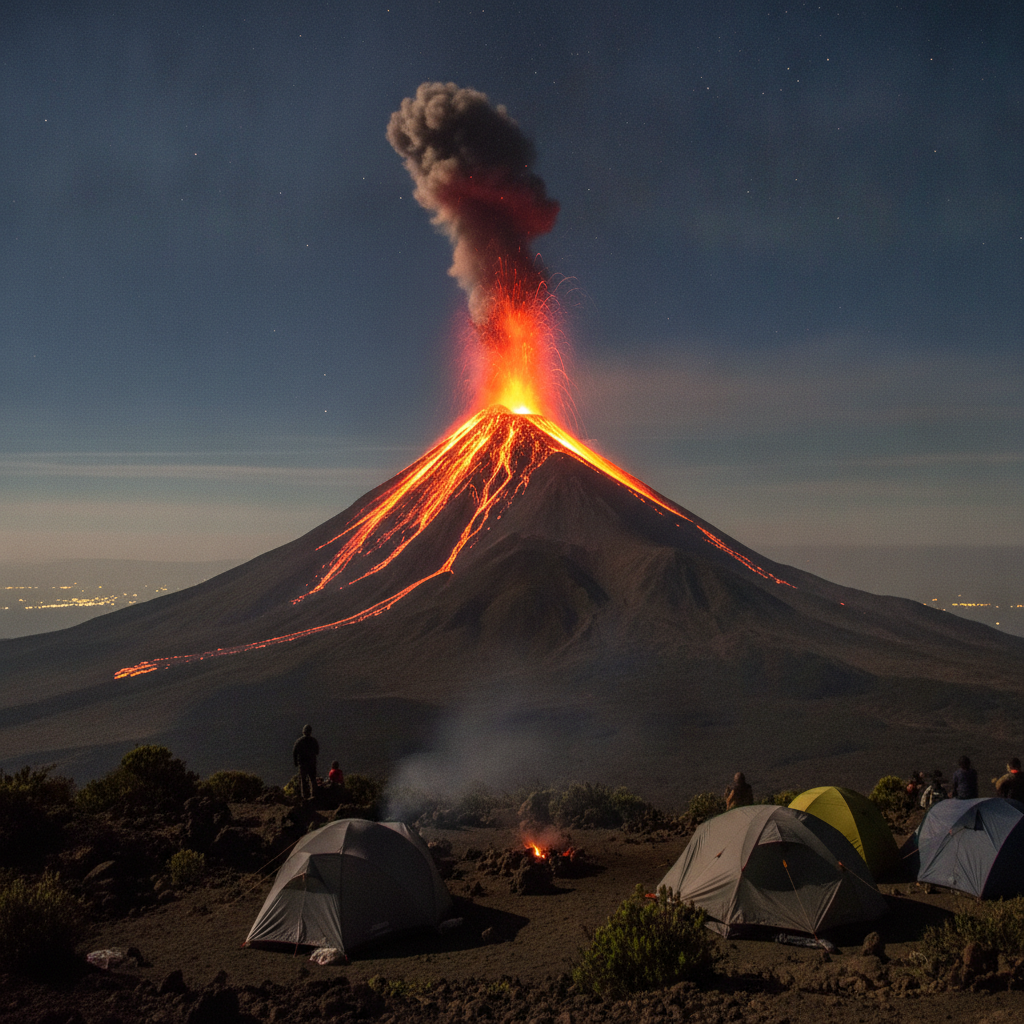
Acatenango and Fuego: Volcano Trekking from Antigua
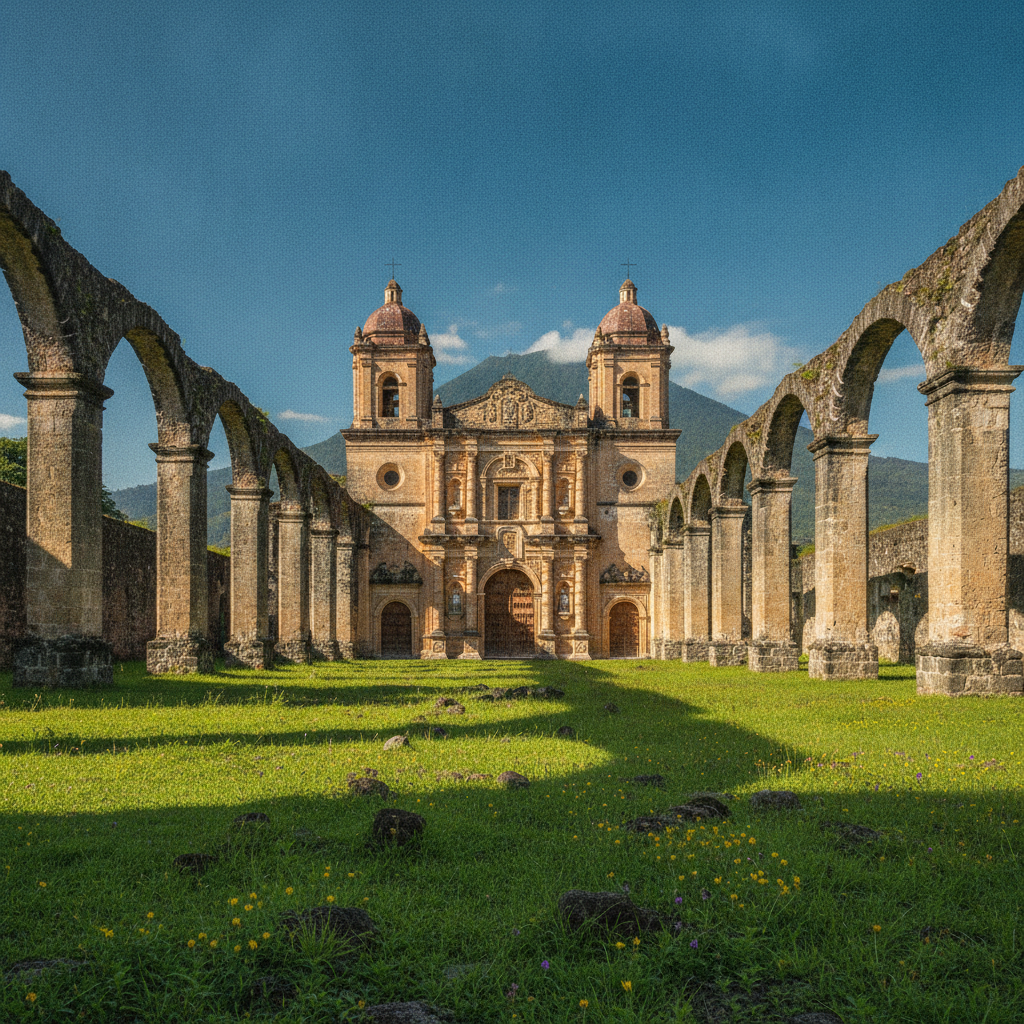
Colonial History: The Kingdom of Guatemala and the 1773 Earthquake