Colonial History: The Kingdom of Guatemala and the 1773 Earthquake
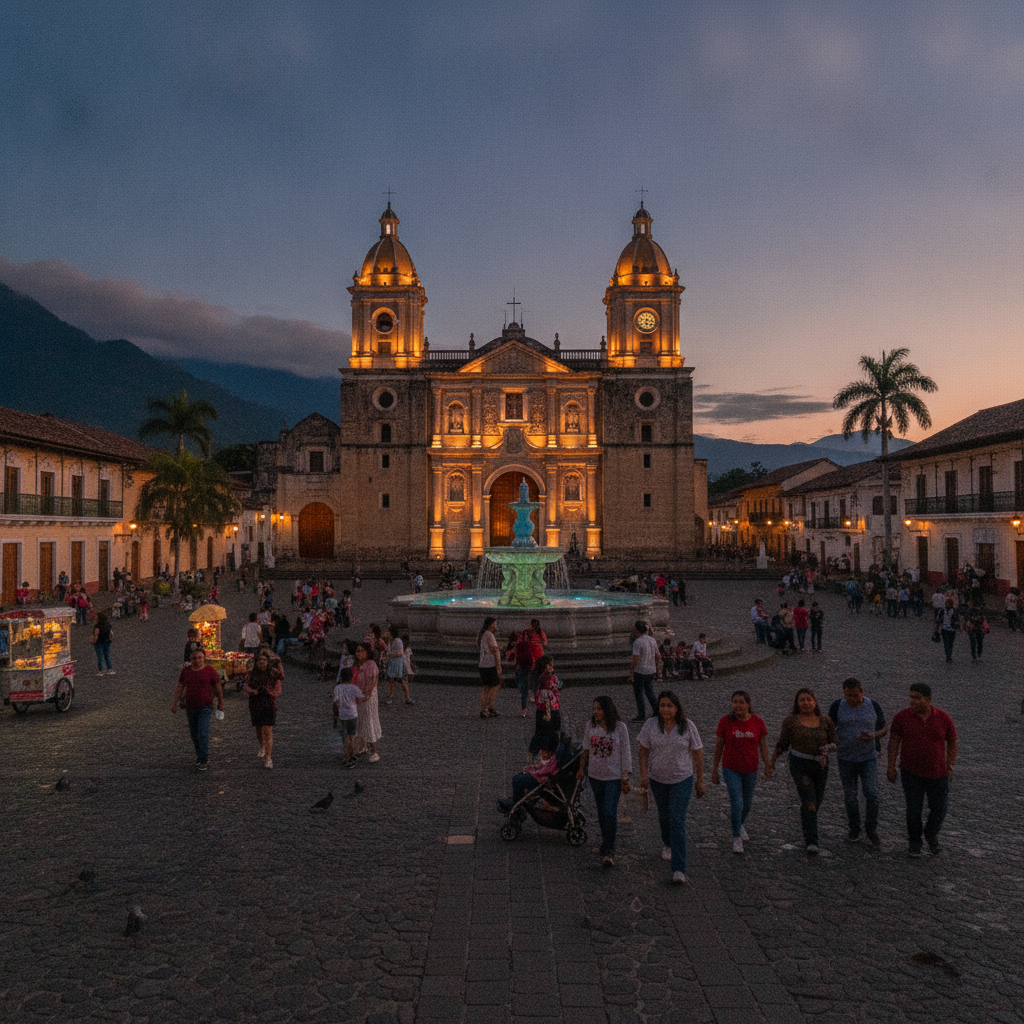
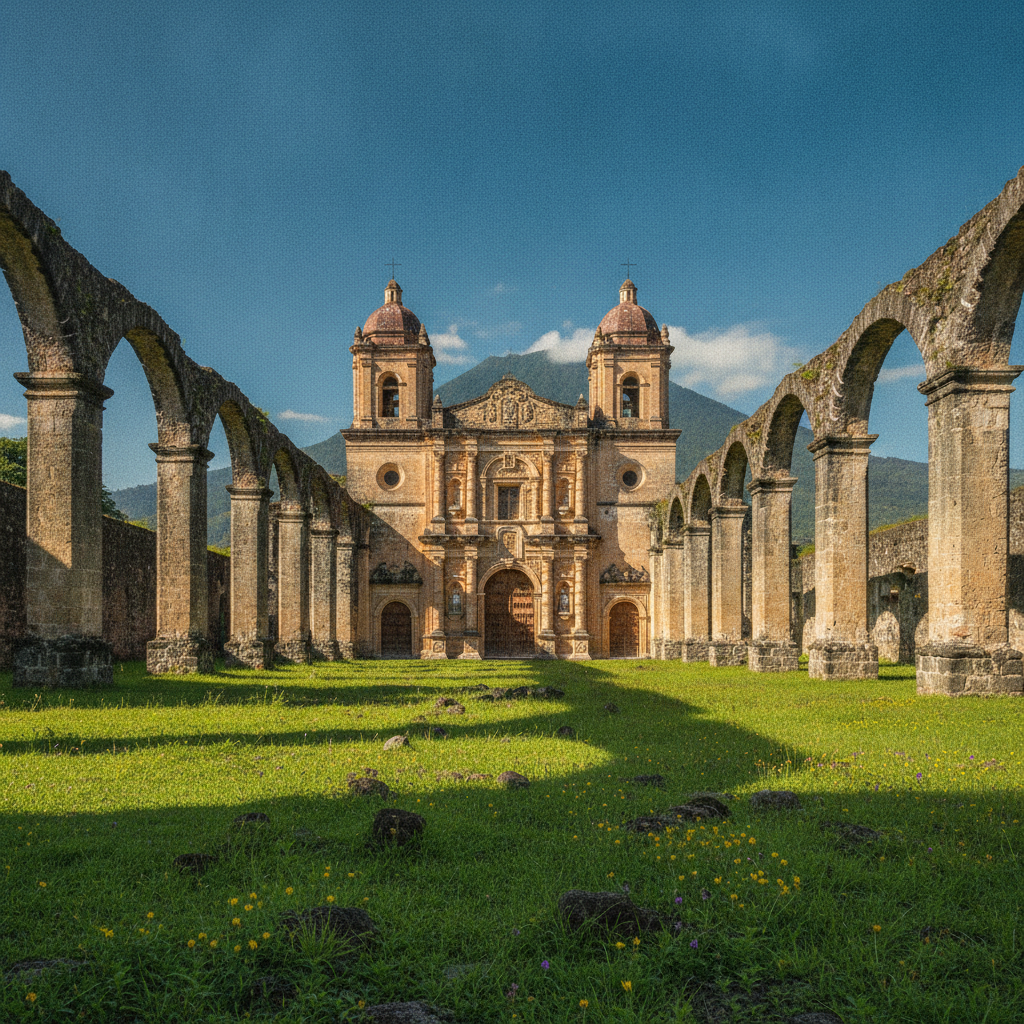
Antigua Guatemala, originally called Santiago de los Caballeros de Guatemala, served as the capital of the Captaincy General of Guatemala from 1543 until the 1773 Santa Marta earthquake destroyed the city and forced the relocation of the capital to the current Guatemala City. For 230 years it was the administrative, ecclesiastical, and commercial center of a territory spanning from Chiapas to Costa Rica, producing the colonial baroque architecture and ecclesiastical institutions whose ruins define the contemporary city.
- 1
Foundation and the Three Colonial Capitals
The Spanish colonial capital of Guatemala moved three times before settling at its current location. The first capital, established in 1524 at Iximche, the Kaqchikel Maya capital, was abandoned when the Kaqchikel revolted. The second, Ciudad Vieja at the base of Volcan de Agua, was destroyed in 1541 when a crater lake collapsed and flooded the settlement, killing the governor's wife Beatriz de la Cueva. The third and longest-lived capital, Santiago de los Caballeros, was established at the present site of Antigua in 1543 and grew into the most important city in Central America over the following two centuries. The sequence of catastrophic relocations is embedded in Guatemalan historical identity as a narrative of persistence against natural adversity.
- 2
The Captaincy General: Administrative Reach and Colonial Power
At its height in the seventeenth and eighteenth centuries, Santiago de los Caballeros governed a territory that included the modern countries of Guatemala, Belize, Honduras, El Salvador, Nicaragua, and Costa Rica, as well as the Mexican state of Chiapas. The city was the seat of the Royal Audiencia (the colonial court), the Archbishop of Guatemala, the Universidad de San Carlos (founded 1676, the second-oldest university in Central America), and the printing press that produced the first newspaper in Central America. The city of approximately 60,000 people was larger than most contemporary Spanish American cities and was administered from a Palace of the Captains General facing the main plaza, portions of which still stand.
- 3
Ecclesiastical Architecture: Orders, Competition, and Baroque Excess
The dominant architectural force in colonial Antigua was the competition between religious orders for visible presence and patronage. The Franciscans, Dominicans, Mercedarians, Augustinians, Jesuits, and Capuchins each built churches and convents that expressed their institutional ambitions in stone and stucco. The result was a city where the ecclesiastical buildings dominated the skyline so completely that the secular residential architecture, however fine, existed in their visual shadow. The Antiguan baroque style that emerged was heavily influenced by local Maya craftsmen who interpreted Spanish and Italian decorative models in their own visual vocabulary, producing stucco relief work whose iconography blends European and indigenous Mesoamerican elements.
- 4
The 1773 Santa Marta Earthquake: Destruction and Controversy
The earthquake of July 29, 1773, the largest in Central American colonial history, struck the city on the Feast of Santa Marta and collapsed the majority of the major ecclesiastical buildings. The Archbishop of Guatemala and the civil authorities immediately debated whether to rebuild in place or relocate the capital. Archbishop Pedro Cortes y Larraz led the reconstruction faction; Captain General Martin de Mayorga led the relocation faction. The Crown sided with relocation, and a decree of 1776 officially ordered the transfer of capital functions to the Valley of the Hermitage (present Guatemala City). Many residents refused to leave, giving the city its current name: Antigua, meaning the old one.
- 5
Post-Earthquake Abandonment and Romantic Rediscovery
The population that remained in Antigua after the capital transfer lived among the ruins for over a century with minimal investment in restoration or new construction. The ruined churches, overgrown convents, and decaying mansions that defined the nineteenth-century city became the subject of romantic travel writing by European and North American visitors who found in the ruins an aesthetic of picturesque decay. John Lloyd Stephens, whose 1841 Incidents of Travel in Central America became the primary English-language introduction to the Maya world, visited Antigua and described it in terms that established the romantic ruin aesthetic. The protection of the ruins became a conservation cause in the twentieth century, leading to the UNESCO designation.
- 6
UNESCO Heritage Designation and the Gentrification Tension
The UNESCO World Heritage designation of 1979 provided the framework for the restoration investments that have transformed Antigua from a decaying colonial town into one of Latin America's premier heritage tourism destinations. The designation also created a preservation framework that restricts new construction height and building materials within the historic core. The economic consequences have been significant: property values have increased dramatically, real estate speculation has accelerated, and the residential population of the historic core has been displaced by commercial uses. The tension between heritage preservation and equitable urban development is most visible in the conversion of colonial residences to boutique hotels and restaurants for the tourism market, a process that has largely removed the mixed-income residential character the city had through the 1980s.
Walk this route with audio
Stories play automatically as you reach each stop — no tapping needed.
More in Antigua Guatemala
Antigua Guatemala: Colonial Baroque, Volcano Views, and the UNESCO Historic Core
Spanish Language Schools and the Antigua Study-Travel Economy
Antigua Food Scene: Coffee, Chocolate, Pepian, and the Restaurant Economy
Acatenango and Fuego: Volcano Trekking from Antigua
Tikal, Copan, and the Classic Maya Archaeological Circuit from Antigua