Antananarivo: The Aye-Aye, Andasibe Indri Call, Queen Ranavalona, the Malagasy Language Origins, and the Fady Taboo System
Madagascar heritage: the aye-aye (the most feared and most unusual lemur), Andasibe-Mantadia rainforest and the indri call, Queen Ranavalona I and the Merina monarchy, the Malagasy language (Austronesian in Africa, related to Borneo), and the fady taboo system that shapes Madagascar daily life.
- 1
The Aye-Aye - The Most Feared Animal in Madagascar
The aye-aye (Daubentonia madagascariensis): the most unusual lemur and one of the most bizarre mammals on earth. The aye-aye is the world largest nocturnal primate. Its distinguishing feature: the elongated, skeletal middle finger (significantly longer than the other fingers), used to tap on bark and listen for hollow spaces containing grubs, then to hook out the grubs from the cavity (a feeding technique called percussive foraging). The aye-aye is the only primate known to use echolocation-like acoustic scanning to find food. The fady (taboo) of the aye-aye: the aye-aye is considered the most bad luck animal in Malagasy culture in many regions; some communities believe that if an aye-aye points its elongated finger at you, you will die; others believe that the mere presence of an aye-aye near a village brings bad luck. The aye-aye population has been severely depleted because of this superstition (people kill aye-ayes on sight in communities with this belief). The Palmarium Reserve (on the east coast near Andasibe) is the most accessible place to see aye-ayes.
- 2
Andasibe-Mantadia National Park - The Indri Call and the Accessible Rainforest
Andasibe-Mantadia National Park (approximately 140 km east of Antananarivo): the most accessible national park in Madagascar for visitors based in Tana, a half-day drive east through the highland escarpment into the rainforest. The indri (Indri indri): the largest living lemur (body length approximately 70 cm, weight approximately 10 kg) and one of the most charismatic. The indri call: a series of haunting rising and falling notes that carry up to 3 km through the forest, the defining sound of the Madagascar highland rainforest. The indri cannot be kept in captivity (no indri has survived more than one year in a zoo) because its diet requirements are not understood; the only way to see the indri is in its natural rainforest habitat. The Andasibe area is also excellent for other lemur species (the woolly lemur, the grey-headed lemur, the black-and-white ruffed lemur) and for chameleons, frogs, and birds. The Vakona Forest Lodge (adjacent to the park): the most comfortable accommodation near Andasibe, with a private lemur island in the lodge grounds.
- 3
The Malagasy Kingship - Queen Ranavalona and the Merina Monarchy
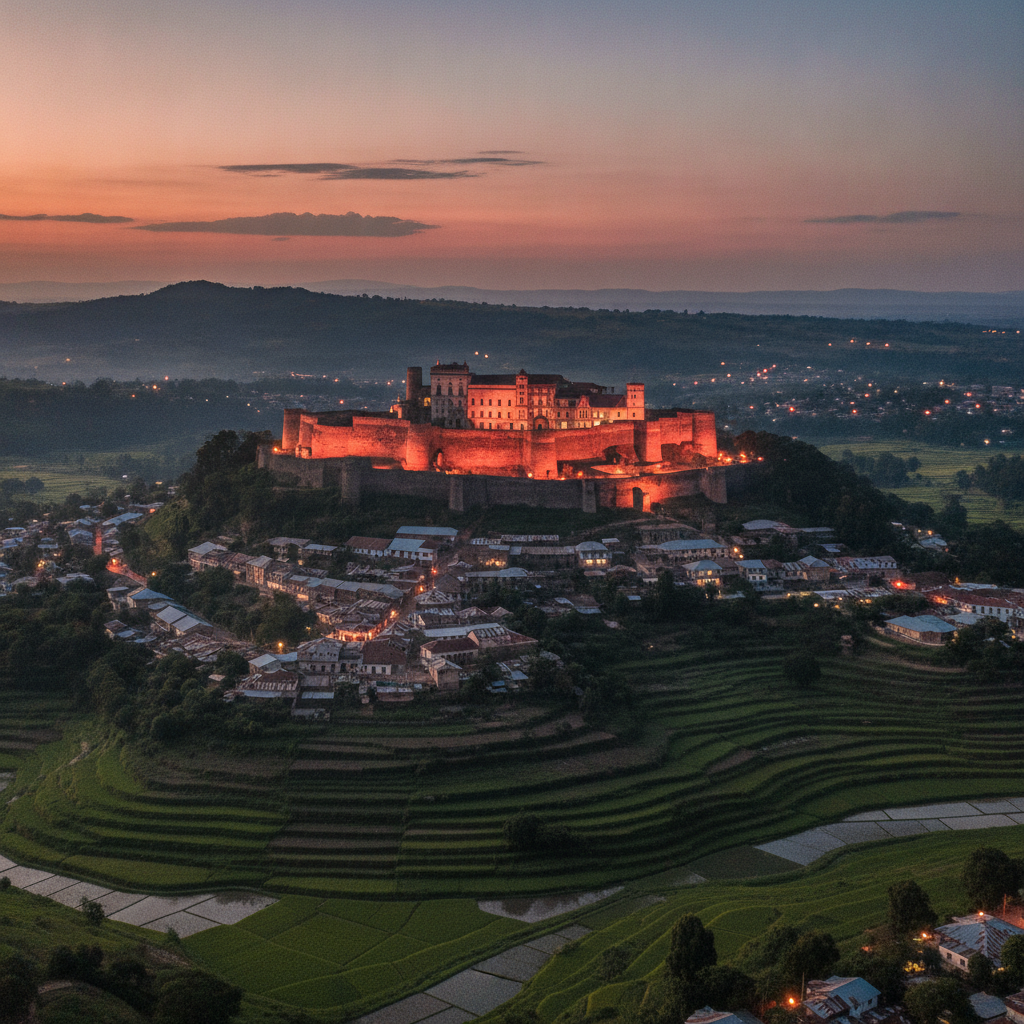
The Merina monarchy: the most politically organized pre-colonial polity in Madagascar. The Merina Kingdom unified the central highlands under King Andrianampoinimerina (died 1810) and his son Radama I (died 1828), who established the first formal diplomatic relations with European powers (initially Britain). Queen Ranavalona I (reigned 1828-1861): the most controversial Merina monarch. Ranavalona I expelled all European missionaries and traders in 1835 and executed Malagasy Christians. Her son Radama II (reigned 1861-1863) reversed these policies and was subsequently assassinated by his own nobles. The Merina court followed a pattern of queen-regnants (three queens: Ranavalona I, Ranavalona II, Ranavalona III) ruling through powerful prime ministers (the most powerful being Rainilaiarivony, who was the Prime Minister and the husband of three consecutive queens). The last queen, Ranavalona III, was exiled by France to Reunion and then to Algiers (where she died in 1917); she is now considered a national hero of Malagasy resistance.
- 4
The Malagasy Language - The Austronesian Tongue of Africa
The Malagasy language: the most surprising linguistic feature of Madagascar. Malagasy is classified in the Malayo-Polynesian branch of the Austronesian language family, most closely related to the Ma Anjaan language of southeastern Borneo. This means that the primary language of Madagascar is linguistically related to Indonesian and Malay, not to any African language. The linguistic relationship proves the Austronesian origin of the earliest Malagasy settlers: genetic analysis confirms that the founding population arrived from Borneo approximately 350-500 CE (possibly as part of a single founding event by a small group, as the genetic diversity of the population is consistent with a founder effect from a small founding group). The vocabulary: Malagasy has borrowed significantly from Bantu (the East African Bantu-speaking traders and settlers who arrived later), Arabic (from the Muslim traders of the Indian Ocean trade routes), French (colonial influence), and English. The numbers in Malagasy are entirely Austronesian in structure. The click sounds that appear in some regional varieties of Malagasy were borrowed from Khoisan-speaking contacts in East Africa.
- 5
The Madagascar Fady System - Taboos That Shape Daily Life
The fady (taboo) system of Madagascar: the most complex and pervasive system of culturally specific prohibitions of any country in the world. Each fady is specific to a particular ethnic group, region, village, family, or individual. Common types of fady: food fady (certain foods prohibited to certain groups: pork fady among some communities, specific fish fady, certain vegetables), directional fady (houses must face a specific direction; sleeping with your head in a specific direction), behavioral fady (whistling at night; certain words that must not be said; actions forbidden near a river; the prohibition on pointing at a tomb). The fady of the dead: the reverence for ancestors (the razana) is the most culturally central element of Malagasy spiritual life; disturbing, disrespecting, or building near a tomb is the most serious fady violation. The geographic variation: a visitor can cross from one village to the next and find entirely different sets of fady; the responsible traveler must ask a local guide about current local fady before behaving in ways that might inadvertently violate them.
- 6
Antananarivo Five Routes and Madagascar Planning Complete Reference
Antananarivo five routes complete. Route 1: Madagascar fourth largest island, Rova palace, lemurs, Malagasy culture, Ranomafana, practical guide. Route 2: Tsingy UNESCO, Avenue of the Baobabs, Isalo, French colonial history, Malagasy music and famadihana. Route 3: Nosy Be ylang-ylang, rainforest deforestation, spiny forest, vanilla economy, poverty paradox. Route 4: chameleons (40% of world species), fossa predator, RN7 scenic road, Tana food, marine life. Route 5 (this route): aye-aye (the most feared animal, the percussive foraging lemur), Andasibe-Mantadia and the indri call, Queen Ranavalona I and the Merina monarchy history, the Malagasy language (Austronesian in Africa), the fady taboo system. Route 6 needed: the final legacy route. Madagascar planning summary: the best circuit from Antananarivo (2 weeks): Day 1-2 Tana (Rova, markets), Day 3 Andasibe (indri, lemurs), Day 4-5 fly Morondava (Avenue of Baobabs, Kirindy fossa), Day 6-7 fly Nosy Be (beach, snorkeling), Day 8-9 fly Isalo (canyon, natural pools), Day 10-11 Fort Dauphin (spiny forest, Berenty), Day 12 return to Tana. Internal flights are essential (the RN7 roads are slow: Tana to Fort Dauphin is 12+ hours by road; 1.5 hours by Air Madagascar). Book Air Madagascar flights well in advance.
Walk this route with audio
Stories play automatically as you reach each stop — no tapping needed.
More in antananarivo
Antananarivo: Madagascar Chameleons, the Fossa Predator, Route Nationale 7, Malagasy Food Markets, and Humpback Whales
Antananarivo: Nosy Be Beach Resort, Madagascar Rainforest Crisis, Spiny Forest, Vanilla Industry, and the Poverty Paradox
Antananarivo: Tsingy de Bemaraha, Avenue of the Baobabs, Isalo National Park, French Colonial History, and Malagasy Music
Antananarivo: The Red Island, the Rova Royal Palace, Lemurs, Malagasy Culture, Ranomafana Rainforest, and Practical Guide