Rijksmuseum, Van Gogh & Museumplein: The Museum Quarter
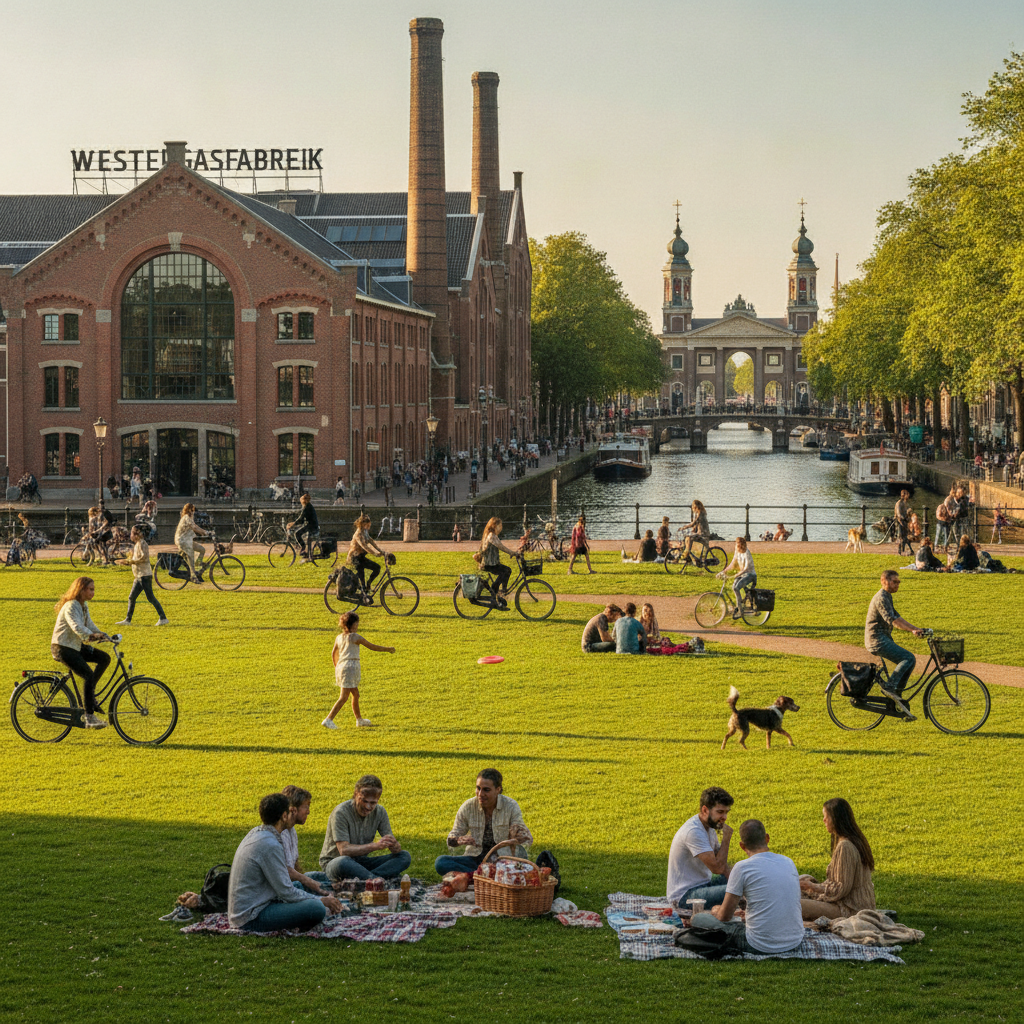
The Museumplein, a broad open square in Amsterdam's Oud-Zuid district, anchors the most concentrated collection of world-class museums anywhere in the Netherlands: the Rijksmuseum (the Dutch national museum, 8,000 works on display, 80 galleries), the Van Gogh Museum (the largest collection of Van Gogh's work in the world, 200 paintings, 500 drawings), the Stedelijk Museum (modern and contemporary art, design), and the Concertgebouw (one of the most acoustically perfect concert halls in the world, completed 1888). The Museumplein itself, redesigned in 1999, is a social space as much as a tourist destination: a sunken pond used for skating in winter, a lawn where Amsterdammers picnic in summer, and the junction between the 19th-century museum district and the Vondelpark — the city's central park, a 47-hectare ribbon of lawn, ponds, and playgrounds that runs through Oud-Zuid. This route is the essential Amsterdam cultural itinerary.
- 1
Rijksmuseum — Eight Centuries of Dutch Art and History
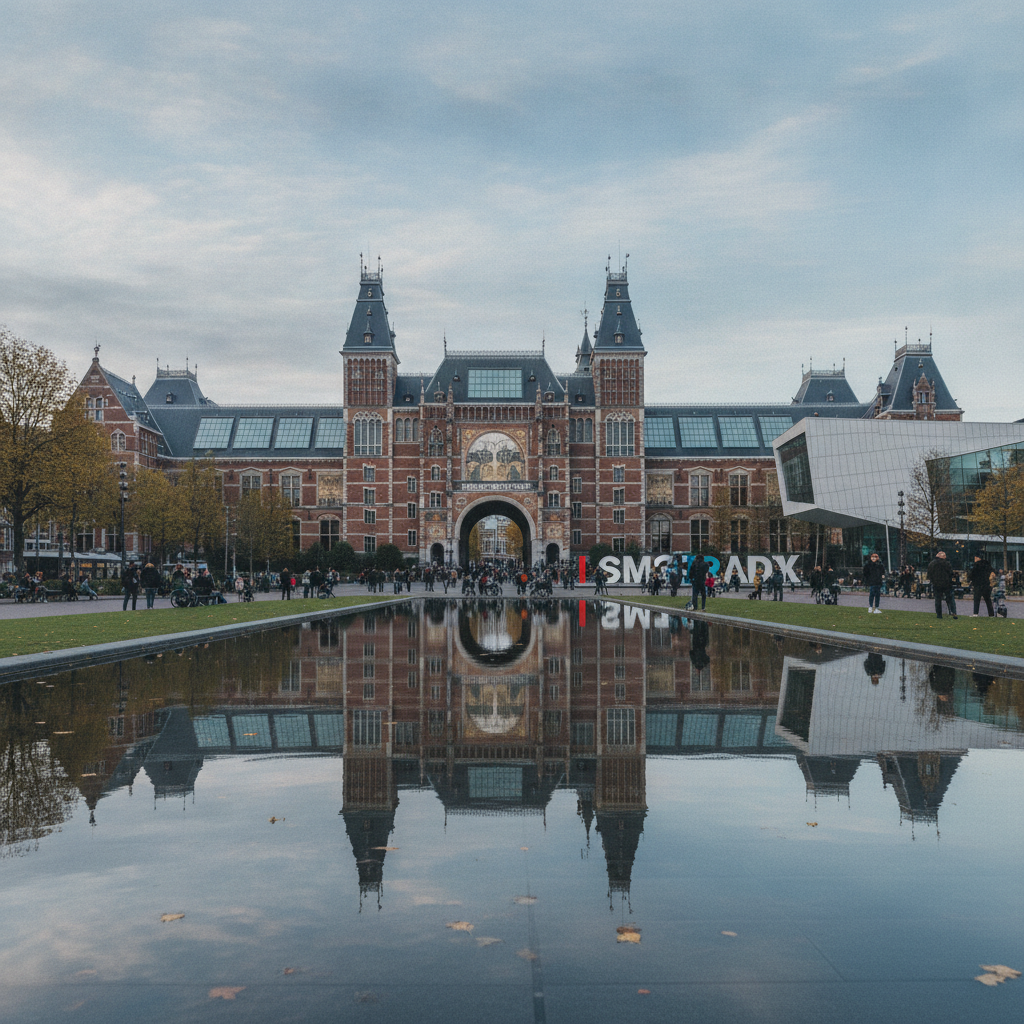
The Rijksmuseum, the Dutch national museum of art and history, is one of the great encyclopedic museums of the world: 8,000 objects displayed across 80 galleries, spanning eight centuries of Dutch and Flemish art and history, from a 12th-century baptismal font to Vermeer's The Milkmaid, from Rembrandt's The Night Watch to a 17th-century dollhouse the size of a sideboard. The building, designed by Pierre Cuypers (who also designed Amsterdam's Central Station) in a neo-Gothic/Dutch Renaissance style and opened in 1885, was controversial at the time — critics called it a 'Catholic church' and questioned whether such ornamentation suited a Protestant country — but is now loved as a civic monument. The renovation by Antonio Cruz and Antonio Ortiz (2003–2013), the most expensive museum renovation in Dutch history, transformed the interior while restoring the original decoration and opened the central archway to bicycle traffic (Dutch practicality prevailing over museum protocol). The gallery of Golden Age painting on the second floor — Rembrandt, Vermeer, Hals, Steen, Ruisdael, de Hooch — is the finest collection of 17th-century Dutch painting in the world.
- 2
Van Gogh Museum — 200 Paintings, One Life
The Van Gogh Museum, opened in 1973 in a building by Gerrit Rietveld (completed posthumously by his colleague Johan van Dillen and Jan van Tricht), holds the largest collection of Vincent van Gogh's work in the world: 200 paintings, 500 drawings, and 750 personal letters that together form the most intimate portrait of a major artist available anywhere. The collection belongs to the Vincent van Gogh Foundation, established by Van Gogh's nephew Theo's son, and spans the artist's entire career: the dark, potato-eating peasant paintings of Nuenen (1883–1885); the Impressionist experiments of Paris (1886–1888); and the extraordinary final period of Arles, Saint-Rémy, and Auvers-sur-Oise (1888–1890) in which Van Gogh produced, in two years, the paintings for which he is known — The Bedroom, Sunflowers, The Sower, the Almond Blossom, the self-portraits. The 1999 wing by Kisho Kurokawa connects to the main building via a glass passage and hosts temporary exhibitions drawn from the museum's research into 19th-century art more broadly.
- 3
Stedelijk Museum — Modern and Contemporary Art Since 1895
The Stedelijk Museum, founded in 1895 and reopened in 2012 after a decade-long renovation that added the spectacularly ungainly white fiberglass 'bathtub' wing (by Benthem Crouwel Architects, universally mocked and now accepted), is the Netherlands' foremost museum of modern and contemporary art and design. The collection spans De Stijl (Mondrian, Rietveld, van Doesburg), CoBrA (Karel Appel, the Dutch-Belgian-Danish movement of expressive figuration), American Abstract Expressionism (the museum acquired major Rothko, Newman, and de Kooning works in the 1960s, when they were still cheap), Minimal Art, and contemporary practice. The design collection includes a complete suite of Rietveld furniture and an archive of Dutch graphic design from the 1920s to the present. The temporary exhibitions are among the most ambitious in Europe — the Stedelijk has consistently shown significant artists before they achieved international recognition.
- 4
Concertgebouw — The World's Most Acoustically Perfect Hall
The Concertgebouw (Concert Building), completed in 1888 to designs by Adolf Leonard van Gendt, is consistently ranked among the three most acoustically perfect concert halls in the world (alongside the Vienna Musikverein and Boston Symphony Hall) — a quality that was achieved not by acoustic engineering (the science didn't exist in 1888) but by Van Gendt's close study of the Leipzig Gewandhaus and an empirically derived 2-second reverberation time that suits orchestral music perfectly. The Royal Concertgebouw Orchestra, which has occupied the hall since its opening, is regularly ranked among the top orchestras in the world. The main hall seats 2,037 people; the smaller Recital Hall (Kleine Zaal) seats 478. The building underwent a significant structural renovation in 1988 (the original brick foundation was replaced with concrete piles) and is a national monument. Lunchtime concerts on Wednesdays (free) offer the best way to hear the hall without paying full concert prices.
- 5
Vondelpark — Amsterdam's Central Park
The Vondelpark, 47 hectares of lawn, ponds, rose gardens, playgrounds, and cycle paths running through the Oud-Zuid district, is the social center of Amsterdam: the place where Amsterdammers sunbathe, picnic, play football, walk dogs, listen to free concerts at the open-air theater (Openluchttheater, June–August), and simply exist in a city that otherwise provides very little public green space. The park was designed by the landscape architects Jan David Zocher and his son Louis Paul Zocher in the English landscape style (irregular paths, naturalistic water features, informal planting) and opened in 1865; it was named after the 17th-century playwright Joost van den Vondel (the 'Dutch Shakespeare') in 1867. The park has no fence or gate and is open 24 hours — an anomaly in a city as dense as Amsterdam that gives it an unusual openness. The Film Museum EYE (now relocated to Amsterdam Noord) was originally housed in the round pavilion by the entrance, which is now a café and event space.
- 6
Vondelpark Pavilion & the Neighborhoods of Oud-Zuid
The streets immediately south of the Vondelpark — Cornelis Schuytstraat, Jacob Obrechtstraat, Beethovenstraat — constitute Amsterdam's wealthiest residential neighborhood and its most concentrated area of late 19th-century bourgeois architecture: four- and five-story brick apartment buildings with ornate facades, bay windows, and private gardens, built between 1880 and 1920 for the professional class that the expansion of the city created. The Concertgebouwbuurt (Concert Hall neighborhood, between the Museumplein and the Vondelpark) is particularly fine: quiet streets, large apartments, an abundance of antique dealers and independent restaurants. The street markets on the Cornelis Schuytstraat (Wednesday and Saturday mornings) sell the best quality produce in Amsterdam — a neighborhood market rather than a tourist attraction, serving residents who have the means to pay for quality.
Walk this route with audio
Stories play automatically as you reach each stop — no tapping needed.
More in amsterdam
Jordaan, Anne Frank & the Canal Ring: Amsterdam's Golden Age Heart
Rembrandtplein, Tuschinski & the Amstel: Art, Entertainment, and the Skinny Bridge
Amsterdam Noord, EYE & NDSM: The Creative Waterfront
De Pijp, Albert Cuyp & Heineken: Amsterdam's Most Diverse Neighborhood
NEMO, Maritime Museum & Eastern Docklands: The Harbor City Reinvented