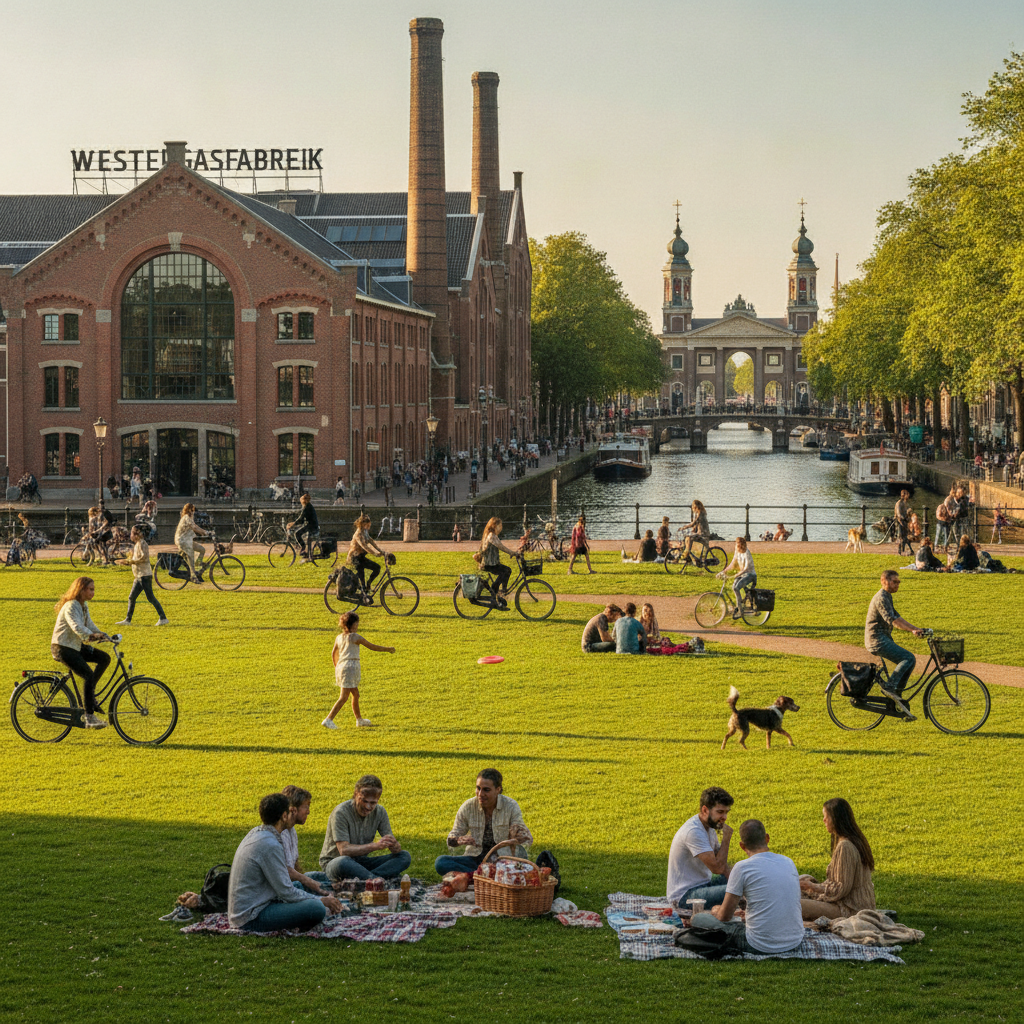
Amsterdam Noord, EYE & NDSM: The Creative Waterfront
Amsterdam Noord (North Amsterdam), the neighborhood north of the IJ harbor accessible by free ferry from Central Station, was for most of its history Amsterdam's industrial backyard: the Shell oil refinery, the NDSM shipyard, warehouses, and the low-lying polders that provided the agricultural hinterland for the city. The closure of heavy industry from the 1980s–2000s left a landscape of enormous industrial buildings, empty docks, and cheap real estate. Artists, cultural organizations, and creative businesses moved in; the city invested in cultural infrastructure (EYE Film Museum, A'DAM Tower, Tolhuistuin cultural park); and Amsterdam Noord became, in the 2010s, what Berlin's Mitte was in the 1990s: the frontier of European creative culture, rough-edged and quickly gentrifying.
- 1
IJ Ferry — The Free Commute That Tourists Discover
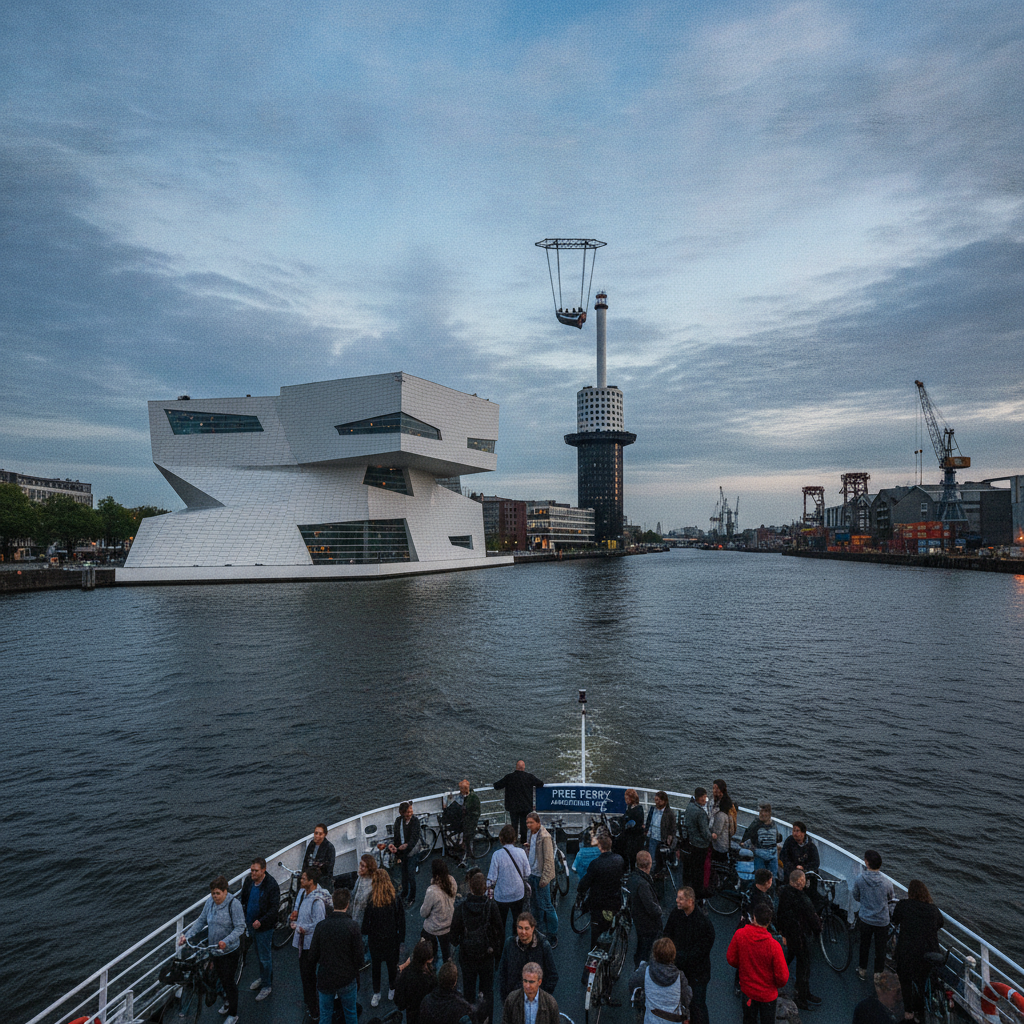
The free ferries that cross the IJ harbor between the back of Central Station and Amsterdam Noord are one of Amsterdam's best-kept semi-secrets: a free public transport service (operated by GVB, Amsterdam's public transport company, as part of the tram and metro network) that makes the crossing in 5 minutes, runs 24 hours (at 7.5-minute intervals during the day, 15-minute intervals at night), and carries an astonishing mix of commuters on bicycles, tourists discovering the EYE museum, NDSM workers, and Noord residents. The crossing provides what is widely considered the best free view of Amsterdam's skyline — the Central Station spires, the traditional Dutch gabled roofline of the city, and the modern waterfront developments of the IJ docks visible simultaneously from the water. Three ferry routes cross to different points on the Noord bank; the most useful for visitors goes to the NDSM Wharf (25 minutes).
- 2
EYE Film Museum — Architecture as Manifesto
EYE Film Museum, opened in 2012 in a building by Delugan Meissl Associated Architects (Vienna), is the Dutch national film museum and one of the finest museum buildings in the Netherlands of the 21st century: a white, angular building of intersecting planes and cantilevered volumes, positioned at the water's edge of the IJ with its main facade angled toward the historic city on the opposite bank — a building that looks simultaneously like a camera and like an act of viewing. The museum holds 37,000 films (including the complete Dutch film production since 1895), 700,000 photographs, 50,000 posters, and a research library on international cinema. The permanent collection is displayed in an underground gallery reached by a descending ramp, while the main floors host temporary exhibitions and four cinema screens (showing independent, retrospective, and archival films, often with live music accompaniment). The building's cantilevered roof serves as a terrace with views across the IJ; the ground-floor café extends to the waterside.
- 3
A'DAM Tower & Lookout — 360° From the Former Shell Building
The A'DAM Tower (Amsterdam Dance and Music, formerly the Shell Research Tower, built 1971), a 22-story cylindrical tower on the Noord waterfront immediately behind EYE, was the research headquarters of Royal Dutch Shell's Amsterdam operations until the company relocated in 2009. Purchased by a music industry consortium and converted into a creative hub (music studios, a boutique hotel, a nightclub on the top floor — Shelter, underground but in the tower's base), the building is best known for its rooftop attraction: the A'DAM Lookout (open to visitors, fee required), which includes an outdoor observation deck at 100 meters and 'Over the Edge' — a swing mounted on the edge of the roof that carries riders out over the IJ at 100 meters height. The building's conversion is a case study in adaptive reuse: a 1970s corporate research facility converted to a cultural destination without significant structural modification.
- 4
NDSM Wharf — Europe's Largest Creative Hub
The NDSM (Nederlandsche Dok en Scheepsbouw Maatschappij — Dutch Dock and Shipbuilding Company) wharf, Amsterdam's main shipyard from 1894 to 1984, is the largest converted creative hub in Europe: a 50-hectare complex of dry docks, crane halls, and industrial buildings on the Noord waterfront that has been converted since 1999 to a mix of artists' studios, event spaces, restaurants, the IJ Open Air Film Festival, the Robodock festival, and the Northside Festival. The main hall — 'the wharf hall', 220 meters long, 40 meters wide, 22 meters high — contains approximately 200 artists' studios in a community-supported structure: the NDSM Foundation, founded in 1999 by squatter artists who occupied the derelict building, negotiated a lease with the city and has operated the space ever since. The hall also hosts major events (the IJ Dock festivals, concerts, art fairs) and retains the original overhead cranes, dock machinery, and graffiti that accumulated during the squatter period.
- 5
Tolhuistuin — A Cultural Park in a Former Shell Garden
The Tolhuistuin (Tollhouse Garden), immediately behind the EYE museum, is a cultural park in the former garden of the Shell research complex: a large garden with a concert venue (the Tolhuis), a café, a restaurant, and a performance space that hosts the Amsterdam equivalent of London's Barbican or Paris's La Villette — a mixed arts center combining music, theater, and visual arts in an outdoor, accessible setting. The garden (free entry) is one of the most pleasant outdoor spaces in Amsterdam Noord: mature trees, lawns, a terrace overlooking the IJ, and the constant background noise of the harbor.
- 6
De Goudfazant & Noord Food Culture
Amsterdam Noord's food culture — centered on the NDSM Wharf, the Gare du Nord, and the streets around the Buiksloterweg ferry landing — is the most creative in Amsterdam: a combination of pop-up restaurants in industrial spaces, food halls in converted warehouses, and established restaurants that have chosen Noord's cheap rents and industrial settings over the expensive canal ring. De Goudfazant (The Golden Pheasant), in a former garage and auto repair facility at Aambeeldstraat 10i, is the most celebrated: long tables in a raw industrial space, a menu that changes weekly based on available produce, no reservations for most services (queue), and an insistence on using North Amsterdam suppliers and producers. The surrounding area — the Buiksloterweg, the Johan van Hasseltweg — is dense with coffee roasters, microbreweries, food producers, and artisan workshops that have moved to Noord for its combination of cheap space and creative community.
Walk this route with audio
Stories play automatically as you reach each stop — no tapping needed.
More in amsterdam
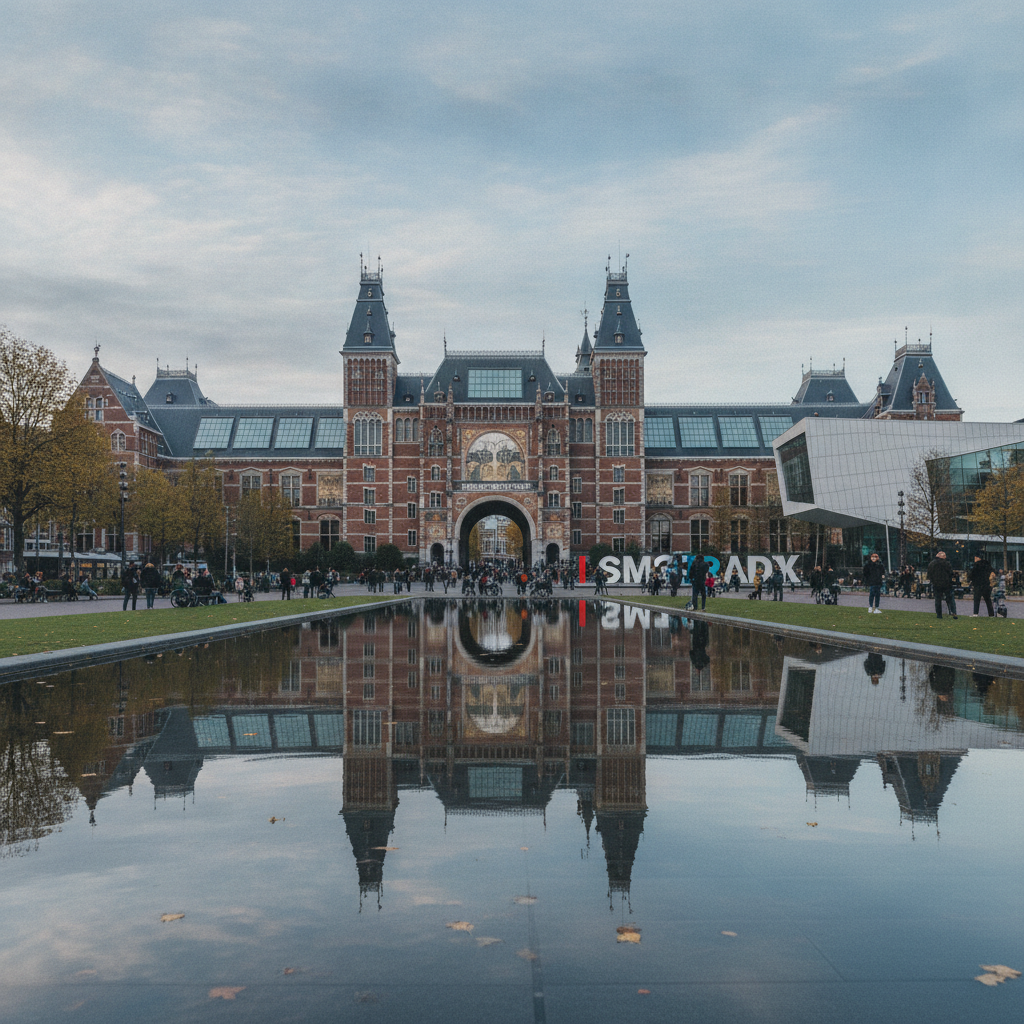
Rijksmuseum, Van Gogh & Museumplein: The Museum Quarter
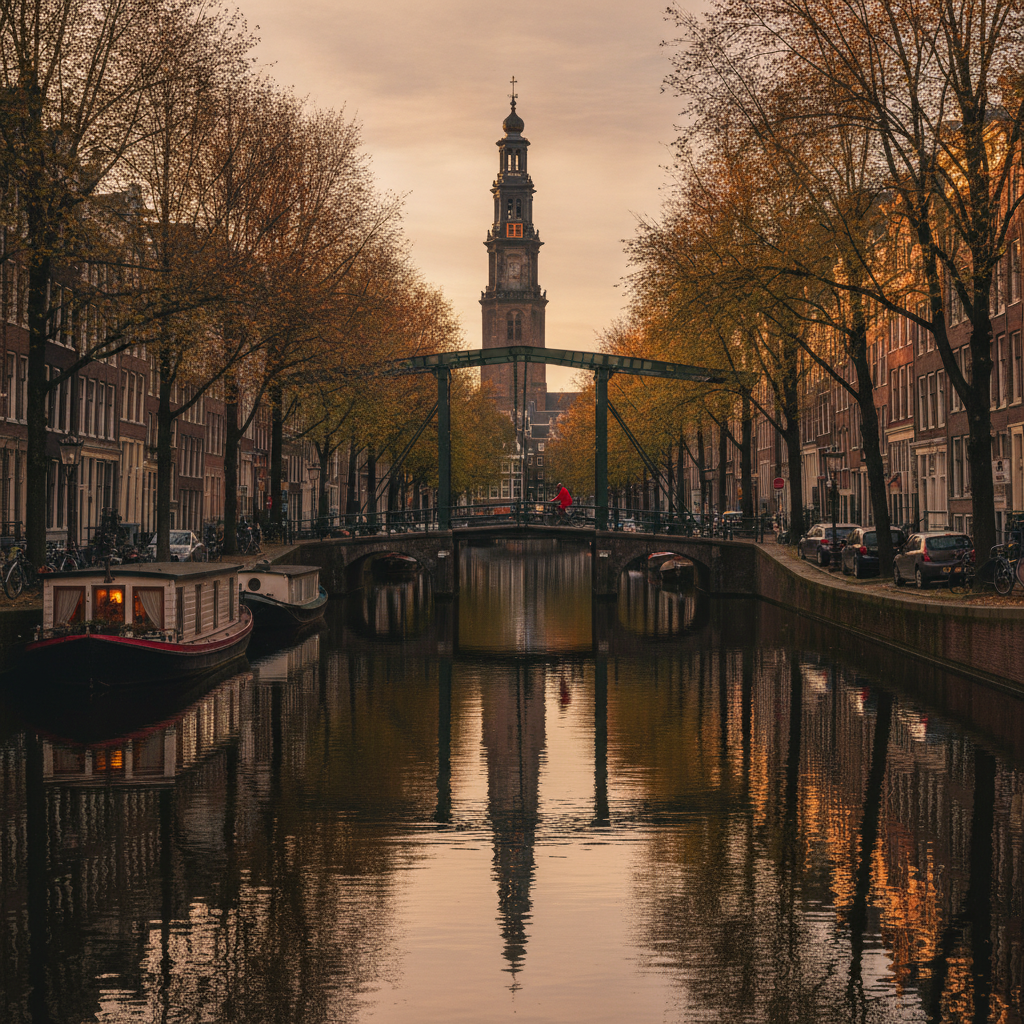
Jordaan, Anne Frank & the Canal Ring: Amsterdam's Golden Age Heart
Rembrandtplein, Tuschinski & the Amstel: Art, Entertainment, and the Skinny Bridge
De Pijp, Albert Cuyp & Heineken: Amsterdam's Most Diverse Neighborhood
NEMO, Maritime Museum & Eastern Docklands: The Harbor City Reinvented