The Aiytys Improvised Verse Duel Between Kazakh Akyns Named UNESCO Intangible Heritage in 2015, the Shyrdak Reverse-Applique Felt Carpet Where Two Interlocking Colors Cut Simultaneously Fit Each Other Exactly & the ALMA Mountain Bike Trail Descending 1,300m in 18km Above Almaty
The aiytys improvised verse duel between Kazakh akyns with dombra accompaniment named UNESCO Intangible Cultural Heritage in 2015; the shyrdak reverse-applique technique where two contrasting felt colors are cut simultaneously so the positive shape exactly fills the negative space; the ALMA Bike Trail descending 1,300m in 18km from 3,000m to 1,700m above Almaty; the Manas epic at 500,000 verses as the world's longest oral epic tradition; the Koryo-Saram Korean restaurants in Almaty's Mikrorayon district making kimchi with Green Bazaar Chinese cabbage; and URKER restaurant using sous-vide horse tenderloin and fermented mare's milk foam in the first contemporary Kazakh fine dining.
- 1
The Shyrdak – Kazakhstan's Felt Carpet Tradition
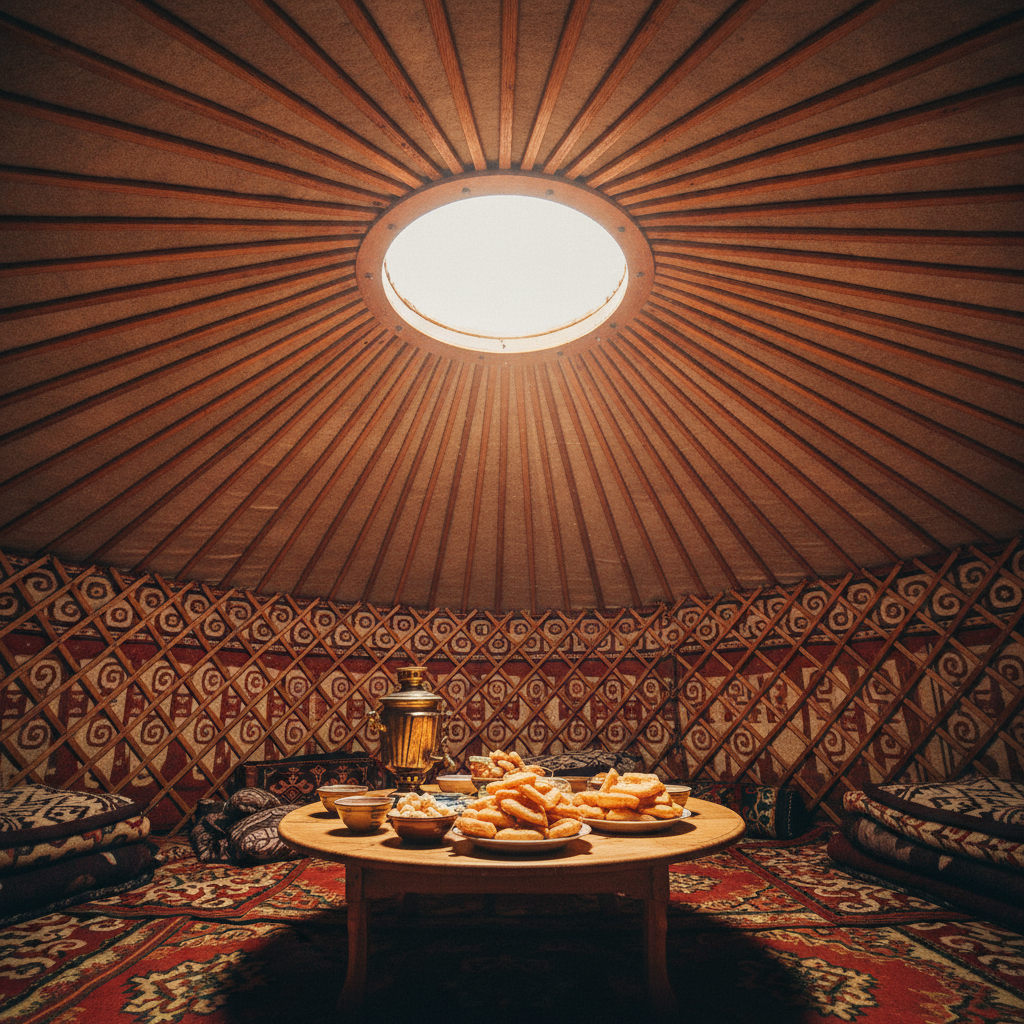
The Kazakh felt carpet (shyrdak) tradition (the primary visual art form of the Kazakh nomadic tradition—the felt rugs that covered the yurt floor and walls and encoded the aesthetic identity of each family): the felt art heritage guide. The shyrdak technique (the shyrdak (шырдақ)—the mosaic felt carpet produced by the reverse-applique technique: two sheets of contrasting-colored felt (the most common combination: rust-red and cream, or dark blue and terracotta) are cut simultaneously in interlocking patterns (the positive shape cut from one color exactly fits the negative space left in the other), and the two complementary pieces are sewn together with a colored whip-stitch at the seams—the seam stitching (the characteristic red or dark blue linear border visible at every joint) is both structural (preventing the pieces from separating) and decorative): the primary motifs (the primary shyrdak motifs: the koshkar muiz (ram's horn—the most common Kazakh decorative motif, a paired spiral that symbolizes strength and abundance); the kumis (the teardrop and crescent motif); the tulpar (the winged horse—the symbol of the steppe): the regional variation (the West Kazakhstan shyrdak (Atyrau and Aktobe) uses larger, bolder geometric compositions; the East Kazakhstan shyrdak (Almaty region) uses more complex interlocking spirals and finer seam stitching): the acquisition (the best shyrdak and felt art in Almaty: the Zhol Zhoru felt-art workshop on Dostyk Avenue (direct-from-artist sales, USD 150–600 for a full-size shyrdak); the Central State Museum gift shop; the Green Bazaar occasional antique shyrdak sellers (the most unpredictable but occasionally lowest-price source).
- 2
Almaty's Outdoor Culture – From Hiking to Skiing
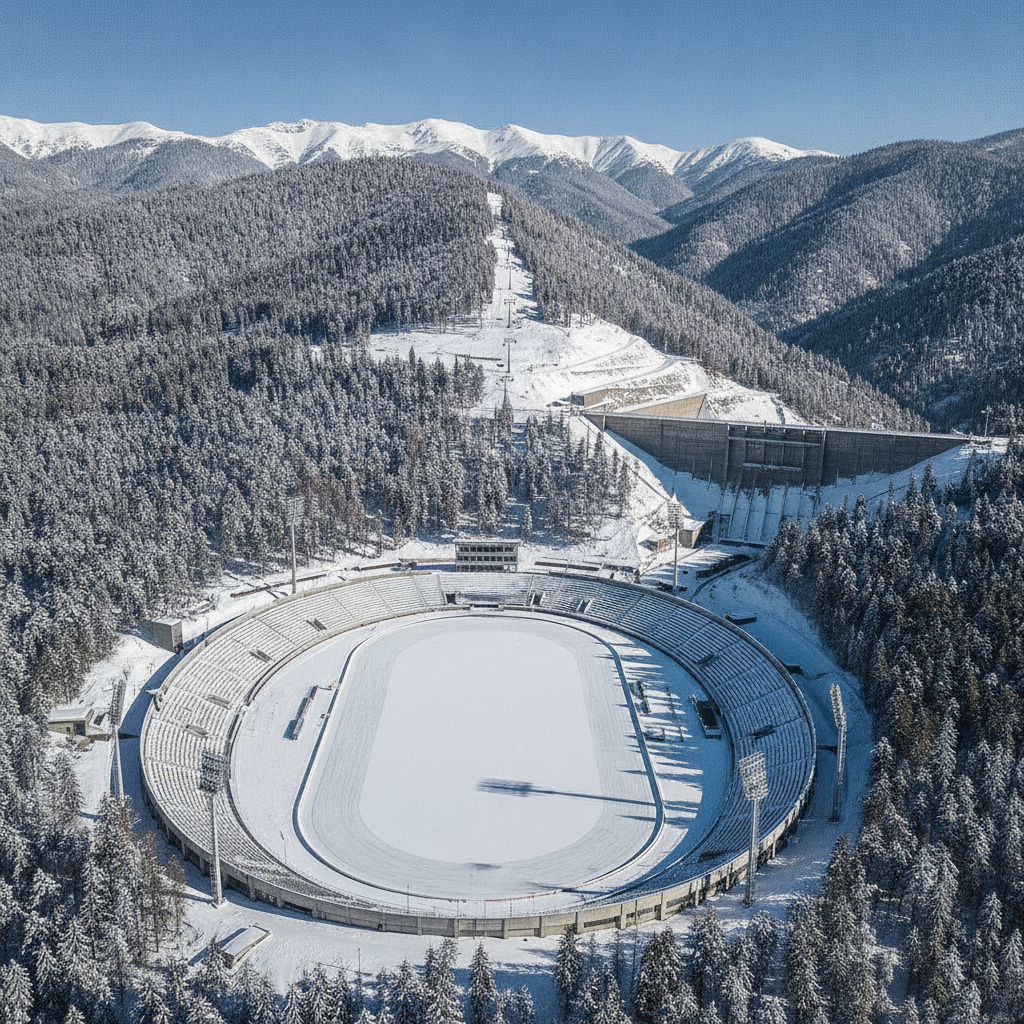
The Almaty outdoor recreation culture (the lifestyle that defines the city's identity more than any other factor—the Almaty resident's relationship with the mountain environment directly above the city): the outdoor culture guide. The culture of the mountains (the Almaty mountain culture is unusual among major cities in its immediacy—the Zailiysky Alatau mountain wall is visible from every south-facing window in the city; the Medeu speed skating stadium is 15 minutes from the city center; the highest reachable point by cable car (the Talgar Pass, 3,163m) is 40 minutes from the city center—the city's relationship with its mountain hinterland is more intimate than any comparable relationship in European or North American cities): the Almaty mountain culture calendar (the outdoor recreation calendar: January–March (skiing at Shymbulak, ice skating at Medeu, backcountry skiing and ski touring in the Zailiysky Alatau backcountry); April–May (ski touring transitions to hiking; the apple blossom in the foothills; the first green in the mountain meadows (jailau)); June–August (hiking, mountain biking, via ferrata at Shymbulak, paragliding from the Kok-Tobe ridge); September–October (the clearest mountain weather of the year—the optimal hiking and photography season; the mountain meadows turn golden before first snow)): the ALMA Bike Trail (the mountain bike trail network above Shymbulak—15 trails from beginner to expert, the longest 18 km descending from 3,000m to 1,700m, operating June–October).
- 3
Almaty's Restaurant Scene – The Central Asian Cosmopolis
The Almaty restaurant scene guide (the most diverse restaurant city in Central Asia—the place where 100+ nationalities of Soviet deportees, migrants, and expatriates have created the only genuinely cosmopolitan food culture in the region): the restaurant guide. The top restaurants (the Almaty restaurant scene at the upper end: Navat (the most celebrated Uzbek restaurant in Almaty—the tashkent-style plov cooked in the correct proportion of oil, and the Central Asian salads including achichuk (tomato and onion) and vinegret): URKER (the contemporary Kazakh fine dining restaurant at the Esentai Park—the first restaurant to reimagine traditional Kazakh nomadic food (beshbarmak, horse meat, kurt) in a contemporary fine-dining context, using sous-vide horse tenderloin and fermented mare's milk foam): Sup Khinkali (the Georgian restaurant—Almaty has the largest Georgian restaurant community outside Georgia itself, a legacy of Soviet Caucasian cultural prestige): the Korean restaurants (the Koryo-Saram community restaurants in the Mikrorayon district—the most authentic Korean food in Central Asia, combining traditional Korean recipes with Kazakh ingredients: the Alma-Ata kimchi uses the locally available Chinese cabbage from the Green Bazaar): the food mall (the Esentai Mall food court (the primary high-end food court in Almaty): restaurants from 20 nationalities including Japanese, Indian, Italian, Vietnamese, and Moroccan—in a single food court in a shopping mall in a steppe city 200 km from the Chinese border).
- 4
The Itinerary – Four Days in Almaty and Mountains
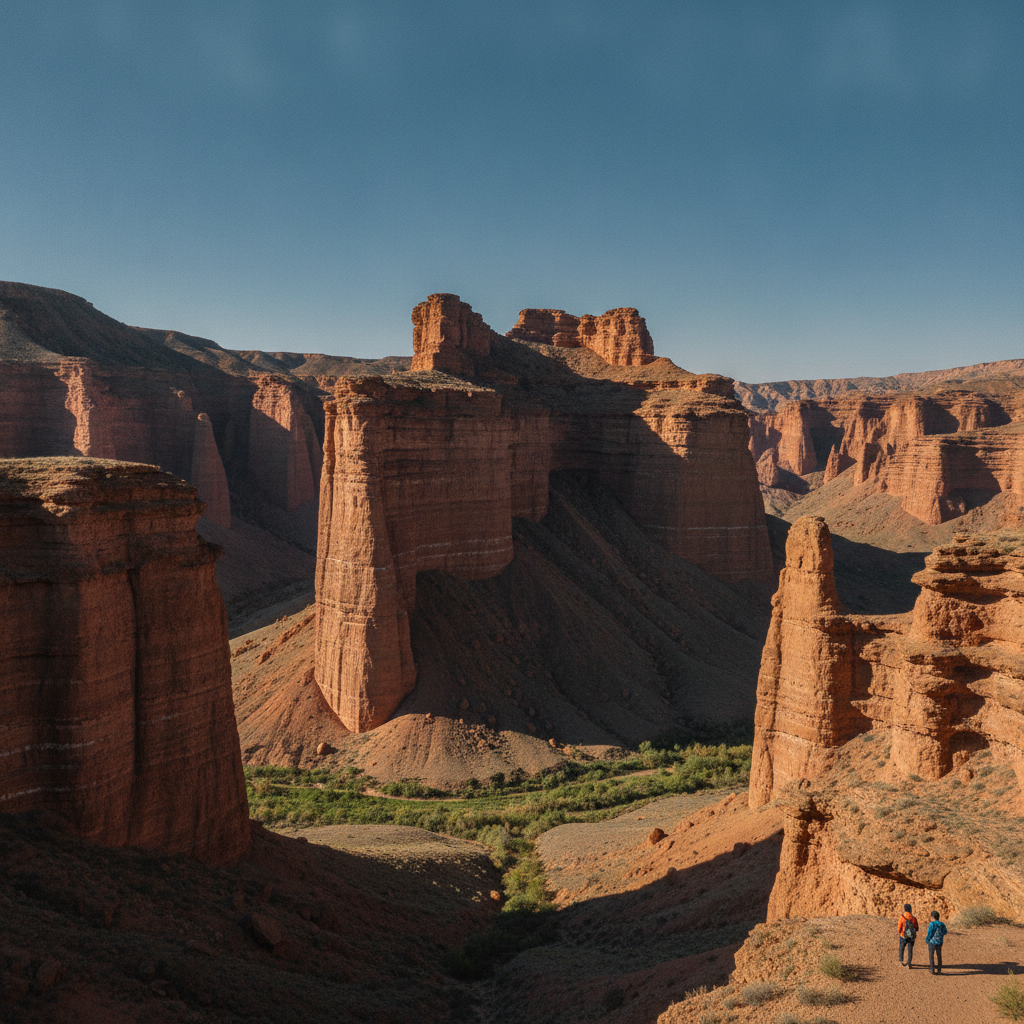
The Almaty 4-day itinerary (the optimal plan for first-time visitors combining city highlights with mountain access): the day-by-day itinerary guide. Day 1 (city foundations): 09:00 — Green Bazaar (the fruit, nut, and meat market morning; sample the dried apricot (uruk) and the kurt (salted dried sour cheese); 11:00 — Central State Museum (the Golden Man exhibit; 2 hours); 13:30 — lunch at a stolovaya Soviet canteen (USD 4 for a 3-course lunch); 15:00 — Panfilov Park and Zenkov Cathedral (the wooden cathedral in the autumn light); 17:00 — Kok-Tobe cable car and Beatles statue (the city panorama in the late afternoon); 20:00 — dinner at URKER (the contemporary Kazakh fine dining). Day 2 (mountain day): 07:00 — cable car from Medeu to Shymbulak (07:30 first cable car); 08:00 — Shymbulak to Talgar Pass (3,163m—2h hiking or 20 min on the upper gondola); 11:00 — lunch at the Shymbulak restaurant; 13:00 — descent and afternoon at Medeu skating rink (in winter) or Medeu hiking (in summer); 17:00 — return to city. Day 3 (Big Almaty Lake and Charyn): early departure (07:00) for Big Almaty Lake (border zone permit at checkpoint); afternoon return; optional evening at Fab rika creative hub (gallery + bar). Day 4 (day trip east or cultural): Charyn Canyon (full day—departure 08:00 by organized tour); or the Kasteyev Museum of Arts (the morning); the shyrdak workshop (afternoon); farewell beshbarmak dinner.
- 5
Kazakhstan Literature & the Steppe Oral Tradition
The Kazakhstani literary and cultural heritage (the oral poetry tradition of the Kazakh steppe—one of the longest continuous oral literary traditions in the world): the literary heritage guide. The Kazakh oral tradition (the akyns—the Kazakh oral poets and bards—maintained the primary literary tradition of the Kazakh steppe for 2,000+ years in the absence of a written Kazakh literary tradition (the Kazakh language was first written using the Arabic script in the 18th century, then Cyrillic in 1940, then the Latin alphabet (in transition since 2017)): the aiytys (the айтыс—the improvised verse duel between two akyns, performed before a live audience with musical accompaniment on the dombra (the Kazakh two-string plucked lute)—the akyns compete to produce the most clever, poetically refined improvised verse on the announced theme: the aiytys tradition was declared UNESCO Intangible Cultural Heritage in 2015): the Kokpar epic (the epic tradition of the Kazakh steppe: the Alpamys Batyr (the oldest surviving Kazakh epic, estimated 9th century origin—the story of the hero Alpamys's battles against the kalmak (Oirat) enemies); the Er Targyn epic; the Manas epic (the Kyrgyz national epic, 500,000 verses—the longest oral epic tradition in the world, shared by Kyrgyz and some Kazakh traditions)): the Abay Kunanbayev (1845–1904—the greatest Kazakh poet, born in the Semey (Semipalatinsk) region: Abay's poems and translations of Pushkin into Kazakh established the Kazakh written literary tradition—the Abay State Opera Theater in Almaty is named for him).
- 6
Almaty at Night – From Teahouse to Techno Club
The Almaty after-dark guide (the nightlife and evening entertainment culture of Central Asia's most cosmopolitan city—a city where Soviet nostalgia, Kazakh tradition, and global youth culture coexist): the night guide. The evening start (the Almaty evening begins with the characteristic Kazakh tea culture (chay ishim—the tea invitation that precedes any social engagement): the traditional Kazakh tea is prepared in a samovar (the Russian brass hot-water urn), combined with mare's milk or cream (rather than the Uzbek green tea with plain water), and served with the accompaniments (kurt, baursak (the fried dough pillows—the most distinctive Kazakh bread), and raisins)): the restaurant strip (the Dostyk Avenue restaurant strip from the Opera House south toward the mountains: the highest restaurant density in Kazakhstan—60+ restaurants within 2 km; the peak dinner hour 20:00–22:00): the bar scene (the primary bar area: the Gogol Street bar strip (parallel to Dostyk, 1 block west)—the most concentrated bar area in Almaty, with the Alco-bar, the Chukotka, and the Rockstar Bar occupying three adjacent converted residential buildings): the club scene (the primary clubs: the Roxy (the principal electronic music club, capacity 800, operates 23:00–06:00 Friday–Saturday); the Hollywood Club (the mixed format club with karaoke rooms, pool tables, and a dance floor); the Almaty Jazz Club (the Thursday–Sunday jazz program from 20:00, USD 10 entry)): the overnight (the Esentai area hotel restaurants serve breakfast from 07:00—the Rixos hotel breakfast buffet (USD 20) is the most comprehensive available; the stolovaya canteen on Furmanov Street is open from 07:30 and serves the same quality breakfast for USD 2).
Walk this route with audio
Stories play automatically as you reach each stop — no tapping needed.
More in Almaty

The Baikonur Steppe Launch Site Where Sputnik, Gagarin, and the First Spacewalk All Originated, the Kokaral Dam That Raised the North Aral Sea 30m in Five Years & the KaspiBank Super-App Serving 12 Million Active Users from Almaty
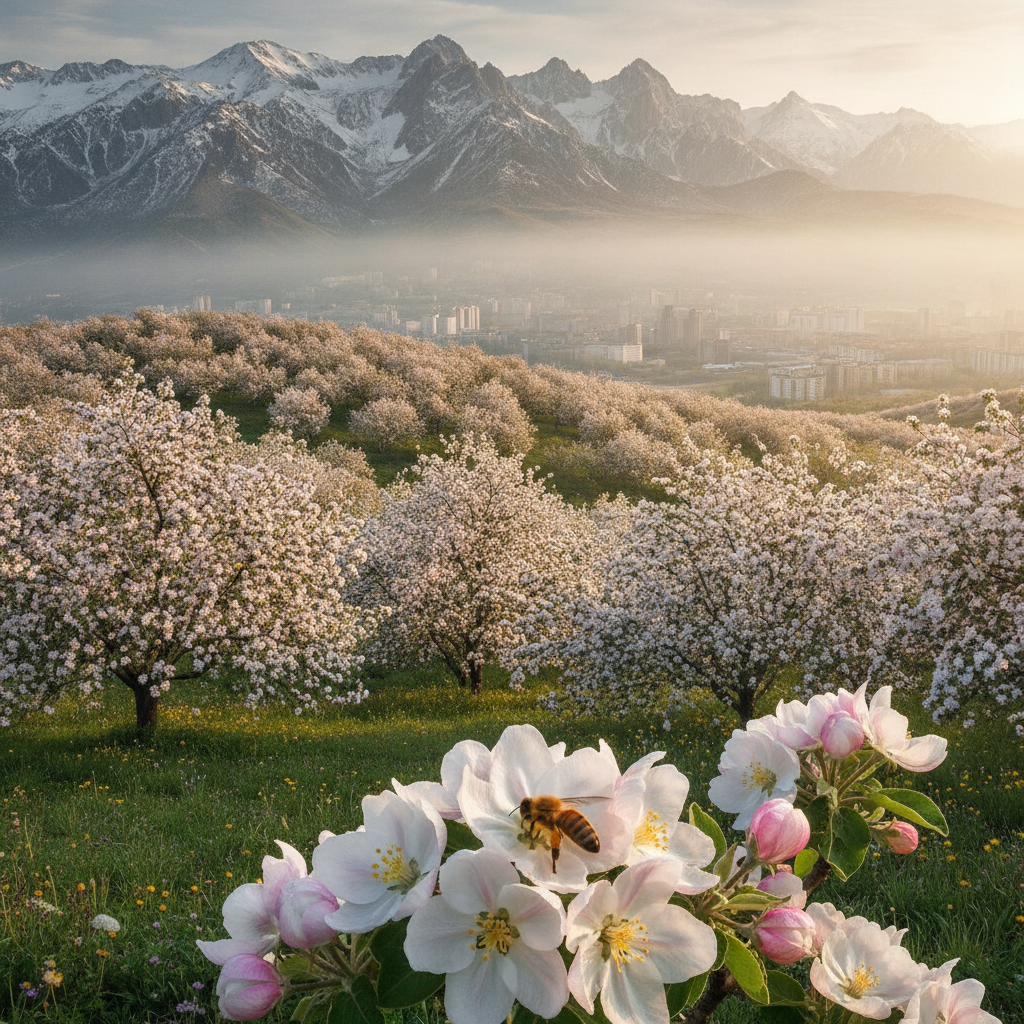
The Wild Apple Forests Above Almaty as the Genetic Origin of All 7,500 Domestic Apple Varieties, Eisenstein Filming Ivan the Terrible in Alma-Ata During WWII & the Aport Apple Growing to 800g the Largest Domesticated Apple Variety
The 4th Century BCE Scythian Golden Man Wearing 4kg of Interlocking Gold Plaques Found 70km From Almaty, the Kazakh Eagle Hunter Tradition Using Golden Eagles With 2.3m Wingspans & the January 2022 Almaty City Hall Fire That Triggered the First CSTO Military Deployment
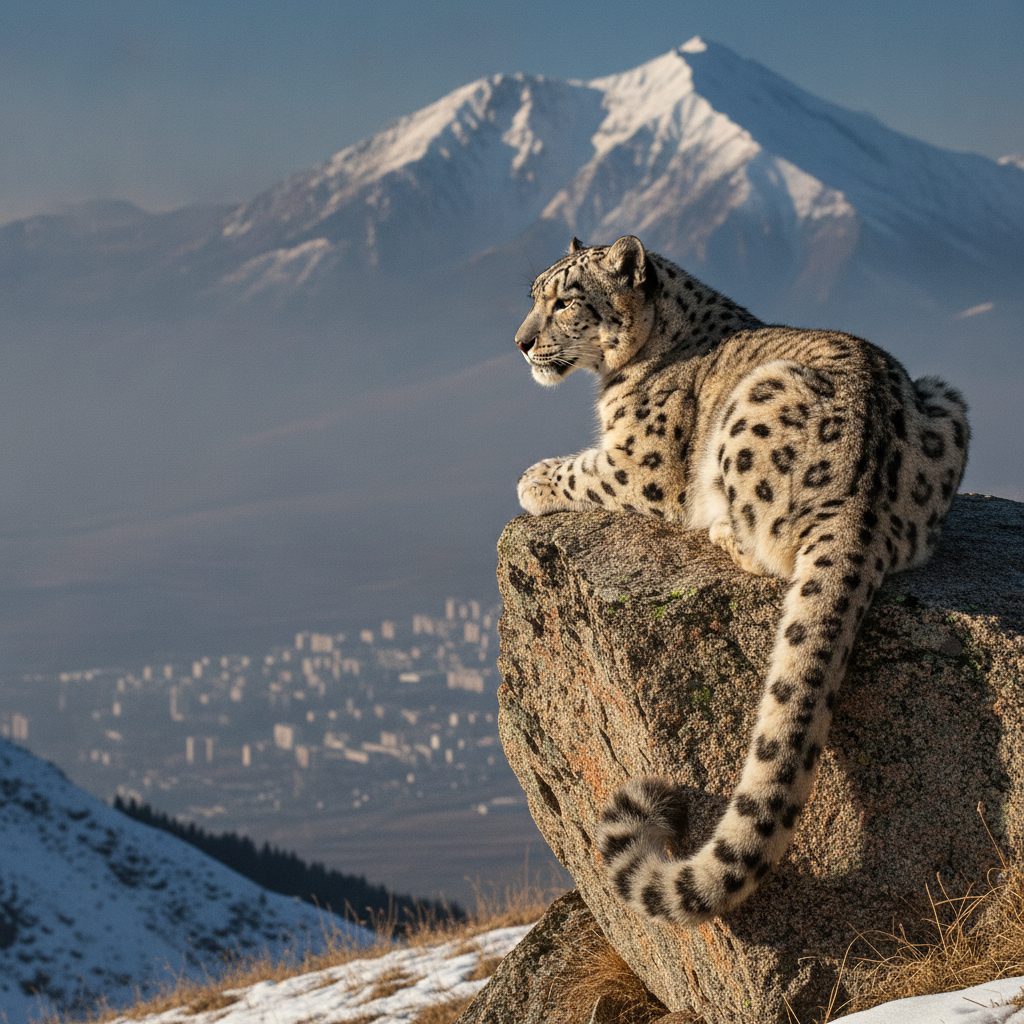
The 1887 Verniy Earthquake That Produced the First Seismic Building Code in the Russian Empire, the Stalin Deportation of 100,000 Soviet Koreans to Kazakhstan in 1937 & the Snow Leopard Population of 150-180 in the Zailiysky Alatau Mountains Above Almaty