The 4th Century BCE Scythian Golden Man Wearing 4kg of Interlocking Gold Plaques Found 70km From Almaty, the Kazakh Eagle Hunter Tradition Using Golden Eagles With 2.3m Wingspans & the January 2022 Almaty City Hall Fire That Triggered the First CSTO Military Deployment
The Issyk Golden Man burial (4th-3rd century BCE) containing 4kg of interlocking gold armor plaques as the finest Scythian goldwork ever found; the berkutchi eagle hunting tradition with trained 4-6kg golden eagles used for 2,000+ years on the Kazakh steppe; the January 5, 2022 storming of Almaty city hall triggering the first-ever CSTO collective defense deployment; the Big Almaty Lake turquoise color deepening to its maximum in June-July as glacial melt peaks; the Dungan ashlan-fu cold noodle soup eaten cold even in steppe summer; and the Charyn Canyon Valley of Castles comparable to the Grand Canyon but 2h30m from a modern city center.
- 1
Kazakh Nomadic Heritage – Yurt, Eagle & Steppe
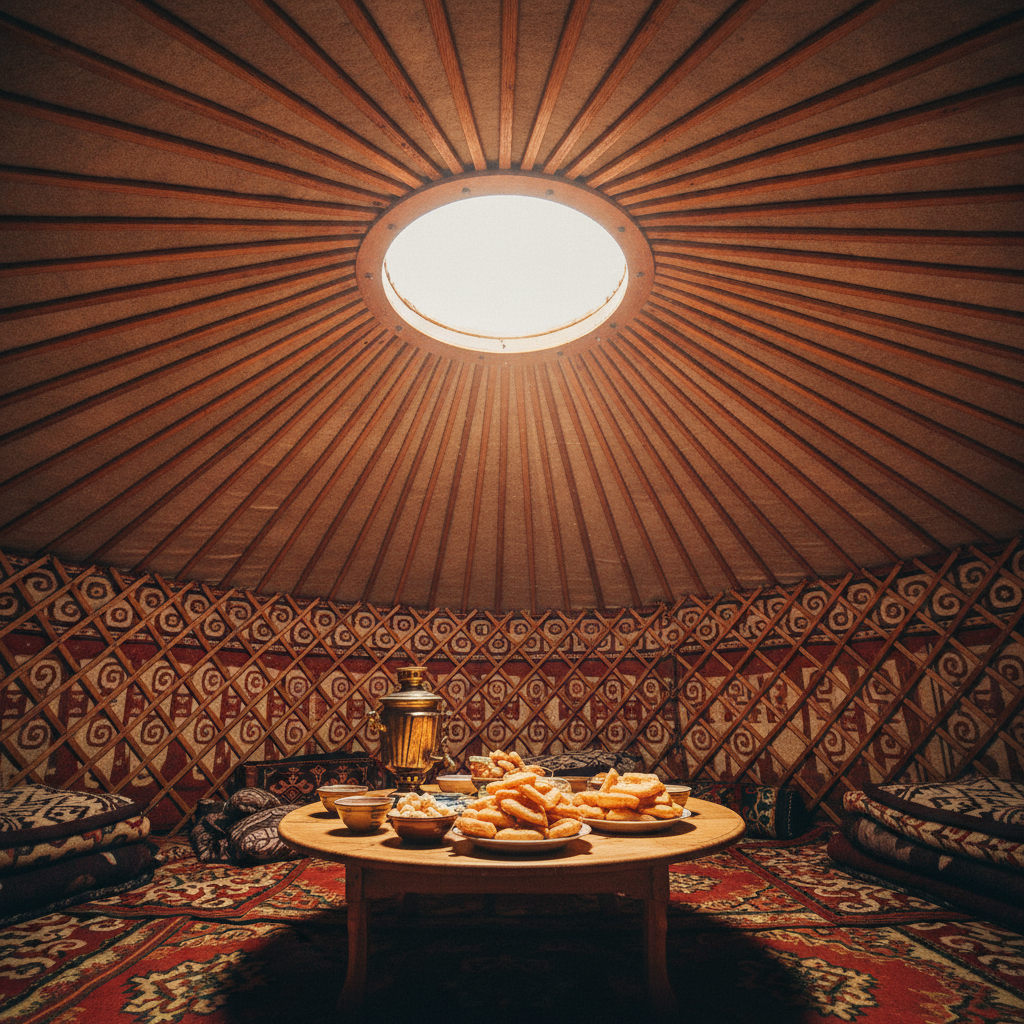
The nomadic cultural heritage of the Kazakh people (the traditions of the steppe nomads who inhabited the Central Asian grasslands for 3,000 years before the Soviet collectivization forced sedentarization): the nomadic culture guide. The yurt (the Kazakh yurt (the portable circular felt dwelling of the Central Asian steppe nomad): the structure (the yurt consists of a wooden lattice wall (kerege—circular collapsible trellis panels), a wooden door frame, radial roof poles (uuk—approximately 80 poles in a standard yurt), a central ring (shanyrak—the circular roof ring through which smoke escapes and light enters), and 3–4 layers of felt covering (the felt is made from sheep's wool beaten and compressed into panels)): the assembly time (a standard 6-meter-diameter yurt can be assembled in 1–2 hours by a skilled family—the assembly and disassembly efficiency was the defining advantage of the yurt for a nomadic population that moved up to 8 times per year following seasonal grazing routes): the Shanyrak national symbol (the shanyrak—the circular wooden roof ring of the yurt—is the central symbol on the Kazakhstani state emblem: it represents the home, the family, and the continuity of the nomadic tradition): the eagle hunting (the Kazakh berkutchi (eagle hunter)—the tradition of hunting with trained golden eagles (Aquila chrysaetos) that is one of the oldest hunting traditions in the world (2,000+ years documented in Central Asia): the trained golden eagle (wingspan 2.0–2.3m, weight 4–6 kg) is used to hunt foxes, rabbits, and small deer on the steppe; the eagle hunting season is October–February: the Almaty region has approximately 400 active berkutchi practitioners.
- 2
The Big Almaty Lake & Tian Shan Trekking
The Tian Shan trekking guide from Almaty (the mountain hiking network accessible within 1–3 hours of the city center—the primary reason serious trekkers include Almaty in their Central Asian itinerary): the mountain access guide. The Big Almaty Lake (the Bolshoye Almatinskoe Ozero (BAO)—the glacial lake at 2,511m altitude 30 km south of central Almaty: the lake is 1.6 km × 0.8 km, 40m deep, fed by Tian Shan glacial meltwater and colored an intense turquoise by glacial silt (rock flour) suspended in the water—the color intensity varies seasonally: deepest turquoise in June–July when glacier melt is highest; paler in September–October when melt decreases): the access route (the Big Almaty Lake road requires a border zone permit (free, issued at the checkpoint at the base of the road): the road is open to 4WD vehicles from May to October; the 12 km road from the city boundary to the lake rises 1,000m): the Chimbulak hiking network (the Shymbulak resort is the primary trailhead for day hikes in the Zailiysky Alatau: the Talgar Pass (3,163m—1.5h from Shymbulak top station); the Maloye Almatinskoe Gorge (the side valley east of Shymbulak—day hike to the Kosmostantsiya (2,800m cosmic ray research station, Soviet-era): the Trans-Ili Alatau traverse (the 5-day ridge-walk from the Shymbulak area to the Issyk Gorge east of Almaty—the most challenging accessible multi-day route from the city): the permits (a border zone permit is required for all hiking above 2,200m in the Zailiysky Alatau—issued free at the Medeu checkpoint).
- 3
Almaty's Art Scene – Museum & Gallery Circuit
The Almaty arts and museums guide (the cultural institutions of Kazakhstan's cultural capital—a city that combines Soviet-era heritage museums with an emerging contemporary art scene): the arts guide. The Central State Museum of Kazakhstan (the most important museum in Kazakhstan: 170,000 artifacts covering the full history of the Kazakh steppe from the Bronze Age to independence: the highlight: the Golden Man (Altyn Adam)—the 4th–3rd century BCE Saka (Scythian) warrior burial found at Issyk (70 km east of Almaty) in 1969: the burial contained a warrior dressed in a complete armor of 4,000 interlocking gold plaques forming a full-body golden suit (approximately 4 kg of gold); the armor is the most spectacular example of Scythian goldwork in the world—the reconstructed suit is the centerpiece of the museum): the Kasteyev State Museum of Arts (the primary art museum of Kazakhstan: 23,000 works including Soviet-era Kazakh painting (the Almaty school of landscape painting depicting the Tian Shan mountains in the Socialist Realist style), traditional Kazakh craft objects (felt (shyrdak), jewelry, silver), and an international collection including Russian imperial art): the Artbat gallery (the primary contemporary art gallery in Almaty—showing Kazakh and Central Asian contemporary artists in a converted Soviet factory space in the Alatay district): the Almaty street art (the Fabrika creative hub—a former sewing factory converted to studios, galleries, cafes, and creative offices that is the center of the Almaty creative scene).
- 4
Almaty Food Scene – From Beshbarmak to Craft Beer
The Almaty food and drink guide (the most diverse dining city in Central Asia—a city where Kazakh nomadic cuisine, Soviet canteen culture, Korean-Kazakh fusion, and an emerging craft food scene coexist): the food guide. The beshbarmak (the national dish of Kazakhstan: beshbarmak (бесбармак—'five fingers' in Kazakh, referring to the traditional eating method of using all five fingers to eat the dish): the dish consists of wide flat noodles (toqash or zhayma—hand-rolled and cut square) topped with boiled mutton or horse meat and onion sauce (tuzdyk), served in a communal flat dish (tabak) with the broth (sorpa) served separately in a bowl): the Dungan and Korean food (the two most significant minority food contributions to Almaty's restaurant scene: the Dungan (Chinese Muslim) cuisine—ashlan-fu (the cold noodle soup with vinegar, starch jelly, and chili—the most distinctive Dungan dish, eaten cold despite the heat of the steppe summer); the Korean food (the Koryo-Saram (Soviet Koreans deported from the Soviet Far East to Kazakhstan by Stalin in 1937) contribution to Almaty's food scene: the Korean kimchi, naengmyeon (cold noodles), and bap (rice dishes) available at the Korean restaurants in the Microdistrict area)): the craft beer (the Almaty craft beer scene: Hop Head Brewing (the pioneer Almaty craft brewery, founded 2016), Irbis Brewery (the largest craft brewery, with 20 taps at the taproom on Dostyk Avenue)—the Almaty craft beer culture reflects the city's Russian and European cultural influences more than the Muslim-majority cities of Uzbekistan).
- 5
The January Events – Almaty's Democratic Uprising
The January 2022 Almaty events (the political crisis that made Almaty the center of the most significant political upheaval in post-Soviet Central Asia): the contemporary history guide. The background (Kazakhstan's political system under President Nursultan Nazarbayev (1991–2019) was a consolidated authoritarian system with the president controlling all significant political, economic, and media power—Nazarbayev resigned in 2019, transferring power to Kassym-Jomart Tokayev but retaining the title of Elbasy (Leader of the Nation) and chair of the Security Council): the fuel price trigger (on January 2, 2022, the government removed fuel price caps in Zhanaozen, western Kazakhstan, causing LPG (liquefied petroleum gas) prices to double overnight—the price increase triggered protests that spread from the oilfield workers of western Kazakhstan to the broader population): the Almaty events (the protests reached Almaty on January 4–5: a crowd of approximately 20,000 stormed and burned the Almaty Akimat (city hall) and the Almaty television center on January 5; President Tokayev requested Russian-led CSTO military intervention (the first use of the CSTO collective defense mechanism): the CSTO deployed approximately 2,500 Russian-led troops to Kazakhstan January 6–19): the aftermath (the official death toll was 238 killed (the actual number is disputed by human rights organizations which estimate 250–400); approximately 10,000 people were arrested in the aftermath; Tokayev removed Nazarbayev from the Security Council chairmanship—the events are interpreted both as a democratic uprising and as a power struggle within the Kazakhstani elite).
- 6
Almaty Day Trips – Charyn Canyon & Issyk Lake
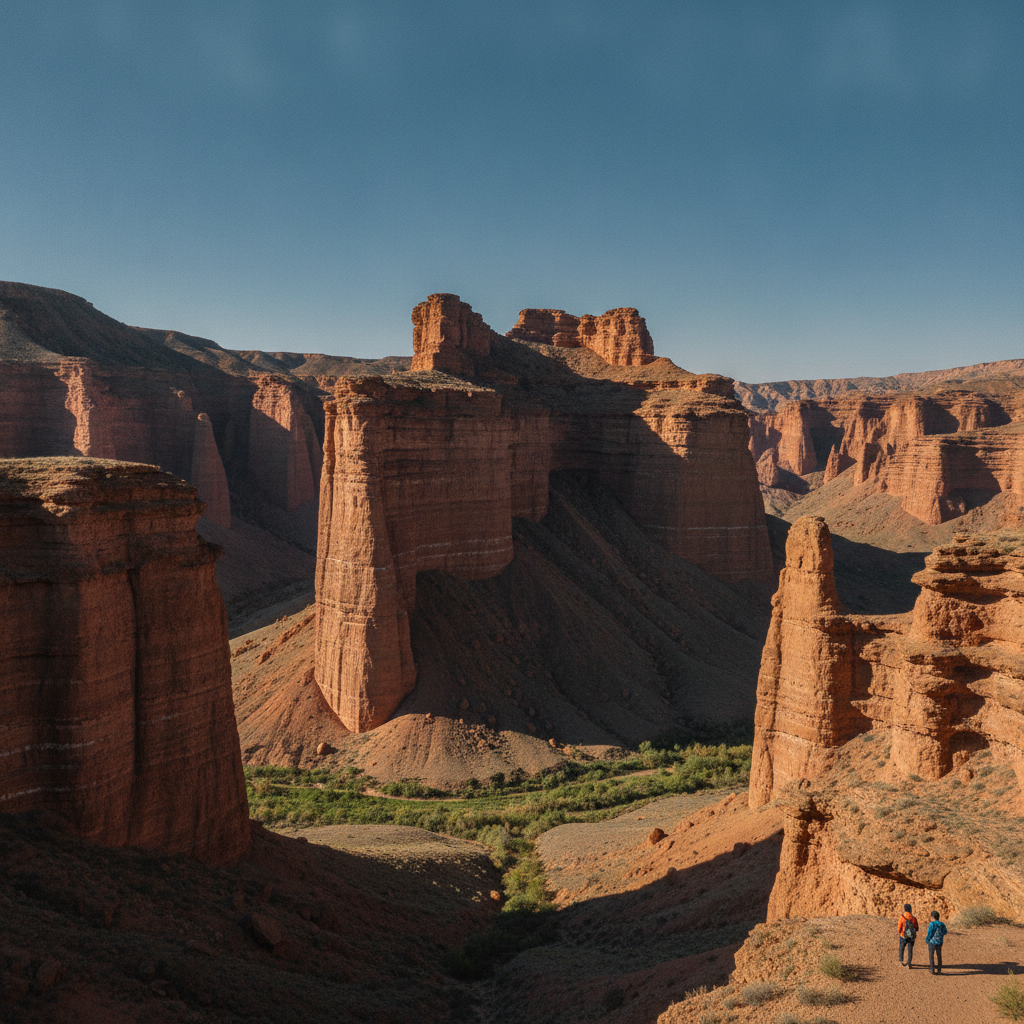
The Almaty day trip guide (the most spectacular natural destinations accessible from Almaty within a single day): the day trip handbook. The Charyn Canyon (the Charyn Canyon (Шарын шатқалы)—the canyon system of the Charyn River 200 km east of Almaty in the Charyn National Park: the canyon depth 150–300m, length 154 km—often compared to the American Grand Canyon but at smaller scale; the rock formation color (the red-orange Cenozoic sandstone and conglomerate layers create a color gradient from deep ochre at the base to pale salmon at the top): the Valley of Castles (the most photographically distinctive section of the Charyn Canyon: a 2 km section where the erosion has created isolated pillars, arches, and castle-like formations in the red sandstone—the most spectacular view from the canyon rim above the Valley of Castles at the end of the 3 km rim trail): the transport (Charyn Canyon from Almaty: 2h30m by car (200 km east on the A351 highway); organized tours from Almaty available at USD 25–40/person; the canyon is accessible May–October (the river road floods November–April)): the Issyk Lake (the Issyk Lake (Есік Көлі)—the glacial lake 70 km east of Almaty in the Zailiysky Alatau foothills at 1,756m altitude): the lake disappeared in July 1963 when a catastrophic mudflow (sel) destroyed the natural dam—the lake reformed by 1983 but is 10m lower than the 1963 level): the road (the Issyk Gorge road from the town of Issyk climbs 20 km to the lake—the most accessible scenic drive near Almaty (2-3 hours round trip by car)).
Walk this route with audio
Stories play automatically as you reach each stop — no tapping needed.
More in Almaty
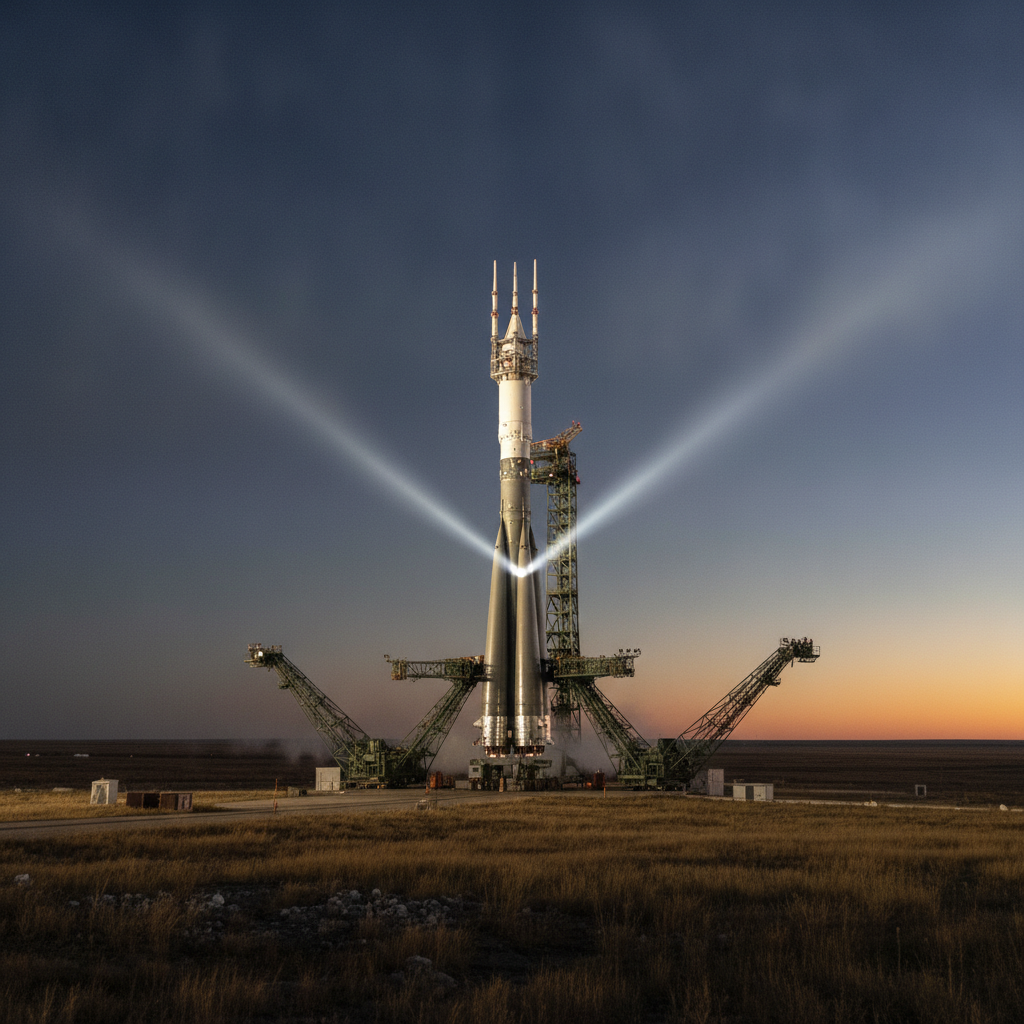
The Baikonur Steppe Launch Site Where Sputnik, Gagarin, and the First Spacewalk All Originated, the Kokaral Dam That Raised the North Aral Sea 30m in Five Years & the KaspiBank Super-App Serving 12 Million Active Users from Almaty
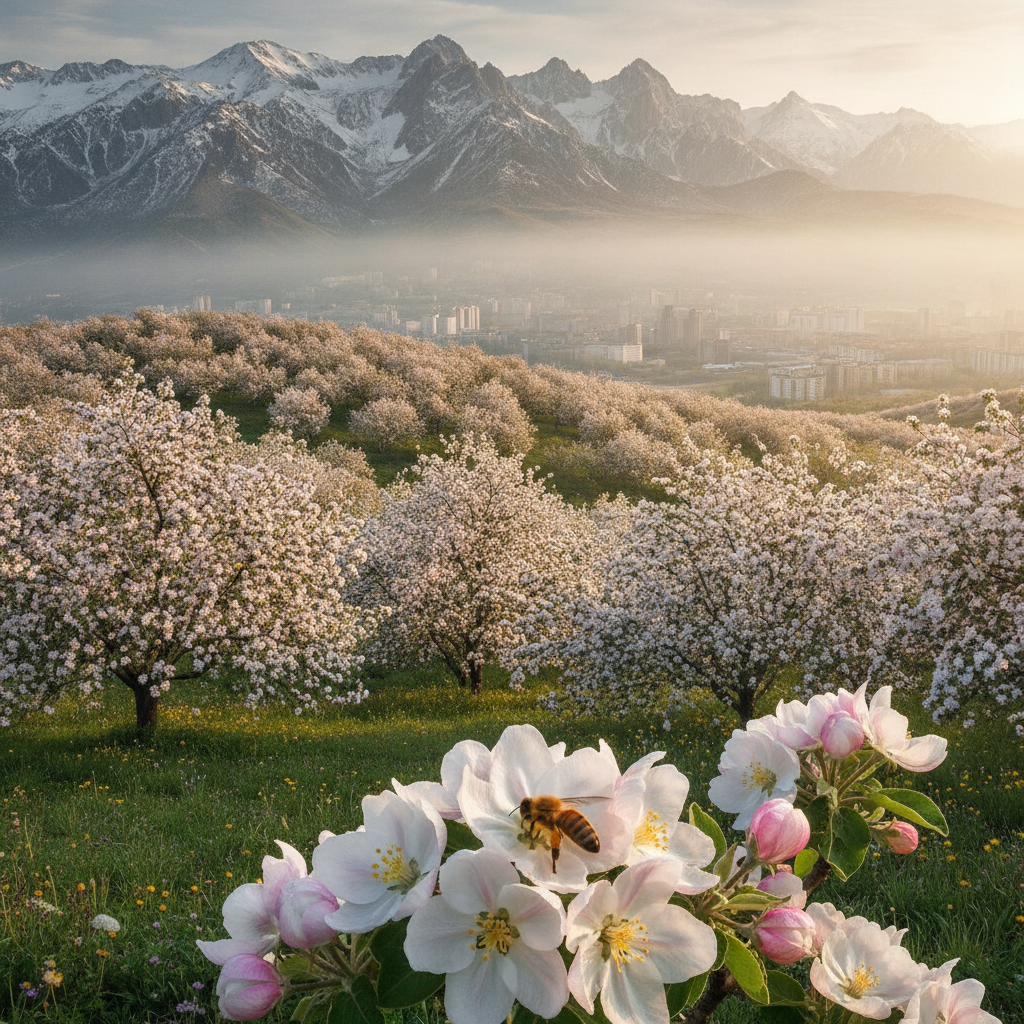
The Wild Apple Forests Above Almaty as the Genetic Origin of All 7,500 Domestic Apple Varieties, Eisenstein Filming Ivan the Terrible in Alma-Ata During WWII & the Aport Apple Growing to 800g the Largest Domesticated Apple Variety
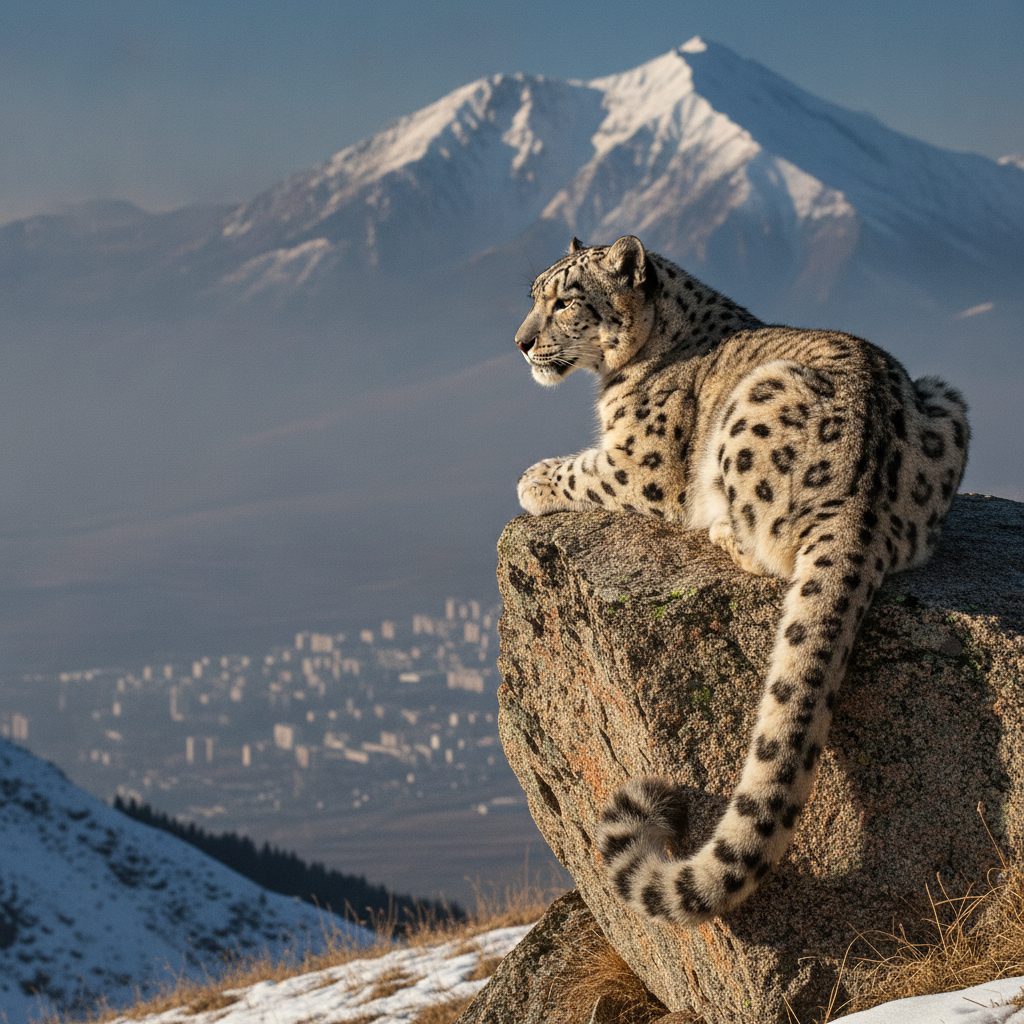
The 1887 Verniy Earthquake That Produced the First Seismic Building Code in the Russian Empire, the Stalin Deportation of 100,000 Soviet Koreans to Kazakhstan in 1937 & the Snow Leopard Population of 150-180 in the Zailiysky Alatau Mountains Above Almaty
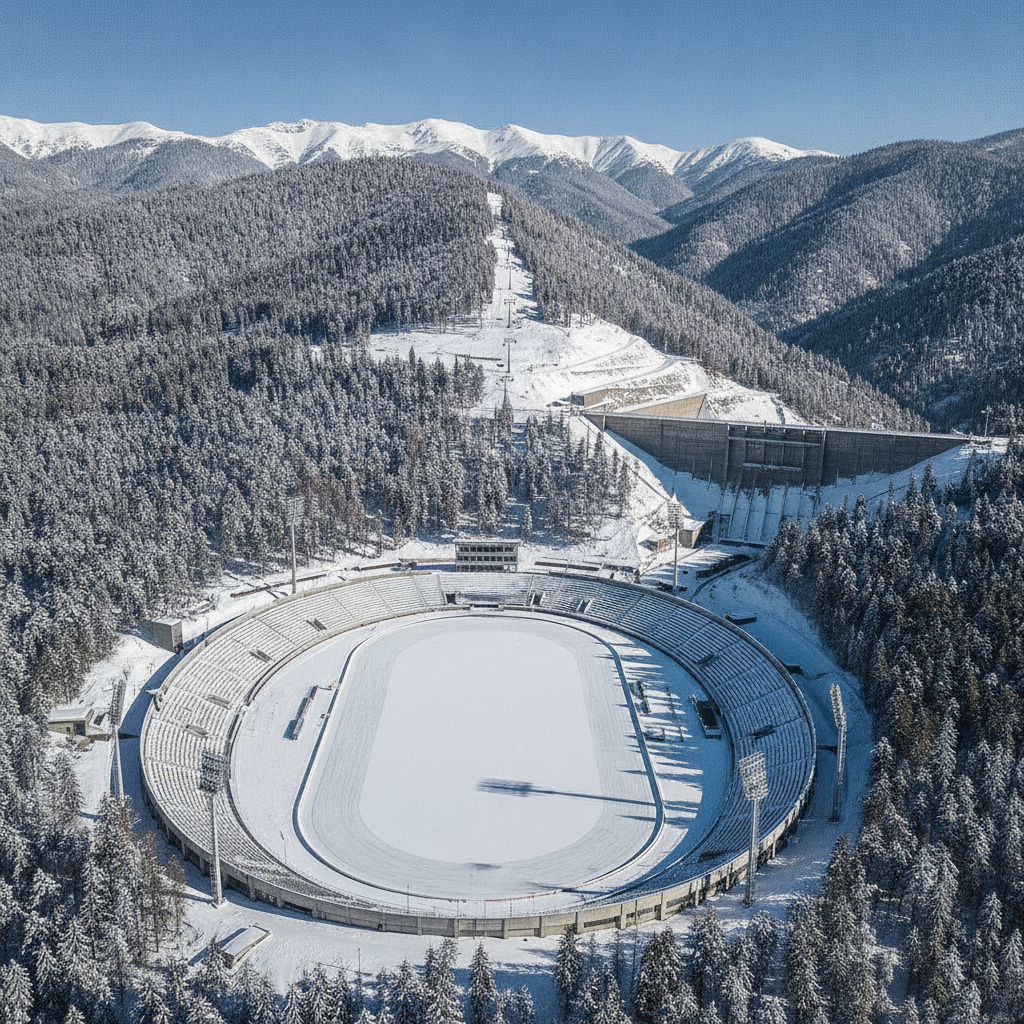
The Highest-Altitude Speed Skating Stadium Where 105 World Records Were Set, the Wooden Zenkov Cathedral That Survived a Magnitude 7.7 Earthquake Because Wood Absorbs Seismic Energy & the Beatles Statue on a Kazakhstan Hilltop