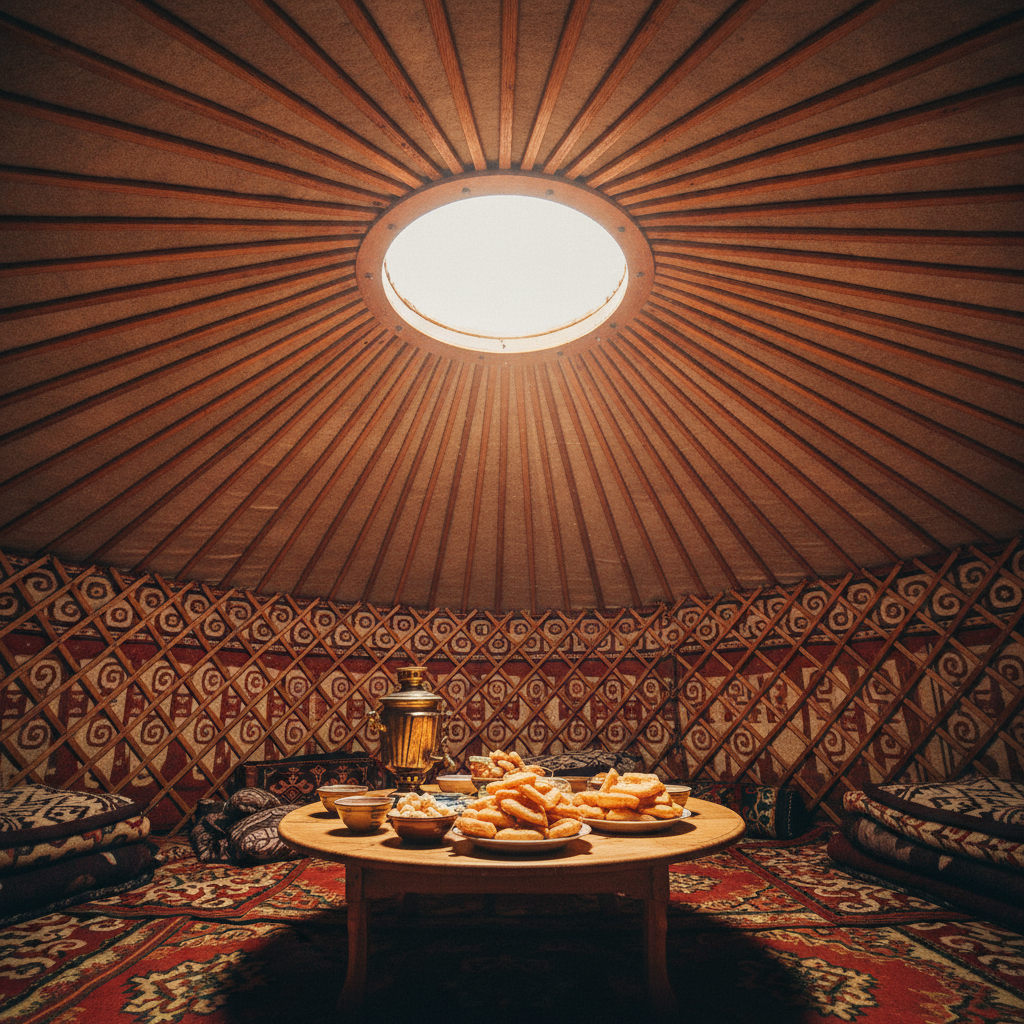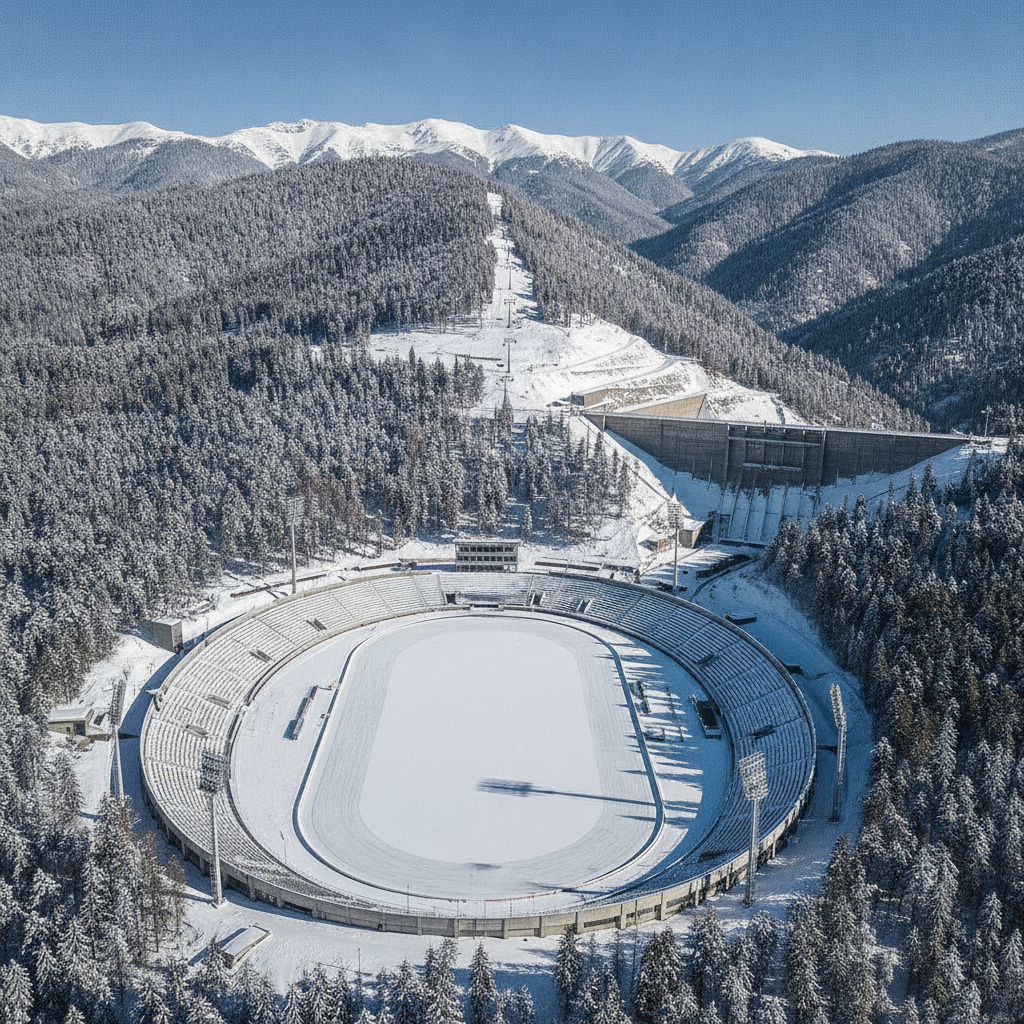
The Highest-Altitude Speed Skating Stadium Where 105 World Records Were Set, the Wooden Zenkov Cathedral That Survived a Magnitude 7.7 Earthquake Because Wood Absorbs Seismic Energy & the Beatles Statue on a Kazakhstan Hilltop
Medeu at 1,691m setting 105 world speed skating records using calcium-poor spring water for exceptionally hard ice; the Zenkov Cathedral built in 1907 entirely in wooden log construction without nails surviving the 1911 magnitude 7.7 earthquake that destroyed most of Verniy; the Beatles bronze statue at Kok-Tobe hilltop installed in 2007 citing Soviet youth cultural influence; the Almaty minarets at 63m matching the Prophet Muhammad's age in years; the horse meat (zhylkyy et) as Kazakhstan's primary prestige meat eaten at celebrations; and the kumys fermented mare's milk at 1-3% ABV produced only April-June during foaling season.
- 1
Medeu & Shymbulak – The Mountain Sports Gateway
The Medeu-Shymbulak mountain complex (the high-altitude sports and recreation zone 15–25 km southeast of central Almaty in the Zailiysky Alatau mountains): the mountain gateway guide. Medeu (the Medeu speed skating stadium (1972)—the highest-altitude (1,691m) speed skating stadium in the world during its Soviet era of competition: the stadium covers 10,500 m² of ice, making it the largest outdoor speed skating rink in the world—more world speed skating records (105) were set at Medeu between 1972 and 1991 than at any other single venue in history; the high altitude (reduced air resistance) and the spring water (calcium-low water produces exceptionally hard clear ice) combined to produce the record-breaking conditions): the flood dam (the dam above the Medeu stadium was built in 1966 following a catastrophic mudflow (sel) that destroyed part of the Alma-Ata valley in 1963—the dam can hold 6 million m³ of water and glacial debris): Shymbulak (the ski resort 3 km above Medeu (2,230–3,200m): the largest ski resort in Central Asia: 30 km of pisted runs, the longest 3.5 km; lift-served skiing from November to April; summer hiking season May–September): the cable car (the gondola from Medeu stadium to Shymbulak base (2,230m) takes 20 minutes—the most scenic cable car in Kazakhstan; the cable car continues from Shymbulak to the Talgar Pass (3,163m) with views of the Zailiysky Alatau range and on clear days the Tian Shan peaks extending toward Kyrgyzstan).
- 2
The Green Bazaar – Almaty's Food Market Soul
The Green Bazaar (Zelyony Bazar—the primary food market of Almaty, operating on the same site since 1875 when Almaty (then Verniy) was still a Russian military frontier town): the market guide. The market (the Green Bazaar occupies a covered market hall in the center of Almaty—the market covers approximately 1.5 hectares and is divided into sections: the dried fruit and nut section (the most spectacular visually—the pyramidal displays of 40+ varieties of dried fruit, nuts, and spices: the Fergana raisins (kishmish), the dried apricots (uruk) from Uzbekistan, the Almaty walnuts, the Kyrgyz dried mulberries, the Tajik almonds, and the Iranian pistachios): the meat section (the Central Asian meat market: horse meat (zhylkyy et—the primary Kazakhstan prestige meat, eaten at celebrations and believed to have medicinal properties); mutton; and beef—all hanging as whole carcasses in the traditional Central Asian market style): the dairy section (the Kazakh fermented dairy products: the kumys (fermented mare's milk—the national drink of Kazakhstan, produced April–June during the foaling season; the kefir-like texture with a slight alcohol content (1–3% ABV); the shubat (fermented camel's milk—thicker and slightly sour; believed to have digestive and immune-strengthening properties); the kurt (dried salted sour cheese balls—the most portable traditional Kazakh food, used by nomads as a protein source on long journeys)): the best visit time (weekday mornings 08:00–11:00—the market is most active and the produce freshest).
- 3
Kok-Tobe – The Hill Above the City
Kok-Tobe (Кок-Тобе—'Blue Hill' in Kazakh—the 1,100m hill southeast of the city center topped by the 372m Almaty TV Tower): the city panorama guide. The cable car (the Kok-Tobe cable car departs from Dostyk Avenue in the central business district and climbs 1,500m to the summit in 12 minutes—the cable car was built 1967 and is the primary tourist attraction of central Almaty): the TV tower (the Almaty Television Tower (372m)—built 1975 in reinforced concrete on the 1,100m hilltop: total height including hill 1,472m above sea level—the highest television broadcasting structure in Central Asia; the tower survived the 1988 Spitak earthquake that damaged much of Soviet Armenia because Almaty's earthquake engineering code (updated after the 1887 Verniy earthquake that destroyed the original city) requires structures to withstand 9-point seismic acceleration): the Beatles statue (the bronze life-size sculpture of the four Beatles in their 1960s Abbey Road crossing pose—installed at Kok-Tobe in 2007 at the initiative of the Almaty city administration, citing the cultural influence of Beatles music on Soviet youth culture in the 1960s–70s): the panorama (on clear days (best in October–November after the first snowfall when the mountain clarity is highest) the Kok-Tobe summit provides a 360-degree view of: the Zailiysky Alatau mountain wall (2,000–4,000m above the city skyline) to the south; the Almaty city grid extending north to the steppe horizon; the Kapchagay Reservoir glinting silver 80 km north on clear days).
- 4
Central Mosque & Zenkov Cathedral – Faith in Almaty
The religious heritage of Almaty (the two primary places of worship that define the religious architectural landscape of the post-Soviet city): the faith heritage guide. The Central Mosque (the Almaty Central Mosque (Орталық мешіт—built 1999, expanded 2014): the largest mosque in Kazakhstan (capacity 10,000 worshippers): the mosque architecture is the post-Soviet Central Asian style—a combination of traditional Islamic elements (the four minarets (63m each—the height chosen to equal the length of the Prophet Muhammad's life in years), the blue-glazed dome (26m diameter)) with modern construction materials (reinforced concrete frame, aluminum cladding on the minarets): the Friday prayer (the mosque receives 5,000–8,000 worshippers for the Friday noon prayer (juma)—the largest regular weekly gathering in Almaty): the Zenkov Cathedral (the Cathedral of the Ascension (Вознесенский собор)—built 1907 in the Panfilov Park in central Almaty—the most architecturally distinctive building in Kazakhstan: the cathedral is built entirely in wood (Tian Shan fir) using the traditional Russian Orthodox carpentry technique of log-on-log construction without nails—the cathedral survived the 1911 Kebin earthquake (magnitude 7.7) that destroyed most of Verniy because the wooden structure absorbed the seismic energy rather than cracking): the height (56m—the tallest wooden building in Central Asia): the interior (the painted Orthodox iconostasis with icons of Russian saints executed in a distinctly Central Asian style—the background landscapes show steppe and Tian Shan rather than the Byzantine gold ground).
- 5
Almaty's Soviet Architecture – The Garden City Heritage
The Soviet urban legacy of Almaty (the planned Soviet garden city of Alma-Ata—the model Soviet republic capital that demonstrates the highest aspirations of Soviet urban planning in Central Asia): the architectural heritage guide. The garden city concept (Alma-Ata was designated the capital of the Kazakh SSR in 1929 and rebuilt as a model Soviet city on a formal grid plan: the city plan (designed by the urban planner A. P. Zenkov in the 1920s based on the existing military settlement grid) uses wide tree-lined boulevards (the arboretum of Almaty—the plane tree, poplar, and Tian Shan spruce street plantings that shade the city in summer and give Almaty its park-like character): the major Soviet monuments (the Central State Museum of Kazakhstan (built 1985—the most architecturally ambitious Soviet building in Almaty: a dome 50m in diameter in the Kazakh national style with white marble cladding and traditional Kazakh ornamental motifs in the metalwork frieze); the Palace of the Republic (built 1970—the primary concert hall and state event venue, seating 3,000)): the Panfilov Park (the central park of Almaty (25 hectares)—named for the 28 Panfilov Guardsmen, the Red Army soldiers of the 316th Rifle Division (recruited in Almaty) who reportedly held a position against German tanks at the Battle of Moscow in November 1941—the memorial eternal flame and bronze bas-reliefs commemorate the battle): the Alatau Mountains backdrop (the defining feature of Almaty's urban landscape—the Zailiysky Alatau mountains rise immediately behind the city, providing the skyline visible from every north-south boulevard).
- 6
Almaty Practical Guide – Arrival, Seasons & Neighborhoods
The Almaty practical guide (the essential logistics for visiting Kazakhstan's largest city and cultural capital): the practical handbook. The airport (Almaty International Airport (ALA)—the primary international gateway for Central Asia: direct connections to Dubai (5h, daily (flydubai, Emirates)), Istanbul (6h, daily (Turkish Airlines, Air Astana)), Frankfurt (7h, 3× weekly (Lufthansa)), Beijing (4h, daily (Air Astana, Air China)), Seoul (5h30m, daily), Moscow (4h, multiple daily)): the visa (citizens of 62 countries (including all EU countries, USA, UK, Canada, Australia) do not require a visa for Kazakhstan for stays up to 30 days—implemented January 2023): the city neighborhoods (the primary districts: the Medeu District (southeast—the wealthiest district, containing the Central Business District, the Panfilov Park, the Green Bazaar, and the main restaurants and hotels); the Bostandyk District (the mountain-facing district including Medeu stadium, Shymbulak, and the Kok-Tobe hill): the Alatay District (northwest—the Soviet-era residential district with the widest boulevards)): the seasons (the optimal visiting season is May–June (warm, green, mountain snow visible) and September–October (crisp, clear mountain views, autumn foliage); July–August is hot (35°C) but the mountains are accessible for hiking; January–February is cold (-15°C nights) but Shymbulak skiing is excellent): the transport (the Almaty Metro (2 lines, 14 stations—under expansion to 3 lines by 2027)—the primary public transport for tourist attractions; taxi app Yandex Go is universal and reliable (USD 2–5 within the center)).
Walk this route with audio
Stories play automatically as you reach each stop — no tapping needed.
More in Almaty
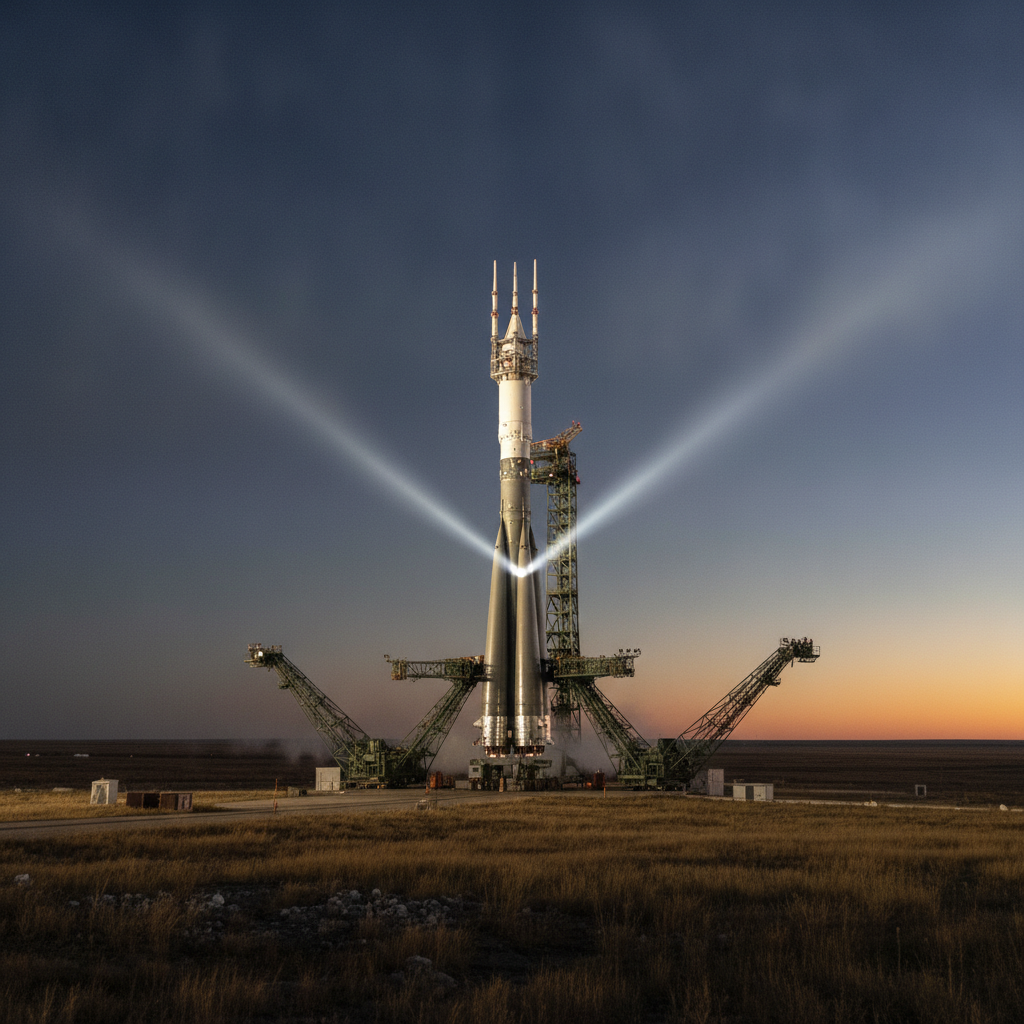
The Baikonur Steppe Launch Site Where Sputnik, Gagarin, and the First Spacewalk All Originated, the Kokaral Dam That Raised the North Aral Sea 30m in Five Years & the KaspiBank Super-App Serving 12 Million Active Users from Almaty
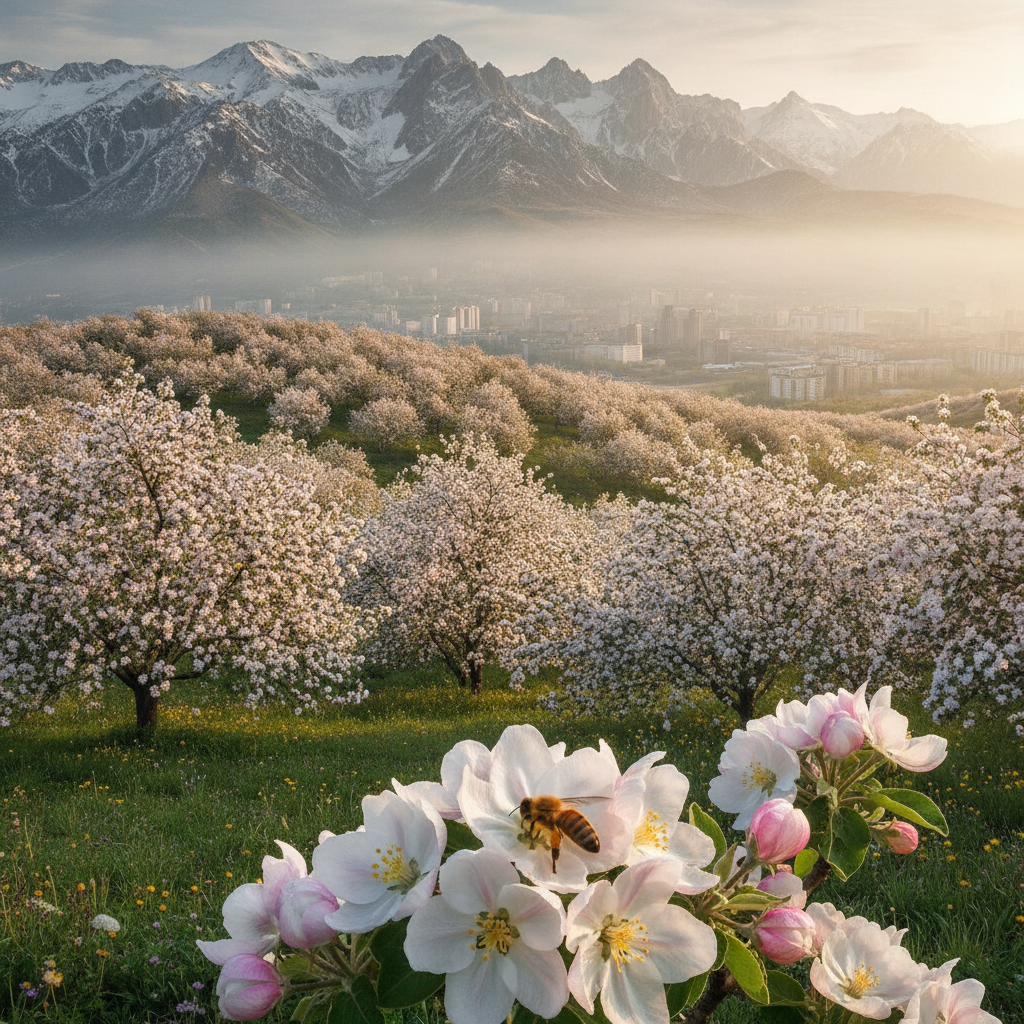
The Wild Apple Forests Above Almaty as the Genetic Origin of All 7,500 Domestic Apple Varieties, Eisenstein Filming Ivan the Terrible in Alma-Ata During WWII & the Aport Apple Growing to 800g the Largest Domesticated Apple Variety
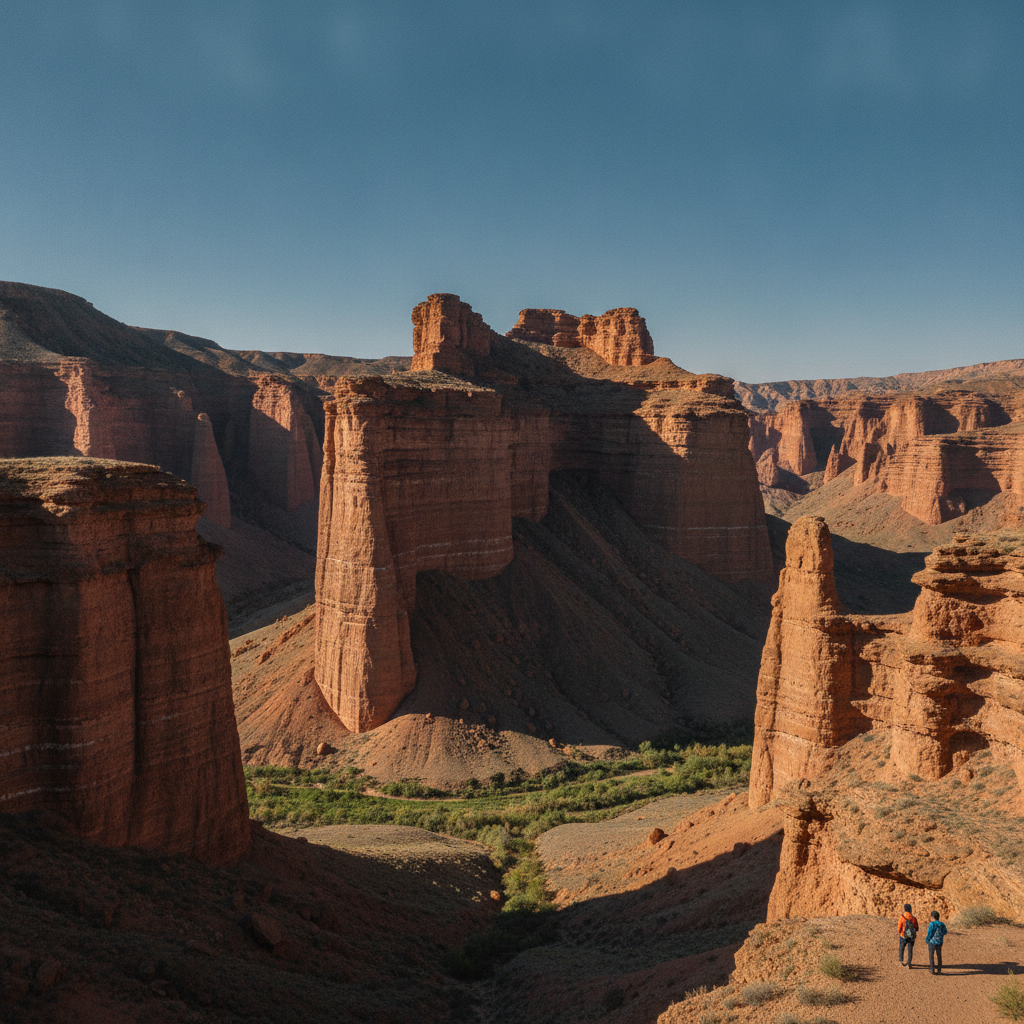
The 4th Century BCE Scythian Golden Man Wearing 4kg of Interlocking Gold Plaques Found 70km From Almaty, the Kazakh Eagle Hunter Tradition Using Golden Eagles With 2.3m Wingspans & the January 2022 Almaty City Hall Fire That Triggered the First CSTO Military Deployment
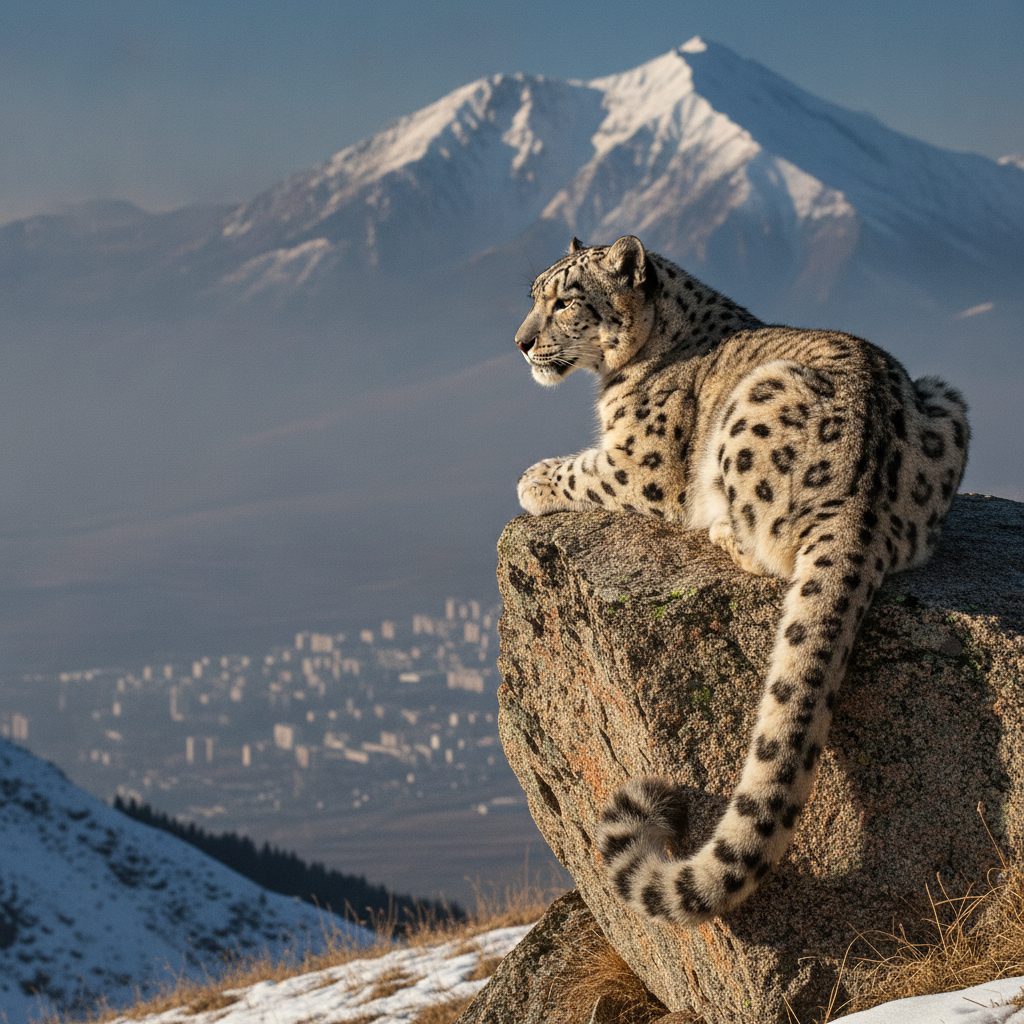
The 1887 Verniy Earthquake That Produced the First Seismic Building Code in the Russian Empire, the Stalin Deportation of 100,000 Soviet Koreans to Kazakhstan in 1937 & the Snow Leopard Population of 150-180 in the Zailiysky Alatau Mountains Above Almaty