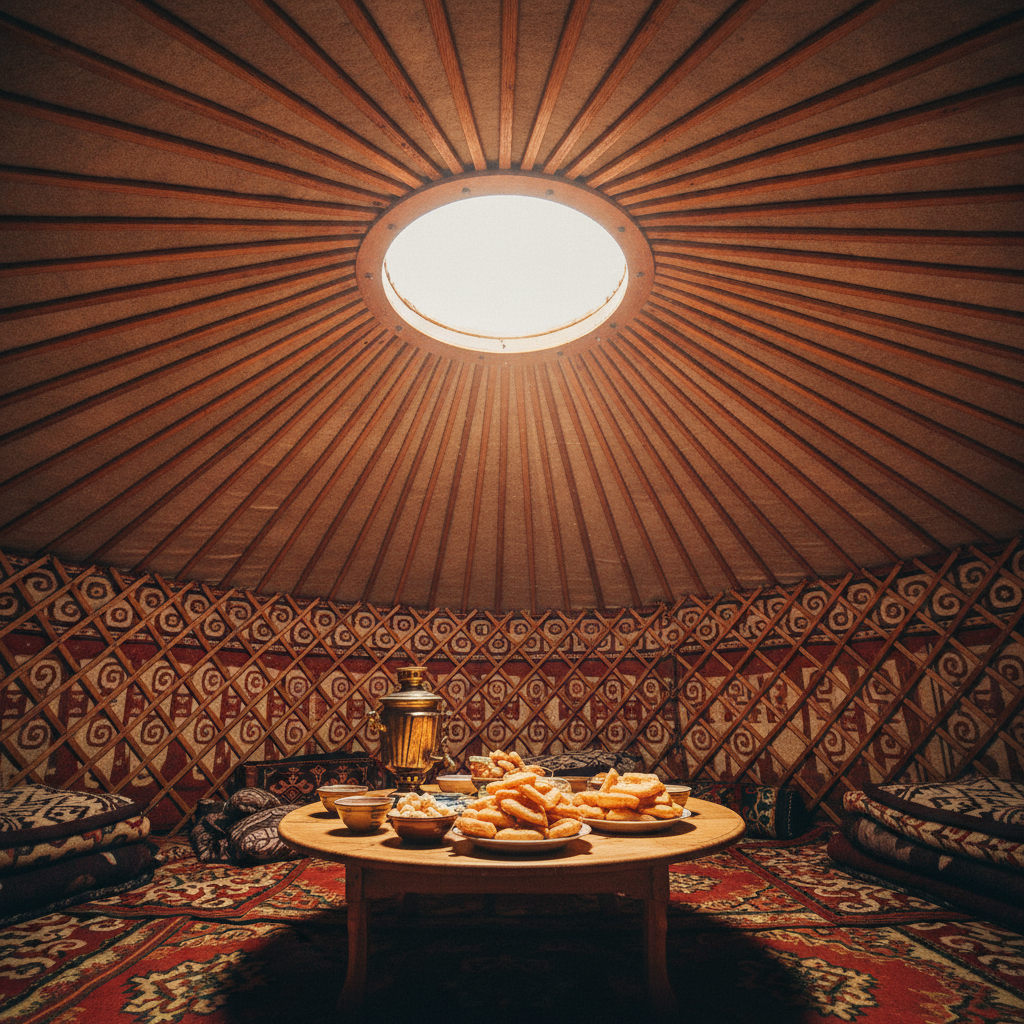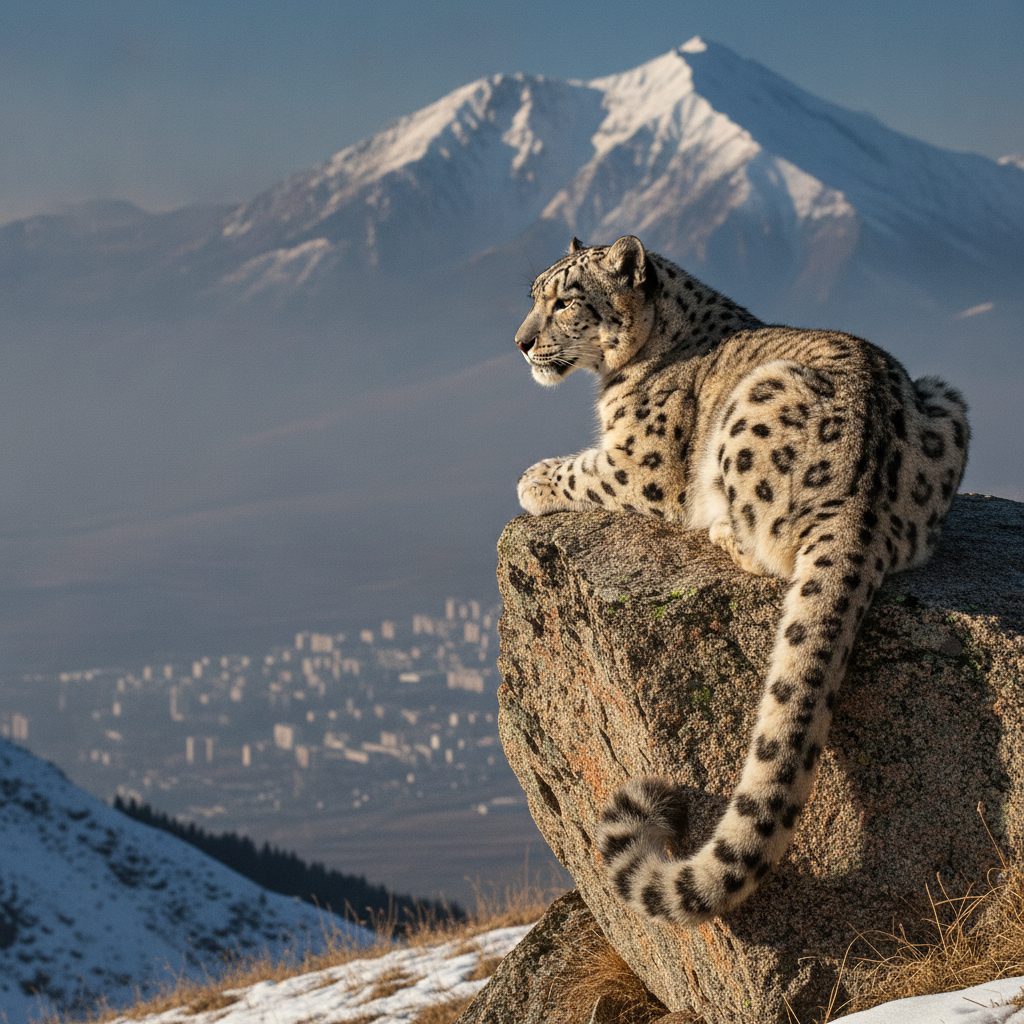
The 1887 Verniy Earthquake That Produced the First Seismic Building Code in the Russian Empire, the Stalin Deportation of 100,000 Soviet Koreans to Kazakhstan in 1937 & the Snow Leopard Population of 150-180 in the Zailiysky Alatau Mountains Above Almaty
The 1887 magnitude 7.3 earthquake destroying 95% of Verniy and producing the Russian Empire's first seismic building code; Stalin deporting the Koryo-Saram (Soviet Koreans) in 1937 making Kazakhstan the primary Soviet deportation destination; the Zailiysky Alatau snow leopard population of 150-180 as one of the healthiest remnant populations in Central Asia; the Almaty Uighur diaspora of 250,000 as the largest outside China; the Przewalski's horse extinct in the wild until reintroduced from captive stock at Almaty Zoo in 1992; and Eisenstein filming Ivan the Terrible in Alma-Ata during WWII evacuation.
- 1
Almaty's Earthquake History – Living on a Fault
The seismic heritage of Almaty (the city's relationship with the Tian Shan earthquake zone—the most seismically active region in Central Asia): the earthquake history guide. The fault system (Almaty is situated at the northern edge of the Tian Shan mountain range on the Trans-Ili Fault—a major reverse fault running east-west along the base of the Zailiysky Alatau: the fault is capable of generating magnitude 7.0–8.0 earthquakes, as demonstrated historically): the 1887 Verniy earthquake (the magnitude 7.3 earthquake of June 3, 1887 destroyed 95% of the buildings in Verniy (the predecessor city of Almaty), killing approximately 332 people (the low death toll relative to destruction reflecting the low population density at the time): the earthquake resulted in the adoption of the Verniy Building Code—the first seismic building code in the Russian Empire, requiring all major buildings to use wood-frame or reinforced concrete construction rather than unreinforced brick): the 1911 Kebin earthquake (the magnitude 7.7 earthquake of January 4, 1911 (the second-largest earthquake in Central Asian recorded history) produced a fault scarp 200 km long in the Zailiysky Alatau and caused a catastrophic landslide on the southern side of the mountain range—the Almaty damage was limited because the 1887 building code had already replaced the most vulnerable structures): the mudflow (sel) risk (the combination of steep mountain slopes, glacial moraines, and heavy spring snowmelt creates a persistent sel (debris flow) risk above Almaty—the 1921 and 1963 debris flows killed hundreds and reached the edge of the city; the Medeu dam (built 1966) and a network of 25 smaller debris-flow barriers protect the city).
- 2
The Ethnic Mosaic of Almaty – Kazakhs, Russians & Diaspora
The ethnic diversity of Almaty (the most ethnically diverse city in Central Asia—a legacy of Soviet population movements that brought over 100 nationalities to Kazakhstan): the ethnic heritage guide. The historical context (Kazakhstan's ethnic composition is the direct result of Soviet demographic engineering: the Russian settlement (the Russian Cossack settlement from the 1830s, followed by mass peasant migration from European Russia (1905–1920) and Soviet industrial migration (1930s–1960s)); the deported nationalities (Stalin deported the Volga Germans (600,000 people, 1941), the Koryo-Saram (Soviet Koreans, 100,000 people, 1937), the Chechens and Ingush (400,000, 1944), and the Crimean Tatars (200,000, 1944) to Kazakhstan—making Kazakhstan the primary Soviet deportation destination): the Almaty ethnic composition (Almaty is approximately 55% Kazakh, 25% Russian, with the remaining 20% comprising Uighur (8%), Ukrainian, Korean, Tatar, German, and other nationalities—the most ethnically mixed city in the former Soviet Union after Moscow): the Russian emigration (the Russian population of Kazakhstan has decreased from 40% (1989) to approximately 15% (2024) as Russian-speaking citizens emigrated to Russia, Germany, and Israel after independence—the emigration has been a source of significant demographic anxiety for the Kazakh government): the Uighur community (the Almaty Uighur community (approximately 250,000 people) is the largest Uighur diaspora community outside China—the Uighur Cultural Center on Alatau Street and the Uighur-language media preserve Uighur language and culture in Kazakhstan).
- 3
Families in Almaty – Children's Mountain & City Guide
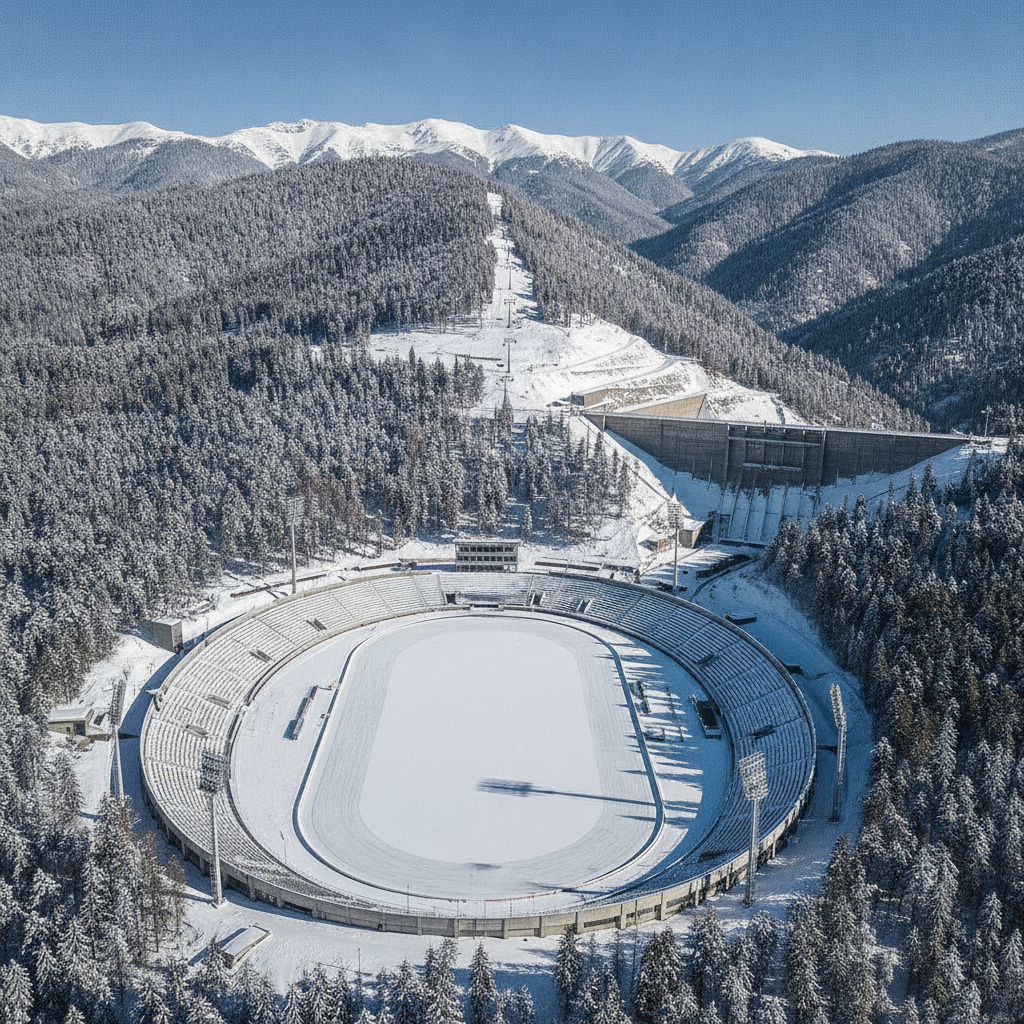
The Almaty families guide (the practical guide for visiting Almaty with children—the mountain activities, city attractions, and child-appropriate experiences): the families travel guide. The Medeu and Shymbulak (the primary family destination near Almaty: the Medeu ice skating (November–March): the public skating sessions on the world-record ice rink (USD 5 entry + USD 3 skate rental)—the rink is so large that it never feels crowded; the Shymbulak cable car (the 12-minute gondola from 1,500m to 2,230m is itself the attraction for younger children—the mountain views from the gondola are the best accessible mountain views near Almaty): the snow tubing (the Shymbulak snow tubing park (December–March): dedicated tubing runs for children and adults (USD 5/30 minutes)): the Almaty Zoo (the Almaty Zoo (founded 1934): 3,600 animals from 450 species including the snow leopard (the national animal of Kazakhstan), the Amur tiger, the Przewalski's horse (the wild horse of the Central Asian steppe that was extinct in the wild but reintroduced from captive stock in 1992), and the Bactrian camel—the zoo is 5 km from the city center in Gorky Park): the Central State Museum children's section (the Golden Man exhibit is the most effective museum exhibit for engaging children's historical imagination—the life-size reconstructed gold armor suit in a darkened gallery): the apple orchard walk (the Kok-Baital gorge 20 km from the city—a valley walk through wild apple and apricot orchards in the May blossom season).
- 4
Almaty's Silk Road Connection – Caravans to China
The Almaty Silk Road connection (the role of the Almaty region in the northern branch of the ancient Silk Road—the steppe route that bypassed the desert cities of Uzbekistan and connected China to the Black Sea through the Kazakh steppe): the Silk Road heritage guide. The Ili River route (the northern Silk Road branch ran from Chang'an (Xi'an) westward through the Gansu Corridor, crossed the Tian Shan via the Bedel Pass into the Ili River Valley (the valley containing modern Almaty), and continued west through the Kazakh steppe to the Caspian Sea and the Black Sea ports: the Ili Valley route was particularly active during the Tang Dynasty (618–907 CE) and the Mongol period (13th–14th century) when the Mongol Pax Mongolica guaranteed safe passage along the northern steppe route): the Chilikty Valley kurgans (the Chilikty Valley 250 km east of Almaty (in the East Kazakhstan province): the Saka (Scythian) burial mounds of the 8th–7th century BCE—the oldest monumental burial structures in Kazakhstan, predating the Silk Road by 500 years but establishing the steppe exchange network that preceded it): the Kargaly treasure (the Kargaly diadem—a 2nd–1st century BCE golden headdress found at the Kargaly archaeological site 40 km southwest of Almaty in 1939: the diadem depicts the winged snow leopard and the stag in the Saka animal-style goldwork tradition, comparable to the Issyk Golden Man in technical quality): the caravansarai at Talgar (the Talgar settlement 25 km east of Almaty on the northern Silk Road branch—the most accessible archaeological site of the medieval Silk Road caravanserai network near Almaty).
- 5
The Snow Leopard – Almaty's Mountain Guardian
The snow leopard (Panthera uncia) in the Almaty region (the apex predator of the Zailiysky Alatau whose presence defines the ecological status of the mountain ecosystem above Almaty): the wildlife heritage guide. The snow leopard (the snow leopard—the large felid of the mountains of Central and South Asia: weight 22–55 kg; body length 1.0–1.3m; tail length 0.8–1.0m (nearly as long as the body—the long tail is used for balance on steep rocky terrain and as a thermal wrap in cold temperatures): the population (the global snow leopard population is estimated at 4,000–6,500 individuals (2023) across 12 countries—the Zailiysky Alatau population is estimated at 150–180 individuals (2023), one of the healthiest remnant populations in the Central Asian mountain arc): the prey (the primary prey of the snow leopard in the Zailiysky Alatau: the Siberian ibex (Capra sibirica—the wild goat of the mountain cliffs, population approximately 5,000 in the Alatau), the roe deer, and the Argali (Marco Polo sheep variant in the high-altitude zones above 3,000m)): the conflict (the primary threat to the Zailiysky Alatau snow leopard: the livestock depredation conflict—the leopards take sheep and goats from the high-altitude pastures (jailau) in summer, resulting in retaliatory killing by herders—the Snow Leopard Trust's Almaty chapter operates a livestock insurance program to compensate herders for snow leopard predation, reducing retaliatory killing): the sighting probability (the best snow leopard sighting locations near Almaty: the Ala-Archa National Park in Kyrgyzstan (60 km from Almaty) has a higher sighting probability than the Zailiysky Alatau due to its more rugged terrain).
- 6
Budget Almaty – Stretching the Tenge
The Almaty budget travel guide (the practical handbook for visiting Kazakhstan's most expensive city on a limited budget): the budget handbook. The currency (the Kazakhstani tenge (KZT): 1 USD = approximately 450–470 KZT (2024)—Kazakhstan is the most expensive country in Central Asia but substantially cheaper than Western Europe or East Asia): the budget accommodation (the cheapest legitimate accommodation in Almaty: the Staybridge Hostel (USD 8–12/dorm; the best-located hostel, 10 minutes walk from the Green Bazaar); the Sleep In Hostel (USD 10–15/dorm, opposite the opera house); the Airbnb private apartments in the Medeu District (USD 25–40/night for studio apartments—the best value private accommodation in Almaty): the budget food (the cheapest full meals in Almaty: the Soviet-style stolovaya (cafeteria)—self-service canteens serving borscht, salads, and hot dishes at USD 2–4/meal—the best examples are the Stolovaya on Tole Bi Street and the Arkhivnaya on Furmanov Street; the Green Bazaar food court (the prepared food stalls on the north side of the Green Bazaar sell lagman, beshbarmak, and Dungan ashlan-fu at USD 1.50–3.00/portion)): the free activities (Panfilov Park and Zenkov Cathedral: free; the Medeu exterior and dam wall walk: free; the Kok-Tobe hill walking path (instead of cable car): free—the 3 km walking trail from the Dostyk Avenue cable car base to the summit is free and takes 1h uphill): the total budget (complete 2-day Almaty experience achievable at USD 40–55 total).
Walk this route with audio
Stories play automatically as you reach each stop — no tapping needed.
More in Almaty
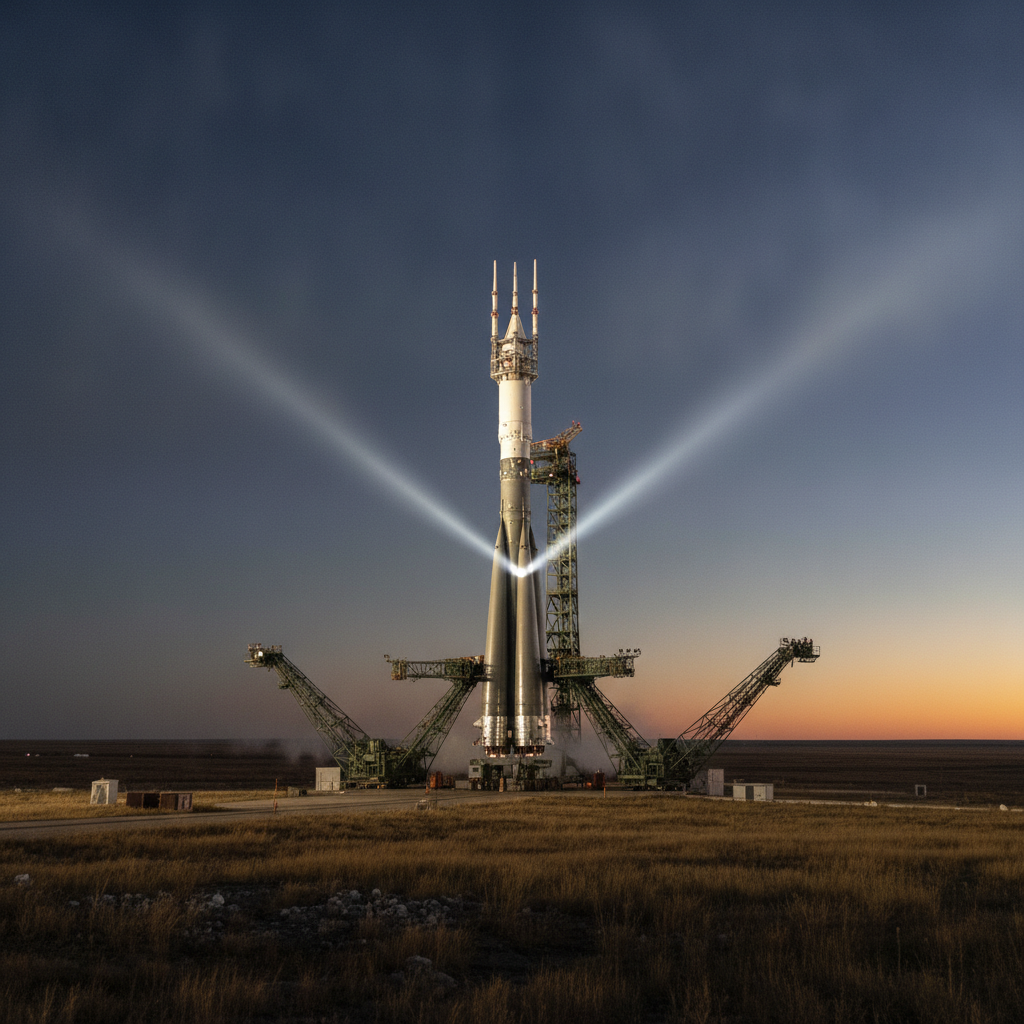
The Baikonur Steppe Launch Site Where Sputnik, Gagarin, and the First Spacewalk All Originated, the Kokaral Dam That Raised the North Aral Sea 30m in Five Years & the KaspiBank Super-App Serving 12 Million Active Users from Almaty
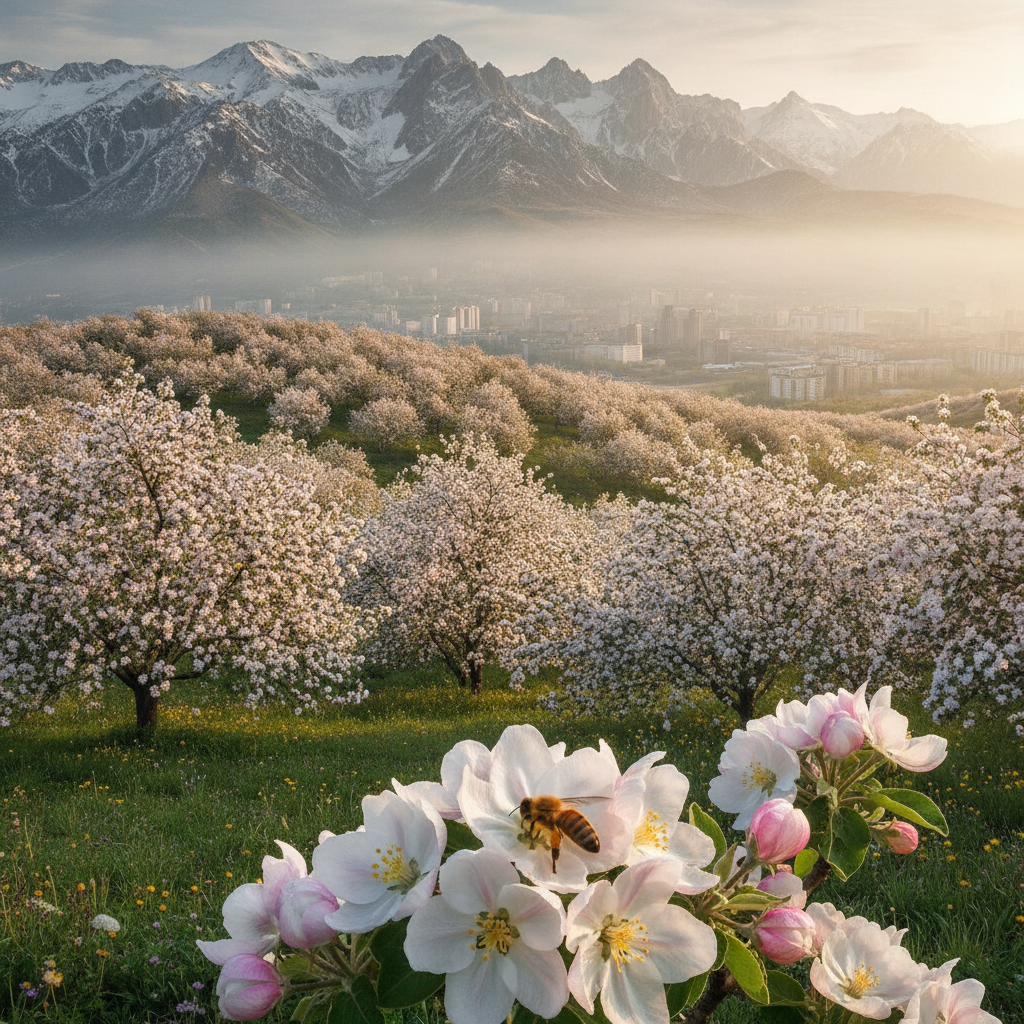
The Wild Apple Forests Above Almaty as the Genetic Origin of All 7,500 Domestic Apple Varieties, Eisenstein Filming Ivan the Terrible in Alma-Ata During WWII & the Aport Apple Growing to 800g the Largest Domesticated Apple Variety
The 4th Century BCE Scythian Golden Man Wearing 4kg of Interlocking Gold Plaques Found 70km From Almaty, the Kazakh Eagle Hunter Tradition Using Golden Eagles With 2.3m Wingspans & the January 2022 Almaty City Hall Fire That Triggered the First CSTO Military Deployment
The Highest-Altitude Speed Skating Stadium Where 105 World Records Were Set, the Wooden Zenkov Cathedral That Survived a Magnitude 7.7 Earthquake Because Wood Absorbs Seismic Energy & the Beatles Statue on a Kazakhstan Hilltop