The Wild Apple Forests Above Almaty as the Genetic Origin of All 7,500 Domestic Apple Varieties, Eisenstein Filming Ivan the Terrible in Alma-Ata During WWII & the Aport Apple Growing to 800g the Largest Domesticated Apple Variety
The Malus sieversii wild apple of the Zailiysky Alatau confirmed by genome sequencing as the primary ancestor of all 7,500 cultivated apple varieties; Eisenstein filming Ivan the Terrible Parts I and II in Alma-Ata after the Moscow film studios were evacuated in 1941; the Aport apple cultivar reaching 600-800g as the world's largest domesticated apple variety; Almaty's capital transfer to Astana in 1997 with disputed reasons including earthquake risk, ethnic politics, and personal legacy; the Korday border crossing processing 25,000 vehicles daily as the busiest land crossing in Central Asia; and October-November after first snowfall as the best Almaty photography conditions combining mountain snow with yellow autumn foliage.
- 1
The Apple City – Almaty's Horticultural Origin
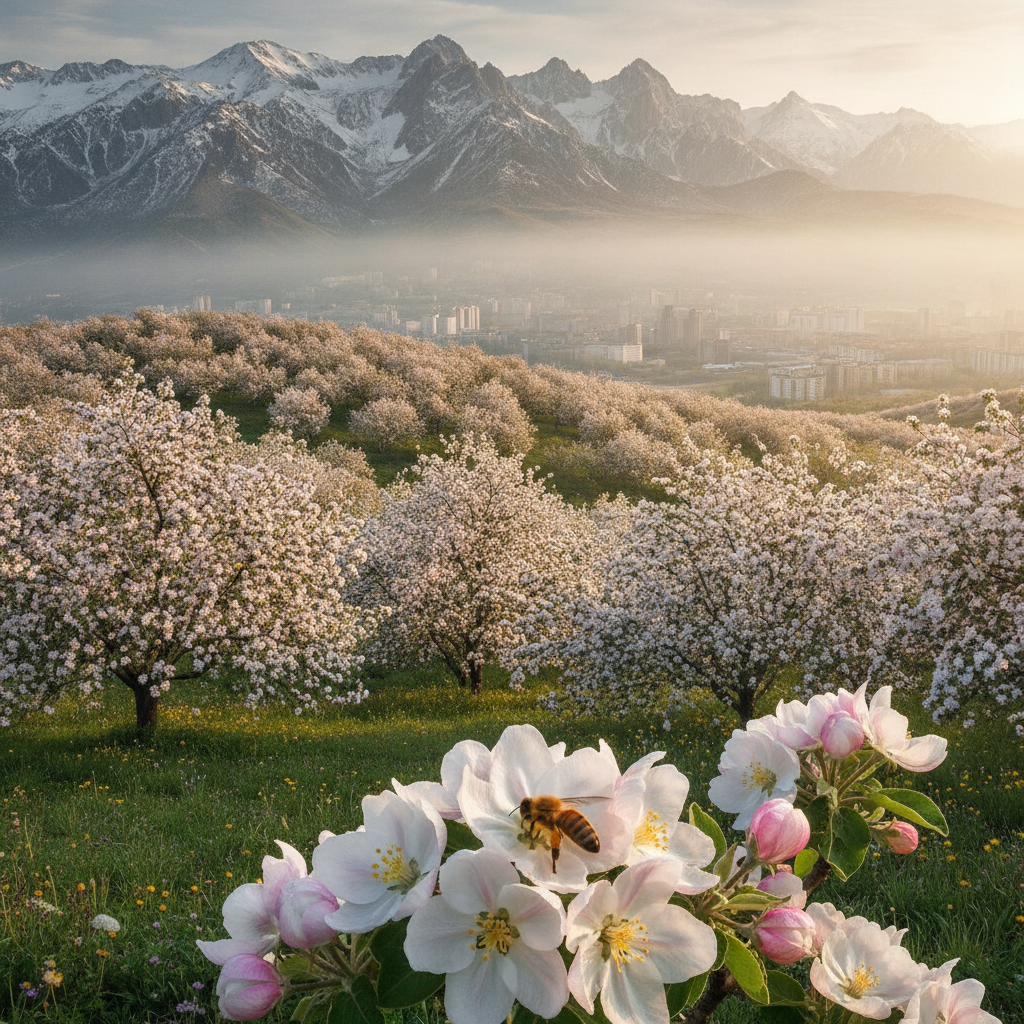
The apple heritage of Almaty (the Zailiysky Alatau foothills as the original homeland of the domestic apple—the single most significant botanical fact about Almaty): the botanical heritage guide. The wild apple origin (the domestic apple (Malus domestica) descends from the wild Sievers apple (Malus sieversii)—a wild apple species that grows naturally in the Tian Shan and Zailiysky Alatau mountain forests of Kazakhstan and Kyrgyzstan: the genetic studies of the 1990s–2000s (led by the botanist Barrie Juniper at Oxford and confirmed by genome sequencing in 2010) established that the Malus sieversii of the Almaty region is the primary ancestor of all 7,500 cultivated apple varieties in the world): the Almaty (Alma-Ata) name connection (the city of Almaty was known as Alma-Ata—'Father of Apples' in Kazakh—from its founding as a Russian settlement in 1854: the name reflects the extraordinary density of wild apple orchards in the Zailiysky Alatau foothills surrounding the original settlement—early Russian travelers described the foothills as being entirely covered in wild apple trees in spring (May), with the blossoms visible from 10 km distance): the Aport apple (the Aport—a large, red, very sweet apple variety developed in the Almaty region from the wild Malus sieversii stock in the late 19th century—the most famous domesticated apple cultivar from Kazakhstan (individual Aport apples can reach 600–800g, the largest domesticated apple variety): the Aport orchards of the Almaty foothills (the Nurbai, Talgar, and Issyk districts) are the primary remaining agricultural heritage of the city's orchard culture—much reduced from the Soviet era by urban development).
- 2
Soviet Almaty – The Showcase Republic Capital
The Soviet construction of Alma-Ata (the planned Soviet city that transformed a small Russian frontier town (population 30,000 in 1926) into a major modern city (population 1.1 million by 1991)): the Soviet urban heritage guide. The city plan (the Soviet Alma-Ata was built on a grid plan with the principal street Lenina (now Dostyk) Avenue running north-south from the Alatau mountain wall to the northern steppe: the avenues are 60–80m wide (substantially wider than European city boulevards) lined with Tian Shan spruce (Picea schrenkiana) and plane trees (Platanus): the street trees are the defining element of Alma-Ata's urban character—the tree canopy covers approximately 60% of the central city sidewalk area): the major Soviet buildings (the Government House (the main government building on Republic Square—the largest public building in Kazakhstan, built 1954 in the Stalin Empire style): the State Opera House (the Abay State Academic Opera and Ballet Theater—built 1941 by evacuated Moscow architects and performers, as Alma-Ata was one of the primary evacuation destinations for Soviet cultural institutions during WWII): the VDNKH (the Exhibition of Achievements of the National Economy of the Kazakh SSR—the Soviet exhibition complex now operating as Atakent Exhibition Center)): the wartime role (Alma-Ata's role as the primary evacuation destination for Soviet cinema during WWII—the Mosfilm and Lenfilm studios were evacuated to Alma-Ata in 1941, and approximately 80 major Soviet films were made in Alma-Ata in 1941–1945, including Sergei Eisenstein's Ivan the Terrible (Parts I and II)).
- 3
Kazakhstan's Transition – From Soviet to Petro-State
The Kazakhstan political and economic transition guide (the history of Kazakhstan from Soviet republic to independent petro-state—the backstory that explains the modern city of Almaty): the contemporary history guide. The independence (Kazakhstan declared independence on December 16, 1991—the last Soviet republic to declare independence before the formal dissolution of the USSR on December 25, 1991): the Nazarbayev era (Nursultan Nazarbayev, Communist Party First Secretary of the Kazakh SSR from 1989, became the first President of Kazakhstan in 1991 and ruled until March 2019—a 30-year presidency that combined strong economic development with political authoritarianism: the oil revenue (the Tengiz, Kashagan, and Karachaganak oilfields in western Kazakhstan made Kazakhstan the 9th largest oil producer in the world (1.9 million barrels/day in 2023) and transformed the country's GDP from USD 25 billion (1991) to USD 220 billion (2022)): the capital transfer (Nazarbayev transferred the capital from Almaty to the purpose-built new capital Astana (now Nur-Sultan, renamed again to Astana in 2022) in 1997—the stated reasons: Almaty's earthquake risk and geographic peripherality; the actual reasons are disputed (theories include: greater steppe accessibility for the Kazakh ethnic majority; control of nomadic identity politics; personal legacy construction; geographic centering of the country): the inequality (Kazakhstan's Gini coefficient (income inequality measure) is 0.28 (2022)—relatively equal by post-Soviet standards—but the oil wealth is concentrated in western Kazakhstan while Almaty hosts the financial and business elite).
- 4
Almaty's Nightlife & Contemporary Culture
The Almaty contemporary culture and nightlife guide (the most vibrant nightlife and contemporary culture scene in Central Asia—a city that serves as the regional hub for the arts, music, and creative industries): the contemporary culture guide. The nightlife geography (the primary nightlife and restaurant zone of Almaty: the Dostyk Avenue corridor (from the Opera House north to the Green Bazaar)—the highest concentration of restaurants, bars, and clubs in Kazakhstan; the Esentai Park area (the luxury district surrounding the Esentai Tower (200m—the tallest building in Kazakhstan)—the high-end restaurant and cocktail bar zone): the music scene (the Almaty live music scene: the Chukotka bar (the primary indie rock venue, capacity 300, open since 2010); the MEZZO club (the primary jazz and world music venue); the Roxy Club (the principal electronic music club—the DJs play European techno and house music to a mixed Russian-Kazakh-expatriate audience): the theater scene (the Abay State Opera and Ballet Theater (founded 1934)—the primary high-culture venue: the ballet program is the most active in Central Asia (15 ballets in the annual repertoire); the ARTИШ Theater—the principal drama theater performing Kazakh-language productions): the film (Almaty is the center of the Kazakh new wave cinema: the director Emir Baigazin (Harmony Lessons, 2013—Berlinale Silver Bear) and Darezhan Omirbaev (the internationally recognized Kazakh director) both based in Almaty): the street food circuit (the late-night food option: the Uighur manti steamed dumplings from the Uighur restaurants in the Samalyk district, open until 02:00).
- 5
Photography in Almaty – Mountains, Markets & Street
The Almaty photography guide (the practical handbook for photographing the most visually diverse city in Central Asia—where Soviet architecture, mountain landscapes, and Central Asian market culture coexist): the photographer's guide. The mountain backdrop (the Zailiysky Alatau mountains provide a dramatic backdrop for Almaty city photography: the best north-south boulevard for mountain views (with the mountains visible at the end of the avenue): Dostyk Avenue (from the Opera House, looking south) in the morning (the mountains are backlit after 11:00 in summer—optimal morning light is 07:00–09:00): Furmanov Street (looking south from the Panfilov Park): the clearest mountain days are October–November after first snowfall (the mountain snow and the autumn yellow tree foliage create the optimal color palette)): the Medeu ice rink (the Medeu stadium from above: the 4WD road to the Koktobe Pass above Medeu provides an elevated view of the ice rink in winter (November–April) with the surrounding mountain bowl—the best single panoramic landscape photograph near Almaty): the Green Bazaar interior (the most colorful interior photography space in Almaty: the dried fruit pyramid displays under the bazaar hall skylights create natural top-lit food still-life compositions; the best light 09:00–11:00 when the skylight angle is optimal): the Zenkov Cathedral (the wooden cathedral in Panfilov Park: photograph from the west in the morning (06:30–08:00 in summer) when the low morning light illuminates the white and ochre paintwork of the facades; use the surrounding park trees as foreground framing elements).
- 6
Almaty to Bishkek & the Silk Road Circuit
The Almaty to Bishkek connection (the 2-hour road journey between the two most accessible cities of the Central Asian mountain arc—and the broader Silk Road circuit connecting Almaty to the wider region): the circuit planning guide. The Almaty-Bishkek road (the primary highway between Kazakhstan and Kyrgyzstan (the A-2 highway): 250 km, 3 hours by car or shared taxi: the road crosses the border at Korday (the busiest Central Asian land border crossing, processing 15,000–25,000 vehicle crossings daily), passes through the Chu Valley (the flat agricultural valley between the Zailiysky Alatau and the Kyrgyz Ala-Too mountains), and arrives in Bishkek—the journey is dominated by the mountain wall to the south and the flat steppe to the north): Bishkek (the Kyrgyz capital (population 1.1 million)—a Soviet-planned garden city similar in structure to Almaty but with significantly less economic development: the primary reasons to visit Bishkek from Almaty: the Osh Bazaar (the primary bazaar of Bishkek, larger and less touristic than Almaty's Green Bazaar); the Kyrgyz National Museum (the yurt and nomadic artifact collection); the proximity of the Ala-Archa National Park (45 min from Bishkek center—spectacular gorge hiking accessible without a permit): the Song-Kol Lake (the high-altitude steppe lake at 3,016m, 6h from Bishkek by 4WD, with the most authentic surviving yurt-nomad tourism experience in Central Asia): the circuit (the optimal Central Asia circuit from Almaty: Almaty → Bishkek (2h) → Issyk-Kul Lake (3h from Bishkek) → Osh (8h from Issyk-Kul or 1h by air) → Tashkent (2h by air) → Samarkand → Bukhara → Tashkent → Almaty).
Walk this route with audio
Stories play automatically as you reach each stop — no tapping needed.
More in Almaty
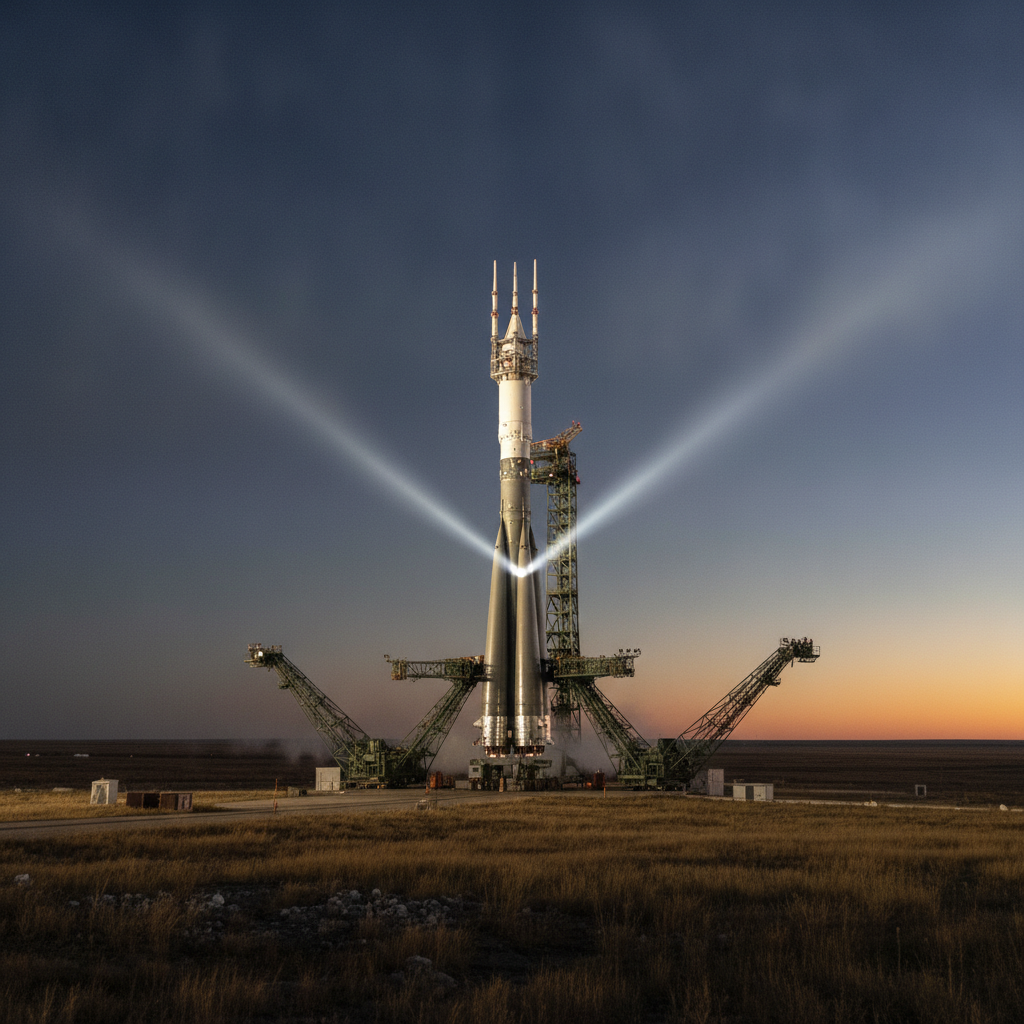
The Baikonur Steppe Launch Site Where Sputnik, Gagarin, and the First Spacewalk All Originated, the Kokaral Dam That Raised the North Aral Sea 30m in Five Years & the KaspiBank Super-App Serving 12 Million Active Users from Almaty
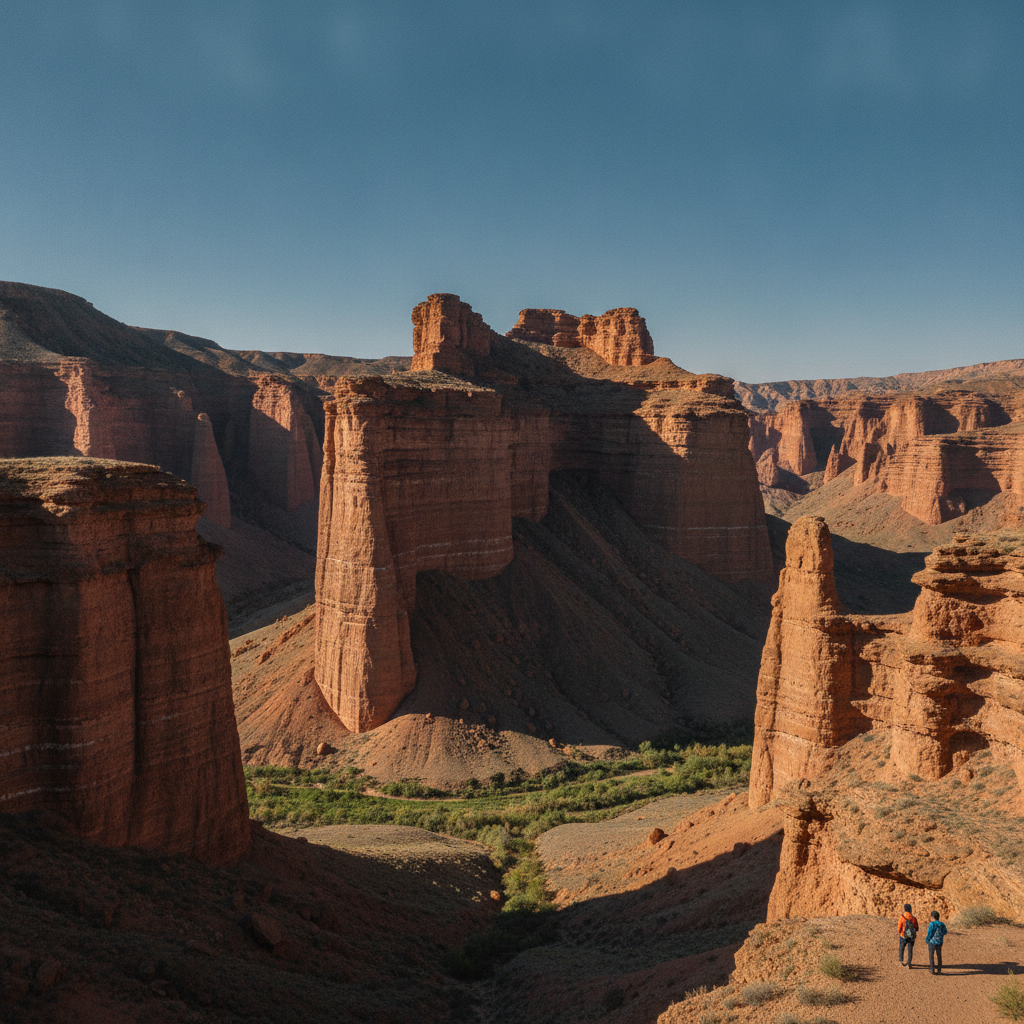
The 4th Century BCE Scythian Golden Man Wearing 4kg of Interlocking Gold Plaques Found 70km From Almaty, the Kazakh Eagle Hunter Tradition Using Golden Eagles With 2.3m Wingspans & the January 2022 Almaty City Hall Fire That Triggered the First CSTO Military Deployment
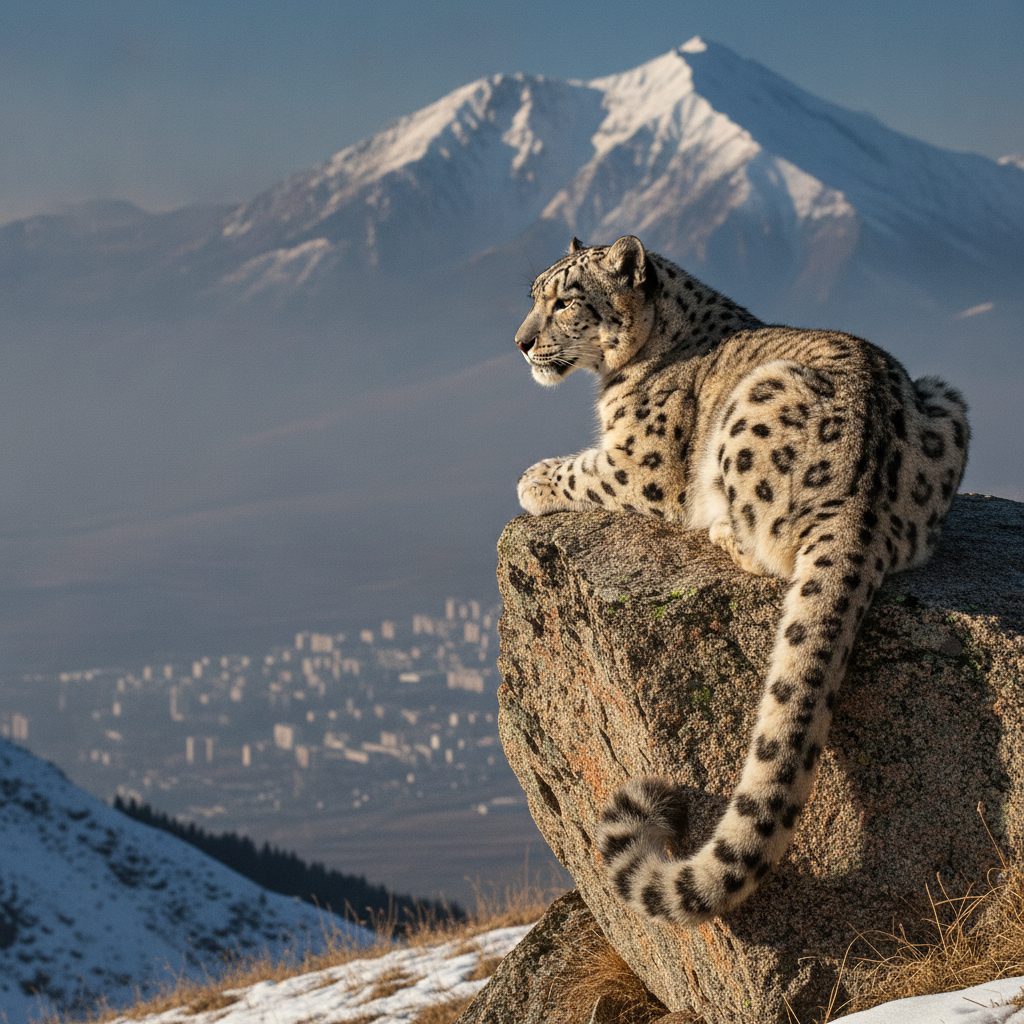
The 1887 Verniy Earthquake That Produced the First Seismic Building Code in the Russian Empire, the Stalin Deportation of 100,000 Soviet Koreans to Kazakhstan in 1937 & the Snow Leopard Population of 150-180 in the Zailiysky Alatau Mountains Above Almaty
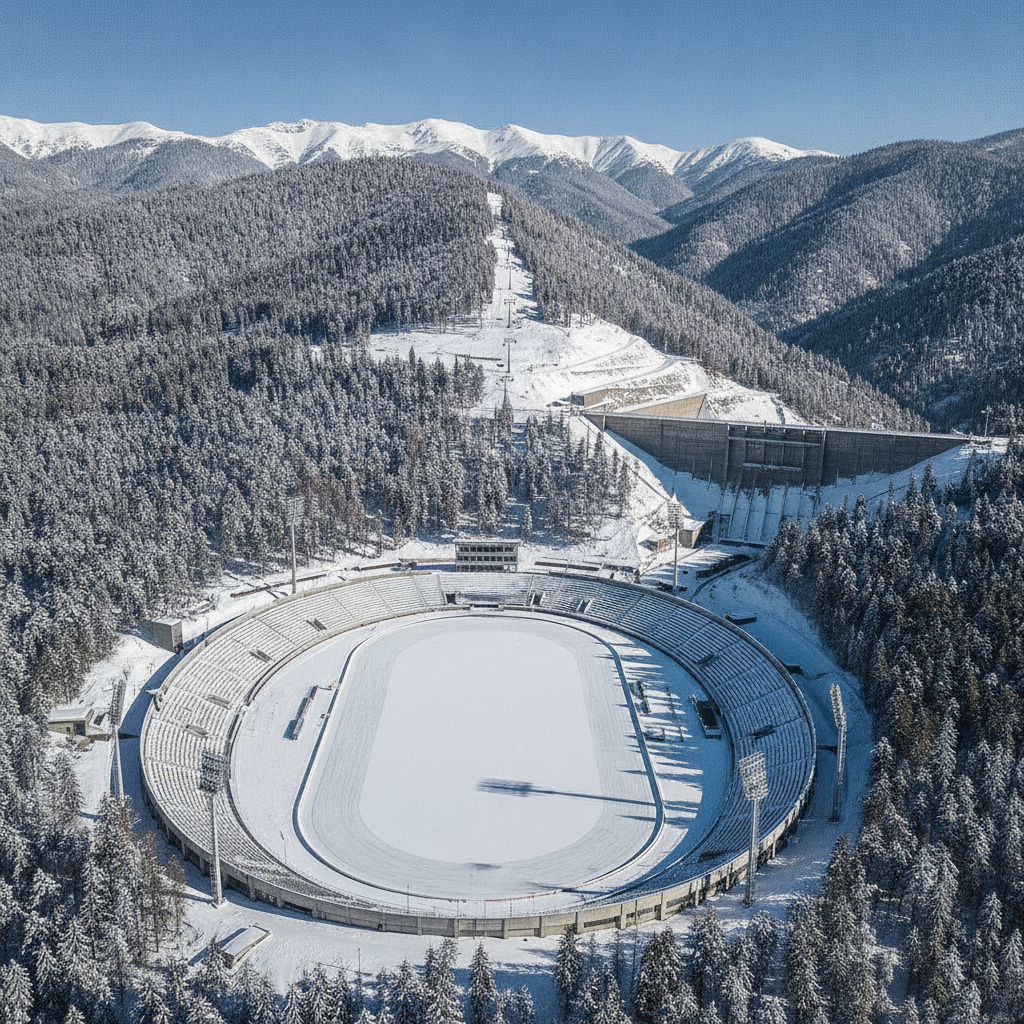
The Highest-Altitude Speed Skating Stadium Where 105 World Records Were Set, the Wooden Zenkov Cathedral That Survived a Magnitude 7.7 Earthquake Because Wood Absorbs Seismic Energy & the Beatles Statue on a Kazakhstan Hilltop