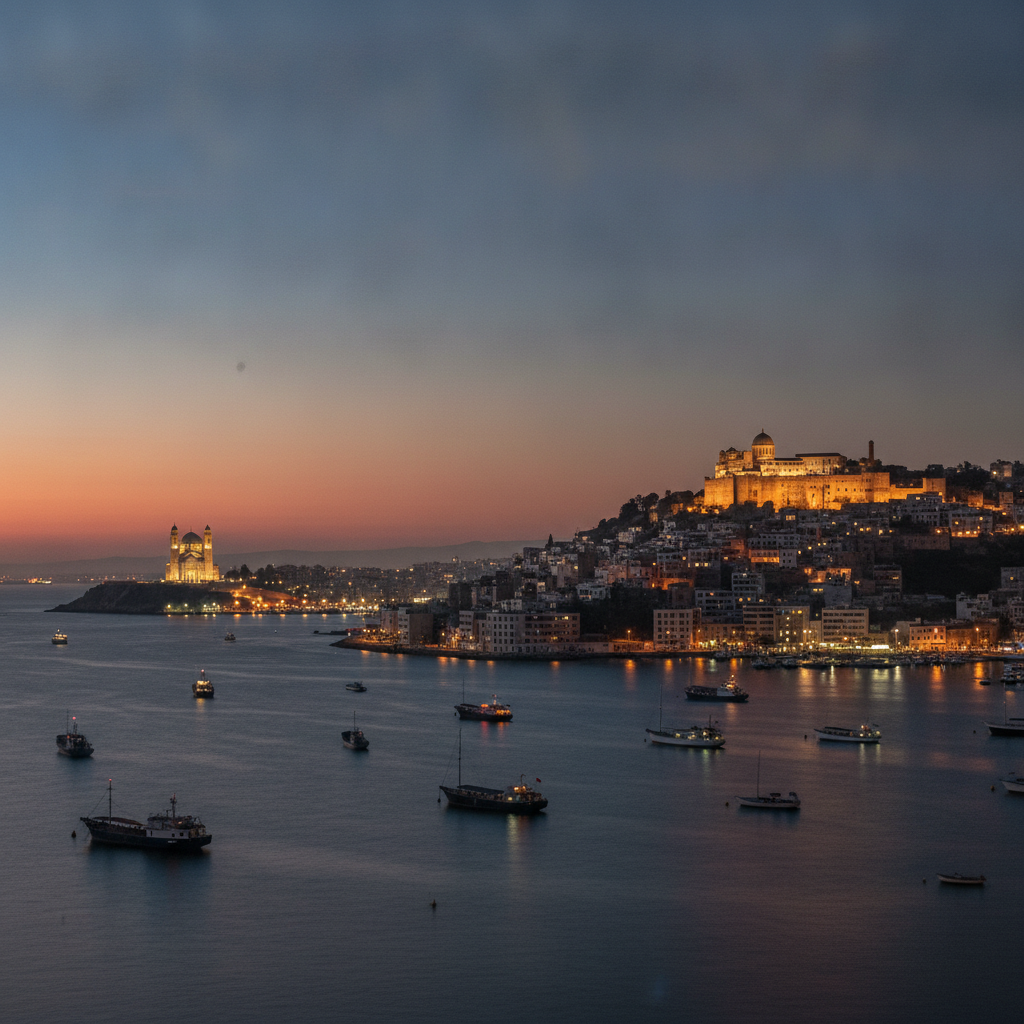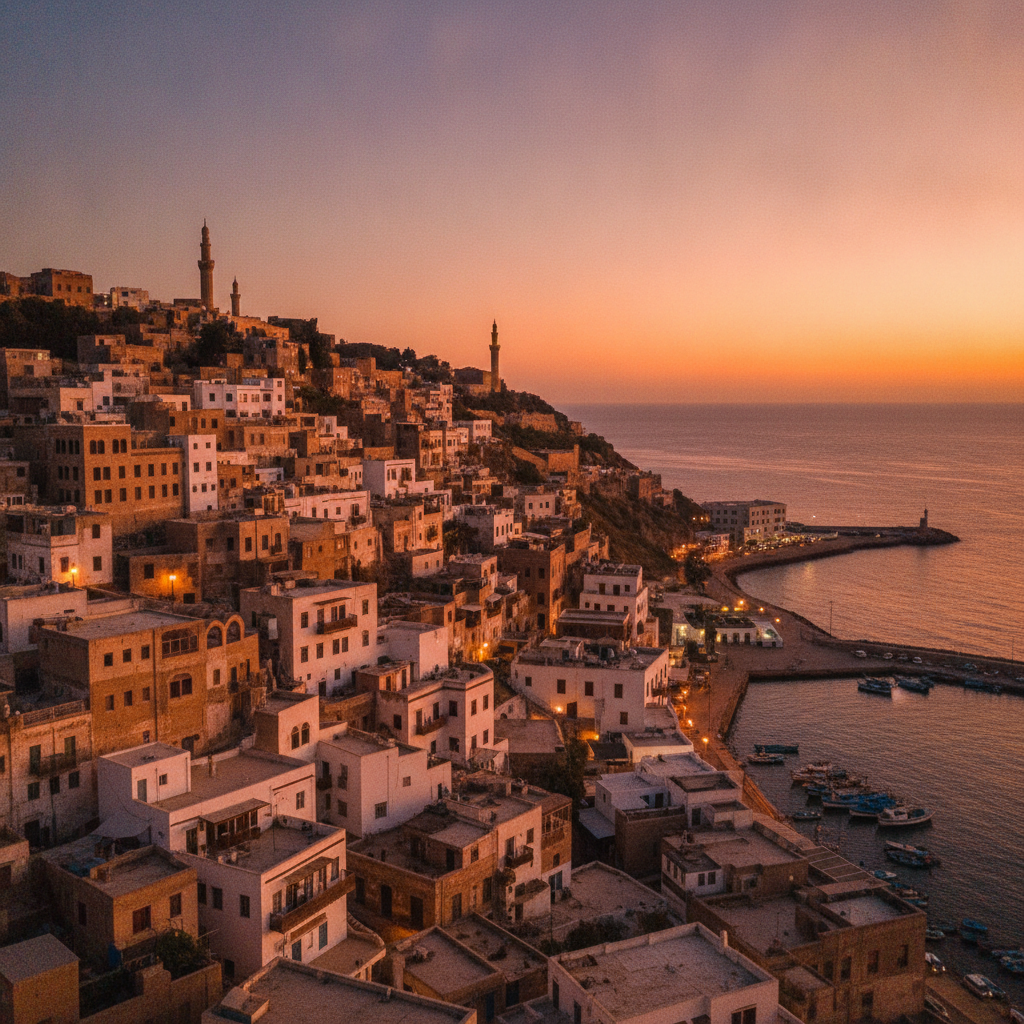
Algiers Complete Guide - Practical Tips, Amazigh Culture, Music, and Mediterranean Identity
Practical Algiers: visa requirements, safety, transport, Amazigh identity and the Tamazight language renaissance, Algerian music from rai to Andalusian chaabi, comparison with Tunis and Casablanca, and the complete reference guide for one of the world's most complex and rewarding capitals.
- 1
Algiers vs Tunis vs Casablanca - Comparing the Three Great North African Capitals
Algiers (population approximately 3.5-4 million metro) vs Tunis (approximately 2.5 million metro) vs Casablanca (approximately 4.5-5 million metro): the three great North African capitals compared across history, culture, and traveler experience. The historical depth (Algiers: the deepest revolutionary history and Ottoman-era Casbah: colonized 1830-1962 (132 years): the most complex and difficult recent history: Tunis: the lightest French colonial impact: the Hafsid and Husainid Bey dynasties maintained Tunisian cultural continuity: the Medina of Tunis (UNESCO) is the most accessible and best-preserved of the three North African medinas: Casablanca: the youngest of the three as a major city (developed primarily under French protectorate 1912-1956): the Art Deco capital: the economic capital of Morocco and the largest Atlantic port in Africa. The culture (Algiers: French-Arabic bilingualism: the most complex literary tradition (Camus, Djebar, Kateb Yacine): the rai music tradition: the most politically charged cultural context: Tunis: the most accessible to Western tourists: the Jasmine Revolution (2010-2011) brought Tunisia the most successful democratic transition of the Arab Spring: the Bardo Museum (world-class Roman mosaic collection): Casablanca: the most internationalized and business-oriented: the Hassan II Mosque (the third largest mosque in the world): the Art Deco architecture: the most liberal social environment in the Maghreb outside of Tunisia. The practical (Algiers: extremely difficult visa for most nationalities: limited tourism infrastructure: not recommended for solo first-time travelers without contacts: Tunis: easy visa access: strong tourism infrastructure: the most accessible North African capital: Casablanca: moderate visa access: excellent tourism infrastructure.)
- 2
The Amazigh Renaissance in Algeria - Tamazight Language Recognition and Kabyle Identity
The Amazigh-Berber cultural renaissance in Algeria: the long struggle for Tamazight language recognition and the Kabyle identity movement. The Black Spring of 2001 (the Black Spring (Printemps Noir) of 2001: triggered by the killing of the young Kabyle man Massinissa Guermah by gendarmes in the Tizi Ouzou region in April 2001: the Kabyle uprising: approximately 120-130 Kabyle protesters killed by security forces in the uprising: the largest unrest in Algeria since the Black Decade: the demands: recognition of Tamazight as an official language alongside Arabic: the outcome: Tamazight was recognized as a national language (but not official) in the 2002 constitutional amendment: in 2016 Tamazight was finally recognized as an official language of Algeria alongside Arabic: the Tifinagh script: the ancient Berber script used in the Tuareg Tamashek writing tradition and revived in the Amazigh renaissance: the Kabyle language (Taqbaylit) is the most widely spoken Amazigh language in Algeria with approximately 5-7 million speakers: the identity (the Amazigh-Berber people are the indigenous population of North Africa: they have inhabited the region for at least 10,000 years before the Arab-Islamic conquest of 688-711 CE: the Arab-Islamic conquest Arabicized the coastal lowland populations while the mountain communities (the Kabyle, the Chaoui, the Mozabite, the Tuareg) maintained their language and cultural identity.)
- 3
Algerian Music - From Rai to Andalusian Chaabi and the Gnawa of the West
Algerian music traditions: from rai to classical Andalusian music, chaabi, and the diverse sound world of North Africa's largest country. The rai tradition (the rai (ra'i - meaning opinion or point of view in Arabic): the popular music genre that originated in the Oran region of western Algeria in the early 20th century: the original rai (the early 20th century female cheikhat performers who sang in the cabarets of Oran about love, wine, and social issues: the genre was associated with the lower social classes and was considered disreputable: the modern rai: in the 1970s-1980s rai was transformed by the incorporation of electric guitars, synthesizers, and Western pop rhythms: Cheb Khaled (the King of Rai: born 1960 in Oran: his 1992 recording Didi became the first North African popular song to reach international commercial success in Europe: the Black Decade (the rai artists were targeted by Islamist extremists during the Black Decade: Cheb Hasni (the Romeo of Rai) was shot dead in Oran in 1994: the genre was suppressed in Algeria during the civil war years and many rai artists emigrated to France): the classical Andalusian music (the Andalusian musical tradition (musiqa al-ala or nuba): the classical Arabic-Andalusian music preserved by the communities who fled from Al-Andalus to North Africa in 1492-1609: Algeria preserves three distinct schools of Andalusian music: the Algiers school (the al-ala of Algiers), the Tlemcen school (the gharnati of Tlemcen - the most elaborate orchestral tradition), and the Constantine school (the malouf of Constantine): the chaabi (the chaabi (popular music of Algiers): the urban popular music of the Algiers Casbah: guitar and mandole-based: associated with the Casbah working class: a form distinct from both rai and classical Andalusian music.)
- 4
Practical Guide to Visiting Algeria - Visas, Safety, Transport, and Money
The practical guide to visiting Algeria as an independent traveler: visas, safety, transportation, accommodation, money, and logistics. The visa (Algeria has one of the most restrictive visa policies in the world for non-Muslim-majority country citizens: most European, American, and Asian passport holders require a visa in advance: the visa application requires: a letter of invitation from an Algerian citizen or organization, hotel bookings for all nights, a detailed itinerary, proof of funds, travel insurance, and multiple supporting documents: processing time: 4-8 weeks: the visa rejection rate is significant: there is no visa on arrival for most nationalities: the exceptions (citizens of Arab League countries, some African Union countries, and a small number of other states have easier access): the safety (Algeria is generally safe for travelers who have obtained a visa and are visiting the northern cities - Algiers, Oran, Constantine, Tlemcen, Annaba: the Saharan regions require a licensed Algerian tour operator and military/gendarmerie escort in some areas: the border regions with Mali, Niger, Libya, and Tunisia have significant security challenges related to the Sahelian instability and the AQIM (Al-Qaeda in the Islamic Maghreb) presence: the transport (Air Algerie is the national airline: domestic flights connect Algiers to Oran, Constantine, Annaba, Tamanrasset, Djanet, Ghardaia, and other cities: the train (the SNTF national rail network: Algiers to Oran (5-6 hours), Algiers to Constantine (approximately 5 hours): the money (the Algerian dinar (DZD): approximately 140-160 DZD per 1 EUR in 2024-2025: credit cards are rarely accepted outside of international hotels in Algiers: cash is the standard payment method.)
- 5
Algiers and the Mediterranean - A City of Three Faces
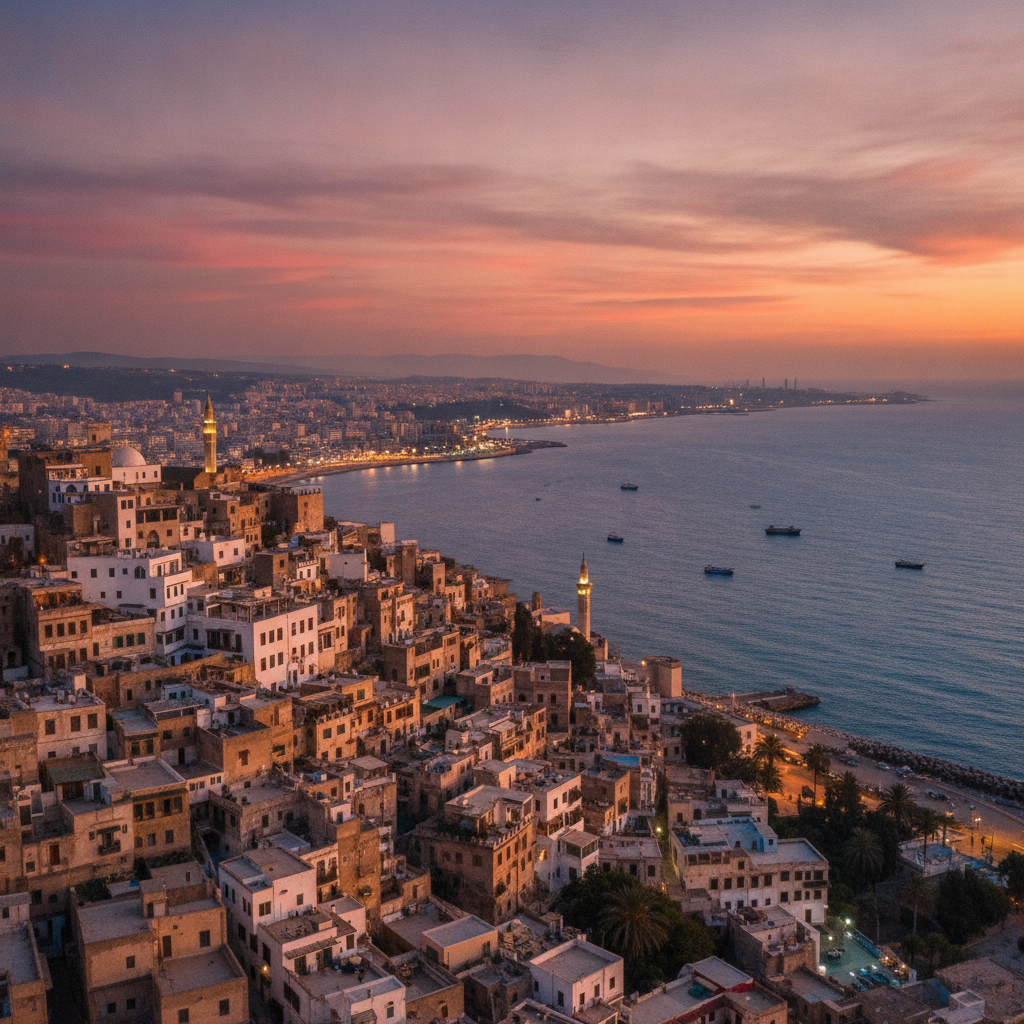
Algiers as a Mediterranean city: the relationship between the Algerian capital and the sea, the European legacy, and the three cultural identities (Amazigh-Berber, Arab-Islamic, and French-Mediterranean) that define contemporary Algeria. The Mediterranean identity (Algiers is on the same latitude as Rome and Valencia: the Mediterranean climate (hot dry summers, mild wet winters): the bay of Algiers is one of the finest natural harbors in the Mediterranean: the white facades of the buildings on the Algiers hillside earned the city its Arabic name (Alger la Blanche - Algiers the White): the city faces north toward the Mediterranean and Europe: the three identities (the Amazigh-Berber identity: the indigenous population: the language, the traditions, the music (the chaabi, the Kabyle songs): the Arab-Islamic identity: the religion (99% Muslim), the Arabic language, the cultural orientation toward the Arab world: the French-Mediterranean identity: the French colonial legacy: the French language (French is the primary language of business, education, and the media despite Arabic being the official language): the French-influenced cafes, baguettes, and boulevards of central Algiers: the ambivalence (Algeria is the only country in the world where independence was achieved by a war that killed approximately 1.5 million Algerians (the official Algerian figure) or approximately 300,000-500,000 (the revised historical estimates) over 7.5 years (1954-1962): the French language and culture are both the colonial inheritance and the lingua franca of the educated class: this ambivalence defines contemporary Algeria's relationship with France (significant diplomatic tensions have persisted to the present day).
- 6
Complete Algiers Reference - Essential Information for Planning Your Journey
Algiers complete reference: the essential practical and contextual information for planning a visit to the capital of North Africa's largest country. The essential facts (the official name: the People's Democratic Republic of Algeria (al-Jumhuriyya al-Jazairiyya ad-Dimuqratiyya ash-Shabiyya): the capital: Algiers (al-Jazair in Arabic): the population: approximately 45 million (2025): the area: 2,381,741 square km (the largest country in Africa and the Arab world by area): the language: Arabic (official), Tamazight (official since 2016), French (widely used): the religion: Sunni Islam (99%): the currency: Algerian dinar (DZD): the GDP: approximately USD 230-250 billion (2024): primary hydrocarbon economy: the political system: presidential republic: the President: Abdelmadjid Tebboune (elected 2019, re-elected 2024): the practical for Algiers (the international airport: Houari Boumediene International Airport (ALG) - 20 km southeast of central Algiers: the taxi from airport: approximately 2,000-4,000 DZD: the time zone: CET (UTC+1) year-round (no daylight saving): the best time to visit: April-June and September-November: the accommodation (Algiers has a limited but improving selection of hotels: the Sofitel Algiers Hamma Garden: the El Aurassi Hotel (state-owned, panoramic Casbah views): the Sheraton Club des Pins (15 km west of central Algiers on the coast): the Mercure Alger Aeroport: the emergency (police: 17: ambulance: 14: gendarmerie: 1055: the Algiers fire brigade: 14).
Walk this route with audio
Stories play automatically as you reach each stop — no tapping needed.
More in Algiers
The Barbary Corsairs of Algiers Enslaved an Estimated 1-1.25 Million Europeans From 1516 to 1830 and the United States Fought Its First International Wars Against Them in the Barbary Wars of 1801-1815; Le Corbusier Visited Ghardaia in 1931 and the Whitewashed Geometric Minimalism of the Mozabite Ibadi Architecture Directly Influenced His Purist Architectural Philosophy; Cheb Hasni the Algerian Rai Singer Was Shot Dead in Oran in 1994 During the Black Decade Civil War in Which Approximately 100,000-200,000 Algerians Were Killed
Algiers Arts, Museums, Literature, Cuisine, and Photography Guide
Djemila, Timgad, and the Roman Ruins of Algeria - North Africa's Best Preserved Roman Cities
Algiers Day Trips and Regional Highlights - From Roman Ruins to Saharan Prehistory