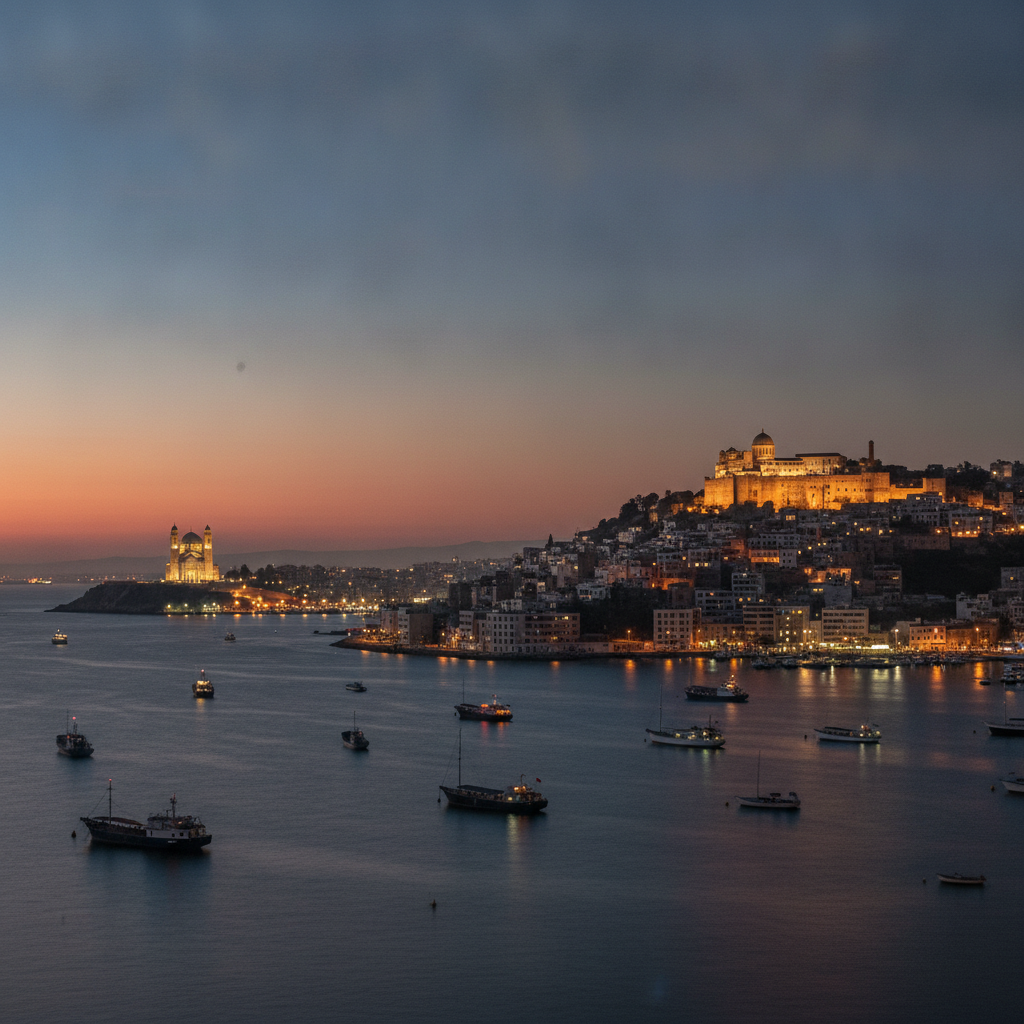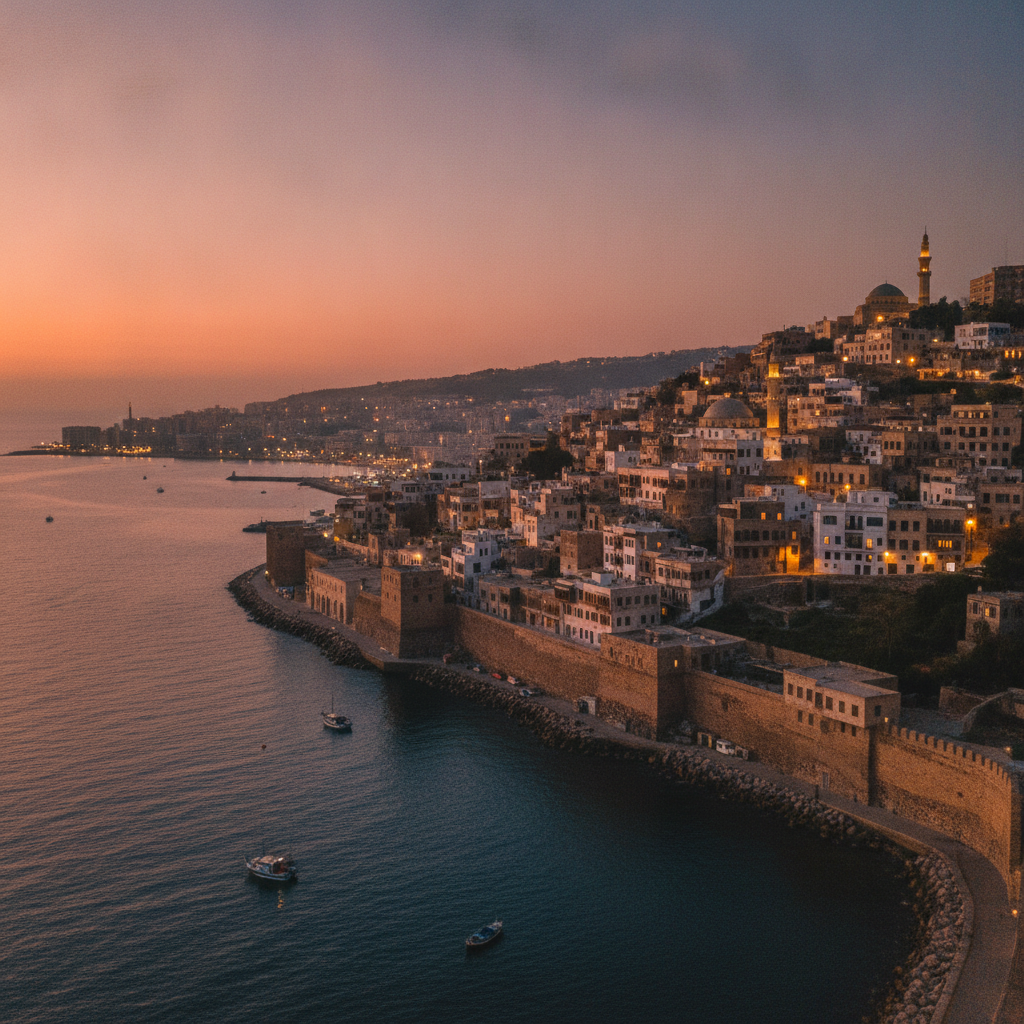
Djemila, Timgad, and the Roman Ruins of Algeria - North Africa's Best Preserved Roman Cities
Djemila (Cuicul) and Timgad (Thamugadi) as two of the best-preserved Roman cities in North Africa both UNESCO World Heritage Sites; the Numidian Kingdom of Jugurtha (who fought Rome from 112-105 BCE in the Jugurthine War); Tipasa on the Mediterranean coast west of Algiers as another UNESCO Roman-Christian site described by Albert Camus; and Bejaia (Bejaia - the Berber Hammadid kingdom capital and medieval center of mathematics where the Pisan mathematician Fibonacci learned the Hindu-Arabic numeral system in the 12th century including the zero that transformed European mathematics.
- 1
Djemila and Timgad - The Best Preserved Roman Cities in North Africa
Djemila (Cuicul - Roman) and Timgad (Thamugadi - Roman) are two UNESCO World Heritage Roman cities in Algeria that are among the best preserved Roman urban landscapes in the world. Djemila (UNESCO 1982): a Roman city founded approximately 96-98 CE under Emperor Nerva in the Algerian Tell Atlas mountains at 900m elevation: extraordinary state of preservation: the forum, the arch of Caracalla, the theatre, and the Christian basilica complex (4th-5th century) all largely intact: the cold mountain climate preserved the stone better than coastal sites. Timgad (UNESCO 1982): a Roman military colony (colonia) founded in 100 CE by Emperor Trajan for veterans of the Third Augustan Legion: the most perfectly grid-planned Roman city in the world: the perfect decumanus maximus and cardo maximus cross at right angles: the triumphal arch of Trajan: the theatre seating 3,500: the Library of Timgad (one of the finest surviving Roman library buildings in the world). Both sites are largely unvisited by international tourists making them extraordinarily accessible with no crowds.
- 2
The Numidian Kingdom and Jugurtha - Algeria's Ancient Berber Kingdom
The ancient Numidian Kingdom of North Africa and its most famous ruler Jugurtha who fought Rome from 112-105 BCE. The Numidians (the Numidians - the Berber Amazigh tribes of the North African interior west of Carthage: the primary Numidian kingdoms were Numidia Proper and Massaesulia in the territory of modern Algeria): King Massinissa (the first great Numidian king 202-148 BCE - allied himself with Rome against Carthage at the Battle of Zama (202 BCE) where Scipio Africanus defeated Hannibal: Massinissa built the first great Numidian kingdom in Algeria): Jugurtha (the Jugurthine War 112-105 BCE: Jugurtha refused to accept the Roman client-king arrangement and launched a guerrilla war against Roman forces in North Africa: the war dragged on for 7 years and exposed Roman military incompetence and corruption: Jugurtha bribed Roman senators and famously said that Rome was a city for sale: he was eventually captured by treachery and strangled in the Mamertine Prison in Rome in 104 BCE: Jugurtha is now regarded as one of the first great Algerian national heroes and resistance fighters against foreign domination.
- 3
Tipasa and Albert Camus - The Mediterranean Coast West of Algiers
Tipasa (60 km west of Algiers on the Mediterranean coast) and the connection to Albert Camus: the Roman and Christian archaeological site described in some of the most lyrical prose in 20th century French literature. Tipasa (UNESCO 1982): a Phoenician-Roman-Christian coastal town: the ruins of the Roman town, the early Christian basilica complex (including one of the largest basilicas in Roman North Africa - the Basilica of Bishop Alexander), the 2nd century theatre, and the Juba I royal mausoleum (the Tomb of the Christian - a 30m circular mausoleum outside the town walls built for the Numidian royal family): Albert Camus (Albert Camus (1913-1960) - the French-Algerian writer and philosopher (Nobel Prize in Literature 1957): born in Mondovi (Drea) in eastern Algeria: grew up in Belcourt, a working-class quarter of Algiers: wrote several early essays about Tipasa (Noces (Nuptials) 1938) describing the ruins in sensuous and luminous prose: Camus wrote of returning to Tipasa after the war in a famous 1953 essay: The Mediterranean sun on the Roman ruins of Tipasa is described as one of the great literary evocations of North African landscape.
- 4
Bejaia and the Arab-Berber Mathematics - How the Zero Reached Europe
Bejaia (Bijaya, Bougie in French - the medieval Hammadid Berber kingdom capital on the Algerian Mediterranean coast east of Algiers) as the city where the Pisan mathematician Fibonacci learned the Hindu-Arabic numeral system (including the zero) that transformed European mathematics and launched the scientific revolution. Fibonacci (Leonardo of Pisa - Leonardo Fibonacci (c.1170-c.1240/1250): the most important European mathematician of the Middle Ages: born in Pisa: his father Guglielmo Bonacci was a Pisan merchant official who worked in the Bougie (Bejaia) customs house: the young Leonardo learned arithmetic from a Moorish master in Bougie: he learned the Hindu-Arabic numeral system (the system now universally used with the digits 0-9) which he encountered in the North African and Islamic commercial world: the Liber Abaci (the Book of Calculation: published 1202: the primary European text introducing the Hindu-Arabic numeral system to Europe: the system replaced the cumbersome Roman numeral system in European commerce and scholarship: the zero (the zero (sifr in Arabic - meaning empty) is the concept that was most revolutionary for European mathematics: the ability to represent nothing as a number is the foundation of positional notation and all subsequent mathematics: the Fibonacci sequence (the famous sequence (1,1,2,3,5,8,13,21...) was introduced by Fibonacci in Liber Abaci as a mathematical problem: the sequence was named after him by later mathematicians.
- 5
The Algerian Civil War 1991-2002 - The Black Decade and the Islamic Salvation Front
The Algerian Civil War (1991-2002) - the Black Decade (la Decennie Noire): the most devastating conflict in North African history since the Algerian War of Independence. The context (the Algerian political opening of 1989: President Chadli Bendjedid liberalized the political system allowing multiparty elections: the Islamic Salvation Front (Front Islamique du Salut - FIS) won the first round of the December 1991 parliamentary elections with 188 seats (and projected to win a majority in the second round): the army coup (January 1992): the Algerian military cancelled the elections and forced President Bendjedid to resign: a state of emergency was declared: the FIS was outlawed and its leaders arrested: the war (the armed Islamist groups that emerged from the FIS cancellation became the Armed Islamic Group (GIA) and later the Salafist Group for Preaching and Combat (GSPC): the war between the Algerian security forces and the Islamist armed groups killed approximately 100,000-200,000 Algerians between 1991 and 2002: the massacres (the most notorious phase was 1996-1998 when the GIA conducted mass massacres of entire villages: the Rais massacre (August 1997 - approximately 200-300 civilians killed in one night): the Bentalha massacre (September 1997 - approximately 200-400 civilians killed): the responsibility for some massacres is disputed between the GIA and the Algerian security forces: the concord (the Civil Concord of 1999 under President Bouteflika allowed Islamist combatants to surrender in exchange for amnesty and effectively ended the war).
- 6
Algiers Legacy - The Revolutionary Capital of the Non-Aligned World
Algiers legacy: the final assessment of the capital of one of the most consequential nations in post-colonial history. The revolutionary capital (Algiers in the 1960s-1970s was the primary hub of the international revolutionary left and the Non-Aligned Movement: the FLN government hosted liberation movements from across Africa, Asia, and Latin America: the Black Panthers (the American Black Panther Party leader Eldridge Cleaver lived in Algiers in exile (1969-1973): Algeria provided sanctuary, support, and a radio platform: the Latin American revolutionaries: the South African ANC: the PLO: the POLISARIO Front (Western Sahara): the Non-Aligned Movement (Algeria was a founding member of the Non-Aligned Movement (NAM) at Bandung (1955) and hosted the 4th NAM Summit in Algiers (1973) under President Houari Boumediene: Algeria became the primary voice of the developing world in the 1970s: the OPEC (Algeria played a significant role in the 1973 OPEC oil embargo as a founding member): the Algiers Accords (the Algiers Accords of 1981 resolved the Iran Hostage Crisis (the 52 American hostages held in Tehran from 1979) - Algeria mediated the agreement between Iran and the US and the hostages were released on January 20, 1981 (the day of Ronald Reagan's inauguration - a deliberate Iranian timing): the cultural legacy (Albert Camus, Assia Djebar (the Algerian novelist and Academie Francaise member - the first Maghrebi woman elected to the Academie Francaise in 2005), the rai music tradition: Algeria's cultural production in French is one of the richest literatures in the Francophone world).
Walk this route with audio
Stories play automatically as you reach each stop — no tapping needed.
More in Algiers
The Barbary Corsairs of Algiers Enslaved an Estimated 1-1.25 Million Europeans From 1516 to 1830 and the United States Fought Its First International Wars Against Them in the Barbary Wars of 1801-1815; Le Corbusier Visited Ghardaia in 1931 and the Whitewashed Geometric Minimalism of the Mozabite Ibadi Architecture Directly Influenced His Purist Architectural Philosophy; Cheb Hasni the Algerian Rai Singer Was Shot Dead in Oran in 1994 During the Black Decade Civil War in Which Approximately 100,000-200,000 Algerians Were Killed
Algiers Arts, Museums, Literature, Cuisine, and Photography Guide
Algiers Complete Guide - Practical Tips, Amazigh Culture, Music, and Mediterranean Identity
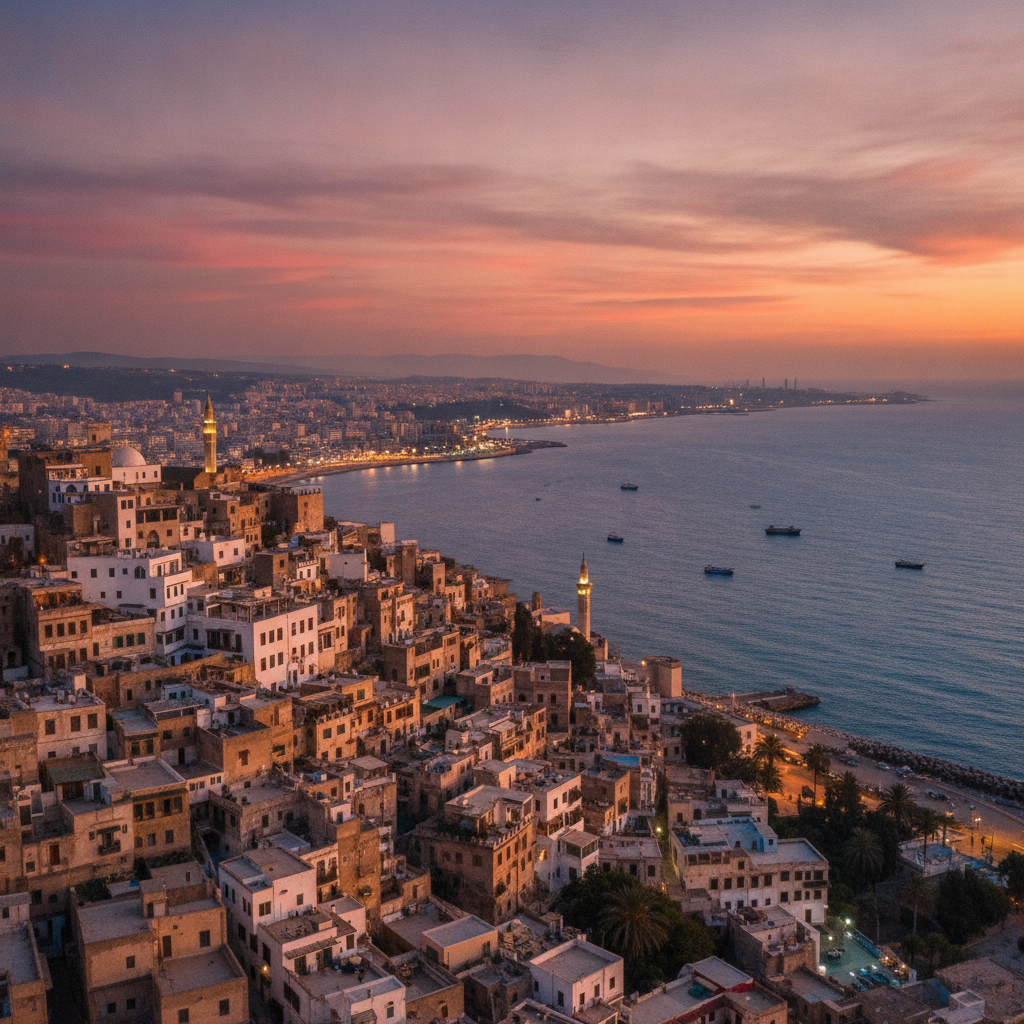
Algiers Day Trips and Regional Highlights - From Roman Ruins to Saharan Prehistory